
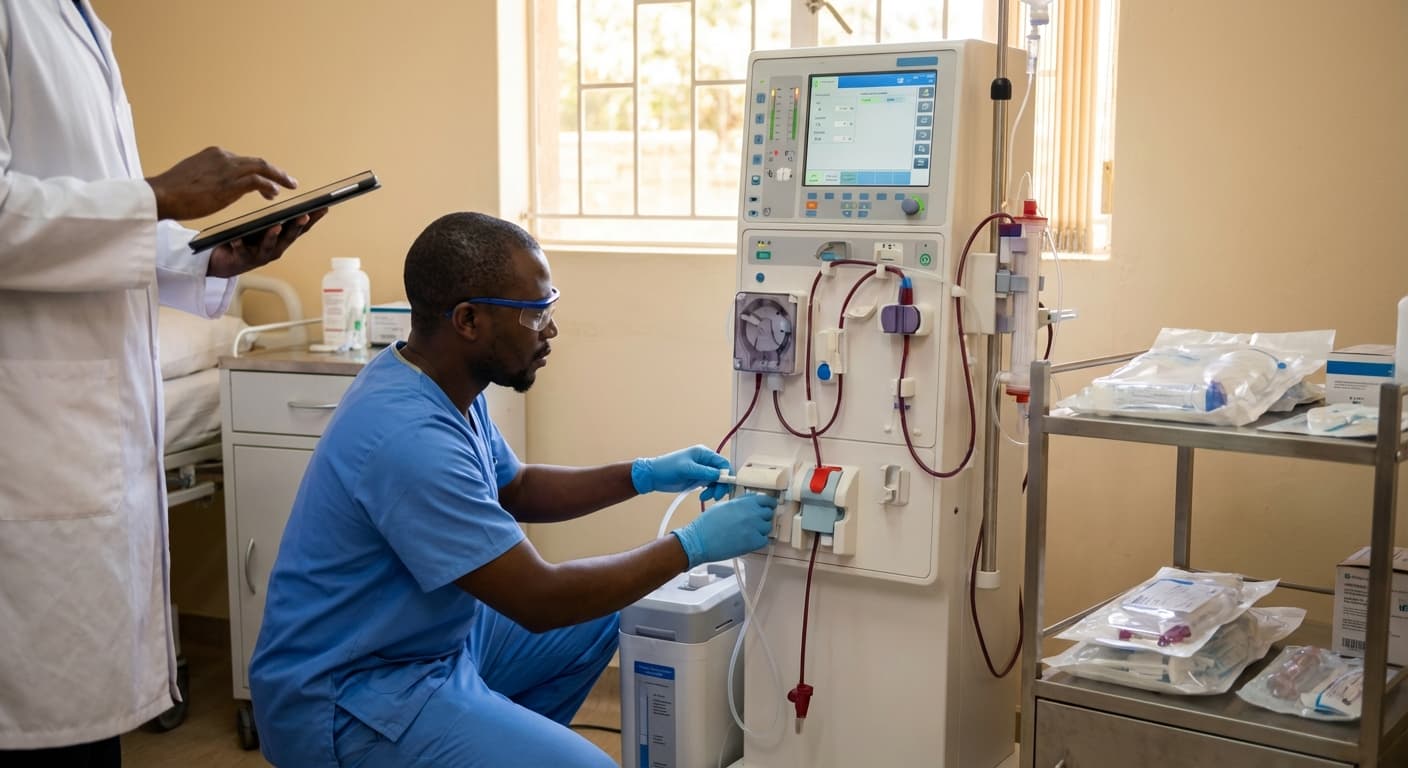
Hemodialysis Machine Installation Service in Congo (Kinshasa)
Engineering Excellence & Technical Support
Hemodialysis Machine Installation Service High-standard technical execution following OEM protocols and local regulatory frameworks.
Certified Biomedical Engineers
Our team comprises highly trained and certified biomedical engineers with extensive experience in installing and commissioning hemodialysis machines. They are adept at adhering to international standards and local regulatory requirements in Congo (Kinshasa).
Comprehensive Site Assessment & Preparation
We conduct thorough site assessments to ensure optimal placement, power, water supply, drainage, and ventilation for your hemodialysis machines. Our service includes preparation of the installation area to meet all technical specifications for safe and efficient operation.
Rigorous Testing & Validation
Post-installation, our engineers perform comprehensive diagnostic tests and machine validations to guarantee optimal performance, accuracy, and patient safety. We provide detailed reports and ensure full integration with existing healthcare IT systems.
What Is Hemodialysis Machine Installation Service In Congo (Kinshasa)?
Hemodialysis machine installation service in Congo (Kinshasa) refers to the comprehensive process of setting up, configuring, and validating hemodialysis equipment within healthcare facilities in the Democratic Republic of Congo's capital. This service ensures that the advanced machinery required for renal replacement therapy is functional, safe, and compliant with relevant medical and safety standards, thereby enabling the provision of critical care for patients suffering from end-stage renal disease (ESRD). The process typically involves site assessment, equipment delivery and unpacking, physical installation, electrical and plumbing connections, water treatment system integration, initial calibration, system testing, operator training, and final validation and commissioning. This is a critical infrastructure support service for nephrology departments and dialysis centers.
| Who Needs Hemodialysis Machine Installation Service? | Typical Use Cases | ||||
|---|---|---|---|---|---|
| Hospitals and healthcare institutions requiring new or expanded dialysis units. | Establishment of new dialysis centers. | Replacement or upgrade of existing hemodialysis machines. | Healthcare facilities in remote or underserved areas establishing renal care services. | Non-governmental organizations (NGOs) and international health organizations setting up dialysis programs. | |
| Management of End-Stage Renal Disease (ESRD) requiring extracorporeal blood purification. | Treatment of acute kidney injury (AKI). | Management of fluid overload in renal patients. | Removal of toxins and waste products from the bloodstream. | Preparation for or recovery from kidney transplantation. | Treatment of certain poisoning cases where dialysis is indicated for toxin removal. |
Key Components of Hemodialysis Machine Installation Service
- Site assessment and preparation (including power, water, and waste management infrastructure evaluation).
- Equipment delivery, unboxing, and precise placement.
- Mechanical and electrical connections to facility utilities.
- Integration with medical-grade water purification systems (e.g., reverse osmosis).
- System initialization, configuration, and software setup.
- Functional testing and performance calibration.
- Pre-dialysis and dialysis cycle simulations.
- Comprehensive operator training on machine operation, maintenance, and troubleshooting.
- Validation and commissioning to ensure operational readiness and safety.
- Documentation of installation, calibration, and training.
Who Needs Hemodialysis Machine Installation Service In Congo (Kinshasa)?
Hemodialysis machine installation services are crucial for any facility in Congo (Kinshasa) aiming to provide or expand renal replacement therapy. These specialized installations require trained technicians, adherence to strict medical device regulations, and integration with existing hospital infrastructure. The demand for such services directly correlates with the prevalence of kidney disease and the capacity of healthcare providers to offer advanced treatments. This includes ensuring proper plumbing, electrical connections, water purification systems, and the initial setup and testing of the hemodialysis machines themselves.
| Target Customer Type | Relevant Departments/Units |
|---|---|
| Public Hospitals | Nephrology Department, Internal Medicine, Surgical Department (if related procedures occur), Biomedical Engineering Department, Facilities Management |
| Private Hospitals and Clinics | Nephrology Unit, Renal Care Department, Medical Services, Engineering and Maintenance, Facilities Management |
| Dialysis Centers | Clinical Operations, Biomedical Engineering, Technical Services, Patient Care Services |
| NGOs | Healthcare Program Management, Project Implementation Teams, Technical Support Units |
| Research Institutions | Clinical Research Departments, Laboratory Services, Biomedical Engineering |
| Medical Equipment Suppliers/Distributors | Technical Services Department, Installation and Maintenance Teams, Sales and Operations |
| New Healthcare Facilities | Project Development Team, Clinical Planning, Facilities and Infrastructure Development, Procurement Department |
Target Customers for Hemodialysis Machine Installation Service in Congo (Kinshasa)
- Public Hospitals (Government-owned)
- Private Hospitals and Clinics
- Dialysis Centers (standalone facilities)
- Non-Governmental Organizations (NGOs) with healthcare initiatives
- Research Institutions (for training and research purposes)
- Medical Equipment Suppliers/Distributors (who may contract installation)
- Potentially, larger medical facilities in other urban centers within the DRC
- New healthcare facilities planning to offer dialysis services
Hemodialysis Machine Installation Service Process In Congo (Kinshasa)
This document outlines the typical workflow for installing a hemodialysis machine in Congo (Kinshasa), from the initial customer inquiry to the successful execution of the service. This process is designed to ensure a seamless and efficient installation, meeting the specific needs of healthcare facilities in the region.
| Phase | Key Activities | Description | Responsibility | Estimated Timeline |
|---|---|---|---|---|
| Initial Contact, Requirement Gathering | Customer contacts the service provider with a need for hemodialysis machine installation. This involves understanding the type of machine, quantity, intended location (hospital, clinic), and any specific facility requirements (e.g., power, water, space). | Customer, Service Provider Sales Team | 1-3 Business Days |
| Proposal Generation, Price Negotiation, Contract Signing | Based on the needs assessment, a detailed quotation is prepared, outlining costs for the machine (if applicable), installation, training, and any necessary accessories. Upon agreement, a formal contract is signed. | Service Provider Sales Team, Customer | 3-7 Business Days |
| Facility Assessment, Technical Requirements Verification | A technical team visits the installation site to assess power supply stability, water quality and availability, drainage systems, room size and layout, and ventilation. This ensures the site meets the machine's operational requirements. | Service Provider Technical Team | 2-5 Business Days |
| Machine Procurement (if applicable), Shipping, Customs Clearance | If the machine is not already on-site, it is procured and shipped. This phase includes managing all aspects of international or domestic transportation, insurance, and necessary customs procedures for entry into Congo (Kinshasa). | Service Provider Logistics Team, Suppliers | Varies significantly based on origin and import processes (weeks to months) |
| Unpacking, Physical Installation, Plumbing & Electrical Connections | The technical team unpacks the hemodialysis machine and meticulously installs it according to manufacturer guidelines and the site survey findings. This includes connecting plumbing for water supply and drainage, and ensuring secure electrical connections. | Service Provider Technical Team | 1-3 Business Days per machine |
| Functional Checks, Performance Verification, Parameter Adjustment | All machine functions are thoroughly tested to ensure they operate within the manufacturer's specifications. This includes critical parameters like dialysate flow rate, temperature, and conductivity. Calibration is performed as needed. | Service Provider Technical Team | 1-2 Business Days per machine |
| Operator Instruction, Clinical Staff Education | Comprehensive training is provided to the healthcare facility's clinical staff (nurses, technicians) on the operation, routine maintenance, and basic troubleshooting of the hemodialysis machine. | Service Provider Clinical Trainer, Facility Staff | 1-3 Business Days per group |
| Manual Provision, Service Report, Customer Sign-off | All relevant documentation, including user manuals, warranty information, and service reports, is provided to the customer. The customer formally acknowledges the successful installation and handover. | Service Provider Technical Team, Customer Representative | 0.5 Business Days |
| Follow-up, Warranty Service, Preventative Maintenance Scheduling | The service provider offers ongoing support, including addressing any immediate post-installation queries, managing warranty claims, and discussing options for preventative maintenance to ensure the machine's longevity and optimal performance. | Service Provider Technical Support, Customer | Ongoing |
Hemodialysis Machine Installation Service Process in Congo (Kinshasa)
- Inquiry & Needs Assessment
- Quotation & Contractual Agreement
- Site Preparation & Survey
- Logistics & Transportation
- Installation & Setup
- Testing & Calibration
- User Training
- Documentation & Handover
- Post-Installation Support
Hemodialysis Machine Installation Service Cost In Congo (Kinshasa)
Installing a hemodialysis machine is a critical process requiring specialized expertise to ensure proper functionality, safety, and longevity of the equipment. The cost of hemodialysis machine installation services in Congo (Kinshasa) can vary significantly based on several factors. These include the complexity of the installation, the specific model of the hemodialysis machine, the required infrastructure modifications, the location within Kinshasa, and the service provider's reputation and overhead. It's essential for healthcare facilities to obtain detailed quotes from multiple qualified service providers to ensure competitive pricing and understand the scope of services included. Factors such as pre-installation site surveys, necessary plumbing and electrical upgrades, water treatment system integration, calibration, and initial training for medical staff all contribute to the overall cost.
| Service Component | Estimated Cost Range (Congolese Franc - CDF) | Notes |
|---|---|---|
| Site Survey & Consultation | 150,000 - 500,000 CDF | Initial assessment of facility readiness. |
| Basic Installation (excluding major upgrades) | 1,500,000 - 5,000,000 CDF | Includes connection to existing suitable utilities. |
| Installation with Plumbing/Electrical Upgrades | 3,000,000 - 10,000,000+ CDF | Varies greatly based on the extent of necessary modifications. |
| Water Treatment System Integration | 2,000,000 - 8,000,000 CDF | Cost of the unit and its integration, if not already present. |
| Calibration & Performance Testing | 500,000 - 1,500,000 CDF | Ensuring the machine operates within specified parameters. |
| Initial Staff Training | 750,000 - 2,500,000 CDF | Hands-on training for nurses and technicians. |
| Transportation & Logistics | 200,000 - 800,000 CDF | Depends on distance and accessibility of the site. |
| Total Estimated Installation Cost (Basic to Moderate) | 3,000,000 - 15,000,000 CDF | This is a general range and can be significantly higher for complex installations. |
Factors Influencing Hemodialysis Machine Installation Costs in Congo (Kinshasa)
- Type and Model of Hemodialysis Machine (single, dual, or multi-patient units, advanced features)
- Site Preparation and Infrastructure Requirements (electrical outlets, water supply, drainage, ventilation, seismic considerations)
- Water Treatment System Integration (reverse osmosis, deionization, filtration)
- Plumbing and Electrical Work (specialized wiring, piping, surge protection)
- Geographic Location within Kinshasa (accessibility, transport costs)
- Service Provider's Expertise and Reputation (certified technicians, experience with specific brands)
- Pre-installation Site Survey and Consultation
- Calibration and Testing Procedures
- Initial User Training for Medical Staff
- Warranty and After-Sales Support Packages
- Urgency of Installation (rush services may incur higher fees)
Affordable Hemodialysis Machine Installation Service Options
Installing a hemodialysis machine is a significant investment, and securing reliable and affordable installation services is crucial for any healthcare facility. This guide explores various options for affordable hemodialysis machine installation, focusing on value bundles and effective cost-saving strategies. We aim to equip you with the knowledge to make informed decisions that prioritize both patient care and financial efficiency.
| Value Bundle Component | Description | Cost-Saving Potential | Example Scenario |
|---|---|---|---|
| Manufacturer-Provided Installation | Installation service included or offered at a discounted rate directly by the hemodialysis machine manufacturer. | Often offers competitive pricing and ensures compatibility with the specific machine model. Can reduce the hassle of sourcing separate providers. | Purchasing a dialysis machine package that includes on-site setup and initial calibration by the manufacturer's certified technicians. |
| Bundled Service Packages | Combining installation with other services like initial training, preventative maintenance plans, or extended warranties from a single provider. | Reduces administrative overhead and can unlock volume discounts. Provides a streamlined support system. | A service provider offering a package that includes machine installation, training for your biomedical staff, and a two-year maintenance contract for a fixed price. |
| Regional or Local Installers | Engaging specialized biomedical installation companies that operate within your geographic region. | Potentially lower travel costs compared to national providers. May foster stronger relationships and better understanding of local regulations. | Hiring a local biomedical engineering firm with proven experience in dialysis unit setups in your city. |
| Refurbished Machine Installation | Installation services for pre-owned or refurbished hemodialysis machines. | Significantly lower upfront machine cost, leading to overall project savings. Installation costs may also be adjusted. | Securing installation for a certified refurbished dialysis machine from a reputable vendor, which often comes with a lower service fee than for a new unit. |
| Phased Installation with Training | Breaking down the installation process and integrating staff training at each stage. | Empowers in-house staff to handle some aspects, reducing reliance on external technicians for minor tasks in the future. Can spread costs over time. | An installer sets up the basic plumbing and electrical, followed by training your biomedical team on calibration, and then the installer returns for final hook-up and testing. |
Key Considerations for Affordable Installation
- Understanding Installation Scope: Differentiate between basic setup, full integration with existing infrastructure (plumbing, electrical, water purification), and ongoing maintenance contracts. Clearly defining needs prevents unexpected costs.
- Machine Type and Manufacturer: Some manufacturers offer bundled installation with their machines, potentially at a discount. Consider the complexity of installation based on the machine's features and requirements.
- Location and Accessibility: Remote or difficult-to-access locations may incur higher transportation and labor costs. Planning for accessibility can mitigate this.
- Timeline and Urgency: Rush installations often come with premium pricing. Advance planning allows for more competitive bids.
- Quality of Service: Prioritize experienced and certified technicians. While cost is important, the safety and proper functioning of the machine are paramount. Compromising on quality can lead to expensive repairs and downtime.
Verified Providers In Congo (Kinshasa)
Finding reliable healthcare in a new or unfamiliar region can be a daunting task. In Congo (Kinshasa), for those seeking medical services, identifying verified providers is paramount to ensuring quality care and safety. This is where Franance Health distinguishes itself as a premier choice. Franance Health's commitment to stringent credentialing and its network of rigorously vetted medical professionals offer unparalleled peace of mind to patients. Their meticulous verification process ensures that every provider associated with Franance Health meets the highest standards of expertise, ethical practice, and patient-centered care. By prioritizing transparency and accountability, Franance Health not only connects you with qualified doctors and specialists but also empowers you with the confidence that you are receiving the best possible medical attention in Congo (Kinshasa).
| Key Verification Criteria | Franance Health's Standard |
|---|---|
| Medical Licensure and Certification | Mandatory and thoroughly verified for all practitioners. |
| Professional Experience | Assessed for relevant and extensive practice in their specialization. |
| Reputation and Patient Feedback | Considered through a combination of direct feedback mechanisms and independent review. |
| Ethical Conduct and Disciplinary History | Scrutinized to ensure a clean record and adherence to professional ethics. |
| Continuing Medical Education (CME) | Ensured for practitioners to maintain up-to-date knowledge and skills. |
Why Franance Health is the Best Choice for Verified Providers in Congo (Kinshasa):
- Rigorous Verification Process: Franance Health employs a multi-faceted vetting system that goes beyond basic licensing, examining credentials, professional history, and patient feedback.
- Commitment to Quality: Only providers who demonstrate a consistent commitment to patient well-being and ethical medical practices are included in their network.
- Access to Top Specialists: Franance Health connects you with a diverse range of medical specialists, ensuring you can find the right expertise for your specific health needs.
- Patient-Centric Approach: The focus is on providing a seamless and reassuring experience for patients, with providers who are dedicated to clear communication and personalized care.
- Transparency and Trust: Franance Health fosters an environment of trust by being transparent about their verification standards and the qualifications of their network providers.
Scope Of Work For Hemodialysis Machine Installation Service
This Scope of Work (SOW) outlines the technical requirements, deliverables, and standard specifications for the installation service of hemodialysis machines. The objective is to ensure a safe, efficient, and compliant installation process, meeting all regulatory and operational standards.
| Deliverable/Task | Description | Standard Specifications/Requirements | Acceptance Criteria | |
|---|---|---|---|---|
| Site Assessment Report | Evaluation of the installation site's suitability, including space, power, water, and drainage requirements. | Detailed site survey documenting all relevant infrastructure, potential challenges, and proposed solutions. Must include floor plans and schematic diagrams. | Report submitted and approved by the client's project manager prior to installation commencement. | |
| Hemodialysis Machine Unpacking and Inspection | Careful unpacking of the hemodialysis machines and accessories, followed by a thorough visual inspection for any damage. | All packaging materials removed safely. Machines and accessories inspected for physical damage, missing parts, and compliance with shipping manifests. | Damaged or missing items reported immediately. Inspection report signed by both technician and client representative. | |
| Mechanical and Electrical Installation | Secure mounting and connection of the hemodialysis machines, ensuring proper alignment and grounding. | Machines installed according to manufacturer's guidelines. Electrical connections made by qualified electricians, adhering to local electrical codes and safety standards. Proper grounding verified. | Machines are stable, level, and securely fixed. Electrical connections are secure, insulated, and tested for proper voltage and current. | All cables neatly routed and secured, minimizing trip hazards. |
| Water Treatment System Integration | Connection of the hemodialysis machine to the pre-installed or newly installed water treatment system. | Water lines connected to the machine inlet ports using appropriate, non-reactive materials. Bypass valves installed for maintenance. Water quality testing points identified. | Leak-free connections established. Water pressure and flow rates meet machine specifications. Water quality (e.g., resistivity, total dissolved solids) within acceptable limits as per dialysate standards. | Water treatment system operational and providing purified water to the machine. |
| Testing, Calibration, and Commissioning | Comprehensive functional testing and calibration of each hemodialysis machine to ensure optimal performance. | System diagnostics performed. All functions (e.g., blood pump, dialysate delivery, ultrafiltration control, safety alarms) tested. Calibration performed according to manufacturer's specifications using calibrated test equipment. | All functions tested successfully. Machine parameters calibrated within specified tolerances. Safety alarms tested and confirmed to be operational. Machine passes all diagnostic checks. | Machine performance validated through simulated treatments (if applicable). |
| User Training | Training of clinical and technical staff on the operation, basic maintenance, and troubleshooting of the installed hemodialysis machines. | Training curriculum covers machine setup, patient connection, treatment initiation/monitoring, alarm management, disinfection, and basic troubleshooting. Hands-on practical sessions included. | Staff demonstrate competency in operating the machines and responding to common issues. Training materials provided. | Training attendance and sign-off sheets completed. |
| Documentation and Handover | Provision of all necessary documentation and formal handover of the installed equipment. | Includes installation certificates, test reports, calibration certificates, user manuals, maintenance logs, and warranty information. Formal handover meeting with client representatives. | All required documents are complete, accurate, and provided in the agreed format. Client formally accepts the installed equipment. | Client sign-off on the final installation and handover form. |
Key Project Phases
- Site Assessment and Preparation
- Equipment Unpacking and Inspection
- Mechanical and Electrical Installation
- Water Treatment System Integration
- Testing, Calibration, and Commissioning
- User Training
- Documentation and Handover
Service Level Agreement For Hemodialysis Machine Installation Service
This Service Level Agreement (SLA) outlines the performance standards and commitments for the installation of hemodialysis machines. It specifies response times for service requests and uptime guarantees for the installed equipment. This SLA is applicable to [Client Name] for the installation services provided by [Service Provider Name].
| Service Level | Description | Response Time Target | Uptime Guarantee |
|---|---|---|---|
| Critical (Machine Malfunction) | Complete failure of the hemodialysis machine preventing patient treatment. | 1 hour (acknowledgement and dispatch) | 98% during scheduled operational hours |
| High (Performance Degradation) | Significant impact on machine performance affecting treatment quality or efficiency, but treatment can still be completed with potential adjustments. | 4 business hours (acknowledgement and dispatch) | 99% during scheduled operational hours |
| Medium (Minor Issue) | Non-critical issue affecting auxiliary functions or user interface, but not directly impacting patient treatment. | 8 business hours (acknowledgement and dispatch) | 99.5% during scheduled operational hours |
| Low (Inquiry/Preventative Maintenance Scheduling) | Routine inquiries, questions about operation, or scheduling of preventative maintenance. | 24 business hours (acknowledgement) | N/A (not applicable to uptime guarantee) |
Key Service Metrics
- Response Time: The maximum time allowed for the service provider to acknowledge and begin addressing a reported issue.
- Resolution Time: The maximum time allowed to fully resolve a reported issue and restore normal functionality.
- Uptime Guarantee: The percentage of time the installed hemodialysis machine is expected to be operational and available for use.
Frequently Asked Questions

Ready when you are
Let's scope your Hemodialysis Machine Installation Service in Congo (Kinshasa) project in Congo (Kinshasa).

Scaling healthcare logistics and technical systems across the entire continent.