
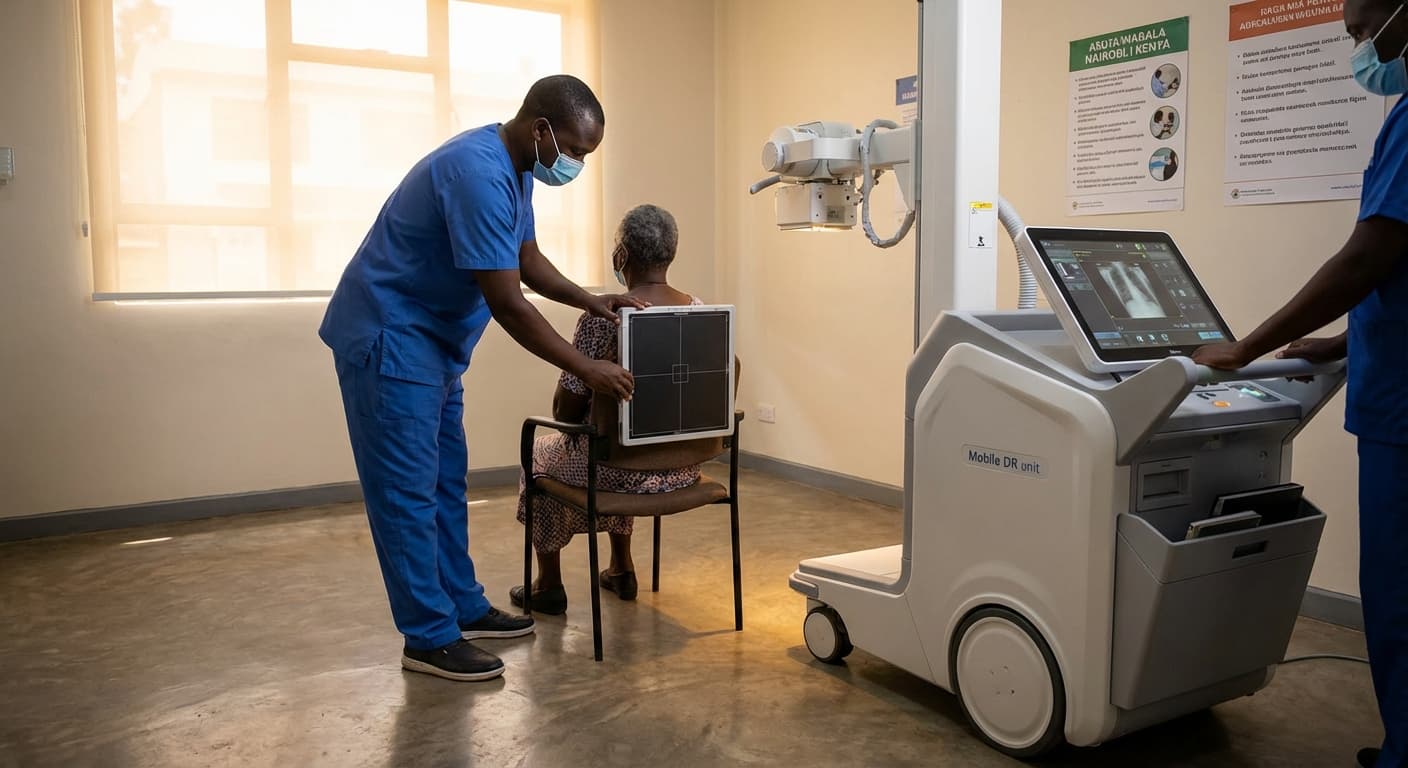
Digital X-Ray Installation Service (Mobile DR) in Congo (Kinshasa)
Engineering Excellence & Technical Support
Digital X-Ray Installation Service (Mobile DR) High-standard technical execution following OEM protocols and local regulatory frameworks.
Rapid Deployment for Critical Healthcare Needs
Our expert technicians can deploy advanced Mobile DR units in Kinshasa within [X] days, ensuring immediate access to vital diagnostic imaging for remote or underserved communities. We prioritize speed and efficiency to bridge critical healthcare gaps.
Advanced Mobile DR Technology Optimized for Kinshasa's Environment
We install state-of-the-art Mobile DR systems engineered for reliability and performance in Kinshasa's unique operational conditions. Our installations include robust power management solutions and intuitive user interfaces for seamless integration into existing healthcare workflows.
Comprehensive Training & Local Support Network
Beyond installation, we provide thorough on-site training for your medical staff on operating and maintaining the Mobile DR units. Our commitment extends to establishing a responsive local support network for ongoing technical assistance and spare parts availability in Kinshasa.
What Is Digital X-ray Installation Service (Mobile Dr) In Congo (Kinshasa)?
Digital X-ray installation service, specifically referring to Mobile Digital Radiography (DR) systems in Congo (Kinshasa), denotes the comprehensive process of deploying, configuring, and integrating portable X-ray equipment with digital imaging capabilities into healthcare facilities. This service ensures the operational readiness of these advanced diagnostic tools, enabling rapid and high-quality radiographic examinations at the point of care or in resource-constrained environments. Mobile DR systems, unlike fixed installations, offer flexibility in patient positioning and accessibility in diverse clinical settings, ranging from emergency departments and intensive care units to field hospitals and outreach programs. The service encompasses site assessment, system setup, calibration, software integration, network connectivity, and end-user training, ensuring compliance with relevant medical imaging and data security standards.
| Who Needs This Service? | Typical Use Cases in Congo (Kinshasa) |
|---|---|
| Hospitals and Clinics: Particularly those in urban and peri-urban areas seeking to upgrade from analog radiography or expand diagnostic imaging capabilities with greater flexibility. | Emergency Departments (ED): Rapid bedside imaging for trauma patients, critical care, and patients with mobility issues, reducing the need for patient transport to fixed X-ray rooms. |
| Field Hospitals and Mobile Medical Units: Providing essential diagnostic imaging services in remote or underserved areas, disaster relief operations, and public health outreach campaigns. | Intensive Care Units (ICU): Continuous patient monitoring and immediate radiographic assessments without disrupting critical care routines. Imaging of ventilated patients, port placements, and line insertions. |
| Diagnostic Imaging Centers: Enhancing service offerings with portable imaging solutions for home-bound patients or specialized imaging needs. | Military and Humanitarian Organizations: Deploying diagnostic capabilities in challenging operational environments or conflict zones where fixed infrastructure may be compromised or unavailable. |
| Research Institutions: Facilitating on-site radiographic studies in clinical or field settings for epidemiological research or medical interventions. | Maternal and Child Health Programs: Portable X-ray for evaluating pediatric conditions like pneumonia or for specific obstetric imaging needs in accessible locations. |
| Government Health Initiatives: Supporting national health programs requiring widespread access to diagnostic imaging, such as tuberculosis screening or skeletal surveys. | Trauma and Orthopedic Centers: Quick assessment of fractures, dislocations, and other musculoskeletal injuries at the point of care, improving patient management and reducing waiting times. |
Key Components of Digital X-Ray Installation Service (Mobile DR):
- Site Assessment and Planning: Evaluation of the intended deployment environment, power availability, space requirements, and network infrastructure to determine optimal placement and configuration for the mobile DR unit.
- Hardware Installation and Configuration: Physical setup of the mobile X-ray generator, detector (flat panel), acquisition workstation, and associated peripherals. This includes securing the equipment and ensuring proper power and data connections.
- Software Deployment and Integration: Installation and configuration of the Digital Imaging and Communications in Medicine (DICOM) compliant Picture Archiving and Communication System (PACS) or other imaging management software. Integration with existing hospital information systems (HIS) or electronic health records (EHR) is often a critical component.
- System Calibration and Quality Assurance: Rigorous calibration of the X-ray generator and detector to ensure accurate radiation output and image fidelity. Performance testing and image quality assessments are conducted to meet diagnostic standards.
- Network Connectivity and Security: Establishment of secure network connections for image transfer to PACS/HIS/EHR. Implementation of data encryption and access control measures to comply with privacy regulations (e.g., HIPAA-equivalent standards in local context).
- End-User Training and Support: Comprehensive training for radiographers, technologists, and relevant medical staff on the operation of the mobile DR system, image acquisition techniques, basic troubleshooting, and PACS utilization. Provision of initial technical support and documentation.
- Regulatory Compliance and Certification: Ensuring the installed system adheres to local and international standards for medical imaging equipment, radiation safety, and data handling. Assistance with obtaining necessary certifications or approvals.
Who Needs Digital X-ray Installation Service (Mobile Dr) In Congo (Kinshasa)?
The installation of mobile Digital Radiography (DR) systems in Congo (Kinshasa) is a critical service for enhancing diagnostic imaging capabilities, particularly in areas with limited infrastructure or for mobile healthcare units. These advanced systems offer immediate image acquisition and processing, reducing patient wait times and improving diagnostic accuracy. The service is essential for healthcare facilities seeking to modernize their X-ray services, overcome the challenges of traditional film-based radiography, and extend high-quality imaging to remote or underserved populations. The installation process involves not only the physical setup of the mobile DR unit but also calibration, training, and integration with existing hospital information systems (HIS) or Picture Archiving and Communication Systems (PACS).
| Department | Key Needs and Applications for Mobile DR |
|---|---|
| Radiology Department | Primary imaging service, need for immediate image availability, reduced patient throughput time, improved diagnostic workflow, digital archiving and retrieval, remote consultation capabilities. |
| Emergency Department (ER) | Rapid diagnosis of trauma (fractures, dislocations), assessment of acute conditions (pneumothorax, foreign bodies), immediate imaging for critically ill patients where moving them to a fixed radiology suite is difficult. |
| Intensive Care Unit (ICU) | Bedside imaging for critically ill patients to assess respiratory status (e.g., pneumonia, ARDS), check central line placement, evaluate for pneumothorax, and monitor lung conditions without patient transport. |
| Orthopedics Department | Imaging for fractures, dislocations, and post-operative assessments, especially in high-volume trauma centers or during orthopedic outreach clinics. |
| Internal Medicine / Pulmonology | Diagnosis and monitoring of lung diseases (pneumonia, tuberculosis, COPD exacerbations), assessment of pleural effusions, and follow-up imaging for patients with respiratory complaints. |
| Pediatrics Department | Bedside imaging for infants and children who may be difficult to move, diagnosis of common childhood ailments (e.g., pneumonia, fractures), and imaging for neonates in NICU settings. |
| Outreach / Mobile Healthcare Units | Providing diagnostic imaging services in remote areas, rural communities, or during public health campaigns where fixed imaging infrastructure is unavailable. Essential for screening programs (e.g., TB). |
| Surgical Departments | Pre-operative and post-operative imaging, especially for patients who are not yet mobile or are in recovery, to assess surgical outcomes and complications. |
Target Customers for Mobile DR Installation Service in Congo (Kinshasa)
- Public Hospitals and Clinics
- Private Hospitals and Diagnostic Centers
- Non-Governmental Organizations (NGOs) and Humanitarian Organizations
- Mobile Health Clinics and Outreach Programs
- Government Health Ministries and Regional Health Authorities
- Military Healthcare Facilities
- Research Institutions (for mobile clinical trials)
Digital X-ray Installation Service (Mobile Dr) Process In Congo (Kinshasa)
This document outlines the comprehensive workflow for the Digital X-Ray Installation Service (Mobile DR) in Congo (Kinshasa), from initial customer inquiry to successful system execution and handover. The process is designed to ensure efficiency, transparency, and customer satisfaction throughout the installation lifecycle.
| Phase | Key Activities | Responsible Parties | Deliverables/Outcomes | Notes/Considerations |
|---|---|---|---|---|
| Phase 1: Inquiry and Initial Consultation |
| Customer, Sales Representative (Supplier) | Understanding of customer requirements, preliminary quote, agreement on next steps. | Clear communication of system capabilities and limitations. Initial documentation of customer expectations. |
| Phase 2: Site Assessment and Planning |
| Technical Team (Supplier), Project Manager (Supplier), Customer Representative | Site assessment report, detailed project plan, finalized system configuration, binding quotation. | Address potential challenges like power stability, internet connectivity, and building access. Obtain necessary site access permissions. |
| Phase 3: Logistics and Procurement |
| Procurement Team (Supplier), Logistics Coordinator (Supplier), Customs Broker (Local Partner) | Shipped and cleared equipment, confirmed delivery at site, inventory of received components. | Factor in lead times for international shipping and potential customs delays. Engage a reliable local customs broker. |
| Phase 4: Installation and Configuration |
| Installation Engineers (Supplier), Technical Support (Supplier) | Physically installed and powered Mobile DR system, configured software. | Ensure proper grounding and electrical safety. Document all configuration settings. |
| Phase 5: Testing and Calibration |
| Installation Engineers (Supplier), Calibration Specialist (Supplier), Customer IT Personnel (if applicable) | System functionality confirmed, calibrated imaging parameters, successful PACS integration (if applicable), quality assurance report. | Perform tests with phantom objects. Ensure consistency in image acquisition. Verify data integrity for PACS integration. |
| Phase 6: Training and Handover |
| Training Specialist (Supplier), Project Manager (Supplier), Customer Staff (Users & Administrators) | Trained personnel, comprehensive system documentation, signed acceptance form. | Tailor training to different user groups. Provide accessible and practical training materials. |
| Phase 7: Post-Installation Support |
| Customer Support Team (Supplier), Field Service Engineers (Supplier) | Ongoing system reliability, prompt issue resolution, continued customer satisfaction. | Establish clear communication channels for support. Proactive maintenance is key to longevity. |
Digital X-Ray Installation Service (Mobile DR) Process - Congo (Kinshasa)
- Phase 1: Inquiry and Initial Consultation
- Phase 2: Site Assessment and Planning
- Phase 3: Logistics and Procurement
- Phase 4: Installation and Configuration
- Phase 5: Testing and Calibration
- Phase 6: Training and Handover
- Phase 7: Post-Installation Support
Digital X-ray Installation Service (Mobile Dr) Cost In Congo (Kinshasa)
Installing a Digital Radiography (DR) system, particularly a mobile DR unit, in Congo (Kinshasa) involves several cost considerations. The overall price will fluctuate based on the specific DR system chosen, the vendor, the complexity of the installation, and any required infrastructure upgrades. Mobile DR systems offer flexibility but can sometimes have a higher unit cost compared to fixed installations. This discussion will outline the key pricing factors and provide estimated cost ranges in the local currency, Congolese Franc (CDF).
| Cost Component | Estimated Range (CDF) | Notes |
|---|---|---|
| Mobile DR System (Unit Cost) | 35,000,000 - 150,000,000+ CDF | This is highly variable. New, high-end systems will be at the upper end. Refurbished or basic models will be lower. |
| Installation & Setup Services | 2,000,000 - 10,000,000 CDF | Includes technical setup, calibration, and basic integration. Complex integration or extensive training will increase this. |
| Training (Radiographers/Technicians) | 1,000,000 - 5,000,000 CDF | Per group or per training session. May be included in some vendor packages. |
| Ancillary Equipment (PACS/RIS, Shielding etc.) | 5,000,000 - 25,000,000+ CDF | Depends heavily on existing infrastructure. A full PACS/RIS system can be a significant investment. |
| Import Duties, Taxes & Logistics | 15% - 30% of CIF value | This is a significant variable. Consult with a customs broker for precise figures. |
| Total Estimated Installation Cost (Excluding System Unit) | 8,000,000 - 40,000,000+ CDF | This represents the costs around the DR system unit itself. |
| Overall Estimated Project Cost (Mobile DR Installed) | 43,000,000 - 190,000,000+ CDF | This is a broad range. A more precise quote requires specific system selection and vendor consultation. |
Key Pricing Factors for Mobile DR Installation in Congo (Kinshasa)
- DR System Unit Cost: This is the most significant factor. The price varies based on the manufacturer, image quality (detector size and resolution), software features, and whether it's a new or refurbished unit.
- Brand and Model: Reputable international brands (e.g., Siemens, GE, Philips, Fuji) will generally be more expensive than lesser-known or regional brands. Specific model features like wireless connectivity, advanced image processing, and portability options also impact cost.
- Vendor and Distributor: Prices can differ between authorized distributors and resellers. Local presence and support services offered by the vendor will also play a role.
- Installation Services: This includes the technical expertise required to set up the DR system, calibrate it, and integrate it with existing hospital IT infrastructure (if applicable). Specialized training for radiographers and technicians is often bundled or offered as an add-on.
- Infrastructure Requirements: While mobile DR units are designed for flexibility, they may still require power conditioning, stable internet connectivity (for PACS integration or remote viewing), and potentially minor modifications to existing spaces for optimal operation and storage.
- Ancillary Equipment: This could include PACS (Picture Archiving and Communication System) and RIS (Radiology Information System) if not already in place, lead shielding, and other accessories necessary for a complete and safe radiology department.
- Import Duties and Taxes: As Congo (Kinshasa) imports medical equipment, applicable customs duties, VAT, and other import-related taxes will significantly add to the landed cost.
- Logistics and Shipping: The cost of transporting the equipment from the point of origin to Kinshasa, including freight, insurance, and handling, will be factored in.
- Warranty and Service Agreements: Extended warranties and ongoing maintenance contracts can add to the initial investment but are crucial for ensuring system longevity and minimizing downtime.
- Currency Fluctuations: Exchange rates between the USD (often the currency of international medical equipment pricing) and the CDF can impact the final price.
Affordable Digital X-ray Installation Service (Mobile Dr) Options
Investing in a digital X-ray system, particularly a mobile Digital Radiography (DR) unit, offers significant advantages in terms of image quality, workflow efficiency, and reduced radiation dose. This service focuses on providing affordable installation options for these advanced systems. We understand that budget is a key consideration, so we've developed flexible packages and cost-saving strategies to make upgrading to mobile DR accessible for various healthcare facilities.
| Value Bundle Name | Key Components | Target Facility Size | Estimated Price Range (USD) | Key Cost-Saving Features |
|---|---|---|---|---|
| Essentials Package | Mobile DR Detector (wired/wireless option), Basic Workstation, Image Acquisition Software, Standard Installation & Training | Small Clinics, Private Practices, Emergency Rooms | $30,000 - $50,000 | Focus on core functionality, standard components, minimal customization. |
| Advanced Workflow Bundle | Mobile DR Detector (wireless preferred), Advanced Workstation with PACS Viewer, DICOM Connectivity, Extended Warranty, Comprehensive Installation & On-site Training | Medium-Sized Hospitals, Imaging Centers, Specialty Clinics | $50,000 - $80,000 | Bundled software and hardware for seamless integration, efficient training reduces operational ramp-up time. |
| Premium Mobility Solution | High-Resolution Wireless Mobile DR Detector, Portable X-ray Generator (integrated or separate), High-Performance Workstation with Advanced Image Processing Tools, Full PACS Integration, Network Setup, Extended Support Package | Large Hospitals, Trauma Centers, Mobile Imaging Services | $80,000+ | Includes cutting-edge technology for optimal image quality and performance, optimized for high-volume use. |
Key Benefits of Mobile DR Installation
- Enhanced Image Quality: Digital images offer superior detail and contrast compared to traditional film, leading to more accurate diagnoses.
- Improved Workflow Efficiency: Faster image acquisition, instant viewing, and PACS integration streamline the diagnostic process, reducing patient wait times.
- Reduced Radiation Dose: DR systems often require lower radiation exposure for patients and staff due to their higher sensitivity.
- Portability and Flexibility: Mobile DR units can be easily moved to patient locations (bedside, trauma bays), improving accessibility in critical care settings.
- Cost Savings: While an upfront investment, long-term savings are realized through reduced film and processing costs, and increased throughput.
- Digital Archiving and Retrieval: Eliminates physical storage needs and allows for quick access to patient history.
Verified Providers In Congo (Kinshasa)
Finding reliable and credentialed healthcare providers in Kinshasa can be a challenge. Franance Health is a leading organization committed to ensuring that all their affiliated providers meet rigorous standards, offering peace of mind to individuals seeking quality medical care. Their dedication to verification means patients can trust the expertise and qualifications of the professionals they encounter.
| Credential Type | Verification Standard | Benefit to Patient |
|---|---|---|
| Medical Licenses | Up-to-date and valid registration with relevant national and regional medical boards. | Ensures provider is legally permitted to practice medicine. |
| Educational Degrees & Certifications | Verification of authenticity of degrees, diplomas, and specialized certifications from accredited institutions. | Confirms foundational medical knowledge and specialized expertise. |
| Professional Experience | Thorough review of work history, including references and confirmation of practice duration. | Demonstrates practical application of skills and clinical judgment. |
| Specialty Board Certifications | Confirmation of successful completion of rigorous examinations and requirements for specialty boards. | Indicates advanced proficiency in a specific medical field. |
| Good Standing & Ethics | Background checks for any disciplinary actions or malpractice claims. | Assures ethical conduct and professional integrity. |
Why Franance Health Credentials Matter
- Rigorous Vetting Process: Franance Health employs a multi-stage vetting process that goes beyond basic licensing. This includes verifying educational backgrounds, specialized training, and professional experience.
- Continuous Professional Development: Affiliated providers are often required to demonstrate ongoing engagement in continuing education and professional development, ensuring they remain at the forefront of medical advancements.
- Patient-Centric Approach: Credentials often reflect a provider's commitment to ethical practice and patient well-being, a core value promoted by Franance Health.
- Access to Specialized Care: By partnering with highly qualified professionals, Franance Health facilitates access to a broader range of specialized medical services within Kinshasa.
- Reduced Risk of Medical Errors: Thorough credentialing contributes to a safer healthcare environment by minimizing the risk of unqualified practitioners providing care.
Scope Of Work For Digital X-ray Installation Service (Mobile Dr)
This Scope of Work (SOW) outlines the requirements for the professional installation of a Mobile Digital Radiography (DR) X-ray system. The service includes site assessment, system installation, configuration, testing, and user training to ensure the mobile DR unit is fully operational and integrated according to manufacturer specifications and client requirements.
| Technical Deliverable | Standard Specification / Requirement | Verification Method | Acceptance Criteria |
|---|---|---|---|
| Site Survey Report | Assessment of room dimensions, power availability (voltage, grounding, circuit breaker capacity), network infrastructure (Wi-Fi signal strength, Ethernet availability), environmental conditions (temperature, humidity), and potential obstructions. | On-site inspection, measurement, and documentation. | Report submitted within 3 business days of site visit, confirming suitability for installation. |
| Physical Installation | All components securely mounted and connected according to manufacturer's installation manual. Proper cable management ensuring safety and aesthetics. Mobile cart mobility tested. | Visual inspection, functional test of cart movement and component stability. | All components installed without damage. Cables neatly managed and secured. Cart moves freely and safely. |
| Electrical & Network Connectivity | Dedicated, properly grounded electrical outlets meeting system requirements. Stable Wi-Fi connection with signal strength > -70 dBm or wired Ethernet connection meeting 1 Gbps standards. Firewall rules configured if necessary. | Electrical outlet verification, Wi-Fi signal strength measurement, network connectivity ping tests, IP address configuration. | Power supply stable and within specified voltage range. Consistent network connectivity with adequate bandwidth and latency for image transfer. |
| System Configuration & Software Installation | Installation of DR acquisition software, PACS connectivity, DICOM conformity, patient registration setup, and image export settings as per client workflow. | Software installation verification, PACS connectivity test, DICOM conformance test, patient data entry and image retrieval test. | Software installed and configured correctly. Successful bidirectional communication with PACS. Patient data accurately captured and images correctly transmitted. |
| Calibration & Initial Testing | X-ray generator calibration, detector calibration (flat panel detector), AEC (if applicable) calibration. Initial image acquisition and quality check. | System diagnostic logs, image quality assessment using phantoms, generator output verification. | All calibration procedures completed successfully. Images acquired are of diagnostic quality with no artifacts. |
| Performance Verification & QA | System throughput testing (image acquisition to PACS), resolution testing (using resolution charts), contrast and noise level verification (using phantoms), dose monitoring and reporting. | Timing tests, resolution chart analysis, phantom image analysis for contrast/noise, dose report review. | System meets manufacturer's specified throughput. Resolution, contrast, and noise levels are within acceptable diagnostic ranges. Dose is within ALARA principles. |
| User Training | Comprehensive training for radiologists, technologists, and relevant staff on system operation, image acquisition techniques, troubleshooting, and basic maintenance. Training materials provided. | Observation of trainees during practical exercises, Q&A sessions. | All trainees demonstrate competency in operating the system for daily tasks. Training materials delivered. |
| Documentation & Handover | Final installation report, system user manual, warranty information, calibration certificates, and any client-specific configuration details. Formal sign-off from client representative. | Review of provided documentation, client walk-through and confirmation. | All required documentation provided and understood. Client formally accepts the installed system. |
Key Service Components
- Site assessment and preparation.
- Unpacking and physical installation of all system components (X-ray generator, detector, acquisition workstation, mobile cart, power supply, cabling).
- Electrical and network connectivity setup.
- System configuration and software installation.
- Calibration and initial testing.
- Performance verification and quality assurance.
- User training and system handover.
- Post-installation support and documentation.
Service Level Agreement For Digital X-ray Installation Service (Mobile Dr)
This Service Level Agreement (SLA) outlines the response times and uptime guarantees for the Digital X-Ray Installation Service (Mobile DR). This SLA is an integral part of the Master Services Agreement between [Your Company Name] ("Provider") and [Client Company Name] ("Client").
| Service Component | Response Time (Business Hours) | Uptime Guarantee (Post-Installation & Acceptance) | Notes |
|---|---|---|---|
| Initial Installation & Configuration | As per project timeline in SOW | N/A | Focus is on successful initial deployment. Uptime guarantees commence after acceptance. |
| Critical System Failure (Complete Inoperability) | Within 2 business hours of verified report | 99.5% (monthly) | Critical failure means the entire Mobile DR system is non-functional, preventing any imaging. |
| Major System Malfunction (Limited Functionality) | Within 4 business hours of verified report | 99.0% (monthly) | Major malfunction means key components are not working, significantly impacting imaging workflow but not causing complete shutdown. |
| Minor System Issue (Performance Degradation) | Within 8 business hours of verified report | N/A | Minor issues include performance slowdowns or non-critical feature malfunctions. Resolution may involve remote troubleshooting or scheduling a technician. |
| Remote Support & Troubleshooting | Within 4 business hours during business hours | N/A | Applies to issues identifiable and resolvable remotely. |
Service Description
- Provider shall install and configure the Mobile Digital Radiography (DR) X-ray system at the Client's designated facility according to the specifications outlined in the Statement of Work (SOW).
- This SLA covers the initial installation, setup, calibration, and basic training for the Mobile DR system.
- It does not cover ongoing maintenance, repairs, software updates beyond the initial installation, or user-specific application support not explicitly stated in the SOW.
Frequently Asked Questions

Ready when you are
Let's scope your Digital X-Ray Installation Service (Mobile DR) in Congo (Kinshasa) project in Congo (Kinshasa).

Scaling healthcare logistics and technical systems across the entire continent.