
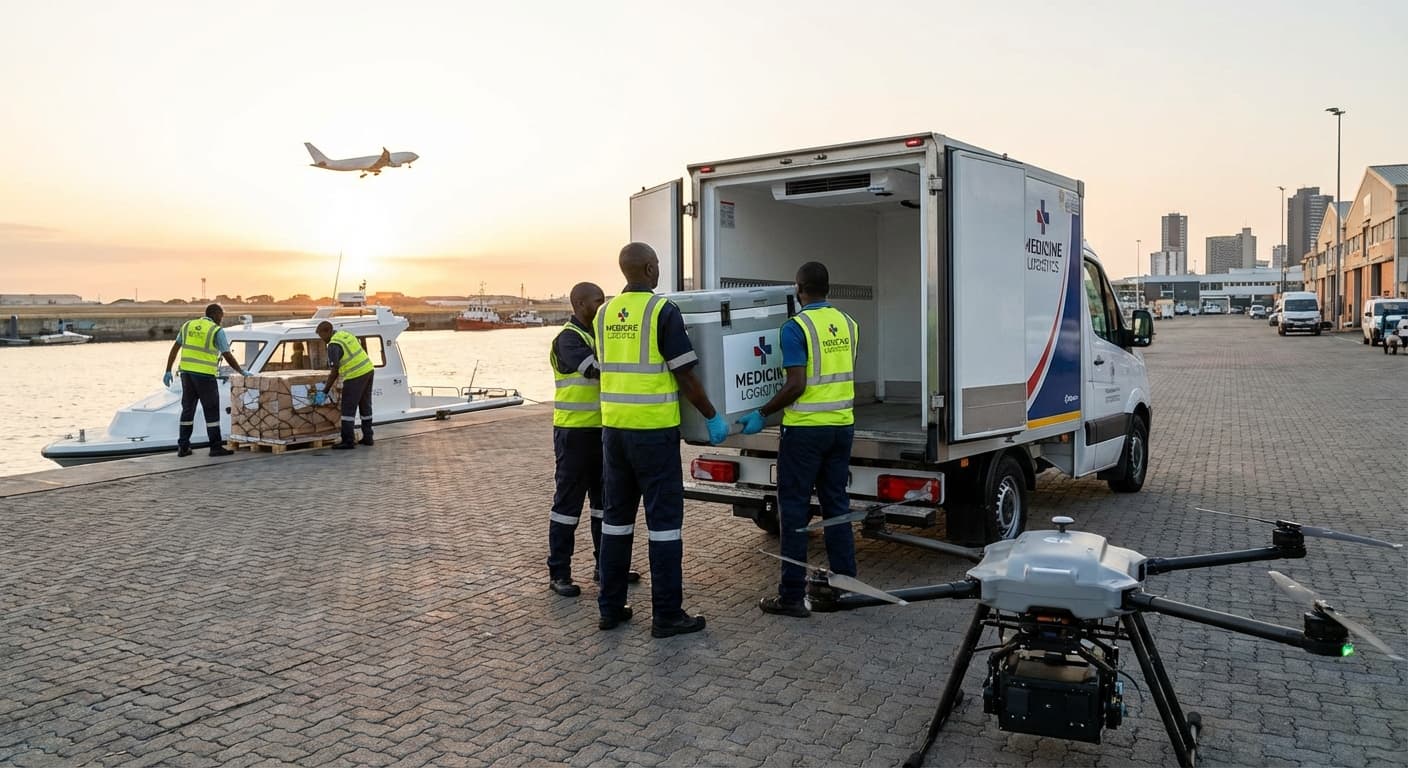
Door-to-Door Medical Logistics Coordination Service (Air/Sea/Road) in Congo (Kinshasa)
Engineering Excellence & Technical Support
Door-to-Door Medical Logistics Coordination Service (Air/Sea/Road) High-standard technical execution following OEM protocols and local regulatory frameworks.
Expedited Air Cargo for Critical Medical Supplies
Leveraging strategically located air hubs and dedicated charter flights, we ensure rapid transit of temperature-sensitive pharmaceuticals, vaccines, and emergency medical equipment from Kinshasa to remote or hard-to-reach health facilities across the DRC, minimizing spoilage and maximizing patient access.
Robust Sea Freight Solutions for Large-Scale Medical Aid
Optimizing maritime routes and port clearances, we manage the secure and cost-effective transportation of bulk medical supplies, hospital equipment, and humanitarian aid shipments arriving in Congo via sea. Our expertise mitigates transit times and ensures seamless last-mile delivery from major ports like Matadi.
Integrated Road Network for Last-Mile Health Delivery
Utilizing a fleet of specialized, climate-controlled vehicles and trained logistics personnel, we provide reliable and secure door-to-door delivery of medical supplies to rural clinics and community health centers. Our real-time tracking and secure chain-of-custody protocols guarantee the integrity of every shipment.
What Is Door-to-door Medical Logistics Coordination Service (Air/sea/road) In Congo (Kinshasa)?
Door-to-door medical logistics coordination service in Congo (Kinshasa) refers to a comprehensive, end-to-end supply chain management solution for medical goods, encompassing their retrieval from the origin point (door) and final delivery to the designated healthcare facility or patient's residence (door). This service integrates air, sea, and road transportation modes, along with warehousing, customs clearance, and specialized handling requirements, to ensure the timely, secure, and compliant movement of pharmaceuticals, medical devices, biological samples, and other healthcare-related products. The coordination aspect is paramount, involving the seamless orchestration of multiple service providers, regulatory bodies, and stakeholders to overcome the complex logistical challenges inherent in the Democratic Republic of Congo's infrastructure and operational environment.
| Service Provider/Entity | Requirement/Need | Role in Service Coordination |
|---|---|---|
| Hospitals and Clinics (Public/Private) | Reliable access to critical medications, medical equipment, and supplies; reduction in stockouts; improved patient care outcomes. | Primary beneficiaries requiring consistent and predictable delivery of medical consumables and pharmaceuticals. |
| Pharmaceutical Manufacturers and Distributors | Efficient and compliant distribution of products; market access; supply chain integrity; avoidance of product spoilage. | Initiators of the supply chain, requiring end-to-end management from manufacturing site to end-user. |
| Non-Governmental Organizations (NGOs) and International Aid Agencies | Delivery of essential medicines and medical supplies to remote or underserved populations; emergency medical response; program implementation. | Key clients operating in challenging environments, necessitating robust and adaptable logistical solutions. |
| Diagnostic Laboratories | Timely transport of biological samples for testing; delivery of diagnostic kits and reagents. | Critical component for healthcare diagnostics, requiring specialized and rapid transport. |
| Government Health Ministries | Ensuring the availability of essential medicines and vaccines nationwide; managing national health commodity stockpiles; public health program support. | Oversight and strategic coordination of the national medical supply chain. |
| Research Institutions | Transport of specialized reagents, equipment, and biological materials for research purposes. | Niche users requiring precise and controlled logistical operations. |
| Patients (for home-based care) | Delivery of prescribed medications and medical devices directly to their residence. | End-users benefiting from direct-to-patient delivery models, particularly for chronic conditions. |
Key Components of Door-to-Door Medical Logistics Coordination Service
- Origin pickup and consolidation of medical goods.
- International and domestic freight forwarding (air, sea, road).
- Cold chain management and temperature-controlled transportation.
- Customs brokerage and regulatory compliance facilitation.
- Warehousing and inventory management.
- Last-mile delivery to final destination.
- Real-time tracking and visibility of shipments.
- Risk management and contingency planning.
- Specialized handling for hazardous or sensitive materials.
Who Needs Door-to-door Medical Logistics Coordination Service (Air/sea/road) In Congo (Kinshasa)?
Door-to-door medical logistics coordination services, encompassing air, sea, and road transport, are crucial for ensuring timely and secure delivery of medical supplies, equipment, and personnel in Congo (Kinshasa). These services address the unique challenges of the region, including vast distances, underdeveloped infrastructure, and potential security concerns. They offer end-to-end management, from initial planning and sourcing to final delivery and customs clearance, minimizing risks and optimizing efficiency. This comprehensive approach is vital for healthcare providers, humanitarian organizations, and government agencies operating within or supplying to the Democratic Republic of Congo.
| Customer Type | Key Departments/Functions Involved | Specific Logistics Needs |
|---|---|---|
| Hospitals and Healthcare Facilities | Procurement, Pharmacy, Supplies Management, Emergency Department, Operating Theatre | Just-in-time delivery of pharmaceuticals, vaccines, disposables, specialized equipment; emergency resupply. |
| Pharmaceutical Companies and Distributors | Supply Chain Management, Logistics, Warehousing, Sales & Marketing | Bulk transport of finished products and raw materials, temperature-controlled shipments, last-mile delivery to pharmacies and clinics. |
| Medical Device Manufacturers and Suppliers | Logistics, Technical Support, Sales, Installation Teams | Delivery of high-value equipment, fragile items, installation support, return logistics for repairs. |
| NGOs and Humanitarian Aid Agencies | Program Management, Logistics & Supply Chain, Procurement, Medical Teams | Transport of essential medicines, surgical kits, hygiene supplies, tents, and equipment to remote areas, often in challenging conditions. |
| Government Health Ministries and Agencies | Public Health Programs, Disease Surveillance, Procurement, National Medical Stores | Distribution of national vaccine stockpiles, essential medicines for public health campaigns, epidemic response supplies. |
| Research and Development Institutions | Research Coordinators, Lab Managers, Procurement, Facilities Management | Transport of sensitive biological samples, research reagents, specialized laboratory equipment, maintaining cold chain integrity. |
| International Health Organizations | Country Offices, Program Managers, Logistics Officers | Coordinated delivery of project-specific medical supplies, equipment for health interventions, and support for national health programs. |
Target Customers and Departments for Door-to-Door Medical Logistics Coordination Service in Congo (Kinshasa)
- Hospitals and Healthcare Facilities: Both public and private institutions requiring regular or emergency delivery of medicines, vaccines, medical devices, and specialized equipment.
- Pharmaceutical Companies and Distributors: Businesses needing to transport bulk medicines, finished drug products, and raw materials across the country and internationally to reach consumers and healthcare providers.
- Medical Device Manufacturers and Suppliers: Companies delivering diagnostic equipment, surgical instruments, hospital furniture, and other critical medical technology.
- Non-Governmental Organizations (NGOs) and Humanitarian Aid Agencies: Organizations involved in providing healthcare services, emergency relief, and public health initiatives, often transporting large volumes of medical supplies to remote and underserved areas.
- Government Health Ministries and Agencies: National and regional health authorities responsible for public health programs, disease control initiatives, and maintaining national medical stockpiles.
- Research and Development Institutions: Universities, research centers, and clinical trial organizations requiring the transport of biological samples, research equipment, and specialized reagents.
- International Health Organizations (e.g., WHO, UNICEF): Bodies coordinating and implementing health programs within the DRC, necessitating reliable logistics for their initiatives.
- Emergency Medical Services (EMS) Providers: Organizations needing rapid and dependable transport of critical medical equipment and supplies for emergency response.
- Medical Training and Education Institutions: Facilities requiring the delivery of anatomical models, simulation equipment, and other educational resources.
Door-to-door Medical Logistics Coordination Service (Air/sea/road) Process In Congo (Kinshasa)
This document outlines the comprehensive door-to-door medical logistics coordination service workflow for air, sea, and road transportation within Congo (Kinshasa). The service encompasses all stages from initial client inquiry to the final delivery and confirmation of medical goods, ensuring efficient, secure, and compliant transit.
| Stage | Description | Key Activities | Responsible Party(ies) | Deliverables |
|---|---|---|---|---|
| The process begins with a client expressing a need for medical logistics services. This stage involves understanding the specific requirements of the shipment. | Receive client inquiry (phone, email, web form). Understand nature of medical goods (temperature-sensitive, hazardous, etc.). Determine origin, destination, quantity, urgency, and budget. Identify regulatory requirements. | Client, Logistics Coordinator | Initial understanding of shipment requirements. |
| Based on the assessed needs, a detailed quotation is prepared and, upon acceptance, a formal agreement is established. | Calculate costs (transportation, customs, handling, insurance, etc.). Prepare detailed quotation with service inclusions/exclusions. Negotiate terms and pricing. Issue service agreement. Receive signed agreement and advance payment (if applicable). | Logistics Coordinator, Finance Department, Client | Formal quotation. Signed service agreement. Initial payment confirmation. |
| Meticulous planning and preparation of all necessary documentation are crucial for smooth transit, especially for medical goods with specific regulations. | Develop a detailed logistics plan (mode of transport, routes, schedules). Obtain all necessary permits and licenses (e.g., import/export permits, health certificates, special handling permits). Prepare shipping documents (Bill of Lading/Air Waybill, commercial invoice, packing list, certificates of origin, SDS for hazardous materials). Arrange for specialized packaging and labeling (e.g., cold chain). Coordinate insurance. | Logistics Coordinator, Documentation Specialist, Client (for specific documents), Regulatory Affairs | Approved logistics plan. Complete and accurate shipping documentation. Valid permits and licenses. Insurance certificate. |
| The medical goods are collected from the origin and prepared for onward transportation. Consolidation may occur if multiple shipments are being handled for the same client or destination. | Schedule pick-up from client's facility or designated point. Supervise loading and ensure proper handling. Verify quantity and condition of goods against packing list. Consolidate goods if necessary. Secure goods for transit. | Logistics Coordinator, Warehouse Staff, Drivers/Handlers | Collected and secured medical goods. Updated inventory records. |
| The actual movement of medical goods from origin to destination using the chosen mode(s) of transport. | Book space on aircraft, vessels, or trucks. Track shipments in real-time. Monitor environmental conditions (temperature, humidity) for cold chain shipments. Manage any transit delays or disruptions. Coordinate intermodal transfers. | Logistics Coordinator, Transport Providers (Airlines, Shipping Lines, Trucking Companies), Monitoring Teams | Goods in transit. Real-time tracking updates. Temperature monitoring reports (if applicable). |
| Navigating the complex customs procedures at the point of entry into Congo (Kinshasa) is a critical and often challenging step. | Submit all required documentation to customs authorities. Facilitate customs inspections. Pay applicable duties and taxes. Resolve any customs queries or discrepancies. Obtain customs release. | Logistics Coordinator, Customs Broker, Customs Authorities, Client (for specific information) | Cleared goods from customs. Customs release documentation. |
| The final leg of the journey, ensuring the secure and timely delivery of medical goods to the ultimate recipient. | Plan and execute the final delivery route. Use specialized vehicles for sensitive cargo. Supervise unloading. Verify recipient's identity. Ensure safe transfer of goods. | Logistics Coordinator, Delivery Drivers/Teams, Client Representative | Medical goods delivered to the final destination. |
| Confirmation of successful delivery and comprehensive reporting to the client. | Obtain signed Proof of Delivery (POD) from the recipient. Conduct a post-delivery quality check. Prepare a comprehensive final report detailing the entire logistics process, including any incidents or deviations. Issue final invoice. | Logistics Coordinator, Client Representative, Finance Department | Signed POD. Final logistics report. Final invoice. Client satisfaction confirmation. |
Key Stages of the Medical Logistics Coordination Service
- Inquiry and Needs Assessment
- Quotation and Agreement
- Pre-shipment Planning and Documentation
- Collection and Consolidation
- Transportation (Air/Sea/Road)
- Customs Clearance
- Last-Mile Delivery
- Proof of Delivery and Reporting
Door-to-door Medical Logistics Coordination Service (Air/sea/road) Cost In Congo (Kinshasa)
Coordinating door-to-door medical logistics, encompassing air, sea, and road transport, in Congo (Kinshasa) is a complex undertaking with significant cost implications. The Democratic Republic of Congo presents unique challenges, including underdeveloped infrastructure, bureaucratic hurdles, security concerns, and varying geographical accessibility. These factors directly influence the pricing of such services. The cost is not standardized and is highly dependent on a multitude of factors. This service is crucial for the timely and safe delivery of essential medical supplies, equipment, and pharmaceuticals, especially in remote or underserved regions.
| Logistics Service Component | Estimated Cost Range (Congolese Francs - CDF) - Indicative | Notes |
|---|---|---|
| Local Road Transport (within Kinshasa, per km/trip) | 50,000 - 250,000 CDF | Varies greatly by vehicle type, distance, and road conditions. |
| Inter-city/Regional Road Transport (per km/trip) | 75,000 - 400,000+ CDF | Dependent on distance, road quality, and security. Can involve multiple vehicles. |
| Air Freight (per kg, exclusive of origin/destination charges) | 15,000 - 50,000+ CDF | Highly variable based on airline, urgency, and route. Bulk discounts may apply. |
| Sea Freight (per TEU/FEU, exclusive of port charges) | 2,000,000 - 8,000,000+ CDF | For international shipments to Matadi. Port handling, customs, and onward transport are additional. |
| Customs Clearance & Brokerage Fees | 300,000 - 2,000,000+ CDF | Can be a significant portion, depending on shipment value and complexity. May include facilitation fees. |
| Cargo Insurance (percentage of value) | 1% - 5% of goods value | Mandatory for valuable medical supplies. Rates depend on risk profile. |
| Cold Chain Management (specialized handling, per day/shipment) | 100,000 - 1,000,000+ CDF | Includes specialized equipment, temperature monitoring, and trained personnel. |
| Documentation and Permits | 50,000 - 500,000+ CDF | Varies by type of medical goods and required permits. |
| Coordination & Management Fee (percentage of total logistics cost) | 10% - 25% | Charged by the logistics coordinator for their expertise, network, and oversight. |
Key Pricing Factors for Door-to-Door Medical Logistics Coordination in Congo (Kinshasa):
- Nature of Goods: Perishable items (vaccines, blood products) require cold chain management, specialized packaging, and expedited transport, all of which increase costs. High-value or hazardous materials also incur higher insurance and handling fees.
- Volume and Weight: Larger and heavier shipments naturally incur higher freight charges across all modes of transport.
- Origin and Destination: Proximity to major ports (like Matadi) and airports (like N'djili International Airport) significantly impacts road transport costs. Remote locations within DRC, requiring extensive road or even local air/boat transport, will be considerably more expensive.
- Mode of Transport: Airfreight is the most expensive but fastest, essential for time-sensitive medical items. Sea freight is the most economical for bulk goods but takes much longer. Road transport is common but can be unreliable and slow due to road conditions.
- Urgency and Transit Time: Expedited services, especially for air cargo, command premium pricing. Standard transit times are more cost-effective.
- Customs Clearance and Documentation: Navigating DRC's customs procedures can be time-consuming and costly. The efficiency of the logistics provider in handling these aspects is a major factor. Unexpected duties, taxes, and import permits add to the overall expense.
- Insurance: Comprehensive insurance covering the value of the medical goods and potential transit risks is mandatory and contributes to the cost.
- Security and Risk Mitigation: In certain regions, security escorts or specialized handling might be necessary, leading to additional expenses.
- Warehousing and Storage: If intermediate warehousing is required, either at origin, transit points, or destination, storage fees will apply.
- Local Handling and Last-Mile Delivery: The complexity of last-mile delivery, especially in areas with poor road infrastructure, often involves specialized vehicles, local partnerships, and significant labor, all impacting the final price.
- Service Provider's Expertise and Network: Established logistics providers with strong local networks, established relationships with authorities, and proven track records in handling medical cargo in DRC often charge higher, but justified, fees due to their reliability and ability to mitigate risks.
Affordable Door-to-door Medical Logistics Coordination Service (Air/sea/road) Options
Our affordable door-to-door medical logistics coordination service offers flexible and cost-effective solutions for the transportation of medical supplies, equipment, and specimens. We understand the critical nature of medical shipments and strive to provide reliable, timely, and budget-friendly options across air, sea, and road. Our services are designed to optimize your supply chain, reduce transit times, and minimize costs without compromising on the safety and integrity of your valuable medical cargo.
| Service Tier | Description | Key Features | Estimated Cost Savings | Ideal For |
|---|---|---|---|---|
| Economy Connect | Our most budget-friendly option, focusing on efficiency and consolidated shipments. | Standard transit times, route optimization, consolidated shipping, basic tracking. | Up to 20% on standard shipments. | Non-urgent supplies, routine equipment transfers, large volume shipments with flexible timelines. |
| Standard Care | A balanced approach offering a good mix of speed, reliability, and cost-effectiveness. | Flexible transit times (expedited/standard options), optimized routing, volume discounts, enhanced tracking, basic risk mitigation. | Up to 15% on mixed urgency shipments. | Regular medical supplies, moderate urgency equipment, inter-facility transfers, research materials. |
| Priority Express | Designed for urgent shipments requiring expedited transit with comprehensive care. | Expedited transit, dedicated vehicle/flight options, real-time 24/7 monitoring, advanced temperature control, premium packaging consultation, priority risk mitigation. | Focus on minimizing transit time and potential loss, cost savings through avoided delays and spoilage. | Life-saving medications, critical diagnostic samples, emergency equipment, urgent transplant materials. |
Value Bundles and Cost-Saving Strategies
- Consolidated Shipments: Grouping multiple smaller shipments into a single, larger consignment to reduce individual handling and transportation fees.
- Optimized Route Planning: Leveraging our extensive network and advanced logistics software to identify the most efficient and cost-effective routes for each shipment.
- Flexible Transit Times: Offering a range of transit options from expedited to standard, allowing you to balance speed with budget constraints.
- Strategic Warehousing: Utilizing strategically located warehouses for temporary storage and consolidation, reducing last-mile delivery costs and transit durations.
- Volume Discounts: Rewarding loyal clients and those with consistent shipping volumes with preferential pricing.
- Packaging Optimization: Providing guidance and solutions for efficient and protective packaging to minimize damage and reduce dimensional weight charges.
- Negotiated Carrier Rates: Leveraging our strong relationships with air, sea, and road carriers to secure competitive rates on your behalf.
- Real-time Tracking and Visibility: Offering advanced tracking systems to provide transparency and allow for proactive management, preventing costly delays.
- Dedicated Account Management: Assigning a dedicated logistics specialist to understand your specific needs and identify further cost-saving opportunities.
- Risk Mitigation Services: Including options for specialized insurance and temperature-controlled transport to protect against potential loss or spoilage, saving on replacement costs.
Verified Providers In Congo (Kinshasa)
In the Democratic Republic of Congo (Kinshasa), navigating the healthcare landscape can be challenging. Ensuring you are receiving care from legitimate and qualified professionals is paramount. Franance Health has emerged as a leading provider, distinguished by its rigorous credentialing process and unwavering commitment to patient well-being. This commitment translates into a superior healthcare experience, making Franance Health the optimal choice for individuals seeking trusted medical services.
| Franance Health Credentialing Aspect | Benefit to Patients in Congo (Kinshasa) | Example of Verification |
|---|---|---|
| License Verification | Ensures providers are legally authorized to practice medicine. | Cross-referencing with the Ministry of Health's official registry. |
| Educational Qualification Validation | Confirms providers have completed accredited medical programs. | Review of diplomas and certificates from recognized institutions. |
| Specialty Board Certification | Identifies physicians with advanced training in specific medical fields. | Verification of certificates from recognized specialty boards. |
| Reference Checks | Gathers insights into a provider's professional conduct and patient interactions. | Contacting previous employers or professional colleagues. |
| Background Checks | Ensures a safe and trustworthy healthcare environment. | Review of any disciplinary actions or criminal records (where applicable and legally permissible). |
Why Franance Health Credentials Stand Out:
- Rigorous Verification Process: Franance Health employs a multi-faceted verification system that goes beyond basic checks. They meticulously validate medical licenses, educational qualifications, and professional affiliations of all their healthcare providers. This ensures that only genuinely qualified and experienced practitioners are part of their network.
- Specialized Expertise Focus: Beyond general qualifications, Franance Health prioritizes identifying providers with specialized expertise relevant to the diverse healthcare needs within Congo (Kinshasa). This means patients can find specialists in areas like pediatrics, obstetrics, cardiology, and more, all vetted by Franance Health.
- Ongoing Performance Monitoring: The commitment to quality doesn't end with initial credentialing. Franance Health actively monitors the performance and patient feedback of its affiliated providers, ensuring continued adherence to high standards of care and ethical practice.
- Adherence to International Standards: Franance Health strives to align its credentialing practices with internationally recognized benchmarks for healthcare provider qualification, offering a level of assurance often sought by those accustomed to global healthcare norms.
- Transparency and Accessibility: Franance Health is dedicated to providing patients with clear information about their providers' credentials, empowering them to make informed decisions about their healthcare. This transparency builds trust and confidence.
Scope Of Work For Door-to-door Medical Logistics Coordination Service (Air/sea/road)
This Scope of Work (SOW) outlines the requirements for a Door-to-Door Medical Logistics Coordination Service, encompassing air, sea, and road transportation. The service provider will be responsible for the end-to-end coordination of medical cargo, ensuring safe, timely, and compliant transit from origin to destination. This includes planning, booking, tracking, customs clearance, and last-mile delivery of various medical supplies, pharmaceuticals, and equipment. The service must adhere to stringent quality control measures and regulatory requirements relevant to medical logistics.
| Technical Deliverable | Description | Standard Specifications / Requirements | Measurement / Verification |
|---|---|---|---|
| Logistics Plan | Detailed plan for each shipment, including mode selection, routing, transit times, and risk assessment. | Must include carrier selection criteria, contingency plans, and adherence to temperature/handling requirements. Optimized for cost and transit time. | Submitted prior to shipment initiation. Verified against actual transit execution and client approval. |
| Booking Confirmation | Confirmation of all booked transportation legs (air, sea, road). | Includes carrier name, flight/voyage/truck number, departure/arrival times, and reference numbers. Must be provided within 24 hours of booking request. | Digital confirmation documents. Verified against carrier manifests. |
| Real-time Tracking Data | Continuous updates on the location and status of the shipment. | Minimum update frequency of every 4 hours for air/road, and every 12 hours for sea. Accessible via a web-based portal or API. | Web portal access, API integration, regular status reports. |
| Temperature Monitoring Reports | Records of temperature data during transit for temperature-sensitive cargo. | Continuous logging with data points recorded at least every 30 minutes. Data must be tamper-proof and compliant with GDP. | Digital temperature logs, deviation reports. Verified by audit of data and equipment. |
| Customs Clearance Documentation | All necessary documentation for customs clearance at origin and destination. | Includes commercial invoice, packing list, certificate of origin, import/export permits, and any specific medical declarations. 100% accuracy and completeness required. | Verified by customs authorities and client review. |
| Proof of Delivery (POD) | Confirmation of successful delivery to the final destination. | Signed POD by authorized recipient, including date, time, and recipient's name/signature. Digital POD with photographic evidence preferred. | Digital POD records, client confirmation. |
| Incident Report | Detailed report for any deviations, damage, loss, or delays. | Includes cause analysis, impact assessment, corrective actions taken, and proposed preventive measures. Submitted within 12 hours of incident discovery. | Written report, reviewed by client. Follow-up on corrective actions. |
| Final Shipment Report | Comprehensive report summarizing the entire logistics process for a shipment. | Includes all executed stages, actual transit times, costs incurred, any incidents, and performance against KPIs. Provided within 7 days of final delivery. | Digital report, client sign-off. |
| Performance Metrics Report | Regular reports on key performance indicators (KPIs) for the service. | Includes on-time delivery rate, damage rate, cost per shipment, customer satisfaction scores. Monthly reporting. | Digital report with data analytics. Verified against raw data. |
Key Responsibilities and Service Components
- Comprehensive logistics planning and route optimization (air, sea, road).
- Procurement and management of transportation carriers and freight forwarders.
- Real-time tracking and proactive communication throughout the transit process.
- Temperature-controlled and specialized handling for sensitive medical cargo.
- Customs brokerage and documentation management for international shipments.
- Warehousing and distribution solutions as required.
- Risk assessment and mitigation for all transportation modes.
- Adherence to Good Distribution Practices (GDP) and relevant healthcare regulations.
- Emergency logistics response capabilities.
- Reporting and performance analytics.
Service Level Agreement For Door-to-door Medical Logistics Coordination Service (Air/sea/road)
This Service Level Agreement (SLA) outlines the response times and uptime guarantees for the Door-to-Door Medical Logistics Coordination Service (Air/Sea/Road) provided by [Your Company Name] (hereinafter referred to as "Provider"). This SLA aims to ensure reliable and timely coordination of medical shipments, minimizing disruption and maximizing the efficiency of critical medical supply chains.
| Service Component | Response Time (Maximum) | Uptime Guarantee (Minimum) | Notes |
|---|---|---|---|
| 24/7 Client Support Line Accessibility | 15 minutes for acknowledgment and initial assessment | 99.9% | Applies to all incoming calls and emails requesting coordination. |
| Initial Coordination Plan for Critical Shipments | 30 minutes from notification | N/A (Focus on response time) | Includes initial route planning, carrier selection, and risk assessment. |
| Initial Coordination Plan for Urgent Shipments | 60 minutes from notification | N/A (Focus on response time) | Includes preliminary route planning and carrier identification. |
| Initial Coordination Plan for Standard Shipments | 2 business hours from notification | N/A (Focus on response time) | Includes booking confirmation and tracking initiation. |
| Real-time Shipment Tracking Updates (via portal/email) | Within 15 minutes of actual event (e.g., departure, arrival, delay) | 99.5% | Applies to all tracked shipments that have commenced transit. |
| Proactive Delay Notification and Mitigation | Immediately upon detection of a significant delay impacting delivery window | N/A (Focus on proactive notification) | Provider will propose alternative solutions. |
| Emergency Issue Resolution (e.g., lost shipment, critical delay) | 1 hour for dedicated incident management team engagement | N/A (Focus on rapid response) | Initiates a dedicated team to resolve the issue. |
| Coordination System & Communication Channel Availability | N/A (Continuous monitoring) | 99.9% | Applies to the client portal, dedicated email, and phone lines. |
Key Service Definitions
- Operational Hours: 24/7/365 (all day, every day, including public holidays).
- Critical Shipment: A shipment containing life-saving medications, organs for transplant, essential medical equipment requiring immediate deployment, or any shipment designated as critical by the client.
- Urgent Shipment: A shipment requiring expedited handling and coordination due to a pressing medical need, but not immediately life-threatening.
- Standard Shipment: A shipment with a defined delivery window that does not fall under Critical or Urgent categories.
- Response Time: The maximum time allowed for the Provider to acknowledge and begin actively addressing a client request or issue.
- Uptime Guarantee: The percentage of time the Provider's core coordination systems and communication channels are operational and accessible to the client.
Frequently Asked Questions

Ready when you are
Let's scope your Door-to-Door Medical Logistics Coordination Service (Air/Sea/Road) in Congo (Kinshasa) project in Congo (Kinshasa).

Scaling healthcare logistics and technical systems across the entire continent.