
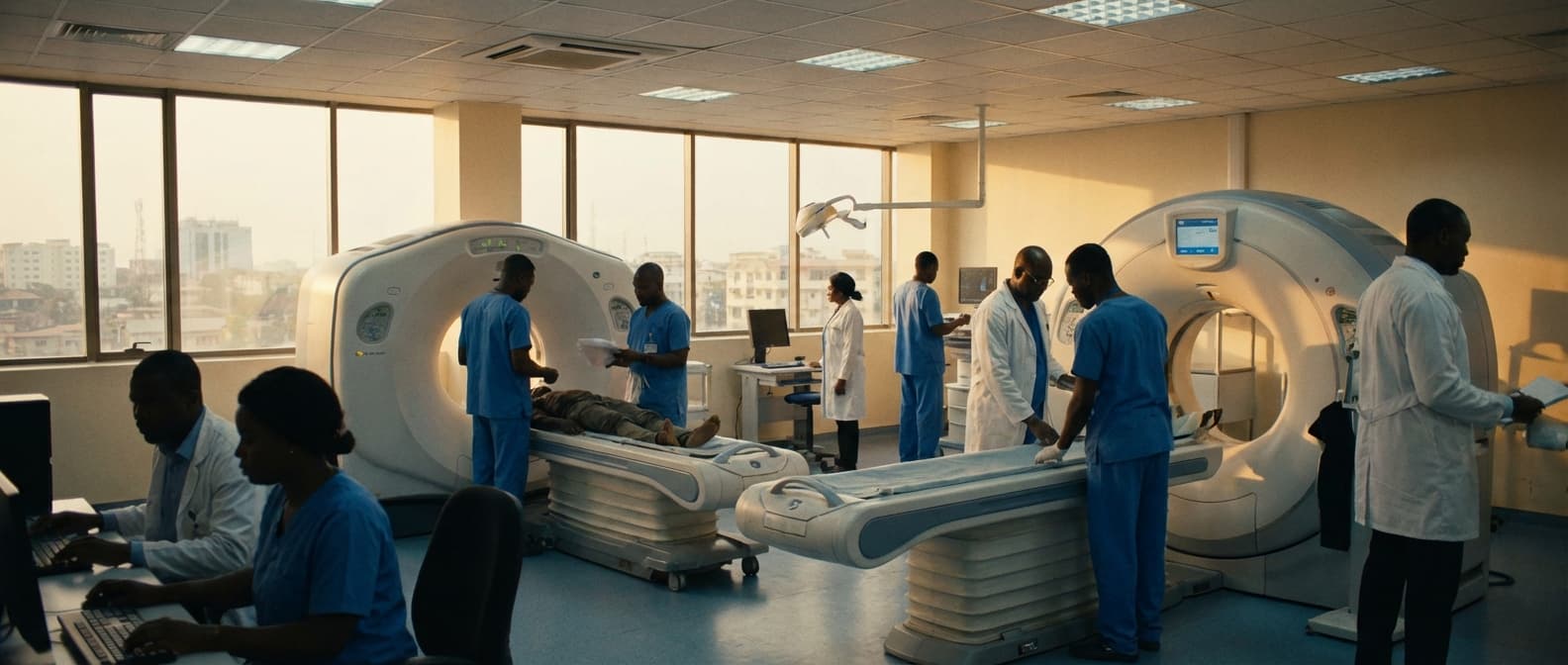
Imaging Acceptance Testing & QA in Congo (Kinshasa)
Engineering Excellence & Technical Support
Commissioning and periodic QA for CT/MRI/X‑ray/US/Mammo. High-standard technical execution following OEM protocols and local regulatory frameworks.
Advanced Image Quality Validation
Rigorous testing of imaging equipment (X-ray, CT, Ultrasound, MRI) using calibrated phantoms and industry-standard protocols to ensure optimal diagnostic image quality, resolution, contrast, and noise levels. Verification of adherence to DICOM standards and local regulatory requirements.
Workflow & Integration Assurance
End-to-end testing of imaging workflows, from patient registration and image acquisition to PACS integration, reporting, and archiving. Validation of seamless data flow, interoperability with existing hospital IT systems, and user interface intuitiveness for clinical staff.
Compliance & Security Audits
Comprehensive audits of imaging systems to ensure compliance with data privacy regulations (e.g., patient confidentiality), cybersecurity best practices, and hardware/software integrity. Verification of access controls, audit trails, and secure data transmission protocols.
What Is Imaging Acceptance Testing & Qa In Congo (Kinshasa)?
Imaging Acceptance Testing (IAT) and Quality Assurance (QA) in the context of Congo (Kinshasa) refers to the systematic evaluation and verification of medical imaging systems and processes to ensure they meet predefined technical specifications, regulatory requirements, and clinical efficacy standards. This service is critical for ensuring the reliability, accuracy, and safety of diagnostic and therapeutic imaging modalities deployed within healthcare facilities. It encompasses a range of activities designed to confirm that imaging equipment, software, and associated workflows function as intended, produce diagnostically acceptable image quality, and adhere to relevant national and international standards. The objective is to mitigate risks associated with equipment malfunction, misdiagnosis, patient harm, and operational inefficiencies.
| Who Needs Imaging Acceptance Testing & QA? | Typical Use Cases | |||||
|---|---|---|---|---|---|---|
| Healthcare Facilities: Public and private hospitals, clinics, diagnostic centers, and imaging practices in Kinshasa and the broader Democratic Republic of Congo that acquire, operate, or upgrade medical imaging equipment. | Government Health Agencies: Ministries of Health and regulatory bodies responsible for setting standards, ensuring public health, and overseeing medical device safety and efficacy. | Equipment Manufacturers and Vendors: To demonstrate that their products meet contractual obligations and regulatory requirements prior to installation and commissioning. | Third-Party Service Providers: Companies specializing in medical equipment maintenance and testing offering independent QA services. | International Aid Organizations and NGOs: Involved in equipping and supporting healthcare infrastructure in the region. | ||
| New Equipment Procurement: Ensuring newly acquired imaging systems meet performance specifications and are safe for clinical use before full operational deployment. | System Upgrades and Modifications: Validating that software updates, hardware enhancements, or configuration changes do not negatively impact image quality or system performance. | Routine Quality Control (QC): Establishing baseline performance and regularly verifying that imaging systems continue to operate within acceptable parameters to maintain diagnostic accuracy. | Post-Maintenance Verification: Confirming that repairs or preventive maintenance activities have restored equipment to its intended operational state and image quality. | Accreditation and Certification Processes: Meeting requirements for national or international accreditation bodies that mandate rigorous QA programs for imaging departments. | Troubleshooting and Incident Investigation: Investigating image quality issues, system failures, or adverse events to identify root causes and implement corrective actions. | Compliance Audits: Demonstrating adherence to regulatory standards and best practices for medical imaging services. |
Key Components of Imaging Acceptance Testing & QA in Congo (Kinshasa)
- Equipment Verification: Physical inspection and functional testing of imaging hardware (e.g., X-ray machines, CT scanners, MRI units, ultrasound devices) to confirm proper installation, calibration, and operational parameters.
- Image Quality Assessment: Objective and subjective evaluation of image characteristics such as resolution, contrast, signal-to-noise ratio (SNR), artifacts, and geometric accuracy using standardized phantoms and clinical datasets.
- Performance Testing: Measurement of critical performance metrics including scan times, throughput, dose monitoring (for radiation-based modalities), and system response times.
- Software Validation: Verification of imaging software functionality, user interface, data management capabilities, integration with Picture Archiving and Communication Systems (PACS) and Electronic Health Records (EHR), and adherence to cybersecurity protocols.
- Radiation Safety Compliance: For modalities involving ionizing radiation, ensuring compliance with national radiation protection regulations, including dose limits, shielding integrity, and emergency protocols.
- Workflow Analysis: Review and validation of clinical imaging workflows, from patient scheduling and preparation to image acquisition, interpretation, reporting, and archiving, to identify and address potential bottlenecks or errors.
- Documentation and Reporting: Comprehensive documentation of all testing procedures, results, identified deviations, and corrective actions, culminating in a formal acceptance report.
- Training Verification: Ensuring that medical personnel have received adequate training on the operation and maintenance of the imaging equipment and associated software.
Who Needs Imaging Acceptance Testing & Qa In Congo (Kinshasa)?
Imaging Acceptance Testing & Quality Assurance (QA) are crucial for ensuring the reliable and accurate performance of medical imaging equipment. In Congo (Kinshasa), this is particularly vital given the need for dependable diagnostic tools to support healthcare delivery. Implementing robust testing and QA processes safeguards patient safety, improves diagnostic accuracy, and optimizes the lifespan of expensive imaging technology.
| Customer Type | Key Departments/Users | Specific Needs/Benefits |
|---|---|---|
| Hospitals (Public & Private) | Radiology Department, Cardiology, Neurology, Oncology, Emergency Room, Surgery | Ensuring accurate diagnosis for a wide range of conditions, optimizing workflow, reducing repeat scans, complying with national standards, extending equipment life. |
| Clinics and Medical Centers | General Practice, Specialist Clinics (e.g., Obstetrics/Gynecology, Orthopedics) | Providing reliable preliminary diagnoses, supporting referrals, cost-effective imaging solutions, patient satisfaction. |
| Diagnostic Imaging Centers | Radiology, Ultrasound, CT, MRI, Mammography Technicians and Radiologists | Maintaining high-quality imaging services, competitive advantage, building trust with referring physicians, efficient throughput. |
| Government Health Ministries and Agencies | Procurement departments, public health programs, regulatory bodies | Ensuring public funds are invested in reliable equipment, standardizing imaging protocols, monitoring equipment performance across public health facilities, ensuring patient safety. |
| Non-Governmental Organizations (NGOs) | Healthcare program managers, field medical staff | Ensuring essential imaging services in underserved areas, maximizing impact of donated or purchased equipment, operational efficiency, sustainability of healthcare initiatives. |
| Research Institutions | Researchers, medical imaging scientists | Reproducibility of research data, ensuring imaging parameters are consistent, validation of new imaging techniques. |
| Medical Equipment Suppliers and Distributors | Technical support teams, sales representatives, service engineers | Ensuring proper installation and initial performance, demonstrating equipment capabilities to potential clients, fulfilling warranty obligations, proactive maintenance. |
Target Customers and Departments for Imaging Acceptance Testing & QA in Congo (Kinshasa)
- Hospitals (Public & Private)
- Clinics and Medical Centers
- Diagnostic Imaging Centers
- Government Health Ministries and Agencies
- Non-Governmental Organizations (NGOs) involved in healthcare
- Research Institutions
- Medical Equipment Suppliers and Distributors
Imaging Acceptance Testing & Qa Process In Congo (Kinshasa)
The Imaging Acceptance Testing & Quality Assurance (QA) Process in Congo (Kinshasa) is a structured approach designed to ensure that imaging systems and their associated software meet defined standards and perform reliably in the local healthcare environment. This process begins with an inquiry from a client or stakeholder regarding the need for imaging equipment or software, or a request to validate existing systems. It then proceeds through a series of defined stages to guarantee functionality, accuracy, and user satisfaction before and after implementation. The workflow is crucial for preventing costly errors, ensuring patient safety, and maximizing the return on investment in medical imaging technology.
| Stage | Description | Key Activities | Responsible Parties (Typical) | Deliverables/Outcomes |
|---|---|---|---|---|
| Initial request for imaging services or technology, leading to detailed needs assessment. | Define specific imaging modalities needed (X-ray, CT, MRI, Ultrasound, PACS, etc.), budget, clinical use cases, local regulatory requirements, existing infrastructure limitations (power, networking, space). | Client/Hospital Administration, Clinical Department Heads, IT Department, Procurement. | Detailed requirements document, preliminary budget estimation. |
| Identifying and evaluating potential suppliers based on the gathered requirements. | Issue Request for Proposals (RFPs), evaluate vendor technical capabilities, service and support infrastructure in Congo, pricing, experience, and compliance with local standards. Conduct site visits or demonstrations if possible. | Procurement Committee, Technical Evaluation Team (Radiologists, Physicists, IT), Legal Department. | Shortlisted vendors, comparative analysis of proposals. |
| Formalizing the agreement with the chosen vendor. | Negotiate contract terms (warranty, service level agreements - SLAs, payment schedules, delivery timelines), ensure compliance with local laws and import regulations, finalize purchase order. | Legal Department, Procurement, Finance Department, Vendor Representatives. | Signed contract, purchase order, payment plan. |
| Verifying the suitability of the installation site before equipment arrival. | Assess space, power supply, cooling, networking infrastructure, shielding requirements (for radiation), and accessibility for installation and maintenance. Confirm compliance with safety regulations. | Vendor's Installation Team, Hospital Facilities Management, Biomedical Engineering Department. | Site readiness report, identification of any necessary site modifications. |
| Physical setup and initial software setup of the imaging system. | Install hardware, connect to power and network, install and configure operating system and imaging software, set up user accounts and security protocols, initial calibration. | Vendor's Installation Engineers, Vendor's Software Engineers, IT Department (support). | Installed and powered-on system, basic software functionality confirmed. |
| Basic functional checks by the vendor to ensure the system operates as designed. | Perform vendor-specific test procedures, verify hardware components, basic image acquisition and display, system diagnostics. | Vendor's Technical Team. | Internal test reports, confirmation of basic system functionality. |
| Comprehensive testing by end-users and stakeholders to confirm it meets clinical needs and quality standards. | Develop and execute test cases covering image quality (resolution, contrast, noise), accuracy of measurements, artifact detection, workflow integration (e.g., with HIS/PACS), radiation safety (if applicable), data security, user interface usability, and performance under expected load. This is a critical phase for the Congolese context, requiring validation of performance in local conditions (e.g., power fluctuations). | Clinical Users (Radiologists, Technologists), Biomedical Engineering, IT Department, Quality Assurance Officer, Vendor Representatives (support/troubleshooting). | Detailed test results, defect log, performance metrics, signed Acceptance Certificate if criteria are met. |
| Educating end-users on how to effectively operate the system. | Provide hands-on training on system operation, image acquisition protocols, image interpretation, PACS integration, and basic troubleshooting. Training should be adapted to the local language and common challenges. | Vendor's Clinical Trainers, Vendor's Technical Trainers, Designated Hospital Super-Users. | Trained staff, training materials, competency assessments (optional). |
| Deployment of the system into routine clinical use and ongoing verification. | Initiate clinical use, closely monitor system performance and user feedback for initial issues, provide immediate support, troubleshoot and resolve any emergent problems. | Clinical Users, Biomedical Engineering, IT Department, Vendor Support Team. | System operational in clinical environment, resolved initial issues, established support channels. |
| Continuous assurance of system performance and adherence to quality standards. | Regular system performance checks, preventative maintenance, software updates, ongoing user feedback collection, periodic QA audits, incident management, contract management for SLAs. | Biomedical Engineering Department, IT Department, Vendor Service Engineers, QA Officer. | Maintained system performance, updated documentation, service reports, continued patient care. |
Imaging Acceptance Testing & QA Workflow in Congo (Kinshasa)
- Inquiry & Requirements Gathering
- Vendor Selection & Proposal Review
- Contract Negotiation & Procurement
- Pre-Installation Site Assessment
- Installation & Configuration
- Initial System Testing (Internal)
- Acceptance Testing & QA (Client/User Focused)
- User Training
- Go-Live & Post-Installation Monitoring
- Ongoing QA & Maintenance
Imaging Acceptance Testing & Qa Cost In Congo (Kinshasa)
Imaging Acceptance Testing & QA costs in Kinshasa, Democratic Republic of Congo (DRC) are influenced by several key factors. These include the complexity and volume of imaging data, the specific imaging modalities involved (e.g., X-ray, MRI, CT, ultrasound), the required level of detail in the testing (e.g., basic functionality, image quality assessment, integration testing), the expertise of the QA personnel, and the project timeline. Given the current economic climate and currency fluctuations in the DRC, pricing can be dynamic. It's crucial to obtain detailed quotes from local IT service providers or specialized QA companies that have experience in the region. These quotes will typically break down costs per hour, per test case, or as a project-based fixed fee.
| Service Component | Typical Pricing Factor | Estimated Range (USD) | Estimated Range (Congolese Franc - CDF - KSh) | Notes |
|---|---|---|---|---|
| Hourly Rate (QA Engineer) | Per Hour | $30 - $80 | 150,000 - 400,000 | Varies significantly based on experience and specialization. |
| Project-Based Testing (Small Scope) | Fixed Project Fee | $500 - $2,500 | 2,500,000 - 12,500,000 | Covers basic functional testing and limited image quality checks for a defined set of features. |
| Project-Based Testing (Medium Scope) | Fixed Project Fee | $2,500 - $10,000 | 12,500,000 - 50,000,000 | Includes more comprehensive functional and image quality testing, potentially integration checks. |
| Project-Based Testing (Large/Complex Scope) | Fixed Project Fee | $10,000+ | 50,000,000+ | For extensive imaging systems, multiple modalities, and in-depth validation. |
| Test Case Development | Per Test Case | $5 - $25 | 25,000 - 125,000 | Cost to design and document individual test cases, especially for complex scenarios. |
| Automated Testing Setup (if applicable) | Project Fee / Hourly | Varies (significant upfront investment) | Varies | Depends on the complexity of the imaging software and the tools used. |
Key Pricing Factors for Imaging Acceptance Testing & QA in Kinshasa
- Complexity and Volume of Imaging Data: Larger datasets and more intricate image formats will necessitate more time and resources for testing.
- Imaging Modalities Involved: Different modalities have varying technical requirements and potential for image artifacts, impacting testing scope.
- Testing Scope and Depth: Basic functional checks versus in-depth image quality assessments and clinical validation will lead to different cost structures.
- Expertise of QA Personnel: Highly skilled QA engineers with specific experience in medical imaging or similar complex systems command higher rates.
- Project Timeline and Urgency: Rush projects or tight deadlines often incur premium pricing.
- Integration Testing Requirements: Testing the integration of imaging systems with PACS, EMRs, or other hospital information systems adds complexity and cost.
- Reporting and Documentation Standards: The level of detail and formality required for QA reports can influence labor hours.
- Geographic Location within Kinshasa: While generally less of a factor for service provision, on-site testing might involve minor logistical considerations.
Affordable Imaging Acceptance Testing & Qa Options
Ensuring the quality and reliability of imaging devices through acceptance testing and Quality Assurance (QA) is critical, but often comes with significant costs. Fortunately, various affordable options exist, including value bundles and strategic cost-saving approaches. These strategies allow organizations to meet regulatory requirements and maintain operational efficiency without breaking the budget. Exploring these options can lead to substantial savings while upholding stringent imaging standards.
| Cost-Saving Strategy | Description | Potential Benefit |
|---|---|---|
| Provider Value Bundles | Purchasing a package of services (e.g., acceptance testing + routine QA + basic maintenance) from a single provider. | Reduced overall cost per service, streamlined vendor management. |
| Third-Party Specialization | Outsourcing testing to specialized companies with established expertise and potentially lower overhead. | Cost-effectiveness, access to specialized tools and knowledge. |
| Remote Monitoring & Automation | Utilizing software and remote access for scheduled QA checks and performance monitoring. | Reduced travel costs, faster identification of issues, minimized downtime. |
| Phased Acceptance Testing | Breaking down acceptance testing into critical, standard, and optional components, tested at different intervals. | Resource optimization, focusing on high-impact testing first. |
| Internal QA Training | Empowering in-house biomedical staff to perform routine QA procedures. | Reduced reliance on external technicians for frequent checks, faster response times. |
| Risk-Based Prioritization | Focusing testing efforts on equipment deemed highest risk based on usage, clinical criticality, or past performance. | Efficient allocation of limited resources, ensuring critical systems are well-maintained. |
| Consolidated Service Agreements | Negotiating a single, comprehensive service agreement for all imaging equipment from one vendor. | Potential volume discounts, simplified administration, better leverage for contract negotiations. |
Affordable Imaging Acceptance Testing & QA Options
- Value Bundles: Providers often offer bundled packages that combine multiple testing services at a reduced overall cost compared to individual services. These can include initial acceptance testing, routine QA checks, and even preventative maintenance.
- Third-Party Service Providers: Engaging independent testing and QA companies can be more cost-effective than relying solely on in-house teams or manufacturer services, especially for organizations with multiple sites or diverse equipment.
- Remote and Automated Testing: Leveraging remote access and automated QA software can significantly reduce the need for on-site technician visits, lowering travel and labor expenses.
- Phased Testing Approaches: Instead of comprehensive testing at every stage, consider a phased approach where critical functionalities are tested thoroughly initially, with less frequent or specialized testing for other aspects.
- In-House Training and Certification: Investing in training existing biomedical staff to perform certain QA tasks can reduce reliance on external services for routine checks.
- Leveraging Manufacturer Resources: Some manufacturers offer basic QA tools or software that can be utilized by internal teams, supplementing more in-depth external testing.
- Risk-Based QA Programs: Prioritize testing efforts on equipment with higher usage, criticality, or a history of issues, optimizing resource allocation.
- Consolidated Service Contracts: For organizations with numerous imaging devices, consolidating service contracts with a single provider can often result in volume discounts and simplified management.
Verified Providers In Congo (Kinshasa)
Ensuring access to quality healthcare is paramount in any region, and the Democratic Republic of Congo (DRC), specifically Kinshasa, is no exception. Navigating the healthcare landscape can be challenging, making the identification of reliable and credentialed providers crucial. Franance Health stands out as a leading organization dedicated to connecting individuals with verified, high-quality healthcare services. Their rigorous vetting process and commitment to excellence make them the premier choice for accessing medical care in Kinshasa.
| Provider Type | Key Verification Criteria | Franance Health Advantage |
|---|---|---|
| Hospitals & Clinics | Accreditation, equipment standards, hygiene protocols, staff-to-patient ratios | Access to facilities with proven infrastructure and operational excellence, reducing risks of substandard care. |
| Specialist Doctors | Medical degrees, specialization certifications, board registrations, malpractice history checks | Connects patients with board-certified specialists, ensuring expertise and reducing the likelihood of misdiagnosis or ineffective treatment. |
| General Practitioners | Medical licenses, continuous professional development, patient feedback integration | Ensures access to competent and accessible primary care physicians who are up-to-date with current medical practices. |
| Diagnostic Laboratories | Laboratory accreditation, equipment calibration, quality control measures, technician qualifications | Provides access to reliable diagnostic services, crucial for accurate and timely medical interventions. |
Why Franance Health Credentials Matter
- Rigorous Vetting Process: Franance Health employs a multi-stage verification system to ensure all their listed providers meet stringent standards for medical qualifications, ethical practices, and operational compliance.
- Certified Medical Professionals: They prioritize partnering with doctors, specialists, and facilities that hold recognized and up-to-date certifications, diplomas, and licenses.
- Patient-Centric Approach: Franance Health's verification extends to assessing a provider's commitment to patient satisfaction, communication, and ethical treatment.
- Transparency and Accountability: By providing verified credentials, Franance Health fosters transparency, allowing patients to make informed decisions about their healthcare providers.
- Continuous Monitoring: Their commitment doesn't end at initial verification; Franance Health engages in ongoing monitoring to ensure providers maintain their high standards over time.
Scope Of Work For Imaging Acceptance Testing & Qa
This Scope of Work (SOW) outlines the requirements for Imaging Acceptance Testing and Quality Assurance (QA) to ensure that the delivered imaging system meets all specified technical and functional requirements. The objective is to verify the system's performance, reliability, and compliance with industry standards and project-specific needs before final acceptance.
| Category | Test Area | Description | Acceptance Criteria/Standard | Deliverables |
|---|---|---|---|---|
| Technical Functionality | Image Acquisition | Testing of image capture from various modalities (X-ray, CT, MRI, Ultrasound, etc.) including resolution, contrast, noise levels, and artifact reduction. | Images meet or exceed specified signal-to-noise ratio (SNR), spatial resolution, and modulation transfer function (MTF). No unacceptable artifacts are present. | Acquisition Parameter Report, Sample Images (raw and processed), Image Quality Metrics Report. |
| Technical Functionality | Image Display & Viewing | Verification of accurate image rendering, windowing/leveling, zoom, pan, cine playback, and multi-frame display. | Images displayed accurately match the source data. All viewing functions operate smoothly and without lag. | Display Performance Report, Screen Calibration Report (if applicable). |
| Technical Functionality | Image Manipulation | Testing of tools for annotation, measurement, image enhancement (e.g., filtering), and manipulation. | All manipulation tools function as expected. Applied changes are accurately reflected in the image and can be saved. | Image Manipulation Test Results. |
| Technical Functionality | Image Archival & Retrieval | Validation of image storage, retrieval, and deletion processes within the PACS or chosen archive. | Images are correctly stored with associated metadata. Retrieval times meet specified performance targets. Data integrity is maintained. | Archival & Retrieval Performance Report, Audit Logs. |
| Integration | PACS/RIS/EMR Integration | Testing of data exchange (e.g., DICOM, HL7) between the imaging system and other healthcare IT systems. | Successful and accurate transfer of patient demographics, study information, and images. Compliance with HL7 v2.x/v3 or FHIR standards. | Integration Test Plan & Results, DICOM Conformance Statement Review, HL7 Conformance Statement Review. |
| Performance | System Throughput | Assessment of the system's ability to handle expected workload (e.g., number of studies processed per hour, image transfer speeds). | System meets or exceeds specified throughput targets under peak load conditions. | Performance Benchmarking Report, Load Testing Results. |
| Performance | Response Times | Measurement of user interface response times for common operations. | Key operations (e.g., image loading, query) complete within defined response time thresholds. | System Response Time Report. |
| Quality Assurance | Defect Tracking & Resolution | Systematic identification, documentation, and verification of bug fixes. | All critical and high-priority defects are resolved and re-tested successfully. Defect closure rate meets project goals. | Defect Log & Status Report, Regression Test Results. |
| Quality Assurance | Documentation Review | Verification of accuracy and completeness of all user manuals, technical documentation, and training materials. | Documentation is accurate, up-to-date, and clearly explains system functionalities and troubleshooting procedures. | Documentation Review Checklist & Findings. |
| Compliance | Regulatory Standards | Ensuring adherence to relevant medical imaging standards. | System complies with DICOM standards (Part 10, storage, query/retrieve, etc.) and any applicable local or international regulations. | DICOM Conformance Statement, Compliance Audit Report. |
Key Objectives of Imaging Acceptance Testing & QA
- Validate image acquisition parameters and quality.
- Verify image display, manipulation, and archival functionalities.
- Confirm system integration with existing PACS/RIS/EMR systems.
- Assess performance under various load conditions.
- Ensure compliance with relevant regulatory standards (e.g., DICOM, HL7).
- Identify and document any defects or deviations from specifications.
- Provide confidence in the system's readiness for clinical use.
Service Level Agreement For Imaging Acceptance Testing & Qa
This Service Level Agreement (SLA) outlines the performance standards for Imaging Acceptance Testing and Quality Assurance (QA) services provided by [Your Company Name] to [Client Company Name]. It defines guaranteed response times for critical issues and uptime for the testing environment.
| Service Component | Uptime Guarantee | Response Time for Critical Issues | Resolution Time Target |
|---|---|---|---|
| Imaging Testing Environment (Uptime) | 99.5% (excluding scheduled maintenance) | N/A | N/A |
| Critical Bug Identification & Reporting (during active testing phases) | N/A | 2 Business Hours | 4 Business Hours (initial analysis) |
| High Priority Bug Identification & Reporting (during active testing phases) | N/A | 4 Business Hours | 8 Business Hours (initial analysis) |
| Standard Priority Bug Identification & Reporting (during active testing phases) | N/A | 8 Business Hours | 2 Business Days (initial analysis) |
| Test Environment Availability (for scheduled testing) | 100% (during agreed-upon testing windows) | N/A | N/A |
| Test Report Generation (post-testing phase completion) | N/A | N/A | 3 Business Days |
Scope of Service
- Imaging Acceptance Testing (IAT): The process of verifying that newly developed or updated imaging features, functionalities, and workflows meet predefined specifications and user requirements.
- Quality Assurance (QA): Ongoing testing activities to ensure the continuous reliability, accuracy, and performance of imaging systems and associated data.
- Testing Environment: The dedicated hardware, software, and network infrastructure used for performing IAT and QA.
Frequently Asked Questions

Ready when you are
Let's scope your Imaging Acceptance Testing & QA in Congo (Kinshasa) project in Congo (Kinshasa).

Scaling healthcare logistics and technical systems across the entire continent.