
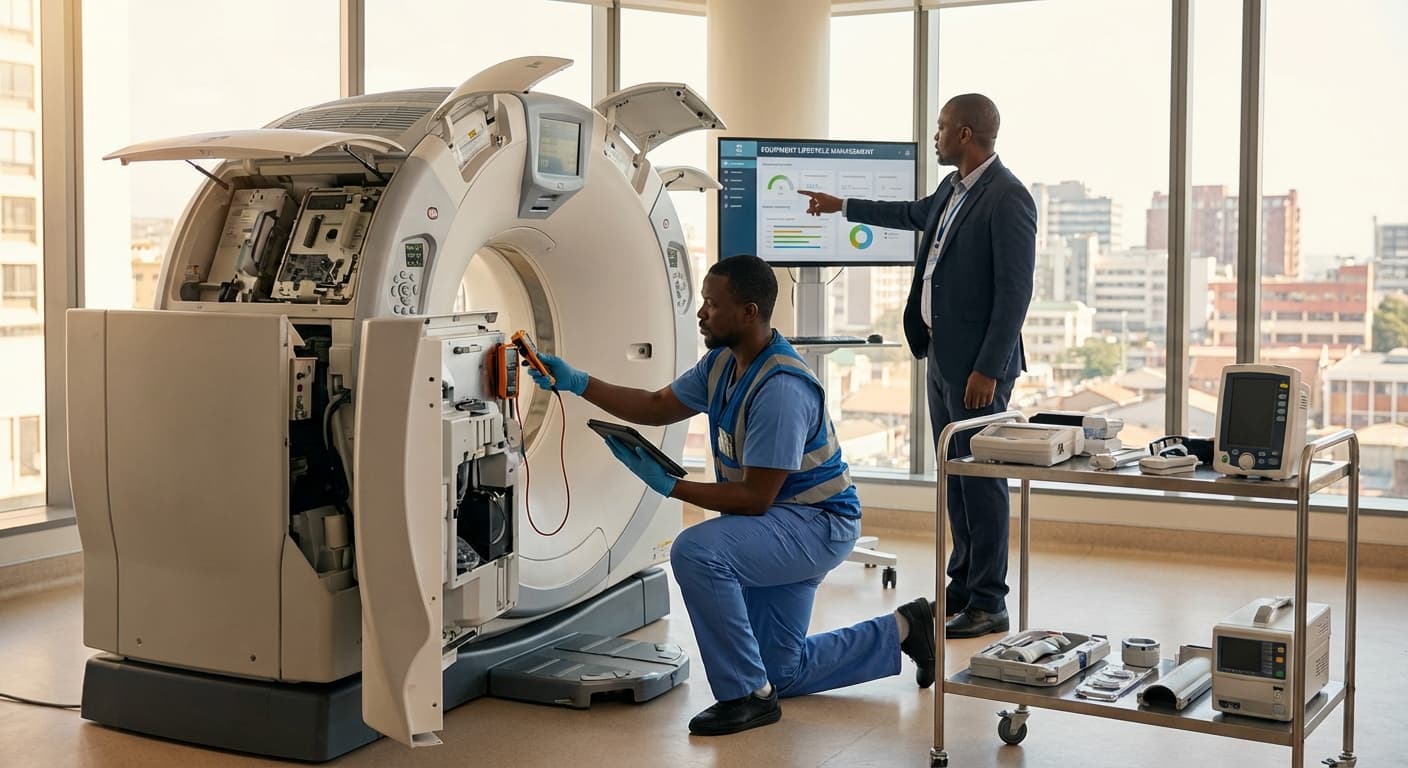
Equipment Replacement Planning & Obsolescence Strategy Service in Congo (Kinshasa)
Engineering Excellence & Technical Support
Equipment Replacement Planning & Obsolescence Strategy Service High-standard technical execution following OEM protocols and local regulatory frameworks.
Proactive Obsolescence Mitigation & Lifecycle Cost Optimization
Leverage advanced predictive analytics and risk assessment tools to identify and manage hardware and software obsolescence risks within your Congo (Kinshasa) operations. Our service minimizes disruptive failures, reduces emergency repair costs, and ensures optimal total cost of ownership by strategically planning replacements and securing critical spare parts well in advance.
Customized Equipment Modernization Roadmaps for Congolese Industry
Develop tailored equipment replacement and modernization roadmaps specifically designed for the unique operational environment and regulatory landscape of Congo (Kinshasa). We assess your current infrastructure, forecast future needs, and recommend cost-effective upgrade paths that enhance efficiency, safety, and compliance, ensuring your business remains competitive.
Resilient Supply Chain & Vendor Management for Critical Spares
Establish robust supply chain strategies and rigorous vendor management protocols to guarantee the availability of critical spare parts and new equipment for your operations in Congo (Kinshasa). We mitigate risks associated with global supply chain disruptions, ensuring continuous operational uptime and minimizing the impact of obsolescence on your critical infrastructure.
What Is Equipment Replacement Planning & Obsolescence Strategy Service In Congo (Kinshasa)?
Equipment Replacement Planning & Obsolescence Strategy Service in Congo (Kinshasa) is a specialized consulting and implementation offering focused on proactively managing the lifecycle of industrial, IT, and critical infrastructure assets. This service helps organizations in the Democratic Republic of Congo (DRC) to optimize capital expenditure, mitigate risks associated with aging or obsolete equipment, and ensure operational continuity. It involves a systematic approach to identifying, evaluating, and strategizing for the timely and cost-effective replacement or upgrade of assets. Key considerations include asset condition assessment, performance degradation analysis, projected future demand, technological advancements, regulatory compliance, and the total cost of ownership (TCO) over the asset's lifespan. The strategy aims to transition from reactive, event-driven replacements to a planned, predictive, and value-driven approach, thereby enhancing reliability, efficiency, and competitiveness.
| Who Needs This Service? | Typical Use Cases |
|---|---|
| Manufacturing Firms (Mining, Agriculture, Food Processing, Heavy Industry) | Replacing aging production machinery (e.g., crushers, conveyors, processing units) to maintain output and quality. |
| Energy & Utilities Companies (Power Generation, Water Treatment) | Planning the upgrade of turbines, transformers, pumps, and distribution networks to ensure reliable service delivery and compliance with environmental regulations. |
| Telecommunications Providers | Strategizing the replacement of outdated network infrastructure (e.g., copper lines, older generation base stations) with modern, higher-capacity systems. |
| Information Technology (IT) Departments in Large Enterprises | Developing a lifecycle management strategy for servers, data storage, network equipment, and end-user devices to avoid security vulnerabilities and performance bottlenecks. |
| Logistics & Transportation Companies | Managing the fleet replacement cycle for trucks, specialized vehicles, and material handling equipment. |
| Healthcare Institutions | Planning for the obsolescence of critical medical equipment (e.g., MRI scanners, laboratory analyzers) to ensure patient care continuity and access to advanced diagnostics. |
| Government & Public Sector Agencies | Optimizing the replacement of public infrastructure assets (e.g., municipal vehicles, traffic control systems) and IT systems. |
Service Components:
- Asset Inventory & Condition Assessment: Comprehensive cataloging and evaluation of existing equipment, including age, performance metrics, maintenance history, and current condition.
- Obsolescence Risk Analysis: Identification of equipment nearing or past its economic or technological obsolescence point, considering factors like spare part availability, manufacturer support, and compatibility with newer systems.
- Performance & Reliability Benchmarking: Analysis of equipment performance against industry standards and identification of reliability issues impacting operations.
- Total Cost of Ownership (TCO) Modeling: Calculation of all costs associated with an asset throughout its lifecycle, including acquisition, operation, maintenance, and disposal.
- Strategic Replacement Planning: Development of multi-year roadmaps for equipment replacement, prioritizing critical assets and aligning with business objectives and budget cycles.
- Technology & Market Trend Analysis: Monitoring of emerging technologies and market shifts that could impact the viability or efficiency of existing assets.
- Business Case Development: Justification for replacement investments based on ROI, risk reduction, efficiency gains, and strategic alignment.
- Implementation & Project Management Support: Assistance with the procurement, installation, and commissioning of new equipment.
- Disposal & Decommissioning Strategy: Planning for the safe, environmentally responsible, and compliant removal of retired assets.
Who Needs Equipment Replacement Planning & Obsolescence Strategy Service In Congo (Kinshasa)?
In Congo (Kinshasa), robust Equipment Replacement Planning & Obsolescence Strategy services are crucial for organizations aiming to maintain operational efficiency, mitigate risks associated with aging assets, and optimize long-term capital expenditure. These services are particularly vital for sectors heavily reliant on specialized machinery and technology that undergo rapid advancement or face supply chain challenges for replacement parts.
| Industry/Sector | Specific Equipment Concerns | Impact of Obsolescence/Lack of Planning |
|---|---|---|
| Mining | Heavy machinery (excavators, haul trucks, crushers), processing equipment, exploration tools | Production delays, increased maintenance costs, safety hazards, inability to meet production targets |
| Manufacturing | Production lines, specialized machinery, automation systems, industrial robots | Reduced product quality, decreased efficiency, inability to adopt new manufacturing technologies, supply chain disruptions for parts |
| Energy (Oil & Gas, Power Generation) | Turbines, generators, pumps, drilling equipment, control systems, transmission infrastructure | Power outages, increased operational costs, environmental risks, potential for catastrophic failure |
| Telecommunications | Network infrastructure (switches, routers, base stations), transmission equipment, data center hardware | Service disruptions, reduced network capacity, security vulnerabilities, inability to offer modern services |
| Transportation (Aviation, Rail, Road) | Aircraft components, train engines, vehicle fleets, signaling systems, maintenance equipment | Safety risks, increased operational costs, service unreliability, compliance issues |
| Healthcare | Medical imaging devices (MRI, CT scanners), surgical equipment, laboratory instruments, patient monitoring systems | Delayed diagnoses, compromised patient care, increased maintenance costs, non-compliance with medical standards |
Target Customers and Departments in Congo (Kinshasa)
- {"items":["Large industrial enterprises (mining, manufacturing, energy, telecommunications)","Government and public sector entities (infrastructure, utilities, defense)","Transportation and logistics companies","Healthcare institutions (hospitals with advanced medical equipment)","Financial institutions (data centers and critical IT infrastructure)","Companies with significant investments in specialized technology"],"title":"Primary Target Customers"}
- {"items":["Operations & Production: Ensuring continuous uptime, minimizing downtime due to equipment failure, and optimizing production output.","Maintenance & Engineering: Proactive identification of failing equipment, planning for timely replacements, and managing spare parts inventory.","Finance & Procurement: Strategic budgeting for capital expenditures, negotiating better terms for new equipment, and avoiding costly emergency purchases.","IT & Technology: Managing the lifecycle of IT hardware and software, planning for upgrades, and addressing cybersecurity risks associated with obsolete systems.","Risk Management & Compliance: Ensuring equipment meets safety and regulatory standards, and mitigating risks associated with equipment failure or obsolescence.","Asset Management: Holistic oversight of the entire asset lifecycle, from acquisition to disposal, optimizing value and minimizing total cost of ownership."],"title":"Key Departments Benefiting from these Services"}
Equipment Replacement Planning & Obsolescence Strategy Service Process In Congo (Kinshasa)
This document outlines the Equipment Replacement Planning & Obsolescence Strategy Service process for clients in Congo (Kinshasa). This service aims to help organizations proactively manage their asset lifecycle, minimize disruption caused by outdated equipment, and optimize replacement investments.
| Stage | Description | Key Activities | Deliverables | Client Involvement | Timelines (Indicative) |
|---|---|---|---|---|---|
| Understanding the client's current situation, challenges, and objectives related to equipment management and obsolescence. | Initial meeting (virtual or in-person in Kinshasa), discussion of service scope, and understanding of business context. | Service scope definition, preliminary understanding of client needs. | Provide initial information about current asset management practices, pain points. | 1-3 Business Days |
| Detailed gathering of information about the client's existing equipment, operational needs, and strategic goals. | Site visits (if feasible in Kinshasa), interviews with key personnel, review of existing asset registers, maintenance records, procurement history, and IT infrastructure. | Comprehensive asset inventory, current operational status report, risk assessment of obsolescence. | Grant access to facilities and personnel, provide all requested documentation and data. | 1-3 Weeks |
| Analyzing the collected data to identify critical equipment nearing obsolescence, potential risks, and developing a tailored replacement strategy. | Performing lifecycle cost analysis, obsolescence forecasting, risk assessment (operational, financial, security), identifying potential replacement technologies/solutions, developing phased replacement plans, defining budget considerations. | Obsolescence risk report, prioritized equipment replacement roadmap, initial cost estimates, strategic recommendations. | Review and provide feedback on preliminary findings and assumptions. | 2-4 Weeks |
| Presenting the detailed strategy, recommended solutions, timelines, and budget for approval. | Formal proposal document outlining the proposed strategy, detailed action plan, cost breakdown, anticipated ROI, and success metrics. Presentation to client stakeholders. | Approved Equipment Replacement & Obsolescence Strategy Plan, formal proposal sign-off. | Review and approve the proposal, allocate budget. | 1-2 Weeks |
| Developing a detailed project plan for the execution of the approved strategy. | Defining specific procurement processes (considering local Kinshasa regulations and suppliers), vendor selection criteria, installation and integration plans, training requirements, and communication protocols. Risk mitigation planning for implementation. | Detailed implementation project plan, procurement strategy, vendor shortlist, training plan, communication matrix. | Provide input on implementation logistics and resource allocation. | 1-2 Weeks |
| Carrying out the approved replacement and upgrade plan, while closely monitoring progress and mitigating risks. | Procurement of new equipment, decommissioning of old equipment, installation and configuration, user training, ongoing progress tracking, issue resolution, adherence to budget and timelines. Coordination with local service providers in Kinshasa. | New equipment successfully deployed, old equipment retired, operational continuity maintained, regular progress reports. | Facilitate access for installation and training, provide feedback on deployed equipment. | Varies based on project scope (Weeks to Months) |
| Evaluating the effectiveness of the implemented strategy and providing ongoing support for asset management. | Post-implementation review meetings, performance evaluation against defined metrics, recommendations for continuous improvement, knowledge transfer, and potential ongoing maintenance/support agreements for new assets. | Post-implementation review report, lessons learned documentation, updated asset management documentation, ongoing support plan (if agreed). | Participate in review meetings, provide feedback on outcomes. | Ongoing or as per agreement |
Service Workflow: Equipment Replacement Planning & Obsolescence Strategy
- Inquiry & Initial Consultation
- Needs Assessment & Data Collection
- Analysis & Strategy Development
- Proposal & Approval
- Implementation Planning
- Execution & Monitoring
- Post-Implementation Review & Ongoing Support
Equipment Replacement Planning & Obsolescence Strategy Service Cost In Congo (Kinshasa)
Estimating the cost of Equipment Replacement Planning & Obsolescence Strategy services in Congo (Kinshasa) requires understanding several key pricing factors. These services are crucial for businesses to proactively manage their asset lifecycle, mitigate risks associated with outdated technology, and optimize capital expenditure. The specific costs can vary significantly based on the scope of work, the size and complexity of the organization's equipment inventory, and the expertise of the service provider.
Key Pricing Factors:
- Scope of Service: This is the most significant determinant of cost. Services can range from a basic assessment of a few critical assets to a comprehensive, enterprise-wide strategy covering thousands of equipment items. Higher levels of detail, such as in-depth technical evaluations, financial modeling for replacement options, and the development of detailed implementation roadmaps, will naturally incur higher costs.
- Inventory Size and Complexity: The sheer number of equipment items to be analyzed directly impacts the time and resources required. Complex machinery, specialized industrial equipment, or diverse IT infrastructure will demand more specialized knowledge and a longer assessment period compared to simpler assets.
- Provider Expertise and Reputation: Established consulting firms with a proven track record in asset management and obsolescence strategies often command higher fees than smaller, less experienced local providers. The depth of their analytical tools, access to industry benchmarks, and the qualifications of their consultants all play a role.
- Data Availability and Quality: The client's ability to provide accurate and organized data on their existing equipment (purchase dates, maintenance records, specifications, usage patterns) can significantly streamline the process. If extensive data collection and validation are required, it will add to the cost.
- Level of Customization: A standardized approach will be less expensive than a highly tailored strategy designed to meet unique operational needs, regulatory requirements, or specific business objectives.
- Technology and Tools Used: Service providers employing advanced asset management software, predictive analytics, or specialized obsolescence forecasting tools may charge more but can often deliver more accurate and actionable insights.
- Geographic Considerations: While Kinshasa is the primary location, if on-site assessments are required across multiple remote sites within Congo, travel and logistical expenses will be factored into the pricing.
Pricing Ranges (Illustrative in Congolese Francs - CDF):
Due to the inherent variability, providing exact figures is challenging. However, based on industry trends and considering the local economic context of Kinshasa, the following are illustrative ranges:
- Basic Assessment (e.g., for a small business with a limited number of critical assets): This might involve an initial consultation, a high-level review of a few key equipment types, and a basic report with recommendations.
* **Range:** 1,500,000 CDF - 5,000,000 CDF
- Standard Project (e.g., for a medium-sized enterprise with a moderate equipment inventory): This would typically include a more detailed inventory analysis, risk assessment for a defined set of equipment categories, and a preliminary obsolescence strategy.
* **Range:** 5,000,000 CDF - 20,000,000 CDF
- Comprehensive Strategy (e.g., for a large corporation with extensive and complex asset portfolios): This involves in-depth analysis, modeling, development of a robust obsolescence management framework, and potentially ongoing advisory services. This could include detailed financial analysis of replacement vs. repair, life cycle costing, and vendor management strategies.
* **Range:** 20,000,000 CDF - 100,000,000+ CDF
Important Notes:
- These figures are estimates and can fluctuate significantly. It is essential to obtain detailed quotes from multiple service providers based on a well-defined scope of work.
- The Congolese Franc (CDF) is the local currency. Exchange rate fluctuations against major international currencies (like USD or EUR) can impact the perceived cost if comparing with international benchmarks.
- For larger projects, providers may offer phased approaches or retainer-based models for ongoing support.
- When evaluating proposals, consider the value delivered, not just the lowest price. The long-term benefits of effective equipment replacement and obsolescence management can far outweigh the initial investment.
| Service Level | Illustrative Price Range (CDF) | Description |
|---|---|---|
| Basic Assessment | 1,500,000 - 5,000,000 | Initial consultation, high-level review of critical assets, basic recommendations. |
| Standard Project | 5,000,000 - 20,000,000 | Detailed inventory analysis, risk assessment for defined equipment categories, preliminary strategy. |
| Comprehensive Strategy | 20,000,000 - 100,000,000+ | In-depth analysis, modeling, robust obsolescence management framework, potential ongoing advisory. |
Factors Influencing Equipment Replacement Planning & Obsolescence Strategy Service Costs in Congo (Kinshasa)
- Scope of Service: Basic assessment to comprehensive enterprise-wide strategy.
- Inventory Size and Complexity: Number and type of equipment items.
- Provider Expertise and Reputation: Experience, qualifications, and industry standing.
- Data Availability and Quality: Client-provided information on existing assets.
- Level of Customization: Standardized vs. highly tailored solutions.
- Technology and Tools Used: Advanced software and analytical capabilities.
- Geographic Considerations: On-site assessments and travel expenses.
Affordable Equipment Replacement Planning & Obsolescence Strategy Service Options
Our Affordable Equipment Replacement Planning & Obsolescence Strategy Service helps businesses proactively manage their asset lifecycle, mitigate risks associated with aging or obsolete equipment, and optimize capital expenditure. We offer flexible value bundles and implement cost-saving strategies tailored to your specific operational needs and budget.
| Cost-Saving Strategy | Description | How it Saves You Money |
|---|---|---|
| Proactive Replacement Scheduling | Identifying optimal times to replace equipment before catastrophic failure or significant performance degradation. | Avoids costly emergency repairs, production downtime, and unexpected capital outlays. |
| Leveraging Bulk Purchasing & Discounts | Consolidating replacement needs to negotiate better pricing with suppliers. | Achieves lower per-unit acquisition costs through volume discounts. |
| Extended Equipment Lifespan Strategies | Implementing preventative maintenance, repair, and upgrade programs for existing assets. | Delays the need for new purchases, stretching capital budgets further. |
| Obsolescence Mitigation & Alternative Sourcing | Identifying and addressing potential obsolescence early, exploring refurbished or compatible alternatives. | Reduces the risk of being forced into expensive, last-minute purchases of proprietary or hard-to-find parts. |
| Optimized Disposal & Recycling | Developing cost-effective and environmentally responsible plans for end-of-life equipment. | Potentially generates revenue from salvaged parts or materials, and avoids disposal fees. |
| Strategic Technology Refresh Cycles | Planning upgrades based on technological advancements that offer improved efficiency and lower operational costs. | Improves productivity and reduces ongoing energy, maintenance, and labor expenses. |
Value Bundles:
- {"title":"Core Planning Bundle","description":"Includes initial asset inventory, depreciation analysis, basic replacement forecasting, and a foundational obsolescence risk assessment."}
- {"title":"Strategic Growth Bundle","description":"Builds on the Core Planning Bundle with advanced forecasting, scenario planning for technology upgrades, vendor negotiation support, and lifecycle cost modeling."}
- {"title":"Comprehensive Lifecycle Management Bundle","description":"Encompasses all features of the Strategic Growth Bundle plus proactive obsolescence monitoring, alternative sourcing strategies, disposal and recycling optimization, and ongoing strategic advisory."}
- {"title":"Customizable Solutions","description":"We can tailor any bundle to your unique requirements, focusing on specific equipment categories or operational challenges."}
Verified Providers In Congo (Kinshasa)
Navigating healthcare in Congo (Kinshasa) can be challenging. Ensuring you're receiving care from verified providers is paramount for your health and well-being. Franance Health stands out as a leader in this regard, offering a commitment to quality and a rigorous vetting process that instills confidence in patients. Their stringent credentialing ensures that every provider associated with Franance Health meets the highest standards of medical expertise, ethical practice, and patient care. This dedication to verification is not just a formality; it's a promise of safety and efficacy, making Franance Health the premier choice for reliable medical services in Kinshasa.
| Credential Type | Franance Health Verification Process | Patient Benefit |
|---|---|---|
| Medical Licenses & Certifications | Thorough checks against official regulatory bodies to confirm validity and current standing. | Ensures providers are legally authorized and possess the fundamental qualifications. |
| Professional Experience | Verification of past employment, surgical case logs (where applicable), and peer reviews. | Confirms practical application of knowledge and a track record of successful patient outcomes. |
| Specialty Training & Fellowships | Validation of advanced training and postgraduate education in specific medical fields. | Guarantees access to highly specialized care and expertise for complex conditions. |
| Background Checks & Ethical Standing | Screening for any disciplinary actions, malpractice claims, or ethical concerns. | Protects patients from substandard care and ensures ethical treatment. |
| Continuing Medical Education (CME) | Confirmation of ongoing participation in professional development and learning. | Ensures providers are up-to-date with the latest medical advancements and techniques. |
Why Franance Health is the Best Choice:
- Rigorous Provider Vetting: Franance Health employs a multi-stage credentialing process to confirm the qualifications, licenses, and experience of all affiliated medical professionals.
- Commitment to Patient Safety: Their verification protocols are designed to prioritize patient well-being by ensuring providers are up-to-date with best practices and ethical guidelines.
- Access to Trusted Professionals: By partnering with Franance Health, patients gain access to a network of highly qualified and reputable doctors, specialists, and healthcare facilities.
- Enhanced Transparency: Franance Health provides clarity on provider credentials, empowering patients to make informed decisions about their healthcare.
- Upholding International Standards: Their commitment to verification aligns with global benchmarks for healthcare quality and safety, offering peace of mind to both local and international patients.
Scope Of Work For Equipment Replacement Planning & Obsolescence Strategy Service
This Scope of Work outlines the services to be provided for Equipment Replacement Planning and Obsolescence Strategy. The objective is to develop a comprehensive, data-driven strategy to manage the lifecycle of critical equipment, minimize operational disruptions due to obsolescence, and optimize capital expenditure for replacements. The service will encompass data gathering, analysis, strategic planning, and the development of actionable roadmaps.
| Deliverable | Description | Standard Specification/Format |
|---|---|---|
| Project Kick-off Meeting Minutes | Summary of initial meeting, objectives, scope confirmation, roles and responsibilities, and next steps. | Microsoft Word Document / PDF |
| Equipment Inventory Database | A structured database containing detailed information on all identified equipment, including manufacturer, model, serial number, installation date, operational history, maintenance records, criticality, and current condition. | Microsoft Excel Spreadsheet / SQL Database (as agreed) |
| Obsolescence Risk Assessment Report | Analysis of each equipment item's risk of obsolescence based on factors such as manufacturer support lifecycle, availability of spare parts, technological advancements, and regulatory changes. Includes a prioritized risk matrix. | Microsoft Word Document / PDF |
| Equipment Replacement Strategy Document | A detailed plan outlining recommended replacement strategies for prioritized equipment, including timelines, budget estimates, justification for each recommendation (e.g., proactive replacement, phased replacement, repair/refurbish), and alignment with business objectives. | Microsoft Word Document / PDF |
| Replacement Roadmap and Schedule | A visual representation (e.g., Gantt chart) of the planned equipment replacements over a defined period, including key milestones, dependencies, and resource allocation. | Microsoft Project File / PDF |
| Financial Analysis and Budget Proposal | Detailed cost estimations for recommended replacements, including procurement, installation, commissioning, and disposal costs. Includes a projected budget for the replacement program and potential ROI calculations. | Microsoft Excel Spreadsheet / PDF |
| Obsolescence Management Framework | A set of guidelines, processes, and best practices for ongoing management of equipment obsolescence, including proactive monitoring, early warning systems, and contingency planning. | Microsoft Word Document / PDF |
| Final Project Report | A comprehensive summary of the project findings, analyses, recommendations, and the developed strategy. Includes an executive summary and detailed appendices. | Microsoft Word Document / PDF |
| Presentation Slides | A clear and concise presentation summarizing the key findings, strategic recommendations, and the implementation roadmap for stakeholders. | Microsoft PowerPoint Presentation / PDF |
Key Service Components
- Establishment of Project Governance and Stakeholder Engagement
- Comprehensive Equipment Inventory and Data Collection
- Obsolescence Risk Assessment and Prioritization
- Development of Replacement Strategy and Roadmap
- Cost-Benefit Analysis and Financial Modeling
- Recommendation of Preventive and Predictive Maintenance Strategies
- Development of a Long-Term Obsolescence Management Framework
- Final Report and Presentation
Service Level Agreement For Equipment Replacement Planning & Obsolescence Strategy Service
This Service Level Agreement (SLA) outlines the guaranteed response times and uptime for the Equipment Replacement Planning & Obsolescence Strategy Service. This service aims to proactively manage the lifecycle of your IT equipment, mitigating risks associated with obsolescence and ensuring timely, cost-effective replacement planning.
| Service Component | Response Time Guarantee (Business Hours) | Uptime Guarantee |
|---|---|---|
| Urgent Inquiry (Critical Obsolescence Risk Identified) | 2 Business Hours | N/A (Service is consultative) |
| Standard Inquiry (General Planning/Strategy Question) | 8 Business Hours | N/A (Service is consultative) |
| EOL/EOS Notification Delivery | Within 2 Business Days of identification | N/A (Service is consultative) |
| Replacement Plan Generation | 5 Business Days (post-data receipt) | N/A (Service is consultative) |
| Strategy Review Meeting Availability | Within 3 Business Days of request | N/A (Service is consultative) |
Service Components
- Proactive obsolescence identification and risk assessment.
- Strategic replacement planning based on operational needs and budget.
- End-of-life (EOL) and end-of-support (EOS) notification and forecasting.
- Recommendations for upgrade/replacement options.
- Deprecation planning and execution support.
- Consultation on lifecycle management best practices.
Frequently Asked Questions

Ready when you are
Let's scope your Equipment Replacement Planning & Obsolescence Strategy Service in Congo (Kinshasa) project in Congo (Kinshasa).

Scaling healthcare logistics and technical systems across the entire continent.