
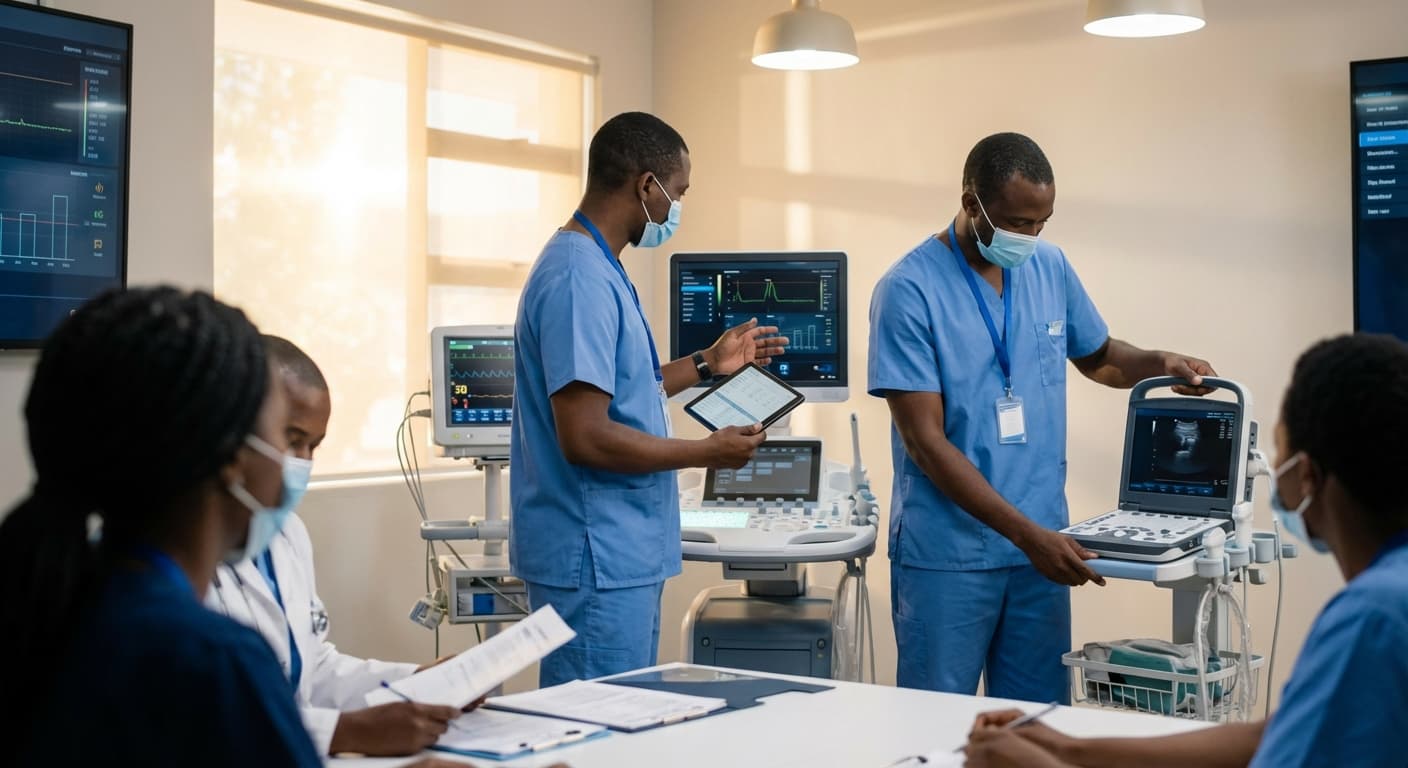
Clinical Needs Assessment for Medical Equipment in Congo (Kinshasa)
Engineering Excellence & Technical Support
Clinical Needs Assessment for Medical Equipment High-standard technical execution following OEM protocols and local regulatory frameworks.
Geospatial Needs Mapping & Prioritization
Leveraging GIS technology to create detailed maps of healthcare facilities across Congo (Kinshasa), overlaying population density, disease prevalence data, and existing infrastructure. This enables precise identification of high-priority regions and facilities requiring specific medical equipment, ensuring resources are allocated most effectively.
Data-Driven Equipment Demand Forecasting
Implementing robust data analytics platforms to process historical medical data, patient demographics, and disease outbreak patterns. This allows for sophisticated forecasting of future equipment needs, reducing stockouts and overstocking, and optimizing inventory management for essential medical devices across the nation.
Interoperable E-Health Integration Framework
Developing and deploying an interoperable e-health framework that connects existing and new medical equipment with national health information systems. This facilitates real-time data sharing, remote monitoring of equipment performance, and seamless integration of new acquisitions, improving operational efficiency and patient care delivery in underserved areas.
What Is Clinical Needs Assessment For Medical Equipment In Congo (Kinshasa)?
A Clinical Needs Assessment for Medical Equipment in Congo (Kinshasa) is a systematic evaluation process designed to identify, prioritize, and quantify the medical equipment requirements of healthcare facilities and public health programs within the Democratic Republic of Congo, specifically in the Kinshasa region. This service is critical for ensuring the availability of appropriate, functional, and sustainable medical technology to meet the diagnostic, therapeutic, and rehabilitative needs of the population, thereby improving healthcare service delivery and patient outcomes. It involves a comprehensive review of existing infrastructure, healthcare service profiles, disease burden, workforce capacity, and resource availability, culminating in a detailed report with actionable recommendations for procurement, installation, training, and maintenance of medical equipment.
| Who Needs This Service? | Typical Use Cases | ||||||
|---|---|---|---|---|---|---|---|
| Government Health Ministries/Agencies: To guide national and regional health sector planning, resource allocation, and procurement strategies. | Hospitals and Healthcare Providers (Public & Private): To identify specific equipment needs for service expansion, modernization, or replacement of outdated technology. | Non-Governmental Organizations (NGOs) and International Aid Organizations: To inform project design, grant applications, and the implementation of healthcare initiatives. | Donors and Funding Agencies: To ensure investments in medical equipment are targeted, effective, and sustainable. | Medical Equipment Suppliers and Manufacturers: To understand the market demand and specific technical requirements for products in the region. | Healthcare Planners and Consultants: To provide expert assessments and recommendations for healthcare infrastructure development. | ||
| Planning for new hospital or clinic construction/renovation: Determining the appropriate medical equipment suite required from inception. | Upgrading existing healthcare facilities: Identifying deficiencies in current equipment and planning for modernization to enhance service capabilities. | Responding to public health emergencies or outbreaks: Assessing the immediate and medium-term equipment needs for disease surveillance, diagnosis, and treatment. | Implementing specific health programs (e.g., maternal and child health, NCD management): Determining the specialized equipment required to deliver these services effectively. | Establishing or expanding specialized medical departments (e.g., radiology, cardiology, intensive care): Quantifying the necessary diagnostic and therapeutic equipment. | Evaluating the effectiveness of past equipment investments: Identifying areas of underutilization or malfunction and informing future procurement decisions. | Developing national or regional medical equipment procurement frameworks: Providing evidence-based data to guide bulk purchasing and standardization efforts. | Capacity building initiatives: Identifying training needs in conjunction with equipment acquisition to ensure proper utilization and maintenance. |
Key Components of a Clinical Needs Assessment:
- Facility and Infrastructure Evaluation: Assessing the current state and capacity of healthcare facilities (hospitals, clinics, health centers) including physical space, utilities (power, water, sanitation), and existing architectural suitability for new equipment.
- Service Delivery Analysis: Reviewing the spectrum of healthcare services offered, including primary, secondary, and tertiary care, as well as specialized services, to determine equipment gaps aligned with service provision.
- Epidemiological Data Review: Analyzing local and regional disease prevalence and incidence data to prioritize equipment for common and high-impact conditions.
- Workforce Capacity Assessment: Evaluating the availability and skill levels of healthcare professionals (physicians, nurses, technicians) to operate and maintain specific equipment, identifying training needs.
- Existing Equipment Inventory and Condition Assessment: Cataloging all current medical equipment, assessing its functionality, age, maintenance history, and obsolescence.
- Resource Mobilization and Financial Planning: Estimating the financial investment required for equipment acquisition, installation, training, and ongoing maintenance, and exploring potential funding sources.
- Sustainability Planning: Developing strategies for long-term equipment maintenance, spare parts management, calibration, and eventual replacement.
- Regulatory and Policy Review: Understanding relevant national and local health regulations, standards, and procurement guidelines.
- Stakeholder Consultation: Engaging with healthcare providers, administrators, policymakers, patient representatives, and relevant NGOs to gather diverse perspectives and ensure buy-in.
Who Needs Clinical Needs Assessment For Medical Equipment In Congo (Kinshasa)?
Understanding the clinical needs for medical equipment in Congo (Kinshasa) is crucial for effective healthcare delivery and resource allocation. A robust clinical needs assessment ensures that investments in medical technology are aligned with the actual health challenges, patient populations, and existing infrastructure. This process is vital for various stakeholders within and outside the healthcare system.
| Customer/Department | Primary Role in Needs Assessment | Key Considerations | Specific Equipment Focus Examples |
|---|---|---|---|
| Hospitals (e.g., Hôpital Général de Kinshasa, Hôpital Saint-Joseph) | End-users, primary data sources | Patient load, disease prevalence, existing infrastructure, staff capacity, maintenance capabilities | Diagnostic imaging (X-ray, ultrasound), surgical instruments, ventilators, patient monitors, laboratory analyzers |
| Ministry of Health (DRC) | Policy maker, national planner, resource allocator | National health priorities, equitable access, public health program requirements, budget constraints | Primary healthcare equipment, mobile clinics, specialized equipment for national disease control programs |
| NGOs (e.g., Doctors Without Borders, World Vision) | Project implementers, funders, equipment donors | Geographic focus, specific project goals (e.g., maternal mortality reduction, HIV/AIDS care), sustainability plans | Maternal health equipment, diagnostic tools for infectious diseases, emergency medical kits |
| Medical Equipment Suppliers (e.g., local distributors) | Market intelligence providers, equipment providers | Market demand, technological trends, training needs, after-sales service requirements | Information on preferred brands, features, and service packages |
| Training Institutions (e.g., University of Kinshasa - Faculty of Medicine) | Curriculum developers, future users | Skills development needs, alignment with current and future clinical practices, availability of simulation equipment | Anatomical models, simulation mannequins, basic diagnostic equipment for training |
Target Customers & Departments for Clinical Needs Assessment in Congo (Kinshasa)
- {"title":"Hospitals and Healthcare Facilities","departments":["Emergency/Trauma Departments","Surgical Wards/Operating Theaters","Intensive Care Units (ICUs)","Maternity and Neonatal Wards","Pediatric Wards","Internal Medicine/General Wards","Radiology and Imaging Departments (X-ray, Ultrasound, CT, MRI)","Laboratory Services","Cardiology Departments","Oncology Departments","Rehabilitation Centers","Outpatient Clinics"],"description":"These are the primary beneficiaries and sites where the needs assessment is conducted. They directly utilize the medical equipment."}
- {"title":"Ministry of Health (MoH)","departments":["Planning and Policy Department","Procurement and Logistics Department","Public Health Programs (e.g., maternal health, infectious disease control)","Hospital Management Department"],"description":"The national governing body responsible for public health policy, planning, and resource allocation. They use the assessment for national health strategies and procurement."}
- {"title":"Non-Governmental Organizations (NGOs) & International Aid Agencies","departments":["Program Design and Implementation Units","Logistics and Supply Chain Management","Grant Management and Funding Departments"],"description":"Organizations that fund, implement, or support healthcare projects and equipment donations. They rely on needs assessments for targeted interventions."}
- {"title":"Medical Equipment Suppliers and Manufacturers","departments":["Sales and Marketing Departments","Product Development and Innovation Teams","Technical Support and Training Divisions"],"description":"Companies that provide medical equipment. A needs assessment helps them understand market demand, specific product requirements, and training needs."}
- {"title":"Healthcare Training and Education Institutions","departments":["Medical Schools","Nursing Schools","Paramedic Training Programs","Continuing Professional Development Units"],"description":"Institutions that train healthcare professionals. Needs assessments inform curriculum development and the type of equipment professionals will need to operate."}
- {"title":"Research Institutions and Universities","departments":["Medical Research Centers","Public Health Research Departments","Biomedical Engineering Departments"],"description":"Entities involved in health research. Needs assessments can identify gaps in research infrastructure and equipment for specific studies."}
- {"title":"Insurance Providers (if applicable/developing)","departments":["Claims and Benefits Department","Provider Network Management"],"description":"As health insurance systems evolve, they may be interested in the types of equipment and services that are essential for patient care covered by their plans."}
Clinical Needs Assessment For Medical Equipment Process In Congo (Kinshasa)
This document outlines the workflow for a Clinical Needs Assessment for Medical Equipment Process in Congo (Kinshasa), from the initial inquiry to the final execution. The process is designed to ensure that medical facilities receive appropriate, functional, and sustainable equipment tailored to their specific clinical needs and operational contexts. It emphasizes collaboration with local stakeholders, thorough assessment, and transparent procurement and implementation.
| Phase | Key Activities | Responsible Parties | Deliverables |
|---|---|---|---|
| Receive/Review inquiry, Initial discussion, Information gathering | Requesting Facility/Partner, Project Coordinator | Confirmation of Understanding, Preliminary Scope Outline |
| Develop SOW, Stakeholder mapping, Budget/Timeline, Team assembly, Permissions | Project Management Team, Local Health Authorities | Scope of Work, Stakeholder List, Project Plan, Approved Permissions |
| Facility profiling, Clinical analysis, Equipment inventory/audit, Gap analysis, Prioritization | Assessment Team (Clinical, Biomedical), Facility Staff | Assessment Data, Inventory List, Gap Analysis Findings, Prioritized List |
| Develop technical specs, Justify recommendations, Consider context | Assessment Team (Biomedical, Clinical), Procurement Specialist | Detailed Equipment Specifications, Justification Documents |
| Compile report, Present findings, Develop recommendations, Stakeholder validation | Assessment Team Lead, Project Coordinator, Key Stakeholders | Needs Assessment Report, Final Equipment Recommendations |
| Develop procurement plan, Tender process, Supplier selection, Contract management | Procurement Team, Project Manager, Legal Advisor | Procurement Plan, Tender Documents, Signed Contracts |
| Logistics, Customs, Installation, Testing, Calibration | Logistics Team, Biomedical Engineers, Installers | Delivered Equipment, Installed and Commissioned Equipment |
| Develop training modules, Conduct user/technician training | Training Specialists, Biomedical Engineers, Clinical Staff | Trained Personnel, Training Materials |
| Track usage, Monitor performance, Gather feedback, Conduct evaluations | Project Monitoring Team, Facility Management, Clinical Staff | Monitoring Reports, Evaluation Findings |
| Develop maintenance plans, Ensure spare parts, Establish service contracts | Biomedical Engineering Department, Facility Management, Suppliers | Maintenance Plans, Spare Parts Inventory, Service Agreements |
Clinical Needs Assessment Workflow for Medical Equipment in Congo (Kinshasa)
- 1. Inquiry and Initial Contact:
* A request for a medical equipment needs assessment is received from a healthcare facility, Ministry of Health representative, or implementing partner.* The inquiry is reviewed to understand the scope, location, and general objectives of the assessment.* Initial contact is made to gather preliminary information and schedule a more detailed discussion.- 2. Pre-Assessment Planning and Scoping:
* A detailed scope of work (SOW) is developed, defining the assessment's objectives, target facilities, geographical coverage, and expected deliverables.* Stakeholder identification and engagement plan is created, including local health officials, hospital administrators, clinical staff, biomedical engineers, and potential donors.* A preliminary budget and timeline are established.* A dedicated assessment team is assembled, comprising clinical experts, biomedical engineers, procurement specialists, and logistics personnel.* Necessary permissions and approvals from relevant government authorities are initiated.- 3. On-Site Needs Assessment:
* **Facility Profiling:** Detailed information is gathered on the facility's type (hospital, clinic, specialized center), size, patient population, service offerings, and existing infrastructure (power, water, internet).* **Clinical Service Analysis:** In-depth interviews and observations are conducted with clinical staff to understand current patient care pathways, diagnostic and treatment protocols, and unmet clinical needs.* **Equipment Inventory and Condition Assessment:** A comprehensive inventory of existing medical equipment is created, including its make, model, age, condition, functionality, and maintenance history. This often involves visual inspection and functional testing.* **Gap Analysis:** The gathered information is analyzed to identify specific gaps in equipment that are hindering effective service delivery, impacting patient outcomes, or preventing the introduction of new services.* **Prioritization of Needs:** Based on clinical impact, urgency, sustainability, and alignment with national health priorities, the identified equipment needs are prioritized.* **Contextual Factors Assessment:** Factors such as local capacity for operation and maintenance, availability of consumables, user training needs, and regulatory requirements are assessed.- 4. Equipment Specification and Justification:
* For each prioritized need, detailed technical specifications for the required equipment are developed. This includes considering:* **Clinical Functionality:** Ensuring the equipment meets the specific diagnostic and therapeutic requirements.* **Durability and Reliability:** Selecting equipment suitable for the local environment and usage patterns.* **Ease of Use and Maintenance:** Favoring user-friendly designs and readily available spare parts.* **Interoperability:** If applicable, ensuring compatibility with existing systems.* **Consumables and Reagents:** Verifying the availability and cost-effectiveness of associated supplies.* A strong justification is provided for each recommended piece of equipment, linking it directly to the identified clinical need and potential impact.- 5. Reporting and Recommendation Development:
* A comprehensive Needs Assessment Report is compiled, documenting the entire process, findings, and analysis.* The report includes a detailed list of recommended medical equipment, prioritized by clinical need and categorized by cost, technical specifications, and estimated lifespan.* Recommendations for training, maintenance support, and infrastructure upgrades are also included.* The report is reviewed and validated by key stakeholders.- 6. Procurement Planning and Execution:
* Based on the validated recommendations, a procurement plan is developed, outlining the tendering process, supplier selection criteria, and contractual terms.* Procurement activities are conducted in accordance with established policies and guidelines, ensuring transparency and fairness.* This may involve international or local tendering, depending on the equipment and budget.- 7. Equipment Delivery, Installation, and Commissioning:
* Logistics and customs clearance procedures are managed for the safe and timely delivery of equipment.* Professional installation and commissioning of the equipment are carried out by qualified technicians.* Initial functional testing and calibration are performed to ensure the equipment operates as intended.- 8. Training and Capacity Building:
* Comprehensive training programs are designed and delivered to clinical staff on the operation, basic maintenance, and safe use of the new equipment.* Training may also be provided to local biomedical technicians for advanced maintenance and repair.- 9. Post-Implementation Monitoring and Evaluation:
* A monitoring plan is established to track the utilization of the equipment, its performance, and the impact on clinical services.* Regular feedback mechanisms are put in place to identify any challenges or issues.* Periodic evaluations are conducted to assess the long-term sustainability and effectiveness of the equipment and its contribution to improved healthcare outcomes.- 10. Sustainability and Maintenance Support:
* Strategies for long-term maintenance and repair are developed, which may include establishing service contracts, providing spare parts, and building local technical capacity.* Mechanisms for ongoing supply chain management of consumables are put in place.* End-of-life planning for equipment is considered.
Clinical Needs Assessment For Medical Equipment Cost In Congo (Kinshasa)
This document outlines a clinical needs assessment for medical equipment in Kinshasa, Congo (DRC). It aims to identify essential medical equipment, understand the pricing landscape, and provide estimated cost ranges in the local currency, the Congolese Franc (CDF). Accurate costings are crucial for effective procurement, resource allocation, and ensuring access to quality healthcare services. The assessment considers various factors that influence pricing, from the type of equipment and its intended use to sourcing channels and market dynamics. It's important to note that these figures are estimates and can fluctuate due to economic conditions, supplier negotiations, import duties, and the specific configuration of the equipment. This information is intended to guide budgeting and strategic planning for healthcare institutions and organizations operating in Kinshasa.
| Equipment Category | Estimated Price Range (CDF) | Notes/Examples |
|---|---|---|
| Basic Diagnostic Equipment | 500,000 - 5,000,000 CDF | e.g., Sphygmomanometers, Stethoscopes, Otoscopes, Diagnostic Sets (manual and basic digital) |
| Point-of-Care Testing Devices | 750,000 - 7,500,000 CDF | e.g., Basic Glucose Meters, Urinalysis Strips and Readers, Rapid Diagnostic Test Kits (malaria, HIV - device cost varies) |
| Laboratory Equipment (Basic/Mid-Range) | 2,000,000 - 25,000,000 CDF | e.g., Centrifuges (benchtop), Microscopes (light), Hematology Analyzers (basic automated), Biochemistry Analyzers (semi-automated), Water Baths |
| Imaging Equipment (Basic/Entry-Level) | 25,000,000 - 150,000,000 CDF | e.g., Ultrasound machines (portable/mid-range), X-ray units (fixed or mobile, basic digital/computed radiography) |
| Surgical Instruments & Supplies | 100,000 - 5,000,000 CDF (per set/kit) | e.g., General surgical sets, specialized instrument kits, autoclaves (tabletop or mid-size) |
| Anesthesia Machines | 15,000,000 - 75,000,000 CDF | Basic to semi-modern anesthesia workstations |
| Patient Monitoring Systems | 3,000,000 - 30,000,000 CDF | e.g., Vital signs monitors (single/multi-parameter), ECG machines (standalone) |
| Medical Furniture | 200,000 - 2,000,000 CDF | e.g., Hospital beds (manual/basic electric), examination tables, trolleys, bedside cabinets |
| Sterilization Equipment (Mid-Range) | 5,000,000 - 40,000,000 CDF | e.g., Larger autoclaves, plasma sterilizers |
Key Pricing Factors for Medical Equipment in Kinshasa
- Type and Complexity of Equipment: Advanced, specialized, or technologically sophisticated equipment (e.g., MRI scanners, sophisticated diagnostic machines) will naturally be more expensive than basic instruments or consumables.
- Brand and Manufacturer Reputation: Well-established, reputable international brands often command higher prices due to perceived quality, reliability, and after-sales support. Local or lesser-known brands might offer lower-cost alternatives.
- New vs. Refurbished/Used Equipment: New equipment is always the most expensive. Refurbished or used equipment can offer significant cost savings but requires careful inspection for functionality and maintenance history.
- Sourcing Channel: Direct import from international manufacturers, procurement through local distributors/agents, or purchases from regional suppliers will have different cost structures influenced by shipping, customs duties, taxes, and distributor markups.
- Import Duties and Taxes: Government levies on imported medical equipment significantly impact the final price. These can vary based on the type of equipment and trade agreements.
- Shipping and Logistics: The cost of transportation, insurance, and handling from the point of origin to Kinshasa adds to the overall price.
- Installation and Training: Many complex medical devices require professional installation and training for healthcare staff. These services are often additional costs.
- After-Sales Service and Maintenance Contracts: The availability and cost of spare parts, maintenance services, and extended warranty contracts are important considerations that influence the total cost of ownership.
- Currency Exchange Rates: Fluctuations in the CDF against major international currencies (USD, EUR) directly affect the cost of imported equipment.
- Market Demand and Availability: Scarcity of specific equipment or high demand can lead to inflated prices. Conversely, oversupply might result in more competitive pricing.
- Supplier Negotiation and Bulk Purchasing: The ability to negotiate prices, especially for bulk orders, can lead to discounts.
- Technical Specifications and Features: Specific functionalities, accuracy levels, and integrated software features can differentiate models and affect their price.
Affordable Clinical Needs Assessment For Medical Equipment Options
This document outlines strategies for conducting affordable clinical needs assessments for medical equipment, focusing on identifying cost-effective solutions through value bundles and strategic purchasing. A thorough needs assessment ensures that acquired equipment directly addresses clinical requirements, preventing overspending on unnecessary features or underperforming assets. By understanding core clinical functions and exploring bundled offerings, healthcare providers can optimize their capital expenditures and achieve better long-term value. This approach prioritizes patient care while maintaining financial prudence.
| Value Bundle Component | Potential Cost Savings | Clinical Benefit |
|---|---|---|
| Equipment Package (e.g., imaging suite, patient monitoring system) | 10-25% discount compared to individual purchases | Integrated workflow, improved interoperability, consistent user experience |
| Equipment + Service/Maintenance Contract | 5-15% discount on bundled service, predictable costs | Reduced downtime, extended equipment lifespan, optimized operational efficiency |
| Equipment + Training & Support | Reduced training costs, faster staff proficiency | Improved equipment utilization, enhanced clinical outcomes, reduced errors |
| Software Integration (e.g., EMR compatibility, data analytics) | Cost savings on standalone software licenses | Streamlined data management, improved decision-making, enhanced patient record accuracy |
| Consumables & Accessories with Equipment Purchase | Negotiated lower prices on initial or recurring supplies | Ensured availability of necessary supplies for immediate use, reduced procurement overhead |
Key Cost-Saving Strategies
- Prioritize Essential Features: Focus on equipment capabilities that directly impact patient care and operational efficiency, avoiding 'nice-to-have' features.
- Leverage Value Bundles: Inquire about integrated packages that combine multiple pieces of equipment, software, or service agreements at a reduced overall cost.
- Negotiate Bulk Discounts: Explore opportunities to purchase multiple units of the same or complementary equipment from a single vendor to secure volume pricing.
- Consider Refurbished or Certified Pre-Owned Equipment: For non-critical or less frequently used items, explore high-quality refurbished options from reputable vendors to significantly reduce initial investment.
- Phased Implementation: If budget constraints are severe, consider acquiring essential equipment in phases, aligning purchases with clinical priority and available funding.
- Long-Term Service Agreements: Negotiate comprehensive service and maintenance contracts upfront, as these can often be bundled with the equipment purchase at a more favorable rate and provide predictable operational costs.
- Standardize Equipment Where Possible: Adopting a standardized set of equipment across departments can simplify training, maintenance, and inventory management, leading to economies of scale.
- Vendor Relationship Building: Cultivate strong relationships with key medical equipment vendors. This can lead to early access to new technologies, preferential pricing, and more flexible contract terms.
- Total Cost of Ownership (TCO) Analysis: Beyond the initial purchase price, evaluate the ongoing costs of maintenance, consumables, training, and potential upgrades to make informed decisions.
Verified Providers In Congo (Kinshasa)
Finding verified healthcare providers in Congo (Kinshasa) is crucial for ensuring quality and trustworthy medical care. Franance Health stands out as a leading platform for this purpose, meticulously vetting its network of healthcare professionals and facilities. Their rigorous credentialing process minimizes risks for patients, offering peace of mind and access to reliable medical services. This commitment to verification, combined with a user-friendly interface and a comprehensive directory, makes Franance Health the premier choice for anyone seeking verified healthcare in Congo (Kinshasa).
| Provider Type | Verification Criteria | Franance Health Benefit |
|---|---|---|
| Hospitals | Licensing, Accreditation, Staff Qualifications, Equipment Standards | Ensures access to well-equipped facilities with certified medical teams. |
| Clinics | Medical License, Practitioner Credentials, Service Offerings | Provides reliable outpatient care from licensed and experienced professionals. |
| Specialist Doctors | Medical Degree, Board Certification, Practice History, Peer Reviews | Connects patients with highly qualified specialists in their respective fields. |
| Diagnostic Centers | Equipment Calibration, Technician Certifications, Quality Control Procedures | Guarantees accurate and dependable diagnostic test results. |
| Pharmacies | Pharmacy License, Prescription Handling Protocols, Medication Sourcing | Ensures access to legitimate and safe medications from licensed pharmacies. |
Why Franance Health is the Best Choice for Verified Providers:
- Rigorous Vetting Process: Franance Health employs a stringent credentialing system to ensure all listed providers meet high standards of expertise and ethical practice.
- Patient Safety and Trust: Their verification process significantly enhances patient safety by filtering out unqualified or unreliable practitioners.
- Comprehensive Directory: Access a wide range of medical specialties and services, all verified for your convenience.
- User-Friendly Platform: Easily search, compare, and connect with verified healthcare professionals.
- Commitment to Quality Care: Franance Health prioritizes access to high-quality healthcare for all users.
- Transparency: Clear information about provider qualifications and credentials.
Scope Of Work For Clinical Needs Assessment For Medical Equipment
This document outlines the Scope of Work (SOW) for a Clinical Needs Assessment (CNA) for medical equipment. The primary objective of this CNA is to identify and prioritize the medical equipment requirements of [Healthcare Facility Name] to ensure optimal patient care, operational efficiency, and technological advancement. This SOW details the tasks, deliverables, and standard specifications to be adhered to throughout the assessment process.
| Phase | Description | Key Activities | Technical Deliverables | Standard Specifications/Considerations |
|---|---|---|---|---|
| Phase 1: Project Initiation & Planning | Defining the scope, objectives, timeline, and resources for the CNA. | Kick-off meeting with stakeholders, formation of CNA team, development of project plan, stakeholder identification and mapping. | Project Charter, Detailed Project Plan, Stakeholder Register. | Compliance with relevant healthcare regulations (e.g., HIPAA, FDA), adherence to project management best practices. |
| Phase 2: Data Collection & Analysis | Gathering information on current equipment, clinical workflows, and future needs. | Surveys, interviews with clinical staff, equipment inventory review, workflow analysis, literature review, benchmarking with similar facilities. | Current Equipment Inventory Report, Clinical Workflow Maps, Needs Assessment Data Summary, Gap Analysis Report. | Data anonymity and confidentiality protocols, utilization of standardized data collection tools, ensuring data accuracy and completeness. |
| Phase 3: Technology & Market Research | Identifying relevant technological advancements and available medical equipment solutions. | Researching new medical technologies, supplier research, attending industry conferences/webinars, exploring innovative solutions. | Technology Trend Report, List of Potential Equipment Vendors, Market Analysis Summary. | Focus on evidence-based technologies, assessment of vendor reputation and support, consideration of emerging trends (e.g., AI in diagnostics, telemedicine). |
| Phase 4: Needs Prioritization & Recommendation Development | Synthesizing collected data and market research to develop prioritized recommendations. | Cross-functional team meetings, developing prioritization criteria (clinical impact, cost, ROI, safety, strategic alignment), drafting equipment specifications, cost-benefit analysis. | Prioritized Equipment Needs List, Draft Equipment Specifications, Cost-Benefit Analysis Reports, Risk Assessment for New Equipment. | Adherence to established prioritization frameworks, development of detailed technical specifications including performance requirements, safety features, interoperability standards, and lifecycle cost. |
| Phase 5: Reporting & Finalization | Documenting findings and recommendations in a comprehensive report and presenting to stakeholders. | Drafting the final CNA report, internal review and feedback, presentation of findings and recommendations to executive leadership and clinical department heads, final report submission. | Final Clinical Needs Assessment Report, Executive Summary Presentation, Action Plan for Implementation. | Clarity and conciseness of reporting, actionable recommendations, alignment with organizational strategic goals, adherence to organizational reporting templates. |
Key Objectives of the Clinical Needs Assessment
- To identify current and future clinical needs for medical equipment across all relevant departments.
- To evaluate the suitability, performance, and availability of existing medical equipment.
- To assess technological advancements and their potential impact on patient care and operational efficiency.
- To identify gaps in current medical equipment inventory and propose solutions.
- To develop a prioritized list of recommended medical equipment, considering clinical efficacy, cost-effectiveness, and strategic alignment.
- To provide recommendations for equipment procurement, integration, training, and maintenance strategies.
Service Level Agreement For Clinical Needs Assessment For Medical Equipment
This Service Level Agreement (SLA) outlines the guaranteed response times and uptime for the Clinical Needs Assessment service for medical equipment provided by [Your Company Name] to [Client Name]. This SLA is an addendum to the Master Services Agreement (MSA) dated [Date of MSA].
| Issue Severity Level | Definition | Response Time Guarantee | Resolution Time Target |
|---|---|---|---|
| Critical | Service is completely unavailable or a major function is inoperable, impacting patient care. | 1 hour | 4 business hours |
| High | Significant degradation of service or a major function is impaired, but a workaround may exist. | 2 business hours | 8 business hours |
| Medium | Minor degradation of service or a non-critical function is impaired. | 4 business hours | 2 business days |
| Low | General questions, requests for information, or minor non-functional issues. | 8 business hours | 5 business days |
Service Level Objectives
- Service Availability: The Clinical Needs Assessment service will be available 99.5% of the time, excluding scheduled maintenance.
- Response Times: [Your Company Name] commits to the following response times for critical issues reported by [Client Name].
- Scheduled Maintenance: [Your Company Name] will provide at least [Number] days' notice for any scheduled maintenance that may impact service availability. Maintenance will be scheduled during off-peak hours whenever possible.
Frequently Asked Questions

Ready when you are
Let's scope your Clinical Needs Assessment for Medical Equipment in Congo (Kinshasa) project in Congo (Kinshasa).

Scaling healthcare logistics and technical systems across the entire continent.