
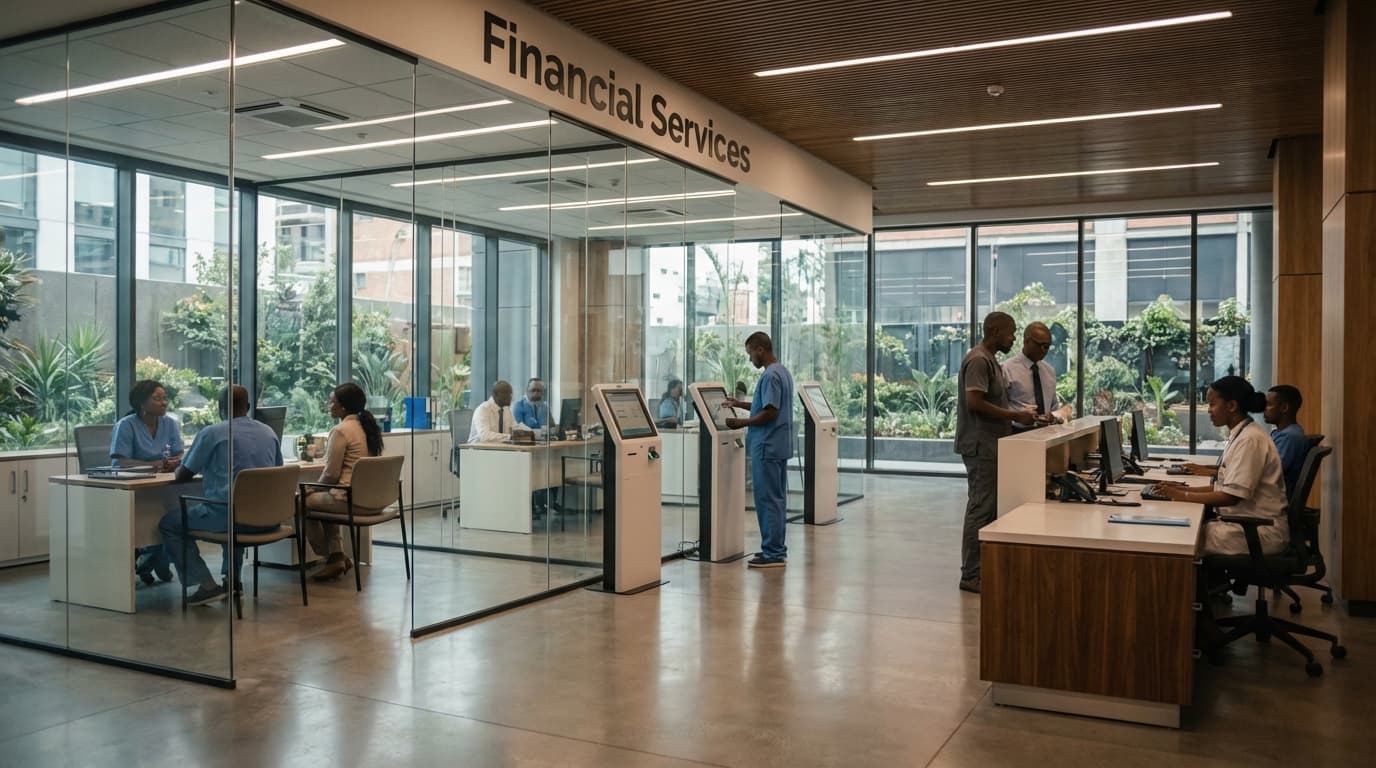
Medical Equipment Financing in Congo (Kinshasa)
Engineering Excellence & Technical Support
Leasing and financing solutions for medical equipment High-standard technical execution following OEM protocols and local regulatory frameworks.
Streamlined Asset Acquisition for Healthcare Providers
We offer tailored financing solutions for state-of-the-art medical equipment, empowering hospitals and clinics in Congo (Kinshasa) to upgrade their facilities with cutting-edge technology without significant upfront capital outlay. Our flexible repayment plans are designed to match your revenue cycles.
Bridging the Funding Gap for Essential Medical Infrastructure
Our specialized financing programs address the unique challenges of the Congolese healthcare sector. We provide access to capital for diagnostic imaging, surgical tools, laboratory equipment, and more, facilitating improved patient care and diagnostic capabilities across the region.
Secure and Transparent Equipment Financing with Local Expertise
Leveraging a deep understanding of the local regulatory landscape and economic conditions in Congo (Kinshasa), we offer secure and transparent financing options. Our process minimizes risk for both lenders and borrowers, ensuring reliable access to critical medical assets.
What Is Medical Equipment Financing In Congo (Kinshasa)?
Medical Equipment Financing in Congo (Kinshasa) refers to the provision of capital through various financial instruments to enable healthcare providers, institutions, and governmental bodies to acquire, upgrade, or replace essential medical devices and machinery. This service is crucial for enhancing diagnostic capabilities, treatment efficacy, patient care quality, and overall healthcare infrastructure development within the Democratic Republic of Congo's capital. It addresses the significant capital expenditure associated with modern medical technology, often beyond the immediate liquidity of many healthcare entities in the region.
| Beneficiary Category | Specific Needs Addressed | Typical Use Cases |
|---|---|---|
| Public Hospitals and Clinics | Acquisition of advanced diagnostic imaging equipment (MRI, CT scanners), surgical instruments, patient monitoring systems, and essential laboratory analyzers to improve service capacity and accuracy. | Replacing outdated radiology equipment, expanding surgical suites, establishing new intensive care units, enhancing diagnostic testing for infectious diseases. |
| Private Healthcare Facilities (Clinics, Diagnostic Centers, Hospitals) | Upgrading to state-of-the-art equipment for competitive advantage, expanding service offerings, and meeting growing patient demand for specialized care. | Purchasing new endoscopy units, acquiring advanced ultrasound machines, investing in modern dental chairs, procuring specialized physiotherapy equipment. |
| Non-Governmental Organizations (NGOs) and International Aid Agencies | Financing for equipment used in public health initiatives, mobile clinics, and projects aimed at underserved populations. | Equipping mobile health units for remote areas, procuring equipment for maternal and child health programs, supporting trauma care facilities. |
| Governmental Health Ministries and Agencies | Funding for national health infrastructure projects, procurement of bulk medical supplies and equipment for public health emergencies, and upgrading referral hospitals. | Establishing national medical logistics and warehousing systems, financing the installation of oxygen generation plants, acquiring emergency response vehicles with medical equipment. |
| Medical Training and Research Institutions | Acquiring specialized equipment for educational purposes, clinical simulation, and advanced medical research. | Purchasing advanced anatomical models for training, acquiring laboratory equipment for biomedical research, funding the acquisition of simulation mannequins for surgical training. |
Key Aspects of Medical Equipment Financing in Congo (Kinshasa)
- Loan Structures: Typically involves term loans, leases (operating or finance), or specialized financing packages tailored to the lifecycle and depreciation of medical assets.
- Asset-Based Lending: The medical equipment itself often serves as collateral, mitigating lender risk.
- Vendor Partnerships: Manufacturers and distributors of medical equipment frequently collaborate with financial institutions to offer bundled financing solutions to end-users.
- Risk Assessment: Financial institutions conduct thorough due diligence, evaluating the creditworthiness of the borrower, the operational viability of the equipment, and the projected revenue generation potential.
- Regulatory Compliance: Financing agreements must adhere to Congolese financial regulations and healthcare sector policies.
- Currency Considerations: Transactions may involve local currency (CDF) or international currencies, necessitating strategies for exchange rate management.
Who Needs Medical Equipment Financing In Congo (Kinshasa)?
Medical equipment financing in Congo (Kinshasa) is a critical need for various healthcare providers and institutions striving to upgrade their facilities, improve patient care, and expand their services. Access to modern and reliable medical technology can be a significant barrier due to the substantial upfront costs involved. Financing solutions bridge this gap, enabling a wider range of stakeholders to acquire essential equipment.
| Department/Unit | Typical Equipment Needs | Financing Justification |
|---|---|---|
| Radiology/Imaging | X-ray machines, CT scanners, MRI machines, ultrasound devices, mammography units | Essential for diagnosis, improved accuracy, and handling a higher patient load. |
| Surgery | Surgical tables, anesthesia machines, electrosurgical units, surgical lights, patient monitors | Enables a wider range of surgical procedures, enhances patient safety during operations. |
| Intensive Care Unit (ICU) | Ventilators, defibrillators, specialized patient monitors, infusion pumps | Crucial for critical care, supporting life and monitoring vital signs of severely ill patients. |
| Emergency Room (ER) | Cardiac monitors, portable X-ray units, resuscitation equipment, stretchers | Facilitates rapid assessment and stabilization of emergency patients. |
| Laboratory Services | Hematology analyzers, biochemistry analyzers, microscopes, centrifuges, PCR machines | Supports accurate and timely diagnostic testing, crucial for disease management. |
| Maternity and Neonatal Care | Incubators, phototherapy units, fetal monitors, delivery tables | Improves outcomes for newborns and mothers, addresses specific neonatal needs. |
| General Wards/Outpatient Departments | Examination tables, diagnostic tools (e.g., ECG machines, otoscopes), basic medical furniture | Enhances routine patient care and diagnostic capabilities for a broader patient base. |
| Rehabilitation Services | Therapy equipment, exercise machines, mobility aids | Supports patient recovery and improves quality of life post-illness or injury. |
Target Customers for Medical Equipment Financing in Congo (Kinshasa)
- Public Hospitals and Health Centers
- Private Hospitals and Clinics
- Specialized Medical Centers (e.g., diagnostic labs, radiology centers)
- Non-Governmental Organizations (NGOs) operating health programs
- Medical Training Institutions
- Small to Medium-sized Enterprises (SMEs) in the healthcare sector
Medical Equipment Financing Process In Congo (Kinshasa)
Financing medical equipment in Congo (Kinshasa) involves a structured process to ensure compliance, risk assessment, and successful acquisition. The workflow typically begins with an inquiry from a healthcare provider or institution and culminates in the execution of the financing agreement and delivery of the equipment.
| Stage | Description | Key Activities | Responsible Parties | Typical Documentation |
|---|---|---|---|---|
| Inquiry & Initial Consultation | The healthcare provider expresses interest in financing medical equipment. | Understanding the client's needs, discussing financing options (loan, lease), preliminary eligibility check. | Healthcare Provider (Client), Financing Institution (Bank, Leasing Company) | Initial meeting minutes, brief needs outline |
| Needs Assessment & Equipment Specification | Detailed understanding of the specific medical equipment required. | Gathering detailed specifications, models, quantities, and any associated software or accessories; obtaining quotes from suppliers. | Healthcare Provider (Client), Financing Institution (Client Support Team) | Equipment specifications sheets, supplier quotes, technical datasheets |
| Financial & Creditworthiness Assessment | Evaluating the financial health and capacity of the healthcare provider to repay the financing. | Reviewing financial statements, cash flow projections, credit history, collateral assessment, market analysis. | Financing Institution (Credit Department, Risk Analysts) | Audited financial statements, bank statements, tax returns, business plan, legal entity documents |
| Proposal & Offer Generation | Based on the assessment, the financing institution formulates a financing proposal. | Determining loan/lease amount, interest rates, repayment terms, collateral requirements, and any service level agreements. | Financing Institution (Business Development, Credit Committee) | Financing proposal, term sheet, preliminary offer letter |
| Legal & Compliance Review | Ensuring the financing arrangement complies with Congolese laws and regulations. | Reviewing legal structures, regulatory requirements (e.g., medical device registration), anti-money laundering (AML) checks, KYC (Know Your Customer) procedures. | Financing Institution (Legal Department, Compliance Officers), Healthcare Provider (Legal Counsel) | Company registration documents, identification documents, legal opinions, compliance checklists |
| Loan/Lease Agreement & Documentation | Formalizing the financing agreement. | Drafting and negotiating the loan or lease agreement, security agreements, and other necessary legal documents. | Financing Institution (Legal Department), Healthcare Provider (Legal Counsel) | Loan agreement, lease agreement, promissory note, security agreements, personal guarantees (if applicable) |
| Equipment Procurement & Delivery | The client or financing institution procures the specified medical equipment. | Placing orders with approved suppliers, managing logistics, customs clearance, and delivery to the healthcare facility. | Healthcare Provider (Procurement Department), Financing Institution (Procurement Support), Equipment Supplier | Purchase orders, invoices, shipping documents, customs declarations, delivery receipts |
| Disbursement & Installation | Funds are disbursed, and the equipment is installed. | Transferring loan funds to the supplier or client, overseeing the installation and commissioning of the equipment, initial training. | Financing Institution (Treasury, Operations), Healthcare Provider (Technical Team), Equipment Supplier | Disbursement confirmation, installation reports, commissioning certificates, training documentation |
| Post-Execution Monitoring & Repayment | Ongoing management of the financing and equipment. | Monitoring loan/lease payments, ensuring equipment maintenance (if applicable), periodic review of the healthcare provider's financial status. | Financing Institution (Account Management, Collections), Healthcare Provider (Finance Department) | Payment schedules, account statements, performance reports, insurance certificates |
Medical Equipment Financing Process in Congo (Kinshasa) - Workflow Stages
- Inquiry & Initial Consultation
- Needs Assessment & Equipment Specification
- Financial & Creditworthiness Assessment
- Proposal & Offer Generation
- Legal & Compliance Review
- Loan/Lease Agreement & Documentation
- Equipment Procurement & Delivery
- Disbursement & Installation
- Post-Execution Monitoring & Repayment
Medical Equipment Financing Cost In Congo (Kinshasa)
Financing medical equipment in Congo (Kinshasa) involves a complex interplay of factors that influence both the cost of the equipment itself and the terms of the financing. Understanding these pricing factors is crucial for healthcare providers seeking to acquire or upgrade essential medical technology. The local currency, the Congolese Franc (CDF), is subject to fluctuations, which can impact the final cost of imported equipment and associated financing charges. Interest rates, loan terms, the creditworthiness of the borrower, and the specific type and sophistication of the medical equipment are all significant drivers of financing costs.
| Equipment Category | Estimated Financing Cost Range (Annual Interest Rate %) | Notes on Local Currency (CDF) Impact |
|---|---|---|
| Basic Diagnostic Equipment (e.g., Digital X-ray, Ultrasound) | 18% - 30% | CDF fluctuations can add 5-15% to the landed cost of imported units, directly increasing the principal financed and subsequent interest. Higher domestic inflation can push local interest rates up. |
| Mid-Range Imaging (e.g., Advanced Ultrasound, Basic CT Scanner) | 20% - 35% | Significant impact of import duties (often 20-30% on landed cost). Financing at higher risk premiums due to advanced technology and potential import bottlenecks. |
| High-End Imaging/Surgical (e.g., MRI, Sophisticated Surgical Lights, Endoscopes) | 25% - 40% | Substantial import duties and taxes. Financing requires strong collateral and often involves international currency hedging considerations. CDF depreciation can make repayment in USD-denominated loans extremely costly. |
| Laboratory Equipment (e.g., Automated Analyzers, Microscopes) | 19% - 32% | Depends on automation level and brand. Import costs are a major factor. Maintenance contracts can be a significant component of the total financed amount. |
| Specialized Medical Furniture & Devices (e.g., Hospital Beds, Anesthesia Machines) | 17% - 28% | Generally lower financing rates than complex machinery. Local manufacturing or sourcing can mitigate some import-related CDF impacts, but quality and availability can vary. |
Key Pricing Factors for Medical Equipment Financing in Congo (Kinshasa)
- Equipment Type and Sophistication: Advanced imaging machines (MRI, CT scanners), complex surgical robots, and specialized diagnostic tools will naturally have higher acquisition costs, leading to higher financing needs and, consequently, higher overall financing charges.
- Equipment Brand and Manufacturer: Reputable international brands often come with a premium price tag due to their perceived quality, reliability, and after-sales support. Local sourcing, if available, might offer cost advantages but could also come with trade-offs in technology or warranty.
- Import Duties and Taxes: As much of the advanced medical equipment is imported, significant import duties, value-added tax (VAT), and other customs-related charges will be levied. These directly inflate the base cost of the equipment, increasing the financing requirement.
- Currency Exchange Rate Fluctuations: The Congolese Franc (CDF) can experience volatility against major currencies like the US Dollar or Euro, especially for imported goods. Financing arrangements often need to account for potential currency depreciation, which can increase the cost of repayment in CDF.
- Financing Institution's Risk Assessment: Lenders (banks, specialized finance companies) will assess the borrower's financial health, credit history, and the project's viability. Higher perceived risk can lead to higher interest rates and less favorable loan terms.
- Interest Rates: These are a primary driver of financing costs. Rates in Congo (Kinshasa) can be influenced by the central bank's monetary policy, inflation levels, and the overall economic climate. Rates are typically expressed as an annual percentage.
- Loan Term/Duration: The length of the financing agreement directly impacts the total interest paid. Longer terms spread the repayment over time but generally result in higher total interest costs.
- Down Payment/Upfront Contribution: A larger down payment reduces the principal amount to be financed, thus lowering the overall financing cost. It also demonstrates financial commitment from the borrower, potentially leading to better loan terms.
- Ancillary Costs: These can include installation fees, training for medical staff, maintenance contracts, and insurance, all of which might be bundled into the financing package or considered separately.
- Provider's Profit Margin and Markups: Both equipment suppliers and financing institutions will incorporate their operational costs and profit margins into the final price.
- Market Demand and Supply: The availability and demand for specific types of medical equipment can influence pricing. Scarce or highly sought-after equipment may command higher prices.
Affordable Medical Equipment Financing Options
Acquiring essential medical equipment can be a significant investment for healthcare providers. Fortunately, numerous affordable financing options exist to make this process more manageable. Beyond simple loans, understanding value bundles and implementing cost-saving strategies can further optimize your financial approach. Value bundles combine equipment with related services, such as maintenance, training, or software, often at a discounted package price. Cost-saving strategies encompass a range of approaches, from negotiating better terms to exploring pre-owned or refurbished options. By leveraging these strategies, healthcare facilities can secure the necessary equipment without compromising their budget.
| Strategy | Description | Benefits | Considerations |
|---|---|---|---|
| Value Bundling | Purchasing equipment along with associated services (maintenance, training, software) as a package deal. | Often provides a lower overall cost compared to purchasing items separately. Simplifies procurement and vendor management. | Ensure the included services align with your actual needs. Compare bundle costs to individual service costs. |
| Negotiating Bulk Discounts | Purchasing multiple pieces of equipment or services from a single vendor at a reduced price. | Significant cost savings on larger orders. Streamlines purchasing process. | Requires careful planning and assessment of future needs to avoid over-purchasing. |
| Exploring Pre-Owned or Refurbished Equipment | Acquiring used equipment that has been inspected, repaired, and certified. | Substantially lower upfront cost compared to new equipment. Often comes with a warranty. | Thoroughly vet the vendor and the condition of the equipment. Understand warranty limitations. |
| Lease-to-Own Options | A lease agreement where the option to purchase the equipment at the end of the lease term is included. | Lower initial payments than outright purchase. Allows for equipment upgrades. Ownership at the end of term. | Understand the buyout clause and its cost. Compare total lease payments to purchase price. |
| Phased Purchasing | Acquiring equipment in stages based on need and budget availability. | Manages cash flow effectively. Allows for adoption of newer technologies as they become available. | May lead to a less integrated system if not planned carefully. Potential for higher per-unit cost in later purchases. |
| Partnerships and Collaborations | Collaborating with other healthcare facilities to share equipment or leverage joint purchasing power. | Reduced individual investment. Access to specialized equipment not needed full-time. | Requires strong agreements and clear protocols for usage and maintenance. |
Key Affordable Medical Equipment Financing Options
- Traditional Equipment Loans: Direct loans from banks or credit unions specifically for purchasing medical equipment.
- Leasing Agreements: Renting equipment for a fixed period, offering lower upfront costs and predictable monthly payments.
- Sale-Leaseback: Selling existing equipment to a leasing company and then leasing it back, freeing up capital.
- Vendor Financing: Many medical equipment manufacturers offer in-house financing options.
- Medical Equipment Financing Companies: Specialized lenders focusing on healthcare equipment.
- Government Grants and Programs: Explore federal, state, and local programs that may offer funding or grants for equipment acquisition.
Verified Providers In Congo (Kinshasa)
Finding reliable and qualified healthcare providers in any region can be a challenge. In Congo (Kinshasa), this is particularly true given the vastness and varying accessibility of services. Franance Health stands out as a leading platform dedicated to connecting individuals with verified medical professionals. Their rigorous credentialing process ensures that all listed providers meet stringent standards for education, experience, and licensing. This commitment to verification is crucial for patient safety and provides a much-needed layer of trust in the healthcare landscape.
| Provider Type | Verification Criteria | Franance Health Advantage |
|---|---|---|
| General Practitioners | Valid Medical License, Medical Degree, Proof of Practice | Verified for competence and ethical practice. |
| Specialists (e.g., Cardiologists, Pediatricians) | All GP criteria plus Board Certification in specialty, Residency completion | Ensures specialized knowledge and advanced training. |
| Surgeons | All Specialist criteria plus Surgical training and experience | Confirms surgical proficiency and safety records. |
| Dentists | Valid Dental License, Dental Degree, Specialty training (if applicable) | Guarantees quality dental care and oral health expertise. |
| Nurses | Registered Nurse License, Relevant certifications | Confirms professional nursing skills and patient care standards. |
Why Franance Health Credentials Matter:
- Rigorous Verification Process: Franance Health doesn't just take providers at their word. They implement a multi-step verification that includes checking medical licenses, educational degrees, board certifications, and professional references.
- Focus on Patient Safety: By ensuring providers are qualified and legitimate, Franance Health directly contributes to the safety and well-being of patients seeking care.
- Access to Expertise: Their network encompasses a wide range of specialists and general practitioners, ensuring that users can find the right healthcare professional for their specific needs.
- Transparency and Trust: The verified status of providers builds confidence, allowing users to make informed decisions about their healthcare journey.
- Streamlined Healthcare Access: Franance Health simplifies the process of finding and booking appointments with qualified doctors, saving users valuable time and reducing stress.
Scope Of Work For Medical Equipment Financing
This Scope of Work (SOW) outlines the requirements for a Medical Equipment Financing program. It details the technical deliverables expected from the financing provider and the standard specifications that the financed medical equipment must meet. The objective is to ensure that the procured equipment is of high quality, suitable for its intended clinical use, and supported by robust financing and maintenance arrangements.
| Category | Deliverable/Specification | Description | Acceptance Criteria/Notes |
|---|---|---|---|
| Financing Terms | Financing Agreement | A legally binding contract detailing the loan amount, interest rate, repayment schedule, collateral, and other financial terms. | Must be reviewed and approved by legal and financial departments. Clear depiction of total cost of ownership. |
| Financing Terms | Amortization Schedule | A detailed breakdown of each loan payment, showing the principal and interest components. | Accurate and verifiable against agreed interest rates and repayment terms. |
| Financing Terms | Insurance Documentation | Proof of adequate insurance coverage for the financed equipment against damage, loss, or theft. | Policy details must meet organizational requirements and lender stipulations. |
| Equipment Procurement | Equipment Specification Compliance | Confirmation that the procured equipment precisely matches the agreed-upon technical specifications. | Documented comparison of actual equipment specs against SOW requirements. Includes manufacturer datasheets. |
| Equipment Procurement | Manufacturer Warranty | Valid manufacturer's warranty documentation for all financed equipment. | Minimum warranty period as per industry standards and specific equipment requirements (e.g., 1-3 years). |
| Equipment Procurement | Certifications and Approvals | Evidence of all necessary regulatory certifications and approvals (e.g., FDA, CE marking, local health authority approvals). | Copies of certificates must be provided. Equipment must be cleared for clinical use in the relevant jurisdiction. |
| Installation & Commissioning | Professional Installation | On-site installation by qualified technicians, adhering to manufacturer guidelines and safety standards. | Installation report signed by both provider and hospital representative. Pre-installation site assessment required. |
| Installation & Commissioning | Commissioning and Calibration | Thorough testing, calibration, and performance verification of the equipment to ensure it meets operational parameters. | Commissioning report including test results, calibration logs, and performance benchmarks. Functional demonstration to end-users. |
| Maintenance & Support | Service Level Agreement (SLA) for Maintenance | A comprehensive SLA outlining response times, preventative maintenance schedules, corrective maintenance procedures, and spare parts availability. | Guaranteed response time for critical failures (e.g., <4 hours). Preventative maintenance at least annually. |
| Maintenance & Support | Technical Support Availability | Access to qualified technical support for troubleshooting and operational assistance. | 24/7 technical support hotline for critical equipment. Defined hours for non-critical support. |
| Maintenance & Support | Training Documentation | Provision of comprehensive user and technical training manuals, and delivery of training sessions. | Training sessions conducted for clinical staff and biomedical engineers. Documentation in English and local language where applicable. |
| Documentation | Equipment Manuals | Complete set of original manufacturer's operating, service, and parts manuals for each piece of equipment. | Digital and/or hard copies provided. Accessible throughout the equipment's lifecycle. |
| Documentation | Asset Register Inclusion | All financed equipment details to be provided for inclusion in the organization's asset management system. | Unique asset tag, serial number, model, purchase date, financing details, and warranty information. |
Key Objectives of the Medical Equipment Financing Program
- To acquire state-of-the-art medical equipment that enhances patient care and clinical outcomes.
- To secure flexible and cost-effective financing solutions for the acquisition of medical equipment.
- To ensure all financed equipment adheres to stringent technical and safety standards.
- To establish reliable maintenance and support services for the financed equipment throughout its lifecycle.
- To optimize the utilization and operational efficiency of acquired medical assets.
Service Level Agreement For Medical Equipment Financing
This Service Level Agreement (SLA) outlines the response times and uptime guarantees for medical equipment financing services provided by [Your Company Name] to [Client Name]. This SLA is an integral part of the Master Service Agreement (MSA) dated [MSA Date].
| Service Component | Priority Level | Response Time (Business Hours) | Target Resolution Time (Business Hours) | Uptime Guarantee (%) | Service Credit (per incident/period) |
|---|---|---|---|---|---|
| System Access & Loan Management Portal | Critical (e.g., inability to process payments, view critical loan data) | 1 Hour | 4 Business Hours | 99.9% | 5% of monthly financing fee |
| System Access & Loan Management Portal | High (e.g., difficulty accessing non-critical loan data, slow portal performance) | 2 Business Hours | 8 Business Hours | 99.5% | 3% of monthly financing fee |
| General Inquiries & Support Requests | Medium (e.g., questions about billing, loan terms, general support) | 4 Business Hours | 24 Business Hours | N/A | N/A |
| Routine Maintenance & Scheduled Downtime | Informational | N/A | N/A | Scheduled during off-peak hours with minimum 48-hour notice | N/A |
Key Performance Indicators (KPIs)
- Response Time: The maximum time within which [Your Company Name] will acknowledge and begin addressing a reported issue.
- Uptime Guarantee: The minimum percentage of time the financed medical equipment is expected to be operational and accessible, subject to maintenance and scheduled downtime.
- Resolution Time: The target time within which [Your Company Name] will aim to resolve an issue, depending on its complexity.
- Service Credit: Compensation provided to the client in the event of a failure to meet the defined uptime guarantees.
Frequently Asked Questions

Ready when you are
Let's scope your Medical Equipment Financing in Congo (Kinshasa) project in Congo (Kinshasa).

Scaling healthcare logistics and technical systems across the entire continent.