
Diagnostic Imaging in Congo (Kinshasa)
Engineering Excellence & Technical Support
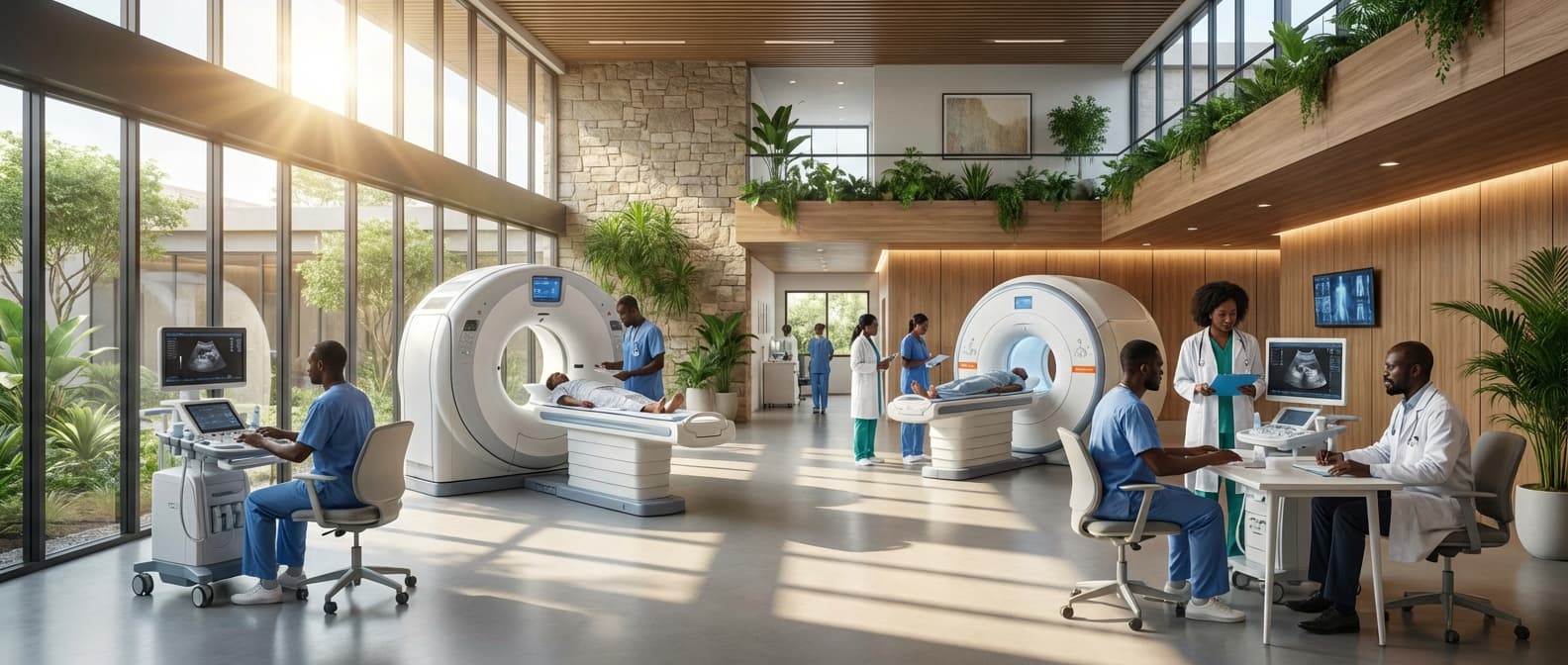
High-resolution imaging systems including CT scanners, MRI, X-ray, and ultrasound technology for accurate clinical diagnosis. High-standard technical execution following OEM protocols and local regulatory frameworks.
Mobile X-ray Units for Remote Outreach
Deployment of rugged, portable X-ray machines to reach underserved populations in remote areas of Kinshasa. This technology allows for on-site diagnostic imaging, reducing the burden of travel for patients and enabling early detection of common conditions like tuberculosis and fractures.
AI-Assisted Ultrasound for Point-of-Care Diagnosis
Implementing AI-powered ultrasound devices that provide real-time diagnostic assistance to local healthcare professionals. This technology enhances accuracy for obstetric scans, abdominal examinations, and point-of-care ultrasound (POCUS) in emergency settings, especially in facilities with limited specialist availability.
Cloud-Based PACS for Centralized Medical Imaging
Establishing a Picture Archiving and Communication System (PACS) leveraging cloud infrastructure. This allows for secure storage, retrieval, and sharing of medical images across multiple clinics and hospitals in Kinshasa, facilitating remote consultations, expert reviews, and streamlined patient care pathways.
What Is Diagnostic Imaging In Congo (Kinshasa)?
Diagnostic Imaging in Congo (Kinshasa) refers to the use of advanced medical imaging technologies to visualize the internal structures of the human body for the purpose of diagnosis, treatment monitoring, and medical research. This service is critical for identifying and characterizing a wide range of pathologies, aiding clinicians in making informed medical decisions. The implementation and accessibility of these services in the Democratic Republic of Congo are influenced by factors such as infrastructure, availability of trained personnel, and economic constraints.
| Who Needs Diagnostic Imaging? | Typical Use Cases |
|---|---|
| Patients presenting with unexplained pain or discomfort. | Fracture detection and assessment of bone integrity. |
| Individuals with suspected internal injuries following trauma. | Diagnosis and staging of various cancers (e.g., lung, abdominal, brain). |
| Patients with neurological symptoms (e.g., headaches, seizures, weakness). | Evaluation of neurological conditions such as stroke, tumors, and spinal cord injuries. |
| Pregnant women requiring monitoring of fetal development and maternal health. | Assessment of cardiovascular health, including blood vessel blockages and heart abnormalities. |
| Individuals undergoing pre-operative evaluation or post-operative follow-up. | Guidance for biopsies and other minimally invasive procedures. |
| Patients with suspected infections affecting internal organs. | Diagnosis of infectious diseases, including pneumonia, appendicitis, and abscesses. |
| Individuals requiring monitoring of chronic conditions. | Evaluation of gastrointestinal disorders, such as ulcers and obstructions. |
Components of Diagnostic Imaging Services
- Radiography (X-ray): The most fundamental imaging modality, utilizing electromagnetic radiation to produce images of bones, lungs, and other dense tissues.
- Computed Tomography (CT) Scan: Employs X-rays taken from multiple angles to create cross-sectional images of the body, providing detailed views of soft tissues, blood vessels, and organs.
- Magnetic Resonance Imaging (MRI): Uses strong magnetic fields and radio waves to generate highly detailed images of soft tissues, brain, spinal cord, muscles, and ligaments.
- Ultrasound (Sonography): Employs high-frequency sound waves to create real-time images of internal organs, blood flow, and fetuses during pregnancy.
- Fluoroscopy: A specialized X-ray technique that produces real-time moving images, often used for dynamic studies of the digestive system or during interventional procedures.
- Mammography: A specialized X-ray technique for examining breast tissue to screen for and diagnose breast cancer.
Who Needs Diagnostic Imaging In Congo (Kinshasa)?
Diagnostic imaging plays a crucial role in modern healthcare by providing non-invasive ways to visualize the internal structures of the body. In Congo (Kinshasa), access to and utilization of these technologies are vital for accurate diagnosis, effective treatment planning, and patient management across various medical disciplines. This document outlines the key target customers and departments that benefit significantly from diagnostic imaging services in Congo (Kinshasa).
| Department | Key Patient Populations | Common Imaging Modalities Used | Diagnostic Needs Addressed |
|---|---|---|---|
| Radiology/Medical Imaging | All patient age groups, across all specialties | X-ray, CT Scan, MRI, Ultrasound, Mammography | Screening, diagnosis of fractures, infections, tumors, vascular diseases, organ abnormalities, trauma assessment |
| Emergency Medicine/Trauma | Patients with acute injuries, accidents, and medical emergencies | X-ray, CT Scan, Ultrasound | Rapid assessment of fractures, internal bleeding, organ damage, head injuries, and other life-threatening conditions |
| Surgery (General, Orthopedic, Neurosurgery, etc.) | Patients requiring surgical intervention or post-operative monitoring | X-ray, CT Scan, MRI, Ultrasound | Pre-operative planning, intra-operative guidance, post-operative assessment of complications, monitoring of surgical outcomes |
| Internal Medicine/General Practice | Patients presenting with a wide range of symptoms and conditions | X-ray, Ultrasound, CT Scan | Diagnosis of pneumonia, abdominal pain, liver/kidney issues, cardiac conditions, gastrointestinal problems |
| Cardiology | Patients with suspected or confirmed heart disease | Echocardiography (Ultrasound), Cardiac CT, Cardiac MRI | Assessment of heart structure and function, coronary artery disease, valve disorders, congenital heart defects |
| Neurology/Neurosurgery | Patients with neurological disorders or head/spinal injuries | MRI, CT Scan, X-ray | Diagnosis of stroke, brain tumors, multiple sclerosis, epilepsy, spinal cord injuries, degenerative diseases |
| Oncology | Patients diagnosed with or suspected of having cancer | CT Scan, MRI, PET Scan (where available), Ultrasound, X-ray | Staging of cancer, monitoring treatment response, detecting recurrence, palliative care imaging |
| Obstetrics and Gynecology (OB/GYN) | Pregnant women and women with gynecological conditions | Ultrasound (Obstetric and Pelvic), MRI (selected cases) | Fetal well-being monitoring, detection of pregnancy complications, assessment of uterine fibroids, ovarian cysts, and other gynecological masses |
| Pediatrics | Infants, children, and adolescents with various medical conditions | X-ray, Ultrasound, CT Scan, MRI | Diagnosis of congenital abnormalities, infections, fractures, developmental issues, childhood cancers |
| Urology | Patients with urinary tract and male reproductive system issues | Ultrasound, CT Scan, X-ray (KUB) | Assessment of kidney stones, urinary tract infections, prostate cancer, bladder abnormalities |
| Pulmonology | Patients with respiratory conditions | X-ray (Chest), CT Scan (Thoracic) | Diagnosis of pneumonia, tuberculosis, lung nodules, emphysema, interstitial lung diseases |
| Dermatology | Limited but can include imaging for certain skin conditions or underlying issues. | Ultrasound | Assessment of subcutaneous lesions or deeper tissue involvement |
Target Customers & Departments for Diagnostic Imaging in Congo (Kinshasa)
- Hospitals (Public and Private)
- Specialty Clinics (e.g., Cardiology, Neurology, Oncology)
- Referral Centers
- Maternity and Children's Hospitals
- Trauma and Emergency Centers
- Research and Academic Institutions
- Government Health Agencies
Diagnostic Imaging Process In Congo (Kinshasa)
The diagnostic imaging process in Congo (Kinshasa) is a multi-step workflow that begins with a patient's medical need and culminates in the delivery of crucial imaging results to inform clinical decisions. This process, while facing resource limitations and infrastructure challenges common in developing nations, generally follows a structured sequence from initial inquiry to the final execution of the imaging procedure. Understanding this workflow is vital for appreciating the operational realities and potential areas for improvement within the Congolese healthcare system.
| Stage | Description | Key Stakeholders | Common Challenges in Congo (Kinshasa) | Potential Solutions/Improvements |
|---|---|---|---|---|
| Patient Referral and Inquiry | A healthcare provider identifies the need for diagnostic imaging. The patient or their caregiver then initiates contact with an imaging center or hospital. This often involves presenting a referral slip from the doctor. | Referring Physician, Patient/Caregiver, Receptionist/Clerical Staff | Limited awareness of imaging services, geographical distance to facilities, transportation difficulties, potential for informal payment requests. | Public health campaigns on the importance of imaging, mobile clinics, improved referral systems, standardized pricing, patient advocacy programs. |
| Appointment Scheduling and Preparation | Based on the type of imaging required and the facility's availability, an appointment is scheduled. Patients receive instructions regarding preparation, which may include fasting, medication adjustments, or bringing specific documents. | Radiology Department Staff, Radiographer/Technician, Patient/Caregiver | Long waiting times for appointments, inconsistent communication of preparation instructions, lack of access to necessary preparation materials (e.g., contrast agents). | Digital appointment systems (even basic SMS reminders), clear and multilingual preparation guides, partnerships for affordable contrast agent supply, prioritization of urgent cases. |
| Imaging Procedure Execution | The patient undergoes the specified imaging examination (e.g., X-ray, ultrasound, CT scan, MRI). This involves positioning the patient, operating the equipment, and acquiring the images. | Radiographer/Technician, Radiologist (for guidance), Patient | Aging and poorly maintained equipment, frequent power outages, scarcity of skilled radiographers/technicians, limited availability of specialized imaging modalities, insufficient consumables (e.g., film, ultrasound gel). | Investment in modern, durable equipment, reliable power backup systems (generators, solar), training and retention programs for technical staff, mobile imaging units, partnerships for equipment maintenance and spare parts. |
| Image Processing and Interpretation | Acquired images are processed (if digital) and then meticulously analyzed by a qualified radiologist who identifies any abnormalities or findings relevant to the patient's condition. | Radiologist, Radiographer/Technician (for image quality checks) | Shortage of radiologists, reliance on manual film processing (where digital is not available), potential for misinterpretation due to fatigue or heavy workload, lack of advanced imaging software. | Tele-radiology initiatives to connect with radiologists remotely, training for a larger pool of radiologists, upgrading to digital imaging systems, continuous professional development for radiologists. |
| Report Generation and Delivery | A detailed report outlining the imaging findings and conclusions is generated by the radiologist. This report is then communicated back to the referring physician. | Radiologist, Administrative Staff, Referring Physician | Delays in report generation, incomplete or ambiguous reports, difficulties in secure and timely report delivery (e.g., reliance on physical copies, poor communication networks). | Standardized reporting templates, electronic report transmission systems (even basic email or secure messaging), courier services for physical reports, clear communication protocols. |
| Follow-up and Clinical Integration | The referring physician reviews the imaging report in conjunction with the patient's clinical information to make a definitive diagnosis and treatment plan. This may involve further imaging or other investigations. | Referring Physician, Patient, Other Specialists | Lack of integration between imaging departments and other clinical services, poor patient follow-up mechanisms, limited understanding of imaging limitations by some referring physicians. | Interdisciplinary case conferences, patient tracking systems, continuing medical education for referring physicians on imaging interpretation and utilization, patient education on the importance of follow-up. |
Diagnostic Imaging Workflow in Congo (Kinshasa)
- Patient Referral and Inquiry
- Appointment Scheduling and Preparation
- Imaging Procedure Execution
- Image Processing and Interpretation
- Report Generation and Delivery
- Follow-up and Clinical Integration
Diagnostic Imaging Cost In Congo (Kinshasa)
Diagnostic imaging services in Kinshasa, Democratic Republic of Congo, are a critical but often expensive component of healthcare. The cost of these procedures can vary significantly based on several factors, making it challenging to provide exact, universally applicable price ranges. Understanding these influencing elements is crucial for patients and healthcare providers alike.
| Imaging Modality | Estimated Price Range (Congolese Franc - CDF) | Notes |
|---|---|---|
| X-ray (e.g., Chest, Limb) | 20,000 - 80,000 CDF | Basic diagnostic imaging, generally the most accessible. |
| Ultrasound (e.g., Abdominal, Pelvic, Obstetric) | 30,000 - 120,000 CDF | Common for soft tissue imaging and pregnancy monitoring. Price can vary based on the area scanned and whether Doppler is used. |
| CT Scan (e.g., Head, Abdomen, Chest) | 150,000 - 500,000+ CDF | Significant variation depending on whether contrast is used and the number of slices/sections. Can be considerably higher in private facilities. |
| MRI (e.g., Brain, Spine, Joints) | 300,000 - 1,000,000+ CDF | Generally the most expensive. Prices are heavily influenced by the specific body part, the need for contrast, and the MRI machine's field strength. |
| Mammography | 50,000 - 150,000 CDF | Cost can vary depending on whether it's a screening or diagnostic mammogram. |
| Fluoroscopy | 60,000 - 200,000 CDF | Used for dynamic imaging, often for procedures like barium swallows or contrast studies. Price depends on complexity. |
Key Factors Influencing Diagnostic Imaging Costs in Kinshasa
- Type of Imaging Modality: Different technologies have vastly different acquisition and maintenance costs. X-rays are generally the most affordable, followed by ultrasounds, CT scans, and the most expensive, MRIs.
- Location and Type of Facility: Private hospitals and specialized imaging centers typically charge higher fees than public hospitals or smaller clinics. The reputation and perceived quality of the facility also play a role.
- Complexity of the Procedure: A simple chest X-ray will be less expensive than a contrast-enhanced CT scan of a complex organ or a specialized MRI sequence.
- Need for Contrast Agents: The use of contrast dyes, which enhance visibility in CT and MRI scans, adds to the overall cost.
- Radiologist Expertise and Reporting: The qualifications and experience of the radiologist interpreting the images and generating the report can influence the price.
- Equipment Age and Technology: Newer, more advanced equipment may command higher prices due to its cost of acquisition and maintenance, but also potentially offers better diagnostic capabilities.
- Overhead Costs of the Facility: This includes rent, utilities, staff salaries, and administrative expenses, which are factored into service pricing.
- Insurance Coverage (or lack thereof): While not as widespread as in some developed nations, any existing health insurance or government programs can significantly alter out-of-pocket expenses for patients. Many individuals pay out-of-pocket, directly impacting affordability.
- Geographic Location within Kinshasa: While not as pronounced as between major cities, there might be slight variations in pricing between different communes or districts within Kinshasa, reflecting local economic conditions and competition.
- Urgency of the Scan: In some instances, emergency or STAT (immediate) requests might incur a surcharge.
Affordable Diagnostic Imaging Options
Navigating the healthcare landscape can be complex, and diagnostic imaging is no exception. Fortunately, there are ways to access necessary imaging services without breaking the bank. Understanding value bundles and implementing cost-saving strategies can significantly reduce your out-of-pocket expenses. Value bundles offer a package of related services at a predetermined price, often leading to savings compared to paying for each service individually. Cost-saving strategies involve proactive steps like comparing prices, exploring out-of-network options (if applicable), and utilizing your insurance benefits effectively.
| Service Type | Potential Cost-Saving Strategy | Notes |
|---|---|---|
| MRI | Price Comparison (multiple facilities) | Prices can differ by hundreds or even thousands of dollars. |
| CT Scan | Inquire about 'package deals' or bundled services for related scans | Some facilities offer discounts for multiple scans performed on the same day. |
| X-ray | Utilize urgent care centers or walk-in clinics for basic X-rays | Often more affordable than hospital emergency rooms for non-emergency situations. |
| Ultrasound | Ask about out-of-pocket discounts or bundled pricing for pregnancy ultrasounds | Some fertility or pregnancy centers offer package deals. |
| PET Scan | Verify in-network status rigorously | These are high-cost procedures; staying in-network is crucial. |
| All Imaging | Negotiate prices if paying entirely out-of-pocket | Don't be afraid to ask for a better rate, especially if you're a self-pay patient. |
Cost-Saving Strategies for Diagnostic Imaging
- Compare Prices: Obtain quotes from multiple imaging centers and hospitals. Prices can vary significantly for the same procedure.
- Ask About Cash Prices: If you're paying out-of-pocket, inquire about discounted cash prices, which are often lower than billed insurance rates.
- Understand Your Insurance Benefits: Review your policy to understand your deductible, co-pays, co-insurance, and whether the imaging provider is in-network.
- Check for Prior Authorization: Many insurance plans require prior authorization for certain imaging procedures. Failing to get this can result in denied claims.
- Explore Out-of-Network Options (with caution): Sometimes, out-of-network providers may offer lower self-pay rates, but factor in potential higher out-of-pocket costs after insurance.
- Utilize HSAs/FSAs: If you have a Health Savings Account (HSA) or Flexible Spending Account (FSA), use these pre-tax dollars to pay for imaging services.
- Seek Physician Referrals to Cost-Effective Providers: Ask your doctor if they can recommend imaging centers known for competitive pricing.
- Consider Telehealth Consultations: For some pre-imaging discussions or follow-ups, telehealth might be an option, saving on travel and potentially consultation fees.
Verified Providers In Congo (Kinshasa)
Finding reliable healthcare providers in a dynamic environment like Congo (Kinshasa) can be challenging. Franance Health distinguishes itself by its commitment to verifying its network of healthcare professionals, ensuring patients receive quality care from trusted sources. This rigorous credentialing process underpins why Franance Health represents the best choice for accessing medical services.
| Provider Type | Verification Process Highlights | Franance Health Benefit |
|---|---|---|
| General Practitioners | License verification, primary source verification of education and training, background checks. | Access to competent and licensed doctors for your everyday health needs. |
| Specialists (e.g., Cardiologists, Pediatricians, Surgeons) | In-depth review of specialty certifications, hospital affiliations, peer references, and continuous professional development records. | Connection to highly skilled and board-certified specialists for complex medical issues. |
| Dentists | Dental board registration, proof of accredited dental school graduation, practice history review. | Reliable dental care from licensed and experienced professionals. |
| Diagnostic Centers & Labs | Accreditation checks, equipment calibration validation, quality control protocols verification. | Trustworthy diagnostic results from certified and well-equipped facilities. |
| Pharmacies | Pharmacy board licensing, adherence to dispensing regulations, medication sourcing verification. | Access to genuine and safely dispensed medications from legitimate pharmacies. |
What Franance Health's Verified Providers Mean for You:
- Uncompromising Quality: Every provider on the Franance Health network undergoes a thorough vetting process, including verification of licenses, certifications, and professional history. This means you're connecting with qualified and legitimate practitioners.
- Enhanced Patient Safety: By partnering with verified providers, Franance Health significantly reduces the risk of encountering unqualified or fraudulent medical personnel, prioritizing your well-being and safety.
- Access to Expertise: Our network includes a diverse range of specialists and general practitioners, all of whom have met stringent professional standards, ensuring you can find the right care for your specific needs.
- Peace of Mind: Knowing that your healthcare provider has been meticulously checked provides invaluable peace of mind, allowing you to focus on your health and recovery.
- Streamlined Healthcare Navigation: Franance Health simplifies the process of finding trustworthy medical assistance, saving you time and reducing the stress often associated with healthcare searches.
- Commitment to Ethical Practice: Our verification process includes checks for adherence to ethical medical standards and best practices, fostering a patient-centric approach to care.
Scope Of Work For Diagnostic Imaging
This Scope of Work (SOW) outlines the requirements for the provision of diagnostic imaging services. It details the technical deliverables, standard specifications, and expected outcomes for a comprehensive diagnostic imaging program. The objective is to ensure accurate, timely, and high-quality diagnostic imaging to support patient care and clinical decision-making.
| Deliverable Category | Specific Deliverables | Standard Specifications | Acceptance Criteria |
|---|---|---|---|
| Imaging Equipment | Installation and Calibration of all imaging modalities (CT, MRI, X-ray, Ultrasound, etc.) | Equipment must meet or exceed manufacturer's specifications. All installations must comply with relevant safety standards (e.g., radiation safety). Calibration certificates required. | Successful commissioning and testing by an independent third party. Signed acceptance certificate from the client. |
| Image Acquisition | Provision of high-quality diagnostic images for all requested examinations. | Images must be of diagnostic quality, free from artifacts that obscure pathology. Standard protocols for each examination type (e.g., contrast administration, slice thickness for CT/MRI) must be followed and documented. | Radiologist review confirms image quality is sufficient for accurate diagnosis in >98% of examinations. |
| Reporting | Timely and accurate interpretation and reporting of all imaging examinations. | Reports must be clear, concise, and address the clinical question. Reports must be signed by a qualified and licensed radiologist. Turnaround time for routine reports: within 24 hours; urgent reports: within 4 hours. | Report availability within specified turnaround times. Radiologist sign-off and availability for consultation. Peer review of a sample of reports indicates accuracy and completeness. |
| Picture Archiving and Communication System (PACS) | Integration and maintenance of a PACS for image storage, retrieval, and viewing. | PACS must be HIPAA compliant and meet data security standards. Sufficient storage capacity for projected image volume. Robust backup and disaster recovery plan. | System uptime of >99.5%. Successful data retrieval within defined timeframes. Successful integration with Electronic Health Record (EHR) system. |
| Quality Assurance (QA) Program | Implementation and ongoing execution of a comprehensive QA program. | Regular equipment performance testing, image quality assessments, and protocol reviews. Staff training and competency assessments. Compliance with ACR standards or equivalent. | Quarterly QA reports documenting test results and corrective actions. Evidence of ongoing staff training. Positive results from accreditation surveys. |
| Staffing | Provision of qualified and licensed radiology technologists and board-certified radiologists. | All personnel must hold current licenses and certifications. Technologists must be proficient in operating all imaging equipment. Radiologists must be proficient in interpreting all modalities offered. | Verification of licenses and certifications. Competency assessments for technologists. Review of radiologist credentials and experience. |
| Patient Safety and Experience | Adherence to patient safety protocols and provision of a positive patient experience. | Protocols for contrast administration, radiation dose optimization, and patient identification must be strictly followed. Clear patient communication and preparation instructions. | Zero reported patient safety incidents related to imaging procedures. Positive patient satisfaction survey results (>85%). |
| Billing and Coding | Accurate and timely billing for all performed imaging services. | Adherence to all relevant coding guidelines (e.g., CPT, ICD-10). Compliance with all payer requirements. | Billing accuracy rate of >98%. Timely submission of claims. |
Key Imaging Modalities Covered
- Radiography (X-ray)
- Computed Tomography (CT)
- Magnetic Resonance Imaging (MRI)
- Ultrasound (US)
- Nuclear Medicine (NM)
- Mammography
- Fluoroscopy
Service Level Agreement For Diagnostic Imaging
This Service Level Agreement (SLA) outlines the performance standards and guarantees for the Diagnostic Imaging services provided by [Provider Name] to [Client Name]. It defines critical metrics for response times for image interpretation and system uptime, ensuring timely and reliable diagnostic services.
| Service Metric | Target Level | Measurement Period | Client Notification |
|---|---|---|---|
| Emergency Case Interpretation Response Time | Within 30 minutes of image acquisition completion | Continuous | N/A (immediate notification triggered by system) |
| Urgent Case Interpretation Response Time | Within 2 hours of image acquisition completion | Continuous | N/A (immediate notification triggered by system) |
| Routine Case Interpretation Response Time | Within 24 hours of image acquisition completion | Business Days (Monday-Friday, 8 AM - 6 PM local time) | N/A (reports available via PACS/RIS) |
| System Uptime Guarantee | 99.5% | Monthly | Scheduled maintenance communicated at least 7 days in advance; unplanned outages communicated within 1 hour of detection. |
Key Definitions
- Diagnostic Imaging Services: Refers to the provision of all diagnostic imaging modalities (e.g., X-ray, CT, MRI, Ultrasound, Nuclear Medicine) and the subsequent interpretation and reporting of imaging studies.
- Image Interpretation Request: A formal request for a radiologist to review and report on a diagnostic imaging study.
- System Uptime: The percentage of time that the Diagnostic Imaging systems (including PACS, RIS, and imaging hardware) are operational and accessible for use, excluding scheduled maintenance.
- Emergency Cases: Life-threatening or limb-threatening conditions requiring immediate diagnostic imaging and interpretation.
- Urgent Cases: Conditions requiring prompt diagnostic imaging and interpretation within a clinically determined timeframe, but not immediately life-threatening.
- Routine Cases: Diagnostic imaging studies that do not fall under emergency or urgent categories and can be interpreted within standard operational hours.
- Scheduled Maintenance: Pre-planned periods during which systems may be taken offline for updates, upgrades, or essential maintenance, communicated in advance to the client.
Frequently Asked Questions

Ready when you are
Let's scope your Diagnostic Imaging in Congo (Kinshasa) project in Congo (Kinshasa).

Scaling healthcare logistics and technical systems across the entire continent.