
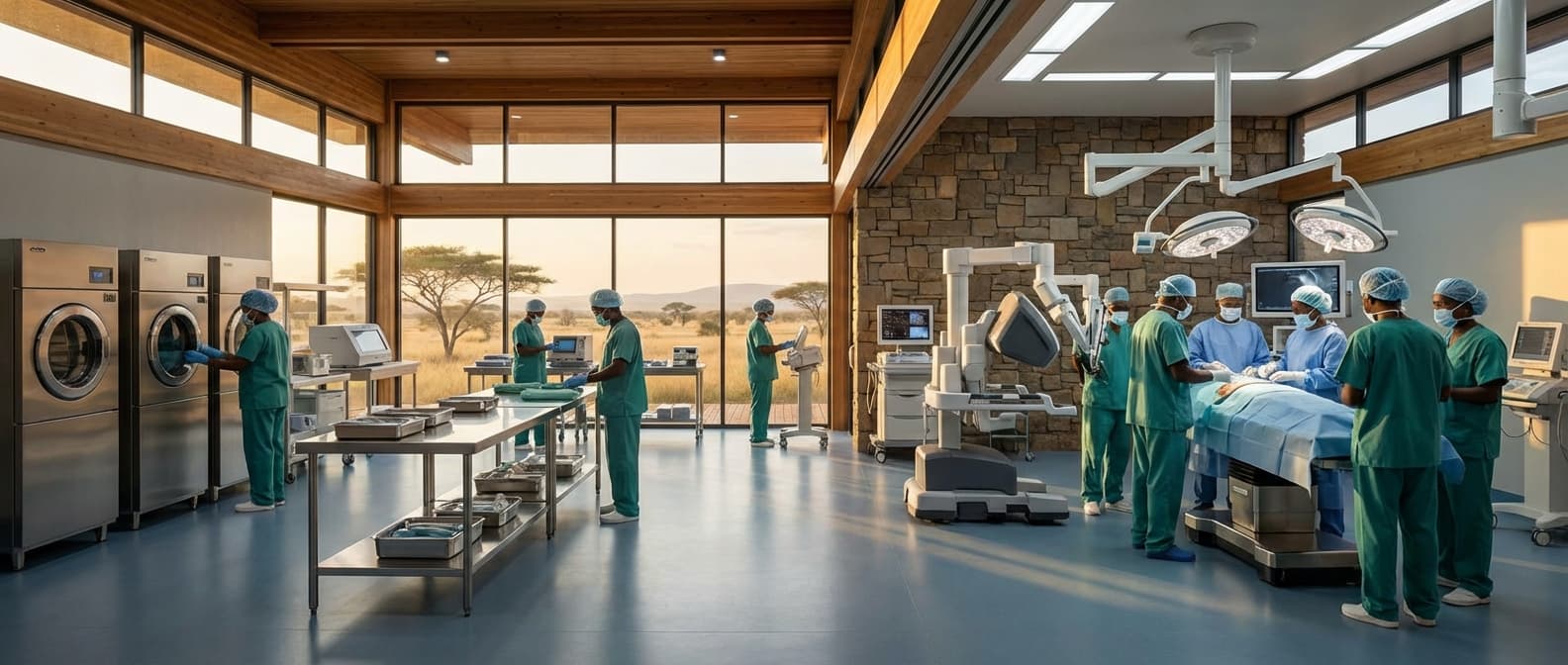
CSSD Design & Validation in Congo (Kinshasa)
Engineering Excellence & Technical Support
CSSD workflow design, validation and process development High-standard technical execution following OEM protocols and local regulatory frameworks.
Advanced Sterilization Cycle Validation (Kinshasa)
Implementing rigorous validation protocols for steam, low-temperature, and chemical sterilization cycles, ensuring optimal efficacy and patient safety within Kinshasa's healthcare facilities. This includes comprehensive biological and chemical indicator testing to meet international standards.
CSSD Equipment Performance Optimization (Kinshasa)
Designing and validating efficient workflows and equipment configurations for Central Sterile Supply Departments (CSSD) in Kinshasa, focusing on maximizing throughput, minimizing risk of recontamination, and extending equipment lifespan through precise performance testing and calibration.
Infection Control Compliance Audits (Kinshasa)
Conducting thorough technical audits and validations of CSSD processes and infrastructure in Kinshasa to ensure strict adherence to national and international infection prevention and control guidelines, thereby safeguarding public health.
What Is Cssd Design & Validation In Congo (Kinshasa)?
Central Sterile Supply Department (CSSD) design and validation in Kinshasa, Democratic Republic of Congo, refers to the systematic process of planning, configuring, and verifying the operational readiness of facilities dedicated to the decontamination and sterilization of medical devices. This service ensures that the CSSD meets stringent international and national standards for infection control, patient safety, and operational efficiency within the specific context of the Kinshasa healthcare landscape, which may present unique logistical, infrastructural, and regulatory considerations.
| Service/Aspect | Description of Involvement in Kinshasa | Rationale for Kinshasa Context |
|---|---|---|
| Needs Assessment | Analyzing patient caseloads, surgical specialties, and prevalent infectious diseases to forecast sterile processing demands. Evaluating existing infrastructure limitations. | To ensure the CSSD is sized appropriately for the existing and growing healthcare needs in Kinshasa, and to account for potential resource constraints (e.g., power stability, water purification). |
| Facility Design | Creating layouts that maximize space efficiency while adhering to strict traffic flow principles, potentially incorporating modular designs to adapt to available construction materials and expertise in Kinshasa. | Optimizing the physical footprint for functionality and safety, considering local building codes and the availability of skilled labor for construction and renovation. |
| Equipment Selection & Sourcing | Recommending robust and reliable equipment with proven performance in challenging environments. Investigating local suppliers and authorized service agents for maintenance and repair. | Prioritizing durable equipment that can withstand fluctuations in power and water quality. Ensuring access to spare parts and technical support is critical for long-term operational sustainability. |
| Validation Protocols | Developing and executing IQ, OQ, and PQ protocols using validated biological and chemical indicators. Documenting all test results meticulously for regulatory compliance and quality assurance. | Establishing a baseline for effective sterilization and providing documented evidence that the CSSD meets the highest safety standards for patient care, particularly important in regions with a higher risk of healthcare-associated infections. |
| SOP Development & Training | Crafting clear, concise SOPs in French and Lingala, incorporating best practices and adapting them to the skill levels of local healthcare professionals. Conducting hands-on training sessions. | Ensuring all personnel understand and can execute their roles effectively, mitigating the risk of human error and standardizing processes for consistent results. |
| Environmental Monitoring | Implementing regular monitoring of temperature, humidity, air pressure, and microbial counts in critical areas. Establishing protocols for remediation if parameters are not met. | Maintaining optimal conditions to prevent recontamination of sterile items and ensure the efficacy of sterilization processes. |
CSSD Design & Validation: Key Components
- Needs Assessment: Comprehensive evaluation of the healthcare facility's current and projected surgical and procedural volumes, types of instrumentation, and infection control protocols to determine optimal CSSD size, workflow, and equipment requirements.
- Facility Design & Layout: Architectural planning and space allocation for distinct functional areas (e.g., receiving/decontamination, cleaning, inspection, assembly, sterilization, sterile storage, dispatch). Emphasis on unidirectional workflow to prevent cross-contamination.
- Equipment Specification & Selection: Identification and procurement of validated sterilization technologies (e.g., autoclaves, low-temperature sterilizers), washer-disinfectors, drying cabinets, ultrasonic cleaners, packaging systems, and monitoring equipment, considering power availability, water quality, and maintenance infrastructure in Kinshasa.
- Workflow Optimization: Development of standard operating procedures (SOPs) for all CSSD processes, including instrument tracking, decontamination cycles, sterilization parameters, sterile packaging, storage conditions, and distribution, tailored to local resources and personnel capabilities.
- Environmental Controls: Design and implementation of HVAC systems, positive/negative pressure differentials between zones, appropriate lighting, and waste management systems to maintain a sterile environment and ensure staff safety.
- Validation & Qualification: Rigorous testing and documentation to confirm that the CSSD design, equipment, and processes consistently achieve the required level of decontamination and sterilization. This includes Installation Qualification (IQ), Operational Qualification (OQ), and Performance Qualification (PQ).
- Staff Training & Competency Assessment: Development and delivery of comprehensive training programs for CSSD personnel on equipment operation, infection control principles, SOPs, and emergency procedures.
- Regulatory Compliance & Documentation: Ensuring adherence to relevant Congolese healthcare regulations, WHO guidelines, and international standards (e.g., ISO 13485, ISO 17665, AAMI ST series) and maintaining meticulous records for audits and accreditation.
Who Needs Cssd Design & Validation In Congo (Kinshasa)?
Central Sterile Supply Departments (CSSDs) are critical for infection prevention and control in healthcare settings. In Congo (Kinshasa), where access to reliable sterile equipment is paramount for patient safety and effective treatment, robust CSSD design and validation are not just beneficial, but essential. This ensures that medical instruments are properly cleaned, disinfected, and sterilized, minimizing the risk of healthcare-associated infections (HAIs) and improving patient outcomes. Proper CSSD design considers workflow, space optimization, and equipment placement, while validation confirms that sterilization processes are consistently effective.
| Department/Facility Type | Primary Need | Specific Concerns in Congo (Kinshasa) |
|---|---|---|
| Hospitals (All Departments) | Sterile instruments for all medical procedures, diagnostics, and patient care. | Ensuring consistent sterilization efficacy in challenging environments, access to reliable spare parts for equipment, training of personnel in standardized protocols, managing power fluctuations. |
| Surgical Departments | High volume of complex and delicate instruments requiring rigorous sterilization. | Preventing surgical site infections, maintaining instrument integrity through proper handling and sterilization cycles, efficient workflow to meet demand. |
| Maternity & Neonatal Units | Sterile instruments for childbirth, infant care, and potential neonatal surgeries. | Minimizing risk of neonatal sepsis, ensuring sterility of specialized neonatal equipment, reliable sterilization for emergency obstetric procedures. |
| Emergency Departments | Rapid turnaround of sterile instruments for life-saving interventions. | Maintaining sufficient stock of sterile instruments, ensuring the efficacy of rapid sterilization cycles, durability of equipment under high usage. |
| Clinics & Health Centers | Sterile equipment for basic medical procedures, wound care, and minor surgeries. | Cost-effective solutions, basic but effective sterilization methods, training for limited staff, ensuring basic hygiene and infection control. |
| Dental Clinics | Sterile instruments for dental procedures and oral hygiene. | Preventing transmission of oral pathogens, maintaining precision of dental instruments, compliance with national dental hygiene standards. |
| Government & Regulatory Bodies | Ensuring national standards for infection control and patient safety. | Developing and enforcing CSSD guidelines, overseeing accreditation processes, capacity building for healthcare facilities across the country. |
| NGOs & International Health Organizations | Establishing and upgrading healthcare infrastructure, providing essential medical services. | Implementing sustainable CSSD solutions, training local healthcare workers, procurement of appropriate and durable equipment for specific project needs. |
Target Customers & Departments in Congo (Kinshasa) Requiring CSSD Design & Validation:
- Hospitals (Public & Private): This is the primary target. All departments within a hospital rely on sterile instruments for surgical procedures, diagnostics, and patient care.
- Clinics & Health Centers: Even smaller facilities need to ensure the sterility of their equipment, especially those performing minor surgical procedures or wound care.
- Surgical Centers: Specialized centers dedicated to surgical procedures will have a high demand for meticulously sterilized instruments.
- Maternity Wards & Neonatal Units: Crucial for the safety of mothers and newborns, requiring sterile instruments for deliveries and infant care.
- Emergency Departments: Rapid turnaround of sterile equipment is vital for treating trauma and acute conditions.
- Laboratories (Clinical & Research): While not always sterilizing instruments in the same way as surgical departments, they often require sterile consumables and may have specific sterilization needs.
- Dental Clinics: Require sterile instruments for examinations, treatments, and minor procedures.
- Government Health Ministries & Regulatory Bodies: Overseeing the quality and safety of healthcare services, they have a vested interest in ensuring proper CSSD standards.
- NGOs & International Health Organizations: Involved in healthcare delivery and infrastructure development, they will seek expertise in establishing or upgrading CSSD facilities.
Cssd Design & Validation Process In Congo (Kinshasa)
This document outlines the typical workflow for the Design and Validation Process of a Central Sterile Supply Department (CSSD) in Congo (Kinshasa), from the initial inquiry to the final execution and handover. The process emphasizes adherence to international standards and best practices while considering local context and resource availability.
| Phase | Key Activities | Deliverables | Key Stakeholders | Considerations (Congo/Kinshasa) |
|---|---|---|---|---|
| Initial contact from the healthcare facility. Understanding the facility's current sterilization needs, patient load, types of procedures, existing infrastructure, and budget. Site visit and preliminary assessment of available space. | Needs assessment report, preliminary scope of work, budget estimation. | Hospital Management, Department Heads (Surgery, Infection Control), CSSD Staff (if existing), Project Initiator. | Understanding local disease patterns and surgical specialties. Assessing existing utility infrastructure (water quality, electricity stability). Availability of skilled local labor for construction. |
| Evaluating the technical and financial viability of the proposed CSSD. Developing a conceptual layout based on international standards (e.g., ISO, AAMI) and best practices. Defining workflow principles (decontamination, packing, sterilization, storage). | Feasibility report, conceptual layout drawings, preliminary equipment list, initial budget breakdown. | Hospital Management, Project Team (Engineers, Architects, CSSD Consultants), Financial Department. | Availability of reliable local suppliers and technicians for future maintenance. Local building codes and regulations. Space constraints within the existing hospital structure. |
| Developing detailed architectural, mechanical, electrical, and plumbing (MEP) drawings. Specifying materials, finishes, and equipment based on the conceptual design. Ensuring compliance with infection control principles and workflow efficiency. Designing ventilation, lighting, and waste management systems. | Detailed architectural drawings, MEP drawings, equipment specifications, bill of quantities (BOQ), tender documents. | Architects, MEP Engineers, CSSD Consultants, Infection Control Specialists, Procurement Department. | Sourcing appropriate materials that can withstand frequent cleaning and disinfection. Ensuring adequate ventilation to prevent cross-contamination. Availability of specialized tradespeople for MEP installations. |
| Tendering process for construction and equipment. Evaluating bids based on technical compliance, price, warranty, and after-sales support. Selecting appropriate sterilization equipment (autoclaves, washer-disinfectors, etc.), instrumentation, and consumables. | Procurement contracts, equipment purchase orders, supplier agreements. | Procurement Department, Hospital Management, CSSD Consultants, Project Manager, Legal Department. | Navigating import regulations and customs duties for equipment. Identifying suppliers with reliable service and spare parts availability in the region. Considering energy efficiency and water consumption of equipment. |
| Executing civil works and interior fit-out according to detailed drawings. Ensuring proper sealing, tiling, and drainage in decontamination and sterile areas. Installing HVAC systems, lighting, and utility connections. | Completed construction, installed finishes, functional utility connections. | Contractors, Site Supervisors, Project Manager, Architects, MEP Engineers. | Ensuring quality of construction and adherence to specifications. Managing potential delays due to logistical challenges. Environmental considerations during construction. |
| Receiving, inspecting, and installing all CSSD equipment. Performing initial checks and calibration. Testing all functions and safety features of each piece of equipment according to manufacturer specifications and international standards. | Installed and functional equipment, commissioning reports, calibration certificates. | Equipment Suppliers/Technicians, CSSD Consultants, Project Manager, Biomedical Engineering Department. | Ensuring proper power supply and water quality for equipment operation. Availability of trained technicians for specialized installations and troubleshooting. |
| Conducting a comprehensive validation process to ensure the CSSD consistently meets predefined quality standards. This includes Installation Qualification (IQ), Operational Qualification (OQ), and Performance Qualification (PQ). Testing sterilization cycles with biological and chemical indicators. | IQ, OQ, PQ reports, validation protocols, validation certificates. | Validation Team (often external specialists or CSSD Consultants), Infection Control Team, Hospital Quality Assurance Department. | Access to accredited laboratories for indicator testing. Ensuring availability of qualified personnel for validation procedures. Documenting all test results meticulously. |
| Training CSSD staff on all aspects of CSSD operations, including safe handling of contaminated instruments, cleaning and disinfection procedures, sterilization cycles, documentation, and quality control. Assessing competency of staff through practical evaluations. | Training materials, training attendance records, competency assessment reports. | CSSD Manager, Trainers (internal or external), CSSD Staff, Infection Control Team. | Language barriers and need for translated training materials. Cultural nuances in training delivery. Establishing ongoing in-service training programs. |
| Formal handover of the fully functional and validated CSSD to the hospital. Establishing standard operating procedures (SOPs), maintenance schedules, and quality management systems. Conducting a post-occupancy evaluation to assess performance and identify areas for improvement. | SOPs, maintenance plans, quality management system documentation, handover certificate, post-occupancy evaluation report. | Hospital Management, CSSD Manager, Project Team, Infection Control Team. | Ensuring robust maintenance contracts and availability of spare parts. Establishing a culture of continuous improvement. Monitoring long-term performance and identifying potential challenges in daily operations. |
CSSD Design & Validation Process Workflow in Congo (Kinshasa)
- Inquiry & Needs Assessment
- Feasibility Study & Conceptual Design
- Detailed Design & Engineering
- Procurement & Equipment Selection
- Construction & Fit-Out
- Equipment Installation & Commissioning
- Validation & Performance Qualification
- Training & Competency Assessment
- Operational Handover & Post-Occupancy Evaluation
Cssd Design & Validation Cost In Congo (Kinshasa)
Designing and validating a Central Sterile Supply Department (CSSD) in Kinshasa, Congo, involves a multifaceted approach to ensure compliance with international standards for infection control and patient safety. The costs associated with such a project are highly variable and depend on several key factors. These include the size and complexity of the CSSD, the level of automation desired, the quality of equipment chosen, the specific validation protocols required, the availability and cost of specialized expertise (both local and international), and unforeseen logistical challenges common in the region. It's crucial to obtain detailed quotes from multiple vendors and consultants to get a realistic budget. Prices are typically quoted in US Dollars or Euros by international suppliers, but local procurement and labor costs will be in Congolese Francs (CDF). Converting these to CDF for a local budget requires considering current exchange rates and potential fluctuations.
| Component | Estimated Range (USD) | Estimated Range (CDF - Approx. Conversion) |
|---|---|---|
| CSSD Design Services (Consultancy) | $5,000 - $30,000+ | 10,000,000 - 60,000,000+ CDF |
| Equipment Procurement (Mid-Range System) | $100,000 - $500,000+ | 200,000,000 - 1,000,000,000+ CDF |
| Validation Services (IQ/OQ/PQ) | $10,000 - $50,000+ | 20,000,000 - 100,000,000+ CDF |
| Installation & Commissioning | $5,000 - $25,000+ | 10,000,000 - 50,000,000+ CDF |
| Staff Training | $2,000 - $10,000+ | 4,000,000 - 20,000,000+ CDF |
| Contingency (10-15%) | Variable | Variable |
Key Pricing Factors for CSSD Design & Validation in Kinshasa
- Scope of Services: Comprehensive design (architectural, MEP, workflow) versus basic consultation.
- CSSD Size and Capacity: Larger departments require more equipment, space, and staff, thus increasing costs.
- Equipment Selection: Manual vs. automated washers/disinfectors, sterilizers (steam, plasma, ethylene oxide), packaging systems, and sterile storage solutions.
- Technology and Automation: Advanced technologies and automated systems generally command higher upfront costs but can improve efficiency and reduce labor in the long run.
- Level of Validation: Basic operational qualification (OQ) and performance qualification (PQ) versus more rigorous validation protocols, including IQ (Installation Qualification) and extensive testing.
- Consultant Fees: Fees for specialized CSSD designers, infection control experts, and validation engineers. International consultants will likely have higher rates.
- Equipment Procurement: Costs of purchasing new, high-quality medical equipment from reputable manufacturers. Lead times and shipping costs are also factors.
- Installation and Commissioning: Costs associated with installing and testing all equipment to ensure it functions as intended.
- Training: Training for CSSD staff on new equipment, procedures, and infection control protocols.
- Regulatory Compliance: Costs associated with meeting local and international standards (e.g., WHO guidelines, local health ministry requirements).
- Project Management: The cost of overseeing the entire design and validation process.
- Logistics and Import Duties: Transportation, import taxes, and customs clearance for equipment and materials, which can be significant in landlocked regions.
- Contingency: A buffer for unforeseen issues, price changes, or scope adjustments.
Affordable Cssd Design & Validation Options
Designing and validating a Central Sterile Services Department (CSSD) is crucial for infection control, but it can be a significant investment. This guide explores affordable design and validation options, focusing on value bundles and cost-saving strategies to ensure a safe and efficient sterile processing environment without breaking the bank. We'll cover practical approaches to optimize space, equipment, and processes, alongside essential validation services that provide maximum return on investment.
| Value Bundle Component | Description | Cost-Saving Benefit | Typical Included Services |
|---|---|---|---|
| Integrated Installation & Operational Qualification (IQ/OQ) | Ensures equipment is installed correctly and operates according to manufacturer specifications. | Combines two essential validation steps into one efficient service, reducing scheduling complexity and potential delays. | Manufacturer-specific installation checks, calibration verification, functional performance tests, documentation review. |
| Performance Qualification (PQ) Package | Demonstrates that the equipment consistently performs its intended function under normal operating conditions. | Offers a pre-defined set of cycles and challenges tailored to the specific equipment, streamlining the PQ process. | Multiple test cycles with biological indicators (BIs) and chemical indicators (CIs), documented load studies, process parameter verification. |
| Washer-Disinfector Validation (IQ/OQ/PQ) | Confirms the proper installation, operation, and consistent performance of washer-disinfectors. | Bundled approach ensures all aspects of washer-disinfector efficacy are covered, from cleaning to thermal disinfection. | Detergent efficacy checks, thermal disinfection profile verification, soil removal tests, biological challenge studies. |
| Sterilization Process Validation (IQ/OQ/PQ for Autoclaves) | Comprehensive validation of steam sterilization processes. | Streamlines the entire sterilization validation lifecycle, providing a holistic view of process effectiveness. | Cycle parameter verification, Bowie-Dick tests, biological indicator studies, load distribution analysis. |
| Annual Re-validation & Calibration | Regular validation and calibration to maintain compliance and ensure ongoing efficacy. | Bundled services often include discounted rates for annual re-validation, promoting long-term cost predictability and compliance. | Periodic re-qualification of sterilization cycles, calibration of critical instruments, system performance checks. |
| Document Management & Training Support | Assistance with documentation requirements and basic staff training on validation principles. | Reduces the burden on internal staff for complex documentation and provides foundational knowledge for compliance. | Template validation reports, guidance on record-keeping, introductory validation awareness training. |
Key Cost-Saving Strategies for CSSD Design & Validation
- Phased Implementation: Break down large projects into manageable phases to spread costs over time and allow for gradual integration of new equipment and processes.
- Modular Design: Utilize modular components for sterilization and decontamination areas. This offers flexibility, scalability, and can reduce initial construction costs compared to traditional builds.
- Equipment Refurbishment & Leasing: Consider purchasing certified refurbished sterilization equipment instead of new. Leasing options can also lower upfront capital expenditure and provide predictable maintenance costs.
- Smart Space Utilization: Optimize workflow and minimize redundant space by implementing ergonomic design principles and investing in space-saving storage solutions.
- Energy-Efficient Equipment: Select energy-efficient autoclaves and washer-disinfectors to reduce long-term operational costs and environmental impact.
- In-House Training Programs: Develop and deliver internal training for staff on CSSD processes and equipment operation. This reduces reliance on external training providers.
- Bundled Validation Services: Partner with validation companies that offer comprehensive 'value bundles' covering multiple validation types (e.g., IQ, OQ, PQ for sterilizers and washer-disinfectors).
- Risk-Based Validation Approach: Focus validation efforts on critical parameters and high-risk areas, rather than exhaustive testing of every conceivable scenario. This streamlines the process and reduces testing time and resources.
- Strategic Outsourcing: Identify non-core CSSD functions that can be cost-effectively outsourced, such as specialized equipment calibration or IT support, allowing internal resources to focus on core sterile processing activities.
- Data Management & Automation: Invest in cost-effective digital tracking systems for instrument lifecycle management and sterilization load records. Automation can reduce manual data entry errors and streamline reporting.
Verified Providers In Congo (Kinshasa)
In the Democratic Republic of Congo (Kinshasa), navigating the healthcare landscape to find verified providers can be a daunting task. Franance Health emerges as a leading choice for individuals and organizations seeking reliable and high-quality medical services. Their commitment to stringent credentialing processes ensures that all affiliated healthcare professionals and facilities meet the highest standards of expertise, ethics, and patient care. This rigorous vetting not only guarantees a superior level of medical treatment but also provides peace of mind to those accessing their network.
| Provider Type | Franance Health Verification Standards | Benefits for Patients |
|---|---|---|
| Hospitals & Clinics | Accreditation, facility audits, adherence to international healthcare standards, staff credential verification. | Access to well-equipped facilities, adherence to safety protocols, experienced medical teams. |
| Specialist Doctors | Verification of medical degrees, board certifications, specialist training, licensing, and ongoing professional development. | Expert diagnosis and treatment from qualified specialists, reduced risk of misdiagnosis or ineffective treatment. |
| General Practitioners | Validation of medical degrees, general practice licenses, and proof of ongoing medical education. | Reliable primary care, early detection of health issues, and effective management of common ailments. |
| Diagnostic Laboratories | Accreditation by relevant health authorities, quality control measures, and qualified laboratory technicians. | Accurate and timely diagnostic results, crucial for effective treatment planning. |
Why Franance Health is the Best Choice for Verified Providers in Congo (Kinshasa):
- Rigorous Credentialing: Franance Health employs a multi-faceted verification process for all providers, including academic qualifications, professional licenses, peer reviews, and background checks. This ensures a high standard of medical competence and ethical practice.
- Comprehensive Network: They have established a broad network of doctors, specialists, hospitals, and clinics across Kinshasa, covering a wide spectrum of medical needs.
- Patient-Centric Approach: Franance Health prioritizes patient well-being and satisfaction, focusing on accessibility, clear communication, and supportive care.
- Quality Assurance: Continuous monitoring and evaluation of their network providers are integral to Franance Health's operations, ensuring ongoing adherence to best practices and patient safety.
- Trust and Reliability: Their commitment to transparency and verification builds trust, making them a reliable partner for healthcare access in a challenging environment.
Scope Of Work For Cssd Design & Validation
This Scope of Work (SOW) outlines the design and validation services required for a Central Sterile Services Department (CSSD). It details the technical deliverables and standard specifications that will be adhered to throughout the project. The goal is to ensure a functionally efficient, safe, and compliant CSSD facility.
| Technical Deliverable | Description | Standard Specifications / Governing Bodies |
|---|---|---|
| CSSD Layout and Workflow Diagrams | Detailed plans illustrating the flow of sterile goods, personnel, and waste, ensuring unidirectional movement to prevent cross-contamination. | ISO 13485, AAMI ST79, HTM 01-01, Local Building Codes |
| Equipment Schedules and Specifications | Comprehensive list of all CSSD equipment (sterilizers, washer-disinfectors, instrument tracking systems, etc.) with detailed technical requirements, performance criteria, and integration needs. | Manufacturer's Data Sheets, FDA regulations, CE Marking requirements, Energy Efficiency Standards |
| Mechanical, Electrical, and Plumbing (MEP) Drawings | Detailed drawings for HVAC (including air change rates, pressure differentials), electrical power distribution, lighting, water supply, drainage, and steam generation/distribution specific to CSSD operations. | ASHRAE Standards, NFPA Standards, local MEP codes, GMP guidelines |
| Room Data Sheets and Finishes Schedule | Specifications for each room including dimensions, ceiling heights, flooring, wall finishes, door types, and specific requirements for hygiene and durability. | ISO 14644 (Cleanrooms), Healthcare Facility Guidelines, Material Safety Data Sheets (MSDS) |
| Infection Control Risk Assessment (ICRA) | Documentation outlining potential infection risks and mitigation strategies during design, construction, and operational phases. | Local Health Authority Guidelines, NHS ICRA Framework |
| Commissioning Plan | A detailed plan for testing and verifying that all installed systems and equipment function as per design specifications. | ASHRAE Guideline 1.4, SMACNA, Manufacturer's Commissioning Protocols |
| Validation Master Plan (VMP) | An overarching document detailing the strategy for the validation of the CSSD facility and its processes. | FDA 21 CFR Part 11, ISPE Baseline Pharmaceutical Education Series |
| Installation Qualification (IQ) Protocols | Protocols to verify that equipment has been installed correctly according to manufacturer's specifications and design requirements. | GHTF SG2/N19:2002 (Quality Systems for Medical Devices), Manufacturer's Installation Manuals |
| Operational Qualification (OQ) Protocols | Protocols to verify that equipment operates within its defined operating parameters and range under all anticipated conditions. | GHTF SG2/N19:2002, Manufacturer's Operational Manuals |
| Performance Qualification (PQ) Protocols | Protocols to verify that the equipment or system consistently performs as intended under normal operating conditions with the actual product. | GHTF SG2/N19:2002, Standard Operating Procedures (SOPs) |
| Sterilization Cycle Validation Reports | Documentation demonstrating the effectiveness of sterilization processes (e.g., steam, low-temperature sterilization) in eliminating microorganisms. | ISO 17665 (Steam Sterilization), ISO 11135 (Ethylene Oxide Sterilization), ANSI/AAMI TIR12 |
| Cleaning and Disinfection Process Validation Reports | Documentation verifying the efficacy of cleaning and disinfection processes for medical devices. | ISO 15883 (Washer-Disinfectors), Manufacturer's Recommendations |
| Standard Operating Procedures (SOPs) | Documented instructions for all CSSD processes, from receiving and cleaning to sterilization and storage. | Internal Hospital Policies, Regulatory Compliance Requirements |
| Training Manuals and Records | Comprehensive training materials for CSSD staff on equipment operation, safety protocols, and infection control practices, along with records of completed training. | Manufacturer's Training Materials, Hospital HR Policies |
Key Project Phases
- Conceptual Design & Requirements Gathering
- Detailed Design & Engineering
- Equipment Specification & Procurement Support
- Installation & Commissioning Oversight
- Validation & Verification
- Training & Documentation Handover
Service Level Agreement For Cssd Design & Validation
This Service Level Agreement (SLA) outlines the agreed-upon service levels for the design and validation of Central Sterile Supply Department (CSSD) facilities. It defines response times for support requests and uptime guarantees for critical CSSD systems that are part of the design and validation process (e.g., validation software, simulation tools).
| Service Component | Response Time (Business Hours) | Resolution Time (Target) | Uptime Guarantee |
|---|---|---|---|
| Critical Support (e.g., validation software failure impacting active validation) | 2 Business Hours | 8 Business Hours | 99.5% |
| High Priority Support (e.g., design review comments requiring urgent clarification) | 4 Business Hours | 2 Business Days | N/A (design activities are project-based) |
| Medium Priority Support (e.g., general inquiries regarding validation procedures) | 8 Business Hours | 5 Business Days | N/A |
| Low Priority Support (e.g., requests for documentation updates) | 24 Business Hours | 10 Business Days | N/A |
| Validation Software/Platform Uptime (if applicable, for hosted solutions) | N/A | N/A | 99.9% |
Scope of Service
- CSSD facility design consultation and review.
- Development and execution of validation protocols for CSSD equipment and processes.
- Troubleshooting and support for validation-related software and hardware.
- Documentation and reporting for validation activities.
Frequently Asked Questions

Ready when you are
Let's scope your CSSD Design & Validation in Congo (Kinshasa) project in Congo (Kinshasa).

Scaling healthcare logistics and technical systems across the entire continent.