
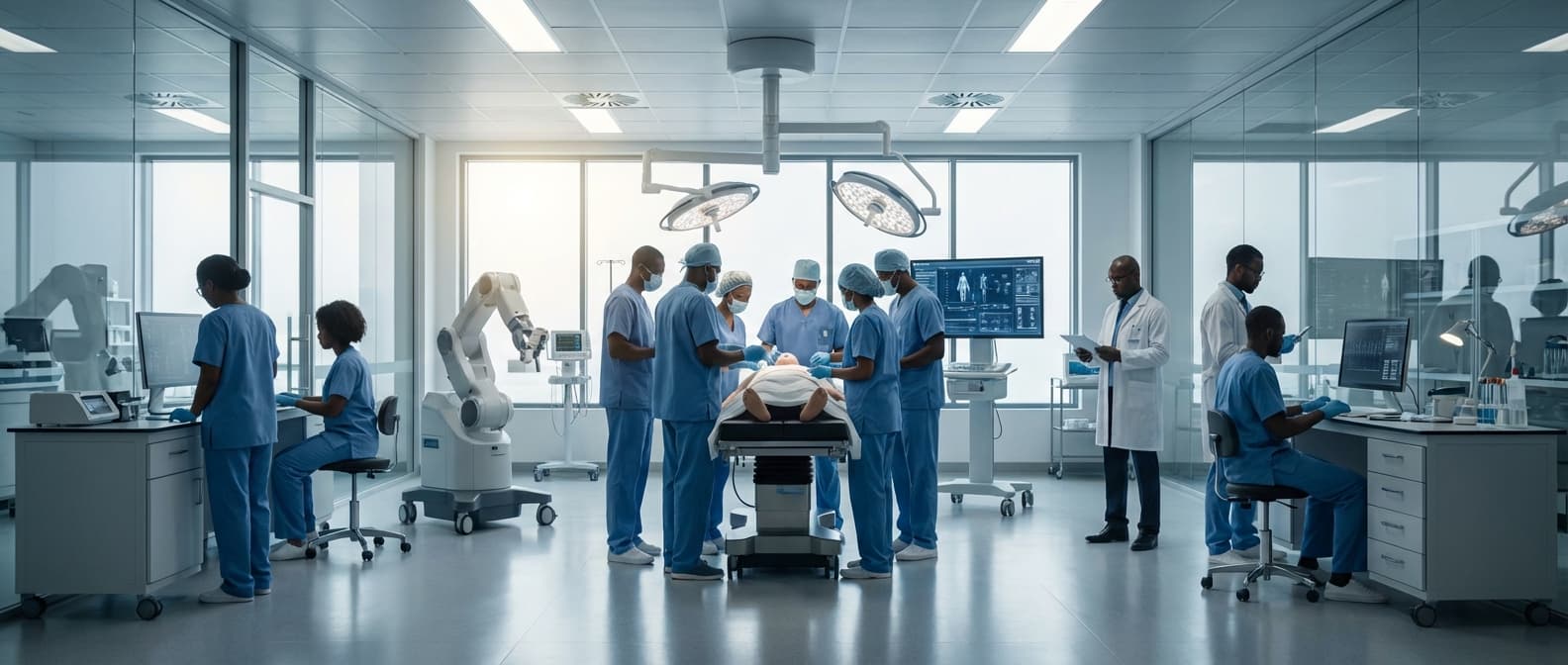
Managed Equipment Service (MES) in Congo (Kinshasa)
Engineering Excellence & Technical Support
Long‑term equipment provision with uptime SLAs and lifecycle management. High-standard technical execution following OEM protocols and local regulatory frameworks.
Real-time Equipment Monitoring & Predictive Maintenance
Deploying advanced IoT sensors and a centralized MES platform to continuously monitor critical equipment health, enabling proactive identification of potential failures and optimizing maintenance schedules for uninterrupted operations in remote Congolese mining and industrial sites.
Remote Diagnostics & Expert Support Network
Leveraging secure remote access capabilities and a dedicated team of international and local experts to provide real-time diagnostics, troubleshooting, and on-demand technical support for complex machinery, minimizing downtime and travel costs across DRC's vast infrastructure.
Optimized Spare Parts Management & Inventory Control
Implementing intelligent inventory management systems integrated with the MES to forecast spare parts demand, optimize stock levels, and ensure timely availability of critical components, significantly reducing operational costs and preventing project delays due to part shortages.
What Is Managed Equipment Service (Mes) In Congo (Kinshasa)?
Managed Equipment Service (MES) in Congo (Kinshasa) refers to a comprehensive outsourcing model wherein a third-party provider assumes responsibility for the procurement, installation, operation, maintenance, and eventual disposal of specialized equipment for client organizations. This service liberates clients from the capital expenditure, operational overhead, and technical expertise demands associated with owning and managing critical assets. MES is particularly relevant in sectors requiring high-availability, technologically advanced, or capital-intensive equipment where efficient lifecycle management is paramount for operational continuity and cost optimization.
| Who Needs MES? | Typical Use Cases |
|---|---|
| Healthcare Institutions: Hospitals, clinics, and diagnostic centers requiring advanced medical imaging devices (MRI, CT scanners), laboratory equipment, surgical instruments, and patient monitoring systems. | Mining & Extractive Industries: Companies utilizing heavy machinery, drilling equipment, processing plants, and laboratory analysis tools for geological surveys and mineral extraction. |
| Telecommunications Providers: Organizations managing complex network infrastructure, base stations, fiber optic deployment tools, and testing equipment. | Manufacturing & Industrial Facilities: Businesses requiring specialized production machinery, automation systems, quality control equipment, and logistics handling systems. |
| Research & Development Laboratories: Institutions in academia and private industry needing sophisticated scientific instrumentation, analytical equipment, and specialized testing apparatus. | Energy Sector (Power Generation & Distribution): Companies operating power plants, managing grid infrastructure, and requiring specialized maintenance and testing equipment. |
| Government Agencies & Public Sector: Entities requiring specialized equipment for infrastructure projects, defense, public safety, or administrative functions. | Logistics & Transportation Companies: Businesses utilizing fleet management systems, cargo handling equipment, and warehousing automation solutions. |
Key Components of Managed Equipment Service (MES):
- Equipment Procurement & Acquisition: Identifying, sourcing, and acquiring the optimal equipment based on client specifications and operational needs, often leveraging the provider's bulk purchasing power and market knowledge.
- Installation & Commissioning: Expert installation, configuration, and integration of equipment into existing client infrastructure, ensuring compliance with relevant standards and operational readiness.
- Operations & Utilization Management: Overseeing the day-to-day operation of the equipment, including scheduling, resource allocation, and performance monitoring to maximize uptime and efficiency.
- Preventive & Corrective Maintenance: Implementing robust preventive maintenance programs to minimize downtime and proactively addressing any equipment malfunctions or failures through rapid corrective actions.
- Technical Support & Expertise: Providing access to specialized technical personnel for troubleshooting, repairs, and ongoing operational guidance.
- Consumables & Spare Parts Management: Ensuring the availability and management of necessary consumables and spare parts to maintain uninterrupted equipment operation.
- Performance Monitoring & Reporting: Continuous tracking of equipment performance metrics, uptime, and cost-effectiveness, with regular reporting to the client.
- Technology Refresh & Obsolescence Management: Planning and executing timely upgrades or replacements of equipment to align with technological advancements and mitigate obsolescence risks.
- End-of-Life Management & Disposal: Responsible and compliant disposal or recycling of equipment at the end of its service life.
- Risk Transfer: Shifting the financial and operational risks associated with equipment ownership and management to the MES provider.
Who Needs Managed Equipment Service (Mes) In Congo (Kinshasa)?
Managed Equipment Service (MES) offers a comprehensive solution for managing and maintaining critical medical equipment. In Congo (Kinshasa), where reliable healthcare infrastructure and access to specialized technical expertise can be challenging, MES is particularly vital. It ensures that healthcare facilities have access to functional, well-maintained equipment, leading to improved patient care and operational efficiency. This service is designed to address the unique needs of healthcare providers in the region, offering peace of mind and allowing them to focus on their core mission of healing.
| Target Customer Type | Key Departments Benefiting from MES |
|---|---|
| Hospitals (Public & Private) | Radiology (X-ray, CT, MRI), Operating Rooms, Intensive Care Units (ICUs), Emergency Departments, Laboratories (Clinical & Pathology), Sterilization Units, Cardiology Departments, Oncology Departments, General Wards |
| Clinics & Health Centers | Diagnostic Rooms (e.g., ultrasound), Minor Procedure Rooms, Laboratory Sections, Pharmacy Equipment |
| Diagnostic Laboratories | Hematology Analyzers, Biochemistry Analyzers, Microbiology Equipment, Imaging Equipment (e.g., ultrasound for basic diagnostics) |
| Specialized Medical Centers | Oncology Treatment Machines (e.g., linear accelerators - if applicable), Cardiology Diagnostic Equipment (e.g., echo machines), Surgical Equipment Specific to the specialty |
| Government Health Agencies | Equipment management for national health programs, public health laboratories, and referral hospitals. |
| NGOs in Healthcare | Equipment for clinics and mobile health units, often in remote or underserved areas, ensuring consistent operation of vital medical tools. |
Who Needs Managed Equipment Service (MES) in Congo (Kinshasa)?
- Hospitals (public and private)
- Clinics and Health Centers
- Diagnostic Laboratories
- Specialized Medical Centers (e.g., oncology, cardiology)
- Government Health Agencies
- Non-Governmental Organizations (NGOs) involved in healthcare
Managed Equipment Service (Mes) Process In Congo (Kinshasa)
The Managed Equipment Service (MES) process in Congo (Kinshasa) is a comprehensive workflow designed to provide healthcare facilities with access to essential medical equipment, along with its maintenance and operational support, often with a focus on public health initiatives or resource-constrained environments. This process aims to overcome challenges related to equipment procurement, installation, upkeep, and staff training, ensuring consistent availability and optimal performance of vital medical technology. The workflow typically begins with an initial inquiry and culminates in the successful execution and ongoing management of the service.
| Stage | Description | Key Activities | Stakeholders Involved | Typical Challenges in Congo (Kinshasa) |
|---|---|---|---|---|
| Inquiry and Needs Assessment | Initial contact from a healthcare facility or government body expressing interest in MES and outlining their equipment needs. | Detailed needs assessment, site visits, understanding existing infrastructure, budget constraints, and priority medical services. | Healthcare Facility Management, Ministry of Health Officials, Potential MES Provider. | Unclear needs, limited data on existing equipment, bureaucratic delays in approvals, geographical accessibility. |
| Proposal Development and Negotiation | The MES provider develops a tailored proposal based on the needs assessment, outlining equipment, services, costs, and service level agreements (SLAs). | Equipment selection, technical specifications, service plans, pricing models (e.g., pay-per-use, fixed fee), risk assessment, negotiation of terms. | MES Provider, Healthcare Facility, Ministry of Health, Financial Institutions (potentially). | Pricing complexities, ensuring realistic SLAs, understanding local market capabilities, currency fluctuations, long negotiation cycles. |
| Contracting and Agreement | Formalization of the MES agreement, outlining all terms, conditions, responsibilities, and legal frameworks. | Drafting and review of the contract, legal vetting, obtaining necessary approvals, signing of the agreement. | MES Provider Legal Team, Healthcare Facility Legal Team, Ministry of Health Legal Department. | Complex legal frameworks, varying interpretations of contract clauses, ensuring compliance with national regulations, potential for corruption. |
| Equipment Procurement and Logistics | Sourcing, purchasing, and transporting the agreed-upon medical equipment to the facility in Congo (Kinshasa). | Global or local procurement, quality control of equipment, customs clearance, transportation, warehousing, last-mile delivery. | MES Provider Procurement Team, Equipment Manufacturers/Suppliers, Logistics Companies, Customs Authorities. | Import duties and taxes, complex customs procedures, unreliable transportation infrastructure, delays in shipping, security of goods in transit. |
| Installation and Commissioning | Setting up and ensuring the proper functioning of all installed equipment. | Site preparation, equipment installation, calibration, testing, verification against specifications, integration with existing systems. | MES Provider Technical Team, Equipment Manufacturer Technicians, Healthcare Facility Biomedical Engineers. | Inadequate site readiness, lack of specialized tools or spare parts, power supply issues, challenging environmental conditions (heat, humidity). |
| Training and Capacity Building | Training healthcare professionals and technical staff on the operation and basic maintenance of the equipment. | Development of training materials, conducting training sessions (on-site/remote), competency assessments, ongoing refresher courses. | MES Provider Training Specialists, Healthcare Facility Clinical Staff, Biomedical Technicians. | Language barriers, varying educational backgrounds of staff, high staff turnover, limited availability of trained local trainers. |
| Operations and Maintenance | Ongoing provision of services, including routine maintenance, repairs, and replacement of parts. | Preventive maintenance schedules, corrective maintenance (troubleshooting and repair), spare parts management, calibration, remote monitoring. | MES Provider Operations and Maintenance Teams, Local Technical Partners (if applicable), Healthcare Facility Staff (for basic upkeep). | Availability of spare parts, access to skilled technicians, travel time for technicians, managing demand for repairs, ensuring efficient use of resources. |
| Performance Monitoring and Reporting | Tracking equipment uptime, service response times, utilization rates, and overall performance against SLAs. | Data collection (manual/automated), regular reporting to the healthcare facility and Ministry of Health, performance analysis, identification of areas for improvement. | MES Provider Performance Management Team, Healthcare Facility Management, Ministry of Health. | Data accuracy and reliability, resistance to sharing performance data, inconsistent reporting formats, difficulty in measuring impact on patient outcomes. |
| End-of-Contract Management | Concluding the MES agreement, including equipment handover, final reporting, and potential transition to new arrangements. | Asset valuation and transfer, contractual obligations fulfillment, final performance review, knowledge transfer, planning for future needs. | MES Provider, Healthcare Facility, Ministry of Health, Potential New Service Providers. | Disputes over asset ownership or condition, challenges in transitioning to new systems, ensuring continuity of service during transition. |
Key Stages of the MES Process in Congo (Kinshasa)
- Inquiry and Needs Assessment
- Proposal Development and Negotiation
- Contracting and Agreement
- Equipment Procurement and Logistics
- Installation and Commissioning
- Training and Capacity Building
- Operations and Maintenance
- Performance Monitoring and Reporting
- End-of-Contract Management
Managed Equipment Service (Mes) Cost In Congo (Kinshasa)
Managed Equipment Service (MES) costs in Congo (Kinshasa) are influenced by a variety of factors, making it challenging to provide definitive price ranges without specific project details. However, understanding these key drivers allows for a more informed estimation. The overall cost is a function of the complexity of the equipment, the duration of the service agreement, the level of support required, and the geographical location within Kinshasa. Furthermore, the economic climate, currency fluctuations, and the specific provider's pricing models play a significant role.
| Service Level & Equipment Type | Estimated Monthly Cost (CDF) | Notes |
|---|---|---|
| Basic Preventive Maintenance (Standard Office Equipment - e.g., Printers, Copiers) | 150,000 - 500,000 CDF | Covers scheduled inspections, cleaning, minor adjustments. Excludes parts and major repairs. |
| Comprehensive Maintenance (Standard Office Equipment) | 400,000 - 1,200,000 CDF | Includes preventive maintenance, parts replacement (excluding consumables like toner), and unlimited service calls for breakdowns. |
| Basic Preventive Maintenance (Mid-Range Industrial/Medical Equipment - e.g., Small Generators, Basic Lab Equipment) | 600,000 - 2,000,000 CDF | Scheduled checks, lubrication, minor part replacements. Parts cost often additional. |
| Comprehensive MES (Mid-Range Industrial/Medical Equipment) | 1,500,000 - 5,000,000 CDF | Full preventive and corrective maintenance, parts (excluding consumables), defined response times, and basic reporting. |
| Advanced MES (High-End Industrial/Medical Equipment - e.g., Complex Imaging Machines, Large-Scale Manufacturing Machinery) | 4,000,000 - 15,000,000+ CDF | Includes all-inclusive services, guaranteed uptime, critical spare parts management, software updates, calibration, specialized technician support, and advanced reporting. Pricing is highly project-specific. |
| IT Infrastructure MES (Servers, Networks) | 800,000 - 4,000,000 CDF | Varies greatly based on scale, redundancy, and required uptime (e.g., 99.9%, 99.99%). Includes monitoring, patching, and incident response. |
Key Pricing Factors for MES in Congo (Kinshasa)
- Type and Complexity of Equipment: High-end, specialized, or technologically advanced equipment (e.g., advanced medical imaging, industrial automation systems) will inherently have higher MES costs due to the specialized skills, spare parts, and calibration required.
- Number and Volume of Equipment: The more units of equipment managed, the higher the overall cost, though economies of scale might apply with larger contracts.
- Scope of Services: This is a critical determinant. Services can range from basic preventive maintenance to comprehensive, round-the-clock support including emergency repairs, spare parts management, software updates, calibration, and even end-of-life management.
- Service Level Agreements (SLAs): The agreed-upon response times, uptime guarantees, and performance metrics directly impact cost. More stringent SLAs with faster response and higher uptime will command higher fees.
- Duration of Contract: Longer-term MES contracts often have lower annual or monthly costs compared to shorter-term agreements, reflecting reduced risk and overhead for the provider.
- Geographical Location within Kinshasa: While Kinshasa is the primary economic hub, access to remote or challenging industrial zones might incur additional logistical costs for technicians and parts delivery.
- Spare Parts and Consumables: The cost and availability of specialized spare parts, particularly for imported equipment, can significantly influence the MES price. This includes the cost of stocking and managing these parts.
- Provider's Expertise and Reputation: Established MES providers with proven track records, specialized certifications, and extensive technical expertise often charge premium prices.
- Training and Skill Development: If the MES contract includes training for the client's in-house staff or the provider assumes responsibility for upskilling their own technicians for specific equipment, this will be factored into the cost.
- Inflation and Currency Exchange Rates: As with any service contract in a dynamic economy like Congo (Kinshasa), fluctuations in the local currency (Congolese Franc - CDF) against major international currencies can impact the cost of imported components and expertise, thereby influencing the overall MES pricing.
- Ancillary Services: Services beyond core maintenance, such as asset tracking, performance reporting, and consulting on equipment utilization, will add to the overall cost.
Affordable Managed Equipment Service (Mes) Options
Affordable Managed Equipment Service (MES) offers businesses a way to efficiently manage and maintain their essential equipment without the burden of outright ownership and high upfront costs. MES providers take responsibility for procurement, installation, maintenance, and often end-of-life disposal of equipment, allowing organizations to focus on their core operations. This approach can significantly reduce total cost of ownership through strategic planning, economies of scale, and optimized asset utilization. Key to achieving affordability are understanding "value bundles" and implementing effective "cost-saving strategies."
| Cost-Saving Strategy | Description | Benefit |
|---|---|---|
| Lease vs. Purchase Analysis | Thoroughly compare the long-term costs of leasing equipment through MES versus outright purchase, considering depreciation, maintenance, and upgrade cycles. | Avoids large capital expenditure, allows for predictable budgeting, and ensures access to up-to-date technology. |
| Right-Sizing Equipment Needs | Accurately assess the actual usage and performance requirements of the equipment to avoid over-provisioning. MES providers can often scale services up or down. | Reduces unnecessary rental/lease costs and avoids paying for underutilized capacity. |
| Consolidated Vendor Agreements | Negotiate a single MES contract for multiple types of equipment or for all equipment across different departments or locations. | Leverages economies of scale, simplifies vendor management, and often leads to volume discounts. |
| Service Level Agreement (SLA) Optimization | Carefully define SLAs to match business needs. Excessively stringent SLAs can increase costs; too lenient can risk downtime. Focus on response times and resolution targets relevant to critical equipment. | Ensures appropriate support levels are in place without overpaying for unnecessary guarantees. |
| Predictive Maintenance & Proactive Support | Opt for MES bundles that include proactive monitoring and predictive maintenance. This prevents major breakdowns and costly emergency repairs. | Minimizes unplanned downtime, extends equipment lifespan, and reduces reactive repair expenses. |
| Standardization of Equipment | Where possible, standardize on a limited range of equipment models. This simplifies maintenance, training, and parts inventory for the MES provider. | Reduces complexity and cost for the provider, which can be passed on as savings to the client. |
| Usage-Based Pricing Models | Explore MES contracts with usage-based components (e.g., per print, per usage hour) where applicable, ensuring alignment with actual business activity. | Ensures payment directly reflects consumption, promoting efficiency and cost control. |
| Regular Contract Review & Renegotiation | Periodically review the MES contract, equipment usage, and market rates to identify opportunities for renegotiation or service optimization. | Ensures the contract remains competitive and aligned with evolving business needs and technology advancements. |
Understanding Value Bundles in MES
- Core Equipment + Maintenance: The most basic bundle, covering the leasing or rental of necessary equipment alongside a comprehensive maintenance and repair service agreement.
- Extended Support & Monitoring: Includes core services plus proactive monitoring of equipment performance, predictive maintenance, and remote support to prevent downtime.
- Software & Integration: Bundles hardware with necessary software licenses, installation, and integration services to ensure seamless operation within the existing IT infrastructure.
- Consumables & Supplies: Incorporates the regular delivery and management of essential consumables (e.g., printer ink, toner, specific machine parts) as part of the service package.
- Training & Onboarding: Adds specialized training for staff on equipment operation and maintenance, as well as initial setup and user onboarding.
- Managed Print Services (MPS) Integration: For businesses with significant printing needs, this bundles printers, copiers, scanners with managed print solutions for cost control and efficiency.
- End-to-End Lifecycle Management: The most comprehensive bundle, encompassing procurement, installation, ongoing maintenance, upgrades, and responsible disposal or recycling at the end of the equipment's useful life.
Verified Providers In Congo (Kinshasa)
In the Democratic Republic of Congo (Kinshasa), navigating the healthcare landscape can be challenging. Identifying truly Verified Providers is paramount to ensuring quality care and avoiding fraudulent services. Franance Health stands out as a leading organization dedicated to verifying and endorsing healthcare providers, offering a crucial layer of trust and reliability for patients in Kinshasa and beyond.
| Provider Type | Verification Criteria Example | Benefit for Patients |
|---|---|---|
| Doctors (General Practitioners & Specialists) | Valid medical license, proof of specialization, hospital affiliations, peer reviews | Ensures diagnosis and treatment from qualified and experienced medical professionals. |
| Hospitals & Clinics | Accreditation status, adherence to safety protocols, availability of essential equipment, staffing ratios | Guarantees a safe and well-equipped environment for medical procedures and patient care. |
| Laboratories & Diagnostic Centers | Proper licensing, quality control measures for tests, trained technicians, accurate reporting | Provides reliable and accurate results for medical investigations, crucial for effective treatment. |
| Pharmacies | Valid operating license, sourcing of medications from reputable suppliers, qualified pharmacists | Ensures access to genuine and safe medications, preventing counterfeit or expired drugs. |
Why Franance Health Credentials Matter
- Rigorous Verification Process: Franance Health employs a multi-faceted vetting system that goes beyond superficial checks. This includes examining licenses, certifications, educational backgrounds, and professional affiliations of healthcare practitioners.
- Commitment to Quality Standards: Verified providers on the Franance Health platform adhere to stringent quality benchmarks. This ensures they meet international and national standards for patient safety, ethical practice, and effective treatment.
- Transparency and Accountability: Franance Health fosters transparency by providing clear information about their verified providers. This empowers patients to make informed decisions and holds providers accountable for their services.
- Combating Fraud and Misinformation: In a region where fraudulent medical practices can be prevalent, Franance Health's verification acts as a shield, protecting patients from unqualified individuals and substandard care.
- Access to Reliable Healthcare: By partnering with Franance Health, patients gain access to a curated network of trusted healthcare professionals, simplifying the search for competent and dependable medical assistance.
Scope Of Work For Managed Equipment Service (Mes)
This document outlines the Scope of Work (SOW) for a Managed Equipment Service (MES) agreement. It details the technical deliverables and standard specifications required to ensure the successful operation, maintenance, and optimization of medical equipment within the client's facilities. The MES aims to provide a comprehensive solution, covering the entire lifecycle of the equipment, from procurement to disposal, while ensuring optimal performance, safety, and cost-effectiveness.
| Category | Technical Deliverables | Standard Specifications & Requirements | Key Performance Indicators (KPIs) | |
|---|---|---|---|---|
| Equipment Inventory & Management | Comprehensive digital inventory of all managed equipment, including make, model, serial number, location, purchase date, warranty status, and maintenance history. | Utilize a standardized inventory management system (e.g., CMMS). Regular audits and updates to inventory. | Inventory accuracy rate > 99%. | 100% equipment tagged and registered. |
| Preventive Maintenance (PM) | Scheduled and documented preventive maintenance for all equipment according to manufacturer recommendations and best practices. | PM checklists developed based on manufacturer guidelines, risk assessment, and usage patterns. Adherence to defined PM schedules. | PM completion rate > 95%. | Reduction in unplanned downtime by X%. |
| Corrective Maintenance & Repair | Rapid response and resolution of equipment malfunctions and breakdowns. | Defined response and repair times based on equipment criticality (e.g., Tier 1: 2 hours, Tier 2: 8 hours). Use of OEM or equivalent certified parts. Trained and certified technicians. | Average repair time < Y hours. | First-time fix rate > Z%. |
| Calibration & Performance Verification | Regular calibration and performance verification to ensure accuracy and functionality. | Calibration performed according to national/international standards (e.g., ISO, IEC). Use of certified calibration equipment. Documentation of all calibration activities. | Calibration compliance rate > 98%. | Accuracy within specified tolerances for critical parameters. |
| Equipment Installation & Decommissioning | Professional installation of new equipment and safe, compliant decommissioning of end-of-life equipment. | Installation by qualified technicians. Pre-installation site surveys. Post-installation testing and validation. Environmentally responsible disposal in compliance with regulations. | On-time installation completion. | Successful decommissioning without environmental incidents. |
| Asset Lifecycle Management | Strategic planning and execution of equipment procurement, replacement, and disposal strategies. | Needs assessment, technology evaluation, procurement support, end-of-life planning. Cost-benefit analysis for upgrades and replacements. | Optimization of equipment refresh cycles. | Reduction in outdated equipment inventory. |
| Technology & Innovation | Proactive identification and integration of relevant technological advancements. | Regular review of emerging medical technologies. Pilot programs for new equipment. Recommendations for system upgrades and replacements. | Successful implementation of X new technologies per year. | Contribution to improved patient outcomes through technology adoption. |
| Regulatory Compliance & Safety | Ensuring all managed equipment meets current regulatory and safety standards. | Adherence to local, national, and international regulations (e.g., FDA, CE). Regular safety audits and risk assessments. Compliance documentation readily available. | Zero major regulatory non-compliance findings. | 100% compliance with safety protocols. |
| Service Reporting & Analytics | Regular reporting on equipment performance, maintenance activities, costs, and utilization. | Monthly/quarterly reports including KPIs, equipment uptime, repair history, cost analysis, and recommendations. Data-driven insights for continuous improvement. | Timely delivery of reports. | Actionable insights leading to Y% cost savings or efficiency gains. |
| Training & Support | Providing training to clinical staff on equipment operation and basic troubleshooting. | Development and delivery of training materials. Ongoing support for clinical users. Knowledge base for common issues. | High user satisfaction with training. | Reduced number of user-related support calls. |
Key Objectives of the MES
- Ensure equipment availability and reliability to support patient care.
- Optimize equipment utilization and operational efficiency.
- Maintain equipment safety and compliance with regulatory standards.
- Manage equipment lifecycle, including procurement, deployment, maintenance, and decommissioning.
- Control and reduce total cost of ownership for medical equipment.
- Provide timely and effective technical support and repairs.
- Implement technology upgrades and innovations as needed.
Service Level Agreement For Managed Equipment Service (Mes)
This Service Level Agreement (SLA) outlines the service levels and guarantees for the Managed Equipment Service (MES) provided by [Your Company Name] to [Client Company Name]. It defines the expected response times and uptime guarantees for the covered equipment.
| Service Component | Response Time Guarantee (Business Hours) | Resolution Time Target (Business Hours) | Uptime Guarantee | Reporting Frequency |
|---|---|---|---|---|
| Critical Equipment Failure (e.g., production down) | 1 Hour | 4 Business Hours | 99.8% | Weekly |
| Major Equipment Malfunction (e.g., impacting significant functionality) | 2 Business Hours | 8 Business Hours | 99.5% | Weekly |
| Minor Equipment Issue (e.g., performance degradation, non-critical function affected) | 4 Business Hours | 24 Business Hours | 99.0% | Monthly |
| Preventative Maintenance Scheduling & Execution | As per agreed schedule | N/A | N/A | Monthly |
Scope of Service
- This SLA applies to all equipment designated as part of the Managed Equipment Service (MES) under the Master Services Agreement (MSA) dated [Date of MSA].
- The MES includes proactive monitoring, preventative maintenance, break-fix support, and all necessary parts and labor for the covered equipment.
- The following equipment is covered under this MES: [List of specific equipment models/types].
Frequently Asked Questions

Ready when you are
Let's scope your Managed Equipment Service (MES) in Congo (Kinshasa) project in Congo (Kinshasa).

Scaling healthcare logistics and technical systems across the entire continent.