
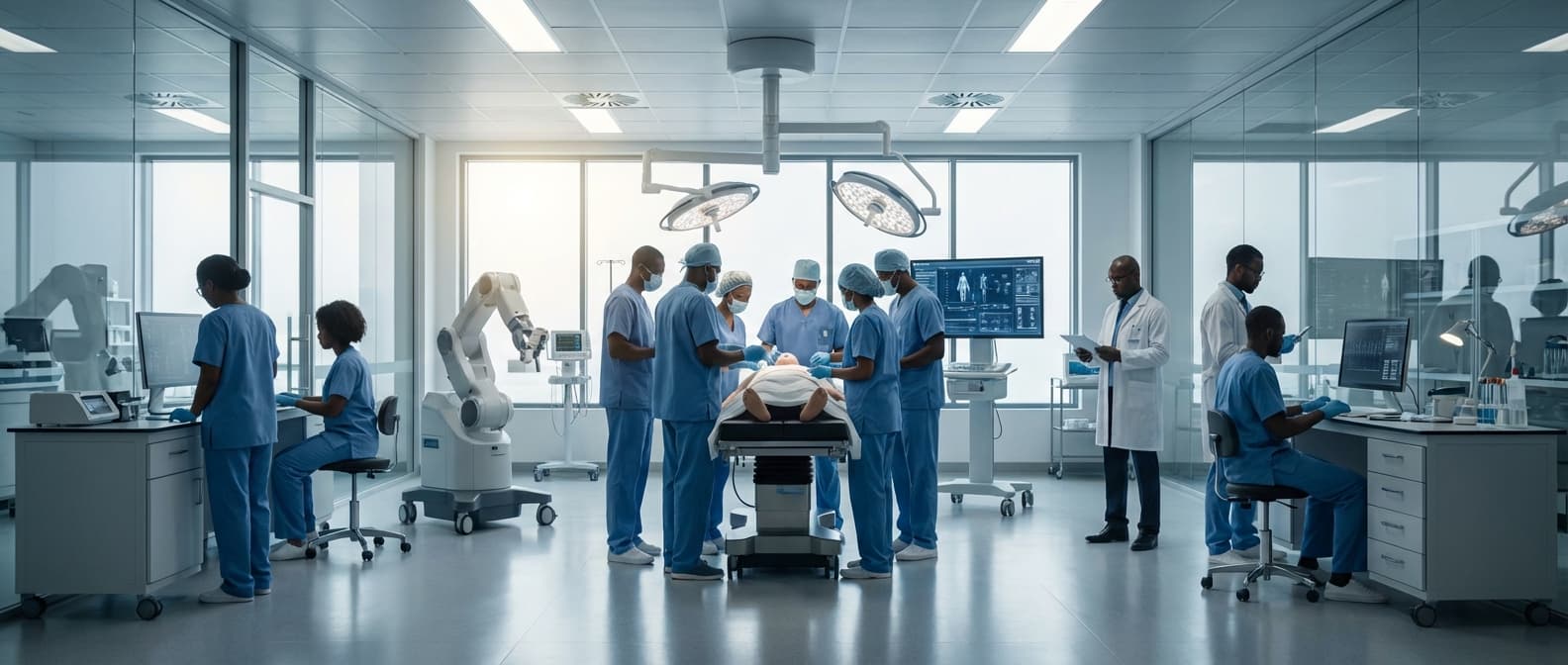
Biomedical Engineering Consulting in Congo (Kinshasa)
Engineering Excellence & Technical Support
Equipment selection, procurement and implementation consulting High-standard technical execution following OEM protocols and local regulatory frameworks.
Advanced Diagnostic Solutions Implementation
Spearheading the integration of cutting-edge diagnostic imaging and laboratory equipment in Congolese healthcare facilities. Our expertise ensures seamless installation, calibration, and training for vital technologies, enhancing early disease detection and patient management capabilities.
Optimized Medical Device Lifecycle Management
Developing robust and sustainable medical device procurement, maintenance, and upgrade strategies tailored to the specific needs and resource landscape of Kinshasa. We focus on maximizing equipment uptime, ensuring patient safety, and extending the operational life of critical medical technology.
Biomimetic Design for Localized Medical Innovations
Leveraging principles of biomimicry to engineer cost-effective and contextually relevant medical devices and solutions. Our approach fosters innovation in areas like prosthetics, wound care, and accessibility tools, addressing unique health challenges faced by communities in the Democratic Republic of Congo.
What Is Biomedical Engineering Consulting In Congo (Kinshasa)?
Biomedical Engineering Consulting in Congo (Kinshasa) is a specialized professional service that provides expert advice, technical solutions, and strategic guidance to organizations and individuals involved in the healthcare sector, with a specific focus on medical devices, technology, and infrastructure within the Democratic Republic of Congo. This field integrates principles of engineering with the life sciences and medicine to address challenges related to the design, development, implementation, maintenance, and regulatory compliance of biomedical equipment and systems. The service aims to optimize healthcare delivery by ensuring the efficient, safe, and effective utilization of medical technology, thereby improving patient outcomes and operational efficiency within the Congolese healthcare landscape.
| Who Needs Biomedical Engineering Consulting? | Typical Use Cases in Congo (Kinshasa) |
|---|---|
| Hospitals and Clinics (Public and Private): Seeking to upgrade equipment, improve maintenance protocols, or ensure regulatory compliance. | Establishing new diagnostic imaging departments, implementing electronic health records (EHR) systems, or optimizing the management of an aging equipment fleet. |
| Government Health Ministries and Agencies: Requiring support for national healthcare infrastructure development, public health programs, and regulatory oversight. | Developing national medical device procurement strategies, establishing quality control standards for imported medical equipment, or designing public health campaigns focused on equipment safety. |
| Non-Governmental Organizations (NGOs) and International Aid Organizations: Involved in healthcare provision and development projects. | Setting up or equipping mobile health clinics, managing donated medical equipment, or implementing sustainable healthcare technology solutions in remote areas. |
| Medical Device Manufacturers and Distributors: Seeking market entry, regulatory approval, or after-sales support in the Congolese market. | Navigating import regulations, establishing local service networks, or ensuring product compliance with Congolese standards. |
| Research Institutions and Universities: Requiring specialized equipment for research or seeking to integrate technology into medical education. | Advising on the acquisition of advanced laboratory equipment, designing simulation centers, or developing curricula for biomedical technology programs. |
| Investors and Financial Institutions: Assessing the technical feasibility and operational risks of healthcare-related investments. | Conducting due diligence on hospital infrastructure projects or evaluating the lifecycle costs of medical equipment portfolios. |
Key Aspects of Biomedical Engineering Consulting in Congo (Kinshasa):
- Technical Assessment and Planning: Evaluating existing biomedical equipment inventories, identifying technological gaps, and formulating strategic plans for procurement and deployment.
- Equipment Procurement and Validation: Assisting in the selection, acquisition, installation, and rigorous validation of new medical devices to ensure compliance with international standards and local regulations.
- Maintenance and Service Management: Developing and implementing robust preventive and corrective maintenance programs, establishing service contracts, and training local technicians.
- Infrastructure Development and Optimization: Advising on the design and establishment of medical facilities, including power, water, and specialized medical gas systems, to support advanced medical technologies.
- Regulatory Compliance and Quality Assurance: Guiding clients through national and international regulatory frameworks for medical devices, including registration, certification, and quality management systems.
- Technology Integration and Interoperability: Facilitating the integration of disparate medical devices and information systems to enhance data flow and clinical decision-making.
- Biomedical Waste Management: Providing expertise on the safe and compliant disposal of biomedical waste, a critical environmental and public health concern.
- Training and Capacity Building: Developing and delivering training programs for healthcare professionals and technical staff on the operation, maintenance, and troubleshooting of medical equipment.
- Project Management: Overseeing the successful execution of biomedical technology-related projects from conception to completion.
Who Needs Biomedical Engineering Consulting In Congo (Kinshasa)?
Biomedical engineering consulting in Congo (Kinshasa) addresses a critical need for enhancing healthcare infrastructure, medical technology utilization, and patient safety. Target customers range from public and private healthcare providers to research institutions and governmental bodies, all of whom can benefit from specialized expertise to optimize their operations, improve diagnostic and therapeutic capabilities, and ensure compliance with international standards. The consultants play a vital role in bridging the gap between technological advancements and accessible, quality healthcare delivery in the region.
| Target Customer/Entity | Key Departments/Units Benefiting |
|---|---|
| Hospitals (Public & Private) | Biomedical Engineering Department, Clinical Engineering, IT Department, Procurement, Quality Assurance, Patient Safety, Anesthesiology, Radiology, Cardiology, Intensive Care Unit (ICU), Operating Rooms (OR) |
| Clinics & Health Centers | Administration, Clinical Staff (Doctors, Nurses), Procurement, Maintenance Staff |
| Medical Laboratories | Laboratory Management, Quality Control, Instrument Maintenance, Research & Development |
| Research Institutions & Universities | Research Departments, Laboratories, Academic Departments (Biomedical Sciences), IT Infrastructure, Equipment Management |
| Governmental Health Ministries & Agencies | Planning & Policy Department, Procurement & Supply Chain, Health Technology Assessment, Quality Control & Regulation, Infrastructure Development |
| Non-Governmental Organizations (NGOs) in Healthcare | Program Management, Logistics & Procurement, Technical Support, Training & Capacity Building, Project Implementation |
| Medical Device Manufacturers & Distributors | Technical Support, Training, After-Sales Service, Product Development (for local needs), Regulatory Affairs |
Biomedical Engineering Consulting Services in Congo (Kinshasa): Target Customers & Departments
- Hospitals (Public & Private)
- Clinics & Health Centers
- Medical Laboratories
- Research Institutions & Universities
- Governmental Health Ministries & Agencies
- Non-Governmental Organizations (NGOs) in Healthcare
- Medical Device Manufacturers & Distributors
Biomedical Engineering Consulting Process In Congo (Kinshasa)
Embarking on a biomedical engineering consulting project in Congo (Kinshasa) requires a structured approach, navigating unique logistical, regulatory, and cultural landscapes. The process, from initial inquiry to successful execution, is a multi-stage journey designed to ensure clarity, efficiency, and ultimately, positive outcomes for healthcare institutions and their patients. This workflow outlines the typical steps involved, highlighting key considerations for this specific region.
| Phase | Key Activities | Considerations for Congo (Kinshasa) | Deliverables |
|---|---|---|---|
| Inquiry & Needs Assessment | Initial contact, information gathering, initial consultation, NDA. | Understanding specific local healthcare challenges, existing infrastructure limitations, potential funding sources. | Needs assessment report, project scope outline. |
| Proposal Development & Scoping | Detailed analysis, defining scope, risk assessment, resource allocation, cost estimation, proposal submission. | Navigating import/export regulations, customs clearance, security, transportation logistics, local availability of resources, cultural nuances. | Detailed proposal, budget, risk mitigation plan. |
| Contract Negotiation & Agreement | Client review, negotiation, contract signing. | Ensuring contract terms are clear and legally sound within the Congolese legal framework, addressing payment terms and local legal advice. | Signed contract, agreed-upon terms and conditions. |
| Project Planning & Mobilization | Detailed plan, team assembly, logistics, stakeholder engagement. | Securing necessary visas and work permits, reliable local transportation, local communication channels, building trust with local authorities and communities. | Project plan, assembled team, logistical arrangements, stakeholder engagement strategy. |
| On-Site Execution & Implementation | Site prep, installation, commissioning, training, process improvement. | Adapting to power fluctuations, ensuring site security, working with local technical staff for support and knowledge transfer, clear communication across language barriers. | Installed and commissioned equipment/systems, trained personnel, updated SOPs. |
| Monitoring, Evaluation & Handover | Performance monitoring, QA, user feedback, final handover. | Establishing clear handover protocols, ensuring documentation is accessible and understandable in local languages, verifying long-term sustainability. | Performance reports, QA reports, training completion records, handover documentation. |
| Post-Project Support & Closure | Follow-up, project evaluation, lessons learned, closure. | Establishing mechanisms for remote support, ongoing communication channels for future needs, documenting successful adaptation to local challenges. | Post-project evaluation report, lessons learned document, final project closure. |
Biomedical Engineering Consulting Process in Congo (Kinshasa): Workflow from Inquiry to Execution
- 1. Initial Inquiry & Needs Assessment:
- Client Contact: A healthcare facility, government agency, or NGO in Congo (Kinshasa) reaches out with a specific biomedical engineering challenge or requirement. This could range from equipment procurement and installation to maintenance strategy development, training needs, or infrastructure upgrades.
- Information Gathering: The consulting firm gathers preliminary information about the client's needs, their current infrastructure, budget constraints, and desired outcomes.
- Initial Consultation: A virtual or in-person meeting (if feasible) is held to discuss the scope of work, understand the context, and determine the feasibility of the project.
- Confidentiality Agreements: Non-disclosure agreements (NDAs) are typically signed at this stage to protect sensitive information.
- 2. Proposal Development & Scoping:
- Detailed Needs Analysis: A more in-depth assessment of the client's situation, often involving site visits (if possible and safe) or detailed questionnaires. This includes understanding existing equipment, technical capabilities of staff, power supply reliability, and local support structures.
- Defining Scope of Work: Clearly outlining the specific services to be provided, deliverables, timelines, and success metrics. This is crucial for managing expectations.
- Risk Assessment: Identifying potential challenges specific to the Congolese context, such as import/export regulations, customs procedures, security concerns, transportation logistics, availability of spare parts, and local expertise.
- Resource Allocation: Determining the necessary personnel, expertise, and equipment for the project.
- Cost Estimation: Developing a comprehensive budget, including consulting fees, travel, accommodation, local support, potential equipment costs, and contingency.
- Proposal Submission: Presenting a detailed proposal to the client, outlining the approach, methodology, team, timeline, and budget.
- 3. Contract Negotiation & Agreement:
- Client Review & Feedback: The client reviews the proposal and provides feedback.
- Negotiation: Discussing and agreeing on contractual terms, including payment schedules, intellectual property, warranties, liabilities, and dispute resolution mechanisms.
- Contract Signing: Formalizing the agreement through legally binding contracts.
- 4. Project Planning & Mobilization:
- Detailed Project Plan: Developing a comprehensive work breakdown structure (WBS), assigning responsibilities, and establishing communication protocols.
- Team Assembly & Training: Assembling the project team, ensuring they have the necessary technical skills and cultural awareness for working in Congo (Kinshasa). This may involve pre-deployment training on local customs and safety.
- Logistics & Procurement: Arranging travel, accommodation, visas, work permits, and procuring any necessary equipment or materials, factoring in import procedures and potential delays.
- Stakeholder Identification & Engagement: Identifying all relevant stakeholders (Ministry of Health, hospital management, technical staff, end-users) and establishing a communication plan.
- 5. On-Site Execution & Implementation:
- Site Preparation: Ensuring the facility is ready to receive equipment or implement solutions (e.g., ensuring adequate power, space, security).
- Equipment Installation & Commissioning: Unpacking, assembling, installing, and rigorously testing all equipment to ensure it meets specifications and is safe for use.
- System Integration: Integrating new systems or equipment with existing infrastructure.
- Training & Capacity Building: Providing comprehensive training to local biomedical technicians, clinical staff, and end-users on the operation, maintenance, and troubleshooting of equipment or systems. This is a critical step for long-term sustainability.
- Process Improvement & Workflow Optimization: Implementing new protocols, standard operating procedures (SOPs), and maintenance schedules.
- Regular Progress Reporting: Providing regular updates to the client on project progress, challenges encountered, and mitigation strategies.
- 6. Monitoring, Evaluation & Handover:
- Performance Monitoring: Continuously monitoring the performance of installed equipment and implemented solutions.
- Quality Assurance: Conducting quality checks and audits to ensure all deliverables meet the agreed-upon standards.
- User Feedback: Gathering feedback from end-users to identify any areas for improvement.
- Final Handover: Officially handing over the completed project to the client, including all documentation, manuals, training materials, and warranties.
- Knowledge Transfer: Ensuring the client has the capacity to maintain and manage the solutions independently.
- 7. Post-Project Support & Closure:
- Follow-up: Providing a period of post-project support to address any initial issues or questions.
- Project Evaluation: Conducting a final project evaluation to assess its success against the defined objectives.
- Lessons Learned: Documenting lessons learned to improve future projects.
- Project Closure: Formally closing the project, including final invoicing and archival of project documentation.
Biomedical Engineering Consulting Cost In Congo (Kinshasa)
Biomedical engineering consulting costs in Congo (Kinshasa) can vary significantly based on several factors. These include the scope and complexity of the project, the experience and specialization of the consultant, the duration of the engagement, and the specific needs of the client (e.g., a hospital, a research institution, or a medical device manufacturer). Demand for specialized biomedical engineering expertise can also influence pricing.
Key Pricing Factors:
- Project Scope and Complexity: Simple consultations for equipment procurement or basic validation will be less expensive than complex projects involving the design of new medical facilities, the implementation of advanced imaging systems, or comprehensive regulatory compliance strategies.
- Consultant Experience and Specialization: Highly experienced consultants with niche expertise (e.g., in specific medical imaging technologies, radiation safety, or biomedical informatics) will command higher rates. Junior consultants or generalists will typically charge less.
- Engagement Duration: Projects requiring extensive on-site work, long-term planning, or ongoing support will naturally incur higher overall costs than short-term advisory roles.
- Client Type and Size: Larger institutions with bigger budgets might be able to afford more comprehensive consulting services, while smaller clinics or startups may seek more cost-effective solutions. The client's ability to pay can sometimes implicitly influence pricing.
- Location and Travel: While Kinshasa is the primary urban center, travel within the DRC to remote areas for site assessments or installations will add to costs, including transportation, accommodation, and per diem.
- Deliverables and Outcomes: The nature of the expected outputs (e.g., detailed reports, training manuals, design blueprints, regulatory submissions) impacts the effort and thus the cost.
- Urgency: Expedited projects requiring immediate attention may incur premium fees.
Pricing Ranges in Congolese Franc (CDF):
It's challenging to provide exact figures without a specific project brief, as the market for specialized biomedical engineering consulting in Kinshasa is not as standardized as in more developed economies. However, based on general consulting industry benchmarks and considering local economic conditions, we can outline potential ranges. These are estimates and should be treated as a guideline. Negotiation is common.
Hourly Rates: For short-term consultations or advisory services, hourly rates can range from approximately 200,000 CDF to 800,000 CDF or more, depending heavily on the consultant's profile. Leading international experts, even when contracted for projects in Kinshasa, might command significantly higher rates, potentially exceeding 1,000,000 CDF per hour, but this is less common for local engagements.
Daily Rates: For projects requiring a dedicated consultant for several days, daily rates can range from 1,500,000 CDF to 5,000,000 CDF. This often includes a more comprehensive scope of work for that day.
Project-Based Fees: For well-defined projects, consultants may offer fixed-price quotes. These can vary drastically:
- Small Projects (e.g., equipment appraisal, basic risk assessment): 3,000,000 CDF to 10,000,000 CDF.
- Medium Projects (e.g., development of maintenance protocols, training program design): 10,000,000 CDF to 30,000,000 CDF.
- Large Projects (e.g., hospital equipment planning and procurement, regulatory compliance strategy): 30,000,000 CDF to 100,000,000 CDF or significantly higher for complex, multi-year initiatives.
Important Considerations:
- Value-Added Tax (VAT): Be aware of any applicable taxes on consulting services.
- Payment Terms: Typical payment schedules might involve an upfront deposit, milestone payments, and a final payment upon project completion.
- Currency Fluctuations: While CDF is the local currency, any USD-denominated expenses or international consultant fees will be subject to exchange rate variations.
To get accurate pricing, it is essential to define your project requirements clearly and solicit proposals from multiple reputable biomedical engineering consulting firms or independent consultants operating in Congo (Kinshasa).
| Service Type/Duration | Estimated Range (Congolese Franc - CDF) |
|---|---|
| Hourly Rate (Advisory/Short Consultation) | 200,000 - 800,000+ |
| Daily Rate (Dedicated Consultant) | 1,500,000 - 5,000,000 |
| Small Project (e.g., Equipment Appraisal) | 3,000,000 - 10,000,000 |
| Medium Project (e.g., Protocol Development) | 10,000,000 - 30,000,000 |
| Large Project (e.g., Hospital Planning, Compliance) | 30,000,000 - 100,000,000+ |
Factors Influencing Biomedical Engineering Consulting Costs in Congo (Kinshasa)
- Project Scope and Complexity
- Consultant's Experience and Specialization
- Duration of Engagement
- Client Type and Budget
- Location and Associated Travel Expenses
- Nature of Deliverables
- Project Urgency
- Market Demand and Competition
Affordable Biomedical Engineering Consulting Options
Navigating the complex landscape of biomedical engineering can be daunting, especially for startups and small to medium-sized enterprises (SMEs). High-quality consulting is crucial for product development, regulatory compliance, market access, and innovation. Fortunately, various affordable biomedical engineering consulting options exist, focusing on delivering value through strategic service packaging and cost-saving approaches. Understanding these options can empower organizations to access expert guidance without breaking their budget.
| Strategy | Description | Cost-Saving Impact |
|---|---|---|
| Value Bundles (Tiered Services) | Consulting firms offer pre-packaged bundles of services designed to meet common needs (e.g., 'Startup Essentials' for early-stage development, 'Regulatory Readiness' for FDA submissions). These bundles often provide a discount compared to purchasing individual services à la carte. | Offers predictable costs and potential savings by consolidating essential services. Clients know what to expect and often get a better rate for the package. |
| Retainer Models (Flexible) | Instead of hourly billing for every interaction, a retainer model provides access to a consultant for a set number of hours or a defined scope of work per month. This can be structured flexibly to match ongoing needs. | Allows for proactive guidance and troubleshooting, potentially preventing costly errors down the line. Predictable monthly cost can aid budgeting and can be more cost-effective than ad-hoc urgent requests. |
| Project-Based Engagements | Clearly defined projects with a fixed scope, deliverables, and price. Ideal for specific, time-bound needs like a design review, feasibility study, or a specific testing protocol. | Provides cost certainty and ensures the consultant is focused on achieving specific outcomes within a set budget. |
| Phased Approach & Milestones | Breaking down larger consulting needs into smaller, manageable phases with defined deliverables and payment points. This allows for iterative progress and evaluation. | Reduces upfront financial risk and allows for course correction if needed, ensuring budget is only spent on progress achieved. |
| Leveraging Internal Resources | Collaborating closely with a consultant to upskill internal teams. The consultant acts as a guide and mentor, enabling the internal team to take on more tasks over time. | Reduces long-term reliance on external consultants, building internal capacity and expertise for future projects. |
| Focus on MVP & Iterative Development | Working with consultants to prioritize and develop a Minimum Viable Product (MVP) and then iterate based on market feedback. This avoids over-engineering and unnecessary expenses. | Minimizes development costs by focusing resources on essential features and learning from real-world application. |
| Shared Services & Collaboratives | For startups or SMEs in similar fields, pooling resources to engage a consultant for common challenges (e.g., a joint regulatory strategy for a class of devices). | Divides the cost of high-level expertise among multiple entities, making it more affordable for each. |
Key Affordable Biomedical Engineering Consulting Options
- Boutique Consulting Firms: Often specialize in niche areas of biomedical engineering, offering deep expertise at a potentially lower overhead cost compared to large, generalist firms. Their focused approach can lead to more efficient and targeted solutions.
- Freelance Consultants & Subject Matter Experts (SMEs): Engaging individual experts on a project basis can be highly cost-effective. This allows access to specialized skills for specific tasks without the commitment of full-time employment or retainer fees.
- Academic Partnerships & University Incubators: Collaborating with university research departments or utilizing services offered by university-affiliated incubators can provide access to cutting-edge knowledge and talent at reduced rates, often with a focus on early-stage development.
- Online Consulting Platforms: Specialized platforms connect businesses with vetted biomedical engineering consultants, offering a marketplace for services with transparent pricing and project management tools.
- "Virtual" or Remote Consulting Models: Many consultants now offer services remotely, significantly reducing travel and overhead costs, which can translate into lower fees for clients.
Verified Providers In Congo (Kinshasa)
Finding verified healthcare providers in Congo (Kinshasa) is crucial for ensuring quality and trustworthy medical care. Franance Health stands out as a premier choice due to its rigorous credentialing process and commitment to patient well-being. This platform meticulously vets its network of doctors, specialists, and healthcare facilities, guaranteeing that all listed providers meet stringent professional standards and possess the necessary qualifications. Their verification process typically includes checking medical licenses, educational backgrounds, board certifications, and sometimes even peer reviews, providing patients with a high degree of confidence.
| Provider Characteristic | Franance Health Verification | Patient Benefit |
|---|---|---|
| Medical License | Verified and Current | Ensures legal and authorized practice. |
| Educational Background | Confirmed and Accredited | Guarantees foundational medical knowledge. |
| Board Certifications | Validated | Confirms specialization and expertise in a particular field. |
| Professional Experience | Assessed (where applicable) | Indicates practical application of skills. |
| Ethical Conduct | Considered (through reputation and referral checks) | Promotes patient trust and safety. |
Why Franance Health is the Best Choice for Verified Providers in Congo (Kinshasa):
- Rigorous Vetting Process: Franance Health employs a multi-faceted verification system that goes beyond basic credentials.
- Commitment to Quality: Prioritizing patient safety and the highest standards of medical practice.
- Transparency and Trust: Providing patients with reliable information about provider qualifications.
- Comprehensive Network: Offering access to a wide range of specialists and healthcare services.
- Ease of Access: Simplifying the process of finding and connecting with trusted medical professionals.
Scope Of Work For Biomedical Engineering Consulting
This Scope of Work (SOW) outlines the services provided by [Consulting Firm Name] (the "Consultant") for [Client Name] (the "Client"). The project aims to leverage the Consultant's expertise in biomedical engineering to address specific technical challenges and achieve defined project objectives. The SOW details the technical deliverables, methodologies, standard specifications, and timelines for the engagement.
| Task/Phase | Description | Key Activities | Deliverables | Standard Specifications/Methodologies | Timeline (Weeks) |
|---|---|---|---|---|---|
| Phase 1: Discovery and Needs Assessment | Understand the client's current situation, identify pain points, and define project requirements. | Stakeholder interviews, literature review, market research, technical assessment. | Detailed Needs Assessment Report, Project Charter. | ISO 13485:2016 (Quality Management Systems for Medical Devices), FDA Quality System Regulation (21 CFR Part 820). | 2 |
| Phase 2: Conceptualization and Design | Develop initial concepts and high-level designs for the proposed solution. | Brainstorming sessions, concept generation, feasibility studies, preliminary design sketches. | Concept Proposals, Preliminary Design Specifications. | IEEE standards for medical device design, DfM/DfA (Design for Manufacturability/Assembly) principles. | 4 |
| Phase 3: Detailed Design and Engineering | Develop detailed engineering designs, including schematics, CAD models, and component selection. | 3D modeling, circuit design, component sourcing, material selection, risk analysis. | Detailed Engineering Drawings (CAD), Bill of Materials (BOM), Risk Management File (RMF). | IEC 60601 series (Medical electrical equipment), relevant ASTM standards, ANSI/AAMI standards. | 6 |
| Phase 4: Prototyping and Testing | Build and test prototypes to validate the design and functionality. | Prototype fabrication, bench testing, performance validation, usability testing. | Functional Prototype, Test Protocols, Test Reports, Verification & Validation (V&V) Plan. | GLP (Good Laboratory Practice), GMP (Good Manufacturing Practice), relevant ISO/IEC test standards. | 8 |
| Phase 5: Regulatory Strategy and Documentation | Develop a plan for regulatory submissions and prepare necessary documentation. | Regulatory pathway analysis, submission document preparation, quality system guidance. | Regulatory Strategy Document, Draft Submission Package (e.g., 510(k) elements). | FDA Guidance Documents, MDR (Medical Device Regulation) for Europe, specific country regulations. | 4 |
| Phase 6: Final Reporting and Knowledge Transfer | Summarize project findings, present results, and facilitate knowledge transfer. | Final project report compilation, presentation of findings, documentation handover, training sessions. | Final Project Report, Project Close-out Documentation, Knowledge Transfer Materials. | Project management best practices, documentation control standards. | 2 |
Project Objectives
- To provide expert biomedical engineering consulting services for the development/improvement of [Specific Biomedical Device/Technology].
- To conduct a thorough analysis of [Specific Technical Challenge/Area].
- To propose and validate innovative engineering solutions.
- To ensure compliance with relevant regulatory standards and best practices.
- To deliver comprehensive technical documentation and reports.
Service Level Agreement For Biomedical Engineering Consulting
This Service Level Agreement (SLA) outlines the response times and uptime guarantees for biomedical engineering consulting services provided by [Your Company Name] to [Client Name]. This agreement aims to ensure timely and reliable support for critical biomedical engineering needs.
| Issue Severity | Definition | Response Time Guarantee (Initial Acknowledgment) | Resolution Target (Best Effort) | Availability Guarantee (Uptime) |
|---|---|---|---|---|
| Emergency | Critical failure posing immediate patient safety risk or significant operational disruption. | Within 1 hour during Service Hours, within 4 hours outside Service Hours. | As soon as technically feasible, with continuous efforts until resolution. | Not directly applicable to 'uptime' in the traditional sense for consulting, but implies priority engagement. |
| Urgent Issue | Significant problem impairing functionality, not immediate patient safety risk. | Within 4 business hours during Service Hours. | Within 1 business day, with ongoing efforts. | Not directly applicable to 'uptime' in the traditional sense for consulting, but implies priority engagement. |
| Standard Issue | Non-critical issue, routine inquiry, or information request. | Within 1 business day during Service Hours. | Within 3 business days, or as agreed upon. | Not directly applicable to 'uptime' in the traditional sense for consulting, but implies priority engagement. |
Key Definitions
- Service Hours: The hours during which [Your Company Name] is available to provide consulting services. Typically, this will be [e.g., 9:00 AM to 5:00 PM Local Time, Monday through Friday, excluding national holidays].
- Emergency: A critical failure of a medical device, system, or process that poses an immediate risk to patient safety or causes significant disruption to critical healthcare operations.
- Urgent Issue: A significant problem that impairs the functionality of a medical device, system, or process but does not pose an immediate risk to patient safety. This may include performance degradation or intermittent failures.
- Standard Issue: A non-critical issue that may affect the performance or functionality of a medical device, system, or process but can be addressed outside of immediate response times. This includes routine inquiries, minor technical questions, or requests for information.
- Downtime: Any period during which the agreed-upon consulting services are unavailable due to issues within [Your Company Name]'s control, excluding scheduled maintenance or force majeure events.
- Uptime Guarantee: The percentage of time that the consulting services are expected to be available during the agreed-upon Service Hours.
Frequently Asked Questions

Ready when you are
Let's scope your Biomedical Engineering Consulting in Congo (Kinshasa) project in Congo (Kinshasa).

Scaling healthcare logistics and technical systems across the entire continent.