
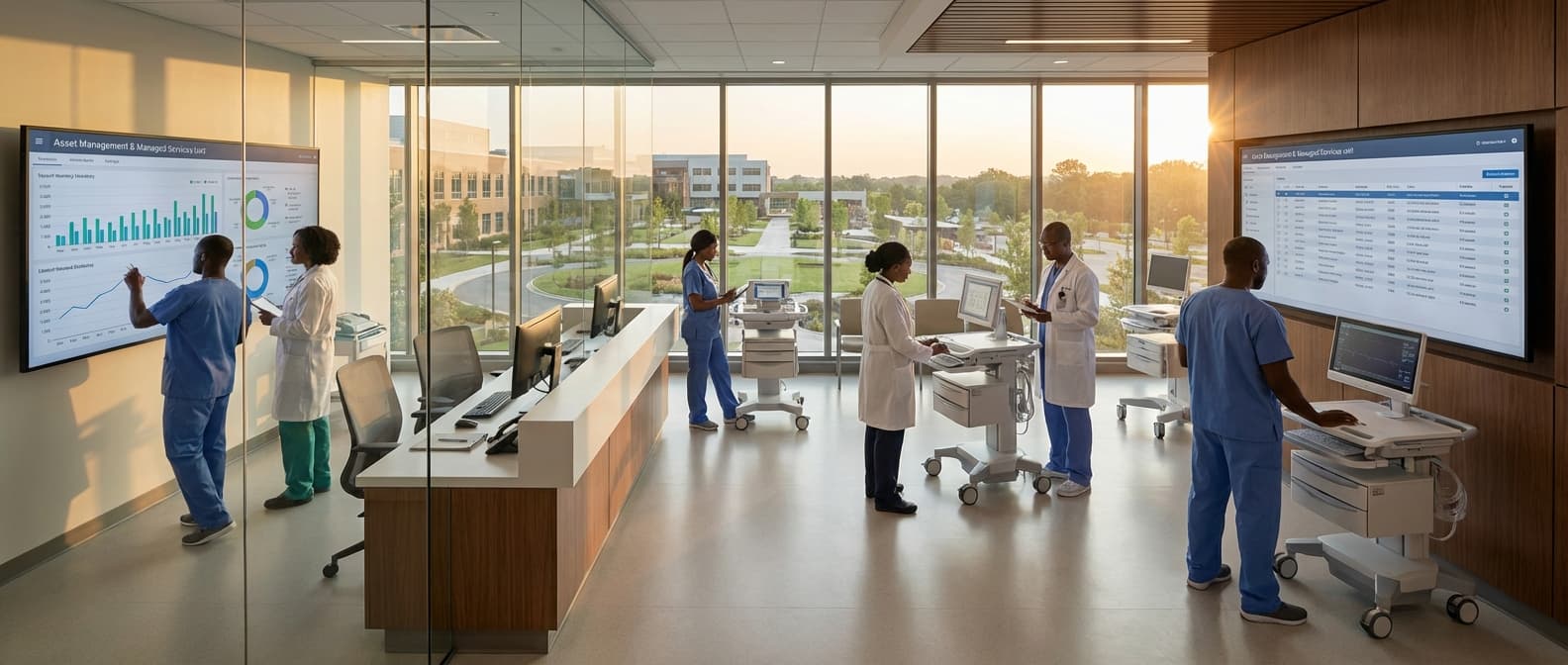
Maintenance KPI Reporting Service (Uptime/MTBF/MTTR) in Congo (Kinshasa)
Engineering Excellence & Technical Support
Maintenance KPI Reporting Service (Uptime/MTBF/MTTR) High-standard technical execution following OEM protocols and local regulatory frameworks.
Real-time Asset Uptime Tracking
Our service provides instant visibility into the operational status of critical assets across Kinshasa. Reduce unexpected downtime with proactive alerts and gain immediate insights into which equipment requires attention, ensuring your operations remain consistently online.
Optimized Mean Time Between Failures (MTBF) Analysis
Leveraging historical data and advanced analytics, we pinpoint recurring failure patterns in your machinery. Our reports empower you to implement targeted preventative maintenance strategies, significantly extending the lifespan of your equipment and minimizing costly interruptions.
Accelerated Mean Time To Repair (MTTR) Reduction
Gain detailed breakdowns of repair times and identify bottlenecks in your maintenance workflow. Our service helps pinpoint areas for improvement in response times and spare parts management, drastically reducing the duration of unplanned outages and restoring productivity faster.
What Is Maintenance Kpi Reporting Service (Uptime/mtbf/mttr) In Congo (Kinshasa)?
Maintenance KPI Reporting Service (Uptime/MTBF/MTTR) in Congo (Kinshasa) refers to a specialized consulting or service offering that focuses on the collection, analysis, and presentation of key performance indicators (KPIs) related to asset maintenance and operational reliability. This service is designed to provide actionable insights into the effectiveness of maintenance strategies, the reliability of equipment, and the speed of recovery from failures. The core KPIs typically monitored are Uptime (availability), Mean Time Between Failures (MTBF), and Mean Time To Repair (MTTR). In the context of Kinshasa, this service addresses the unique operational challenges and infrastructure considerations prevalent in the region, aiming to optimize asset performance and minimize operational disruptions for businesses operating within the Democratic Republic of Congo.
| Stakeholder Group | Needs | Typical Use Cases |
|---|---|---|
| Industrial Operations (Mining, Manufacturing, Energy) | Maximizing asset availability, minimizing production downtime, reducing operational costs, ensuring safety and regulatory compliance. | Monitoring the performance of critical production machinery (e.g., conveyor belts, crushers, generators, turbines). Analyzing failure patterns of high-value assets to implement proactive maintenance. Optimizing maintenance schedules to coincide with planned shutdowns. |
| Infrastructure Management (Utilities, Transportation) | Ensuring continuous service delivery, optimizing asset lifespan, managing repair resources efficiently, improving public safety. | Tracking the uptime of power grids, water treatment plants, or telecommunication networks. Analyzing MTTR for critical network components to improve response times. Identifying critical infrastructure with low MTBF for targeted replacement or upgrade. |
| Logistics and Fleet Management | Optimizing vehicle availability, reducing maintenance costs, improving delivery schedules, enhancing fleet reliability. | Monitoring the uptime of transportation fleets (trucks, buses). Analyzing MTBF for different vehicle types to predict maintenance needs. Calculating MTTR for common repairs to optimize workshop efficiency. |
| IT and Telecommunications | Ensuring network and system availability, minimizing service disruptions, optimizing IT support efficiency, managing hardware lifecycle. | Tracking the uptime of servers, network switches, and telecommunication equipment. Analyzing MTBF for hardware components to identify failure-prone items. Measuring MTTR for incident resolution to improve IT support performance. |
| Government and Public Services | Ensuring the operational readiness of essential services, managing public assets efficiently, optimizing budget allocation for maintenance. | Monitoring the availability of public transportation systems, municipal buildings, or emergency response vehicles. Assessing the reliability of water and sanitation infrastructure. Informing capital expenditure decisions based on asset performance data. |
Key Components of the Service:
- Data Acquisition and Integration: Establishing robust mechanisms for collecting maintenance data from diverse sources, including Computerized Maintenance Management Systems (CMMS), Enterprise Asset Management (EAM) systems, sensor data (IoT), manual logs, and historical records. This involves ensuring data accuracy, completeness, and standardization.
- KPI Calculation and Benchmarking: Deriving Uptime (percentage of time an asset is operational and available), MTBF (average time a repairable asset operates between failures), and MTTR (average time it takes to repair a failed asset) from the collected data. This may also include benchmarking against industry standards or internal historical performance.
- Data Analysis and Root Cause Identification: Employing analytical techniques to identify trends, patterns, and anomalies in the maintenance data. This includes conducting root cause analysis (RCA) for recurring failures to understand underlying issues.
- Reporting and Visualization: Developing comprehensive and visually intuitive reports and dashboards that present the calculated KPIs, trends, and insights. These reports are tailored to different stakeholder needs, from operational teams to executive management.
- Actionable Recommendations: Translating data-driven insights into concrete, practical recommendations for improving maintenance strategies, optimizing spare parts management, enhancing technician training, and implementing predictive maintenance initiatives.
- Continuous Monitoring and Improvement: Establishing a feedback loop for ongoing monitoring of KPIs, tracking the impact of implemented recommendations, and iteratively refining maintenance processes for sustained operational excellence.
Who Needs Maintenance Kpi Reporting Service (Uptime/mtbf/mttr) In Congo (Kinshasa)?
A Maintenance KPI Reporting Service (Uptime/MTBF/MTTR) is crucial for organizations in Congo (Kinshasa) that rely heavily on their physical assets and machinery for operations. Such a service helps in optimizing maintenance strategies, reducing downtime, and improving overall operational efficiency. This is particularly relevant in sectors facing challenges with infrastructure, logistics, and access to specialized maintenance expertise.
| Industry Sector | Specific Company Types | Key Departments Benefiting |
|---|---|---|
| Mining & Extractive Industries | Large-scale mining operations, quarrying companies, oil and gas exploration/extraction | Operations Management, Maintenance Department, Engineering, Plant Management, Asset Management |
| Manufacturing & Industrial Production | Food and beverage processing plants, textile manufacturers, cement production, chemical plants, assembly lines | Production Department, Maintenance & Reliability Engineering, Operations Management, Quality Control |
| Energy & Utilities | Power generation facilities (hydroelectric, thermal), water treatment plants, electricity distribution networks | Plant Operations, Maintenance & Engineering, Network Operations Center (NOC), Reliability Engineering |
| Logistics & Transportation | Large fleet operators (trucking, rail), port authorities, airport maintenance departments | Fleet Management, Operations Management, Maintenance Department, Engineering, Asset Management |
| Telecommunications | Mobile network operators, fixed-line providers (for their infrastructure maintenance) | Network Operations Center (NOC), Field Operations, Maintenance Department, Engineering |
| Large-scale Agriculture & Agribusiness | Companies with automated processing plants, large irrigation systems, mechanized farming operations | Farm Operations Management, Processing Plant Management, Maintenance Department, Engineering |
| Infrastructure & Construction | Major construction companies managing large fleets of heavy machinery, infrastructure maintenance providers | Project Management, Fleet Management, Maintenance Department, Engineering |
Target Customers & Departments in Congo (Kinshasa) for Maintenance KPI Reporting Service
- Industries with critical operational uptime requirements.
- Organizations seeking to improve asset lifecycle management and reduce operational costs.
- Companies facing challenges with unplanned equipment failures and their impact on production.
- Entities aiming for greater predictability and efficiency in their maintenance operations.
- Businesses looking to benchmark their performance against industry standards.
Maintenance Kpi Reporting Service (Uptime/mtbf/mttr) Process In Congo (Kinshasa)
This document outlines the workflow for the Maintenance KPI Reporting Service, specifically focusing on Uptime, Mean Time Between Failures (MTBF), and Mean Time To Repair (MTTR) reporting in Kinshasa, Congo. The service aims to provide clients with accurate and actionable insights into their asset maintenance performance, enabling proactive decision-making and operational efficiency. The process is designed to be transparent, efficient, and client-centric, from initial inquiry to final report delivery.
| Phase | Activity | Description | Key Deliverable(s) | Responsible Party |
|---|---|---|---|---|
| Initial Contact & Needs Assessment | Prospective client contacts the service provider to inquire about Maintenance KPI Reporting (Uptime, MTBF, MTTR). A detailed discussion is held to understand the client's assets, current maintenance practices, reporting needs, and desired outcomes. | Service proposal, understanding of client requirements | Client, Service Provider Sales/Consultant |
| Proposal Development & Agreement | Based on the assessment, a tailored service proposal is developed, outlining the scope of work, methodologies, deliverables, timelines, and pricing. Upon client acceptance, a formal agreement is signed. | Signed Service Agreement | Service Provider, Client |
| Define Data Sources | Identify all relevant data sources for KPI calculation. This includes maintenance logs, work orders, downtime records, asset history, sensor data (if applicable), and ERP systems. | List of identified data sources | Service Provider Analyst Team |
| Develop Data Collection Plan | Create a detailed plan for how data will be accessed and collected. This includes defining data points, frequency of collection, data formats, and access protocols for each source. Consideration for local infrastructure and connectivity in Kinshasa is paramount. | Data Collection Plan | Service Provider Analyst Team |
| On-site Data Gathering (if manual) | For clients with manual record-keeping, a service provider representative will visit the client's facility in Kinshasa to collect data from physical logs, notebooks, and paper-based systems. This may involve interviews with maintenance staff. | Raw, manually collected data | Service Provider Field Technician/Analyst |
| System Integration Setup (if automated) | If client systems are digital, establish secure connections and data extraction mechanisms (e.g., API integration, database queries, file transfers) to pull data automatically or semi-automatically. This may involve IT collaboration. | Established data integration, access credentials | Service Provider IT/Analyst Team, Client IT |
| Data Quality Check | Initial review of collected data for completeness, accuracy, and consistency. Identify and flag any missing, erroneous, or duplicate entries. | Data quality report, identified discrepancies | Service Provider Analyst Team |
| Data Cleaning & Normalization | Rectify identified data errors, impute missing values where appropriate (with client consultation), and standardize data formats (e.g., dates, units of measure) to ensure comparability and accuracy in calculations. | Cleaned and normalized dataset | Service Provider Analyst Team |
| Calculate Uptime | Determine the percentage of time assets were operational and available for use. This involves tracking planned vs. unplanned downtime. | Uptime percentage per asset/group | Service Provider Analyst Team |
| Calculate MTBF (Mean Time Between Failures) | Calculate the average time between successive failures of a repairable component or system. This indicates the reliability of the asset. | MTBF values per asset/group | Service Provider Analyst Team |
| Calculate MTTR (Mean Time To Repair) | Calculate the average time taken to repair a failed asset, from the moment a failure is reported until it is fully functional again. This reflects the efficiency of the repair process. | MTTR values per asset/group | Service Provider Analyst Team |
| Trend Analysis & Root Cause Identification | Analyze calculated KPIs over time to identify trends, patterns, and anomalies. Investigate potential root causes for recurring failures or extended repair times. | Trend reports, preliminary root cause analysis | Service Provider Analyst Team |
| Draft KPI Report | Compile the calculated KPIs, trend analyses, and identified insights into a comprehensive draft report. Visualizations (charts, graphs) are used to present data clearly. | Draft KPI report | Service Provider Analyst Team |
| Add Recommendations | Include actionable recommendations based on the analysis to improve asset reliability, reduce downtime, and optimize maintenance strategies. This section is crucial for clients in Kinshasa looking for practical improvements. | Report with actionable recommendations | Service Provider Analyst Team |
| Present Report to Client | Deliver the final report to the client in Kinshasa, typically through a presentation meeting (in-person or virtual). Explain the findings, KPIs, trends, and recommendations in detail. | KPI report presentation | Service Provider Analyst Team, Client Management |
| Client Feedback & Discussion | Facilitate a discussion to address client questions, gather feedback, and clarify any aspects of the report. This ensures the client understands and agrees with the findings and proposed actions. | Client feedback incorporated into final report | Client, Service Provider Analyst Team |
| Implementation Support (Optional) | Offer support in implementing the recommended actions, which may involve further analysis, training, or process optimization initiatives. | Implementation plan (if agreed upon) | Service Provider Consultant, Client Team |
| Regular Reporting Cycle | Establish a recurring reporting schedule (e.g., monthly, quarterly) for ongoing KPI monitoring and trend analysis. This fosters a culture of continuous improvement in maintenance operations. | Scheduled follow-up meetings, recurring reports | Service Provider Analyst Team, Client Management |
Maintenance KPI Reporting Service Workflow (Kinshasa, Congo)
- Inquiry & Scoping
- Data Collection Strategy Development
- On-site Data Collection / Integration Setup
- Data Validation & Cleaning
- KPI Calculation & Analysis
- Report Generation
- Report Presentation & Review
- Follow-up & Continuous Improvement
Maintenance Kpi Reporting Service (Uptime/mtbf/mttr) Cost In Congo (Kinshasa)
The cost of a Maintenance KPI Reporting Service in Congo (Kinshasa), specifically focusing on Uptime, Mean Time Between Failures (MTBF), and Mean Time To Repair (MTTR), is influenced by several factors. These services are crucial for optimizing operational efficiency and minimizing downtime for businesses. Pricing is typically negotiated based on the scope of services, the complexity of the systems being monitored, the level of data analysis required, and the reporting frequency.
| Service Component | Description | Estimated Cost Range (USD) | Estimated Cost Range (CDF - Congolese Francs) [Approximate Exchange Rate: 1 USD ≈ 2000 CDF (Subject to change)] |
|---|---|---|---|
| Basic KPI Reporting (Uptime, MTBF, MTTR - Automated Data) | Automated data collection and generation of standard reports on key maintenance metrics. | $200 - $600 per month | 400,000 - 1,200,000 CDF per month |
| Advanced KPI Reporting (with Analysis & Trends) | Includes deeper analysis, trend identification, and potential root cause insights for Uptime, MTBF, MTTR. | $500 - $1,500 per month | 1,000,000 - 3,000,000 CDF per month |
| Full-Service Maintenance Analytics (including Integration/Setup) | Comprehensive service, potentially involving system integration, sensor setup, advanced analytics, and regular advisory meetings. | $1,000 - $5,000+ per month | 2,000,000 - 10,000,000+ CDF per month |
| One-Time System Integration/Setup Fee | Initial cost for integrating with existing systems or setting up new data collection mechanisms. | Varies significantly: $500 - $5,000+ | Varies significantly: 1,000,000 - 10,000,000+ CDF |
Key Pricing Factors for Maintenance KPI Reporting Services in Congo (Kinshasa):
- Scope of Services: The number of assets or systems being monitored, the specific KPIs to be tracked (Uptime, MTBF, MTTR are standard, but additional ones like OEE, planned maintenance compliance, etc., can increase cost).
- Data Collection Method: Whether data is collected manually, through existing SCADA/IoT systems, or requires the implementation of new sensor technology. Integration with existing systems is generally more cost-effective.
- Reporting Frequency and Detail: Daily, weekly, monthly, or quarterly reports. The level of detail in the reports (basic metrics vs. in-depth analysis, root cause analysis, trend forecasting) will impact pricing.
- Software and Technology Used: The vendor's proprietary software or platform. Advanced analytics, predictive maintenance capabilities, and user-friendly dashboards can command higher prices.
- Consulting and Advisory Services: Some providers offer consulting services alongside reporting to help clients interpret data and implement improvements. This adds to the overall cost.
- Service Level Agreements (SLAs): Guarantees on report delivery, data accuracy, and uptime of the reporting platform.
- Vendor Experience and Reputation: Established vendors with a proven track record may charge a premium.
- Geographic Reach and Support: If the service needs to cover multiple sites within Congo or requires on-site support, this will affect the price.
Affordable Maintenance Kpi Reporting Service (Uptime/mtbf/mttr) Options
Our Affordable Maintenance KPI Reporting Service provides essential uptime, Mean Time Between Failures (MTBF), and Mean Time To Repair (MTTR) insights to optimize your operations. We understand that budget is a key consideration, so we've designed flexible value bundles and cost-saving strategies to ensure you get maximum value for your investment.
| Feature | Essential Insights | Proactive Performance | Strategic Asset Management |
|---|---|---|---|
| Uptime Reporting | ✓ | ✓ | ✓ |
| MTBF Reporting | ✓ | ✓ | ✓ |
| MTTR Reporting | ✓ | ✓ | ✓ |
| Basic Trend Analysis | ✓ | ✓ | ✓ |
| Root Cause Identification Assistance | – | ✓ | ✓ |
| Basic Recommendation Generation | – | ✓ | ✓ |
| Data Integration | – | – | ✓ |
| Custom Dashboarding | – | – | ✓ |
| Predictive Analytics (Limited) | – | – | ✓ |
| Dedicated Account Manager | – | – | ✓ |
Value Bundles to Suit Your Needs
- {"title":"Essential Insights Bundle","priceRange":"$X - $Y per month","description":"Ideal for smaller operations or those new to KPI tracking. Focuses on core uptime, MTBF, and MTTR reporting."}
- {"title":"Proactive Performance Bundle","priceRange":"$Y - $Z per month","description":"Includes Essential Insights plus trend analysis, root cause identification assistance, and basic recommendation generation."}
- {"title":"Strategic Asset Management Bundle","priceRange":"$Z - $A per month","description":"Our most comprehensive offering. Integrates with your existing systems, provides advanced predictive analytics, custom dashboarding, and dedicated support for strategic decision-making."}
Verified Providers In Congo (Kinshasa)
Navigating the healthcare landscape in Congo (Kinshasa) can be challenging. Ensuring you are engaging with verified and reputable healthcare providers is paramount for your well-being. Franance Health has established itself as a trusted entity in this sector, rigorously vetting its network of healthcare professionals and facilities. Their commitment to credential verification means that patients can access care with confidence, knowing they are in the hands of qualified and legitimate practitioners. This dedication to quality and transparency sets Franance Health apart as the premier choice for healthcare services in the region.
| Service Category | Franance Health Verified Providers | Benefits of Choosing Franance Health |
|---|---|---|
| General Practitioners | Certified Doctors with proven experience. | Accurate diagnoses and primary care management. |
| Specialist Consultations (e.g., Cardiology, Dermatology) | Board-certified specialists with extensive training. | Expertise in complex medical conditions and treatments. |
| Hospitals and Clinics | Accredited facilities with modern equipment. | Access to advanced diagnostics and treatment capabilities. |
| Diagnostic Laboratories | Licensed and quality-assured laboratories. | Reliable and precise laboratory test results. |
| Emergency Services | Experienced medical teams and rapid response units. | Timely and effective care during medical emergencies. |
Why Franance Health is the Best Choice:
- Rigorous credential verification process for all providers.
- Ensures access to qualified and legitimate healthcare professionals.
- Promotes transparency and patient confidence.
- Dedicated to upholding the highest standards of healthcare.
- Offers a reliable pathway to quality medical services in Congo (Kinshasa).
Scope Of Work For Maintenance Kpi Reporting Service (Uptime/mtbf/mttr)
This Scope of Work (SOW) outlines the services for establishing and maintaining a Maintenance Key Performance Indicator (KPI) Reporting Service focused on Uptime, Mean Time Between Failures (MTBF), and Mean Time To Repair (MTTR). The service aims to provide accurate, timely, and actionable insights into the reliability and maintainability of assets, enabling data-driven decision-making for operational improvements.
| Deliverable | Description | Standard Specifications / Requirements |
|---|---|---|
| Data Collection Framework Design | Design and document a standardized framework for collecting raw maintenance data from various sources (e.g., CMMS, SCADA, IoT sensors, manual logs). | Data Sources: Identification and integration strategy for all relevant data sources. Data Fields: Definition of essential data fields required for KPI calculation (e.g., asset ID, failure date/time, repair start/end date/time, failure codes, maintenance actions). Data Granularity: Specification of the required level of detail for data collection. Data Validation Rules: Establishment of rules to ensure data accuracy and completeness. |
| KPI Calculation Engine Development/Configuration | Develop or configure a system or script to automatically calculate Uptime, MTBF, and MTTR based on the collected data. | Calculation Logic: Clearly defined formulas and algorithms for each KPI. Timezone Handling: Robust handling of different timezones. Unit of Measure: Consistent units for all calculated KPIs (e.g., hours, days). Handling of Downtime Events: Rules for defining and aggregating downtime events (planned vs. unplanned). Handling of Out-of-Service Periods: Rules for accounting for scheduled maintenance or other planned downtimes. |
| Reporting Dashboard Development | Design and implement an interactive dashboard for visualizing KPI trends, performance against targets, and identifying areas for improvement. | Visualization Types: Appropriate charts and graphs (e.g., line charts for trends, bar charts for comparisons, pie charts for breakdown). Filtering & Segmentation: Ability to filter data by asset type, location, criticality, failure mode, etc. Drill-down Capabilities: Functionality to drill down into specific data points for detailed analysis. User Roles & Permissions: Defined access levels for different user groups. Real-time/Near Real-time Updates: Specification of data refresh frequency. |
| KPI Performance Reports (Standard & Ad-hoc) | Generate standardized weekly, monthly, and quarterly reports, as well as provide capabilities for ad-hoc reporting. | Report Content: Inclusion of calculated KPIs, trend analysis, comparison against benchmarks/targets, identification of top failing assets, and recommendations. Report Format: Standardized formats (e.g., PDF, Excel, CSV). Report Distribution: Automated or manual distribution mechanisms. Ad-hoc Querying Capability: Tools or interfaces for users to create custom reports. |
| Data Quality Monitoring & Reporting | Establish processes and tools to monitor the quality of incoming maintenance data and report on any identified issues. | Data Completeness Checks: Automated checks for missing critical data fields. Data Accuracy Checks: Validation against predefined rules and historical patterns. Data Timeliness Checks: Monitoring of data submission lag. Data Quality Scorecard: A report summarizing overall data quality metrics. Issue Notification Mechanism: Alerts for data quality problems. |
| User Training & Documentation | Provide comprehensive training to end-users on how to use the reporting dashboard, interpret KPIs, and generate reports, along with supporting documentation. | Training Materials: User manuals, guides, and quick reference sheets. Training Sessions: On-site or remote training sessions. Knowledge Base/FAQ: A repository of common questions and answers. System Documentation: Technical documentation for the developed/configured systems. |
| Ongoing Support & Maintenance | Provide ongoing technical support, bug fixes, and minor enhancements to the KPI reporting service. | Service Level Agreement (SLA): Defined response and resolution times for support requests. Bug Fixing: Prioritized resolution of identified bugs. System Updates: Application of necessary software updates and security patches. Performance Monitoring: Continuous monitoring of system performance. Change Management Process: A defined process for implementing enhancements. |
Key Performance Indicators (KPIs) Covered
- Uptime: The percentage of time an asset or system is operational and available for use.
- Mean Time Between Failures (MTBF): The average time elapsed between inherent failures of a repairable system during normal system operation.
- Mean Time To Repair (MTTR): The average time taken to repair a failed asset or system, from the moment the failure is detected to the moment the asset is back in service.
Service Level Agreement For Maintenance Kpi Reporting Service (Uptime/mtbf/mttr)
This Service Level Agreement (SLA) outlines the commitment of [Your Company Name] (hereinafter referred to as 'Provider') to deliver a Maintenance KPI Reporting Service (hereinafter referred to as 'Service') to [Client Company Name] (hereinafter referred to as 'Client'). This SLA defines the performance standards for uptime, Mean Time Between Failures (MTBF), and Mean Time To Repair (MTTR), along with the associated response times and uptime guarantees.
| Metric | Target/Guarantee | Description |
|---|---|---|
| Service Uptime Guarantee | 99.9% | The Service shall be available and operational 99.9% of the time during each calendar month, excluding Scheduled Maintenance. |
| MTBF Target | Minimum [Number] hours | The average time between Unscheduled Downtime events shall be a minimum of [Number] hours. |
| MTTR Target | Maximum [Number] hours | The average time to resolve Unscheduled Downtime events shall not exceed [Number] hours. |
| Critical Incident Response Time | [Number] minutes (within Business Hours) | Acknowledgement and initial troubleshooting will commence within [Number] minutes of a Critical incident being reported during Business Hours. |
| High Incident Response Time | [Number] hours (within Business Hours) | Acknowledgement and initial troubleshooting will commence within [Number] hours of a High incident being reported during Business Hours. |
| Medium Incident Response Time | [Number] business days (within Business Hours) | Acknowledgement and initial troubleshooting will commence within [Number] business days of a Medium incident being reported during Business Hours. |
| Critical Incident Resolution Target | [Number] hours | Target resolution time for Critical incidents, aiming to restore full service functionality. |
| High Incident Resolution Target | [Number] business days | Target resolution time for High incidents, aiming to restore full service functionality. |
Key Definitions
- Service: The Maintenance KPI Reporting Service provided by Provider, encompassing the collection, aggregation, analysis, and reporting of maintenance data to generate uptime, MTBF, and MTTR metrics.
- Uptime: The percentage of time the Service is available and functioning as intended, excluding scheduled maintenance windows.
- Mean Time Between Failures (MTBF): The average time between unplanned service interruptions or failures of the Service.
- Mean Time To Repair (MTTR): The average time required to restore the Service to full functionality after an unplanned interruption or failure.
- Scheduled Maintenance: Pre-announced periods when the Service may be unavailable for updates, upgrades, or routine maintenance. Client will be notified at least [Number] business days in advance.
- Unscheduled Downtime: Any period when the Service is unavailable that is not part of a Scheduled Maintenance window.
- Business Hours: Monday to Friday, [Start Time] to [End Time] [Time Zone], excluding public holidays.
- Response Time: The maximum time allowed for the Provider to acknowledge a reported issue and begin troubleshooting.
- Resolution Time: The maximum time allowed to restore the Service to full functionality after an issue is reported. This is often linked to MTTR targets but is a contractual commitment.
- Incident Severity Levels: A classification system to prioritize issues based on their impact on the Service.
Frequently Asked Questions

Ready when you are
Let's scope your Maintenance KPI Reporting Service (Uptime/MTBF/MTTR) in Congo (Kinshasa) project in Congo (Kinshasa).

Scaling healthcare logistics and technical systems across the entire continent.