
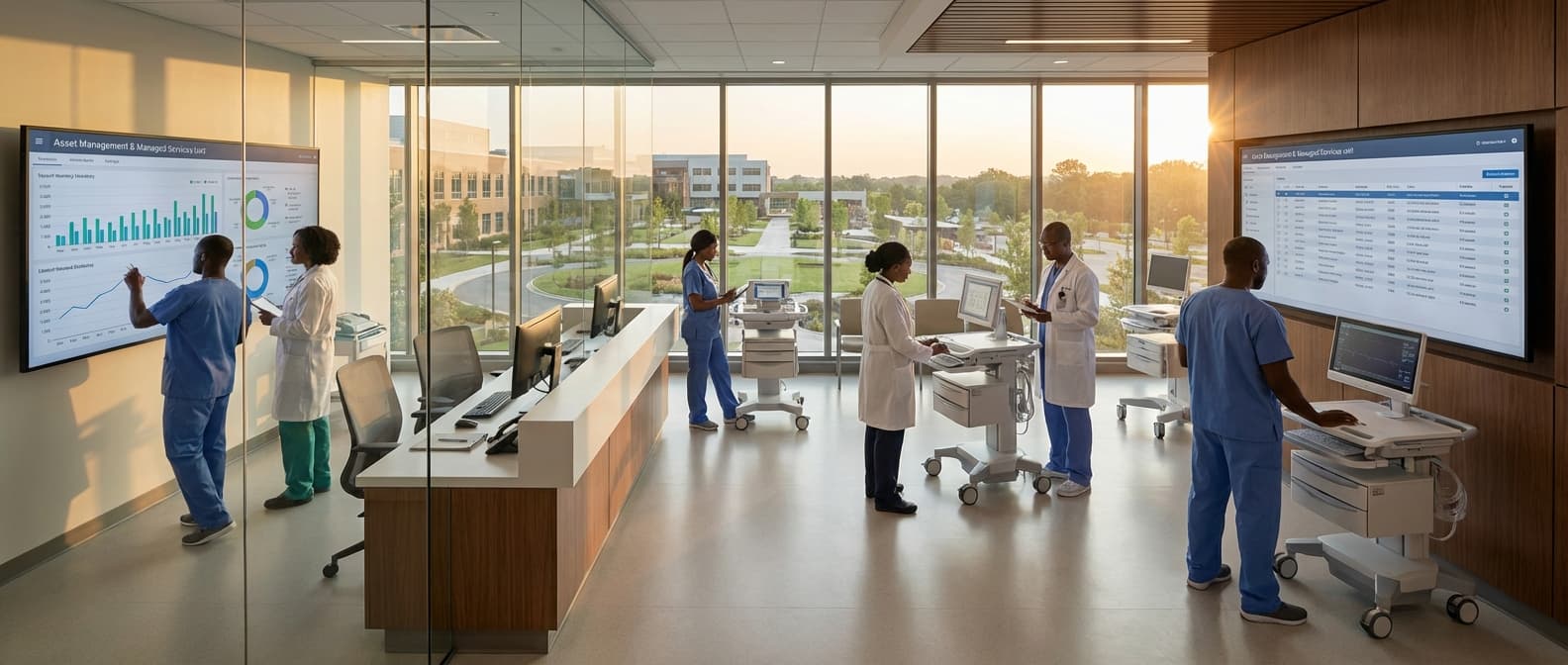
CMMS Setup & Configuration Service in Congo (Kinshasa)
Engineering Excellence & Technical Support
CMMS Setup & Configuration Service High-standard technical execution following OEM protocols and local regulatory frameworks.
Optimized Asset Hierarchy & Tagging
We meticulously design and implement a logical asset hierarchy within your CMMS, from site level down to individual components. This includes defining comprehensive tagging strategies and custom fields for precise asset identification, maintenance history tracking, and effective spare parts management, crucial for understanding your diverse industrial landscape in Kinshasa.
Predictive Maintenance Scheduling & KPI Integration
Leveraging industry best practices, we configure your CMMS to establish proactive preventive and predictive maintenance schedules. This includes setting up meter-based triggers, time-based intervals, and integrating key performance indicators (KPIs) like MTBF and MTTR, enabling data-driven decisions for maximizing equipment uptime and operational efficiency in Congo's demanding environments.
User Role Management & Workflow Automation
Our setup includes robust user role definition and access controls, ensuring secure and efficient operation of the CMMS across different departments and personnel in Kinshasa. We also configure automated workflows for work order generation, approval processes, and notification alerts, streamlining communication and expediting maintenance operations.
What Is Cmms Setup & Configuration Service In Congo (Kinshasa)?
CMMS Setup & Configuration Service in Congo (Kinshasa) refers to the specialized process of implementing and tailoring a Computerized Maintenance Management System (CMMS) to meet the unique operational demands and regulatory environment of businesses located in the Democratic Republic of Congo, specifically within its capital, Kinshasa. This service encompasses the entire lifecycle of CMMS deployment, from initial needs assessment and software selection to detailed system configuration, data migration, user training, and ongoing support. The objective is to create a robust and efficient maintenance management framework that enhances asset reliability, optimizes resource allocation, reduces downtime, and ensures compliance.
| Who Needs CMMS Setup & Configuration Service? | Typical Use Cases in Congo (Kinshasa) | ||||||||
|---|---|---|---|---|---|---|---|---|---|
| Manufacturing Plants: Facilities involved in the production of goods, requiring reliable machinery operation and minimal unplanned downtime. | Asset-Intensive Industries: Companies with significant fixed assets like mining operations, power generation facilities, and industrial processing plants. | Infrastructure Management: Organizations responsible for maintaining public or private infrastructure such as transportation networks, water treatment plants, and telecommunications. | Fleet Management: Companies operating large fleets of vehicles, trucks, or heavy equipment requiring scheduled maintenance and repair tracking. | Facilities Management: Commercial and institutional buildings requiring efficient upkeep of HVAC systems, electrical, plumbing, and building fabric. | Oil and Gas Sector: Exploration, production, and refining facilities where asset integrity and safety are paramount. | Healthcare Institutions: Hospitals and clinics needing to ensure the operational readiness of medical equipment and facility systems. | Mining and Extractive Industries: Operations reliant on heavy machinery and processing equipment, where downtime is extremely costly. | Energy and Utilities: Power generation, transmission, and distribution companies requiring robust maintenance for critical infrastructure. | Transportation and Logistics: Airlines, railways, and shipping companies managing complex fleets and operational schedules. |
| Optimizing Preventive Maintenance Schedules: Ensuring timely servicing of critical production machinery in manufacturing to prevent breakdowns. | Managing Spare Parts Inventory: Implementing a system for tracking and replenishing spare parts for heavy mining equipment, reducing stockouts and overstocking. | Streamlining Work Order Management: Automating the process of generating, assigning, and tracking repair work orders for a fleet of delivery trucks in Kinshasa. | Enhancing Asset Tracking and Lifecycle Management: Recording the complete history of an asset from acquisition to disposal for regulatory compliance in the oil and gas sector. | Improving Maintenance Cost Tracking: Analyzing maintenance expenditures on different types of infrastructure to identify cost-saving opportunities. | Implementing Condition-Based Monitoring: Integrating sensor data with the CMMS to trigger maintenance based on actual asset condition (predictive maintenance) for power generation assets. | Ensuring Compliance with Safety Regulations: Documenting and managing safety checks and procedures for industrial equipment in the DRC. | Facilitating Mobile Maintenance: Equipping field technicians with mobile devices to access and update work orders in real-time for remote infrastructure sites. | Standardizing Maintenance Procedures: Establishing uniform maintenance protocols across multiple facilities or operational units. | Performance Monitoring and Reporting: Generating reports on Mean Time Between Failures (MTBF) and Mean Time To Repair (MTTR) for key assets in the energy sector. |
What CMMS Setup & Configuration Service Involves:
- Needs Assessment and Requirements Gathering: Detailed analysis of existing maintenance processes, asset inventories, workflows, and business objectives to define specific CMMS functional requirements and desired outcomes.
- Software Selection Advisory: Guidance on choosing the most suitable CMMS software solution (cloud-based or on-premise) that aligns with technical infrastructure, budget, scalability needs, and industry best practices prevalent in the Kinshasa market.
- System Installation and Deployment: Technical implementation of the chosen CMMS software, including server setup (if on-premise), database configuration, and network integration.
- Data Migration and Integration: Transferring existing maintenance data (asset registers, work orders, spare parts inventory, historical records) into the new CMMS. This may involve data cleansing, standardization, and integration with other enterprise systems (e.g., ERP, SCADA).
- Customization and Configuration: Tailoring the CMMS modules and functionalities to specific organizational structures, maintenance strategies (preventive, predictive, reactive), reporting requirements, and user roles. This includes defining asset hierarchies, work order types, task templates, and safety procedures.
- Workflow Automation: Designing and implementing automated workflows for work order generation, approval processes, preventive maintenance scheduling, and spare parts requisition.
- User Role Definition and Access Control: Establishing user accounts with defined permissions and access levels based on job functions and responsibilities to ensure data integrity and security.
- Reporting and Analytics Configuration: Setting up custom dashboards, key performance indicator (KPI) reports (e.g., MTBF, MTTR, OEE), and historical analysis tools to provide actionable insights into maintenance performance.
- Training and Knowledge Transfer: Comprehensive training programs for all user groups, from technicians and supervisors to managers and administrators, covering system operation, data entry, and reporting.
- Testing and Validation: Rigorous testing of the configured system to ensure functionality, data accuracy, and user acceptance before go-live.
- Go-Live Support and Post-Implementation Review: Providing on-site or remote support during the initial rollout phase and conducting post-implementation reviews to identify areas for further optimization.
Who Needs Cmms Setup & Configuration Service In Congo (Kinshasa)?
Setting up and configuring a Computerized Maintenance Management System (CMMS) is a crucial step for organizations in Congo (Kinshasa) aiming to optimize their maintenance operations, reduce downtime, and improve overall asset reliability. This service is particularly beneficial for businesses that are experiencing challenges with reactive maintenance, have aging infrastructure, or are looking to implement more proactive and predictive maintenance strategies. A well-configured CMMS can streamline work order management, inventory control, asset tracking, and preventative maintenance scheduling, leading to significant cost savings and increased operational efficiency.
| Customer Type | Key Departments Benefiting from CMMS Setup & Configuration |
|---|---|
| Industrial Manufacturing | Maintenance Department, Production Department, Engineering Department, Facility Management, Inventory Control |
| Mining and Extractive | Maintenance Department (heavy machinery), Operations Department, Safety Department, Parts & Warehousing |
| Energy and Utilities | Operations & Maintenance (O&M), Field Service Teams, Asset Management, Safety & Compliance |
| Transportation & Logistics | Fleet Maintenance, Workshop Management, Operations, Safety & Compliance, Parts Management |
| Commercial Properties/Facilities Management | Building Maintenance, Engineering Services, Operations, Tenant Services, Procurement |
| Healthcare Institutions | Biomedical Engineering, Facilities Management, IT Support, Procurement, Safety & Risk Management |
| Agriculture | Equipment Maintenance, Farm Operations, Inventory Management, Agronomy |
| Construction | Fleet and Equipment Maintenance, Project Management, Site Operations, Procurement |
| Government/Public Works | Public Works Maintenance, Fleet Management, Infrastructure Management, Parks & Recreation |
Target Customers and Departments for CMMS Setup & Configuration Service in Congo (Kinshasa)
- Industrial Manufacturing Plants
- Mining and Extractive Industries
- Energy and Utilities Companies (Power Generation, Water Treatment)
- Transportation and Logistics Companies (Fleet Management)
- Large Commercial Properties and Facilities Management
- Healthcare Institutions (Hospitals, Clinics)
- Agricultural Cooperatives and Large Farms
- Construction Companies managing large fleets and equipment
- Government and Public Works Departments
Cmms Setup & Configuration Service Process In Congo (Kinshasa)
This document outlines the standard workflow for CMMS (Computerized Maintenance Management System) setup and configuration services specifically tailored for clients in Congo (Kinshasa). The process is designed to be systematic, ensuring a smooth transition from initial inquiry to successful system implementation and ongoing support.
| Phase | Key Activities | Deliverables | Key Stakeholders Involved | Estimated Timeline (Kinshasa Context) |
|---|---|---|---|---|
| 1: Inquiry & Discovery | Initial contact via phone, email, or website form. Understanding client's basic maintenance challenges and interest in CMMS. Preliminary discussion of service scope and potential solutions. Gathering client contact information and company overview. | Initial meeting scheduled. Understanding of client's primary pain points. Basic proposal or information packet provided. | Client (Facility Manager, Maintenance Supervisor, IT Manager) Service Provider (Sales Representative, Business Development Manager) | 1-3 Business Days |
| 2: Needs Assessment & Planning | Detailed site visit(s) to observe current maintenance processes. Interviews with key personnel (technicians, supervisors, management). Identification of specific assets, work order types, PM schedules, and reporting requirements. Defining system customization needs. Developing a comprehensive project plan with timelines and resource allocation. | Detailed needs assessment report. Customized CMMS solution proposal. Project plan with milestones. Quotation and contract agreement. | Client (All relevant departments) Service Provider (Project Manager, Technical Consultant, Business Analyst) | 1-2 Weeks |
| 3: System Setup & Configuration | Installation and initial setup of the chosen CMMS software. Configuration of core modules (asset management, work orders, preventive maintenance, inventory). Setting up user roles, permissions, and security settings. Customizing forms, fields, and workflows based on the needs assessment. Development of initial reporting dashboards. | Configured CMMS environment. User accounts created. Basic system functionality tested. | Service Provider (Implementation Specialist, System Administrator) Client (IT Support, nominated system administrator) | 2-4 Weeks |
| 4: Data Migration & Integration | Extraction and cleansing of existing maintenance data (asset lists, history, inventory). Mapping of data to the CMMS structure. Importing data into the new system. Setting up integrations with other existing systems (ERP, SCADA, etc.) if required. | Migrated asset register. Populated work order history (if applicable). Integrated systems functioning. | Service Provider (Data Migration Specialist, Integration Engineer) Client (Data owners, IT Department) | 1-3 Weeks (highly dependent on data complexity and volume) |
| 5: Training & User Acceptance | Delivery of comprehensive training sessions for different user groups (administrators, technicians, supervisors). Hands-on exercises and practical scenarios. User Acceptance Testing (UAT) to validate system functionality against defined requirements. Gathering feedback and making necessary adjustments. | Trained user base. UAT sign-off report. Refined system configuration based on UAT feedback. | Service Provider (Trainer, Project Manager) Client (All end-users) | 1-2 Weeks |
| 6: Go-Live & Deployment | Official launch of the CMMS into the production environment. Initial support during the transition period. Monitoring system performance and user activity. Ensuring all users are actively engaged and using the system. | Live CMMS system. Active user engagement. Initial system performance report. | Service Provider (Project Manager, Technical Support) Client (All end-users, Management) | 1-3 Business Days (for formal go-live, ongoing adoption is a process) |
| 7: Post-Implementation Support & Optimization | Ongoing technical support and troubleshooting. Regular system reviews and performance monitoring. Identification of areas for further optimization and enhancement. Providing updates and new feature training. Assistance with advanced reporting and analytics. | Resolved support tickets. Performance optimization recommendations. Updated training materials. Customer satisfaction surveys. | Service Provider (Support Team, Account Manager) Client (All users, Management) | Ongoing (typically defined in a support contract) |
CMMS Setup & Configuration Service Process Workflow in Congo (Kinshasa)
- Phase 1: Inquiry & Discovery
- Phase 2: Needs Assessment & Planning
- Phase 3: System Setup & Configuration
- Phase 4: Data Migration & Integration
- Phase 5: Training & User Acceptance
- Phase 6: Go-Live & Deployment
- Phase 7: Post-Implementation Support & Optimization
Cmms Setup & Configuration Service Cost In Congo (Kinshasa)
Setting up and configuring a Computerized Maintenance Management System (CMMS) in Congo (Kinshasa) involves several crucial steps, and the cost can vary significantly based on a multitude of factors. A robust CMMS implementation is essential for optimizing maintenance operations, reducing downtime, and improving asset longevity. This guide explores the key pricing determinants and provides estimated cost ranges in the local currency, the Congolese Franc (CDF).
| Service Component | Estimated Cost Range (CDF - Congolese Francs) | Notes |
|---|---|---|
| Basic CMMS Software Licensing (Subscription, per user/month) | 50,000 - 250,000 CDF | Varies based on vendor, features, and number of users. Smaller businesses might find options in the lower range. |
| Advanced CMMS Software Licensing (Subscription, per user/month) | 200,000 - 700,000+ CDF | Includes more comprehensive modules, higher user limits, and enterprise-level features. |
| On-Premise Software License (Perpetual) | 5,000,000 - 50,000,000+ CDF | One-time purchase, typically requires significant upfront investment and ongoing annual maintenance fees. |
| Initial Setup and Configuration (Basic) | 2,000,000 - 15,000,000 CDF | Covers standard configuration for a moderate number of assets and users. Driven by implementation partner's hourly rates and estimated time. |
| Complex Setup and Configuration (Advanced/Customized) | 10,000,000 - 75,000,000+ CDF | Involves extensive customization, integration with other systems, and handling large, complex data sets. Project scope is a major determinant. |
| Data Migration (Per Asset/Record) | 5,000 - 50,000 CDF | Cost per asset or record migrated. Highly dependent on data quality, format, and volume. |
| User Training (Per Session/User) | 50,000 - 300,000 CDF | Includes administrator and end-user training. Can be on-site or remote. Costs increase with duration and complexity of training. |
| Ongoing Support and Maintenance (Annual Fee) | 10% - 25% of Software License Cost | Essential for updates, bug fixes, and technical assistance. Often a percentage of the initial software license cost for perpetual licenses. |
| On-site Implementation Support (Daily Rate) | 300,000 - 1,000,000+ CDF | For specialized tasks or intensive on-site guidance. Varies greatly based on consultant's expertise and travel expenses. |
Key Pricing Factors for CMMS Setup & Configuration in Congo (Kinshasa)
- CMMS Software Licensing Model: The cost can be perpetual (one-time purchase with ongoing maintenance fees) or subscription-based (monthly or annual fees). Subscription models are often more accessible initially.
- Number of Users and Modules: The more users requiring access and the more specialized modules (e.g., inventory management, work order scheduling, preventive maintenance, reporting) that are implemented, the higher the overall cost.
- Complexity of Existing Infrastructure: Organizations with a large number of assets, complex machinery, or a dispersed operational footprint will generally require more time and effort for data migration, configuration, and integration.
- Level of Customization Required: While most CMMS offer standard functionalities, some businesses may need tailored workflows, custom reports, or integrations with existing ERP or SCADA systems, which adds to the cost.
- Data Migration and Integration: The volume and complexity of existing maintenance data (manual records, spreadsheets, older systems) that need to be migrated and integrated into the new CMMS will impact the implementation effort and cost.
- Training and Support Needs: The extent of user training required, the number of training sessions, and the level of ongoing technical support needed (e.g., 24/7 support, on-site assistance) are significant cost drivers.
- Implementation Partner Expertise and Reputation: The experience, track record, and geographical presence of the CMMS implementation partner in Congo (Kinshasa) can influence pricing. Local partners might offer cost advantages.
- On-Premise vs. Cloud-Based Deployment: While cloud-based solutions are increasingly popular for their scalability and lower upfront infrastructure costs, on-premise installations might have higher initial setup and ongoing IT management expenses.
- Project Management Overhead: The time and resources dedicated to project planning, coordination, testing, and go-live support by both the client and the implementation team will be factored into the cost.
Affordable Cmms Setup & Configuration Service Options
Setting up and configuring a Computerized Maintenance Management System (CMMS) can be a crucial step towards optimizing your maintenance operations, improving asset longevity, and reducing costs. However, the initial investment and expertise required can be a barrier for some organizations. Our Affordable CMMS Setup & Configuration Service Options are designed to make this powerful technology accessible and cost-effective. We offer flexible packages and strategic approaches to ensure you get the most value from your CMMS investment without breaking the bank.
| Service Bundle | Core Features | Ideal For | Estimated Price Range (USD) |
|---|---|---|---|
| Basic Setup | Core CMMS configuration (users, assets, locations), initial data import (limited records), standard PM templates, basic training. | Small businesses with simple maintenance needs, those new to CMMS. | $1,500 - $3,000 |
| Standard Configuration | Includes Basic Setup plus custom asset hierarchy, advanced PM scheduling, basic workflow automation, work order management, and standard reporting. | Small to medium-sized businesses seeking comprehensive functionality. | $3,000 - $6,000 |
| Premium Implementation | Includes Standard Configuration plus full data migration, complex workflow development, mobile CMMS setup, advanced reporting and analytics, dedicated on-site training. | Medium to large enterprises with diverse assets and complex maintenance processes. | $6,000 - $12,000+ |
Our Value Bundles & Cost-Saving Strategies:
- {"title":"Tiered Setup Packages","description":"We offer three distinct tiers of setup services, allowing you to choose the level of support that best fits your budget and needs. Each tier includes progressively more comprehensive configuration, data migration, and training."}
- {"title":"Modular Service Add-ons","description":"Beyond our core bundles, you can select specific modules for services like advanced reporting, mobile CMMS integration, IoT sensor connectivity, or custom workflow development. This allows for a truly tailored solution and avoids paying for features you don't need."}
- {"title":"Phased Implementation","description":"For larger or more complex systems, we recommend a phased approach. This breaks down the setup and configuration into manageable stages, spreading the cost over time and allowing your team to adapt gradually."}
- {"title":"Remote & Hybrid Service Models","description":"We leverage efficient remote support and can combine it with targeted on-site visits for critical phases, significantly reducing travel expenses compared to a fully on-site engagement."}
- {"title":"Data Cleansing & Migration Assistance","description":"While we offer full data migration, we also provide cost-effective options for data cleansing assistance, empowering your team to prepare data in advance, thus reducing the time and resources required from our end."}
- {"title":"Standardized Templates & Workflows","description":"We utilize a library of pre-built templates for common assets, work orders, and preventive maintenance schedules. This accelerates the setup process and offers a cost-effective starting point that can be customized."}
- {"title":"Train-the-Trainer Programs","description":"Instead of training every user individually, we can train your internal champions or IT personnel who can then cascade knowledge and support within your organization, a highly scalable and cost-efficient training model."}
- {"title":"Post-Setup Support Packages","description":"Flexible ongoing support packages, from ad-hoc troubleshooting to proactive system optimization, are available to ensure your CMMS continues to deliver value without unforeseen expenses."}
Verified Providers In Congo (Kinshasa)
Finding reliable and trustworthy healthcare providers in Kinshasa, Congo, can be a significant challenge. Franance Health stands out as a leading platform committed to connecting individuals with verified and high-quality medical professionals. Their rigorous credentialing process ensures that all listed providers meet stringent standards, offering peace of mind to those seeking medical care. This verification is crucial in a region where ensuring the competence and legitimacy of healthcare services is paramount. Franance Health's dedication to transparency and patient safety makes them the premier choice for navigating the healthcare landscape in Kinshasa.
| Aspect | Franance Health's Contribution | Why it Matters for You |
|---|---|---|
| Provider Credentialing | Extensive background checks, license verification, and review of educational qualifications. | Ensures you are treated by a qualified and legitimate medical professional. |
| Specialty Coverage | A diverse network of doctors, dentists, specialists, and clinics. | Find the exact medical expertise you need for any condition. |
| Transparency and Information | Detailed provider profiles including experience, specialties, and patient reviews (where available). | Make informed decisions about your healthcare provider. |
| Accessibility | Easy-to-use platform for searching and booking appointments. | Save time and reduce stress in finding medical care. |
| Quality Assurance | Ongoing monitoring and feedback mechanisms for providers. | Guarantees a higher standard of care and service. |
Why Franance Health is Your Best Choice in Kinshasa:
- Rigorous Verification Process: Franance Health meticulously vets all healthcare providers, ensuring they possess valid licenses, certifications, and a proven track record.
- Comprehensive Provider Database: Access a wide range of specialists and general practitioners across various medical disciplines.
- Focus on Patient Safety: Their commitment to verification directly translates to enhanced patient safety and confidence.
- Streamlined Access to Care: Franance Health simplifies the process of finding and booking appointments with trusted medical professionals.
- Commitment to Quality: They prioritize providers who demonstrate a dedication to ethical practices and high standards of medical care.
- Local Expertise, Global Standards: Franance Health blends in-depth knowledge of the Kinshasa healthcare system with adherence to international best practices.
Scope Of Work For Cmms Setup & Configuration Service
This Scope of Work (SOW) outlines the services to be provided for the setup and configuration of a Computerized Maintenance Management System (CMMS). The objective is to implement a robust and efficient CMMS that supports the client's maintenance operations, enhances asset management, and streamlines work order processes. This SOW details the technical deliverables and standard specifications required for a successful project.
| Deliverable | Description | Standard Specifications / Requirements |
|---|---|---|
| CMMS Software Installation & Setup | Installation of the chosen CMMS software on the client's designated servers or cloud environment. | Compatibility with existing IT infrastructure. Secure installation according to vendor best practices. Basic system configuration (e.g., language, time zone). |
| System Configuration | Configuration of core CMMS modules based on client requirements. | Module configuration includes: Asset Management, Work Order Management, Preventive Maintenance, Inventory Management, Procurement Management, Reporting & Analytics, User Management. |
| Asset Hierarchy and Structure | Definition and setup of the asset hierarchy, including parent-child relationships and categorization. | Alignment with client's existing asset numbering scheme and organizational structure. Inclusion of critical asset attributes (e.g., manufacturer, model, serial number, location). |
| Preventive Maintenance (PM) Schedule Configuration | Setup of PM tasks, frequencies, and schedules for critical assets. | Defined PM task lists, labor estimates, required parts, and calibration requirements. Integration with asset hierarchy. Automated generation of PM work orders. |
| User Roles and Permissions Setup | Definition and configuration of user roles with appropriate access levels and permissions. | Granular control over system access for different user groups (e.g., technicians, supervisors, administrators). Compliance with security policies. |
| Workflow Design and Configuration | Design and implementation of custom workflows for work order approvals, requests, and closures. | Streamlined approval processes. Automated notifications. Audit trails for all workflow actions. |
| Data Migration Plan | Development of a comprehensive plan for migrating existing maintenance data into the new CMMS. | Identification of data sources, data cleansing strategy, data mapping, and validation procedures. Downtime minimization strategy. |
| Migrated Data | Successful migration of defined datasets from legacy systems into the configured CMMS. | Accuracy and completeness of migrated data. Verification against source data. Categorization and tagging of migrated assets and work orders. |
| Test Plan and Scenarios | Creation of detailed test plans and test scenarios to validate CMMS functionality. | End-to-end testing of all configured modules. User Acceptance Testing (UAT) criteria defined. Performance and load testing. |
| Test Results and Sign-off | Documentation of all test execution results, including any identified defects and their resolutions. | Defect tracking and resolution process. Formal sign-off on UAT by client stakeholders. |
| Training Materials | Development of user-friendly training materials for different user groups. | Manuals, presentations, quick reference guides, and hands-on exercise materials. Tailored to specific user roles. |
| User Training Sessions | Delivery of comprehensive training sessions to end-users on CMMS functionality. | On-site or remote training. Interactive sessions covering system navigation, core functions, and reporting. Q&A sessions. |
| Deployment Plan | Creation of a detailed plan for the go-live and deployment of the CMMS. | Phased or big-bang deployment strategy. Communication plan. Rollback strategy. |
| Go-Live Support Plan | Outline of support activities during the initial go-live period. | On-site or remote support. Helpdesk escalation procedures. Issue resolution timeline. |
| Post-Deployment Support | Provision of ongoing support after the CMMS has been successfully deployed. | Issue resolution, minor configuration adjustments, and performance monitoring. Defined support hours and response times. |
| System Documentation | Comprehensive documentation of the configured CMMS. | System architecture, configuration details, user manuals, administrator guides, and data dictionary. Version control. |
Project Phases and Activities
- Phase 1: Planning and Discovery
- Phase 2: System Setup and Configuration
- Phase 3: Data Migration
- Phase 4: Testing and Validation
- Phase 5: Training and Deployment
- Phase 6: Post-Deployment Support
Service Level Agreement For Cmms Setup & Configuration Service
This Service Level Agreement (SLA) outlines the terms and conditions for the CMMS Setup & Configuration Service, specifically detailing response times for incidents and availability guarantees for the configured CMMS system. It aims to ensure a predictable and reliable experience for the client.
| Incident Severity Level | Definition | Response Time Target (within Business Hours) | Resolution Time Target (within Business Hours) | Uptime Guarantee (Monthly) |
|---|---|---|---|---|
| Critical (Severity 1) | Complete outage of the CMMS, impacting all users and core functionality. | 1 Hour | 4 Business Hours | 99.9% |
| High (Severity 2) | Significant degradation of CMMS performance or loss of critical functionality for a subset of users. | 2 Business Hours | 8 Business Hours | 99.8% |
| Medium (Severity 3) | Minor functional issues or performance degradation that do not prevent core operations but impact user experience. | 4 Business Hours | 2 Business Days | 99.7% |
| Low (Severity 4) | Cosmetic issues, minor bugs, or feature requests that do not affect CMMS functionality. | 8 Business Hours | 5 Business Days | N/A (Managed as part of ongoing support/enhancements) |
Key Definitions
- CMMS (Computerized Maintenance Management System): The software system provided or configured for the client's use.
- Service: The setup and configuration of the CMMS as per the agreed-upon scope of work.
- Client: The entity receiving the CMMS Setup & Configuration Service.
- Provider: The entity providing the CMMS Setup & Configuration Service.
- Incident: Any event that causes, or may cause, an interruption to or a reduction in the quality of the Service.
- Downtime: Any period during which the CMMS is unavailable to the Client due to a failure of the Provider's systems or the CMMS itself, excluding Scheduled Maintenance.
- Scheduled Maintenance: Pre-announced periods of planned downtime for system updates, upgrades, or other maintenance activities.
- Response Time: The maximum time within which the Provider will acknowledge an Incident and begin work towards resolution.
- Resolution Time: The maximum time within which the Provider will resolve an Incident and restore the Service to its intended operational state.
- Availability: The percentage of time the CMMS is operational and accessible to the Client, calculated monthly.
- Business Hours: Monday to Friday, 9:00 AM to 5:00 PM local time for the Provider's primary support operations, excluding public holidays.
Frequently Asked Questions

Ready when you are
Let's scope your CMMS Setup & Configuration Service in Congo (Kinshasa) project in Congo (Kinshasa).

Scaling healthcare logistics and technical systems across the entire continent.