
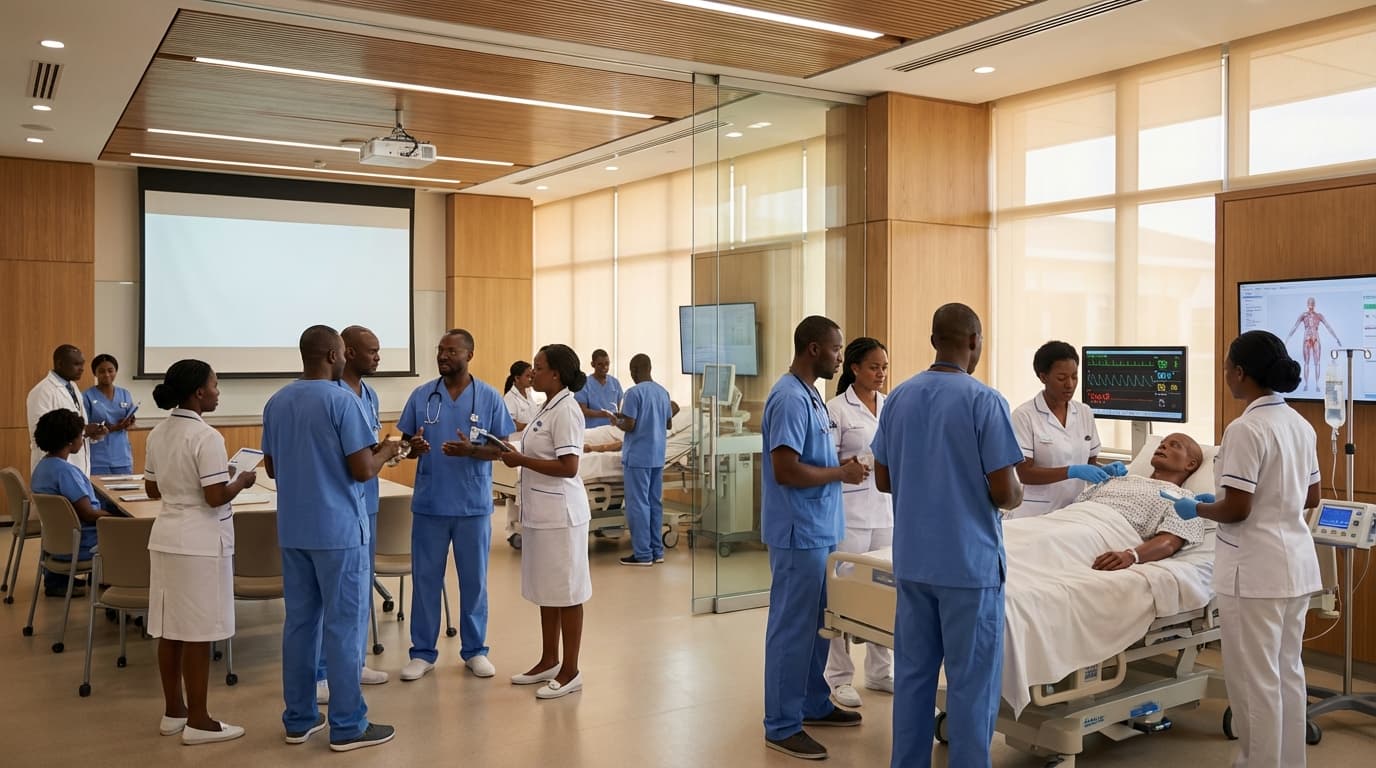
Equipment Training & Education in Congo (Brazzaville)
Engineering Excellence & Technical Support
Comprehensive equipment training and certification programs High-standard technical execution following OEM protocols and local regulatory frameworks.
Localized Equipment Operation & Maintenance (O&M) Training
We deliver hands-on, context-specific training programs for heavy machinery, industrial equipment, and agricultural tools, tailored to the local operational environment and common maintenance challenges faced in Congo (Brazzaville). Our curriculum emphasizes practical application and safety protocols.
Certified Operator & Technician Certification
Our comprehensive training leads to recognized certifications for equipment operators and maintenance technicians. This ensures a skilled local workforce, enhancing operational efficiency, reducing downtime, and improving safety standards across key industries in Congo (Brazzaville).
Preventive Maintenance & Troubleshooting Workshops
We offer specialized workshops focused on advanced preventive maintenance techniques and effective troubleshooting for critical equipment. This empowers local teams to identify and resolve issues proactively, minimizing costly repairs and maximizing the lifespan of valuable assets in Congo (Brazzaville).
What Is Equipment Training & Education In Congo (Brazzaville)?
Equipment Training & Education in Congo (Brazzaville) refers to the systematic process of imparting knowledge, skills, and proficiency to individuals involved in the operation, maintenance, and repair of various types of equipment. This service is crucial for ensuring the safe, efficient, and effective utilization of machinery across diverse industrial, commercial, and public sectors. It encompasses theoretical instruction, practical hands-on demonstrations, simulated scenarios, and ongoing competency assessment. The objective is to minimize operational risks, enhance productivity, reduce downtime, and extend the lifespan of valuable assets, thereby contributing to economic development and industrial advancement within the Republic of the Congo.
| Who Needs It? | Typical Use Cases | ||||||||||||
|---|---|---|---|---|---|---|---|---|---|---|---|---|---|
| Equipment Operators: Individuals directly involved in the daily use of machinery. | Construction: Training on excavators, bulldozers, cranes, concrete mixers, and related heavy machinery. | Industrial Maintenance Technicians: Personnel responsible for the upkeep and repair of manufacturing and processing equipment. | Manufacturing: Operation and maintenance of assembly lines, CNC machines, robotic arms, and packaging equipment. | Field Service Engineers: Technicians who install, maintain, and repair equipment at client sites. | Oil and Gas: Training on drilling rigs, pumps, pipelines, and safety equipment specific to the upstream, midstream, and downstream sectors. | Logistics and Transportation Personnel: Operators of forklifts, warehousing equipment, and vehicle fleets. | Mining: Operation and maintenance of haul trucks, loaders, crushers, and drilling equipment. | Healthcare Professionals: Technicians operating and maintaining medical equipment such as MRI scanners, X-ray machines, and laboratory analyzers. | Agriculture: Training on tractors, harvesters, irrigation systems, and other agricultural machinery. | Energy Sector Workers: Personnel involved in the operation and maintenance of power generation equipment (e.g., turbines, generators) and distribution systems. | Public Works Employees: Training on equipment used for road maintenance, waste management, and water treatment facilities. | Laboratory Technicians: Operation and calibration of scientific instruments and analytical equipment. | Telecommunications Technicians: Installation and maintenance of communication infrastructure and related equipment. |
Key Components of Equipment Training & Education:
- Theoretical Instruction: Covering principles of operation, safety protocols, regulatory compliance, and theoretical underpinnings of equipment function.
- Practical Skill Development: Hands-on training in operating, adjusting, troubleshooting, and performing routine maintenance on specific equipment models.
- Safety and Hazard Awareness: Emphasizing safe work practices, risk identification, emergency procedures, and the use of personal protective equipment (PPE).
- Maintenance and Repair Training: Educating personnel on preventive maintenance schedules, diagnostic techniques, and common repair procedures.
- Simulation and Scenario-Based Learning: Utilizing simulators or realistic scenarios to replicate operational challenges and decision-making processes.
- Certification and Competency Assessment: Evaluating and documenting the acquired skills and knowledge of trainees to ensure proficiency.
- Refresher and Advanced Training: Providing ongoing education to keep skills current with technological advancements and address new operational requirements.
Who Needs Equipment Training & Education In Congo (Brazzaville)?
In Congo (Brazzaville), comprehensive equipment training and education are crucial for a wide range of individuals and organizations to ensure safe, efficient, and productive operations. This is particularly vital in sectors where heavy machinery, specialized tools, and advanced technology are utilized. Investing in proper training mitigates risks, reduces downtime, and maximizes the return on investment in equipment.
| Industry/Sector | Target Departments | Specific Roles/Personnel | Types of Equipment Requiring Training |
|---|---|---|---|
| Oil and Gas | Operations, Maintenance, Production, Safety | Drillers, Riggers, Mechanics, Technicians, Safety Officers, Supervisors | Drilling rigs, pumps, valves, heavy lifting equipment, hazardous material handling equipment, safety equipment |
| Mining | Extraction, Processing, Maintenance, Health & Safety | Miners, Equipment Operators (excavators, loaders, haul trucks), Mechanics, Geologists, Safety Inspectors | Excavators, loaders, haul trucks, drills, crushers, conveyors, safety gear |
| Construction | Site Management, Operations, Maintenance, Logistics | Equipment Operators (cranes, bulldozers, concrete mixers), Foremen, Site Managers, Mechanics, Welders | Cranes, excavators, bulldozers, graders, concrete mixers, scaffolding, welding equipment |
| Manufacturing | Production, Quality Control, Maintenance, Engineering | Machine Operators, Technicians, Engineers, Quality Inspectors, Maintenance Staff | Assembly lines, CNC machines, robotics, packaging machinery, welding equipment, forklifts |
| Transportation and Logistics | Fleet Management, Operations, Maintenance, Warehousing | Truck Drivers, Forklift Operators, Warehouse Personnel, Mechanics, Dispatchers | Heavy-duty trucks, buses, forklifts, cranes, specialized transport vehicles, warehouse automation equipment |
| Agriculture | Farm Operations, Mechanization, Maintenance | Tractor Operators, Harvester Operators, Maintenance Technicians, Farm Managers | Tractors, harvesters, plows, sprayers, irrigation systems, processing machinery |
| Healthcare | Medical Imaging, Laboratory, Surgical Support | Radiographers, Lab Technicians, Biomedical Engineers, Nurses (specialized areas) | MRI machines, CT scanners, X-ray equipment, laboratory analyzers, surgical tools, sterilizers |
| Utilities (Water, Power) | Operations, Maintenance, Repair, Safety | Plant Operators, Technicians, Field Technicians, Linemen, Safety Officers | Pumps, turbines, generators, transformers, control systems, specialized maintenance tools |
Target Customers & Departments for Equipment Training & Education in Congo (Brazzaville)
- Individuals seeking to enhance their employability in industries that rely on specialized equipment.
- Companies aiming to improve the competency and safety of their workforce.
- Government agencies responsible for infrastructure development and maintenance.
- Educational institutions looking to equip their students with practical, in-demand skills.
- Non-governmental organizations (NGOs) involved in humanitarian aid, development projects, and emergency response.
- Service and maintenance providers who need to stay updated on the latest equipment technologies.
Equipment Training & Education Process In Congo (Brazzaville)
The equipment training and education process in Congo (Brazzaville) typically follows a structured workflow to ensure effective knowledge transfer and skill development for users of specialized equipment. This process begins with an inquiry from a client or internal department needing training. The inquiry is then evaluated, a training needs assessment is conducted to define specific learning objectives and tailor the program. Following this, a training plan and proposal are developed and presented for approval. Upon approval, the training materials are prepared, instructors are identified and briefed, and logistics are arranged. The execution phase involves delivering the training, which can include theoretical sessions, practical demonstrations, and hands-on exercises. Post-training, an evaluation is performed to assess the effectiveness of the training and the participants' comprehension. Finally, a certificate of completion is issued, and follow-up support or refresher courses may be offered.
| Stage | Description | Key Activities | Responsible Parties (Typical) |
|---|---|---|---|
| Inquiry & Initial Contact | The process begins when a need for equipment training is identified and communicated. | Receiving training request, initial discussion of requirements. | Client/Internal Department, Training Coordinator/Sales Team |
| Training Needs Assessment (TNA) | Detailed analysis to understand the specific knowledge and skills required. | Interviews, surveys, observation of current practices, defining learning objectives. | Training Coordinator, Subject Matter Experts (SMEs), Client Representatives |
| Training Plan & Proposal Development | Outlining the scope, content, methodology, duration, and cost of the training. | Designing curriculum, selecting training methods, estimating resources, preparing a formal proposal. | Training Coordinator, SMEs, Finance Department |
| Proposal Approval | Formal acceptance of the training proposal by the client or relevant authority. | Review of proposal, negotiation (if necessary), signing of agreement/contract. | Client Management, Procurement Department, Senior Management |
| Training Material Preparation | Developing or gathering all necessary learning resources. | Creating presentations, manuals, handouts, case studies, practical exercises, visual aids. | SMEs, Training Developers, Graphic Designers |
| Instructor Identification & Briefing | Selecting qualified personnel to deliver the training and ensuring they are prepared. | Identifying internal/external trainers, conducting briefing sessions on curriculum, objectives, and logistics. | Training Coordinator, HR Department, SMEs |
| Logistics Arrangement | Organizing all practical aspects for the training delivery. | Booking training venues, scheduling dates, arranging for equipment access, travel, accommodation, catering, IT support. | Training Coordinator, Administrative Staff, IT Department |
| Training Execution | The actual delivery of the training program. | Conducting theoretical sessions, demonstrations, hands-on practice, Q&A sessions, simulations. | Instructors, Participants |
| Post-Training Evaluation | Assessing the effectiveness of the training and participant learning. | Administering feedback forms, quizzes, practical assessments, observing skill application. | Instructors, Training Coordinator, Participants |
| Certificate Issuance | Providing formal recognition of successful completion. | Verifying assessment results, preparing and distributing certificates. | Training Coordinator, Administrative Staff |
| Follow-up Support/Refresher Courses | Providing ongoing assistance and reinforcing learned skills. | Answering post-training queries, offering on-site support, scheduling refresher training as needed. | SMEs, Technical Support Team, Training Coordinator |
Key Stages in the Equipment Training & Education Process
- Inquiry and Initial Contact
- Training Needs Assessment
- Training Plan & Proposal Development
- Proposal Approval
- Training Material Preparation
- Instructor Identification & Briefing
- Logistics Arrangement
- Training Execution (Theory & Practice)
- Post-Training Evaluation
- Certificate Issuance
- Follow-up Support/Refresher Courses
Equipment Training & Education Cost In Congo (Brazzaville)
The cost of equipment training and education in Congo (Brazzaville) can vary significantly due to several key pricing factors. These include the complexity and specialization of the equipment, the duration and depth of the training program, the qualifications and experience of the instructors, the training location (on-site at a client's facility versus a dedicated training center), and the number of participants. Additionally, the inclusion of training materials, certifications, and post-training support can impact the overall price. Currency fluctuations and the general economic climate within Congo (Brazzaville) also play a role. While specific, up-to-the-minute pricing is best obtained through direct quotes from training providers, this overview aims to provide a general understanding of the pricing landscape in local currency (Congolese Franc - XAF).
| Training Type (Example) | Typical Duration | Estimated Price Range (XAF) | Notes |
|---|---|---|---|
| Basic Office Software (e.g., Microsoft Office Suite) | 1-3 Days | 50,000 - 150,000 XAF per participant | Group rates often available. Focus on common applications. |
| Basic Computer Hardware & Troubleshooting | 2-4 Days | 75,000 - 200,000 XAF per participant | Covers assembly, common issues, and basic repairs. |
| Industrial Machinery Operation (e.g., Forklift, Generator) | 3-5 Days | 150,000 - 400,000 XAF per participant | May include safety certification. Varies by machinery complexity. |
| Heavy Construction Equipment Operation (e.g., Excavator, Bulldozer) | 5-10 Days | 300,000 - 750,000 XAF per participant | Often includes practical, hands-on training and safety protocols. On-site training might be more expensive. |
| Specialized IT/Networking Equipment | 3-7 Days | 200,000 - 600,000 XAF per participant | Dependent on the specific technology (e.g., Cisco, cloud platforms). Vendor certifications can increase cost. |
| Medical Equipment Operation (e.g., Diagnostic Machines) | Varies (often customized) | 500,000 XAF and upwards | Highly specialized, requires certified instructors. Price is highly dependent on the specific equipment and duration. |
| On-site Custom Training (per day for instructor) | 1 Day | 100,000 - 300,000 XAF | Excludes participant fees and travel/accommodation for the instructor. Price varies by instructor expertise. |
Key Pricing Factors for Equipment Training & Education in Congo (Brazzaville):
- Equipment Complexity and Specialization: Training for highly technical or specialized industrial machinery (e.g., heavy construction equipment, advanced medical devices) will generally be more expensive than for simpler, more common tools or office equipment.
- Training Program Duration and Depth: Short, introductory sessions will be less costly than comprehensive, multi-day or multi-week courses covering advanced operational, maintenance, and troubleshooting skills.
- Instructor Expertise and Qualifications: Highly experienced instructors with specialized certifications or extensive industry knowledge often command higher fees.
- Training Location: On-site training at a client's premises might include travel and accommodation costs for instructors, potentially increasing the price. Training at a provider's dedicated facility might have fixed overheads that are factored into the cost.
- Number of Participants: Per-participant costs can decrease with larger groups due to economies of scale, but overall program cost will increase.
- Training Materials and Resources: The provision of manuals, online resources, simulations, and other learning aids can influence pricing.
- Certification and Assessment: Programs leading to recognized industry certifications will often have higher costs due to the assessment and accreditation processes involved.
- Post-Training Support: Access to ongoing technical support, follow-up sessions, or refresher courses can add to the overall investment.
- Provider Reputation and Demand: Well-established training providers with a strong reputation may charge a premium for their services.
- Currency Exchange Rates: As the local currency is the Congolese Franc (XAF), fluctuations against major international currencies can affect the cost of imported training equipment or materials, indirectly impacting training fees.
Affordable Equipment Training & Education Options
Investing in proper equipment training and education is crucial for safety, efficiency, and maximizing the lifespan of your assets. Fortunately, there are numerous affordable options available. This guide explores value bundles and cost-saving strategies to make essential training accessible.
| Cost-Saving Strategy | Description | Example |
|---|---|---|
| Online & E-learning Courses | Leveraging digital platforms for self-paced learning. Reduces travel, facility, and instructor costs. | Accessing pre-recorded video modules for heavy machinery operation at a fraction of the cost of in-person classes. |
| Group Discounts & Bulk Purchasing | Negotiating lower per-person rates when training multiple employees or purchasing multiple courses. | A company booking training for 10 employees receives a 15% discount compared to individual bookings. |
| Train-the-Trainer Programs | Investing in a few key personnel to become certified instructors within your organization. This allows for ongoing, in-house training. | Sending a supervisor to a 'Train-the-Trainer' course for hazardous materials handling, enabling them to train new hires internally. |
| Partnerships & Alliances | Collaborating with industry associations, community colleges, or equipment manufacturers who offer discounted training to members or partners. | Joining a local trade association that provides members with discounted access to equipment safety workshops. |
| Government Grants & Subsidies | Exploring available government funding programs designed to support workforce development and safety training. | Applying for a state grant that covers a portion of the cost for specialized welding certification programs. |
| Free Webinars & Introductory Sessions | Utilizing free online sessions offered by training providers or manufacturers to gain foundational knowledge or explore new equipment. | Attending a free webinar on the latest safety features of aerial work platforms. |
| Refresher Courses & Recertification Bundles | Opting for bundles specifically designed for renewing certifications or refreshing existing skills, which are often more cost-effective than initial training. | Purchasing a discounted bundle that includes an online refresher course and a practical assessment for an expired forklift license. |
Understanding Value Bundles
- Definition: Value bundles are packages that combine multiple training modules, resources, or services at a reduced price compared to purchasing them individually. They are designed to offer more comprehensive learning and greater savings.
- Types of Bundles:
- Equipment-Specific Bundles: Training tailored to a particular type of equipment (e.g., forklift operation, scissor lift safety, welding techniques).
- Job Role Bundles: Training aligned with specific job responsibilities that require diverse equipment skills (e.g., construction worker safety package).
- Certification Bundles: Packages that include preparation courses and exam fees for industry-recognized certifications.
- Comprehensive Safety Bundles: Broader training covering multiple safety aspects, often including equipment operation and general workplace safety.
- Benefits of Bundles:
- Cost Savings: The most significant advantage is the reduced overall cost.
- Convenience: Streamlined purchasing and scheduling of multiple training needs.
- Holistic Learning: Ensures employees receive a well-rounded education covering related skills.
- Employee Development: Encourages a culture of continuous learning and skill enhancement.
Verified Providers In Congo (Brazzaville)
In the pursuit of reliable and high-quality healthcare in Congo (Brazzaville), identifying 'Verified Providers' is paramount. This designation signifies that healthcare facilities and professionals have undergone rigorous evaluation processes to ensure they meet specific standards of care, safety, and ethical practice. Among the entities actively involved in establishing and promoting such standards, Franance Health stands out as a crucial player. Their credentialing process is designed to instill confidence in patients, offering them assurance that they are accessing the best possible medical services.
| Franance Health Credentialing Component | Why it Represents the Best Choice |
|---|---|
| Comprehensive Facility Assessment | Franance Health meticulously evaluates the infrastructure, equipment, and operational procedures of healthcare facilities, ensuring they meet stringent quality and safety benchmarks. |
| Professional Staff Verification | All medical practitioners undergo thorough background checks, license verification, and assessment of their expertise, guaranteeing that patients are treated by competent and ethical professionals. |
| Patient Care Standards | Franance Health enforces strict protocols for patient care, including communication, hygiene, and treatment efficacy, which translates to a safer and more effective healthcare experience. |
| Transparency and Accountability | The verification process promotes transparency. Patients can trust that a Franance Health-verified provider has met rigorous standards, fostering accountability within the healthcare sector. |
| Continuous Quality Improvement | Franance Health's commitment extends beyond initial verification, encouraging ongoing adherence to best practices and continuous improvement, ensuring sustained high-quality care. |
What Does 'Verified Provider' Mean in Congo (Brazzaville)?
- Adherence to national and international healthcare regulations.
- Implementation of robust patient safety protocols.
- Employment of qualified and licensed medical professionals.
- Commitment to ethical medical practices and patient rights.
- Maintenance of adequate and up-to-date medical equipment and facilities.
Scope Of Work For Equipment Training & Education
This Scope of Work (SOW) outlines the training and educational services to be provided for the recently acquired [Equipment Name] at [Client Location/Department]. The objective is to ensure that designated personnel are proficient in the safe, effective, and efficient operation, maintenance, and troubleshooting of the equipment.
| Training Module | Duration (Approx.) | Key Topics Covered | Learning Objectives | Assessment Method |
|---|---|---|---|---|
| Module 1: Introduction to [Equipment Name] | 4 hours | Overview of the [Equipment Name]'s purpose, key components, and safety features. Basic operational principles. | Understand the fundamental functionality and safety aspects of the equipment. | Short Quiz, Q&A Session |
| Module 2: Operation and Setup | 8 hours | Detailed step-by-step operating procedures, startup/shutdown sequences, parameter configuration, and routine checks. | Perform standard operational procedures and configure equipment settings correctly. | Practical Demonstration, Scenario-Based Exercise |
| Module 3: Routine Maintenance and Inspection | 6 hours | Scheduled maintenance tasks, cleaning procedures, lubrication, inspection points, and consumable replacement. | Perform all scheduled maintenance and identify potential wear and tear. | Practical Demonstration, Checklist Verification |
| Module 4: Troubleshooting and Diagnostics | 10 hours | Common error codes, fault identification, diagnostic tools, basic repair procedures, and escalation protocols. | Diagnose and resolve common operational issues, understanding when to escalate. | Simulated Fault Scenarios, Problem-Solving Exercises |
| Module 5: Advanced Features & Optimization (Optional) | 4 hours | Exploration of specialized functions, performance tuning, and efficiency optimization techniques. | Leverage advanced features for enhanced performance and efficiency. | Case Study Analysis, Group Discussion |
Technical Deliverables and Standard Specifications
- Detailed training curriculum tailored to the [Equipment Name], covering theoretical concepts and practical applications.
- Comprehensive user manuals and operating procedures for the [Equipment Name].
- Standardized troubleshooting guides and fault isolation procedures.
- Competency assessment tools (e.g., quizzes, practical demonstrations) to verify knowledge and skill acquisition.
- Training materials (presentations, handouts, videos) developed using [Standard Format/Software, e.g., Microsoft PowerPoint, Adobe Captivate] and adhering to [Client's Branding Guidelines/Style Guide].
- Post-training support plan, including [e.g., limited remote support, access to online resources].
- Training environment setup and configuration (if applicable) to mimic actual operating conditions.
- Certification or confirmation of training completion for all participants who successfully meet the competency requirements.
Service Level Agreement For Equipment Training & Education
This Service Level Agreement (SLA) outlines the guaranteed response times and uptime for equipment training and education services provided by [Your Company Name] to [Client Company Name]. This SLA is incorporated by reference into the Master Services Agreement (MSA) between the parties, dated [Date of MSA].
| Service Component | Service Level Objective (SLO) | Measurement | Remedy/SLA Credit |
|---|---|---|---|
| Technical Support for Training Platform Access: | Response Time: | For critical issues impacting immediate training participation (e.g., inability to log in, access essential materials), acknowledge within 2 business hours. | N/A (Focus on rapid resolution) |
| Resolution Time: | Critical issues resolved within 4 business hours. | N/A (Focus on rapid resolution) | |
| Response Time: | For non-critical issues (e.g., minor formatting errors in materials, questions about navigation), acknowledge within 8 business hours. | N/A (Focus on timely resolution) | |
| Resolution Time: | Non-critical issues resolved within 24 business hours. | N/A (Focus on timely resolution) | |
| Content Clarification & General Inquiries: | Response Time: | Questions regarding training content or general equipment operation clarification, acknowledge within 1 business day. | N/A (Focus on informative response) |
| Resolution Time: | Content clarification or general inquiries answered within 3 business days. | N/A (Focus on informative response) | |
| Online Training Platform/Portal Uptime: | Uptime Guarantee: | The online training platform or portal will be available 99.5% of the time, excluding Scheduled Maintenance. | For every full 0.1% of downtime below the 99.5% guarantee in a calendar month, [Client Company Name] will receive a credit of 1% of the monthly training service fees. |
| Scheduled Maintenance: | Notification: | Advance notice of at least 48 business hours will be provided for all Scheduled Maintenance. | N/A |
Key Definitions
- Training Session: A scheduled period of instruction on the operation, maintenance, or troubleshooting of specific equipment.
- Education Materials: Documentation, guides, videos, or other resources provided to support training.
- Support Incident: A request for assistance related to training content, access to education materials, or clarification on equipment operation as covered in the training.
- Response Time: The maximum time allowed for [Your Company Name] to acknowledge and begin addressing a Support Incident.
- Resolution Time: The maximum time allowed for [Your Company Name] to fully resolve a Support Incident.
- Uptime Guarantee: The minimum percentage of time that the online training platform or portal is available for access.
- Scheduled Maintenance: Pre-announced periods where the training platform or portal may be unavailable for updates or upkeep.
- Force Majeure: Events beyond the reasonable control of either party, including but not limited to natural disasters, acts of war, or widespread internet outages.
Frequently Asked Questions

Ready when you are
Let's scope your Equipment Training & Education in Congo (Brazzaville) project in Congo (Brazzaville).

Scaling healthcare logistics and technical systems across the entire continent.