
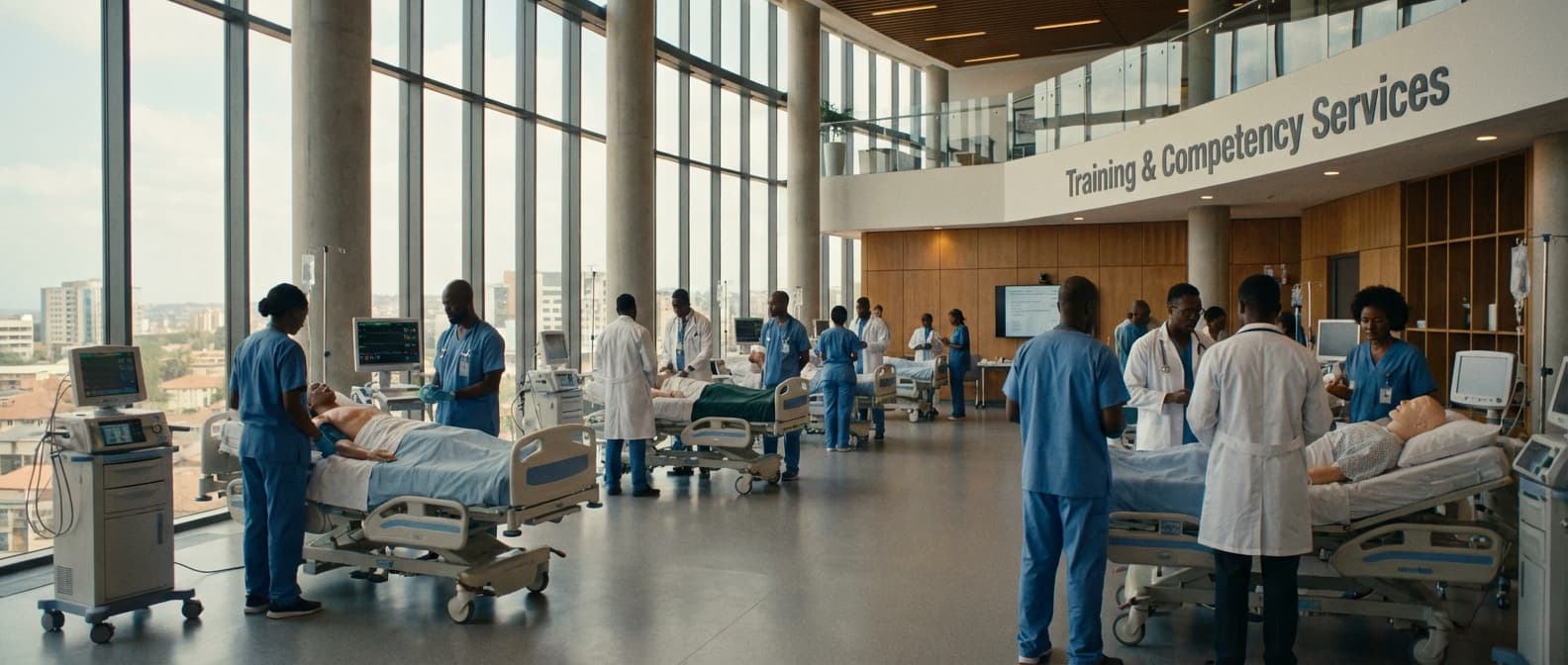
Ventilator User Training Service (Nurses) in Congo (Brazzaville)
Engineering Excellence & Technical Support
Ventilator User Training Service (Nurses) High-standard technical execution following OEM protocols and local regulatory frameworks.
Optimizing Ventilator Settings
Learn to accurately adjust essential ventilator parameters like Tidal Volume (VT), Respiratory Rate (RR), PEEP, and FiO2 based on patient condition and clinical best practices. Master waveform interpretation for real-time adjustments and improved patient outcomes.
Advanced Patient Monitoring & Alarms
Understand the critical meaning of various ventilator alarms. Develop proficiency in interpreting real-time patient data and physiological trends to identify subtle changes and intervene proactively, ensuring patient safety and comfort.
Ventilator-Associated Pneumonia (VAP) Prevention
Implement evidence-based protocols for ventilator circuit care, oral hygiene, and patient positioning to significantly reduce the risk of VAP, a common and serious complication in ventilated patients. Ensure adherence to strict infection control measures.
What Is Ventilator User Training Service (Nurses) In Congo (Brazzaville)?
Ventilator User Training Service (Nurses) in Congo (Brazzaville) refers to specialized educational programs designed to equip registered nurses with the knowledge and practical skills necessary for the safe and effective operation of mechanical ventilators. This service is crucial in environments where access to advanced respiratory support is limited or where there is a high demand for critical care services, such as intensive care units (ICUs), emergency departments, and field hospitals. The training aims to ensure nurses can initiate, monitor, manage, and troubleshoot mechanical ventilation, thereby improving patient outcomes and reducing ventilator-associated complications. This service is delivered by qualified respiratory therapists, critical care physicians, or experienced nurses with specialized ventilator expertise, often utilizing simulation-based learning, hands-on practice with actual or simulated equipment, and case study analysis.
| Who Needs This Service? | Typical Use Cases | ||||||
|---|---|---|---|---|---|---|---|
| Registered nurses working in critical care settings (ICUs, EDs). | Management of patients with acute respiratory failure (e.g., ARDS, pneumonia, COPD exacerbations). | Post-operative patients requiring mechanical ventilation. | Patients with neurological conditions affecting respiratory drive. | Nurses in rural or remote areas with limited access to respiratory therapists. | Deployment in disaster relief or humanitarian aid scenarios. | Healthcare facilities experiencing surges in demand for critical care. | Introduction of new ventilator technology in a healthcare facility. |
Key Components of Ventilator User Training Service (Nurses):
- Ventilator Modes and Settings: Understanding various ventilation modes (e.g., Volume Control, Pressure Control, Assist/Control, Synchronized Intermittent Mandatory Ventilation - SIMV, Pressure Support Ventilation - PSV), their physiological principles, and appropriate selection based on patient condition.
- Initiation of Mechanical Ventilation: Correct setup, patient connection, initial parameter setting, and patient assessment during the initiation phase.
- Monitoring and Assessment: Continuous monitoring of ventilator parameters (e.g., tidal volume, respiratory rate, positive end-expiratory pressure - PEEP, fraction of inspired oxygen - FiO2), patient physiological response (e.g., vital signs, blood gases, chest excursion, breath sounds), and recognition of alarm conditions.
- Ventilator Alarms and Troubleshooting: Identifying common alarms (e.g., high/low pressure, disconnection, low tidal volume), determining their causes, and implementing appropriate interventions.
- Weaning from Mechanical Ventilation: Understanding criteria for weaning, different weaning strategies, and patient assessment during the weaning process.
- Humidification and Airway Management: Principles of airway humidification and the role of nurses in maintaining the artificial airway.
- Complication Prevention: Strategies to prevent ventilator-associated pneumonia (VAP), barotrauma, volutrauma, and other ventilator-related morbidities.
- Ethical and Legal Considerations: Understanding consent, patient rights, and documentation related to mechanical ventilation.
- Emergency Procedures: Protocols for circuit disconnections, power failures, and other emergent situations.
Who Needs Ventilator User Training Service (Nurses) In Congo (Brazzaville)?
This document outlines the essential need for Ventilator User Training Service for nurses in Congo (Brazzaville), focusing on identifying the specific target customers and departments that would benefit most from such specialized training.
| Department | Specific Need for Ventilator Training | Patient Population Served | Key Responsibilities Related to Ventilation |
|---|---|---|---|
| Intensive Care Unit (ICU)/Critical Care Unit (CCU) | High volume of critically ill patients requiring advanced ventilation support. | Adults and potentially pediatric patients with severe respiratory failure. | Initiating, managing, and weaning mechanical ventilation; managing complex ventilator modes; responding to critical alarms and emergencies. |
| Anesthesia Department | Ventilator use during surgical procedures and post-operative recovery. | Patients undergoing surgical interventions. | Intraoperative ventilation management; ensuring appropriate ventilation during anesthesia; monitoring ventilation post-surgery. |
| Emergency Department (ED) | Initial management of patients with acute respiratory distress requiring immediate ventilatory support. | Patients presenting with acute respiratory failure, trauma, or exacerbations of chronic respiratory conditions. | Rapid assessment of respiratory status; initiation of ventilatory support (non-invasive or invasive); stabilization of patients for transfer to higher levels of care. |
| Pediatric Intensive Care Unit (PICU) | Specialized training for ventilating neonates and children, considering their unique physiological needs. | Infants, children, and adolescents with respiratory illnesses or conditions requiring mechanical ventilation. | Adapting ventilator settings for pediatric patients; managing specific pediatric respiratory conditions; recognizing and responding to unique pediatric critical events. |
| Neonatal Intensive Care Unit (NICU) | Critical need for training on specialized neonatal ventilators and the unique respiratory challenges of newborns. | Premature infants and full-term newborns with respiratory distress syndrome, apnea, or other breathing difficulties. | Operating neonatal ventilators; managing various modes of ventilation for neonates; understanding the impact of ventilation on immature lungs. |
| Pulmonology Department (if equipped with ventilators) | Management of chronic respiratory conditions requiring prolonged or intermittent ventilation. | Patients with COPD, cystic fibrosis, neuromuscular disorders affecting breathing. | Long-term ventilator management; patient education for home ventilation; troubleshooting chronic ventilation issues. |
Target Customers and Departments for Ventilator User Training Service in Congo (Brazzaville)
- {"title":"Primary Target Customers: Registered Nurses","description":"Registered Nurses are the frontline healthcare providers who directly operate and monitor ventilators. They require comprehensive training to ensure patient safety, optimize ventilator settings, and manage potential complications."}
- {"title":"Secondary Target Customers: Enrolled/Licensed Practical Nurses (where applicable)","description":"Depending on the healthcare system's structure in Congo (Brazzaville), Enrolled or Licensed Practical Nurses may also be involved in basic ventilator monitoring and patient care under the supervision of Registered Nurses. Training for them would focus on foundational principles and recognizing critical changes."}
- {"title":"Tertiary Target Customers: Nurse Educators/Supervisors","description":"Nurse educators and supervisors play a crucial role in disseminating knowledge and ensuring compliance. Training them ensures they are equipped to train and mentor their teams effectively, acting as internal subject matter experts."}
Ventilator User Training Service (Nurses) Process In Congo (Brazzaville)
This document outlines the workflow for the Ventilator User Training Service specifically designed for nurses in Congo (Brazzaville). The process begins with an inquiry from a healthcare facility or individual nurse and concludes with the successful completion of the training and issuance of a certificate. The service aims to equip nurses with the necessary knowledge and practical skills to safely and effectively operate ventilators, thereby improving patient care and outcomes.
| Stage | Description | Responsible Party | Key Activities | Deliverables | Timeline (Estimated) |
|---|---|---|---|---|---|
| Initial contact from a healthcare facility (hospital, clinic) or a group of nurses expressing interest in ventilator training. This stage involves understanding their specific needs, current skill levels, and the types of ventilators they utilize or plan to acquire. | Potential Client (Healthcare Facility/Nurses), Training Provider Sales/Coordination Team | Initial contact (phone, email, website), Information gathering (number of nurses, experience level, existing equipment), Site visit (optional, for assessment) | Needs Assessment Report, Preliminary understanding of training scope | 1-3 Business Days |
| Based on the needs assessment, the training provider develops a detailed proposal outlining the training objectives, curriculum, methodology, duration, costs, and expected outcomes. Upon agreement, a formal contract is signed. | Training Provider, Potential Client | Proposal preparation, Costing and budgeting, Contract negotiation, Contract signing | Detailed Training Proposal, Signed Service Agreement/Contract | 3-7 Business Days |
| The standard ventilator training curriculum is reviewed and potentially customized to align with the specific ventilators in use at the client's facility, local protocols, and any specific regulatory requirements in Congo (Brazzaville). | Training Provider (Subject Matter Experts/Instructors) | Curriculum review, Material adaptation, Creation of case studies (if applicable), Translation of materials (if needed) | Tailored Training Modules, Participant Handouts, Instructor Guides | 5-10 Business Days |
| Arranging all logistical aspects for the training, including the venue (if external), equipment availability, trainer travel and accommodation, and scheduling the training sessions to minimize disruption to clinical operations. | Training Provider Logistics Team, Client Facility Management | Booking training venue, Securing ventilators for practical sessions, Arranging trainer travel, Scheduling training dates and times, Communication with participants | Confirmed Training Schedule, Logistics Plan, Communication to Participants | 7-14 Business Days |
| The core of the service, involving the delivery of comprehensive training. This includes theoretical lectures on ventilator principles, modes, patient monitoring, and troubleshooting, followed by hands-on practical sessions with actual ventilator equipment. | Training Provider (Certified Instructors) | Theoretical sessions (lectures, discussions), Practical demonstrations, Hands-on practice by nurses, Q&A sessions, Case study analysis | Completed Training Sessions (Theoretical & Practical), Nurse Engagement | Duration varies based on curriculum (e.g., 2-5 days) |
| Assessing the nurses' understanding and practical skills through written tests, practical skill assessments, and scenario-based evaluations. Feedback is also collected from participants to improve future training. | Training Provider (Instructors/Assessors), Participants | Administering theoretical tests, Conducting practical skill assessments, Observing performance in simulated scenarios, Collecting participant feedback forms | Assessment Scores, Practical Competency Ratings, Participant Feedback Summary | Concurrent with Training Delivery & 1-2 Business Days Post-Training |
| Upon successful completion of the training and assessments, nurses receive a certificate of completion. A follow-up may be scheduled to address any lingering questions or provide ongoing support. | Training Provider, Participants | Issuing certificates, Providing assessment results to the client, Conducting post-training follow-up (optional), Gathering testimonials (optional) | Certificates of Completion, Final Training Report, Post-Training Support (if agreed) | 3-5 Business Days post-assessment |
Key Stages of the Ventilator User Training Service Workflow
- Inquiry & Needs Assessment
- Proposal & Agreement
- Curriculum Development & Customization
- Logistics & Scheduling
- Training Delivery (Theoretical & Practical)
- Assessment & Evaluation
- Certification & Follow-up
Ventilator User Training Service (Nurses) Cost In Congo (Brazzaville)
Determining the precise cost of ventilator user training for nurses in Congo (Brazzaville) involves several key factors. The price is not fixed and can fluctuate based on the training provider, the scope and duration of the program, the number of nurses being trained, and whether the training is conducted on-site or at a dedicated facility. Local currency for these transactions is the Central African CFA franc (XAF).
| Cost Factor | Estimated Range (XAF per nurse) |
|---|---|
| Basic Ventilator Operation (1-2 days) | 50,000 - 150,000 |
| Intermediate Ventilator Management (3-5 days) | 150,000 - 300,000 |
| Advanced Ventilation & Critical Care Scenarios (5+ days) | 300,000 - 600,000+ |
| On-site Training (potential additional fees for travel/setup) | Varies greatly based on location and duration |
| Certification Fees (if applicable) | 20,000 - 50,000 |
Factors Influencing Ventilator User Training Costs
- Training Provider: The reputation and experience of the training institution or company significantly impact cost. Specialized medical training companies or established healthcare simulation centers will likely charge more than a general training provider with limited medical expertise.
- Program Duration and Intensity: A comprehensive training program covering advanced ventilation modes, troubleshooting, and emergency scenarios will naturally be more expensive than a basic introductory course. The number of training hours and days is a direct cost driver.
- Number of Participants: Group discounts are often available. Training a larger cohort of nurses simultaneously can reduce the per-person cost.
- Training Location: On-site training at a hospital or clinic might incur additional costs for travel, accommodation, and potentially the use of hospital equipment. Off-site training at a dedicated training center might have fixed facility rental fees included in the price.
- Training Materials and Equipment: The provision of high-quality training manuals, access to functional ventilators (real or simulated), and other learning resources contribute to the overall cost.
- Certification and Assessment: If the training includes a formal assessment and leads to a recognized certification, this often adds to the price due to the administrative and evaluation overhead.
- Customization: Tailoring the training content to specific hospital protocols or particular types of ventilators used in Congo can increase the development cost.
Affordable Ventilator User Training Service (Nurses) Options
This document outlines affordable ventilator user training services specifically designed for nurses, focusing on value bundles and cost-saving strategies to maximize investment and ensure competent patient care. We understand the critical need for well-trained nursing staff in managing ventilated patients, and our offerings aim to be accessible and effective.
| Cost-Saving Strategy | Description | Benefit for Nursing Teams |
|---|---|---|
| Online & Blended Learning Modules | Utilizing pre-recorded lectures, interactive quizzes, and virtual simulations accessible anytime, anywhere. Blended models incorporate in-person hands-on sessions for critical skills. | Reduces travel costs, allows for flexible learning schedules, and minimizes disruption to patient care by freeing up clinical time for training. |
| Group Discounts & Site Licenses | Offering reduced per-participant fees for bulk enrollments from a single facility or providing unlimited access to online modules for a set period. | Significantly lowers the per-nurse training cost, making comprehensive education accessible to larger nursing departments. |
| Train-the-Trainer Programs | Equipping experienced nurses or educators within the facility to deliver and certify ongoing training, reducing reliance on external trainers for basic and refresher courses. | Fosters internal expertise, ensures consistent training aligned with facility protocols, and creates a sustainable training model for long-term cost savings. |
| Modular & Customizable Training | Allowing facilities to select specific modules or customize content to focus on the ventilators and patient populations most relevant to their unit, avoiding unnecessary training. | Ensures training is targeted and relevant, maximizing the return on investment by focusing on essential skills and knowledge for the specific work environment. |
| Simulation-Based Training Packages | Incorporating hands-on practice with high-fidelity simulators to mimic real-world scenarios. Can be offered as standalone workshops or integrated into bundled programs. | Provides a safe environment for skill development and error correction, leading to improved competency and reduced risk of patient harm. Can be more cost-effective than extensive in-situ training. |
| Subscription-Based Access | Providing ongoing access to a library of training materials, including updates on new technologies and best practices, for a recurring fee. | Ensures continuous learning and skill maintenance, keeping nurses up-to-date with evolving ventilator technology and protocols without the need for repeated individual course purchases. |
Key Value Bundles for Nurse Ventilator Training
- Basic Ventilator Management: Covers fundamental principles, common modes, patient assessment, troubleshooting of basic alarms, and weaning readiness assessment. Ideal for new graduates or nurses rotating to areas with ventilated patients.
- Advanced Ventilator Therapies: Builds upon basic knowledge, including modes like APRV, NAVA, and high-frequency ventilation, along with complex ventilation scenarios, advanced troubleshooting, and specialized patient populations (e.g., ARDS, pediatrics).
- Emergency Ventilation & Transport: Focuses on rapid response to critical ventilation events, portable ventilator use during inter-facility transport, and managing ventilation in non-traditional settings.
- Refresher & Competency Validation: Designed for experienced nurses to reinforce knowledge, update skills on new technologies, and meet annual competency requirements. Can be tailored to specific departmental needs.
- Team-Based Learning Package: Includes a combination of basic and advanced modules, with a focus on interdisciplinary communication and collaborative decision-making for ventilator management. Often includes simulation-based training for the entire team.
Verified Providers In Congo (Brazzaville)
Navigating the healthcare landscape in Congo (Brazzaville) can be challenging, and finding reliable, qualified medical professionals is paramount for your well-being. This is where Franance Health stands out. Franance Health is a distinguished organization committed to vetting and verifying healthcare providers, ensuring they meet stringent standards of competence, ethics, and professionalism. Their rigorous credentialing process acts as a crucial filter, guaranteeing that individuals seeking medical assistance can connect with verified providers who offer the highest quality of care. Choosing a Franance Health verified provider means opting for peace of mind, assured expertise, and a commitment to patient safety.
| Provider Type | Franance Health Verification Ensures: | Benefits for Patients |
|---|---|---|
| General Practitioners | Up-to-date medical knowledge, strong diagnostic skills, adherence to primary care standards. | Accurate initial diagnoses, effective management of common illnesses, trusted guidance for specialist referrals. |
| Specialists (e.g., Cardiologists, Dermatologists, Pediatricians) | Advanced training and board certification in their specific field, proven track record of successful treatments. | Expert diagnosis and treatment for complex conditions, access to cutting-edge medical interventions within their specialty. |
| Surgeons | Extensive surgical experience, recognized surgical techniques, rigorous safety protocols. | Safe and effective surgical procedures, minimizing risks and optimizing recovery outcomes. |
| Dentists | Proficiency in various dental procedures, knowledge of oral hygiene best practices, sterile working environments. | Comprehensive oral healthcare, preventative treatments, and restorative dental services. |
| Nurses and Allied Health Professionals | Certified training, empathetic patient care, proficiency in specific healthcare support roles. | High-quality nursing care, rehabilitation services, and essential patient support throughout treatment. |
Why Franance Health Credentials Make Them the Best Choice:
- Rigorous Vetting Process: Franance Health employs a comprehensive and multi-faceted approach to verify providers. This includes scrutinizing educational qualifications, professional licenses, board certifications, and ongoing training to ensure they possess the latest knowledge and skills.
- Commitment to Ethical Practice: Beyond technical proficiency, Franance Health assesses providers for their adherence to ethical guidelines and a patient-centered approach. This means you can expect compassionate, respectful, and transparent care.
- Experience and Specialization Verification: Credentials often highlight specific areas of expertise and years of practical experience, allowing patients to find specialists best suited to their unique medical needs.
- Continuous Professional Development: Franance Health often requires or encourages its verified providers to engage in continuous learning and professional development, ensuring they remain at the forefront of medical advancements.
- Enhanced Patient Trust and Safety: The Franance Health seal of approval provides a significant layer of trust for patients, reducing the uncertainty often associated with selecting a healthcare provider and prioritizing your safety above all else.
- Access to a Network of Excellence: By choosing a Franance Health verified provider, you gain access to a curated network of medical professionals renowned for their dedication and quality of service within Congo (Brazzaville).
Scope Of Work For Ventilator User Training Service (Nurses)
This Scope of Work (SOW) outlines the requirements for providing comprehensive ventilator user training services specifically tailored for registered nurses. The training will equip nurses with the necessary knowledge and practical skills to safely and effectively operate, monitor, and troubleshoot ventilators in various clinical settings. This SOW details the technical deliverables, standard specifications, and general requirements for the training program.
| Deliverable | Description | Standard Specification / Requirement | Target Audience |
|---|---|---|---|
| Training Curriculum Development | Creation of a comprehensive and evidence-based training curriculum covering theoretical and practical aspects of ventilator use. | Includes modules on ventilator anatomy, physiology, modes of ventilation, patient assessment, alarm management, troubleshooting, infection control, and ethical considerations. Curriculum to be reviewed and approved by a clinical subject matter expert. | Nurses |
| Training Materials | Development and provision of high-quality training materials for participants. | Includes presentation slides, participant workbooks, case studies, quick reference guides, and assessment tools. Materials to be available in both digital and print formats, with clear, concise language and relevant visuals. | Nurses |
| Instructor-Led Training Sessions | Conducting interactive and engaging training sessions led by qualified and experienced instructors. | Sessions to include lectures, group discussions, practical demonstrations, and hands-on simulation exercises. Instructor-to-participant ratio should be optimized for effective learning (e.g., 1:10). | Nurses |
| Ventilator Simulation Lab Sessions | Provision of practical, hands-on training using functional ventilators and simulation equipment. | Participants will practice setting up ventilators, initiating ventilation, adjusting parameters, responding to simulated alarms, and performing basic troubleshooting. Access to a variety of ventilator models may be required depending on institutional equipment. | Nurses |
| Competency Assessment | Evaluation of participants' understanding and practical skills acquired during the training. | Includes written knowledge tests, practical skills checklists, and simulated patient scenarios. A minimum passing score for both theoretical and practical components must be defined. | Nurses |
| Certification of Completion | Issuance of a certificate to participants who successfully complete the training and pass the competency assessment. | Certificates to include participant name, training date, course title, and provider name. Digital and/or physical certificates to be provided. | Nurses |
| Post-Training Support (Optional/TBD) | Provision of limited post-training support to address emergent questions or challenges. | May include access to online resources, a dedicated email or phone helpline for a defined period. | Nurses |
| Training Report | Submission of a comprehensive report detailing the training conducted. | Includes participant attendance, assessment results, feedback summary, and recommendations for future training. Report to be submitted within [X] days of training completion. | Training Provider to Client |
Key Objectives of Ventilator User Training
- To ensure nurses understand the fundamental principles of mechanical ventilation.
- To enable nurses to set up, operate, and manage various ventilator modes and parameters.
- To equip nurses with the skills to monitor patient response to ventilation and adjust settings appropriately.
- To train nurses in recognizing and responding to common ventilator alarms and troubleshooting common issues.
- To promote patient safety and optimize ventilation therapy outcomes.
- To ensure compliance with institutional policies and current best practices in mechanical ventilation.
Service Level Agreement For Ventilator User Training Service (Nurses)
This Service Level Agreement (SLA) outlines the response times and uptime guarantees for the Ventilator User Training Service (Nurses).
| Service Component | Guaranteed Response Time | Uptime Guarantee |
|---|---|---|
| Technical Support (for training platform issues) | Within 4 business hours for Severity 1 (critical) issues, within 8 business hours for Severity 2 (major) issues, and within 24 business hours for Severity 3 (minor) issues. | 99.5% uptime for the online training platform, calculated monthly. |
| Content Inquiry (for training material clarification) | Within 1 business day. | N/A (Content inquiries are handled via email/ticketing and do not directly impact platform uptime). |
| Training Session Scheduling & Confirmation | Within 2 business days. | N/A (Scheduling is a process-driven activity, not directly tied to platform uptime). |
| Post-Training Follow-up (for assessment verification) | Within 3 business days. | N/A (Follow-up is a post-service activity). |
Key Performance Indicators (KPIs)
- Response Times for Support Inquiries
- Uptime Guarantees for Training Platform
- Training Session Availability
Frequently Asked Questions

Ready when you are
Let's scope your Ventilator User Training Service (Nurses) in Congo (Brazzaville) project in Congo (Brazzaville).

Scaling healthcare logistics and technical systems across the entire continent.