
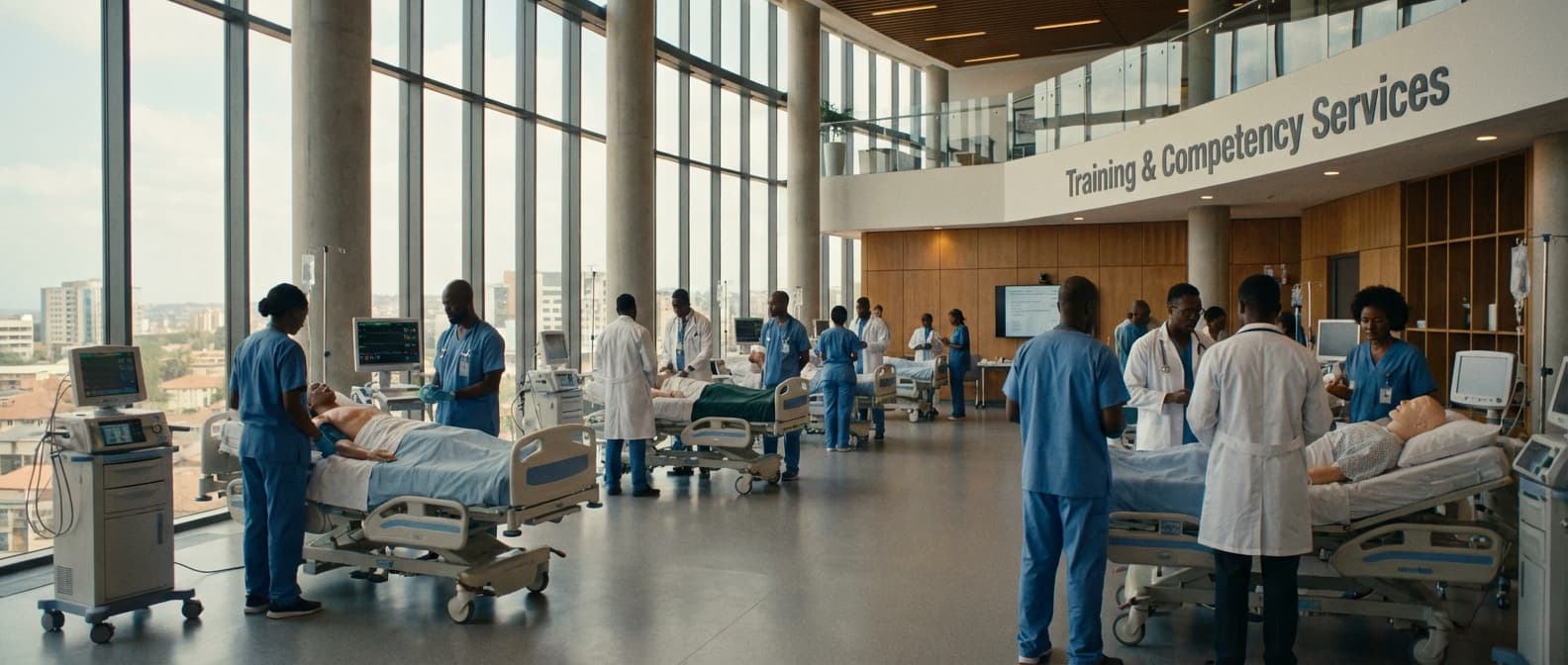
Ultrasound Application Training Service (Protocol-Based) in Congo (Brazzaville)
Engineering Excellence & Technical Support
Ultrasound Application Training Service (Protocol-Based) High-standard technical execution following OEM protocols and local regulatory frameworks.
Standardized Ultrasound Protocols
Master foundational ultrasound techniques with our protocol-driven training. We provide standardized, step-by-step protocols for common examinations, ensuring consistency and accuracy in diagnostic imaging for healthcare professionals in Congo (Brazzaville).
Expert-Led Hands-on Workshops
Gain practical experience through immersive, hands-on workshops led by experienced sonographers. Our training focuses on real-world scenarios encountered in Congo (Brazzaville)'s healthcare settings, empowering trainees with confidence and proficiency.
Locally Relevant Case Studies
Our curriculum incorporates case studies and scenarios tailored to the specific epidemiological and clinical challenges prevalent in Congo (Brazzaville). This ensures the training is not only technically sound but also highly applicable to your daily practice.
What Is Ultrasound Application Training Service (Protocol-based) In Congo (Brazzaville)?
Ultrasound Application Training Service (Protocol-Based) in Congo (Brazzaville) refers to specialized educational programs designed to equip healthcare professionals with the knowledge and practical skills necessary to perform diagnostic ultrasound examinations according to established, evidence-based protocols. This service focuses on systematic approaches to scanning, image acquisition, interpretation, and reporting, ensuring standardized and reproducible results across various clinical scenarios. The training is typically delivered by experienced sonographers, radiologists, or specialized medical educators, often incorporating theoretical lectures, hands-on practical sessions with phantoms and/or supervised patient examinations, and case study analysis.
| Target Audience | Rationale for Need | Typical Use Cases | |||||
|---|---|---|---|---|---|---|---|
| Radiologists and Radiology Residents: To enhance diagnostic accuracy and efficiency in ultrasound examinations. | To standardize diagnostic protocols and improve diagnostic yield. To comply with evolving medical imaging standards and best practices. To reduce inter-observer variability in interpretation. | Abdominal Ultrasound: Assessing liver, gallbladder, pancreas, spleen, kidneys, and aorta. Pelvic Ultrasound (Gynecological & Urological): Evaluating uterus, ovaries, bladder, and prostate. Obstetric Ultrasound: Monitoring fetal growth and development, assessing placental function, and detecting anomalies. Vascular Ultrasound: Evaluating arteries and veins for stenosis, thrombosis, and aneurysms. Small Parts Ultrasound: Imaging the thyroid, breast, and scrotum. Musculoskeletal Ultrasound: Assessing joints, tendons, and muscles. | |||||
| Sonographers (New Graduates & Experienced): To expand skill sets, specialize in specific applications, or update knowledge on new protocols. | To ensure proficiency in performing a wide range of ultrasound examinations. To gain expertise in specialized areas like interventional ultrasound or contrast-enhanced ultrasound. To meet continuing professional development requirements. | General Medical Practitioners & Specialists (e.g., Cardiologists, Gastroenterologists, Surgeons): To incorporate point-of-care ultrasound (POCUS) into their clinical practice and perform basic diagnostic scans. | To enable rapid bedside assessment and initial diagnosis. To facilitate guided procedures (e.g., paracentesis, thoracentesis). To improve patient management and decision-making in resource-limited settings. | Healthcare Institutions: Hospitals, clinics, and diagnostic centers in Congo (Brazzaville) seeking to establish or enhance their ultrasound departments. | To build a competent ultrasound workforce and ensure the provision of high-quality diagnostic imaging services. To implement standardized protocols for accreditation and quality management. | Medical Training Institutions: Universities and vocational schools offering medical imaging programs. | To integrate practical, protocol-driven ultrasound training into the curriculum. To equip future healthcare professionals with essential diagnostic skills. |
Key Components of Ultrasound Application Training Service (Protocol-Based):
- Protocol Development & Dissemination: Training materials are structured around universally accepted or locally adapted ultrasound protocols for specific organ systems or clinical indications.
- Anatomical & Physiological Review: Comprehensive understanding of relevant anatomy and physiology is integrated to facilitate accurate landmark identification and interpretation.
- Image Acquisition Techniques: Emphasis on optimal transducer manipulation, machine parameter optimization, and standardized scanning planes to acquire high-quality diagnostic images.
- Pathology Recognition & Interpretation: Training in identifying sonographic signs of common pathologies and understanding their clinical significance.
- Reporting Standards: Guidance on generating concise, accurate, and structured ultrasound reports that adhere to professional and institutional guidelines.
- Quality Assurance & Optimization: Introduction to quality control measures and troubleshooting common technical challenges.
- Hands-on Practical Sessions: Supervised scanning experience on phantoms and/or consenting patients to reinforce theoretical knowledge and develop psychomotor skills.
- Assessment & Feedback: Evaluation of trainee competency through practical assessments, written examinations, and ongoing formative feedback.
Who Needs Ultrasound Application Training Service (Protocol-based) In Congo (Brazzaville)?
Ultrasound Application Training Service (Protocol-Based) in Congo (Brazzaville) is crucial for healthcare professionals seeking to enhance their diagnostic capabilities, improve patient care, and adhere to international best practices. This specialized training equips practitioners with standardized, protocol-driven approaches to ultrasound examinations, ensuring consistency, accuracy, and efficiency in their daily practice. It is particularly vital in settings where access to advanced training or experienced sonographers may be limited, empowering local healthcare providers to leverage ultrasound technology effectively for a wider range of medical conditions.
| Target Customer Group | Specific Departments/Roles | Training Need/Benefit | Examples of Ultrasound Applications |
|---|---|---|---|
| Hospital-Based Healthcare Providers | Radiology, Obstetrics & Gynecology, Pediatrics, Cardiology, Emergency Medicine, General Surgery | Standardized protocols ensure accurate diagnosis, reduce inter-observer variability, improve workflow efficiency, and facilitate reporting. | Abdominal scans, pelvic scans (obstetric and gynecological), fetal anomaly scans, cardiac assessments, trauma scans (FAST), pediatric imaging, musculoskeletal evaluations. |
| Diagnostic Clinic and Private Practice Sonographers/Radiologists | All imaging specialists | Enhance diagnostic confidence, offer a wider range of specialized ultrasound services, and maintain high-quality standards. | Vascular studies, thyroid and breast imaging, specific interventional ultrasound guidance. |
| Maternal and Child Health Services | Obstetrics, Gynecology, Pediatrics, Neonatology | Improve prenatal care, detect congenital abnormalities, monitor fetal well-being, and optimize neonatal assessments. | Routine obstetric scans, detailed anomaly scans, Doppler studies for fetal well-being, neonatal brain and abdominal scans. |
| Emergency and Trauma Care Teams | Emergency Medicine physicians, nurses, trauma surgeons | Rapid and accurate bedside assessment for trauma, critical illness, and urgent conditions. | FAST (Focused Assessment with Sonography for Trauma) exams, e-FAST, RUSH (Rapid Ultrasound for Shock and Hypotension) exams, assessment of pleural effusions, pneumothorax. |
| Primary Healthcare Providers | General practitioners, nurses in remote or underserved areas | Provide basic diagnostic imaging capabilities, improve early detection of common conditions, and guide referral decisions. | Basic abdominal scans (e.g., for ascites, gallstones), basic obstetric scans for dating and viability, point-of-care ultrasound (POCUS) for various conditions. |
| Medical Educators and Students | Lecturers, professors, medical students in training | Integrate standardized ultrasound protocols into the curriculum, providing hands-on training and fostering future generations of skilled sonographers. | All core ultrasound applications as part of their medical education and clinical rotations. |
Target Customers and Departments for Ultrasound Application Training Service (Protocol-Based) in Congo (Brazzaville)
- Medical Imaging Departments in Hospitals (Public and Private)
- Radiology Clinics and Diagnostic Centers
- Maternity Wards and Obstetrics/Gynecology Departments
- Emergency and Trauma Departments
- Pediatric Departments
- Cardiology Departments
- Internal Medicine Departments
- Surgical Departments (for intraoperative ultrasound)
- Primary Healthcare Centers and District Hospitals
- Medical Training Institutions and Universities
Ultrasound Application Training Service (Protocol-based) Process In Congo (Brazzaville)
This document outlines the workflow for Ultrasound Application Training Services (Protocol-Based) provided in Congo (Brazzaville). The process is designed to be efficient and transparent, guiding clients from initial inquiry to the successful execution of the training program.
| Key Stage | Activities | Responsible Party | Deliverables | Estimated Timeline |
|---|---|---|---|---|
| Inquiry & Needs Assessment | Client expresses interest, initial consultation to understand training needs, specific ultrasound applications, and desired outcomes. Proposal development based on requirements. | Service Provider (Sales/Consultant) & Client | Needs assessment report, detailed training proposal. | 1-2 Weeks |
| Agreement & Planning | Formal agreement signing, contract finalization, deposit payment. Curriculum tailoring, trainer selection, and coordination of pre-training materials. | Client & Service Provider (Operations/Legal) | Signed contract, deposit receipt, finalized training curriculum, assigned trainer. | 1-3 Weeks |
| Training Execution | Logistics are confirmed (venue, equipment). Participants are registered. Training is delivered covering theoretical aspects and hands-on practical sessions according to the agreed protocol. | Service Provider (Trainers/Logistics) & Client | Completed training sessions, participant engagement, on-site progress reports. | Duration varies based on training scope (e.g., 3-5 days per module). |
| Post-Training & Follow-up | Participants are assessed. Certificates are issued. Feedback is collected from both the client and participants. Final payment is processed, and ongoing support is offered. | Service Provider (Administration/Trainers) & Client | Certificates of completion, feedback reports, final invoice, follow-up support documentation. | 1-2 Weeks post-training |
Ultrasound Application Training Service Workflow
- {"steps":["Initial Contact & Inquiry Submission","Needs Assessment Call/Meeting","Proposal Generation & Submission","Client Review & Feedback on Proposal"],"title":"Phase 1: Inquiry and Needs Assessment"}
- {"steps":["Proposal Acceptance & Agreement Signing","Contract Finalization & Payment of Deposit","Detailed Curriculum Customization","Trainer Assignment & Pre-Training Briefing"],"title":"Phase 2: Agreement and Planning"}
- {"steps":["Logistics & Venue Confirmation","Participant Pre-Registration & Information Gathering","On-site Training Delivery (Theory & Practical)","Real-time Feedback & Adjustments","Assessment & Evaluation of Participants"],"title":"Phase 3: Training Execution"}
- {"steps":["Issuance of Certificates","Post-Training Feedback Collection (Client & Participants)","Final Payment Processing","Follow-up Support & Resources Provision","Service Review & Continuous Improvement"],"title":"Phase 4: Post-Training and Follow-up"}
Ultrasound Application Training Service (Protocol-based) Cost In Congo (Brazzaville)
Providing Ultrasound Application Training Services, particularly protocol-based, in Congo (Brazzaville) involves several cost considerations. The price is influenced by the complexity of the protocols, the duration of the training, the number of participants, the qualifications and experience of the trainers, and the logistical arrangements required. Local economic factors, including the cost of living and the availability of specialized trainers, also play a significant role. For protocol-based training, the specificity and depth of the protocols being taught will directly impact the hours of instruction and material development, thus affecting the overall cost. Transportation, accommodation, and training venue rental for trainers and participants in Brazzaville are also substantial components of the pricing structure. Training materials, including handouts, digital resources, and any necessary simulation equipment, will add to the expense. Furthermore, the demand for such specialized training within the Congolese healthcare sector can influence pricing, with higher demand potentially leading to premium rates.
| Training Type/Scope | Estimated Cost Range (CFA Francs) | Notes |
|---|---|---|
| Basic Protocol Introduction (1-2 days) | 250,000 - 500,000 | Covers fundamental protocols for a specific modality (e.g., abdominal, OB/GYN). Assumes local trainers or minimal travel. |
| Intermediate Protocol Training (3-5 days) | 500,000 - 1,200,000 | In-depth training on multiple related protocols, including image optimization and basic interpretation. May involve international trainers requiring travel. |
| Advanced/Specialized Protocol Training (5+ days) | 1,000,000 - 3,000,000+ | Focus on complex areas (e.g., echocardiography, interventional ultrasound, specific disease protocols). Requires highly specialized trainers and potentially dedicated equipment. Costs can escalate significantly with international trainers and extended durations. |
| On-site Training (per day, excluding trainer fees) | 50,000 - 150,000 | Covers venue rental, basic catering, and local logistical support. This is a supplementary cost. |
| Custom Protocol Development/Adaptation | 200,000 - 800,000+ | Cost for tailoring existing protocols or developing new ones to specific local needs or advanced research. This is a one-time development cost. |
Key Pricing Factors for Ultrasound Application Training in Congo (Brazzaville):
- Complexity and Breadth of Ultrasound Protocols
- Training Duration (Days/Weeks)
- Number of Participants
- Trainer Qualifications and Experience
- Logistical Costs (Travel, Accommodation, Venue)
- Training Material Development and Provision
- Need for Specialized Equipment/Simulators
- Local Economic Conditions and Cost of Living
- Demand within the Congolese Healthcare Sector
- Customization of Training Modules
Affordable Ultrasound Application Training Service (Protocol-based) Options
Our affordable ultrasound application training service offers a protocol-based approach, ensuring standardized and efficient learning for healthcare professionals. We understand the importance of cost-effectiveness and provide flexible value bundles and strategic cost-saving options to make high-quality training accessible.
| Strategy | Description | Benefit |
|---|---|---|
| Early Bird Discount | Register and pay for training courses well in advance of the start date. | Significant percentage off standard course fees. |
| Group Enrollment Discount | Enroll multiple participants from the same institution or group. | Tiered discounts based on the number of participants. |
| Bundle Discount | Purchase a value bundle instead of individual modules. | Lower overall cost compared to selecting modules separately. |
| Online vs. In-Person | Opt for fully online training modules for greater flexibility and reduced travel costs. | Eliminates travel and accommodation expenses, greater convenience. |
| Subscription Model | Recurring subscription for continuous access to updated protocols and new modules. | Predictable monthly or annual cost, ongoing learning. |
| Referral Program | Refer a colleague who enrolls in a training program. | Discount on your next course or a gift voucher. |
Value Bundles:
- {"title":"Core Proficiency Bundle","features":["Basic ultrasound physics","Standardized scan protocols","Image optimization techniques","Case study analysis"],"description":"Ideal for beginners or those needing a strong foundation. Includes essential protocol training for common applications (e.g., abdominal, OB/GYN)."}
- {"title":"Specialized Application Bundle","features":["Advanced protocol training","Specialized probes and settings","Pathology recognition for the chosen specialty","Peer review opportunities"],"description":"For professionals focusing on specific modalities. Choose from options like cardiac, vascular, or emergency ultrasound."}
- {"title":"Comprehensive Master Bundle","features":["All features from Core Proficiency and Specialized Application bundles","Interventional ultrasound techniques","Workflow integration and efficiency","Access to expert Q&A sessions"],"description":"The ultimate package for achieving mastery across multiple applications. Combines core and specialized training with advanced modules."}
- {"title":"Team & Enterprise Bundle","features":["Customized curriculum development","On-site or remote group training","Progress tracking for multiple users","Dedicated account management"],"description":"Tailored for clinics, hospitals, or departments. Offers bulk training licenses and on-site options."}
Verified Providers In Congo (Brazzaville)
In the Democratic Republic of Congo (Brazzaville), navigating the healthcare landscape can be challenging. Identifying truly verified and reputable healthcare providers is crucial for ensuring quality care and peace of mind. Franance Health has emerged as a leading force, offering a network of credentialed and vetted medical professionals. Their commitment to rigorous verification processes, transparent practices, and patient-centric care makes them the premier choice for those seeking reliable healthcare services in Congo (Brazzaville).
| Provider Type | Franance Health Verification | Benefits of Choosing Verified Providers |
|---|---|---|
| General Practitioners | Verified medical license, proof of experience, patient reviews. | Accurate diagnoses, appropriate treatment plans, trusted advice. |
| Specialists (e.g., Cardiologists, Pediatricians) | Verified specialized training, board certifications, hospital affiliations. | Expert management of complex conditions, access to advanced care. |
| Hospitals and Clinics | Accreditation by national health bodies, adherence to safety protocols, quality of facilities. | Safe and sterile environments, access to necessary equipment and technology, comprehensive services. |
| Diagnostic Laboratories | Certification of equipment, qualified technicians, adherence to quality control standards. | Accurate and reliable test results, informing effective treatment decisions. |
Why Franance Health Credentials Matter
- Rigorous vetting of medical professionals to ensure qualifications and experience.
- Verification of licenses and accreditations from recognized health bodies.
- Background checks to ensure ethical practices and patient safety.
- Commitment to continuous professional development for their network.
- A transparent system for patients to access verified provider information.
- Focus on patient feedback and quality improvement.
Scope Of Work For Ultrasound Application Training Service (Protocol-based)
This document outlines the scope of work for providing Ultrasound Application Training Services, specifically focusing on a protocol-based approach. The training will equip participants with the knowledge and practical skills to effectively utilize ultrasound equipment according to established clinical protocols. This includes understanding fundamental principles, operating the ultrasound system, acquiring optimal images, performing specific examinations, and interpreting findings within the context of predefined protocols. The technical deliverables will focus on the successful transfer of skills and knowledge, ensuring competency in protocol-driven ultrasound examinations. Standard specifications refer to the quality, format, and expected performance of all training materials and sessions.
| Technical Deliverable | Standard Specification | Description |
|---|---|---|
| Training Curriculum Document | PDF, Version Controlled | Comprehensive outline of all training modules, learning objectives, duration, and assessment methods, aligned with chosen ultrasound protocols. |
| Participant Training Manuals | Printed or Digital (PDF), High-Resolution Images | Detailed guides for each module, including theoretical content, protocol steps, system operation guides, image examples, and troubleshooting tips. |
| Hands-on Simulation Sessions | Minimum 4 hours per participant (variable by protocol complexity) | Supervised practical sessions using ultrasound phantoms or simulated patients, focusing on protocol adherence and image acquisition techniques. |
| Competency Assessment Tools | Checklists, Observation Forms, Image Review Rubrics | Structured tools for evaluating participant proficiency in performing protocol-based examinations and acquiring diagnostic quality images. |
| Post-Training Support Resources | Online Portal Access, FAQ Document | Access to a knowledge base, common questions, and contact information for follow-up inquiries regarding protocol application. |
| Trainer Qualifications & Experience | Certified Sonographer, Minimum 5 Years Experience in Protocol-Based Scanning | Evidence of trainer expertise in the specific ultrasound applications and protocols being taught, with a proven track record in clinical practice and education. |
| Ultrasound Equipment | Modern, Functioning Systems Compatible with Chosen Protocols | Provision of appropriate ultrasound machines and transducers suitable for the training modules and protocols covered. |
Key Training Modules & Objectives
- Module 1: Ultrasound Physics & Instrumentation Refresher - Review of Doppler principles, artifact identification and reduction, machine optimization settings relevant to specific protocols.
- Module 2: Protocol Selection & Understanding - Detailed breakdown of chosen clinical ultrasound protocols (e.g., abdominal, vascular, OB/GYN), indications, contraindications, and expected anatomical coverage.
- Module 3: System Operation & Image Acquisition - Hands-on practice with ultrasound system controls, transducer selection, patient positioning, and systematic image acquisition techniques adhering to protocol guidelines.
- Module 4: Protocol-Specific Examination Performance - Guided practice in performing complete examinations according to selected protocols, including B-mode, Doppler, and other relevant imaging modalities.
- Module 5: Image Optimization & Quality Control - Techniques for achieving diagnostic image quality, artifact recognition and correction, and adherence to quality assurance standards for each protocol.
- Module 6: Basic Interpretation & Reporting Fundamentals - Introduction to identifying normal and abnormal findings within the context of the protocol, and understanding the structure of a standard ultrasound report.
- Module 7: Troubleshooting & Problem Solving - Addressing common challenges encountered during protocol-based scanning and developing strategies for resolution.
Service Level Agreement For Ultrasound Application Training Service (Protocol-based)
This Service Level Agreement (SLA) outlines the performance standards for the Ultrasound Application Training Service (Protocol-Based). It defines the expected response times for support requests and the guaranteed uptime for the training platform. This SLA is integral to the overall service agreement between the Provider and the Client.
| Service Component | Service Level Objective (SLO) | Measurement Period | Monitoring Method |
|---|---|---|---|
| Technical Support - Critical Incident | Response Time: Within 1 hour; Resolution Time: Within 4 business hours | 24/7 | Ticketing system, automated alerts |
| Technical Support - High Incident | Response Time: Within 2 business hours; Resolution Time: Within 8 business hours | 24/7 | Ticketing system |
| Technical Support - Medium Incident | Response Time: Within 4 business hours; Resolution Time: Within 2 business days | Business Hours (Mon-Fri, 9 AM - 5 PM local time) | Ticketing system |
| Technical Support - Low Incident | Response Time: Within 8 business hours; Resolution Time: Within 5 business days | Business Hours (Mon-Fri, 9 AM - 5 PM local time) | Ticketing system |
| Training Platform Uptime | 99.5% Uptime | Monthly | Automated platform monitoring tools |
| Scheduled Training Session Availability | 99.0% Availability | Monthly | Session scheduling system, manual verification |
Key Performance Indicators (KPIs)
- Response Time: The time taken by the Provider to acknowledge and begin addressing a support request.
- Resolution Time: The time taken by the Provider to resolve a confirmed issue.
- Uptime: The percentage of time the Ultrasound Application Training Platform is available for use by the Client.
- Training Session Availability: The guaranteed availability of scheduled training sessions.
Frequently Asked Questions

Ready when you are
Let's scope your Ultrasound Application Training Service (Protocol-Based) in Congo (Brazzaville) project in Congo (Brazzaville).

Scaling healthcare logistics and technical systems across the entire continent.