
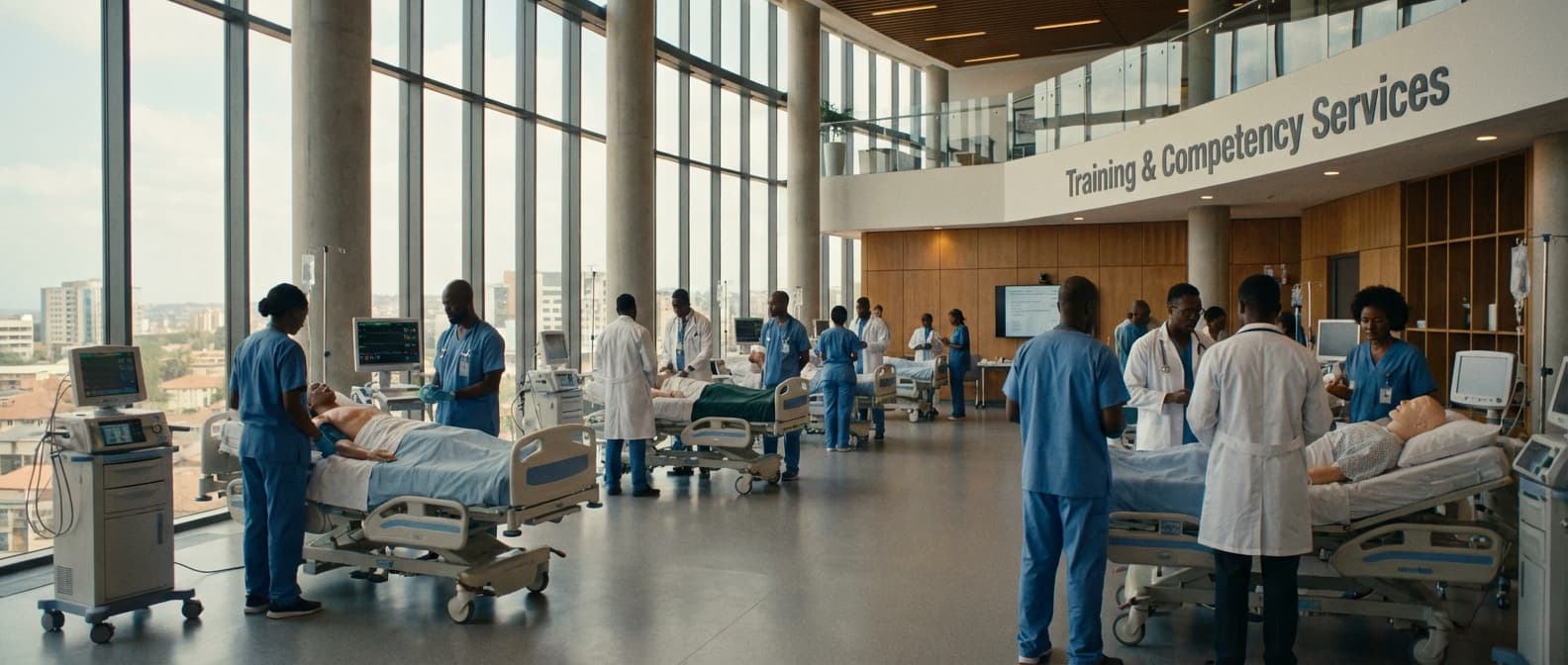
MRI Operator Training Service (Radiographers) in Congo (Brazzaville)
Engineering Excellence & Technical Support
MRI Operator Training Service (Radiographers) High-standard technical execution following OEM protocols and local regulatory frameworks.
Master Advanced MRI Protocols for Congo's Diverse Needs
Our training equips radiographers in Brazzaville with the expertise to implement and optimize a wide range of advanced MRI sequences and protocols. We focus on adapting techniques to address prevalent pathologies in the Congo region, ensuring accurate and efficient diagnostic imaging for conditions such as infectious diseases, neurological disorders, and musculoskeletal injuries.
Uphold Global MRI Safety Standards in Local Context
This module provides comprehensive training on MRI safety protocols, emphasizing adherence to international best practices and local regulatory requirements in Congo. Radiographers will learn to manage patient screening, implement ferromagnetic detection strategies, and ensure optimal radiation safety for both patients and personnel, fostering a secure MRI environment.
Optimize Image Quality and Troubleshoot Common Artifacts
Gain hands-on experience in refining MRI image acquisition parameters and post-processing techniques to achieve superior diagnostic clarity. Our training covers common artifact identification and mitigation strategies specific to MRI scanners likely found in Brazzaville's healthcare facilities, empowering radiographers to deliver high-quality diagnostic results consistently.
What Is Mri Operator Training Service (Radiographers) In Congo (Brazzaville)?
MRI Operator Training Service (Radiographers) in Congo (Brazzaville) refers to specialized educational programs designed to equip qualified radiographers with the comprehensive knowledge and practical skills necessary to safely and effectively operate Magnetic Resonance Imaging (MRI) scanners. This service is crucial for ensuring high-quality diagnostic imaging, patient safety, and efficient utilization of advanced medical technology within healthcare facilities in the Republic of the Congo. The training typically covers theoretical principles of MRI physics, advanced imaging sequences, patient preparation and management, contrast agent administration, image acquisition protocols, post-processing techniques, quality control, radiation safety (though MRI is non-ionizing, safety protocols are paramount), and troubleshooting common issues. The service aims to bridge the gap between general radiography expertise and the highly specialized demands of MRI operation, enabling radiographers to perform diagnostic examinations independently and competently.
| Category | Description | Importance in Congo (Brazzaville) |
|---|---|---|
| Who Needs MRI Operator Training? | Certified Radiographers, Technologists with a background in diagnostic imaging, and healthcare professionals involved in the operation of MRI equipment. | Essential for the establishment and expansion of MRI services in healthcare institutions in Congo (Brazzaville), ensuring local capacity development and reducing reliance on external expertise. |
| Typical Use Cases | Healthcare facilities (hospitals, specialized imaging centers) acquiring or intending to acquire MRI scanners; Government health initiatives to upgrade diagnostic imaging capabilities; Radiographers seeking specialized career advancement in MRI technology. | Enables accurate diagnosis of neurological conditions (stroke, tumors), musculoskeletal injuries, oncological staging, cardiovascular diseases, and abdominal pathologies, thereby improving patient outcomes and contributing to the public health infrastructure. |
Key Components of MRI Operator Training Service (Radiographers)
- Theoretical Foundations of MRI Physics: Understanding nuclear magnetic resonance, signal generation, magnetic field gradients, pulse sequences, and image reconstruction.
- MRI System Operation: Familiarization with specific MRI scanner hardware, console operation, and user interface.
- Patient Management and Safety Protocols: Screening for contraindications (e.g., metallic implants, pacemakers), patient positioning, sedation, and management of claustrophobia.
- Image Acquisition Techniques: Mastering various pulse sequences (e.g., T1-weighted, T2-weighted, FLAIR, DWI, gradient echo) for different anatomical regions and pathologies.
- Contrast Agent Administration: Understanding indications, contraindications, administration protocols, and management of adverse reactions.
- Image Interpretation Fundamentals: Basic understanding of image artifacts, normal anatomy, and common pathological findings to guide acquisition optimization.
- Quality Assurance and Control: Implementing and monitoring procedures to ensure image quality and scanner performance.
- Troubleshooting and Maintenance: Identifying and resolving common technical issues and understanding basic maintenance requirements.
- Ethical and Legal Considerations: Adherence to professional standards, patient confidentiality, and regulatory guidelines.
Who Needs Mri Operator Training Service (Radiographers) In Congo (Brazzaville)?
MRI Operator Training Service (Radiographers) in Congo (Brazzaville) is essential for a range of healthcare facilities and professionals aiming to provide advanced diagnostic imaging services. This training ensures radiographers possess the necessary skills and knowledge to operate MRI machines safely and effectively, interpret images accurately, and contribute to better patient care. The demand stems from the growing need for specialized medical diagnostics and the continuous evolution of MRI technology.
| Customer Type | Departments Requiring Training | Rationale for Training |
|---|---|---|
| Public Hospitals | Radiology Department, Neurology, Orthopedics, Cardiology, Oncology, Neurosurgery | To equip existing radiographers with advanced MRI skills, improve diagnostic accuracy, and reduce reliance on external specialists for complex scans. Essential for comprehensive patient management within public healthcare. |
| Private Hospitals | Radiology Department, all clinical specialties utilizing advanced imaging | To offer cutting-edge MRI services, attract more patients, and maintain a competitive edge. Training ensures staff are proficient with the latest MRI technologies and protocols. |
| Specialty Clinics | Radiology, Neurology, Orthopedics, Sports Medicine, Oncology | To enable precise diagnosis and treatment planning for specific conditions. Radiographers trained in MRI can provide detailed insights crucial for these specialized fields. |
| Diagnostic Imaging Centers | Radiology Department | To expand service offerings and cater to a broader range of medical needs. Highly skilled MRI operators are a primary asset for these centers. |
| Research Institutions | Radiology, Biomedical Research Units | To conduct advanced research studies requiring high-quality MRI data. Training ensures researchers and technicians can acquire and process complex MRI datasets accurately. |
| Medical Training Academies/Universities | Radiography Programs, Medical Imaging Departments | To integrate comprehensive MRI training into their curriculum, producing graduates equipped with in-demand skills for the healthcare job market. |
| Radiographers Seeking Professional Development | Individual Professionals | To enhance career prospects, gain expertise in a specialized imaging modality, and stay updated with technological advancements in radiography. |
Target Customers & Departments for MRI Operator Training Service (Radiographers) in Congo (Brazzaville)
- Hospitals (Public and Private)
- Specialty Clinics (e.g., Neurology, Orthopedics, Oncology)
- Diagnostic Imaging Centers
- Research Institutions
- Medical Training Academies and Universities
Mri Operator Training Service (Radiographers) Process In Congo (Brazzaville)
This document outlines the typical workflow for an MRI Operator Training Service (Radiographers) in Congo (Brazzaville), from initial inquiry to the successful execution of the training program. The process is designed to ensure clarity, efficiency, and adherence to regulatory and client-specific requirements.
| Phase | Step | Description | Key Stakeholders | Deliverables/Outcomes |
|---|---|---|---|---|
| Phase 1: Inquiry and Initial Consultation | 1.1 Inquiry Received | Prospective client (hospital, clinic, educational institution) expresses interest in MRI operator training for radiographers. | Client, Training Provider | Initial contact and understanding of training needs. |
| 1.2 Needs Assessment | Detailed discussion to understand the client's specific requirements: number of trainees, current skill levels, desired training outcomes, available MRI equipment, and any existing protocols. | Client (HR, Radiology Dept. Head), Training Provider (Sales/Technical Team) | Comprehensive training needs assessment report. | |
| 1.3 Preliminary Discussion & Scope Definition | Outline of potential training modules, duration, theoretical vs. practical components, and estimated resource requirements. | Client, Training Provider | Agreed-upon preliminary scope of training. | |
| Phase 2: Proposal and Agreement | 2.1 Customized Proposal Development | Training Provider develops a detailed proposal including: training curriculum, learning objectives, methodologies, trainer profiles, schedule, pricing, terms and conditions, and any required certifications. | Training Provider | Formal training proposal document. |
| 2.2 Proposal Review and Negotiation | Client reviews the proposal, asks clarifying questions, and negotiates terms and pricing as needed. | Client, Training Provider | Mutual understanding and agreement on proposal. | |
| 2.3 Contract/Agreement Signing | Formal contract is signed by both parties, outlining all agreed-upon terms, responsibilities, and payment schedules. | Client, Training Provider | Signed training contract/agreement. | |
| Phase 3: Pre-Training Preparation | 3.1 Training Material Development/Customization | Finalization and customization of training manuals, presentations, practical exercises, and assessment tools based on the agreed curriculum and client's MRI equipment. | Training Provider (Instructional Designers, Trainers) | Completed training materials. |
| 3.2 Trainer Assignment and Briefing | Experienced MRI trainers with relevant expertise are assigned. They are briefed on the client's specific context and training requirements. | Training Provider (Management, Trainers) | Assigned and briefed trainers. | |
| 3.3 Logistics and Scheduling Confirmation | Final confirmation of training dates, venue (on-site or off-site), travel and accommodation for trainers (if applicable), and access to MRI equipment for practical sessions. | Training Provider, Client (Logistics/Admin) | Confirmed training schedule and logistics. | |
| 3.4 Trainee Registration and Pre-Assessment (Optional) | Client registers the radiographers for the training. A pre-assessment might be conducted to gauge baseline knowledge and tailor the training further. | Client (HR/Radiology Dept.), Training Provider | Registered trainees, pre-assessment results (if applicable). | |
| Phase 4: Training Execution | 4.1 Theoretical Training Delivery | Lectures, presentations, and discussions covering MRI physics, anatomy, patient safety, contraindications, imaging protocols, image quality optimization, and artifacts. | Trainer, Trainees | Knowledge acquisition by trainees. |
| 4.2 Practical Training and Hands-on Sessions | Supervised operation of the MRI scanner, including patient positioning, protocol selection, image acquisition, and quality control. This is often tailored to the specific MRI machine(s) at the client's facility. | Trainer, Trainees | Development of practical scanning skills. | |
| 4.3 Case Study Analysis and Problem-Solving | Review of real-world imaging cases, troubleshooting common issues, and discussing best practices for image interpretation and reporting. | Trainer, Trainees | Enhanced analytical and problem-solving abilities. | |
| 4.4 Assessments and Quizzes | Regular assessments (quizzes, practical evaluations) to monitor learning progress and identify areas needing reinforcement. | Trainer, Trainees | Feedback on learning progress. | |
| Phase 5: Post-Training Follow-up and Evaluation | 5.1 Final Assessment and Certification | A comprehensive final assessment (theory and practical) to evaluate the trainees' overall competency. Successful trainees receive a certificate of completion. | Trainer, Trainees | Certified MRI Operators. |
| 5.2 Training Feedback Collection | Trainees and client management provide feedback on the training program, trainers, materials, and overall experience. | Trainees, Client Management, Training Provider | Training evaluation report. | |
| 5.3 Post-Training Support (Optional) | Depending on the agreement, this might include limited remote support, follow-up Q&A sessions, or refresher courses. | Training Provider, Client | Continued professional development and support. | |
| 5.4 Project Closure and Reporting | Final report summarizing the training, assessment results, feedback, and any recommendations for future training or development. | Training Provider | Final training completion report. |
MRI Operator Training Service Workflow (Congo - Brazzaville)
- Phase 1: Inquiry and Initial Consultation
- Phase 2: Proposal and Agreement
- Phase 3: Pre-Training Preparation
- Phase 4: Training Execution
- Phase 5: Post-Training Follow-up and Evaluation
Mri Operator Training Service (Radiographers) Cost In Congo (Brazzaville)
Providing MRI Operator Training (Radiographers) in Congo (Brazzaville) involves several key cost drivers that influence the overall pricing. These factors generally fall into categories such as the training provider's expertise and reputation, the duration and intensity of the program, the curriculum's comprehensiveness, and logistical considerations. The local economic landscape and the demand for such specialized training also play a significant role in establishing pricing ranges. It's important to note that exact figures can vary considerably, and potential clients are advised to seek detailed quotations from specific training institutions.
| Training Program Type | Estimated Price Range (CFA Francs - XAF) | Typical Inclusions |
|---|---|---|
| Basic MRI Operator Fundamentals (e.g., 1-2 weeks, theoretical focus with limited practical) | 150,000 - 350,000 XAF | Core principles of MRI physics, safety protocols, basic patient preparation, introduction to image acquisition. |
| Comprehensive MRI Operator Training (e.g., 3-4 weeks, balanced theory and practical) | 350,000 - 800,000 XAF | In-depth physics, advanced safety, detailed patient care, various pulse sequences, basic image interpretation, common protocols, hands-on scanner time (if available). |
| Advanced/Specialized MRI Modules (e.g., per module, 1 week) | 200,000 - 500,000 XAF | Focus on specific areas like neuroimaging, musculoskeletal MRI, cardiac MRI, or advanced artifact reduction, often building on foundational training. |
| On-site Training (Customized, based on duration and group size) | Variable (quote-based) | Tailored curriculum, instructor travel/accommodation, dependent on specific institutional needs. |
| Refresher Courses/Continuing Professional Development (e.g., 1-3 days) | 75,000 - 200,000 XAF | Updates on new techniques, safety standards, or specific applications. Often for already qualified radiographers. |
Key Pricing Factors for MRI Operator Training (Radiographers) in Congo (Brazzaville)
- Training Provider's Reputation and Expertise: Highly accredited institutions or experienced training organizations with a proven track record of successful MRI operator training will typically command higher fees due to their established quality and expertise.
- Duration and Intensity of Training: Shorter, introductory courses will be less expensive than comprehensive, multi-week programs that cover advanced techniques, troubleshooting, and specific MRI modalities. The more hands-on practice and theoretical instruction, the higher the cost.
- Curriculum Content and Specializations: Training that includes specialized modules, such as neuroimaging, musculoskeletal imaging, or advanced cardiac MRI, will generally incur additional costs compared to a general MRI operator course.
- Certification and Accreditation: Programs offering recognized certifications or accreditation from relevant professional bodies may have higher fees, reflecting the value and credibility of the certification.
- Location and Logistics: The cost can be influenced by whether the training is conducted at a dedicated training facility, within a hospital setting, or if it requires the trainer to travel to a specific location within Brazzaville or elsewhere in Congo. Travel, accommodation, and per diem expenses for instructors will add to the overall cost.
- Training Materials and Resources: The provision of high-quality training manuals, access to simulators, or practical sessions on actual MRI equipment (if available) will impact the pricing.
- Class Size and Group Rates: Larger groups may benefit from discounted per-person rates. Conversely, highly personalized or one-on-one training will be more expensive.
- Economic Conditions and Currency Fluctuations: The local economic environment in Congo (Brazzaville) and any fluctuations in the exchange rate of the local currency (CFA Franc) against major international currencies can affect the cost, especially if the training provider has international affiliations or uses imported training materials.
- Demand for Specialized Skills: High demand for qualified MRI operators in the local healthcare sector can lead to premium pricing for training programs.
Affordable Mri Operator Training Service (Radiographers) Options
This document outlines affordable MRI operator training services specifically designed for radiographers. We focus on providing high-value training options that incorporate cost-saving strategies for both individuals and institutions. Our approach emphasizes practical skills, safety protocols, and efficient MRI operation, ensuring radiographers gain the confidence and expertise needed to excel in this specialized field.
| Value Bundle Tier | Inclusions | Ideal For | Estimated Cost-Saving Strategy |
|---|---|---|---|
| Bronze (Foundation) | Core online modules (physics, safety, basic protocols), self-paced learning. | Individual radiographers seeking foundational knowledge or supplementary training. | Reduced tuition by leveraging self-directed online learning and eliminating instructor-led sessions for core theory. |
| Silver (Standard) | Bronze inclusions + live online Q&A sessions, access to simulated scanning modules, introductory practical case studies. | Radiographers requiring structured learning with interactive elements and simulation practice. | Cost-effective simulation tools replace expensive dedicated scanner time for initial practical exposure; group Q&A sessions reduce individual tutor time. |
| Gold (Comprehensive) | Silver inclusions + in-person workshop (2-3 days) focusing on hands-on scanning techniques and advanced protocols, personalized feedback, post-training mentorship. | Radiographers aiming for in-depth practical skills and personalized guidance. | Bundled in-person training offers a more efficient use of instructor time compared to individual coaching; group workshop format reduces per-person costs. |
| Platinum (Institutional) | Gold inclusions + on-site training options, customized curriculum development, dedicated on-site simulator access, ongoing support and refresher courses for staff. | Hospitals, imaging centers, and healthcare systems seeking to train multiple radiographers efficiently. | Bulk training packages offer significant per-trainee discounts; on-site delivery minimizes travel and accommodation expenses for staff. |
Key Components of Our Affordable MRI Operator Training Service
- Comprehensive Curriculum: Covering MRI physics, safety, patient care, imaging protocols, artifact reduction, and quality assurance.
- Flexible Learning Formats: Offering a blend of online modules, in-person workshops, and simulated scanning sessions.
- Experienced Instructors: Led by certified MRI technologists and radiographers with extensive clinical experience.
- Hands-on Practice Opportunities: Facilitating access to MRI scanners (where feasible) or advanced simulation tools.
- Certification Support: Guiding trainees through preparation for relevant MRI operator certifications.
- Post-Training Support: Providing access to resources, Q&A sessions, and career guidance.
Verified Providers In Congo (Brazzaville)
When seeking healthcare in Congo (Brazzaville), the assurance of verified providers is paramount. Franance Health stands out as a premier choice, offering a robust network of credentialed and reliable healthcare professionals. Their meticulous vetting process ensures that all affiliated providers meet stringent standards for expertise, ethical practice, and patient care. This commitment to quality translates into a superior healthcare experience for individuals and families in Brazzaville.
| Category | Franance Health Advantage | Benefits for Patients |
|---|---|---|
| Provider Verification | Extensive background checks, license verification, and peer reviews. | Ensures access to qualified and ethical medical professionals. |
| Specialty Coverage | Wide network of general practitioners and specialists across various medical fields. | Comprehensive care for all health concerns, from routine check-ups to complex conditions. |
| Accessibility | Easy appointment scheduling and a network of conveniently located clinics. | Reduced waiting times and convenient access to necessary medical services. |
| Cost-Effectiveness | Negotiated rates and transparent pricing structures. | Affordable healthcare without compromising on quality. |
| Patient Support | Dedicated customer service and support for navigating healthcare options. | Peace of mind and assistance throughout the healthcare journey. |
Why Franance Health is the Best Choice:
- Rigorous Credentialing: Franance Health employs a multi-stage credentialing process, verifying licenses, certifications, and professional histories of all providers.
- Quality Assurance: Regular audits and feedback mechanisms are in place to maintain the highest standards of medical practice and patient satisfaction.
- Comprehensive Network: Access a diverse range of specialists and general practitioners, ensuring all healthcare needs are met within a trusted network.
- Patient-Centric Approach: Franance Health prioritizes patient well-being, focusing on accessible, affordable, and high-quality medical services.
- Transparency and Trust: Clear information about provider qualifications and services builds trust and empowers patients to make informed decisions.
Scope Of Work For Mri Operator Training Service (Radiographers)
This document outlines the Scope of Work (SOW) for providing comprehensive MRI Operator Training Services specifically tailored for Radiographers. The training aims to equip radiographers with the necessary knowledge, skills, and practical experience to safely and effectively operate MRI scanners, produce high-quality diagnostic images, and adhere to best practices in patient care and radiation safety. This SOW details the technical deliverables and standard specifications for the training program.
| Deliverable | Description | Standard Specifications | Verification Method |
|---|---|---|---|
| Training Curriculum Document | Detailed syllabus covering all training modules, learning objectives, and assessment methods. | Comprehensive, modular, and aligned with current MRI technology and best practices. Includes theoretical and practical components. | Review and approval by client's medical imaging department. |
| Training Materials (Participant Handouts) | Printed or digital materials for each participant, summarizing key concepts and protocols. | High-quality, clear, and concise. Includes diagrams, charts, and reference information. Available in English (or specified language). | Review of content accuracy and readability. |
| Instructor-Led Training Sessions | Classroom-based lectures and discussions on theoretical aspects. | Qualified and experienced MRI professionals. Sessions will be interactive and engaging, with a trainer-to-trainee ratio conducive to learning. | Observation of training delivery by client representative. |
| Hands-on Scanner Simulation/Training | Practical sessions on an actual MRI scanner or a high-fidelity simulator. | Sufficient machine time for each trainee to practice protocols and develop proficiency. Access to diverse phantom studies for artifact analysis. | Practical assessment of trainee's ability to perform scans and troubleshoot. |
| Case Study Analysis | Review of real-world MRI cases to understand image interpretation and protocol optimization. | A minimum of 20 diverse case studies covering common pathologies and anatomical regions. Cases should include original images and reports. | Debriefing sessions and group discussion participation. |
| Competency Assessment (Written/Practical) | Evaluation of trainee's understanding and practical skills. | Written exam covering theoretical knowledge and a practical exam demonstrating scanner operation and protocol execution. A passing score of 80% is required. | Review of assessment scores and feedback provided to trainees. |
| Training Completion Certificates | Formal documentation of successful completion of the training program. | Issued to each trainee upon successful completion of all modules and assessments. Includes trainee name, course title, dates, and issuing organization. | Verification of issuance to all eligible trainees. |
| Post-Training Support (Optional) | Limited remote or on-site support for trainees after the formal training period. | Defined scope of support (e.g., troubleshooting specific protocol issues, answering queries) and duration (e.g., 30 days). | Record of support interactions and resolution. |
| Training Report | Summary report detailing training activities, participant performance, and recommendations. | Includes attendance records, assessment results, feedback from participants, and any identified areas for improvement in future training. | Review and acceptance by client. |
Key Training Modules
- MRI Physics and Principles
- MRI Scanner Operation and Safety Protocols
- Patient Preparation and Screening
- Image Acquisition Techniques (various protocols)
- Image Processing and Manipulation
- Contrast Agents and Administration
- Quality Assurance and Quality Control (QA/QC)
- Common Artifacts and Troubleshooting
- MRI Safety Zones and Compliance
- Ethical Considerations and Patient Communication
Service Level Agreement For Mri Operator Training Service (Radiographers)
This Service Level Agreement (SLA) outlines the performance standards and guarantees for the MRI Operator Training Service provided to radiographers. It defines the expected response times for support requests and the minimum uptime for access to training materials and platforms.
| Service Component | Uptime Guarantee | Response Time (Technical Support) | Response Time (Instructor Query - if applicable) |
|---|---|---|---|
| Online Training Platform | 99.5% Uptime (measured monthly) | Within 4 business hours for critical issues, 8 business hours for non-critical issues | N/A |
| Training Content Access | 99.5% Uptime (measured monthly) | N/A | Within 24 business hours |
| Technical Support Hotline/Email | N/A (This is a service, not a platform) | Acknowledgement within 2 business hours, Resolution target within 8 business hours for standard issues | N/A |
| Instructor Query Response | N/A (This is a service, not a platform) | N/A | Assigned instructor will respond to queries via the designated platform/email within 24 business hours |
Key Service Components and Guarantees
- Training Platform Availability: The online training platform will be available and accessible to registered users.
- Training Content Accessibility: All enrolled radiographers will have access to the complete library of MRI operator training modules and resources.
- Technical Support: Timely assistance will be provided for any technical issues encountered while using the training platform or accessing content.
- Instructor Support (if applicable): Designated instructors will be available to answer specific questions related to the training content within agreed-upon timeframes.
Frequently Asked Questions

Ready when you are
Let's scope your MRI Operator Training Service (Radiographers) in Congo (Brazzaville) project in Congo (Brazzaville).

Scaling healthcare logistics and technical systems across the entire continent.