
Anesthesia Workstation User Training Service in Congo (Brazzaville)
Engineering Excellence & Technical Support
Anesthesia Workstation User Training Service High-standard technical execution following OEM protocols and local regulatory frameworks.
Hands-On Anesthesia Workstation Simulation
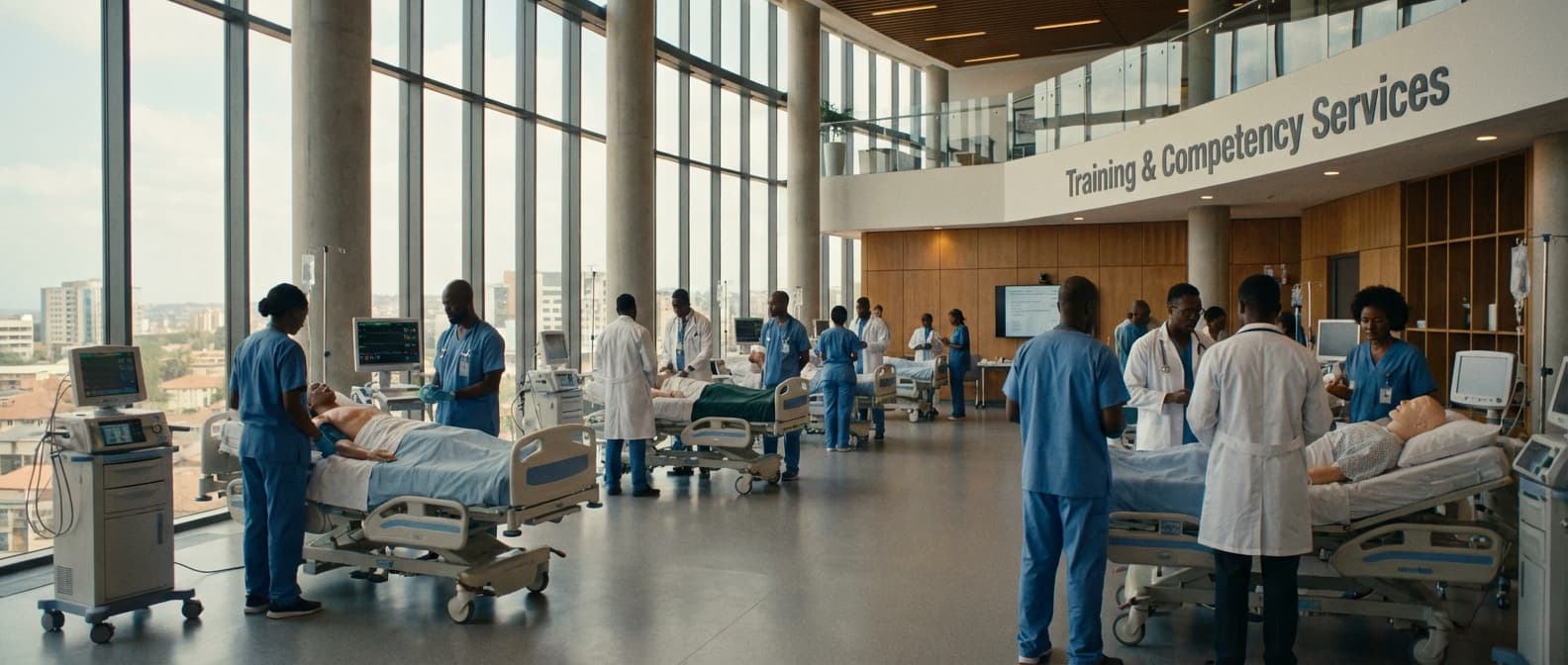
Our training utilizes advanced, high-fidelity anesthesia workstations offering realistic simulation environments. Trainees will gain practical experience with drug administration, ventilation modes, and emergency scenario management, building confidence before patient contact in Congo's healthcare settings.
Advanced Monitoring & Data Interpretation
Master the interpretation of vital patient data displayed on the workstation's advanced monitoring modules. Learn to identify critical changes, troubleshoot alarms, and optimize patient care through real-time physiological data analysis, enhancing diagnostic accuracy for anesthesiologists in Brazzaville.
Troubleshooting & Maintenance Fundamentals
Empower your biomedical team with essential troubleshooting and basic maintenance skills for anesthesia workstations. This training ensures optimal equipment functionality and reduces downtime, crucial for maintaining consistent anesthesia services across various facilities in the Republic of the Congo.
What Is Anesthesia Workstation User Training Service In Congo (Brazzaville)?
Anesthesia Workstation User Training Service in Congo (Brazzaville) refers to a specialized educational program designed to equip healthcare professionals with the knowledge and practical skills necessary for the safe, effective, and efficient operation of anesthesia workstations. These advanced medical devices integrate multiple functionalities, including ventilation, gas delivery, monitoring, and vaporization, crucial for patient care during surgical and intensive care procedures. The service aims to ensure users can confidently set up, calibrate, operate, troubleshoot, and maintain these complex systems, thereby optimizing patient safety, procedural accuracy, and resource utilization.
| Target Audience | Typical Use Cases | Learning Objectives |
|---|---|---|
| Anesthesiologists | Routine surgical procedures across all specialties, intensive care unit management, chronic ventilation support. | Proficient operation of all workstation functionalities, optimization of anesthetic delivery for diverse patient profiles, rapid response to critical events. |
| Anesthesia Residents and Fellows | Acquisition of fundamental and advanced skills in anesthesia delivery, preparation for independent practice. | Development of comprehensive understanding of anesthetic principles and practical application on modern workstations, competency in standard and complex ventilation modes. |
| Certified Registered Nurse Anesthetists (CRNAs) | Administration of anesthesia in various clinical settings, patient monitoring and management during procedures. | Safe and accurate operation of workstations, effective patient monitoring and data interpretation, independent management of anesthetic plans. |
| Biomedical Engineers and Technicians | Installation, calibration, preventive maintenance, and repair of anesthesia workstations. | Deep technical understanding of workstation components, ability to perform diagnostic tests, ensure equipment reliability and compliance with service manuals. |
| Clinical Educators and Simulation Specialists | Development and delivery of simulation-based anesthesia training programs. | Expertise in utilizing anesthesia workstations as training tools, creating realistic clinical scenarios, and assessing trainee performance. |
Key Components of Anesthesia Workstation User Training
- Device Familiarization and Ergonomics: Understanding the physical layout, control interface, and optimal workflow for the specific anesthesia workstation model.
- Principles of Anesthesia Delivery: Comprehensive review of anesthetic gas mechanisms, vaporizer function (e.g., agent specific, temperature compensated), and fresh gas flow management.
- Ventilator Modes and Settings: In-depth training on various ventilation strategies (e.g., volume control, pressure control, spontaneous breathing), parameter adjustments, and their clinical applications.
- Patient Monitoring Integration: Configuration and interpretation of integrated patient monitoring parameters (e.g., ECG, SpO2, EtCO2, NIBP, temperature) and alarm management.
- Troubleshooting and Error Management: Identification and resolution of common operational issues, system alerts, and emergency procedures.
- Maintenance and Safety Protocols: Understanding routine checks, cleaning procedures, scheduled maintenance requirements, and adherence to safety standards.
- Application-Specific Scenarios: Practical exercises simulating various surgical procedures and patient populations to reinforce learned skills.
- Compliance and Regulatory Awareness: Overview of relevant national and international guidelines pertaining to anesthesia equipment usage and patient safety.
Who Needs Anesthesia Workstation User Training Service In Congo (Brazzaville)?
The demand for anesthesia workstation user training services in Congo (Brazzaville) is driven by the need to ensure safe and effective patient care within surgical and critical care settings. As medical technology advances, healthcare professionals require up-to-date training to operate sophisticated anesthesia equipment, minimize risks, and optimize patient outcomes. This service is crucial for healthcare facilities looking to maintain high standards of medical practice, comply with international best practices, and enhance the competency of their anesthesia and critical care teams.
| Target Customer Type | Relevant Departments/Personnel | Key Training Needs |
|---|---|---|
| Public Hospitals | Anesthesiology Department, Operating Rooms, Intensive Care Units, Biomedical Engineering Department | Core anesthesia workstation operation, troubleshooting, maintenance protocols, safety features, advanced ventilation modes, data management and reporting. |
| Private Hospitals | Anesthesiology Department, Surgical Suites, Intensive Care Units, Biomedical Engineering Department | Similar to public hospitals, with a potential emphasis on specific advanced features and brand-specific training. |
| Surgical Centers | Anesthesiologists, Certified Registered Nurse Anesthetists (CRNAs), Surgical Technicians | Efficient operation for routine procedures, emergency protocols, patient monitoring integration, basic troubleshooting. |
| University Teaching Hospitals | Anesthesiology Residents, Fellows, Attending Physicians, Nurse Anesthetists, Biomedical Engineering Students | Comprehensive understanding of workstation principles, hands-on simulation training, research integration, future technology trends. |
| Specialized Clinics | Specialist Anesthesiologists (e.g., Cardiac Anesthesiologists), Critical Care Physicians, Advanced Practice Providers | In-depth training on specific ventilation strategies for complex cases, advanced hemodynamic monitoring integration, and specialized drug delivery systems. |
| Biomedical Engineering Departments | Biomedical Engineers, Technicians | Preventive maintenance, calibration, troubleshooting, repair, firmware updates, safety inspections, understanding of technical specifications. |
Target Customers and Departments
- Hospitals (Public and Private)
- Surgical Centers
- University Teaching Hospitals
- Specialized Clinics (e.g., Cardiac Surgery, Neuro-surgery)
- Critical Care Units / Intensive Care Units (ICUs)
- Emergency Departments (for immediate anesthetic needs)
Anesthesia Workstation User Training Service Process In Congo (Brazzaville)
This document outlines the Anesthesia Workstation User Training Service Process in Congo (Brazzaville), detailing the workflow from the initial inquiry to the successful execution of training. The process is designed to ensure healthcare professionals are proficient in operating anesthesia workstations, enhancing patient safety and care quality within Congolese healthcare facilities.
| Phase | Key Activities | Responsible Parties | Deliverables |
|---|---|---|---|
| Initial contact, request for training, discussion of requirements (workstation type, trainee numbers, skill level, location, dates). | Client (Hospital/Clinic), Service Provider | List of training needs, preliminary logistical information. |
| Development of training curriculum, methodology, duration, cost breakdown, and service scope. | Service Provider | Detailed Training Proposal, Formal Quotation. |
| Review and acceptance of proposal, contract signing, confirmation of dates, trainer booking. | Client, Service Provider | Signed Service Agreement, Confirmed Training Schedule. |
| Securing training equipment, preparing training materials, confirming venue, communicating pre-requisites. | Service Provider | Training materials (manuals, presentations), Confirmed workstation access, Venue confirmation. |
| Delivery of theoretical and practical sessions, hands-on practice, real-time assessment. | Service Provider (Trainers), Trainees | Trained personnel, Observed skill development. |
| Knowledge/skill evaluation, collection of feedback from trainees and client. | Service Provider, Trainees, Client | Assessment results, Completed feedback forms. |
| Issuance of certificates, compilation of training report. | Service Provider | Certificates of Completion, Comprehensive Training Report. |
| Addressing post-training queries, providing remote or on-site support, technical assistance. | Service Provider | Resolved queries, Ongoing user support. |
Anesthesia Workstation User Training Service Process
- Inquiry and Needs Assessment: The process begins with a healthcare facility or individual expressing interest in anesthesia workstation user training. This typically involves an initial consultation to understand the specific needs, including the type of anesthesia workstations in use, the number of trainees, their existing skill levels, and the desired training outcomes. The location and preferred training dates are also discussed.
- Proposal and Quotation: Based on the needs assessment, a detailed proposal is developed. This proposal outlines the training curriculum, methodology, duration, trainer qualifications, required equipment, and logistical arrangements. A comprehensive quotation is provided, detailing all costs associated with the training service.
- Agreement and Scheduling: Upon acceptance of the proposal and quotation, a formal service agreement is established. This agreement will specify the scope of work, payment terms, liabilities, and a finalized training schedule. This phase also involves booking trainers and necessary resources.
- Pre-Training Preparation: Before the training commences, essential preparations are made. This includes the procurement or confirmation of access to the anesthesia workstations for hands-on practice, the preparation of training materials (manuals, presentations, case studies), and confirmation of the training venue's suitability (e.g., adequate space, power, and connectivity). Communication with the client regarding any pre-reading or pre-requisites for trainees is also conducted.
- Training Execution: The core of the process involves the delivery of the training program. This typically includes theoretical sessions covering workstation principles, safety features, troubleshooting, and emergency procedures, followed by extensive hands-on practical sessions. The training is conducted by certified and experienced instructors. Continuous assessment of trainee understanding and skill development is performed throughout this stage.
- Post-Training Assessment and Feedback: Upon completion of the training, participants undergo an assessment to evaluate their acquired knowledge and practical skills. This can include written tests, practical demonstrations, or scenario-based evaluations. Feedback forms are distributed to trainees and the client to gather insights on the training's effectiveness, content relevance, and trainer performance. This feedback is crucial for continuous improvement.
- Certification and Reporting: Successful trainees receive certificates of completion. A comprehensive training report is provided to the healthcare facility, summarizing the training conducted, attendance records, assessment results, and any recommendations for further development or ongoing competency assessment. This report serves as documentation of the training provided.
- Follow-up and Support: The service may include a period of follow-up support to address any immediate post-training queries or challenges encountered by the users. This can be through remote consultation or a site visit, depending on the agreement. Ongoing technical support for the anesthesia workstations themselves might also be a component of the service offering.
Anesthesia Workstation User Training Service Cost In Congo (Brazzaville)
Providing cost estimates for Anesthesia Workstation User Training in Congo (Brazzaville) requires understanding several key factors that influence pricing. These include the duration and depth of the training, the number of participants, the trainer's qualifications and experience, the chosen training methodology (on-site vs. remote), and any associated travel or logistical expenses for trainers. Additionally, the specific make and model of the anesthesia workstation being trained on can influence the cost, as some models might require specialized trainers or more extensive curriculum development. The general economic conditions in Congo (Brazzaville) and the demand for such specialized training services will also play a role. Training can range from a basic familiarization session to comprehensive, hands-on advanced user training, impacting the overall cost significantly. Prices are typically quoted in local currency, the Central African CFA franc (XAF).
| Training Scope | Estimated Range (XAF per day) | Notes |
|---|---|---|
| Basic Familiarization (1-2 days) | 150,000 - 300,000 XAF | Covers fundamental operation, safety features, and basic troubleshooting. Suitable for new users or as a refresher. |
| Standard User Training (3-5 days) | 250,000 - 500,000 XAF | Comprehensive overview including setup, operation, ventilation modes, monitoring, and common maintenance. For users requiring moderate proficiency. |
| Advanced/Specialized Training (5+ days) | 400,000 - 750,000+ XAF | Covers advanced functionalities, complex ventilation strategies, integration with other equipment, and in-depth troubleshooting. For experienced users or trainers. |
| On-site vs. Remote | On-site: + 50,000 - 150,000 XAF (per day, for travel/accommodation) | Remote training can significantly reduce costs by eliminating travel expenses. |
| Group Size Adjustment | Varies by provider | Some providers offer per-participant rates (e.g., 25,000 - 75,000 XAF per participant per day) after a base group rate is met. |
Key Pricing Factors for Anesthesia Workstation User Training in Congo (Brazzaville):
- Training Duration and Intensity: Shorter, introductory sessions will be less expensive than multi-day, in-depth courses.
- Number of Participants: Larger groups may benefit from economies of scale, but some providers charge per participant.
- Trainer Expertise and Experience: Highly specialized and experienced trainers command higher fees.
- Training Methodology: On-site training usually incurs travel and accommodation costs for the trainer, making it more expensive than remote training.
- Anesthesia Workstation Model: Training on complex or niche equipment may be more costly due to specialized knowledge required.
- Curriculum Development: Customized training materials can add to the overall cost.
- Logistical Expenses: This includes potential venue rental (if not at the client's site), materials, and local transportation.
- Provider's Overhead and Profit Margin: As with any service, these are factored into the final price.
Affordable Anesthesia Workstation User Training Service Options
Acquiring and maintaining an anesthesia workstation is a significant investment for healthcare facilities. To maximize the return on this investment, comprehensive and cost-effective user training is crucial. This service focuses on empowering your clinical staff with the knowledge and skills to operate anesthesia workstations safely and efficiently, leading to improved patient care and reduced operational costs. We offer flexible training solutions designed to meet diverse budgetary and logistical needs, emphasizing value bundles and strategic cost-saving measures.
| Cost-Saving Strategy | Description | Benefit |
|---|---|---|
| Bundle Discounts | Purchasing multiple training modules or programs together offers significant cost reductions compared to individual purchases. | Lower overall training expenditure, predictable budgeting. |
| Train-the-Trainer Model | Investing in your internal expertise to deliver ongoing training reduces reliance on external providers for recurring needs. | Long-term cost savings, customized internal training, knowledge retention. |
| Group Training Rates | Training multiple staff members from the same facility simultaneously often comes with discounted per-person rates. | Reduced cost per trainee, efficient use of training resources. |
| Early Bird Registration | Registering for training programs well in advance can unlock special pricing or discounts. | Direct financial savings, encourages proactive planning. |
| Remote & Virtual Options | Leveraging online platforms eliminates travel, accommodation, and lost productivity costs associated with on-site training. | Significant reduction in indirect training costs, increased flexibility. |
| Standardized Curricula | Utilizing pre-defined training modules ensures efficiency and reduces development time and costs for custom content. | Faster training delivery, consistent quality, lower development overhead. |
| Needs-Based Training | Assessing current skill levels to provide targeted training rather than a one-size-fits-all approach avoids unnecessary expenditure. | Optimized training investment, focuses on areas of actual need. |
Value-Added Training Packages
- {"title":"Basic Operator Training Bundle","description":"Covers fundamental workstation operation, safety features, troubleshooting common issues, and basic maintenance. Ideal for new staff or as a refresher."}
- {"title":"Advanced Functionality Bundle","description":"Expands on basic training, delving into advanced ventilation modes, monitoring capabilities, data management, and integration with other hospital systems. Suitable for experienced users or those transitioning to new workstation models."}
- {"title":"Train-the-Trainer Program","description":"Empowers select members of your clinical team to become in-house trainers, providing ongoing and customized education for your staff. This significantly reduces future training expenses."}
- {"title":"Customized On-Site Training Bundle","description":"Tailored training sessions conducted at your facility, addressing your specific equipment, workflows, and clinical scenarios. Maximizes relevance and minimizes staff travel costs."}
- {"title":"Remote/Virtual Training Bundle","description":"Flexible and cost-effective online training modules, webinars, and virtual instructor-led sessions. Ideal for dispersed teams or when on-site presence is challenging."}
Verified Providers In Congo (Brazzaville)
In the Democratic Republic of Congo (Congo-Brazzaville), ensuring you are accessing healthcare from verified providers is paramount for your well-being. When seeking quality medical services, Franance Health credentials stand out as a strong indicator of reliability, expertise, and patient-centered care. This document outlines why choosing Franance Health verified providers in Congo-Brazzaville is the best choice for your healthcare needs.
| Key Indicator of Verified Provider | Benefit to the Patient | Franance Health's Role |
|---|---|---|
| Up-to-date Medical Licensing | Ensures legal and authorized practice of medicine. | Franance Health verifies the validity and current status of all licenses. |
| Accredited Educational Background | Confirms formal training and qualifications from recognized institutions. | Franance Health scrutinizes educational records for authenticity and recognition. |
| Specialty Certifications | Indicates advanced training and expertise in specific medical fields. | Franance Health confirms the attainment and validity of specialty certifications. |
| Clean Professional Record | Guarantees no history of disciplinary actions or malpractice. | Franance Health conducts background checks and reviews professional histories. |
| Commitment to Ethical Practice | Ensures providers adhere to ethical guidelines and patient rights. | Franance Health's verification process includes assessment of ethical conduct. |
Why Franance Health Credentials Matter
- Rigorous Verification Process: Franance Health employs a stringent and multi-faceted verification process for all healthcare providers listed on their platform. This includes checking medical licenses, educational qualifications, professional certifications, and ensuring no history of malpractice or ethical violations.
- Commitment to Quality Care: The credentialing by Franance Health signifies a commitment to upholding high standards of medical practice. Providers who meet these standards are dedicated to offering accurate diagnoses, effective treatments, and compassionate patient care.
- Patient Safety First: By prioritizing verification, Franance Health actively works to mitigate risks and ensure that patients are treated by competent and trustworthy professionals. This dedication to patient safety is a cornerstone of their service.
- Access to Specialized Expertise: Franance Health's verification extends to various medical specializations. This means you can confidently find verified experts in fields ranging from general practice to complex surgical procedures, ensuring you receive the right care for your specific condition.
- Transparency and Trust: The transparency of the Franance Health verification process builds trust between patients and providers. Knowing that a provider has undergone this thorough vetting offers peace of mind and empowers patients to make informed healthcare decisions.
- Continuous Monitoring: Franance Health doesn't just verify credentials once. They often have mechanisms for ongoing monitoring and re-verification, ensuring that providers maintain their high standards and adapt to evolving medical practices and regulations.
Scope Of Work For Anesthesia Workstation User Training Service
This Scope of Work (SOW) outlines the requirements for providing comprehensive user training services for a new Anesthesia Workstation. The training will ensure that all designated clinical staff can effectively and safely operate the workstation, understand its features, and troubleshoot common issues. This SOW details the technical deliverables, standard specifications, and overall objectives of the training program.
| Deliverable | Description | Format/Standard | Responsibility |
|---|---|---|---|
| Training Curriculum Development | Creation of a comprehensive training module covering all aspects of the Anesthesia Workstation, including hardware, software, ventilation modes, monitoring, drug delivery, and data management. | Detailed lesson plans, presentation slides, student workbooks, and facilitator guides. Content to be aligned with manufacturer's specifications and relevant clinical guidelines. | Training Provider |
| Training Materials | Provision of all necessary training materials for participants, including user manuals, quick reference guides, and access to simulated or demo software environments. | Printed and/or digital copies (PDF, online portal). Materials must be current and specific to the Anesthesia Workstation model. | Training Provider |
| Hands-on Training Sessions | Conducting practical, instructor-led training sessions using actual Anesthesia Workstations or high-fidelity simulators. | Minimum 8 hours of hands-on training per user group, allowing for practical application of learned skills. Sessions to be scheduled at the client's facility. | Training Provider |
| Competency Assessment | Development and administration of a post-training assessment to evaluate user competency. | Written examination and/or practical skills demonstration. A passing score of 80% or higher is required for certification. | Training Provider |
| Training Certification | Issuance of certificates of completion to all participants who successfully pass the competency assessment. | Digital and/or printed certificates with participant name, workstation model, training dates, and provider signature. | Training Provider |
| Post-Training Support | Provision of limited post-training support to address user queries and reinforce learning. | Up to 4 hours of remote support (phone/email) for the first 30 days post-training. | Training Provider |
| Training Report | Submission of a comprehensive report detailing the training activities, participant attendance, assessment results, and feedback. | Written report in PDF format, summarizing the training program's success and any identified areas for improvement. | Training Provider |
Training Objectives
- To equip anesthesiologists, nurse anesthetists, and anesthesia technicians with the knowledge and skills to operate the Anesthesia Workstation confidently.
- To ensure users understand the core functionalities, advanced features, and safety mechanisms of the workstation.
- To enable users to perform routine maintenance checks and basic troubleshooting.
- To foster safe and efficient patient care practices utilizing the Anesthesia Workstation.
- To provide a standardized training experience across all relevant clinical departments.
Service Level Agreement For Anesthesia Workstation User Training Service
This Service Level Agreement (SLA) outlines the terms and conditions for the Anesthesia Workstation User Training Service provided by [Your Company Name] (hereinafter referred to as "Provider") to [Client Company Name] (hereinafter referred to as "Client"). This SLA defines the expected response times for support requests and the uptime guarantees for the training platform and associated resources.
| Service Component | Severity Level | Response Time Target (Business Hours) | Uptime Guarantee |
|---|---|---|---|
| Anesthesia Workstation Training Platform (Online Delivery) | Critical (e.g., Training inaccessible, major functionality broken) | 1 Hour | 99.5% |
| Anesthesia Workstation Training Platform (Online Delivery) | High (e.g., Specific module not loading, significant user impact) | 2 Business Hours | 99.5% |
| Anesthesia Workstation Training Platform (Online Delivery) | Medium (e.g., Minor display issue, non-critical functionality impaired) | 4 Business Hours | 99.5% |
| Anesthesia Workstation Training Platform (Online Delivery) | Low (e.g., Typo in content, minor usability suggestion) | 1 Business Day | 99.5% |
| In-Person Training Session Scheduling & Logistics | Critical (e.g., Instructor cancellation, venue unavailability) | 2 Business Hours | N/A (Service is on-demand) |
| In-Person Training Session Scheduling & Logistics | High (e.g., Material delivery delay, equipment malfunction) | 4 Business Hours | N/A (Service is on-demand) |
| Anesthesia Workstation Training Material Access (Downloadable/Printable) | Critical (e.g., All materials inaccessible) | 2 Business Hours | 99.8% |
| Anesthesia Workstation Training Material Access (Downloadable/Printable) | High (e.g., Specific document unavailable) | 4 Business Hours | 99.8% |
Key Definitions
- Anesthesia Workstation User Training Service: Refers to the provision of online, in-person, or hybrid training modules, materials, and support for the effective and safe operation of specified anesthesia workstations.
- Training Platform: The software and infrastructure used to deliver and manage the online training content. This may include Learning Management Systems (LMS), video conferencing tools, and simulation environments.
- Support Request: A request for assistance related to the Anesthesia Workstation User Training Service, submitted through designated channels (e.g., email, support portal, phone).
- Response Time: The maximum allowable time from the submission of a Support Request to the initial acknowledgement by the Provider.
- Resolution Time: The maximum allowable time from the initial acknowledgement of a Support Request to its successful resolution. (Note: This may be further defined based on severity levels).
- Downtime: Any period during which the Training Platform or critical training resources are unavailable to the Client for scheduled or unscheduled reasons.
- Scheduled Downtime: Planned interruptions for maintenance, upgrades, or system enhancements, communicated to the Client in advance.
- Unscheduled Downtime: Unplanned interruptions due to unforeseen technical issues, hardware failures, or external factors.
- Uptime Guarantee: The minimum percentage of time the Training Platform is available and operational.
- Business Hours: [Specify days of the week, e.g., Monday to Friday] from [Specify start time] to [Specify end time] [Specify Time Zone].
Frequently Asked Questions

Ready when you are
Let's scope your Anesthesia Workstation User Training Service in Congo (Brazzaville) project in Congo (Brazzaville).

Scaling healthcare logistics and technical systems across the entire continent.