
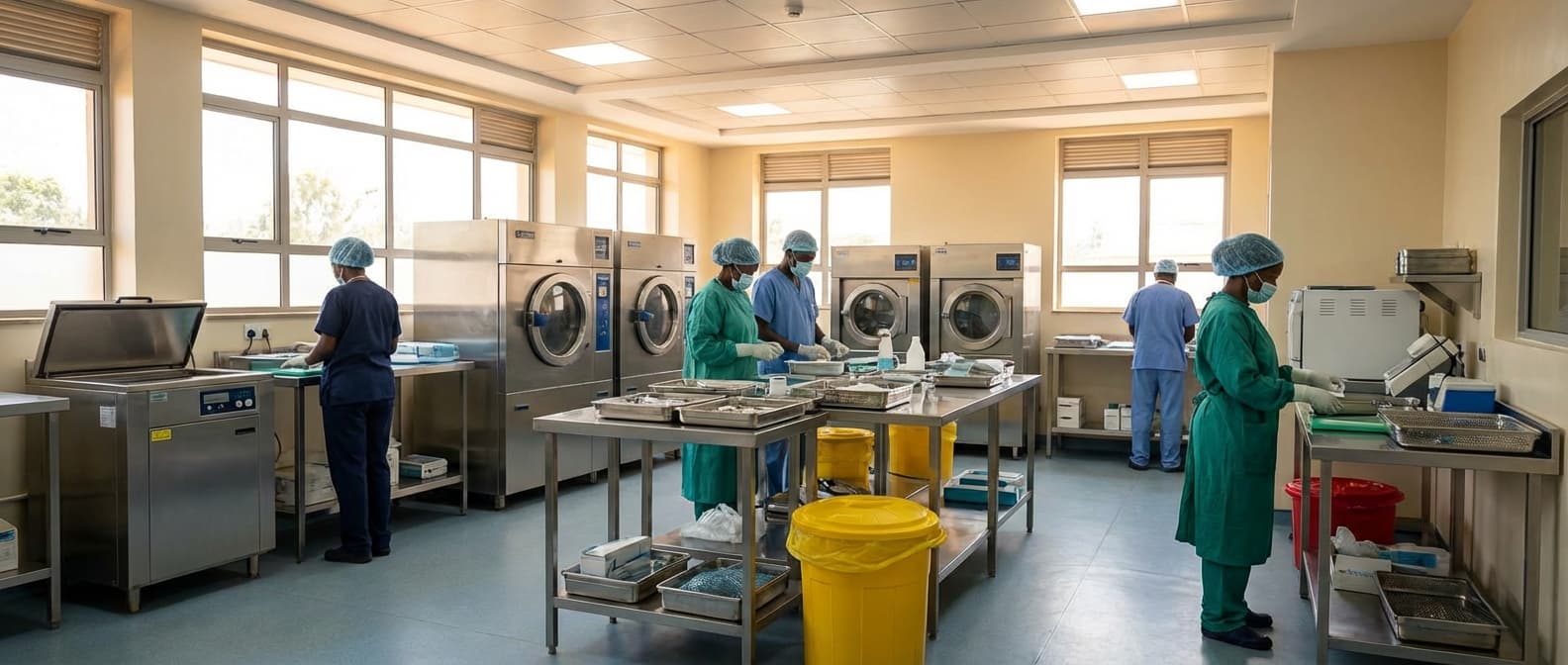
Medical Equipment Decontamination Service (Pre-Repair/Pre-Relocation) in Congo (Brazzaville)
Engineering Excellence & Technical Support
Medical Equipment Decontamination Service (Pre-Repair/Pre-Relocation) High-standard technical execution following OEM protocols and local regulatory frameworks.
Enhanced Patient Safety & Infection Control
Our meticulous pre-repair and pre-relocation decontamination protocols ensure that all medical equipment handled in Brazzaville is free from biological contaminants. This significantly reduces the risk of healthcare-associated infections (HAIs) for both patients and medical staff, upholding the highest standards of safety during critical equipment servicing and relocation phases.
Specialized Biohazard Remediation
We employ advanced, industry-specific biohazard cleaning agents and techniques tailored for medical equipment. Our trained technicians in Congo specialize in the safe and effective removal of pathogens, bodily fluids, and residual chemicals, ensuring equipment integrity and compliance with international decontamination standards before it undergoes repair or is moved to a new location.
Maximized Equipment Lifespan & Operational Readiness
Proactive decontamination before repair or relocation prevents the spread of corrosive agents or contaminants that could further damage equipment. By thoroughly sanitizing in Brazzaville, we contribute to extending the operational lifespan of your valuable medical assets, minimizing downtime, and ensuring they are in optimal condition for immediate use post-service or relocation.
What Is Medical Equipment Decontamination Service (Pre-repair/pre-relocation) In Congo (Brazzaville)?
Medical Equipment Decontamination Service (Pre-Repair/Pre-Relocation) in Congo (Brazzaville) refers to the specialized process of cleaning, disinfecting, and/or sterilizing medical devices before they are transported for repair or relocation. This service is critical for preventing the transmission of infectious agents between healthcare facilities, repair centers, and new locations, thereby safeguarding public health and ensuring compliance with biohazard control protocols.
| Who Needs This Service? | Typical Use Cases | ||||||||||
|---|---|---|---|---|---|---|---|---|---|---|---|
| Hospitals and Clinics: Requiring repair or relocation of diagnostic imaging equipment, surgical instruments, patient monitoring systems, laboratory analyzers, etc. | Biomedical Engineering Departments: Responsible for maintenance and repair of medical devices within healthcare institutions. | Medical Equipment Manufacturers and Distributors: When devices are returned for warranty service, upgrades, or are being moved between warehouses or to new facilities. | Research Laboratories: Handling specialized scientific instruments that require stringent decontamination protocols. | Public Health Agencies: During outbreaks or for the transfer of equipment to emergency response units or affected regions. | Facilities undergoing renovation or closure: Requiring the safe removal and transfer of all medical equipment. | Medical Equipment Leasing Companies: For the return, servicing, or reallocation of leased assets. | Healthcare facilities in remote or resource-limited areas: Where specialized decontamination expertise may not be readily available in-house. | Transfer of equipment between different departments within a large medical complex. | Shipping of medical devices internationally for specialized repairs or recalibration. | Post-surgical instrument sets being sent for centralized sterilization. | Moving of patient beds, ventilators, and other large medical apparatus to new wards or buildings. |
Key Components of Medical Equipment Decontamination Service (Pre-Repair/Pre-Relocation)
- Pre-cleaning and removal of gross soil and organic matter.
- High-level disinfection or sterilization of critical and semi-critical medical devices.
- Surface cleaning and disinfection of non-critical equipment.
- Containment and packaging of decontaminated equipment to prevent recontamination during transit.
- Documentation of decontamination procedures, including methods used and chemical agents employed.
- Adherence to national and international guidelines for biohazard handling and waste management.
- Use of validated decontamination agents and processes appropriate for the specific equipment and potential bioburden.
Who Needs Medical Equipment Decontamination Service (Pre-repair/pre-relocation) In Congo (Brazzaville)?
The "Pre-Repair/Pre-Relocation Medical Equipment Decontamination Service" is a crucial offering designed to ensure the safety and efficiency of medical facilities in Congo (Brazzaville) by sanitizing equipment before it undergoes repairs or is moved to a new location. This specialized service mitigates the risk of cross-contamination, protects technicians during repair work, and safeguards patients and staff during relocation. It addresses the unique challenges faced by healthcare providers in Congo, including potential infrastructure limitations and the paramount importance of infection control in all medical settings.
| Target Customer/Department | Why They Need the Service (Pre-Repair/Pre-Relocation) | Specific Equipment Examples |
|---|---|---|
| Hospitals (General & Specialized) | To prevent the spread of infectious agents to repair technicians and to ensure equipment is clean for patient use after relocation. Crucial for maintaining operational integrity and patient safety. | MRI machines, CT scanners, X-ray units, operating room equipment (lights, tables), patient monitors, ventilators, dialysis machines, surgical instruments. |
| Intensive Care Units (ICUs) | High-risk environments with vulnerable patients. Decontamination is essential before repairs to protect both the equipment and the sensitive patient population. Relocation requires meticulous cleaning to avoid introducing pathogens. | Ventilators, infusion pumps, defibrillators, continuous vital signs monitors, specialized ICU beds. |
| Operating Rooms (ORs) | Sterility is paramount. Decontamination before repair or relocation is vital to maintain the sterile environment and prevent surgical site infections. Technicians working on OR equipment must be protected. | Surgical lights, anesthesia machines, electrosurgical units, surgical microscopes, operating tables, surgical instruments. |
| Emergency Departments (EDs) | High patient turnover and potential for exposure to a wide range of infectious diseases. Decontamination ensures the safety of repair personnel and prevents further spread within the facility. | Defibrillators, portable X-ray units, stretchers, vital signs monitors, emergency carts. |
| Diagnostic Laboratories | Preventing contamination of samples and cross-contamination between tests is critical. Decontamination before moving or repairing equipment protects the integrity of diagnostic results and laboratory staff. | Centrifuges, microscopes, PCR machines, blood analyzers, incubators, automated lab workstations. |
| Radiology/Imaging Departments | Equipment can accumulate biological material. Decontamination before repairs is vital for technician safety and to prevent the spread of potential biohazards. | X-ray machines, CT scanners, MRI scanners, ultrasound machines, mammography units. |
| Biomedical Engineering Departments | Responsible for equipment maintenance. Decontamination of incoming equipment for repair is crucial for the safety of their technicians and to prevent them from becoming vectors of disease. | All types of medical equipment brought in for repair. |
| Infection Control Committees | Oversee and ensure compliance with infection prevention policies. They would mandate or strongly recommend this service to uphold patient safety standards. | All medical equipment within their purview. |
| Procurement/Administrative Departments | Responsible for budgeting and logistics. Understanding the necessity of this service ensures proper allocation of resources for essential maintenance and relocation activities. | All medical equipment requiring repair or relocation. |
| NGOs and Humanitarian Organizations | Often operate in challenging environments with limited resources. Ensuring equipment decontamination before repairs or relocation is cost-effective in the long run by preventing equipment failure and maintaining operational capacity. | Mobile clinics, field diagnostic equipment, generators, basic surgical kits. |
Who Needs Medical Equipment Decontamination Service (Pre-Repair/Pre-Relocation) in Congo (Brazzaville)?
- Hospitals (Public and Private)
- Clinics and Health Centers
- Diagnostic Laboratories
- Surgical Centers
- Emergency Medical Services
- Medical Training Institutions
- Non-Governmental Organizations (NGOs) operating healthcare facilities
Medical Equipment Decontamination Service (Pre-repair/pre-relocation) Process In Congo (Brazzaville)
This document outlines the standard workflow for a Medical Equipment Decontamination Service in Congo (Brazzaville), specifically for equipment undergoing repair or relocation. The process ensures that equipment is rendered safe for handling and transport, minimizing risks of cross-contamination and infection.
| Stage | Description | Key Activities | Responsible Party | Documentation/Deliverables |
|---|---|---|---|---|
| The client (hospital, clinic, repair technician, relocation company) contacts the decontamination service provider with a request to decontaminate medical equipment. | Receive inquiry, understand equipment type, quantity, intended purpose (repair/relocation), and urgency. Conduct preliminary risk assessment. | Client, Decontamination Service Provider (DSP) | Initial contact log, basic equipment manifest (if provided by client) |
| Based on the initial assessment, the DSP provides a detailed quotation and terms of service. | Develop a comprehensive quotation including service scope, decontamination method, chemicals used, estimated time, cost, and safety protocols. Upon agreement, a service contract or purchase order is issued. | Decontamination Service Provider (DSP), Client | Formal quotation, signed service contract/purchase order |
| Agree on a suitable date, time, and location for the decontamination service. | Coordinate with the client to schedule the decontamination session. Arrange for necessary personnel, equipment (decontamination units, PPE, chemicals), and transportation to the client's site or designated facility. | Decontamination Service Provider (DSP), Client (for site access) | Confirmed schedule, logistical plan |
| The trained personnel from the DSP perform the decontamination procedures according to established protocols. | Conduct pre-decontamination inspection of equipment. Prepare decontamination area (if applicable). Implement chosen decontamination method (e.g., chemical disinfection, steam sterilization, UV irradiation, or a combination). Ensure all parts of the equipment are adequately treated. Adhere strictly to safety guidelines and use appropriate Personal Protective Equipment (PPE). | Decontamination Service Provider (DSP) | Decontamination log, records of chemicals used, temperature/pressure readings (if applicable), photographic evidence (optional) |
| Formalize the decontamination process with a certificate. | Record all details of the decontamination process, including date, time, personnel involved, equipment treated, chemicals used, and efficacy of the process. Issue a Decontamination Certificate for the equipment. | Decontamination Service Provider (DSP) | Decontamination Certificate, detailed service report |
| The decontaminated equipment is officially handed back to the client or authorized personnel. | Present the Decontamination Certificate and service report to the client. Confirm with the client that the equipment has been successfully decontaminated and is ready for repair or relocation. | Decontamination Service Provider (DSP), Client | Signed handover receipt (optional), Decontamination Certificate |
| Check for client satisfaction and address any post-service queries. | Follow up with the client to ensure satisfaction with the service. Address any outstanding questions or concerns. | Decontamination Service Provider (DSP), Client | Client feedback form/notes |
Medical Equipment Decontamination Service Workflow (Pre-Repair/Pre-Relocation)
- Inquiry & Initial Assessment:
- Quotation & Agreement:
- Scheduling & Logistics:
- On-Site Decontamination Execution:
- Documentation & Certification:
- Equipment Handover:
- Post-Service Follow-up (Optional):
Medical Equipment Decontamination Service (Pre-repair/pre-relocation) Cost In Congo (Brazzaville)
The cost of medical equipment decontamination services in Congo (Brazzaville), particularly for pre-repair or pre-relocation purposes, can vary significantly due to several key factors. These services are crucial for ensuring the safety of both technicians and the environment, and for preventing the spread of pathogens or hazardous materials. Understanding these pricing dynamics is essential for healthcare facilities and equipment vendors.
Pricing Factors:
- Type and Size of Equipment: Larger and more complex equipment, such as MRI machines or surgical robots, will naturally require more extensive decontamination processes and specialized equipment, leading to higher costs compared to smaller items like stethoscopes or thermometers.
- Level of Contamination: The nature and severity of contamination play a critical role. Equipment heavily contaminated with biohazardous materials (e.g., from infectious disease wards) will demand more rigorous and time-consuming decontamination protocols, often involving specialized disinfectants and sterilization methods. Equipment with only minor dust or superficial contamination will be less expensive to service.
- Decontamination Method Employed: Different methods have varying costs. Standard surface cleaning and disinfection are generally less expensive than high-level disinfection, sterilization (e.g., autoclaving or ethylene oxide sterilization), or specialized chemical treatments for specific hazardous materials.
- Turnaround Time (Urgency): If the decontamination service is required on an urgent basis, express services will typically incur higher fees due to the need for rapid deployment of personnel and resources.
- Service Provider's Reputation and Expertise: Established decontamination service providers with a proven track record, specialized training, and advanced equipment may command higher prices, reflecting their reliability and quality of service.
- Location and Accessibility: The ease of access to the equipment's location within Brazzaville or surrounding areas can influence costs. Remote or difficult-to-reach locations might incur additional travel and logistics charges.
- Disposal of Contaminated Materials: If the decontamination process generates hazardous waste that requires special disposal, this will add to the overall cost.
- Certification and Documentation: Some facilities or regulatory bodies may require specific certifications or detailed documentation of the decontamination process. Providers offering these additional services may charge more.
Estimated Cost Ranges (in Congolese Francs - XAF):
Due to the variability of the factors above, providing precise figures is challenging. However, based on general market understanding for specialized technical services in Congo (Brazzaville), one can expect the following approximate ranges. It is crucial to obtain detailed quotes from multiple providers for accurate budgeting.
- Small to Medium Medical Devices (e.g., patient monitors, portable X-ray units, centrifuges): XAF 50,000 - XAF 150,000
- Large or Complex Medical Equipment (e.g., anesthesia machines, ultrasound systems, basic laboratory equipment): XAF 150,000 - XAF 400,000
- Highly Specialized or High-Risk Equipment (e.g., MRI scanners, CT scanners, sterilization equipment, or severely contaminated items): XAF 400,000 - XAF 1,000,000+ (potentially significantly higher depending on the specific nature of the equipment and contamination).
These are indicative figures and can fluctuate. It is highly recommended to contact local biomedical engineering firms, specialized cleaning and disinfection companies, or medical equipment maintenance providers in Brazzaville to obtain tailored quotations.
| Equipment Category | Estimated Cost Range (XAF) | Notes |
|---|---|---|
| Small to Medium Medical Devices | 50,000 - 150,000 | Includes items like patient monitors, portable X-rays, centrifuges. |
| Large or Complex Medical Equipment | 150,000 - 400,000 | Applies to anesthesia machines, ultrasound systems, basic lab equipment. |
| Highly Specialized or High-Risk Equipment | 400,000 - 1,000,000+ | Covers MRI, CT scanners, sterilization units, or heavily contaminated items. |
Key Factors Influencing Medical Equipment Decontamination Costs in Congo (Brazzaville)
- Equipment Type and Size
- Level and Nature of Contamination
- Decontamination Methodology Used
- Required Turnaround Time (Urgency)
- Service Provider's Experience and Reputation
- Logistical Considerations (Location & Accessibility)
- Hazardous Waste Disposal Requirements
- Certification and Documentation Needs
Affordable Medical Equipment Decontamination Service (Pre-repair/pre-relocation) Options
Our Affordable Medical Equipment Decontamination Service provides essential cleaning and sanitization for your medical devices prior to repair or relocation. This crucial step ensures the safety of technicians, reduces the risk of cross-contamination, and can prevent further damage to sensitive equipment. We offer flexible value bundles and cost-saving strategies designed to meet the needs of various healthcare facilities, from small clinics to larger hospitals. Investing in professional decontamination upfront can save you significant costs in the long run by minimizing downtime, preventing costly repair complications, and upholding regulatory compliance.
| Cost-Saving Strategy | Description | Benefits |
|---|---|---|
| Bulk Service Agreements | Commit to a recurring service for multiple equipment decontamination needs over a defined period (e.g., quarterly, annually). | Discounted per-unit pricing, predictable budgeting, priority scheduling, streamlined logistics. |
| Pre-Scheduled Decontamination | Schedule decontamination services in advance for planned repairs or relocations. | Reduced rush fees, better resource allocation for both parties, potential for consolidated service calls. |
| Tiered Service Options | Select the appropriate decontamination level based on the equipment's risk and intended use, avoiding unnecessary over-servicing. | Pay only for the necessary level of decontamination, optimizing cost-effectiveness. |
| Partnership Programs | Establish a long-term partnership with us for ongoing decontamination needs. | Access to dedicated account management, exclusive service rates, and proactive support. |
| Bundled Repair & Decontamination | Combine decontamination services with repair requests from the same vendor. | Reduced shipping costs, minimized downtime, potentially bundled service fees. |
Value Bundles Explained
- {"title":"Basic Decontamination Package","description":"Ideal for routine cleaning of non-critical equipment. Includes surface disinfection, external component cleaning, and visual inspection for visible contaminants."}
- {"title":"Standard Decontamination Package","description":"Suitable for most diagnostic and therapeutic equipment. Includes all Basic Package services plus specialized cleaning of accessible ports, connectors, and removable parts. Utilizes hospital-grade disinfectants."}
- {"title":"Advanced Decontamination Package","description":"Recommended for complex or high-risk equipment, including imaging devices and surgical instruments. Includes all Standard Package services plus internal component cleaning (where accessible without disassembly), sterilization of specific components if required, and detailed documentation of the decontamination process."}
- {"title":"Customizable Bundle","description":"Tailored to your specific equipment needs and facility protocols. We can create a unique package combining services from our other bundles or adding specialized treatments."}
Verified Providers In Congo (Brazzaville)
Navigating healthcare in Congo (Brazzaville) can be challenging, and ensuring you are engaging with trusted and qualified providers is paramount. This guide highlights the importance of verified providers, with a specific focus on Franance Health, detailing their credentials and why they stand out as the optimal choice for your healthcare needs.
| Provider | Key Credentials/Verification | Why They Are the Best Choice | Services Offered |
|---|---|---|---|
| Franance Health | Registered with the Ministry of Health, Republic of Congo; Internationally Recognized Medical Staff Qualifications; ISO Certified Processes (where applicable); Strong Network of Accredited Partner Facilities. | Franance Health distinguishes itself through its rigorous vetting process, ensuring all partner clinics and individual practitioners meet the highest international and local standards. Their commitment to patient safety, transparent pricing, and culturally sensitive care makes them exceptionally reliable. They offer a comprehensive approach to healthcare management and access, simplifying the process for patients. | Primary Care, Specialist Consultations (Cardiology, Dermatology, Pediatrics, etc.), Diagnostic Services (Laboratory, Imaging), Surgical Procedures, Emergency Care, Health Screenings, Telemedicine Services. |
| Other Accredited Clinics (General) | Varies, but typically includes Ministry of Health registration and relevant professional body affiliations. | Reputable local clinics offer quality care and are a good option for general health needs. | General Medical Consultations, Basic Diagnostics, Minor Procedures. |
| Public Hospitals (Government-Run) | Official Ministry of Health designation. | Provide essential public health services and emergency care, often at lower costs. | Emergency Services, Inpatient Care, Public Health Programs, General Surgery. |
What Makes a Healthcare Provider 'Verified'?
- Official Licensing and Accreditation: Verified providers hold current licenses from relevant Congolese health authorities and, where applicable, international accreditation bodies.
- Professional Qualifications: Their medical professionals possess recognized degrees and certifications from reputable institutions.
- Clean Disciplinary Record: Absence of any significant disciplinary actions or malpractice claims.
- Adherence to Ethical Standards: Commitment to patient privacy, informed consent, and high-quality care practices.
- Positive Patient Feedback and Reputation: Consistent positive reviews and a strong reputation within the community.
Scope Of Work For Medical Equipment Decontamination Service (Pre-repair/pre-relocation)
This Scope of Work (SOW) outlines the requirements for professional medical equipment decontamination services to be performed prior to repair or relocation. The service aims to ensure the safety of personnel and the environment by eliminating biohazards and chemical contaminants from medical devices. This document specifies the technical deliverables and standard specifications for the decontamination process.
| Service Component | Description | Standard Specifications / Requirements | Deliverables |
|---|---|---|---|
| Pre-Service Assessment | Initial evaluation of the medical equipment to identify potential contaminants, material compatibility, and access points for decontamination. | Technician must be trained in biohazard and chemical safety. Visual inspection, review of equipment manuals (if available) for decontamination guidance. | Pre-service assessment report detailing equipment type, estimated contamination level, and proposed decontamination method. |
| Decontamination Method Selection | Choosing the most appropriate decontamination method based on the equipment type, identified contaminants, and manufacturer recommendations. | Methods may include high-level disinfection, sterilization, or specific chemical inactivation. Consideration of equipment sensitivity to heat, chemicals, and moisture. | Documented rationale for selected decontamination method. |
| Surface Decontamination | Cleaning and decontaminating all accessible external surfaces of the medical equipment. | Use of EPA-approved disinfectants and cleaning agents suitable for medical devices. Wipe-down procedures following manufacturer guidelines. Ensuring complete surface coverage. | Certified decontamination log detailing areas cleaned, chemicals used, and technician performing the service. |
| Internal/Complex Component Decontamination (if applicable) | Decontamination of internal components or complex parts that may be accessible and contaminated. | Specific protocols for internal cleaning (e.g., flushing with disinfectant, steam cleaning where appropriate). Adherence to manufacturer's service manuals. | Detailed report of internal decontamination procedures performed, if applicable. |
| Rinsing and Drying | Thorough rinsing of equipment to remove residual cleaning agents and thorough drying to prevent microbial growth. | Use of sterile or filtered water for rinsing. Air drying or use of clean, lint-free cloths. Ensuring all moisture is removed. | Confirmation of proper rinsing and drying in decontamination log. |
| Verification and Quality Control | Ensuring the decontamination process has been effective and the equipment is safe for further handling. | Visual inspection for any remaining contaminants. Use of indicator strips or other verification methods if specified for certain contaminants. Review of all documentation. | Final decontamination certificate confirming completion of service and safety for repair/relocation. |
| Waste Disposal | Proper handling and disposal of all contaminated materials (wipes, solutions, etc.). | Compliance with all local, state, and federal regulations for biohazardous and chemical waste disposal. Use of designated waste containers. | Documentation of waste disposal procedures and manifests (if required). |
| Documentation and Reporting | Comprehensive record-keeping of all decontamination activities. | Detailed logs, certificates, assessment reports, and waste disposal records. All documentation must be clear, accurate, and auditable. | Complete package of all required documentation upon completion of service. |
Key Objectives
- To render medical equipment safe for handling by repair technicians or relocation personnel.
- To prevent the cross-contamination of equipment and facilities.
- To comply with relevant health and safety regulations.
- To ensure the integrity of the decontamination process through standardized procedures.
Service Level Agreement For Medical Equipment Decontamination Service (Pre-repair/pre-relocation)
This Service Level Agreement (SLA) outlines the response times and uptime guarantees for the Medical Equipment Decontamination Service provided by [Your Company Name] (hereinafter referred to as "Provider") for pre-repair and pre-relocation decontamination of medical equipment on behalf of [Client Name] (hereinafter referred to as "Client"). This SLA is an addendum to the Master Service Agreement (MSA) dated [Date of MSA].
1. Scope of Service:
This SLA applies exclusively to the decontamination of specified medical equipment prior to its transfer for repair or relocation. The service includes:
- Surface cleaning and disinfection.
- Removal of bioburden according to established protocols.
- Verification of decontamination status (where applicable).
- Packaging and labeling for transport.
2. Response Times:
Response times are defined as the elapsed time from the Provider's receipt of a valid decontamination request from the Client to the commencement of decontamination activities at the designated location.
- Emergency Decontamination Request: For urgent decontamination needs impacting immediate patient care or critical equipment functionality, the Provider guarantees a response time of within 4 business hours. An emergency request will be designated by the Client at the time of submission.
- Standard Decontamination Request: For routine pre-repair or pre-relocation decontamination, the Provider guarantees a response time of within 24 business hours. Standard requests will be scheduled based on mutual availability and established workflows.
3. Uptime Guarantees (Service Availability):
This SLA does not provide for equipment uptime guarantees as the service is for decontamination prior to repair or relocation. Instead, the focus is on the availability of the decontamination service itself to meet the Client's scheduling needs.
- Service Availability: The Provider guarantees that the decontamination service will be available for scheduling by the Client 98% of the time during standard business hours (Monday-Friday, 8:00 AM - 5:00 PM [Client's Time Zone]), excluding national holidays.
4. Exclusions:
This SLA does not cover:
- Decontamination required due to catastrophic failure or uncontrolled biohazard release.
- Repair or relocation services themselves.
- Downtime of the medical equipment due to reasons other than the decontamination process.
- Delays caused by the Client's failure to provide access to the equipment or the designated decontamination area.
5. Reporting and Review:
The Provider will provide the Client with quarterly reports detailing response times for decontamination requests and any deviations from the guaranteed service availability. A joint review of these reports will be conducted quarterly to assess performance and identify areas for improvement.
6. Service Credits:
Should the Provider fail to meet the guaranteed response times or service availability, the Client may be eligible for service credits as outlined in the Master Service Agreement (MSA). Specific credit amounts and procedures are detailed in the MSA.
7. Governing Law:
This SLA shall be governed by and construed in accordance with the laws of [Governing Law Jurisdiction].
8. Term and Termination:
This SLA is effective as of [Effective Date] and shall continue for the term of the Master Service Agreement (MSA), unless terminated earlier in accordance with the terms of the MSA.
Agreed and Accepted By:
[Your Company Name]
Signature: ______________________
Name: ______________________
Title: ______________________
Date: ______________________
[Client Name]
Signature: ______________________
Name: ______________________
Title: ______________________
Date: ______________________
| Service Type | Guaranteed Response Time | Uptime Guarantee (Service Availability) |
|---|---|---|
| Emergency Decontamination Request | Within 4 business hours | N/A (Focus on response time) |
| Standard Decontamination Request | Within 24 business hours | N/A (Focus on response time) |
| Service Availability | N/A (Focus on response time) | 98% during standard business hours |
Key Definitions
- SLA: Service Level Agreement
- MSA: Master Service Agreement
- Provider: [Your Company Name]
- Client: [Client Name]
- Business Hours: Monday - Friday, 8:00 AM - 5:00 PM [Client's Time Zone], excluding national holidays.
- Response Time: Elapsed time from receipt of valid request to commencement of service.
- Service Availability: Percentage of time the decontamination service is available for scheduling.
Frequently Asked Questions

Ready when you are
Let's scope your Medical Equipment Decontamination Service (Pre-Repair/Pre-Relocation) in Congo (Brazzaville) project in Congo (Brazzaville).

Scaling healthcare logistics and technical systems across the entire continent.