
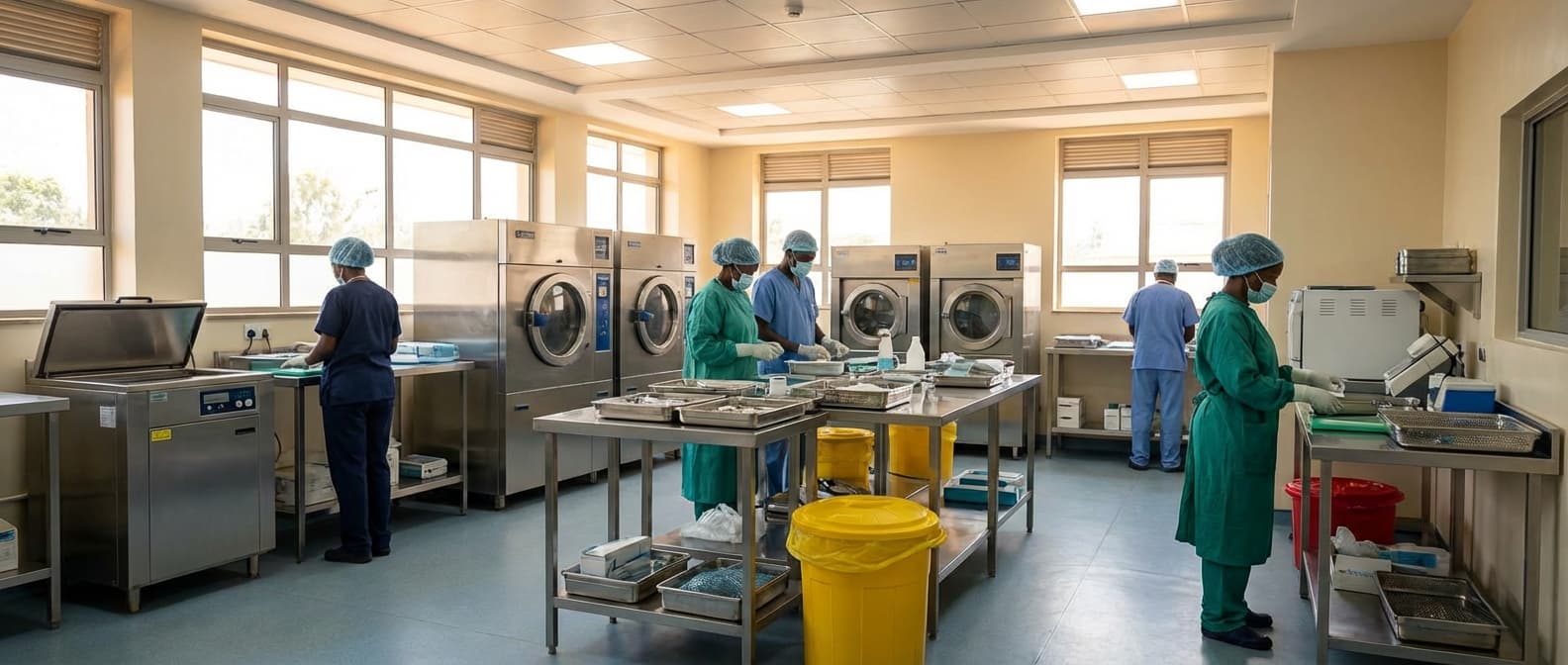
Infection-Control Readiness Support Service for Reusable Equipment in Congo (Brazzaville)
Engineering Excellence & Technical Support
Infection-Control Readiness Support Service for Reusable Equipment High-standard technical execution following OEM protocols and local regulatory frameworks.
Sterilization and Disinfection Mastery
Our service implements and rigorously audits advanced sterilization and disinfection protocols for all reusable medical equipment. We ensure adherence to WHO guidelines and local regulations, utilizing state-of-the-art autoclaves and validated chemical disinfection agents to eliminate pathogens effectively and prevent healthcare-associated infections.
Capacity Building and Skills Development
We provide comprehensive, hands-on training programs for healthcare personnel on proper handling, cleaning, disinfection, and sterilization procedures. Our focus is on empowering local staff with the knowledge and practical skills necessary to maintain the highest standards of infection control for reusable equipment, fostering a sustainable culture of safety.
Robust Supply Chain Management
Our service establishes and optimizes the supply chain for essential infection control consumables and equipment maintenance. We ensure a reliable and consistent flow of high-quality detergents, disinfectants, sterilization supplies, and spare parts, preventing stockouts and guaranteeing the continuous operational integrity of infection control processes.
What Is Infection-control Readiness Support Service For Reusable Equipment In Congo (Brazzaville)?
Infection-Control Readiness Support Service for Reusable Equipment in Congo (Brazzaville) refers to a specialized service designed to ensure that healthcare facilities possess and maintain the necessary infrastructure, protocols, and trained personnel for the safe and effective disinfection and sterilization of reusable medical equipment. This service aims to prevent healthcare-associated infections (HAIs) by ensuring that reusable items, such as surgical instruments, endoscopes, respiratory therapy equipment, and diagnostic tools, are rendered free of viable microorganisms before each use. The service encompasses a multi-faceted approach to readiness, addressing potential vulnerabilities in the infection control chain related to reusable medical devices. It is crucial for maintaining patient safety and upholding the quality of healthcare delivery within the specified region, where resource limitations and specific epidemiological contexts may present unique challenges.
| Who Needs the Service | Typical Use Cases |
|---|---|
| Hospitals: All departments utilizing reusable medical and surgical instruments, including operating theaters, intensive care units, emergency departments, and sterilization units. | Surgical Procedures: Ensuring the sterility of surgical instruments, laparoscopic tools, and other instruments used in invasive procedures. Endoscopy: Disinfection and sterilization of flexible and rigid endoscopes, vital for procedures like gastroscopy and colonoscopy. Respiratory Therapy: Reprocessing of ventilators, nebulizers, and suction equipment to prevent transmission of respiratory pathogens. Dialysis Units: Sterilization of hemodialysis equipment and accessories. Dental Clinics: Disinfection and sterilization of dental instruments and handpieces. Outpatient Clinics: Particularly those performing minor surgical procedures or diagnostic interventions involving reusable tools. Central Sterilization Supply Departments (CSSDs): As the primary hub for reprocessing, ensuring their readiness and efficiency. Facilities in remote or underserved areas: Where access to specialized training and advanced equipment may be limited, necessitating external support to achieve and maintain readiness. |
| Clinics and Health Centers: Facilities performing minor procedures or utilizing reusable diagnostic equipment. | Training and Skill Enhancement: When new sterilization technologies are introduced or when existing staff require updated training on best practices. Equipment Malfunction or Obsolescence: Addressing situations where existing sterilization equipment is non-functional, outdated, or not meeting performance standards. Post-Outbreak Investigations: As part of an initiative to strengthen infection control measures following a healthcare-associated infection outbreak linked to improperly reprocessed equipment. New Facility Setup or Expansion: Ensuring that newly established or expanded healthcare facilities have robust infection control systems for reusable equipment from inception. Public Health Initiatives: Supporting government or non-governmental organization (NGO) led programs aimed at improving healthcare safety and reducing HAIs across a region. Compliance Audits: Preparing for or responding to audits by regulatory bodies or accreditation agencies concerning infection control practices. |
Key Components of Infection-Control Readiness Support Service for Reusable Equipment:
- Risk Assessment and Gap Analysis: Evaluating existing practices, equipment, and infrastructure against established infection control standards for reusable medical devices.
- Policy and Procedure Development/Refinement: Creating or updating Standard Operating Procedures (SOPs) for cleaning, disinfection, sterilization, and storage of reusable equipment, aligned with national and international guidelines.
- Equipment Assessment and Recommendations: Evaluating the functionality and suitability of current sterilization and disinfection equipment (e.g., autoclaves, washer-disinfectors, chemical sterilants) and recommending upgrades or replacements as needed.
- Infrastructure Evaluation: Assessing the adequacy of dedicated reprocessing areas, ventilation systems, water supply quality, and waste management facilities for reusable equipment.
- Training and Capacity Building: Providing comprehensive training programs for healthcare personnel involved in the reprocessing of reusable equipment, covering principles of microbiology, infection control, equipment operation, and troubleshooting.
- Supply Chain Management Support: Assisting in the procurement and quality assurance of appropriate cleaning agents, disinfectants, sterilants, and consumables necessary for reprocessing.
- Monitoring and Evaluation Framework: Establishing systems for routine monitoring of reprocessing processes, including biological and chemical indicators, and developing protocols for performance evaluation and continuous improvement.
- Emergency Preparedness and Response Planning: Developing plans for maintaining reusable equipment reprocessing capacity during emergencies or disruptions, and ensuring availability of backup sterilization modalities.
- Regulatory Compliance Assistance: Guiding facilities in adhering to relevant national and international regulations and guidelines pertaining to medical device reprocessing.
Who Needs Infection-control Readiness Support Service For Reusable Equipment In Congo (Brazzaville)?
This service is crucial for ensuring the safe and effective reprocessing of reusable medical equipment in healthcare facilities within Congo (Brazzaville). Infection control is paramount to preventing healthcare-associated infections (HAIs), which can have devastating consequences for patients and strain healthcare resources. Properly trained staff, adequate infrastructure, and adherence to standardized protocols are essential for minimizing the risk of transmission of pathogens through contaminated equipment.
| Department/Unit | Key Personnel/Roles | Specific Needs Addressed |
|---|---|---|
| Sterilization and Reprocessing Department (SRPD) / Central Sterile Supply Department (CSSD) | Head of SRPD/CSSD, Sterilization Technicians, Nurses | Training on decontamination, cleaning, disinfection, sterilization (autoclaving, chemical sterilization), packaging, storage, and quality control. Support with equipment maintenance and validation. Development and implementation of Standard Operating Procedures (SOPs). |
| Operating Theaters / Surgical Wards | Surgeons, Anesthesiologists, Surgical Nurses | Ensuring availability of sterile instruments at the point of use. Training on proper handling of used instruments. Understanding the workflow from the OR to the SRPD/CSSD. |
| Infection Prevention and Control (IPC) Committee/Department | IPC Focal Person, IPC Nurses, Hospital Administrators | Developing and overseeing the overall IPC program. Monitoring compliance with sterilization protocols. Risk assessment and outbreak investigation related to equipment. Training for all relevant staff. |
| Nursing Units (Medical, Pediatric, Maternity, etc.) | Head Nurses, Registered Nurses, Auxiliary Nurses | Proper handling and transport of contaminated reusable equipment to the SRPD/CSSD. Understanding the importance of single-use vs. reusable items. Basic cleaning and disinfection principles for immediate use items. |
| Administrative and Management Staff | Hospital Directors, Facility Managers, Procurement Officers | Budget allocation for IPC programs and equipment. Infrastructure assessment and upgrades. Policy development and enforcement related to infection control. Ensuring adequate staffing and resources for reprocessing. |
| Laboratory Services | Laboratory Technicians, Pathologists | Sterilization of reusable glassware, instruments, and media preparation equipment. Training on appropriate sterilization methods for laboratory use. Maintaining the integrity of laboratory diagnostics. |
Target Customers and Departments for Infection-Control Readiness Support Service for Reusable Equipment in Congo (Brazzaville)
- Hospitals (Public and Private)
- Clinics and Health Centers
- Surgical Centers
- Dental Clinics
- Laboratories (requiring sterilization of reusable instruments)
- Maternity Wards
- Emergency Departments
Infection-control Readiness Support Service For Reusable Equipment Process In Congo (Brazzaville)
This document outlines the Infection-Control Readiness Support Service for Reusable Equipment Processes in Congo (Brazzaville), detailing the workflow from initial inquiry to successful execution. The service aims to enhance the safe reprocessing of reusable medical equipment, a critical component of infection prevention and control in healthcare settings.
| Stage | Key Activities | Deliverables/Outcomes |
|---|---|---|
| Contact, preliminary consultation, understanding of current state and needs. | Identified needs, initial scope of service. |
| Customized proposal creation, contract negotiation. | Formal agreement/MOU, detailed service plan. |
| On-site evaluation, staff interviews, protocol review, data gathering. | Detailed assessment report, baseline data. |
| Data analysis, identification of deficiencies, development of improvement strategies. | Gap analysis report, specific recommendations. |
| Development and delivery of training modules, practical exercises. | Trained staff, enhanced skills, improved awareness. |
| Creation or update of SOPs, guideline integration. | Standardized and clear reprocessing protocols. |
| Assessment of facilities and equipment, recommendations for upgrades/modifications. | Recommendations for infrastructure and equipment improvements. |
| On-site guidance, troubleshooting, regular follow-ups. | Successful integration of new practices, problem resolution. |
| KPI tracking, post-intervention assessments, performance review. | Performance data, identification of areas for further improvement. |
| Final report generation, development of long-term strategies. | Comprehensive report, sustainable infection control practices. |
Workflow Stages
- {"title":"1. Initial Inquiry & Needs Assessment","description":"Healthcare facilities or relevant ministries express interest in the service. A preliminary consultation is conducted to understand the facility's current reusable equipment processing practices, existing challenges, available infrastructure, and specific needs regarding infection control readiness."}
- {"title":"2. Proposal Development & Agreement","description":"Based on the needs assessment, a customized proposal is developed outlining the scope of services, objectives, methodology, timelines, deliverables, and associated costs. This is followed by a formal agreement or Memorandum of Understanding (MOU) between the service provider and the client."}
- {"title":"3. Pre-Assessment & Baseline Data Collection","description":"A detailed on-site assessment is conducted to evaluate the current state of reusable equipment reprocessing. This involves observing workflows, interviewing staff, reviewing existing protocols and documentation, and assessing the condition of equipment, sterilization devices, and supplies. Baseline data on infection rates and equipment-related incidents may be collected."}
- {"title":"4. Gap Analysis & Recommendation Formulation","description":"The collected data is analyzed to identify gaps in infection-control readiness. Specific recommendations are formulated for improvement, covering areas such as workflow standardization, staff training, infrastructure upgrades, equipment maintenance, supply chain management, and adherence to national/international guidelines."}
- {"title":"5. Training & Capacity Building","description":"Targeted training programs are designed and delivered to healthcare staff involved in the reusable equipment process. This includes theoretical sessions and practical hands-on training on decontamination, cleaning, disinfection, sterilization, packaging, storage, and documentation. Emphasis is placed on critical steps and common pitfalls."}
- {"title":"6. Protocol Development & Revision","description":"Standard Operating Procedures (SOPs) for each stage of the reusable equipment reprocessing cycle are developed or revised to align with best practices and the identified needs. These protocols are made clear, concise, and accessible to all relevant personnel."}
- {"title":"7. Infrastructure & Equipment Support (If Applicable)","description":"Recommendations for necessary infrastructure modifications or equipment upgrades are provided. This might include advice on setting up dedicated reprocessing areas, acquiring appropriate sterilization equipment, or ensuring proper ventilation and waste management systems."}
- {"title":"8. Implementation Support & Mentorship","description":"The service provider offers ongoing support during the implementation of the recommendations and new protocols. This can include on-site mentorship, troubleshooting, and regular check-ins to ensure proper adoption and address any emerging challenges."}
- {"title":"9. Monitoring & Evaluation","description":"A system for regular monitoring and evaluation of the implemented changes is established. This involves tracking key performance indicators (KPIs) related to process adherence, equipment functionality, and potentially, a reduction in healthcare-associated infections (HAIs). Post-intervention assessments are conducted."}
- {"title":"10. Reporting & Sustainability Planning","description":"Comprehensive reports are provided to the client detailing the assessment findings, implemented interventions, training outcomes, and monitoring results. Strategies for long-term sustainability of improved practices, including ongoing training and quality assurance mechanisms, are developed and discussed."}
Infection-control Readiness Support Service For Reusable Equipment Cost In Congo (Brazzaville)
This document outlines the pricing factors and estimated cost ranges for an Infection-Control Readiness Support Service specifically for reusable medical equipment in Congo (Brazzaville). The service aims to ensure that healthcare facilities have robust protocols and trained personnel for the safe cleaning, disinfection, and sterilization of reusable medical devices, thereby preventing healthcare-associated infections (HAIs). The pricing will be influenced by a variety of factors, reflecting the unique context of healthcare delivery and operational costs in Brazzaville.
| Service Component | Estimated Cost Range (XAF - Central African CFA Franc) | Notes on Variability |
|---|---|---|
| Initial Assessment & Gap Analysis | 150,000 - 500,000 | Depends on facility size and complexity of equipment inventory. |
| Protocol Development & Customization | 200,000 - 750,000 | Based on the number of protocols needed and level of customization required. |
| Staff Training (per session/person) | 50,000 - 150,000 | Varies by training duration, trainer expertise, and participant numbers. Group rates may apply. |
| Equipment Auditing & Performance Verification | 100,000 - 400,000 per audit | Influenced by the number and type of equipment audited. |
| Supply Chain Management Consultation (for consumables) | 75,000 - 300,000 | Based on the scope of recommendations and vendor engagement. |
| Ongoing Monitoring & Reporting (monthly retainer) | 250,000 - 1,000,000+ | Determined by the frequency of monitoring, reporting complexity, and level of support. |
| Provision of Basic Infection Control Consumables (initial stock) | Variable (e.g., 50,000 - 500,000+) | Highly dependent on the type and quantity of consumables required. |
| Project Management & Coordination | 10-15% of total service cost | Standard project management fee. |
Key Pricing Factors for Infection-Control Readiness Support Service
- Scope of Services: The breadth and depth of the support provided (e.g., initial assessment, protocol development, staff training, equipment auditing, ongoing monitoring, supply chain management).
- Number and Type of Reusable Equipment: The volume and complexity of the medical equipment requiring infection control support. More specialized or a larger quantity of equipment will naturally increase costs.
- Facility Size and Infrastructure: The size of the healthcare facility, its current infection control capacity, and the availability of dedicated spaces for reprocessing equipment.
- Training Needs and Duration: The level of expertise of existing staff, the number of personnel to be trained, and the duration and intensity of the training programs.
- Logistics and Accessibility: The geographical location of the healthcare facility within Brazzaville and the ease of access for service providers.
- Technology and Equipment Requirements: The need for specialized infection control equipment, consumables, or reporting software provided as part of the service.
- Frequency of Support and Monitoring: Whether the service is a one-time intervention, a phased approach, or requires ongoing regular monitoring and support.
- Consultant Expertise and Experience: The qualifications, experience, and reputation of the infection control specialists and trainers involved.
- Local Regulatory Compliance: Ensuring that all protocols and training align with national and international infection control guidelines relevant to Congo.
- Contingency and Risk Management: Factors built-in to address unforeseen challenges or the need for emergency support.
Affordable Infection-control Readiness Support Service For Reusable Equipment Options
Our Affordable Infection-Control Readiness Support Service for Reusable Equipment Options empowers healthcare facilities to maintain the highest standards of infection prevention without straining their budgets. We understand the critical need for robust infection control, especially with the growing reliance on reusable medical devices. This service is designed to provide comprehensive, cost-effective solutions, ensuring your equipment is always safe, compliant, and ready for patient use. We achieve this through flexible value bundles that cater to diverse operational needs and proactive cost-saving strategies that deliver tangible financial benefits.
| Value Bundle Tier | Included Services | Target Facility Size/Need | Estimated Cost Savings Potential |
|---|---|---|---|
| Essential Readiness | On-site training for staff on cleaning and disinfection protocols; routine equipment inspection and performance checks; access to a digital logbook for tracking reprocessing cycles; discounted pricing on recommended cleaning agents and disinfectants. | Small clinics, dental offices, outpatient surgical centers with limited reusable equipment volume. | 10-15% reduction in reprocessing errors, 5-10% savings on consumables. |
| Comprehensive Care | All 'Essential Readiness' services, PLUS: detailed equipment maintenance schedules; proactive replacement recommendations for worn parts; remote monitoring of reprocessing equipment (if applicable); dedicated customer support line with expedited response times; customizable training modules. | Medium-sized hospitals, larger clinics, specialized medical facilities with moderate reusable equipment inventory. | 15-20% reduction in equipment downtime, 10-15% savings on repair and replacement costs, improved staff efficiency. |
| Advanced Assurance | All 'Comprehensive Care' services, PLUS: full audit and gap analysis of current infection control practices; development of site-specific reprocessing Standard Operating Procedures (SOPs); assistance with regulatory audits and accreditation; access to advanced infection control analytics and reporting; priority access to new technologies and innovations. | Large hospitals, multi-site healthcare systems, facilities with complex reusable equipment needs and high infection control risk profiles. | 20-25%+ reduction in HAIs, significant savings on sterilization failures and recalls, enhanced reputation and patient trust. |
Key Benefits of Our Reusable Equipment Infection Control Support:
- Enhanced Patient Safety: Minimized risk of healthcare-associated infections (HAIs).
- Regulatory Compliance: Adherence to current infection control guidelines and standards.
- Optimized Equipment Lifespan: Proper maintenance and reprocessing extend the usability of your valuable assets.
- Reduced Operational Downtime: Efficient workflows and reliable support minimize disruptions.
- Predictable Budgeting: Transparent pricing and bundled services offer financial clarity.
- Expert Guidance: Access to specialized knowledge and best practices in infection control.
Verified Providers In Congo (Brazzaville)
Navigating healthcare in Congo (Brazzaville) requires trust and assurance. When seeking medical services, identifying verified providers is paramount to ensure quality care and patient safety. This is where organizations like Franance Health play a crucial role. Their rigorous credentialing process offers a significant advantage, distinguishing them as a premier choice for healthcare consumers.
| Service Area | Franance Health Verified Advantage | Why it's the Best Choice |
|---|---|---|
| General Practitioners | Verified for comprehensive diagnostic skills and patient management. | Ensures access to skilled doctors who can address a wide range of health concerns effectively. |
| Specialist Physicians (e.g., Cardiology, Pediatrics) | Credentials confirmed for advanced training, experience, and board certifications. | Guarantees consultation with highly qualified specialists for complex medical needs. |
| Surgeons | Verification of surgical expertise, track record, and adherence to safety protocols. | Provides confidence in the skill and safety of surgical procedures. |
| Dentists | Assessed for clinical proficiency, use of modern techniques, and patient care ethics. | Offers reliable dental care from trusted and competent professionals. |
| Pharmacists | Credentials checked for dispensing accuracy, medication knowledge, and patient counseling. | Ensures safe and informed access to medications and pharmaceutical advice. |
Why Franance Health Credentials Matter:
- Rigorous Vetting: Franance Health employs a comprehensive evaluation system that goes beyond basic licensing. They meticulously examine professional qualifications, educational backgrounds, experience, and ethical standing of their affiliated healthcare providers.
- Quality Assurance: The credentialing process is designed to uphold the highest standards of medical practice. This means that providers affiliated with Franance Health have demonstrated their commitment to delivering safe, effective, and patient-centered care.
- Trust and Transparency: Franance Health's verification process provides a clear and transparent indicator of a provider's legitimacy and competence, offering peace of mind to individuals seeking medical attention.
- Access to Excellence: By partnering with and verifying top-tier healthcare professionals, Franance Health ensures that patients have access to some of the most skilled and experienced medical practitioners available in Congo (Brazzaville).
- Continuous Monitoring: Credentialing is not a one-time event. Franance Health often incorporates ongoing monitoring and re-evaluation to ensure that providers maintain their high standards throughout their affiliation.
Scope Of Work For Infection-control Readiness Support Service For Reusable Equipment
This Scope of Work (SOW) outlines the requirements for providing Infection-Control Readiness Support Services for Reusable Equipment. The service aims to ensure healthcare facilities have robust protocols, training, and infrastructure in place to safely and effectively reprocess reusable medical devices, thereby minimizing the risk of healthcare-associated infections (HAIs). This SOW details the objectives, key activities, technical deliverables, and standard specifications required to achieve these goals.
| Section | Description | Key Activities | Technical Deliverables | Standard Specifications |
|---|---|---|---|---|
| Evaluation of existing infection control policies, procedures, equipment, staffing, and training related to reusable equipment. | Site visits, document review, interviews with staff, equipment inspection, observation of reprocessing workflows. | Comprehensive Current State Assessment Report detailing findings, identified risks, and areas for improvement. Gap analysis matrix. | Compliance with relevant national and international infection control guidelines (e.g., CDC, WHO, AAMI ST79), relevant accreditation standards, and facility policies. |
| Creation or refinement of written policies and Standard Operating Procedures (SOPs) for all stages of reusable equipment reprocessing. | Development of SOPs for: cleaning, disinfection, sterilization (steam, chemical, etc.), sterile storage, handling, transport, maintenance, and documentation. Validation of new or revised protocols. | Set of comprehensive, auditable SOPs for all reprocessing steps. Validation reports for sterilization cycles. Flowcharts of reprocessing workflows. | Adherence to AAMI ST79 (Steam Sterilization and Sterility Assurance in Health Care Facilities), relevant manufacturer instructions for use (IFUs), and applicable regulatory requirements. |
| Development and delivery of targeted training programs for all personnel involved in reprocessing. | Creation of training modules (online, in-person, blended). Conducting training sessions. Development and administration of competency assessments. Skills validation checklist. | Training curriculum and materials. Training attendance records. Competency assessment results. Certified trainer qualifications. | Training content aligned with developed SOPs. Competency assessments reflecting practical skills and knowledge application. Training materials developed by qualified subject matter experts. |
| Assessment of the adequacy and functionality of reprocessing equipment, supplies, and physical space. | Evaluation of washers/disinfectors, sterilizers, cleaning agents, sterile packaging materials, storage areas, ventilation systems. Recommendations for upgrades or replacements. | Equipment assessment report with recommendations. Supply chain review and recommendations. Facility layout and environmental control recommendations. | Equipment performance aligned with manufacturer specifications and industry standards. HVAC and environmental controls meeting relevant building codes and infection control guidelines. |
| Establishment of a system for ongoing monitoring, auditing, and quality improvement of reprocessing processes. | Development of audit tools and schedules. Implementation of performance indicators (KPIs). Root cause analysis for deviations. Feedback mechanisms. | Audit plan and schedule. Performance monitoring dashboard. Deviation investigation reports. Continuous improvement action plans. Regular reporting to facility leadership. | Audits conducted at regular intervals (e.g., quarterly). KPIs reflecting key process outcomes (e.g., sterilization failure rates, compliance with IFUs). Action plans with measurable outcomes and timelines. |
Objectives
- To assess and enhance the existing infection control practices for reusable equipment reprocessing.
- To develop and implement standardized protocols and procedures compliant with current guidelines and best practices.
- To provide comprehensive training and competency assessments for all personnel involved in reusable equipment reprocessing.
- To identify and address potential gaps in equipment, supplies, and infrastructure.
- To establish a framework for ongoing monitoring, auditing, and continuous improvement of infection control processes.
Service Level Agreement For Infection-control Readiness Support Service For Reusable Equipment
This Service Level Agreement (SLA) outlines the response times and uptime guarantees for the Infection-Control Readiness Support Service for Reusable Equipment. This service is designed to ensure that critical reusable equipment maintains the highest standards of infection control, minimizing the risk of healthcare-associated infections and ensuring operational readiness.
| Service Component | Priority Level | Response Time Guarantee | Resolution Time Target | Uptime Guarantee |
|---|---|---|---|---|
| Critical Equipment Failure (e.g., sterilization equipment malfunction posing immediate infection risk) | P1 (High) | Within 30 minutes of notification | Within 4 hours | 99.9% (Excluding scheduled maintenance) |
| Major Infection Control Breach Detected (e.g., confirmed contamination of critical reusable equipment) | P2 (Medium) | Within 1 hour of notification | Within 8 hours | 99.5% (Excluding scheduled maintenance) |
| Minor Infection Control Concern (e.g., procedural deviation, potential contamination) | P3 (Low) | Within 4 business hours of notification | Within 24 business hours | 99.0% (Excluding scheduled maintenance) |
| Preventative Maintenance & Consultation (e.g., scheduled equipment checks, training) | P4 (Routine) | As per scheduled agreement or within 2 business days of request | As per scheduled agreement or within 5 business days of request | N/A (Proactive service) |
Key Service Objectives
- Prompt identification and resolution of potential infection control breaches related to reusable equipment.
- Minimizing equipment downtime due to infection control concerns.
- Ensuring compliance with relevant infection control guidelines and regulations.
- Providing expert support for the maintenance, cleaning, and sterilization of reusable equipment.
Frequently Asked Questions

Ready when you are
Let's scope your Infection-Control Readiness Support Service for Reusable Equipment in Congo (Brazzaville) project in Congo (Brazzaville).

Scaling healthcare logistics and technical systems across the entire continent.