
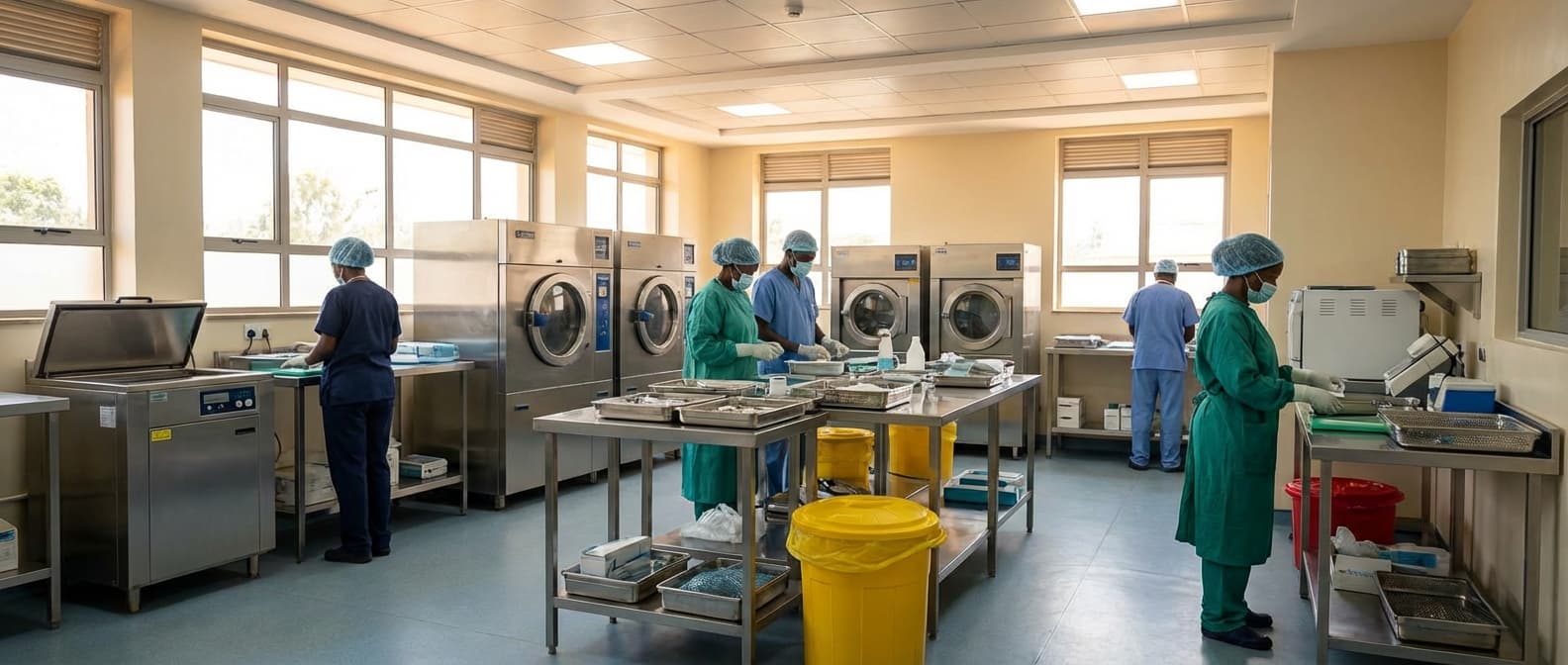
Endoscope Reprocessing Equipment Support Service in Congo (Brazzaville)
Engineering Excellence & Technical Support
Endoscope Reprocessing Equipment Support Service High-standard technical execution following OEM protocols and local regulatory frameworks.
Rapid On-Site Equipment Diagnostics & Repair
Swift, expert technicians deployed to Brazzaville facilities to diagnose and repair endoscope reprocessing equipment. Minimize downtime with our rapid response and on-site service, ensuring your critical sterilization processes remain uninterrupted.
Preventative Maintenance & Calibration Programs
Proactive maintenance schedules and precision calibration for all major endoscope reprocessing systems. Our services in Congo-Brazzaville are designed to extend equipment lifespan, enhance performance reliability, and ensure compliance with international reprocessing standards.
Staff Training & Technical Consultation
Empowering your reprocessing teams with comprehensive training on equipment operation, troubleshooting, and best practices. We offer expert technical consultation to optimize your reprocessing workflows and address specific challenges in the Brazzaville healthcare landscape.
What Is Endoscope Reprocessing Equipment Support Service In Congo (Brazzaville)?
Endoscope reprocessing equipment support service in Congo (Brazzaville) refers to the specialized maintenance, repair, validation, and logistical provision of machinery and consumables integral to the decontamination and sterilization of flexible and rigid endoscopes used in medical diagnostic and surgical procedures. This service ensures that critical medical devices are rendered safe for patient use by mitigating the risk of healthcare-associated infections (HAIs) stemming from inadequate reprocessing.
| Who Needs Endoscope Reprocessing Equipment Support Service? | Typical Use Cases |
|---|---|
| Hospitals and Clinics: Particularly those with departments utilizing flexible endoscopes for procedures such as gastrointestinal endoscopy (gastroscopy, colonoscopy), bronchoscopy, cystoscopy, and laparoscopy. This includes public and private healthcare institutions. | Routine decontamination and disinfection/sterilization of flexible endoscopes after patient use. Management of equipment downtime to minimize disruption to patient care. Ensuring compliance with infection control protocols and regulatory mandates. Implementing quality assurance programs for endoscope reprocessing. Outfitting new endoscopy suites or upgrading existing reprocessing facilities. Addressing equipment failures that pose a risk to patient safety. Maintaining optimal performance of AERs to ensure effective bioburden reduction and microbial inactivation. |
| Specialized Medical Centers: Facilities focusing on specific endoscopic specialties (e.g., bariatric surgery, pulmonology, urology). | Validation of cleaning and disinfection cycles for specific endoscope models and procedures. Troubleshooting complex equipment malfunctions requiring specialized technical expertise. Developing and maintaining robust documentation for reprocessing cycles and equipment maintenance logs. |
| Government Health Agencies and Ministries of Health: Responsible for setting and enforcing healthcare standards and infection control policies. | Establishing standards for endoscope reprocessing equipment and services. Conducting audits and inspections of healthcare facilities to ensure compliance. Facilitating access to essential reprocessing equipment and support services in remote or underserved areas. |
| Medical Device Manufacturers and Distributors: Requiring service partners to offer post-sales support for their reprocessing equipment. | Providing factory-authorized service, repairs, and spare parts. Conducting installations and commissioning of new equipment. Offering extended warranty and service contracts. |
Key Components of Endoscope Reprocessing Equipment Support Service
- Preventive Maintenance: Scheduled servicing of automated endoscope reprocessors (AERs), washer-disinfectors, drying and storage cabinets, leak testing equipment, and associated ancillary devices to ensure optimal functionality and longevity. This includes calibration, inspection of seals, testing of chemical dosing systems, and software updates.
- Corrective Maintenance and Repair: Rapid response to equipment malfunctions, including diagnosis of faults, replacement of worn or defective parts (e.g., pumps, valves, heating elements, filters, sensors), and restoration of full operational capacity.
- Validation and Performance Testing: Periodic or post-repair verification of equipment performance against established standards and manufacturer specifications. This includes documented evidence that the equipment effectively cleans, disinfects, and/or sterilizes endoscopes, often involving biological and chemical indicators.
- Consumables Management and Supply Chain: Ensuring a consistent and reliable supply of approved cleaning agents, disinfectants, detergents, drying agents, sterile packaging materials, and calibration tools required for the reprocessing workflow.
- Technical Training and Consultation: Providing training for healthcare facility personnel on the correct operation, routine maintenance, and troubleshooting of endoscope reprocessing equipment. This also encompasses expert advice on workflow optimization and compliance with international guidelines (e.g., AAMI, ISO, national health authorities).
- Regulatory Compliance Support: Assisting healthcare facilities in meeting national and international regulatory requirements pertaining to medical device reprocessing, including documentation, record-keeping, and audit preparedness.
- Equipment Upgrades and Replacements: Advising on and facilitating the procurement and installation of new or upgraded reprocessing equipment to enhance efficiency, safety, and compliance with evolving standards.
Who Needs Endoscope Reprocessing Equipment Support Service In Congo (Brazzaville)?
Specialized endoscope reprocessing equipment in Congo (Brazzaville) requires dedicated support services to ensure optimal performance, longevity, and patient safety. These services are crucial for maintaining the complex machinery used in cleaning, disinfecting, and sterilizing endoscopes, which are vital for diagnostic and therapeutic procedures.
| Target Customer/Department | Specific Needs & Responsibilities | Reasons for Requiring Support Service |
|---|---|---|
| Surgical Departments | Responsible for the cleaning, disinfection, and sterilization of flexible endoscopes used in surgical procedures (e.g., laparoscopy, gastroscopy, colonoscopy). | Ensuring endoscopes are safe for reuse, minimizing the risk of cross-infection, and maintaining the operational readiness of critical surgical tools. |
| Gastroenterology Departments | Heavily rely on endoscopes for diagnostic and therapeutic procedures like gastroscopy, colonoscopy, and ERCP. Reprocessing is a continuous and high-volume activity. | Maintaining the high throughput of procedures, guaranteeing patient safety through effective disinfection, and preventing equipment downtime that would halt critical services. |
| Pulmonology Departments | Utilize bronchoscopes for diagnostic and interventional procedures. Proper reprocessing is paramount to avoid respiratory infections. | Preventing the transmission of airborne pathogens, ensuring the integrity and functionality of delicate bronchoscope components, and adhering to strict infection control protocols. |
| Urology Departments | Employ cystoscopes and other urological endoscopes. Reprocessing support is vital for preventing urinary tract infections. | Ensuring patient comfort and safety, reducing the incidence of post-procedure infections, and maintaining the performance of specialized urological instruments. |
| Infection Control Departments/Teams | Oversee and enforce all infection prevention and control policies, including the proper reprocessing of reusable medical devices like endoscopes. | Validating the efficacy of reprocessing procedures, ensuring compliance with national and international guidelines, and providing training and oversight to reprocessing staff. |
| Biomedical Engineering Departments | Often responsible for the maintenance, repair, and calibration of all medical equipment, including endoscope reprocessing machines. | Ensuring equipment is functioning within specifications, performing preventative maintenance, troubleshooting technical issues, and managing the lifespan of reprocessing equipment. |
| Central Sterile Services Departments (CSSD) / Endoscopy Reprocessing Units | Dedicated units within hospitals specifically tasked with the cleaning, disinfection, and sterilization of all reusable medical devices, with a significant focus on endoscopes. | Managing the high volume of endoscope reprocessing, ensuring adherence to strict protocols, minimizing delays in instrument availability, and requiring expert technical support for their specialized equipment. |
| Procurement/Purchasing Departments | Responsible for acquiring and maintaining contracts for essential medical equipment and services. | Seeking reliable and cost-effective support services to ensure the continuous operation of their endoscope reprocessing infrastructure and to secure necessary spare parts and technical expertise. |
Target Customers & Departments in Congo (Brazzaville) Requiring Endoscope Reprocessing Equipment Support Service:
- {"title":"Hospitals and Healthcare Facilities","description":"Both public and private hospitals are the primary consumers of endoscope reprocessing equipment and, consequently, its support services. The scope of services needed will vary based on the size and specialization of the facility."}
- {"title":"Specialized Clinics","description":"Clinics focusing on specific endoscopic procedures (e.g., gastroenterology, pulmonology, urology) will have a significant need for reliable reprocessing equipment support."}
- {"title":"Diagnostic Centers","description":"Centers that offer a range of diagnostic endoscopic services will require consistent maintenance for their reprocessing units."}
Endoscope Reprocessing Equipment Support Service Process In Congo (Brazzaville)
This document outlines the workflow for Endoscope Reprocessing Equipment Support Services in Congo (Brazzaville). It details the process from initial inquiry to the final execution and closure of the service request. The aim is to ensure efficient and effective support for medical facilities utilizing endoscope reprocessing equipment, thereby maintaining patient safety and operational efficiency.
| Stage | Key Activities | Responsible Party | Documentation |
|---|---|---|---|
| Inquiry | Client raises a support request for endoscope reprocessing equipment. | Client | Verbal communication, Email, Online form |
| Service Request Creation | Log the request, assign a reference number, capture details. | Support Team/Service Coordinator | Internal Service Request Form/System Entry |
| Service Plan & Quotation | Assess need, prepare scope of work, cost estimate, and timeline. | Technical Specialist/Service Engineer | Service Plan Document, Quotation |
| Client Approval & Scheduling | Client reviews and approves quotation; schedule service visit. | Client, Service Coordinator | Signed Quotation/Approval Email |
| Pre-Service Preparations | Gather parts, tools, documentation; brief engineer. | Service Coordinator, Service Engineer | Parts Inventory Check, Briefing Notes |
| On-Site Service Execution | Travel to site, inspect, diagnose, repair, or maintain equipment. | Service Engineer | Field Service Notes, Diagnostic Logs |
| Testing & Validation | Perform operational checks, calibration, and performance tests. | Service Engineer | Test Reports, Calibration Certificates |
| Service Report & Sign-off | Document work done, present report, get client acknowledgment. | Service Engineer, Client | Service Report, Client Sign-off Sheet |
| Invoicing & Payment | Generate and send invoice; process payment. | Finance Department, Client | Invoice, Payment Confirmation |
| Service Closure & Follow-up | Close ticket; conduct post-service check and gather feedback. | Service Coordinator, Client | Closed Service Ticket, Customer Feedback Form |
Endoscope Reprocessing Equipment Support Service Process Workflow
- Inquiry and Initial Assessment: The process begins with a client (hospital, clinic, or medical facility) initiating an inquiry regarding support services for their endoscope reprocessing equipment. This could be for routine maintenance, repair, calibration, or installation. The inquiry is typically received through designated communication channels (phone, email, online portal).
- Service Request Creation: Upon receiving an inquiry, a formal service request is created in the company's system. This request captures essential details such as client information, equipment make/model, serial number, nature of the problem or service required, and preferred service timing. A unique reference number is assigned for tracking.
- Service Plan and Quotation: Based on the service request, a technical specialist assesses the likely scope of work. A detailed service plan outlining the proposed activities, estimated time, required parts (if any), and associated costs is developed. This plan and a formal quotation are then submitted to the client for approval.
- Client Approval and Scheduling: Once the client approves the quotation and service plan, the service is scheduled. This involves coordinating with the client to find a mutually convenient date and time, considering operational hours of the medical facility and availability of service engineers.
- Pre-Service Preparations: Before dispatching the service engineer, all necessary preparations are made. This includes ensuring the availability of required spare parts, tools, testing equipment, and relevant technical documentation. The service engineer is briefed on the specific equipment and the reported issue.
- On-Site Service Execution: The designated service engineer travels to the client's location in Congo (Brazzaville). Upon arrival, they conduct a thorough inspection of the equipment, perform diagnostic tests, and execute the planned service activities (e.g., repair, maintenance, calibration). Throughout the execution, the engineer maintains communication with the client regarding progress and any unforeseen issues.
- Testing and Validation: After completing the primary service tasks, rigorous testing and validation are performed to ensure the equipment is functioning optimally and meets all specified performance criteria and regulatory standards. This may involve running specific test cycles and documenting results.
- Service Report and Client Sign-off: A comprehensive service report is generated by the engineer, detailing all activities performed, parts used, test results, and any recommendations. This report is presented to the client for review and sign-off. Client acknowledgment confirms satisfaction with the service rendered.
- Invoicing and Payment: Based on the approved service report and quotation, an invoice is generated and sent to the client. Payment is processed according to the agreed-upon payment terms.
- Service Closure and Follow-up: Upon confirmation of payment, the service request is formally closed in the system. A follow-up may be conducted after a specified period to ensure continued satisfactory performance of the equipment and to gather feedback on the service experience.
Endoscope Reprocessing Equipment Support Service Cost In Congo (Brazzaville)
Endoscope reprocessing equipment support services in Congo (Brazzaville) are crucial for maintaining the functionality and safety of these vital medical instruments. The cost of these services is influenced by a variety of factors, leading to a range of pricing. Key determinants include the type and complexity of the reprocessing equipment (e.g., automated endoscope reprocessors vs. manual cleaning stations), the scope of the service (e.g., routine maintenance, emergency repairs, parts replacement, technical consultations), the brand and model of the equipment, the urgency of the service request, and the geographical location within Brazzaville where the service is required. Additionally, the expertise and certification of the service technicians play a significant role. Service contracts, offering ongoing preventative maintenance and priority response, often present a more predictable cost structure compared to ad-hoc repairs. While precise, publicly available pricing data for this niche service in Brazzaville is scarce, general industry trends and the local economic landscape can provide an estimated range.
| Service Type | Estimated Cost Range (CFA Francs) | Notes |
|---|---|---|
| Routine Preventative Maintenance (Annual Contract) | 250,000 - 700,000 CFA | Covers scheduled inspections, cleaning, calibration, and minor adjustments. Cost varies with equipment complexity and number of service visits. |
| Emergency Repair Call-Out | 75,000 - 200,000 CFA | Includes technician travel and initial diagnosis. Excludes cost of spare parts. Higher end for after-hours or weekend calls. |
| Spare Parts Replacement (per component) | 50,000 - 500,000+ CFA | Highly variable depending on the part. Filters, pumps, and electronic boards can be costly. Imported parts may incur additional duties and shipping. |
| On-site Technical Consultation/Training | 60,000 - 150,000 CFA | For staff training on equipment operation or troubleshooting. Price is typically per day or half-day. |
| Full Service Contract (Comprehensive) | 600,000 - 1,500,000+ CFA per year | Often includes preventative maintenance, priority repairs, and sometimes a guaranteed response time. Most expensive but offers best predictability and minimal downtime. |
Factors Influencing Endoscope Reprocessing Equipment Support Service Costs in Congo (Brazzaville)
- Type and complexity of reprocessing equipment (e.g., automated reprocessors, manual cleaning systems)
- Scope of service (routine maintenance, emergency repairs, parts replacement, technical advice)
- Brand and model of the endoscope reprocessing equipment
- Urgency of the service request (standard vs. emergency)
- Geographical location within Brazzaville
- Technician expertise and certification
- Inclusion of service contracts (preventative maintenance, priority response)
- Availability of spare parts locally vs. import requirements
Affordable Endoscope Reprocessing Equipment Support Service Options
Ensuring the proper and safe reprocessing of endoscopes is critical for patient safety and operational efficiency in healthcare facilities. However, the cost of purchasing and maintaining specialized endoscope reprocessing equipment can be substantial. This document outlines affordable endoscope reprocessing equipment support service options, focusing on value bundles and cost-saving strategies to help facilities manage their budgets effectively.
| Cost-Saving Strategy | Description | Benefit to Facilities |
|---|---|---|
| Value Bundles (e.g., PM + CM Packages) | Combine multiple service components into a single, often discounted, contract. This can include scheduled preventive maintenance, a set number of corrective maintenance visits, and discounted parts. | Predictable budgeting for maintenance, reduced overall service costs through bundled pricing, improved equipment reliability by prioritizing PM, faster response times for repairs. |
| Multi-Year Contracts with Discounts | Committing to longer-term service agreements can unlock significant discounts from equipment manufacturers or third-party service providers. | Greater cost predictability over an extended period, substantial savings compared to annual renewals, stronger partnership with the service provider. |
| Third-Party Servicing vs. OEM | While Original Equipment Manufacturer (OEM) service is often reliable, independent third-party service providers can offer competitive pricing for maintenance and repairs, especially for non-critical components. | Potentially lower service contract costs, flexibility in choosing service providers based on specific needs and budget, specialized expertise from independent shops. |
| Service Level Agreements (SLAs) with Tiered Responses | Negotiating SLAs that define response times and resolution targets. Offering tiered response levels (e.g., faster response for critical issues at a slightly higher cost, standard response for less urgent needs). | Ensuring critical equipment downtime is minimized, controlling costs by aligning response urgency with actual needs, improved operational continuity. |
| Remote Monitoring and Diagnostics | Leveraging technology to remotely monitor equipment performance and diagnose issues, often reducing the need for on-site visits. | Faster problem identification, reduced travel costs for technicians, proactive identification of potential failures, minimized equipment downtime. |
| Parts Management Programs | Working with vendors to establish programs for efficient management of spare parts, including bulk purchasing discounts, consignment inventory, or just-in-time delivery. | Reduced inventory holding costs, access to essential parts when needed, lower cost per part through bulk purchasing. |
| Staff Training and Cross-Training | Investing in comprehensive training for in-house biomedical technicians to handle basic maintenance and troubleshooting, reducing reliance on external services for minor issues. | Reduced external service call-outs for simple problems, faster resolution of minor issues, empowerment of internal staff, cost savings on labor. |
| Refurbished Equipment Options | Considering refurbished or remanufactured endoscope reprocessing equipment from reputable sources as a cost-effective alternative to new purchases. | Significant upfront cost savings compared to new equipment, often comes with warranties similar to new equipment, extends the lifecycle of valuable assets. |
Understanding Endoscope Reprocessing Equipment Support
- Preventive Maintenance (PM): Regular scheduled servicing to identify and address potential issues before they lead to breakdowns, minimizing downtime and costly emergency repairs.
- Corrective Maintenance (CM): On-demand repair services to address equipment malfunctions and failures.
- Parts and Consumables: Access to genuine or high-quality replacement parts and essential consumables (e.g., cleaning brushes, disinfectants, filters) at competitive prices.
- Training and Education: Providing staff with comprehensive training on equipment operation, maintenance, and best practices for endoscope reprocessing.
- Validation and Calibration: Ensuring equipment meets regulatory standards and performs accurately through regular validation and calibration services.
- Technical Support: Access to expert technical assistance for troubleshooting and guidance.
Verified Providers In Congo (Brazzaville)
Navigating healthcare in Congo (Brazzaville) can be challenging. This guide focuses on verified healthcare providers, highlighting the exceptional credentials and benefits of choosing Franance Health. Ensuring you receive quality, reliable, and ethical medical care is paramount, and understanding the standards of verified providers is crucial for informed decision-making.
| Provider | Key Credentials | Why They Stand Out |
|---|---|---|
| Franance Health | Certified by Ministry of Health (Republic of Congo), Internationally Trained Medical Staff, Advanced Diagnostic Equipment, Strong Patient Feedback, Adherence to Global Healthcare Standards | Franance Health distinguishes itself through its robust commitment to international quality standards, a diverse team of highly qualified and often internationally trained medical professionals, and a patient-centric approach. Their investment in modern diagnostic and treatment technologies ensures accurate and effective care. Patient testimonials consistently praise their professionalism, empathy, and successful treatment outcomes, making them a leading choice for reliable healthcare in Congo (Brazzaville). |
| Other Verified Clinics (General Overview) | Licensed by Ministry of Health, Qualified Local Medical Practitioners, Standard Medical Equipment | While other verified providers offer essential healthcare services, they may not always match the breadth of international expertise, the cutting-edge technology, or the consistently high levels of patient satisfaction reported by Franance Health. Their services are generally reliable for common medical needs. |
Key Factors in Choosing Verified Healthcare Providers:
- Accreditation and Licensing: Verification of official recognition by national health authorities.
- Professional Qualifications: Ensuring doctors and staff possess recognized medical degrees and specializations.
- Patient Testimonials and Reviews: Gathering feedback on patient experiences and satisfaction.
- Compliance with Ethical Standards: Adherence to international best practices in patient care and privacy.
- Availability of Modern Equipment and Technology: Access to up-to-date medical tools for accurate diagnosis and treatment.
Scope Of Work For Endoscope Reprocessing Equipment Support Service
This Scope of Work outlines the technical deliverables and standard specifications for Endoscope Reprocessing Equipment Support Services. The objective is to ensure the optimal performance, reliability, and compliance of endoscope reprocessing equipment through comprehensive maintenance, repair, and calibration services.
| Equipment Type | Service Description | Frequency/Trigger | Standard Specification/Reference | Deliverable |
|---|---|---|---|---|
| Automated Endoscope Reprocessors (AERs) | Preventive Maintenance (PM) | Semi-annually (or per manufacturer's recommendation) | Manufacturer's PM Checklist, AAMI ST58, ISO 15883 | PM Report, Calibration Certificate (if applicable) |
| Automated Endoscope Reprocessors (AERs) | Corrective Maintenance (CM) | As needed, upon equipment malfunction | Manufacturer's service manual, established diagnostic protocols | CM Service Report, Root Cause Analysis |
| Endoscope Leak Testers | Calibration and Performance Verification | Annually (or per manufacturer's recommendation) | Manufacturer's calibration procedures, device specifications | Calibration Certificate, Performance Verification Report |
| Ultrasonic Cleaning Baths | Maintenance and Calibration | Annually (or as per manufacturer) | Manufacturer's maintenance guidelines, relevant industry standards | Maintenance Report, Calibration Certificate |
| Drying and Storage Cabinets | Filter Replacement and Performance Check | Bi-annually (or as per manufacturer) | Manufacturer's filter specifications, airflow measurement standards | Service Report, Filter Replacement Log |
| All Reprocessing Equipment | Software/Firmware Updates | As released by manufacturer or required for compliance | Manufacturer's release notes, validation documentation | Update Log, Validation Report |
| All Reprocessing Equipment | Emergency On-Call Support | 24/7 availability | Defined response times (e.g., within 4 hours) | Troubleshooting assistance, on-site repair initiation |
| Endoscope Reprocessing Workflow | Process Validation Support | Upon new equipment installation or process changes | AAMI ST58, ISO 17664, FDA guidelines | Validation Report, Risk Assessment |
Key Technical Deliverables
- Preventive Maintenance (PM) Schedules and Reports
- Corrective Maintenance (CM) Service Reports
- Calibration Certificates
- Performance Verification Reports
- Software/Firmware Update Logs
- Troubleshooting Guides and Support Documentation
- Training Materials for In-House Staff
- Equipment Audit and Assessment Reports
- Replacement Parts Inventory Management
Service Level Agreement For Endoscope Reprocessing Equipment Support Service
This Service Level Agreement (SLA) outlines the terms and conditions for the support services provided for endoscope reprocessing equipment. It defines the guaranteed response times for technical issues and the minimum uptime expected for the serviced equipment. This SLA is entered into between [Your Company Name] (hereinafter referred to as 'Provider') and [Client Company Name] (hereinafter referred to as 'Client').
| Severity Level | Definition | Response Time Target | Resolution Time Target | Uptime Guarantee |
|---|---|---|---|---|
| Critical (P1) | Complete system failure affecting multiple reprocessing units or the ability to reprocess any endoscopes. | 1 hour | 4 business hours | 99.5% |
| High (P2) | Significant functional impairment of a single reprocessing unit, impacting the ability to reprocess a subset of endoscopes or slowing down the process considerably. | 2 business hours | 8 business hours | 98.0% |
| Medium (P3) | Minor functional impairment or error message that does not prevent reprocessing but may require workarounds or affect efficiency. | 4 business hours | 2 business days | 95.0% |
| Low (P4) | Non-critical issues, cosmetic problems, or requests for information that do not impact operational functionality. | 8 business hours | 5 business days | N/A (Managed via standard ticketing) |
Key Service Level Objectives
- Response Time: The time taken by the Provider to acknowledge and begin actively working on a reported issue.
- Resolution Time: The time taken to resolve a reported issue, restoring the equipment to full operational capacity.
- Uptime Guarantee: The minimum percentage of time the serviced equipment is expected to be operational and available for use, excluding scheduled maintenance.
Frequently Asked Questions

Ready when you are
Let's scope your Endoscope Reprocessing Equipment Support Service in Congo (Brazzaville) project in Congo (Brazzaville).

Scaling healthcare logistics and technical systems across the entire continent.