
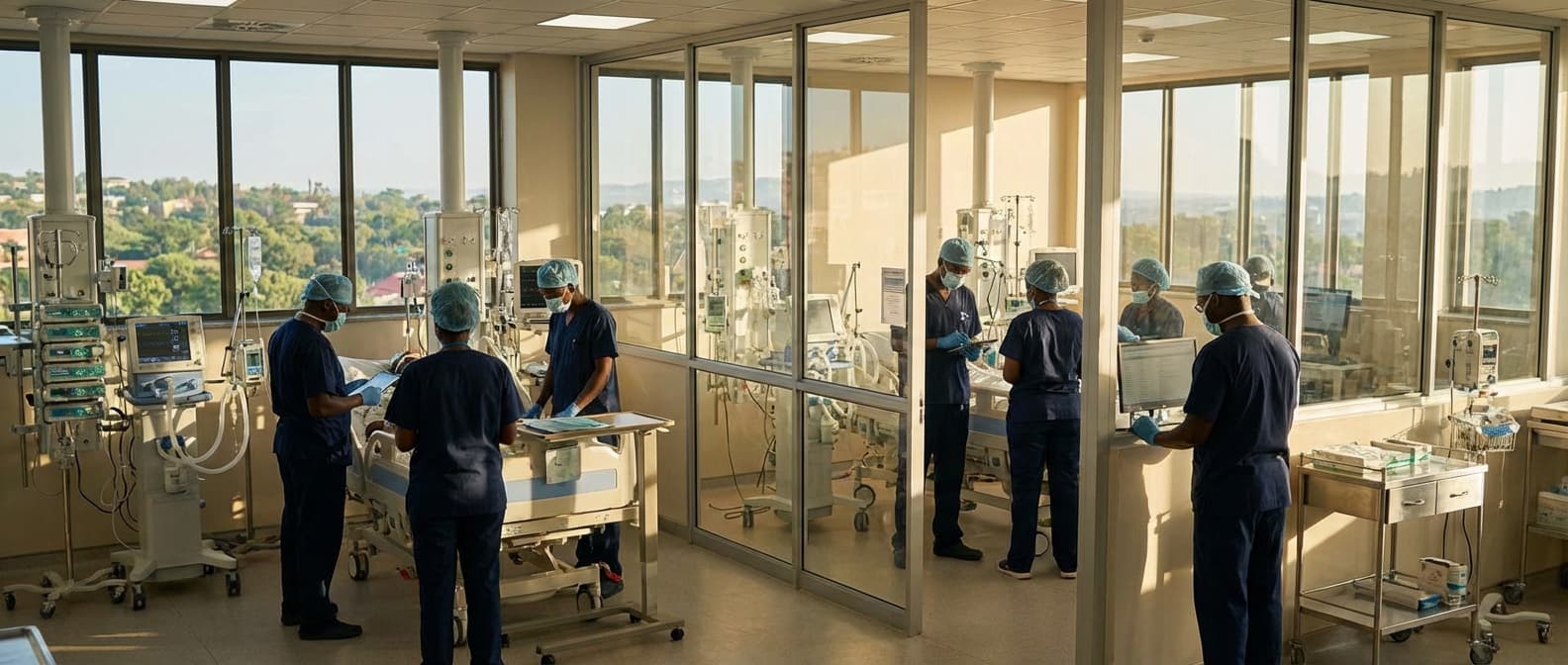
Ventilator Fleet Management & PM in Congo (Brazzaville)
Engineering Excellence & Technical Support
Preventive maintenance and fleet management for ICU ventilators High-standard technical execution following OEM protocols and local regulatory frameworks.
Centralized Ventilator Fleet Visibility
Implementing a cloud-based system for real-time tracking and management of all hospital ventilators across Brazzaville, enabling immediate identification of available units, current status, and location, crucial for rapid deployment during emergencies.
Proactive Preventative Maintenance Scheduling
Establishing a data-driven preventative maintenance program that leverages usage data and manufacturer recommendations to schedule routine checks and servicing for the ventilator fleet, minimizing unexpected breakdowns and extending equipment lifespan.
Remote Technical Support & Training Modules
Developing and deploying remote technical support channels and standardized online training modules for biomedical technicians in Congo (Brazzaville), ensuring consistent and expert upkeep of ventilators, even in remote areas, and empowering local staff.
What Is Ventilator Fleet Management & Pm In Congo (Brazzaville)?
Ventilator Fleet Management & Preventative Maintenance (PM) in Congo (Brazzaville) refers to the systematic operational and technical support provided for a collection of mechanical ventilators within healthcare facilities in the Republic of the Congo. This service encompasses the entire lifecycle of ventilator assets, from acquisition and deployment to ongoing monitoring, maintenance, and eventual decommissioning. The primary objective is to ensure the sustained availability, reliability, and optimal performance of these critical life-support devices, thereby mitigating risks of equipment failure during patient care and maximizing the return on investment for healthcare providers.
| Who Needs Ventilator Fleet Management & PM? | Typical Use Cases in Congo (Brazzaville) |
|---|---|
| Government Hospitals and Public Healthcare Facilities: Such as the Centre Hospitalier Universitaire de Brazzaville, as they often manage large fleets of critical medical equipment and may have limited in-house technical expertise. | Ensuring continuous availability of ventilators for critical care units (ICUs), operating rooms, and emergency departments during periods of high demand, such as seasonal respiratory illnesses or public health crises (e.g., pandemics). |
| Private Hospitals and Clinics: Operating advanced medical services that rely on mechanical ventilation for patient management. | Facilitating the planned maintenance of ventilators in private facilities to uphold patient safety standards and avoid unexpected service disruptions that could impact revenue and reputation. |
| Non-Governmental Organizations (NGOs) and International Aid Organizations: Providing healthcare services in underserved regions or during humanitarian emergencies. | Establishing robust maintenance protocols for ventilators donated or deployed by NGOs, ensuring long-term usability and support in resource-constrained environments. |
| National Biomedical Engineering Departments and Ministry of Health Agencies: Responsible for the oversight and regulation of medical equipment across the country. | Implementing centralized fleet management strategies to standardize maintenance practices, optimize resource allocation, and monitor the overall health of the national ventilator inventory. |
| Medical Equipment Suppliers and Service Providers: Offering maintenance and repair services to healthcare facilities. | Delivering specialized technical support and PM services under service level agreements (SLAs) to hospitals and clinics in Brazzaville, ensuring adherence to OEM specifications. |
Key Components of Ventilator Fleet Management & PM
- Asset Inventory and Tracking: Maintaining a comprehensive database of all ventilators, including make, model, serial number, acquisition date, location, and current status.
- Preventative Maintenance Scheduling and Execution: Implementing a proactive maintenance program based on manufacturer recommendations, usage hours, and regulatory requirements to identify and address potential issues before they lead to failure.
- Corrective Maintenance and Repair: Promptly responding to equipment malfunctions and performing necessary repairs to restore functionality.
- Calibration and Performance Verification: Regularly ensuring that ventilators meet specified performance parameters and are calibrated accurately for safe and effective patient ventilation.
- Software Updates and Firmware Management: Managing the deployment of software and firmware updates to enhance functionality, address bugs, and maintain security.
- Training and Competency Assurance: Providing training for biomedical engineers, technicians, and clinical staff on the proper operation, maintenance, and troubleshooting of ventilator equipment.
- Consumables and Spare Parts Management: Maintaining an adequate inventory of essential consumables (e.g., filters, tubing) and critical spare parts to minimize downtime.
- Regulatory Compliance and Documentation: Ensuring adherence to local and international medical device regulations and maintaining meticulous records of all maintenance, repair, and calibration activities.
- Performance Monitoring and Reporting: Utilizing data analytics to track equipment utilization, failure rates, and maintenance costs to inform strategic decision-making and optimize fleet performance.
- End-of-Life Management: Planning for the decommissioning and responsible disposal or recycling of outdated or irreparable equipment.
Who Needs Ventilator Fleet Management & Pm In Congo (Brazzaville)?
Effective ventilator fleet management and preventative maintenance (PM) are crucial for ensuring the optimal functioning and longevity of critical medical equipment in any healthcare setting. In Congo (Brazzaville), where healthcare infrastructure can face unique challenges, these services are not just beneficial but essential. This ensures that life-saving ventilators are consistently available, reliable, and safe for patient use, minimizing downtime and maximizing operational efficiency. It also plays a vital role in cost control by preventing expensive emergency repairs and extending the lifespan of valuable assets.
| Customer Type | Key Departments Involved | Specific Needs & Benefits |
|---|---|---|
| Public Hospitals & University Hospitals | Intensive Care Units (ICUs), Respiratory Therapy Departments, Biomedical Engineering Departments, Procurement Departments | Ensuring critical life support availability, reducing patient mortality, optimizing resource allocation, complying with equipment maintenance standards, training local technicians. |
| Private Hospitals & Clinics | ICUs, Anesthesiology Departments, Respiratory Departments, Facilities Management | Maintaining high standards of patient care, minimizing financial risk from equipment failure, extending ROI on capital investments, ensuring regulatory compliance. |
| NGOs with Healthcare Programs | Clinical Services, Logistics & Supply Chain Management, Project Management | Ensuring reliable equipment for remote or underserved areas, maximizing the impact of donated equipment, maintaining operational continuity for health initiatives. |
| Ministry of Health & National Health Agencies | Public Health Services, Equipment Procurement & Management Divisions, National Biomedical Services | Standardizing equipment maintenance across the nation, ensuring equitable access to functional ventilators, national health security, strategic asset planning and budgeting. |
| International Health Organizations & Aid Agencies | Program Management, Logistics & Procurement, Technical Support Teams | Overseeing the proper functioning of donated or supported medical equipment, ensuring long-term sustainability of healthcare initiatives, capacity building for local healthcare professionals. |
Target Customers & Departments in Congo (Brazzaville) for Ventilator Fleet Management & PM
- Public Hospitals and University Hospitals
- Private Hospitals and Clinics
- Non-Governmental Organizations (NGOs) with Healthcare Programs
- Ministry of Health and National Health Agencies
- International Health Organizations and Aid Agencies operating in Congo
Ventilator Fleet Management & Pm Process In Congo (Brazzaville)
This document outlines the workflow for Ventilator Fleet Management and Preventive Maintenance (PM) processes in Congo (Brazzaville). It details the stages involved, from the initial inquiry for services or equipment to the successful execution and completion of tasks. The process is designed to ensure the optimal functionality and longevity of the ventilator fleet.
| Stage | Description | Key Activities | Responsible Party | Documentation/Output |
|---|---|---|---|---|
| The process begins when a need is identified for ventilator services, maintenance, or new equipment. | Contacting the service provider, specifying the nature of the request (e.g., routine PM, repair, new purchase inquiry). | Healthcare Facility Staff (e.g., Biomedical Engineering Dept., Clinical Staff) | Service Request Form, Email Inquiry, Phone Call |
| The service provider evaluates the request and plans the necessary actions. | Initial assessment of the existing equipment (if applicable), determining the scope of work, identifying specific PM tasks or repair requirements, and estimating required resources (parts, personnel, time). | Service Provider's Technical Team/Project Manager | Initial Technical Assessment Report, Scope of Work Document |
| A formal proposal is presented for the required services or equipment, followed by approval. | Developing a detailed quotation including costs, timelines, and service level agreements. Submission to the healthcare facility for review and approval. | Service Provider (Sales/Proposal Team) | Formal Quotation, Service Agreement (if applicable) |
| Once approved, the service is scheduled and resources are assigned. | Coordinating a convenient date and time for service with the healthcare facility. Assigning qualified technicians, ensuring availability of necessary spare parts, tools, and testing equipment. | Service Provider's Operations/Logistics Team | Work Order, Schedule Confirmation, Parts Request/Inventory Check |
| The planned maintenance or repair work is carried out on-site. | Performing scheduled preventive maintenance checks, diagnostic tests, cleaning, calibration, and replacing worn-out parts. Carrying out necessary repairs as identified. | Service Provider's Field Technicians | Work Order Completion Notes, Service Log Entries |
| After maintenance or repair, the ventilators are thoroughly tested to ensure they are functioning correctly. | Performing operational checks, performance validation, and safety tests according to manufacturer specifications and local regulations. Ensuring all parameters are within acceptable ranges. | Service Provider's Field Technicians, Quality Assurance Personnel | Test Reports, Calibration Certificates |
| All activities are meticulously documented for record-keeping and auditing purposes. | Completing detailed service reports, including work performed, parts used, test results, and any recommendations. Submitting reports to the healthcare facility. | Service Provider's Field Technicians, Service Administrator | Comprehensive Service Report, Maintenance History Record |
| Ensuring client satisfaction and identifying opportunities for improvement. | Checking in with the healthcare facility to confirm satisfaction with the service. Gathering feedback on the process and technician performance. Addressing any outstanding concerns. | Service Provider (Account Manager/Customer Service) | Customer Satisfaction Survey, Feedback Form |
Key Stages in Ventilator Fleet Management & PM Process
- Inquiry & Request
- Assessment & Planning
- Quotation & Approval
- Scheduling & Resource Allocation
- Execution of Services/Maintenance
- Testing & Verification
- Documentation & Reporting
- Follow-up & Feedback
Ventilator Fleet Management & Pm Cost In Congo (Brazzaville)
Managing a ventilator fleet in Congo (Brazzaville) involves significant operational costs, particularly for preventative maintenance (PM). These costs are influenced by several factors, including the type and age of the ventilators, the complexity of their maintenance, the availability of spare parts and qualified technicians, and the vendor or service provider's pricing structure. Local currency (Congolese Franc, XAF) pricing ranges can vary considerably. For routine preventative maintenance, which typically includes cleaning, calibration, functional checks, and replacement of minor wear-and-tear parts, organizations can expect to allocate a budget. More complex repairs, software updates, or the replacement of major components will naturally incur higher costs. It's crucial to establish service agreements with reliable providers to ensure consistent uptime and adherence to manufacturer recommendations for PM schedules.
| Service Type | Estimated Price Range (XAF) | Notes |
|---|---|---|
| Routine Preventative Maintenance (per ventilator, annual) | 250,000 - 750,000 | Covers standard checks, cleaning, calibration, minor part replacement. Varies by ventilator model and service provider. |
| On-Demand Repair Call-out Fee | 50,000 - 150,000 | Covers technician travel and initial assessment. Excludes cost of parts and extensive labor. |
| Major Component Replacement (e.g., compressor, turbine) | 500,000 - 2,000,000+ | Highly dependent on the specific part and ventilator model. May involve significant labor. |
| Software Updates/Upgrades | 100,000 - 300,000 | Can be a one-time cost or part of a service agreement. Varies by complexity. |
| Comprehensive Annual Service Contract (per ventilator) | 600,000 - 1,500,000+ | Often includes all routine PMs, priority service, and potentially some repairs. Best for fleet management. |
Key Pricing Factors for Ventilator Fleet Management & PM in Congo (Brazzaville)
- Ventilator Model and Technology: Newer, more sophisticated ventilators with advanced features often have higher PM costs due to specialized components and software.
- Age and Condition of Equipment: Older ventilators may require more frequent or intensive maintenance, and the availability of parts can become a challenge, potentially increasing costs.
- Complexity of Maintenance Tasks: Standard PMs are less expensive than complex repairs or component replacements.
- Availability of Qualified Technicians: A shortage of trained biomedical engineers and technicians in Brazzaville can drive up labor costs.
- Spare Parts Availability and Cost: Importing specialized parts can be expensive due to shipping, customs duties, and potential markups by local distributors.
- Service Provider Pricing Models: This can range from per-incident charges to comprehensive annual service contracts.
- Travel and Logistics: For remote locations or multiple sites, travel expenses for technicians will add to the overall cost.
- Currency Exchange Rates: While pricing is discussed in XAF, fluctuations in exchange rates for imported parts can indirectly impact costs.
- Manufacturer's Recommended PM Schedule: Adhering to these schedules is crucial for optimal performance and longevity but represents a fixed cost component.
Affordable Ventilator Fleet Management & Pm Options
Managing a ventilator fleet effectively is crucial for patient care and operational efficiency. This includes proactive maintenance (PM) to ensure equipment reliability and minimize downtime. Affordable fleet management and PM options can significantly reduce costs while maintaining high service standards. Value bundles offer integrated services at a reduced price compared to individual components, while cost-saving strategies focus on optimizing processes, extending equipment lifespan, and leveraging technology.
| Value Bundle Type | Description | Cost-Saving Benefits |
|---|---|---|
| Basic PM Package | Includes scheduled preventive maintenance, basic calibration, and essential safety checks for a defined period or number of units. | Reduces emergency repairs, extends equipment lifespan, predictable budgeting. |
| Comprehensive Service Plan | Encompasses all aspects of the Basic PM Package, plus corrective maintenance, priority response for repairs, and potentially loaner equipment. | Minimizes downtime, faster issue resolution, reduced capital expenditure on replacement units due to extended service life. |
| Technology Integration Bundle | Combines PM services with remote monitoring software, asset tracking systems, and predictive analytics capabilities. | Proactive issue identification, optimized PM scheduling based on actual usage, improved inventory management, data-driven decision-making. |
| Managed Service Agreement | Outsourced management of the entire ventilator fleet, including PM, repairs, inventory, and reporting, often on-site or with dedicated personnel. | Frees up internal resources, leverages specialized expertise, economies of scale, guaranteed service levels. |
Key Components of Affordable Ventilator Fleet Management & PM Options
- Preventive Maintenance (PM) Scheduling and Execution
- Corrective Maintenance and Repair Services
- Equipment Calibration and Performance Verification
- Inventory Management of Spare Parts
- Asset Tracking and Lifecycle Management
- Training for Biomedical Staff
- Reporting and Data Analytics
- Remote Monitoring Capabilities
Verified Providers In Congo (Brazzaville)
When seeking healthcare services in Congo (Brazzaville), ensuring you are engaging with verified providers is paramount for your well-being. Verified providers adhere to specific standards, demonstrating a commitment to quality, ethical practices, and patient safety. One such organization that plays a crucial role in verifying healthcare professionals and facilities is Franance Health. Their rigorous credentialing process offers a strong assurance of competence and reliability, making them an excellent choice for patients navigating the healthcare landscape.
| Provider Type | Franance Health Verification Implies: | Benefits for Patients |
|---|---|---|
| Hospitals and Clinics | Adherence to medical infrastructure standards, proper equipment, trained staff, and established emergency protocols. | Access to safe, well-equipped facilities with competent medical teams, leading to more effective treatment and recovery. |
| Individual Doctors and Specialists | Verified medical licenses, specialized training completion, positive professional references, and no disciplinary actions. | Confidence in the doctor's qualifications and expertise, leading to accurate diagnoses and appropriate treatment plans. |
| Nurses and Allied Health Professionals | Certification in their respective fields, relevant educational backgrounds, and demonstrated practical skills. | Assurance of receiving care from qualified and trained support staff, contributing to a seamless healthcare experience. |
| Laboratories and Diagnostic Centers | Use of certified equipment, adherence to quality control measures, and appropriately qualified technicians. | Reliable and accurate diagnostic results, crucial for effective treatment decisions. |
Why Franance Health Credentials Represent the Best Choice:
- Rigorous Verification Process: Franance Health employs a comprehensive system to vet healthcare providers, examining qualifications, licenses, experience, and adherence to professional codes of conduct.
- Commitment to Patient Safety: Their verification ensures providers meet established safety protocols and best practices, minimizing risks and promoting positive patient outcomes.
- Upholding Ethical Standards: Franance Health validates that providers operate with integrity, transparency, and a dedication to patient confidentiality and respect.
- Access to Competent Professionals: By choosing providers with Franance Health credentials, patients can be confident they are accessing skilled and knowledgeable healthcare professionals.
- Enhanced Trust and Reliability: The Franance Health seal of approval serves as a mark of trust, reducing uncertainty and providing peace of mind for individuals seeking medical care.
- Facilitating Quality Healthcare Access: Their work actively contributes to raising the overall standard of healthcare available in Congo (Brazzaville) by promoting excellence among practitioners.
Scope Of Work For Ventilator Fleet Management & Pm
This Scope of Work (SOW) outlines the requirements for a comprehensive Ventilator Fleet Management and Preventive Maintenance (PM) program. The objective is to ensure the optimal performance, reliability, and availability of the organization's ventilator fleet, minimizing downtime and maximizing patient care. This SOW details the technical deliverables and standard specifications expected from the service provider.
| Technical Deliverable | Description | Standard Specification / Requirement |
|---|---|---|
| Ventilator Inventory Management System (VIMS) | A comprehensive system for tracking all ventilators, including serial numbers, model, purchase date, warranty status, PM history, repair logs, and location. | Web-based access, secure data storage, robust search and filtering capabilities, integration with asset tagging systems (e.g., barcode, RFID). |
| Preventive Maintenance (PM) Program | Scheduled inspections, cleaning, functional testing, and calibration of all ventilators based on manufacturer recommendations and regulatory requirements. | PM schedule adherence >99%, completion of all required PM tasks per manufacturer's service manual, use of calibrated test equipment, documentation of all performed tasks and findings. |
| Corrective Maintenance & Repair Services | Prompt response to reported ventilator malfunctions or failures, diagnosis, and repair of all issues. | Guaranteed response times (e.g., <4 hours for critical alerts, <24 hours for non-critical), use of OEM or equivalent quality parts, post-repair functional testing and calibration, detailed repair reports including parts used and labor hours. |
| Calibration Services | Regular calibration of all ventilators to ensure accuracy and performance. | Performed by certified technicians using traceable, calibrated test equipment, documented with calibration certificates, adherence to manufacturer's recommended calibration intervals. |
| Parts Inventory Management | Management and stocking of critical spare parts for the ventilator fleet. | Maintain adequate stock levels for critical components to meet response times, minimize stock-outs, provide regular inventory reports, track part usage and costs. |
| Reporting and Analytics | Regular reports on fleet status, PM completion rates, repair history, downtime analysis, and cost tracking. | Monthly and quarterly reports, customizable dashboards, data export capabilities, analysis of trends to identify areas for improvement. |
| Service Level Agreements (SLAs) | Formal agreements outlining performance metrics, response times, and availability guarantees. | Defined uptime guarantees, response time commitments for different service levels, penalty clauses for non-compliance. |
| Documentation and Record Keeping | Meticulous record-keeping of all maintenance, repair, and calibration activities for each ventilator. | Secure digital archiving of all service records, accessible by authorized personnel, compliance with relevant healthcare regulations (e.g., HIPAA, FDA if applicable). |
| Technician Qualifications | Ensuring all technicians performing maintenance and repair are qualified and certified. | Certified by ventilator manufacturers or equivalent industry-recognized bodies, proven experience with the specific ventilator models in the fleet, ongoing training and professional development. |
| Regulatory Compliance | Adherence to all relevant national and local regulations pertaining to medical device maintenance and safety. | Compliance with FDA Quality System Regulation (21 CFR Part 820), TJC standards, and other applicable healthcare regulations. |
Key Objectives
- Maintain 98% fleet availability through proactive PM and rapid response to unscheduled maintenance.
- Ensure all ventilators are calibrated and functioning within manufacturer specifications.
- Provide detailed tracking and reporting of all fleet activities, including PM, repairs, and asset lifecycle.
- Optimize inventory management of spare parts to minimize lead times and costs.
- Facilitate seamless integration with existing hospital information systems (HIS) where applicable.
Service Level Agreement For Ventilator Fleet Management & Pm
This Service Level Agreement (SLA) outlines the terms and conditions for the Ventilator Fleet Management and Preventive Maintenance (PM) services provided by [Service Provider Name] to [Client Name]. It establishes specific performance metrics, response times, and uptime guarantees to ensure the optimal functioning and availability of the client's ventilator fleet.
| Service Type | Priority Level | Response Time Target | Uptime Guarantee | Notes |
|---|---|---|---|---|
| Preventive Maintenance (PM) | Scheduled | N/A (PM scheduling will be agreed upon mutually) | N/A (Proactive to prevent downtime) | PM will be conducted according to manufacturer recommendations and agreed-upon schedule. Failure to complete scheduled PM within the agreed timeframe may result in a service credit. |
| Corrective Maintenance (Critical Failure) | Critical (Life-Sustaining Equipment Failure) | 1 Hour (from notification acknowledgement) | 99.5% (Monthly aggregated uptime) | Service Provider will dispatch a qualified technician immediately upon notification. Resolution time targets will be communicated after initial diagnosis. |
| Corrective Maintenance (Minor Failure) | High | 4 Business Hours (from notification acknowledgement) | 99.5% (Monthly aggregated uptime) | Service Provider will aim to diagnose and resolve within the response time. If extended repair is needed, a temporary replacement may be discussed. |
| Technical Support/Consultation | Standard | 8 Business Hours (for non-urgent inquiries) | N/A | For questions regarding ventilator operation, settings, or basic troubleshooting. |
Key Definitions
- Ventilator Fleet: Refers to all medical ventilators owned or operated by the Client that are covered under this SLA.
- Preventive Maintenance (PM): Scheduled inspections, testing, cleaning, calibration, and servicing of ventilators to prevent failures and ensure optimal performance, as per manufacturer guidelines and regulatory requirements.
- Corrective Maintenance: Unscheduled repairs or troubleshooting required to restore a malfunctioning ventilator to operational status.
- Critical Failure: A complete loss of function of a ventilator that renders it unusable for patient care.
- Minor Failure: A partial loss of function or operational issue that does not immediately render the ventilator unusable but requires attention.
- Service Request: A formal notification from the Client to the Service Provider requesting maintenance or repair of a ventilator.
- Uptime: The percentage of time a ventilator is operational and available for use.
- Response Time: The maximum time elapsed from the moment a Service Request is logged by the Service Provider until the commencement of diagnostic or repair activities.
- Resolution Time: The maximum time elapsed from the moment a Service Request is logged until the ventilator is returned to full operational status (for corrective maintenance).
Frequently Asked Questions

Ready when you are
Let's scope your Ventilator Fleet Management & PM in Congo (Brazzaville) project in Congo (Brazzaville).

Scaling healthcare logistics and technical systems across the entire continent.