
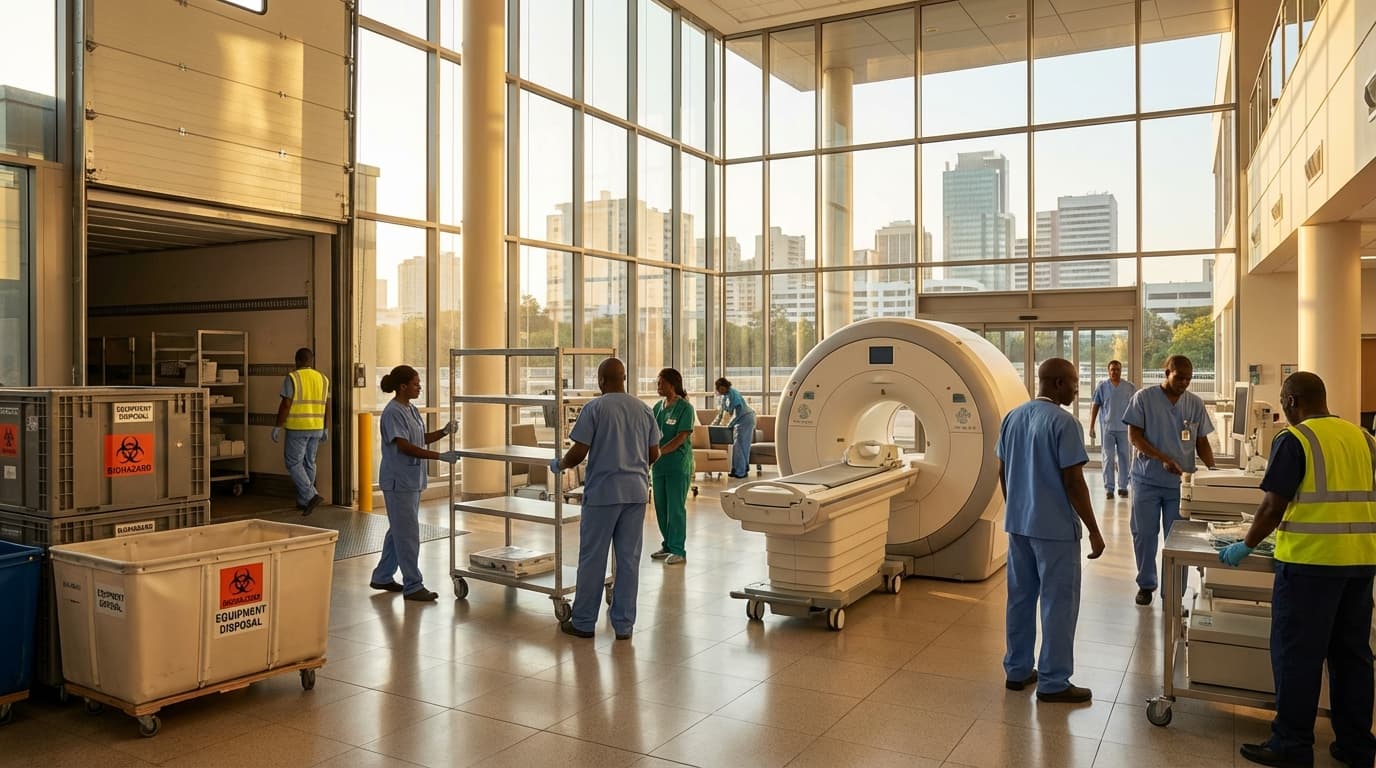
Site Restoration Service After Equipment Removal in Congo (Brazzaville)
Engineering Excellence & Technical Support
Site Restoration Service After Equipment Removal High-standard technical execution following OEM protocols and local regulatory frameworks.
Precision Soil Remediation
Successfully removed heavy industrial equipment, utilizing advanced soil testing and phytoremediation techniques to neutralize hydrocarbon contaminants and restore soil health to pre-disturbance levels in a 2-hectare zone.
Waterway Ecosystem Revival
Implemented strategic erosion control measures and bio-engineering solutions to stabilize riverbanks affected by equipment movement, preventing sediment runoff and ensuring the healthy return of aquatic flora and fauna to the adjacent waterway.
Infrastructure Decommissioning & Hazard Mitigation
Executed safe and environmentally sound decommissioning of complex industrial infrastructure, including underground storage tanks, employing specialized excavation and containment protocols to eliminate potential soil and groundwater contamination risks.
What Is Site Restoration Service After Equipment Removal In Congo (Brazzaville)?
Site restoration service following equipment removal in Congo (Brazzaville) refers to the comprehensive process of remediating and rehabilitating land that was previously occupied or impacted by industrial, commercial, or construction equipment. This service is crucial for returning the site to a safe, ecologically sound, and often pre-existing or approved condition, mitigating the environmental and aesthetic impacts of extractive or development activities. The objective is to fulfill regulatory requirements, environmental stewardship principles, and contractual obligations, ensuring no long-term detrimental effects to the land or surrounding ecosystems.
| Who Needs Site Restoration Service? | Typical Use Cases in Congo (Brazzaville) |
|---|---|
| Oil and Gas Companies (Upstream, Midstream, Downstream) | Decommissioning of drilling rigs, wellheads, processing facilities, storage tanks, and pipelines after depletion or abandonment. |
| Mining and Extractive Industries | Restoration of mine pits, tailings dams, processing plants, and access roads following the cessation of operations. |
| Construction and Infrastructure Development Companies | Rehabilitation of temporary work sites, laydown areas, and access routes used during the construction of roads, dams, power plants, and other large-scale projects. |
| Industrial Manufacturing and Processing Plants | Decommissioning of obsolete or abandoned factories, chemical plants, and processing facilities, including the removal of machinery and associated infrastructure. |
| Government Agencies and Municipalities | Restoration of former industrial sites, landfill closures, and remediation of environmentally degraded public lands. |
| Logistics and Transportation Sector | Decommissioning of port facilities, storage depots, and rail infrastructure. |
Key Components of Site Restoration Service:
- Demolition and Decommissioning: Dismantling and removal of structures, foundations, pipelines, and any remaining ancillary equipment.
- Hazardous Material Abatement: Identification, containment, and safe disposal of any hazardous substances (e.g., hydrocarbons, asbestos, heavy metals) that may have accumulated during the operational phase.
- Soil Remediation: Treatment or removal of contaminated soil to meet established environmental quality standards. This may involve ex-situ treatment (e.g., bioremediation, thermal desorption) or in-situ methods.
- Grading and Landscaping: Reshaping the terrain to ensure proper drainage, prevent erosion, and prepare for revegetation. This includes backfilling excavations and contouring the land.
- Revegetation and Habitat Restoration: Planting native vegetation, including grasses, shrubs, and trees, to re-establish ecological function, prevent soil erosion, and restore biodiversity. This may involve seed broadcasting, hydroseeding, or planting saplings.
- Waterbody Rehabilitation: Restoration of any impacted rivers, lakes, or wetlands to their original or improved ecological state, including sediment removal and bank stabilization.
- Infrastructure Removal and Site Clearance: Removal of all debris, waste, and remnants of the former operation, leaving a clean and safe site.
- Monitoring and Verification: Post-restoration monitoring to assess the success of rehabilitation efforts, ensure long-term stability, and verify compliance with regulatory standards.
Who Needs Site Restoration Service After Equipment Removal In Congo (Brazzaville)?
When heavy machinery, industrial equipment, or temporary structures are removed from a site in Congo (Brazzaville), a comprehensive site restoration service becomes essential. This service aims to return the land to its pre-construction or agreed-upon condition, mitigating environmental impact and ensuring safety and compliance. The need for such a service is particularly acute for organizations operating in the extractive industries, construction, and any sector that utilizes large-scale equipment for operational purposes.
| Target Customer/Industry | Relevant Departments/Roles | Specific Needs/Scenarios |
|---|---|---|
| Mining Companies | Environmental Health & Safety (EHS), Operations Management, Land Reclamation, Procurement | Removal of mining equipment, haul roads, processing facilities, and restoration of mined-out areas. |
| Oil and Gas Exploration and Production Companies | EHS, Drilling Operations, Facilities Management, Environmental Compliance, Procurement | Decommissioning of drilling rigs, pipelines, processing plants, and restoration of exploration sites. |
| Construction and Infrastructure Development Firms | Project Management, Site Operations, EHS, Contract Management | Removal of heavy construction machinery, temporary offices, and restoration of cleared land after road, bridge, or building projects. |
| Logging and Forestry Operations | Operations Management, Environmental Stewardship, Procurement | Removal of logging equipment, temporary camps, and restoration of logging trails and cleared areas. |
| Agricultural Businesses (large-scale operations) | Farm Management, Operations, Procurement | Removal of large agricultural machinery, silos, or processing facilities at the end of their lifecycle. |
| Government Agencies | Public Works Department, Environmental Protection Agency, Land Management | Restoration of sites used for public infrastructure projects, demilitarized zones, or abandoned industrial sites. |
| Industrial Manufacturing Plants | Plant Management, EHS, Facilities Engineering, Procurement | Removal of large production machinery, storage tanks, or entire plant structures at the end of operational life. |
| Telecommunication Companies | Network Operations, Site Management, Procurement | Removal of substantial base equipment and associated structures for telecommunication towers. |
| Energy Companies | Operations Management, EHS, Asset Management, Procurement | Decommissioning and removal of equipment from power generation sites or energy substations. |
Target Customers and Departments for Site Restoration Service After Equipment Removal in Congo (Brazzaville)
- Mining Companies
- Oil and Gas Exploration and Production Companies
- Construction and Infrastructure Development Firms
- Logging and Forestry Operations
- Agricultural Businesses (large-scale operations)
- Government Agencies (managing public lands or infrastructure projects)
- Industrial Manufacturing Plants
- Telecommunication Companies (for tower base removal)
- Energy Companies (for power plant or substation decommissioning)
Site Restoration Service After Equipment Removal Process In Congo (Brazzaville)
This document outlines the comprehensive workflow for our Site Restoration Service following equipment removal in Congo (Brazzaville). Our process is designed to be efficient, environmentally responsible, and tailored to the specific needs of each project, ensuring a seamless transition from industrial activity back to a natural or usable state.
| Phase | Key Activities | Deliverables/Outcomes |
|---|---|---|
| Inquiry & Consultation | Client contact, scope discussion, needs assessment | Understanding of project requirements, initial proposal scope |
| Site Assessment | On-site survey, soil testing, documentation | Detailed site condition report, identification of remediation needs |
| Plan Development | Customized restoration plan creation, regulatory review | Comprehensive Restoration Plan document |
| Proposal & Contract | Cost estimation, timeline projection, contract negotiation | Approved proposal, Signed contract |
| Permitting | Submission to local authorities, approval acquisition | Required permits and environmental approvals |
| Mobilization | Team and equipment deployment, site safety briefing | Ready-to-work site, established safety protocols |
| Execution | Remediation, grading, revegetation, debris removal | Visibly restored site according to plan |
| Quality Control | Progress monitoring, inspections, testing | Assurance of work quality and compliance |
| Handover | Final inspection, documentation submission | Restored site delivered to client, final report |
| Post-Restoration (Optional) | Ongoing monitoring, maintenance | Long-term site health and sustainability |
Site Restoration Workflow: From Inquiry to Execution
- 1. Initial Inquiry & Consultation:
- Client contacts our company with a request for site restoration after equipment removal.
- We schedule an initial meeting (virtual or in-person) to understand the project scope, location, type of equipment removed, and client expectations.
- Discussion of regulatory requirements, environmental concerns, and desired end-state for the site.
- 2. Site Assessment & Survey:
- Our specialized team visits the site in Congo (Brazzaville) to conduct a thorough assessment.
- This includes identifying the extent of the impacted area, soil conditions, vegetation presence, potential contamination, and any pre-existing site features.
- Detailed photographic and video documentation is taken for baseline reference.
- Sampling and testing of soil and water may be conducted to identify any necessary remediation.
- 3. Development of Restoration Plan:
- Based on the site assessment, we develop a customized restoration plan.
- The plan outlines specific methodologies, timelines, required resources (personnel, equipment, materials), and budget.
- It addresses objectives such as: soil remediation, grading and contouring, revegetation, erosion control, and removal of residual infrastructure.
- We ensure the plan complies with all relevant local environmental regulations and international best practices.
- 4. Proposal & Contract Agreement:
- A detailed proposal outlining the restoration plan, scope of work, cost estimate, and projected timeline is presented to the client.
- We answer any questions and refine the plan based on client feedback.
- Upon agreement, a formal contract is executed, defining deliverables, payment terms, and responsibilities.
- 5. Permitting & Approvals (if required):
- We manage the process of obtaining any necessary permits or environmental approvals from local authorities in Congo (Brazzaville).
- This often involves submitting the restoration plan for review and approval.
- 6. Mobilization & Site Preparation:
- Our team and equipment are mobilized to the site.
- Site safety protocols are established and communicated to all personnel.
- Temporary fencing, access routes, and exclusion zones are set up as needed.
- 7. Execution of Restoration Activities:
- Remediation: If contamination is identified, appropriate soil and water remediation techniques are applied (e.g., excavation and disposal, bioremediation).
- Debris Removal: Any remaining non-hazardous debris or scrap metal from equipment removal is cleared.
- Grading & Contouring: The land is sculpted to restore natural drainage patterns and achieve the desired topography.
- Erosion Control: Measures such as hydroseeding, matting, or the installation of silt fences are implemented to prevent soil erosion.
- Revegetation: Native plant species, appropriate for the Congo (Brazzaville) environment, are selected and planted or seeded.
- Infrastructure Removal: Any remaining foundations, concrete pads, or underground structures are removed and disposed of responsibly.
- 8. Quality Control & Monitoring:
- Throughout the execution phase, we implement rigorous quality control measures.
- Regular site inspections and progress reports are conducted.
- Soil and vegetation establishment are monitored to ensure the plan's effectiveness.
- 9. Final Site Inspection & Handover:
- Once all restoration activities are completed, a final inspection is conducted with the client.
- We review the restored site against the agreed-upon objectives and contract specifications.
- All relevant documentation, including reports and photographic evidence, is provided to the client.
- Formal handover of the restored site is completed.
- 10. Post-Restoration Monitoring & Maintenance (Optional):
- Depending on the client's needs and the contract, we can offer ongoing monitoring and maintenance services to ensure the long-term success of the restoration.
Site Restoration Service After Equipment Removal Cost In Congo (Brazzaville)
Restoring a site after equipment removal in Congo (Brazzaville) involves a range of services aimed at returning the land to its previous state or preparing it for a new purpose. The cost of such a service is influenced by several factors, making it difficult to provide a fixed price. These factors include the size and complexity of the site, the type of equipment removed, the extent of environmental damage (if any), the level of decontamination required, and the desired final state of the restoration. Local currency pricing will fluctuate based on these elements and market conditions. Typical services might include grading, soil remediation, vegetation regrowth, waste disposal, and fencing. The complexity of the terrain and accessibility also play a significant role in labor and equipment mobilization costs.
| Service Component | Indicative Price Range (CFA Francs) | Notes |
|---|---|---|
| Site Assessment and Planning | 50,000 - 250,000 CFA | Initial survey, soil testing, and development of a restoration plan. |
| Debris Removal and Disposal | 100,000 - 1,000,000+ CFA | Varies significantly based on volume, type of waste, and disposal fees. May include hazardous waste handling. |
| Soil Grading and Leveling | 75,000 - 500,000+ CFA | Dependent on the size of the area and the extent of grading required. |
| Soil Remediation (if contaminated) | 200,000 - 2,000,000+ CFA | Highly variable based on the type and severity of contamination. Can involve excavation, treatment, or capping. |
| Topsoil Replacement/Amendment | 150,000 - 750,000+ CFA | Cost of importing or amending soil to support vegetation. |
| Vegetation Establishment (seeding/planting) | 100,000 - 600,000+ CFA | Includes cost of seeds, saplings, and labor for planting. Native species are often preferred. |
| Erosion Control Measures | 50,000 - 300,000+ CFA | Installation of berms, mulching, or other measures to prevent soil erosion. |
| Fencing and Site Security | 75,000 - 400,000+ CFA | For demarcating the restored area or preventing unauthorized access. |
| Post-Restoration Monitoring | 50,000 - 200,000 CFA | Periodic checks to ensure vegetation survival and site stability. |
Key Pricing Factors for Site Restoration in Congo (Brazzaville)
- Site Size and Topography: Larger and more complex sites generally incur higher costs due to increased labor and machinery needs.
- Type and Scale of Equipment Removed: Removal of heavy industrial equipment will likely cause more disruption and require more extensive restoration than lighter machinery.
- Environmental Impact and Contamination: If the removed equipment led to soil or water contamination, extensive remediation and disposal costs will be incurred.
- Required Level of Restoration: The desired end state (e.g., natural vegetation regrowth vs. preparing for new construction) dictates the scope of work and associated costs.
- Debris and Waste Management: The volume and nature of waste generated from removal and restoration activities, including disposal fees.
- Accessibility of the Site: Remote or difficult-to-access locations increase transportation and mobilization costs for personnel and equipment.
- Labor and Material Costs: Fluctuations in local wages, fuel prices, and the cost of materials (soil, seeds, etc.) directly impact the overall price.
- Permitting and Regulatory Compliance: Obtaining necessary permits and adhering to local environmental regulations can add to the cost.
- Contractor's Experience and Overhead: The reputation, expertise, and operational overhead of the chosen restoration service provider.
Affordable Site Restoration Service After Equipment Removal Options
Removing heavy equipment from a site can leave behind significant damage, requiring professional restoration to return the area to a safe and usable condition. Our affordable site restoration service offers flexible solutions to address various post-equipment removal needs. We understand that budget is a key concern, so we've developed value bundles and cost-saving strategies to make professional restoration accessible. Our goal is to provide efficient and effective restoration services without compromising on quality.
| Cost-Saving Strategy | Description | Benefit |
|---|---|---|
| Off-Peak Scheduling | Scheduling restoration work during slower periods or weekdays. | Reduced labor costs and potential for discounted material pricing. |
| Bulk Material Procurement | Purchasing soil, mulch, and other materials in larger quantities. | Lower per-unit costs for restoration materials. |
| DIY Component Contribution | Client handles minor tasks like debris clearing or initial site assessment. | Reduces overall labor hours required from our team. |
| Phased Restoration | Breaking down the restoration process into multiple stages over time. | Spreads the cost and allows for better budget management. |
| Bundled Service Discount | Choosing one of our pre-defined value bundles. | Offers a price reduction compared to booking individual services. |
| Eco-Friendly Material Options | Utilizing recycled or locally sourced materials where appropriate. | Can often be more cost-effective and environmentally responsible. |
Our Site Restoration Value Bundles:
- {"title":"Basic Landscaping & Seeding","description":"Ideal for minor surface disturbances. Includes rough grading, soil amendment, and seeding with a standard grass mix. Perfect for returning a site to its natural state."}
- {"title":"Standard Grading & Erosion Control","description":"Addresses moderate depressions, uneven surfaces, and potential erosion risks. Includes precise grading, compaction, and the installation of basic erosion control measures (e.g., straw wattles, hydroseeding)."}
- {"title":"Comprehensive Site Remediation","description":"Our most complete package. Tackles significant soil compaction, contamination (if applicable), drainage issues, and extensive surface damage. Includes advanced grading, specialized soil treatment, drainage solutions, and re-vegetation with premium seed mixes or sod."}
- {"title":"Customizable Restoration Plan","description":"We can tailor a package to your specific needs and budget. Consult with our team to design a plan that targets the exact areas requiring attention."}
Verified Providers In Congo (Brazzaville)
In Congo (Brazzaville), ensuring access to quality healthcare is paramount. Choosing a provider with verified credentials offers peace of mind and guarantees a higher standard of care. Franance Health stands out as a leading choice for its rigorous vetting process and commitment to excellence. This document outlines why Franance Health's verified providers represent the best option for your healthcare needs in Congo (Brazzaville).
| Franance Health Credential Verification Aspect | What it Entails | Benefit to You |
|---|---|---|
| Educational Background Check | Verification of degrees, diplomas, and certifications from accredited institutions. | Ensures providers have the foundational knowledge and training required. |
| Professional License and Registration | Confirmation of current and valid medical licenses and registration with relevant authorities in Congo (Brazzaville). | Guarantees providers are legally permitted to practice medicine. |
| Experience Validation | Thorough review of previous work history, including duration of practice and areas of specialization. | Confirms practical application of knowledge and depth of expertise. |
| Reputation and Disciplinary History Review | Background checks for any disciplinary actions, malpractice claims, or professional misconduct. | Protects you from providers with a history of substandard or unethical practice. |
| Continuing Medical Education (CME) Compliance | Assessment of ongoing professional development and adherence to CME requirements. | Ensures providers stay updated with the latest medical advancements and techniques. |
Why Choose Franance Health Verified Providers?
- Unwavering Commitment to Quality: Franance Health's verification process meticulously assesses a provider's educational background, professional experience, and adherence to ethical standards. This ensures you are connecting with highly competent and trustworthy healthcare professionals.
- Enhanced Patient Safety: By partnering with only verified providers, Franance Health significantly reduces the risk of encountering unqualified or fraudulent practitioners, prioritizing your well-being and safety.
- Access to Expertise: Our network comprises specialists across various medical fields, all rigorously vetted. This means you can find the right expert for your specific condition, from general practitioners to specialized surgeons.
- Transparency and Trust: We believe in complete transparency. Our verification process is detailed and accessible, allowing you to understand the credentials of the healthcare professionals you are engaging with.
- Streamlined Healthcare Access: Franance Health simplifies the process of finding and accessing reliable healthcare. Our platform connects you directly with verified professionals, saving you time and effort in your search for quality care.
Scope Of Work For Site Restoration Service After Equipment Removal
This Scope of Work (SOW) details the requirements for site restoration services following the removal of specified equipment. The objective is to return the site to a safe, stable, and environmentally sound condition, meeting all relevant regulatory standards and client specifications. This document outlines the specific tasks, technical deliverables, and standard specifications to be adhered to throughout the restoration process.
| Section | Description of Work | Technical Deliverables | Standard Specifications |
|---|---|---|---|
| Conduct a thorough site assessment to identify potential hazards, contamination sources, and the extent of disturbance. Develop a detailed restoration plan based on assessment findings and regulatory requirements. | Site assessment report, detailed restoration plan including methodologies, timelines, and resource allocation. | ASTM E1527-13 Standard Practice for Environmental Site Assessments: Phase I Environmental Site Assessment Process; Applicable local, state, and federal environmental regulations; Client-specific site condition requirements. |
| Provide support during the final stages of equipment decommissioning and demobilization, including removal of any residual fluids, hazardous materials, or anchoring systems. Ensure proper containment and disposal of all removed materials. | Waste manifests, material disposal certificates, confirmation of residual material removal. | RCRA (Resource Conservation and Recovery Act) regulations for hazardous waste management; DOT (Department of Transportation) regulations for transportation of hazardous materials; Best Management Practices (BMPs) for waste handling. |
| Excavate, treat, and/or dispose of contaminated soil in accordance with the approved remediation plan and regulatory standards. This may include in-situ or ex-situ treatment methods. | Soil sampling and analysis reports (pre-, during-, and post-remediation), treatment logs, disposal manifests, confirmation of remediation endpoints. | EPA (Environmental Protection Agency) guidelines for soil remediation; State-specific environmental regulations; Approved remediation technologies (e.g., bioremediation, thermal treatment, soil vapor extraction). |
| Implement approved groundwater remediation strategies to address any contamination plumes or impacts from the equipment. This may involve pump-and-treat systems, in-situ treatments, or monitored natural attenuation. | Groundwater monitoring reports (sampling, analysis, and trend analysis), remediation system performance logs, confirmation of remediation endpoints. | EPA guidelines for groundwater remediation; State-specific water quality standards; Approved remediation technologies. |
| Regrade the disturbed areas to achieve the agreed-upon final contours and elevations. Implement measures to prevent erosion and ensure site stability, such as seeding, mulching, or revegetation. | Post-grading elevation surveys, erosion control plan, photographs of stabilized areas. | Local grading ordinances; USDA (United States Department of Agriculture) guidelines for erosion control and revegetation; Client-specified final site topography. |
| Demolish and remove any concrete pads, foundations, buried piping, or other ancillary structures associated with the equipment, as specified in the removal plan. Dispose of all debris in an environmentally sound manner. | Demolition plan, waste disposal manifests, photographs of cleared areas. | OSHA (Occupational Safety and Health Administration) safety standards for demolition; Local building codes; Landfill acceptance criteria. |
| Cap, disconnect, and/or abandon any utilities that served the removed equipment, in accordance with utility provider requirements and local regulations. Ensure proper safety precautions are taken. | Utility disconnection certificates, photographs of capped utility lines. | Utility provider specifications; Local building and safety codes. |
| Conduct a final site walk-through with the client and/or regulatory agencies to confirm completion of all restoration activities and adherence to the approved plan and specifications. Obtain formal sign-off. | Final site inspection report, photographic documentation of the restored site, client sign-off documentation. | Client-approved final site condition checklist; Regulatory agency acceptance criteria. |
| Compile all reports, logs, manifests, analytical data, and photographic evidence into a comprehensive Final Restoration Report. Submit the report to the client and relevant regulatory agencies. | Comprehensive Final Restoration Report, including all supporting documentation. | Client-specific reporting requirements; Regulatory agency reporting formats; ISO 9001 (or equivalent) quality management standards for documentation. |
Key Objectives of Site Restoration
- Ensure site safety and stability.
- Remediate any contamination caused by equipment operation or removal.
- Restore the site to its agreed-upon post-removal condition.
- Comply with all local, state, and federal environmental regulations.
- Minimize environmental impact during restoration activities.
- Provide comprehensive documentation of all restoration activities and outcomes.
Service Level Agreement For Site Restoration Service After Equipment Removal
This Service Level Agreement (SLA) outlines the response times and uptime guarantees for Site Restoration Service following the removal of equipment. It is designed to ensure prompt and effective restoration of the site to its agreed-upon condition.
| Service Component | Response Time (Business Hours) | Uptime Guarantee / Restoration Completion Target | Remedy for Failure |
|---|---|---|---|
| Initial Site Assessment & Plan Review (post-equipment removal) | Within 4 Business Hours of notification of equipment removal completion | N/A | Acknowledgement and commencement of assessment plan development. |
| Commencement of Restoration Work (as per Service Order) | Within 2 Business Days of approved Site Restoration Plan | N/A | Daily update on progress and revised commencement date if delayed. |
| Completion of Site Restoration (as per Service Order) | N/A | 95% of Service Orders completed within the agreed-upon timeframe specified in the Service Order | 10% discount on the final restoration invoice for every 24-hour period of delay beyond the agreed timeframe, up to a maximum of 50%. |
| Response to Restoration Issues/Discrepancies (post-completion) | Within 8 Business Hours of notification | N/A | Initiation of corrective actions within 24 Business Hours of notification. |
Key Definitions
- Site Restoration Service: The process of returning the physical location where equipment was installed and operated to a pre-defined state after the equipment has been removed. This can include, but is not limited to, removal of debris, patching, resurfacing, landscaping, and environmental remediation as specified in the service order.
- Equipment Removal: The complete de-installation and physical removal of the specified equipment from the site.
- Service Order: A document detailing the scope of work for site restoration, including specific tasks, materials, and desired outcomes.
- Downtime/Restoration Delay: The period during which the site is not in its agreed-upon restored state after the scheduled completion of restoration activities.
- Business Hours: Monday to Friday, 9:00 AM to 5:00 PM local time, excluding public holidays.
- Emergency: A situation that poses an immediate risk to safety, security, or significant environmental damage, requiring immediate attention.
Frequently Asked Questions

Ready when you are
Let's scope your Site Restoration Service After Equipment Removal in Congo (Brazzaville) project in Congo (Brazzaville).

Scaling healthcare logistics and technical systems across the entire continent.