
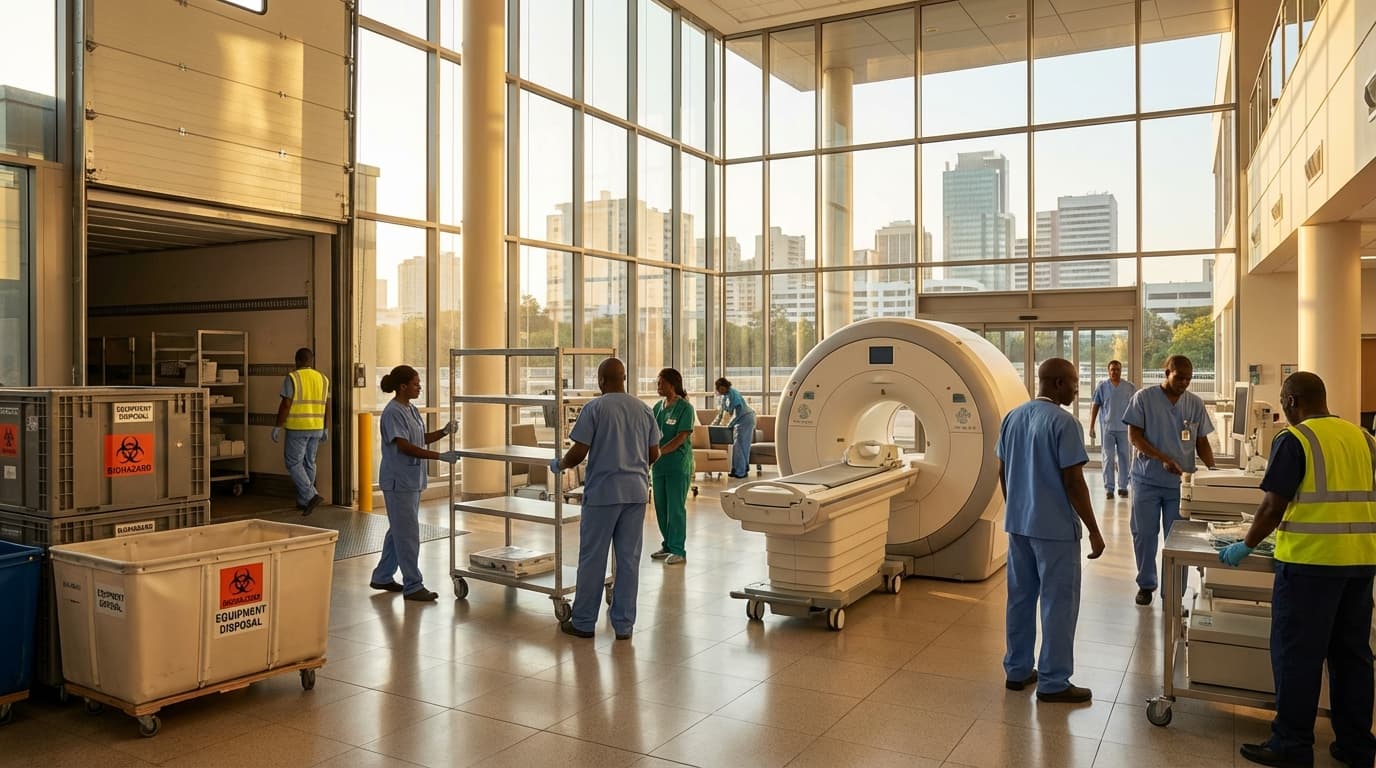
Heavy Medical Equipment De-Installation Service (MRI/CT/Cath Lab) in Congo (Brazzaville)
Engineering Excellence & Technical Support
Heavy Medical Equipment De-Installation Service (MRI/CT/Cath Lab) High-standard technical execution following OEM protocols and local regulatory frameworks.
Precision De-Installation for Complex Imaging Modalities
Our specialized teams possess deep expertise in the meticulous de-installation of high-value, heavy medical equipment such as MRI, CT scanners, and Cath Labs. We employ advanced techniques and calibrated tools to ensure zero damage to sensitive components, preserving their integrity for future relocation or disposal in Congo (Brazzaville).
Navigating Congo's Logistics and Regulatory Landscape
We excel in managing the intricate logistics and regulatory requirements specific to de-installing heavy medical equipment in Brazzaville. Our comprehensive service includes navigating customs, securing necessary permits, and ensuring adherence to all local environmental and safety standards throughout the de-installation process.
Uncompromising Safety Protocols for High-Risk Operations
The safety of personnel and equipment is paramount in our heavy medical equipment de-installation services. We implement rigorous, site-specific safety protocols, including risk assessments, controlled dismantling procedures, and secure handling of hazardous materials, guaranteeing a secure and compliant operation for MRI, CT, and Cath Lab systems in the Congo (Brazzaville) environment.
What Is Heavy Medical Equipment De-installation Service (Mri/ct/cath Lab) In Congo (Brazzaville)?
Heavy Medical Equipment De-Installation Service (MRI/CT/Cath Lab) in Congo (Brazzaville) refers to the specialized process of safely and systematically dismantling, disconnecting, and preparing large-scale, high-value medical imaging and interventional systems, such as Magnetic Resonance Imaging (MRI) scanners, Computed Tomography (CT) scanners, and Cardiac Catheterization (Cath Lab) suites, for relocation, disposal, or storage. This service requires a deep understanding of intricate electrical, mechanical, and often cryogenic systems, as well as adherence to strict safety protocols and environmental regulations. The process involves skilled technicians trained in the specific de-installation procedures for each equipment type, ensuring that components are properly labeled, packaged, and documented to facilitate re-installation or safe handling. It encompasses the breakdown of complex sub-assemblies, removal of shielding, disconnection of power and data conduits, and often the management of refrigerants or other hazardous materials in accordance with local and international standards. The objective is to minimize risk of damage to the equipment, protect personnel, and ensure compliance with all relevant decommissioning requirements.
| Who Needs This Service? | Typical Use Cases |
|---|---|
| Hospitals and Diagnostic Imaging Centers in Congo (Brazzaville) undergoing upgrades, renovations, or relocation of their facilities. | Replacement of outdated MRI, CT, or Cath Lab systems with newer technology. |
| Healthcare institutions closing down or consolidating services, requiring the removal of existing equipment. | Transfer of functional equipment from one facility to another within Congo or for export. |
| Medical equipment leasing companies or financial institutions that own and need to reclaim or repossess heavy medical imaging systems. | Decommissioning of equipment for sale on the second-hand market. |
| Research institutions or universities that are decommissioning or relocating specialized medical imaging laboratories. | Site remediation projects that require the complete removal of installed medical infrastructure. |
Key Aspects of Heavy Medical Equipment De-Installation Service
- Specialized Personnel: Employment of certified and experienced technicians proficient in de-installing specific medical modalities (MRI, CT, Cath Lab).
- Disassembly and Disconnection: Careful dismantling of complex systems, including superconducting magnets (for MRI), gantry components (for CT), and intricate plumbing/electrical systems (for Cath Labs).
- Component Labeling and Documentation: Meticulous labeling of all parts and comprehensive documentation of the de-installation process for traceability and re-installation.
- Safety Protocols: Strict adherence to safety guidelines for handling heavy machinery, electrical hazards, and potentially hazardous materials (e.g., cryogens).
- Environmental Compliance: Management and disposal of refrigerants, shielding materials, and other waste in accordance with Congolese environmental regulations.
- Packaging and Logistics Support: Provision of specialized packaging for sensitive components and coordination with logistics providers for secure transportation.
- Site Preparation: Assessment and preparation of the site for safe and efficient equipment removal, including power isolation and access route confirmation.
- Decommissioning Certificates: Issuance of relevant documentation confirming the successful and compliant de-installation.
Who Needs Heavy Medical Equipment De-installation Service (Mri/ct/cath Lab) In Congo (Brazzaville)?
The relocation, decommissioning, or upgrade of high-value medical imaging and interventional systems like MRI, CT scanners, and Cath Labs requires specialized de-installation services. These are complex and delicate procedures that demand expert knowledge of the equipment, its intricate components, and the precise steps needed for safe dismantling, packing, and transportation. In Congo (Brazzaville), a country investing in its healthcare infrastructure and facing challenges in specialized technical services, businesses and organizations providing such expert de-installation are crucial. This document outlines who requires these services and the specific departments within those organizations that would be the primary point of contact or beneficiaries.
| Target Customer Type | Key Departments Involved in De-Installation Decisions/Coordination |
|---|---|
| Hospitals (Public and Private) | Radiology Department, Cardiology Department, Biomedical Engineering Department, Procurement Department, Facilities Management, Hospital Administration |
| Medical Imaging Centers | Center Management, Lead Radiologist, Technical Operations Manager, Procurement Officer |
| Diagnostic Clinics | Clinic Director, Lead Physician (specializing in relevant field), Operations Manager |
| Specialized Medical Institutions (e.g., Cardiology Centers) | Center Director, Chief of Cardiology, Biomedical Engineering, Procurement, Facility Manager |
| Government Health Ministries/Agencies | Department of Health Infrastructure, Technical Services Division, Procurement Unit, Project Management Office |
| International Aid Organizations/NGOs | Project Manager (Healthcare), Logistics Coordinator, Technical Advisor, Procurement Officer |
| Equipment Manufacturers/Suppliers | Field Service Management, Project Management, Decommissioning Team, Logistics Department |
| Third-Party Maintenance and Service Providers | Operations Manager, Project Manager, Technical Leads, Procurement Department |
Target Customers for Heavy Medical Equipment De-Installation Service in Congo (Brazzaville)
- Hospitals (Public and Private)
- Medical Imaging Centers
- Diagnostic Clinics
- Specialized Medical Institutions (e.g., Cardiology Centers)
- Government Health Ministries/Agencies
- International Aid Organizations/NGOs involved in healthcare
- Equipment Manufacturers/Suppliers (for decommissioning or relocation projects)
- Third-Party Maintenance and Service Providers
Heavy Medical Equipment De-installation Service (Mri/ct/cath Lab) Process In Congo (Brazzaville)
This document outlines the comprehensive workflow for the de-installation of heavy medical equipment, specifically MRI, CT scanners, and Cath Labs, within Congo (Brazzaville). The process is designed to be meticulous, safe, and compliant with all relevant regulations, ensuring a smooth transition for healthcare facilities. It covers the journey from the initial client inquiry to the final handover of de-installed components.
| Stage | Description | Key Activities | Responsible Party | Deliverables |
|---|---|---|---|---|
| The client expresses interest in de-installing heavy medical equipment. This stage involves understanding their specific needs and providing initial information. | Receive client inquiry, understand equipment type, location, and desired timeline. Provide preliminary information on services offered. | Client, Service Provider (Sales/Inquiry Team) | Initial understanding of project scope, potential for service provision. |
| A thorough on-site evaluation is conducted to assess the equipment, the environment, and potential challenges. | Inspect equipment condition and configuration. Assess accessibility of the room, power supply, ventilation, and egress routes. Identify any structural or environmental considerations. Confirm safety protocols. Engage with facility staff and technical personnel. | Service Provider (Technical Team, Project Manager) | Detailed site report, risk assessment, preliminary plan of action. |
| Based on the site survey, a detailed proposal and cost estimate are prepared. | Develop a comprehensive de-installation plan. Outline methodology, safety measures, timelines, and required resources. Provide a detailed breakdown of costs (labor, materials, specialized equipment, permits, etc.). | Service Provider (Project Manager, Estimating Team) | Formal proposal document, detailed quotation, project timeline. |
| Upon client acceptance of the proposal, a formal contract is established. | Review and sign the service agreement. Confirm payment terms, insurance coverage, and liability. Establish communication channels. | Client, Service Provider (Legal/Contracts Department) | Signed service contract. |
| Detailed planning of resources, personnel, and transportation is undertaken. | Mobilize specialized de-installation team (engineers, technicians). Secure necessary tools, lifting equipment, and safety gear. Arrange for transportation of personnel and equipment to the site. Obtain any required permits or approvals from local authorities. Develop a detailed work schedule with specific task assignments. | Service Provider (Project Manager, Logistics Team) | Mobilized team, secured equipment, confirmed permits, detailed work schedule. |
| The site is prepared to ensure safe and efficient de-installation. | Isolate power and utilities to the equipment. Clear the surrounding area to ensure adequate working space. Implement safety signage and barriers. Conduct pre-de-installation briefings with the on-site team and facility representatives. | Service Provider (De-installation Team), Client (Facility Management) | Safe and prepared work environment. |
| The actual de-installation of the medical equipment is performed. | Dismantle components following manufacturer's specifications and industry best practices. Safely disconnect electrical, water, and any other service connections. Handle sensitive components with extreme care. Adhere strictly to all safety protocols and procedures. Document the de-installation process (photos, videos). | Service Provider (De-installation Team) | De-installed equipment components. |
| De-installed components are carefully packaged for protection during transit and storage. | Select appropriate packaging materials based on equipment type and sensitivity. Custom-build crates for larger or delicate items. Label all packages clearly with contents, destination, and handling instructions. Ensure all components are accounted for. | Service Provider (De-installation Team, Logistics Team) | Securely packaged and labeled equipment components. |
| Components are transported to the designated destination or storage facility. | Load packaged equipment onto specialized transport vehicles. Ensure safe loading and securing of cargo. Transport to the specified location (new site, storage, disposal). Provide real-time tracking if required. | Service Provider (Logistics Team) | Delivered equipment components (at destination or storage). |
| All relevant documentation is provided to the client, and the project is formally concluded. | Provide a final project report detailing the de-installation process, including any encountered issues and their resolutions. Hand over all de-installed components and associated documentation. Conduct a final site walkthrough with the client for sign-off. Process final invoices and payments. | Service Provider (Project Manager), Client | Final project report, signed handover document, completed project. |
Key Stages of Heavy Medical Equipment De-Installation Service
- Inquiry and Initial Consultation
- Site Survey and Assessment
- Proposal and Quotation
- Contractual Agreement
- Planning and Logistics
- Pre-De-installation Preparation
- Equipment De-installation Execution
- Packaging and Crating
- Transportation and Warehousing (if applicable)
- Final Documentation and Handover
Heavy Medical Equipment De-installation Service (Mri/ct/cath Lab) Cost In Congo (Brazzaville)
De-installing heavy medical equipment like MRI, CT scanners, and Cath Labs in Congo (Brazzaville) is a specialized and complex process that requires expert knowledge, specific tools, and adherence to safety protocols. The cost of such services can vary significantly based on several factors. It's crucial for healthcare facilities to obtain detailed quotes from reputable service providers well in advance of the de-installation.
Key Pricing Factors:
- Type and Size of Equipment: Larger and more complex machines (e.g., high-field MRI) will naturally incur higher de-installation costs than smaller CT scanners. The number of components to be disassembled also plays a role.
- Accessibility and Location: The ease of access to the equipment within the facility, as well as the overall location in Brazzaville (e.g., city center vs. remote areas), can impact logistics and labor costs. Difficult access, multiple flights of stairs, or narrow corridors will increase the complexity and price.
- Dismantling Complexity and Time: The extent of disassembly required. Some equipment might be modular, while others require extensive breakdown. The estimated time the de-installation will take is a primary driver of cost.
- Specialized Tools and Equipment: De-installation often requires specialized lifting gear, precision tools, and potentially even temporary structural support. The availability and rental costs of these items will be factored in.
- Safety and Environmental Considerations: Strict adherence to safety regulations, including proper handling of hazardous materials (if any), and environmental disposal protocols (for certain components) add to the overall cost.
- Technician Expertise and Experience: The skill and experience of the de-installation team are paramount. Highly specialized technicians command higher rates.
- Logistics and Transportation: If the equipment needs to be moved to a different location within Congo or prepared for international shipping, the associated transportation and logistical planning costs will be substantial.
- Downtime and Scheduling: The urgency of the de-installation and the flexibility in scheduling can also influence pricing. Expedited services often come at a premium.
- Regulatory Compliance and Permits: Obtaining necessary permits or clearances for the de-installation process might be required, adding to administrative costs.
- Insurance: Comprehensive insurance to cover potential damage during the de-installation process is a necessary and often included cost.
Estimated Cost Ranges (in Congolese Francs - XAF):
Due to the specialized nature and variability of these services, providing precise figures is challenging without specific project details. However, based on general industry estimates and considering the local economic context in Brazzaville, the following ranges can be anticipated:
- MRI De-Installation: This is typically the most complex and expensive due to the superconducting magnet, large size, and intricate components. Expect a range from 15,000,000 XAF to 40,000,000 XAF or more, depending heavily on the factors above.
- CT Scanner De-Installation: While less complex than MRI, CT scanners still involve significant weight and delicate components. Costs could range from 8,000,000 XAF to 25,000,000 XAF.
- Cath Lab De-Installation: Cath labs are modular but can be extensive. The cost will depend on the specific configuration and the number of ancillary systems. Estimated costs could be in the range of 10,000,000 XAF to 30,000,000 XAF.
Important Note: These figures are indicative and should be used as a preliminary guideline. It is imperative to solicit detailed proposals from multiple qualified service providers specializing in medical equipment de-installation in Brazzaville to get accurate and competitive pricing for your specific project.
| Equipment Type | Estimated Cost Range (XAF) | Notes |
|---|---|---|
| MRI (Magnetic Resonance Imaging) | 15,000,000 - 40,000,000+ | Most complex, includes superconducting magnet handling. |
| CT Scanner (Computed Tomography) | 8,000,000 - 25,000,000 | Significant weight and delicate components. |
| Cath Lab (Cardiac Catheterization Laboratory) | 10,000,000 - 30,000,000 | Cost depends on modularity and ancillary systems. |
Factors Influencing Heavy Medical Equipment De-Installation Costs in Brazzaville
- Type and Size of Equipment
- Accessibility and Location within the Facility
- Dismantling Complexity and Estimated Time
- Requirement for Specialized Tools and Lifting Equipment
- Adherence to Safety and Environmental Protocols
- Experience and Expertise of the De-installation Team
- Logistics and Transportation Requirements
- Urgency and Scheduling Flexibility
- Regulatory Compliance and Permit Acquisition
- Insurance Coverage
Affordable Heavy Medical Equipment De-installation Service (Mri/ct/cath Lab) Options
Finding affordable options for de-installing heavy medical equipment like MRI, CT scanners, and Cath Labs is crucial for healthcare facilities undergoing renovations, upgrades, or closures. This process requires specialized expertise, precision, and adherence to strict safety protocols. This guide explores cost-effective strategies and value bundles to manage these complex de-installation projects efficiently.
| Value Bundle/Strategy | Description | Cost-Saving Benefit |
|---|---|---|
| Comprehensive De-installation & Relocation Package | This bundle includes site assessment, de-installation, crating, transportation, and re-installation at a new location. Often offered by specialized medical equipment service providers. | Reduces the need to coordinate multiple vendors, leading to streamlined logistics and potential volume discounts. Minimizes risk of damage during transport as the same team handles the entire process. |
| De-installation with Salvage/Resale Option | Service providers who also specialize in refurbishing or reselling used medical equipment can offer a credit or reduced de-installation fee if they can salvage valuable components or resell the entire unit. | Recoups some of the de-installation costs through the sale of usable parts or the entire system. Encourages responsible equipment lifecycle management. |
| Phased De-installation Scheduling | Breaking down the de-installation into manageable phases, especially for larger projects or facilities still in partial operation. This can be coordinated with renovation schedules. | Allows for better budget allocation and can reduce the need for expedited services. Minimizes disruption to ongoing operations, thus preserving revenue. |
| Early Planning and Vendor Engagement | Engaging with de-installation specialists early in the planning stages allows for accurate quoting and identification of potential challenges. | Prevents last-minute rushes, unexpected costs, and potential delays. Allows for negotiation of more competitive rates based on lead time. |
| Bundled De-installation and Decommissioning | Combining de-installation with the official decommissioning process of the equipment, including proper documentation and disposal protocols. | Ensures compliance with regulatory requirements, avoiding potential fines. Streamlines the administrative aspects, saving staff time and resources. |
| Negotiating Service Level Agreements (SLAs) | For ongoing relationships or large-scale projects, negotiating SLAs that include guaranteed response times, pricing structures, and performance metrics. | Provides cost predictability and ensures quality of service. Can secure preferential pricing for repeat business. |
| In-House vs. Outsourced De-installation Assessment | Carefully evaluating whether to utilize in-house maintenance teams (if qualified) or specialized external vendors. The complexity and risk of heavy equipment often favor outsourcing. | Outsourcing to specialists can be more cost-effective in the long run due to their expertise, specialized tools, and insurance, preventing costly mistakes and liability. |
| Bulk De-installation for Multiple Facilities | If a healthcare system is decommissioning or relocating multiple facilities, consolidating de-installation services can lead to significant discounts. | Leverages economies of scale for transportation, labor, and project management. Streamlines the entire process across the system. |
Key Considerations for Affordable Heavy Medical Equipment De-Installation
- Specialized Expertise: De-installation of high-value, heavy medical equipment necessitates trained technicians with experience in handling sensitive electronics, magnetics (for MRI), and complex plumbing/electrical systems. Incorrect handling can lead to costly damage and safety hazards.
- Logistical Planning: Thorough planning is vital, including site assessment, equipment assessment, transportation routes, and scheduling. Effective logistics minimize downtime and unforeseen expenses.
- Safety and Compliance: Adherence to all relevant safety regulations (OSHA, environmental) and industry standards is non-negotiable. Compliance prevents fines and ensures a secure work environment.
- Equipment Condition and Age: The age and condition of the equipment can impact de-installation complexity and potential for salvage or resale value.
- Downtime Minimization: For active facilities, minimizing operational downtime during de-installation is paramount to avoid revenue loss.
- Environmental Disposal/Recycling: Proper disposal or recycling of components, especially those containing hazardous materials, must be factored into the cost.
Verified Providers In Congo (Brazzaville)
In the realm of healthcare in Congo (Brazzaville), identifying trusted and credentialed providers is paramount for ensuring quality patient care. Among the many options, Franance Health stands out as a beacon of reliability and excellence. Their rigorous credentialing process and commitment to upholding the highest standards make them the premier choice for individuals and families seeking comprehensive and trustworthy healthcare services.
| Credential Aspect | Franance Health's Verification | Benefit to Patients |
|---|---|---|
| Educational Background | Thorough verification of medical degrees, diplomas, and certifications from accredited institutions. | Ensures providers have foundational knowledge and are adequately trained. |
| Professional Experience | Detailed review of work history, including previous roles, responsibilities, and duration of practice. | Confirms practical application of skills and depth of experience. |
| Licensure and Registration | Verification of current and valid medical licenses with relevant national and regional bodies. | Guarantees legal and ethical practice within the healthcare system. |
| Specialty Certifications | Confirmation of board certifications and specialized training in particular medical fields. | Identifies experts in specific areas of medicine for targeted treatment. |
| Reputation and References | Inquiries into professional standing and ethical conduct through peer and employer references. | Mitigates risk by identifying providers with a strong track record and positive professional relationships. |
| Continuous Professional Development (CPD) | Encouragement and tracking of ongoing learning and skill enhancement. | Ensures providers stay current with medical advancements and best practices. |
Why Franance Health is the Superior Choice:
- Unwavering Commitment to Quality: Franance Health prioritizes patient well-being above all else. This commitment is reflected in their stringent selection and vetting process for all affiliated healthcare professionals and facilities.
- Rigorous Credentialing Standards: Franance Health's credentialing process goes beyond basic licensing. It involves thorough verification of educational qualifications, professional experience, licensure status, and any disciplinary actions. This ensures that only competent and ethical providers are part of their network.
- Focus on Competence and Expertise: They ensure that their providers possess the necessary skills and up-to-date knowledge in their respective fields, from general practitioners to specialists.
- Patient-Centric Approach: Franance Health fosters a network of providers who are dedicated to a patient-first philosophy, emphasizing clear communication, empathy, and personalized care plans.
- Comprehensive Network: Their network encompasses a wide range of medical disciplines and services, ensuring that patients can find the specialized care they need conveniently.
- Enhanced Trust and Reliability: By choosing Franance Health, patients gain the assurance that they are receiving care from verified and reputable healthcare professionals, minimizing risks and maximizing the likelihood of positive health outcomes.
Scope Of Work For Heavy Medical Equipment De-installation Service (Mri/ct/cath Lab)
This Scope of Work (SOW) outlines the requirements for the de-installation of heavy medical equipment, specifically Magnetic Resonance Imaging (MRI) scanners, Computed Tomography (CT) scanners, and Cardiac Catheterization (Cath Lab) systems. The service provider will be responsible for the safe, efficient, and compliant de-installation of these complex and sensitive machines from their current locations within the healthcare facility. This includes all necessary preparation, disconnection, disassembly, removal, and waste disposal according to industry best practices and regulatory standards. The goal is to prepare the equipment for transport and future re-installation or disposal while ensuring the integrity of the surrounding infrastructure.
| Specification Category | Standard/Requirement | Description/Notes |
|---|---|---|
| Personnel | Certified Technicians | All de-installation personnel must possess relevant certifications and demonstrable experience with the specific type of equipment being de-installed. Proof of training and certification (e.g., manufacturer-specific, electrical safety) required. |
| Safety | OSHA Compliance | Adherence to all Occupational Safety and Health Administration (OSHA) regulations and facility-specific safety protocols. This includes, but is not limited to, lockout/tagout procedures, fall protection, and personal protective equipment (PPE). |
| Tools & Equipment | Manufacturer Recommended/Industry Standard | Use of appropriate, calibrated, and well-maintained tools, lifting equipment (cranes, forklifts, pallet jacks), rigging gear, and specialized de-installation kits as recommended by the equipment manufacturer or industry best practices. |
| Disconnection Procedures | Manufacturer Guidelines & Best Practices | All electrical, data, cooling, and RF connections must be disconnected, secured, and insulated according to manufacturer manuals and electrical safety standards. Cryogen management for MRI must be handled by certified professionals with proper containment and ventilation. |
| Disassembly | Modular & Component-Based | De-installation will be performed in a modular fashion, breaking down the equipment into manageable sections for safe transport, following manufacturer's disassembly procedures to avoid damage. |
| Infrastructure Protection | Pre-defined Protections | Implementation of protective measures for all sensitive areas of the facility, including floor protection (e.g., specialized mats, plywood), wall coverings, door frames, and ceiling elements that may be impacted during equipment movement. |
| Documentation | Comprehensive & Traceable | Detailed record-keeping including pre- and post-de-installation site photos, equipment condition reports, inventory of parts, and a final de-installation certificate. All documentation must be provided in electronic format (PDF). |
| Waste Management | Environmental Compliance | Proper segregation, handling, and disposal of all waste materials, including consumables, packaging, and any components identified for disposal, in accordance with local, state, and federal environmental regulations. |
| Site Restoration | Leave Clean & Safe | Upon completion of de-installation, the work area must be thoroughly cleaned, free of debris, and returned to a safe and usable condition, as it was found prior to the commencement of work, unless otherwise specified. |
| Insurance | Adequate Coverage | Service provider must maintain comprehensive general liability insurance, professional liability insurance, and workers' compensation insurance with coverage limits sufficient to protect the healthcare facility. Certificates of insurance required. |
Technical Deliverables
- Detailed de-installation plan and schedule.
- On-site assessment report of equipment and surrounding environment.
- All necessary tools, equipment, and specialized handling machinery.
- Certified technicians with expertise in MRI/CT/Cath Lab de-installation.
- Proper disconnection and securing of all power, data, coolant, and RF cables.
- Controlled disassembly of modular components as per manufacturer guidelines.
- Safe lifting, rigging, and maneuvering of heavy equipment sections.
- Isolation and capping of fluid or gas lines (e.g., helium lines for MRI).
- Protection of the healthcare facility's infrastructure (flooring, walls, doorways, ceilings).
- Labeling and inventory of all removed components.
- Documentation of the de-installation process, including photographic evidence.
- Waste management and disposal of any removed materials or consumables.
- Final site cleanup and restoration to a safe and presentable condition.
- Certification of de-installation completion, confirming equipment is safely detached and ready for transport.
Service Level Agreement For Heavy Medical Equipment De-installation Service (Mri/ct/cath Lab)
This Service Level Agreement (SLA) outlines the response times and uptime guarantees for the de-installation of heavy medical equipment, specifically MRI, CT, and Cath Lab systems, provided by [Your Company Name] (hereinafter referred to as "Provider") to [Client Name] (hereinafter referred to as "Client"). This agreement is effective as of [Start Date] and remains in effect until [End Date].
| Service Category | Response Time Target (Business Hours) | Response Time Target (24/7) |
|---|---|---|
| Scheduled De-installation Request (Initial Contact) | 4 Business Hours | N/A (Scheduled events occur during business hours unless otherwise agreed) |
| Emergency De-installation Request (Acknowledgement) | 1 Business Hour | 1 Hour |
| Emergency De-installation Request (On-site Arrival - Metro Areas) | 8 Business Hours | 4 Hours |
| Emergency De-installation Request (On-site Arrival - Non-Metro Areas) | 16 Business Hours | 8 Hours |
Definitions
- De-installation Service: The process of safely and professionally disconnecting, dismantling, and preparing heavy medical equipment (MRI, CT, Cath Lab) for relocation or disposal.
- Scheduled De-installation: De-installation services planned and agreed upon in advance by both Provider and Client.
- Emergency De-installation: De-installation required due to unforeseen circumstances such as equipment failure necessitating immediate removal, or urgent facility changes.
- Downtime: The period during which the de-installation service is unavailable or cannot be performed by the Provider, excluding scheduled maintenance or events outside the Provider's control.
- Response Time: The maximum time allowed for the Provider to acknowledge a service request and initiate action (e.g., dispatching a technician or confirming next steps).
- Uptime Guarantee: The commitment of the Provider to ensure the availability of their de-installation services within the agreed-upon timeframes and conditions.
Frequently Asked Questions

Ready when you are
Let's scope your Heavy Medical Equipment De-Installation Service (MRI/CT/Cath Lab) in Congo (Brazzaville) project in Congo (Brazzaville).

Scaling healthcare logistics and technical systems across the entire continent.