
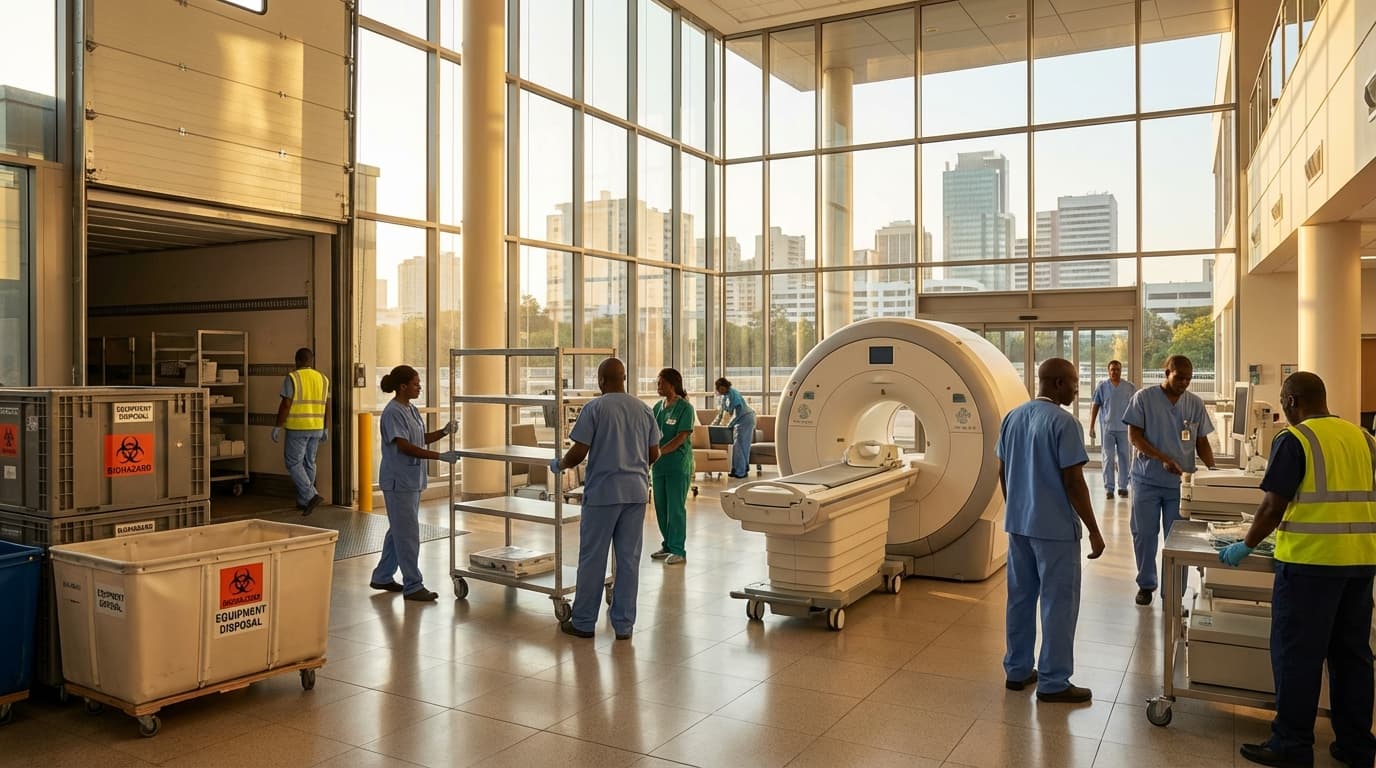
Decommissioning Service for Medical Devices in Congo (Brazzaville)
Engineering Excellence & Technical Support
Decommissioning Service for Medical Devices High-standard technical execution following OEM protocols and local regulatory frameworks.
Comprehensive Asset Auditing & Inventory
We conduct meticulous on-site audits of all medical devices slated for decommissioning, generating a detailed inventory with serial numbers, asset tags, acquisition dates, and current condition. This ensures complete transparency and accountability, forming the bedrock of a compliant and efficient decommissioning process in Congo.
Environmentally Responsible Disposal Pathways
Our service prioritizes safe and sustainable disposal. We adhere to strict international and local environmental regulations for hazardous medical waste. Options include certified recycling, component recovery for reuse, or secure, compliant destruction, minimizing environmental impact in Brazzaville.
Data Security & Compliance Assurance
We guarantee the secure erasure or physical destruction of all sensitive patient and operational data stored on medical devices. Our process ensures full compliance with data privacy regulations, safeguarding against breaches and providing auditable proof of secure data sanitization for all decommissioned equipment in Congo.
What Is Decommissioning Service For Medical Devices In Congo (Brazzaville)?
Decommissioning service for medical devices in Congo (Brazzaville) refers to the systematic and controlled process of retiring a medical device from active clinical use, ensuring its safe and compliant disposition. This encompasses a comprehensive set of activities designed to render the device inoperable, erase sensitive patient data, and manage its environmental impact according to local and international regulations. The service is crucial for healthcare facilities, manufacturers, and regulatory bodies to maintain patient safety, data privacy, and environmental stewardship.
| Who Needs Decommissioning Service? | Typical Use Cases | ||||||||||
|---|---|---|---|---|---|---|---|---|---|---|---|
| Hospitals and Clinics: Healthcare facilities that have reached the end-of-life for their medical equipment, are upgrading to new technologies, or are closing down operations. | Medical Device Manufacturers/Distributors: When devices are recalled, have reached their service life, or are being returned for end-of-life management. | Research Institutions: For devices used in studies that have concluded, or when equipment is no longer required for research purposes. | Government Agencies: Involved in managing public health infrastructure or overseeing the disposal of medical assets. | Third-Party Service Providers: Companies specializing in medical equipment maintenance and lifecycle management. | End-of-Life (EOL) of equipment: When a device has reached the manufacturer's recommended service life or has become obsolete. | Technology Upgrades: Replacing older equipment with newer, more advanced models. | Device Malfunction/Irreparable Damage: When a device is beyond economic repair or poses a safety risk. | Facility Closure or Relocation: Decommissioning all medical equipment in a facility that is ceasing operations or moving premises. | Product Recalls: Removing and safely disposing of recalled medical devices from circulation. | Software Obsolescence: Devices whose supporting software is no longer supported or secure. | Regulatory Mandates: When specific medical devices are required to be removed from service due to changes in regulations or standards. |
Key Components of Medical Device Decommissioning Service
- Data Sanitization and Destruction: Securely erasing all patient health information (PHI) and other sensitive data stored on the device, adhering to standards like HIPAA or GDPR where applicable, and potentially involving physical destruction of storage media for high-risk devices.
- Functional Deactivation: Rendering the device inoperable to prevent unintended use or misidentification. This can involve disabling power, removing critical components, or performing software-based deactivation.
- Environmental Management and Disposal: Sorting, recycling, or safely disposing of device components (including hazardous materials like mercury or batteries) in accordance with national and local environmental regulations. This may involve specialized waste handling protocols.
- Asset Management and Documentation: Recording the decommissioning process, including device details, reasons for decommissioning, date, personnel involved, and final disposition method. This documentation is vital for audit trails and regulatory compliance.
- Regulatory Compliance Verification: Ensuring that all decommissioning activities meet the requirements set by the Ministry of Health and other relevant regulatory bodies in Congo (Brazzaville).
- Safety Procedures: Implementing protocols to protect personnel from potential hazards associated with the device during the decommissioning process (e.g., residual chemicals, sharp components, electrical hazards).
Who Needs Decommissioning Service For Medical Devices In Congo (Brazzaville)?
Decommissioning services for medical devices in Congo (Brazzaville) are crucial for ensuring patient safety, protecting sensitive data, and complying with environmental regulations. This process involves the safe and secure removal, disposal, or repurposing of end-of-life, damaged, or obsolete medical equipment. Identifying the right clients and departments is key to offering effective and tailored decommissioning solutions.
| Customer Type | Key Departments/Personnel Involved | Specific Needs/Reasons for Decommissioning |
|---|---|---|
| Hospitals (Public and Private) | Biomedical Engineering/Clinical Engineering Department, IT Department (for data security), Facilities Management, Procurement Department, Administration | Replacement of aging or faulty equipment, upgrade to newer technology, space optimization, data sanitization of imaging and patient record systems, compliance with disposal regulations. |
| Clinics and Health Centers | Clinic Manager/Administrator, Lead Nurse, IT Support (if applicable) | Small-scale equipment upgrades, disposal of outdated diagnostic tools, ensuring data privacy on any integrated systems. |
| Diagnostic Laboratories | Laboratory Manager, IT Manager, Technical Staff | Obsolescence of specialized testing equipment, data security for laboratory information systems (LIS), proper disposal of hazardous materials used in diagnostics. |
| Research Institutions | Principal Investigators, Research Facility Managers, IT Security | End-of-life for specialized research apparatus, data integrity and security on experimental equipment, ethical disposal of research-related devices. |
| Government Health Agencies | Ministry of Health Officials, Public Health Program Managers, Procurement Officers | Management of surplus or outdated equipment from public health initiatives, national medical inventory upgrades, ensuring standardized and compliant disposal across public facilities. |
| Non-Governmental Organizations (NGOs) | Program Managers, Logistics Coordinators, Healthcare Facility Leads | Phasing out equipment in remote or resource-limited settings, managing donations of older equipment that needs secure disposal, ensuring responsible asset management. |
| Medical Equipment Suppliers and Distributors | Sales Management, Service Department, Logistics/Warehousing | Managing trade-in programs, responsible disposal of returned or unrepairable equipment, end-of-life solutions for equipment they have sold over time. |
| Rehabilitation Centers | Therapy Department Heads, Center Administrators, IT Support | Updating specialized rehabilitation equipment, ensuring data privacy on therapeutic devices with integrated software, safe disposal of worn-out or specialized apparatus. |
Target Customers and Departments for Medical Device Decommissioning in Congo (Brazzaville)
- Hospitals (Public and Private)
- Clinics and Health Centers
- Diagnostic Laboratories
- Research Institutions
- Government Health Agencies
- Non-Governmental Organizations (NGOs) operating in healthcare
- Medical Equipment Suppliers and Distributors (for end-of-life management)
- Rehabilitation Centers
Decommissioning Service For Medical Devices Process In Congo (Brazzaville)
This document outlines the typical workflow for decommissioning medical devices in Congo (Brazzaville), from the initial inquiry to the final execution of the service. The process is designed to ensure compliance with relevant regulations, responsible disposal of equipment, and proper data sanitization.
| Phase | Key Activities | Documentation | Regulatory Considerations (Congo-Brazzaville) |
|---|---|---|---|
| Inquiry & Consultation | Initial contact, scope definition, needs assessment. | Meeting minutes, preliminary scope document. | Understanding local business registration and service provision requirements. |
| Site Assessment & Inventory | On-site inspection, device identification, condition assessment, detailed inventory creation. | Site survey report, detailed device inventory. | Access permissions for site entry. |
| Proposal & Quotation | Developing detailed decommissioning plan, cost estimation. | Formal proposal, detailed quotation. | Clarity on pricing, taxes, and invoicing procedures. |
| Contract & Agreement | Formalizing terms, conditions, responsibilities, and liabilities. | Signed contract/service agreement. | Compliance with contract law and potential need for local legal review. |
| Pre-Decommissioning Preparation | Obtaining permits, scheduling, resource allocation. | Permit documentation, scheduling confirmation. | Specific environmental or waste disposal permits if applicable; import/export regulations for equipment if necessary. |
| Data Sanitization / Destruction | Secure erasure or physical destruction of sensitive data. | Data sanitization logs, certificates of data destruction. | Compliance with any national data protection guidelines (if available) and best practices. |
| Disassembly & Segregation | Breaking down devices, sorting components by material. | Disassembly logs, component segregation records. | Safe handling of potentially hazardous materials. |
| Transportation & Logistics | Secure packaging and transport of devices and components. | Shipping manifests, transport documentation. | Vehicle registration, driver licensing, potential roadworthiness checks; customs regulations if crossing borders. |
| Final Disposal / Recycling | Environmentally sound disposal or recycling of materials. | Disposal manifests, recycling certificates. | Environmental protection regulations, waste management laws, licensed disposal facilities. |
| Certification & Documentation | Issuing proof of service completion and responsible handling. | Certificate of Destruction/Decommissioning, final report, audit trail. | Ensuring documentation meets any national auditing or record-keeping requirements. |
Decommissioning Service Workflow for Medical Devices in Congo (Brazzaville)
- {"title":"1. Inquiry & Initial Consultation","description":"The process begins with a healthcare facility or organization initiating contact with a specialized medical device decommissioning service provider. This initial consultation involves understanding the scope of the decommissioning project, including the types and quantities of medical devices, the facility's location in Congo (Brazzaville), and any specific regulatory or data security concerns."}
- {"title":"2. Site Assessment & Inventory","description":"Upon agreement, the service provider conducts a thorough site assessment. This involves physically inspecting the devices to be decommissioned, confirming their identification (serial numbers, models), assessing their condition, and verifying their status. A detailed inventory is created, documenting each device."}
- {"title":"3. Proposal & Quotation","description":"Based on the site assessment and inventory, the service provider develops a comprehensive proposal and quotation. This document outlines the proposed decommissioning plan, including the methods for data sanitization/destruction, physical disposal or recycling, environmental considerations, timelines, and associated costs. It will also detail the responsibilities of both parties."}
- {"title":"4. Contract & Agreement","description":"Once the proposal is accepted, a formal contract is established. This legally binding agreement details the terms and conditions of the decommissioning service, including liability, insurance, compliance requirements, and payment schedules. It may also include specific clauses related to national or local regulations in Congo (Brazzaville)."}
- {"title":"5. Pre-Decommissioning Preparation","description":"Before physical work begins, preparatory steps are taken. This includes securing necessary permits or approvals from local authorities in Congo (Brazzaville) if required, scheduling the decommissioning activities to minimize disruption to healthcare operations, and preparing specialized equipment and personnel for the task."}
- {"title":"6. Data Sanitization / Destruction","description":"This critical phase ensures that all sensitive patient data stored on medical devices is irretrievably erased or physically destroyed. Methods employed will comply with industry standards and regulatory requirements. This might involve software-based wiping, degaussing, or physical destruction of storage media."}
- {"title":"7. Disassembly & Component Segregation","description":"Following data sanitization, the medical devices are carefully disassembled. Components are segregated based on their material type (e.g., metals, plastics, electronics) and potential for reuse or recycling. This step is crucial for environmentally responsible disposal."}
- {"title":"8. Transportation & Logistics","description":"The decommissioned devices and their components are safely and securely transported from the healthcare facility to the designated processing or disposal site. This involves appropriate packaging and adherence to transportation regulations. Logistics planning is essential for efficient movement within Congo (Brazzaville)."}
- {"title":"9. Final Disposal / Recycling","description":"The segregated components are processed according to their material type. This can include recycling of valuable materials, responsible disposal of hazardous waste in compliance with environmental regulations in Congo (Brazzaville), or donation of functional components if applicable and agreed upon."}
- {"title":"10. Certification & Documentation","description":"Upon completion of the decommissioning process, the service provider issues a Certificate of Destruction or Decommissioning. This document serves as proof that the medical devices have been handled and disposed of in accordance with the agreed-upon plan and any relevant regulations. Detailed records of the entire process, including inventory, data sanitization methods, and disposal manifests, are provided to the client."}
- {"title":"11. Post-Service Review (Optional)","description":"A post-service review may be conducted to gather feedback from the client, identify any areas for improvement, and ensure client satisfaction with the decommissioning service provided in Congo (Brazzaville)."}
Decommissioning Service For Medical Devices Cost In Congo (Brazzaville)
Decommissioning medical devices in Congo (Brazzaville) involves a multi-faceted process that ensures safe and environmentally responsible disposal or repurposing. The costs associated with these services are influenced by several key factors, and consequently, the pricing can vary significantly. Understanding these pricing drivers is crucial for healthcare facilities and organizations planning for device lifecycle management.
| Device Category (Examples) | Estimated Cost Range (CFA) | Notes |
|---|---|---|
| Small diagnostic tools (e.g., stethoscopes, blood pressure monitors) | 10,000 - 30,000 CFA | Primarily involves collection and general waste disposal or basic recycling. |
| Basic laboratory equipment (e.g., centrifuges, microscopes) | 20,000 - 70,000 CFA | May involve basic disassembly and specialized waste segregation. |
| Patient monitoring systems (e.g., ECG machines, vital signs monitors) | 50,000 - 150,000 CFA | Requires careful handling of electronic components and potential data sanitization. |
| Imaging equipment (e.g., X-ray machines, older ultrasound units) | 200,000 - 800,000+ CFA | Significant cost due to size, complex electronics, potential hazardous materials (e.g., lead shielding, coolant), and specialized dismantling. |
| Anesthesia machines | 100,000 - 400,000 CFA | Involves handling of gas systems, complex electronics, and potentially hazardous materials. |
| Large surgical equipment (e.g., surgical lights, tables) | 80,000 - 300,000 CFA | Cost driven by size, weight, and disassembly requirements. |
| Devices with radioactive isotopes or significant hazardous materials | Variable (Consult Provider) | Requires highly specialized licensing, handling, transportation, and disposal protocols, leading to significantly higher and case-by-case pricing. |
Key Pricing Factors for Medical Device Decommissioning in Congo (Brazzaville)
- Type and Complexity of the Medical Device: Simpler, non-electronic devices will generally incur lower decommissioning costs than complex imaging equipment (e.g., MRI, CT scanners) or devices containing hazardous materials (e.g., mercury, radioactive isotopes).
- Condition of the Device: Devices requiring extensive disassembly, specialized handling, or involving potential biohazards will command higher decommissioning fees.
- Volume of Devices: Larger volumes of devices may allow for economies of scale, potentially leading to a lower per-unit cost for the decommissioning service.
- Transportation and Logistics: The distance from the facility to the disposal or recycling center, and the accessibility of the location, will impact transportation costs. Specialized transport for certain equipment also adds to the expense.
- Disposal Method: Options range from secure destruction (incineration, shredding) to recycling and refurbishment. The chosen method directly affects the cost. Environmentally sound disposal, especially for hazardous materials, is often more expensive.
- Regulatory Compliance and Documentation: Adherence to national and international regulations for medical waste disposal and data sanitization (for devices with data storage) requires specialized procedures and documentation, which are factored into the pricing.
- Service Provider Expertise and Licensing: Reputable decommissioning service providers with the necessary licenses, trained personnel, and specialized equipment will typically charge more than less experienced or uncertified operators.
- Data Security and Destruction: For devices containing patient data, rigorous data sanitization or physical destruction is essential and adds to the cost.
- Specialized Handling Requirements: Certain devices may require specialized equipment or expertise due to their size, weight, or specific hazard classification (e.g., lasers, high-voltage components).
- Location of Service: While the focus is Brazzaville, if devices are located in more remote areas, the logistics will become a significant cost driver.
Affordable Decommissioning Service For Medical Devices Options
Navigating the decommissioning of medical devices can be a complex process, involving regulatory compliance, data security, and environmental responsibility. Finding affordable services is crucial for healthcare facilities. This guide explores value bundles and cost-saving strategies for medical device decommissioning.
| Cost-Saving Strategy | Description | Potential Savings | Considerations |
|---|---|---|---|
| Bulk Discounts | Negotiate lower per-unit prices for decommissioning a large volume of devices at once. | 10-25% or more, depending on volume. | Requires accurate inventory and scheduling to maximize efficiency. |
| Long-Term Contracts | Commit to a service provider for an extended period (e.g., 1-3 years) in exchange for discounted rates. | 5-15% reduction in per-unit cost. | Ensure contract flexibility for unforeseen changes in device volume or needs. |
| Early Planning & Scheduling | Proactively plan decommissioning schedules well in advance to avoid rush fees and secure better rates. | Avoids expedited service charges, potentially saving 15-30%. | Requires internal coordination and forecasting of device lifecycle. |
| Responsible Recycling & Resale Options | Prioritize providers who can responsibly recycle or remarket functional devices, offsetting decommissioning costs. | Can generate revenue or significantly reduce disposal fees. | Requires vetting providers for ethical and compliant resale practices. |
| On-Site Data Destruction | Having data securely destroyed on-site can sometimes be more cost-effective and provide greater peace of mind. | Reduces transportation costs and associated risks. | Verify the provider's on-site destruction methods and certifications. |
| Consolidated Pickups | Schedule fewer, larger pickups rather than multiple small ones to minimize transportation expenses. | Reduces fuel and labor costs per pickup. | Requires adequate on-site storage and organization of devices. |
| Standardized Decommissioning Processes | Implement consistent internal processes for preparing devices for decommissioning to improve provider efficiency. | Reduces labor and time spent by the service provider on preparation. | Requires clear internal guidelines and training. |
Understanding Value Bundles
- Tiered Service Packages: Service providers often offer tiered packages that bundle common decommissioning tasks. Basic packages might include secure data destruction and basic recycling, while premium options could incorporate transportation, detailed asset tracking, and certified disposal of hazardous components.
- Comprehensive Solutions: Look for providers who offer end-to-end solutions. This means they handle everything from on-site collection and data wiping to environmentally sound disposal and providing necessary documentation. Bundling these services often results in a lower per-unit cost compared to sourcing them individually.
- Subscription-Based Models: Some providers offer subscription or retainer models. This can be cost-effective for facilities with ongoing decommissioning needs, as it often comes with discounted rates, priority scheduling, and predictable budgeting.
- Partnership Programs: Explore if providers offer partnership programs for larger healthcare networks or organizations with significant volumes of devices. These programs can unlock bulk discounts and customized service agreements.
- Value-Added Services Inclusion: Investigate if a bundle includes important value-added services such as compliance reporting, asset verification for financial reconciliation, or even minor repair/refurbishment options for devices with resale potential.
Verified Providers In Congo (Brazzaville)
Navigating healthcare in Congo (Brazzaville) requires trust and reliability. When seeking verified healthcare providers, especially those with robust credentials, Franance Health stands out as a premier choice. Their commitment to quality assurance, adherence to international standards, and rigorous vetting processes ensure that patients receive exceptional care. This document outlines why Franance Health credentials signify the best choice for your health needs in Congo (Brazzaville).
| Credential Type | Description | Franance Health Verification |
|---|---|---|
| Medical Licenses | Official authorization from regulatory bodies to practice medicine. | Verified for validity, expiry, and scope of practice. |
| Specialty Certifications | Board certifications or recognized qualifications in specific medical fields. | Confirmed with issuing bodies and assessment of recognized equivalency. |
| Educational Degrees | Academic qualifications from accredited institutions. | Verified for authenticity and relevance to medical practice. |
| Work Experience History | Documentation of previous professional roles and responsibilities. | Cross-referenced with references and institutional records where possible. |
| Continuing Medical Education (CME) | Evidence of ongoing learning and skill enhancement. | Mandatory participation tracked and documented. |
| Professional Reputation & Ethics | Assessment of professional conduct and patient satisfaction. | Inclusion of peer reviews and patient feedback monitoring. |
Why Franance Health Credentials Matter:
- Rigorous Vetting Process: Franance Health employs a multi-stage verification process for all its affiliated healthcare professionals and facilities. This includes checking licenses, certifications, educational backgrounds, and practical experience.
- Adherence to International Standards: Franance Health aligns its credentialing standards with globally recognized healthcare benchmarks. This ensures that providers meet a high level of competence and ethical practice.
- Continuous Professional Development: The organization mandates and monitors ongoing training and professional development for its network, guaranteeing that providers remain up-to-date with the latest medical advancements and techniques.
- Patient Safety and Quality Assurance: A core component of Franance Health's credentialing is a strong focus on patient safety and the delivery of high-quality medical services. This includes checks on infection control, equipment maintenance, and patient feedback mechanisms.
- Transparency and Accountability: Franance Health provides a transparent platform for patients to access verified provider information. They maintain a system of accountability, addressing any concerns or issues promptly.
- Specialized Expertise: The network curated by Franance Health includes a diverse range of specialists, ensuring that patients can find the right expert for their specific medical needs, all thoroughly vetted.
Scope Of Work For Decommissioning Service For Medical Devices
This Scope of Work (SOW) outlines the requirements for decommissioning services for medical devices. The objective is to ensure safe, secure, and compliant removal and disposal of medical equipment, adhering to all relevant regulations and industry best practices. This SOW specifies the technical deliverables and standard specifications that the service provider must meet.
| Deliverable/Specification | Description | Standard/Requirement | Verification Method |
|---|---|---|---|
| Decommissioning Plan | Detailed plan outlining the approach, timeline, resources, safety protocols, and disposal methods for each device. | Must comply with relevant environmental, health, and safety regulations (e.g., EPA, OSHA). Include risk assessment and mitigation strategies. | Review and approval by the client before commencement. |
| Asset Inventory Report | Comprehensive list of all devices to be decommissioned, including model, serial number, location, and condition. | Accurate and complete, cross-referenced with client's asset management system. | On-site verification by client representative during the decommissioning process. |
| Data Sanitization Certificate | Proof of secure erasure or destruction of all sensitive data stored on medical devices (e.g., patient information, operating parameters). | Must meet established data security standards (e.g., HIPAA, NIST SP 800-88 Rev. 1). Certificate should detail the sanitization method used for each device. | Review of certificates and logs by the client. Possible random sample verification of devices post-sanitization. |
| Device Decommissioning Record | Individual record for each device detailing the decommissioning process, including date, personnel involved, and any anomalies. | Detailed, accurate, and signed by the responsible technician. | Client spot-checking of records during the project. |
| Waste Manifests/Disposal Certificates | Documentation proving responsible and compliant disposal of decommissioned devices and associated waste. | Must comply with local, state, and federal environmental regulations for hazardous and non-hazardous waste. Certificates should be from licensed disposal facilities. | Review and acceptance of manifests and certificates by the client. |
| Safety Compliance Report | Report detailing adherence to all safety protocols during the decommissioning process. | Includes incident reports (if any), evidence of Personal Protective Equipment (PPE) usage, and adherence to site-specific safety rules. | On-site safety audits by the client. Review of incident reports. |
| Final Decommissioning Report | Consolidated report summarizing the entire decommissioning project, including all deliverables, exceptions, and final disposition of assets. | Comprehensive, clearly written, and includes a summary of all activities and certifications. | Client acceptance and sign-off. |
| Environmental Compliance | Ensuring all decommissioning activities comply with environmental regulations. | Proper handling and disposal of refrigerants, hazardous materials (e.g., mercury), and electronic waste according to EPA and local regulations. | Audits of waste disposal records and facility compliance. |
| Electrical Safety | Safe disconnection and handling of electrical components. | All power sources must be safely disconnected and verified before physical removal. Technicians must be trained in electrical safety. | Visual inspection during decommissioning. Verification of lockout/tagout procedures. |
| Tooling and Equipment | Use of appropriate and calibrated tools for disassembly and removal. | Tools must be in good working order and suitable for the specific medical device. Calibration records for specialized measurement tools may be required. | Visual inspection of tools by client. Request for calibration certificates if specified for critical tasks. |
Key Phases of Decommissioning Service
- Site Assessment and Planning
- Asset Identification and Verification
- Data Sanitization and Destruction
- Physical Decommissioning and Removal
- Waste Management and Disposal
- Documentation and Certification
Service Level Agreement For Decommissioning Service For Medical Devices
This Service Level Agreement (SLA) outlines the response times and uptime guarantees for the Decommissioning Service for Medical Devices provided by [Your Company Name] (hereinafter referred to as "Provider") to [Client Company Name] (hereinafter referred to as "Client"). This SLA is an appendix to the Master Services Agreement (MSA) between the Provider and the Client.
| Service Component | Response Time Guarantee | Uptime Guarantee |
|---|---|---|
Definitions
- {"term":"Decommissioning Service","definition":"The service of safely and securely removing, sanitizing, data wiping, and environmentally responsible disposal of designated medical devices as per industry standards and regulations."}
- {"term":"Service Request","definition":"A formal request submitted by the Client to the Provider for Decommissioning Services, initiated through the designated portal or email address."}
- {"term":"Response Time","definition":"The maximum time allowed for the Provider to acknowledge a Service Request and initiate diagnostic/assessment steps before dispatching a technician or confirming next steps."}
- {"term":"Resolution Time","definition":"The maximum time allowed to complete the Decommissioning Service for a given Service Request, from initial acknowledgement to successful completion and confirmation."}
- {"term":"Scheduled Maintenance","definition":"Planned periods during which the Decommissioning Service may be temporarily unavailable for essential updates or system maintenance. The Client will be notified in advance."}
- {"term":"Force Majeure","definition":"Events beyond the reasonable control of the Provider, including but not limited to, natural disasters, acts of war, or widespread network failures, that may impact service delivery."}
Frequently Asked Questions

Ready when you are
Let's scope your Decommissioning Service for Medical Devices in Congo (Brazzaville) project in Congo (Brazzaville).

Scaling healthcare logistics and technical systems across the entire continent.