
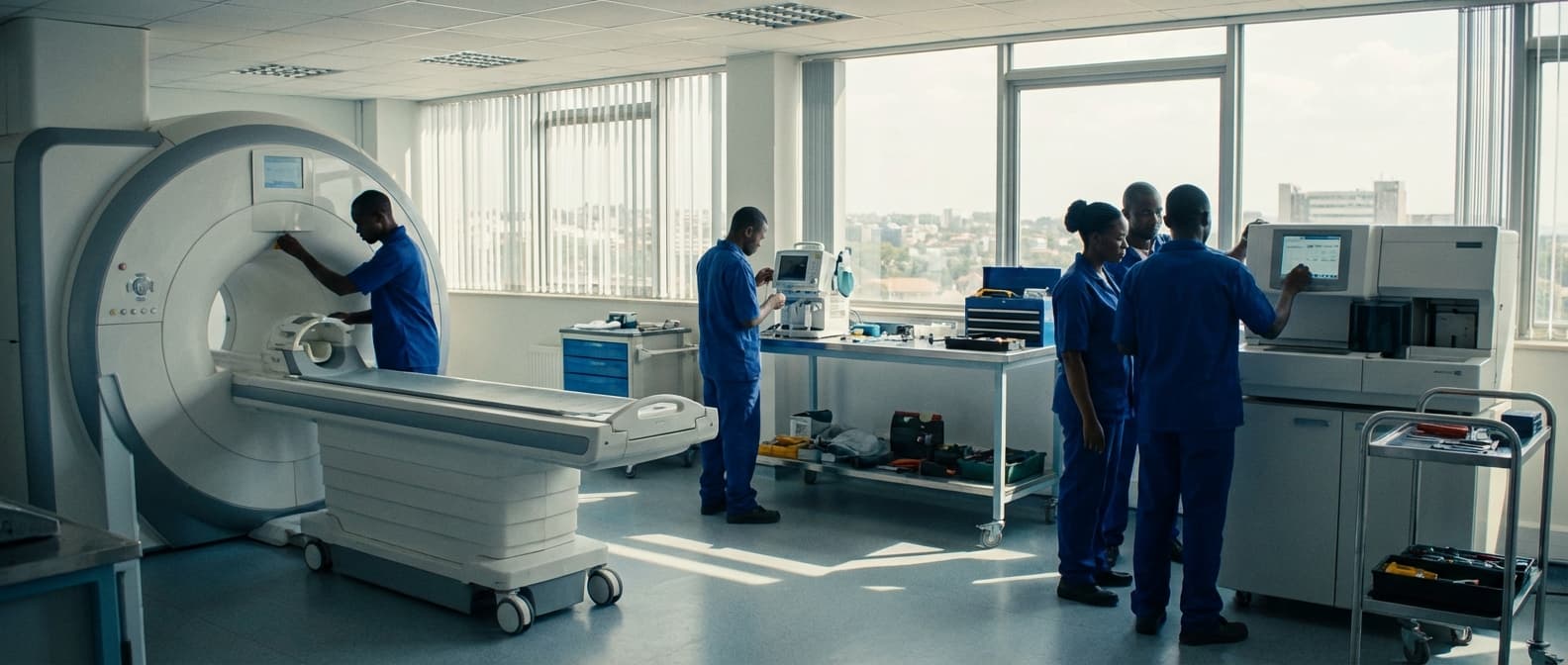
Planned Shutdown Coordination Service for Critical Equipment in Congo (Brazzaville)
Engineering Excellence & Technical Support
Planned Shutdown Coordination Service for Critical Equipment High-standard technical execution following OEM protocols and local regulatory frameworks.
Proactive Equipment Health Monitoring
Leveraging advanced sensor data and predictive analytics to meticulously track the operational health of critical equipment. This allows for early detection of potential issues, enabling us to schedule planned shutdowns precisely when needed, minimizing unexpected downtime and maximizing operational efficiency in Congo (Brazzaville)'s challenging industrial environment.
Optimized Shutdown Scheduling & Resource Allocation
Our service meticulously plans and schedules maintenance activities during pre-defined low-demand periods. We employ sophisticated scheduling algorithms to coordinate the deployment of specialized technicians, necessary parts, and equipment, ensuring minimal disruption to ongoing operations and efficient resource utilization across Congo (Brazzaville)'s critical infrastructure.
Risk Mitigation & Safety Protocol Enforcement
We implement robust risk assessment frameworks and stringent safety protocols tailored to the specific operational context in Congo (Brazzaville). This includes comprehensive pre-shutdown safety briefings, hazard identification, and mitigation strategies, ensuring the safety of personnel and the integrity of critical equipment during all planned maintenance activities.
What Is Planned Shutdown Coordination Service For Critical Equipment In Congo (Brazzaville)?
Planned Shutdown Coordination Service for Critical Equipment in Congo (Brazzaville) refers to a specialized, structured approach to managing the temporary deactivation of essential industrial machinery and infrastructure. This service is crucial for activities such as preventative maintenance, equipment upgrades, regulatory compliance inspections, and the integration of new systems within an operational environment. The primary objective is to minimize operational downtime, mitigate associated risks, and ensure a safe and efficient transition back to full service, all within the specific logistical and regulatory context of Congo (Brazzaville).
| Who Needs the Service | Typical Use Cases | Industry Sectors | |||||||||
|---|---|---|---|---|---|---|---|---|---|---|---|
| Industrial facilities with high-availability requirements. | Preventative maintenance programs for rotating equipment (turbines, pumps, compressors). | Oil and Gas (Upstream, Midstream, Downstream) | Mining and Mineral Processing | Power Generation and Distribution | Large-scale manufacturing plants. | Scheduled overhauls and major component replacements. | Telecommunications Infrastructure | Water and Wastewater Treatment | Companies undertaking significant infrastructure upgrades or expansions. | Integration of new technologies or automation systems. | Government and Public Utilities |
| Organizations facing stringent regulatory compliance mandates. | Mandatory inspections and certifications for safety-critical systems (e.g., pressure vessels, fire protection). | Entities requiring minimal disruption to continuous processes. | Turnarounds for refinery units or chemical plants. | Businesses operating in remote or challenging logistical environments. | Planned replacement of aging or obsolete critical equipment. |
Service Components and Scope
- Detailed planning and scheduling of shutdown windows, aligning with production cycles and market demands.
- Risk assessment and development of mitigation strategies for potential safety hazards, environmental impacts, and operational disruptions.
- Coordination with internal stakeholders (operations, maintenance, safety, procurement) and external vendors/contractors.
- Management of spare parts, consumables, and specialized tooling required for the shutdown activities.
- Development and execution of detailed work scopes, including pre-shutdown checks, isolation procedures, and post-shutdown recommissioning plans.
- Supervision and oversight of all on-site activities during the shutdown period.
- Compliance with local regulatory requirements and adherence to international best practices for industrial safety and environmental management.
- Post-shutdown analysis and reporting, including lessons learned for future planning.
- Logistical support, including transportation, accommodation, and site access for personnel and equipment within Congo (Brazzaville).
Who Needs Planned Shutdown Coordination Service For Critical Equipment In Congo (Brazzaville)?
Planned Shutdown Coordination Service for Critical Equipment in Congo (Brazzaville) is essential for any organization operating heavy machinery, sensitive electronic systems, or any equipment that requires scheduled maintenance, upgrades, or repairs. These services ensure that downtime is minimized, safety is paramount, and operational efficiency is maintained. In Congo (Brazzaville), where industrial infrastructure is crucial for economic development, this service plays a vital role in keeping operations running smoothly and preventing costly disruptions.
| Target Customer Sector | Key Departments Requiring Coordination |
|---|---|
| Mining & Extractive Industries | Operations Department, Maintenance Department, Safety & Environment Department, Logistics Department |
| Oil & Gas | Production Operations, Maintenance & Integrity, HSE (Health, Safety, and Environment), Project Management |
| Manufacturing | Production Management, Plant Engineering & Maintenance, Quality Control, Supply Chain |
| Power & Utilities | Plant Operations, Grid Management, Technical Services, Safety & Compliance |
| Telecommunications | Network Operations, Field Maintenance, Infrastructure Planning, Security Operations |
| Transportation & Logistics | Operations Management, Fleet Maintenance, Infrastructure Management, Safety Department |
| Healthcare | Biomedical Engineering, Facilities Management, Clinical Operations, IT Department |
Target Customers and Departments for Planned Shutdown Coordination Service in Congo (Brazzaville)
- Large-scale industrial facilities
- Mining and Extractive Industries
- Oil and Gas Exploration and Production
- Manufacturing Plants
- Power Generation and Distribution Utilities
- Telecommunications Infrastructure Providers
- Transportation and Logistics Hubs
- Large Agricultural Processing Operations
- Hospitals and Healthcare Facilities with critical medical equipment
- Government and Public Infrastructure Projects
Planned Shutdown Coordination Service For Critical Equipment Process In Congo (Brazzaville)
This service outlines the structured workflow for coordinating planned shutdowns of critical equipment in Brazzaville, Congo. The process ensures minimal disruption, maximum safety, and efficient execution of maintenance activities. It begins with an initial inquiry from the client and culminates in a comprehensive post-shutdown report. This systematic approach leverages clear communication, meticulous planning, and on-site supervision to achieve successful outcomes.
| Stage | Description | Key Activities | Deliverables/Outcomes | Responsible Parties |
|---|---|---|---|---|
| Client expresses a need for a planned shutdown for critical equipment maintenance. The service provider assesses the general requirements and feasibility. | Receive client inquiry, preliminary discussion of equipment, desired shutdown period, and general objectives. Initial risk assessment. | Confirmation of service interest, preliminary understanding of project scope. | Client, Service Provider (Sales/Business Development) |
| Detailed understanding of the shutdown scope, objectives, and constraints. Formal proposal outlining services, timeline, resources, and cost. | Detailed site visit (if necessary), discussions with client's technical team, defining specific maintenance tasks, safety protocols, required resources (personnel, tools, spares), scheduling constraints. Preparation and submission of a comprehensive proposal. | Formal proposal document, detailed scope of work, project timeline, resource plan, cost estimation. | Service Provider (Project Management, Technical Experts), Client (Operations, Maintenance, Procurement) |
| Comprehensive planning and procurement of all necessary resources. Finalization of shutdown schedule and safety procedures. | Detailed work package development, scheduling of all maintenance activities, procurement of spare parts and specialized tools, mobilization of personnel and equipment, finalization of safety permits and procedures, pre-shutdown meetings with client and stakeholders, risk mitigation planning. | Detailed shutdown schedule, approved work permits, confirmed resource availability, established communication channels, completed safety inductions. | Service Provider (Project Management, Engineering, Safety Officers), Client (Operations, Maintenance, HSE) |
| Managed execution of the planned shutdown and maintenance activities according to the approved schedule and safety procedures. | On-site management of all shutdown activities, coordination of maintenance teams, adherence to safety protocols, real-time progress monitoring, issue resolution, daily progress reporting, communication with client's on-site representatives. | Completion of scheduled maintenance tasks, operational equipment, adherence to safety standards, immediate identification and resolution of deviations. | Service Provider (On-site Project Manager, Supervisors, Technicians), Client (On-site Representatives, Operations, Maintenance) |
| Handover of equipment, demobilization, and submission of a comprehensive report detailing the shutdown execution and outcomes. | Equipment handover and testing, final site cleanup, demobilization of personnel and equipment, compilation of maintenance records, creation of a detailed post-shutdown report (including lessons learned, performance analysis, and recommendations), financial closure. | Handed-over operational equipment, comprehensive post-shutdown report, final invoice, project close-out documentation. | Service Provider (Project Management, Technical Teams), Client (Operations, Maintenance, Finance) |
Planned Shutdown Coordination Service Workflow
- 1. Inquiry and Initial Assessment:
- 2. Scope Definition and Proposal Development:
- 3. Pre-Shutdown Planning and Preparation:
- 4. On-Site Execution and Supervision:
- 5. Post-Shutdown Activities and Reporting:
Planned Shutdown Coordination Service For Critical Equipment Cost In Congo (Brazzaville)
Coordinating planned shutdowns for critical equipment in Congo (Brazzaville) is a specialized service that requires meticulous planning, expert execution, and robust safety protocols. The cost of such a service is influenced by several key factors, leading to a variable pricing structure. Understanding these factors is crucial for businesses to budget effectively and ensure the smooth operation of their critical assets. These services are vital for preventive maintenance, upgrades, and minimizing unforeseen downtime, which can be exceptionally costly in an industrial setting. The pricing will reflect the complexity of the equipment, the duration of the shutdown, the level of expertise required, and the specific demands of the operating environment in Congo (Brazzaville).
| Service Level/Complexity | Estimated Price Range (XAF) |
|---|---|
| Basic Coordination (Standard Equipment, Shorter Duration): Includes initial planning, scheduling, and basic on-site supervision. | 500,000 - 1,500,000 XAF |
| Intermediate Coordination (Complex Equipment, Moderate Duration): Involves detailed planning, specialized team coordination, risk assessment, and enhanced safety oversight. | 1,500,000 - 5,000,000 XAF |
| Advanced Coordination (Highly Critical Equipment, Extended Duration/Multiple Units): Comprehensive project management, integration of multiple specialist teams, extensive risk mitigation, full compliance management, and emergency preparedness. | 5,000,000 - 20,000,000+ XAF |
| Emergency/Unplanned Shutdown Coordination (Premium): Typically commands a significant premium due to urgency, often involving mobilization of specialized teams on short notice and expedited processes. | 10,000,000 - 50,000,000+ XAF |
Key Pricing Factors for Planned Shutdown Coordination Services
- Equipment Complexity and Criticality: The more complex and critical the equipment, the higher the coordination costs. This includes specialized machinery, large-scale industrial units, and systems that, if they fail, would cause significant operational disruption or safety hazards.
- Scope and Duration of the Shutdown: A comprehensive shutdown involving multiple pieces of equipment or extended maintenance periods will naturally incur higher costs than a shorter, more targeted intervention.
- Required Expertise and Specialization: The need for highly skilled technicians, engineers, or specialized project managers with experience in the specific industry or equipment will drive up costs. This includes certifications and proven track records.
- Safety and Environmental Compliance: Implementing stringent safety procedures, obtaining permits, and ensuring adherence to local and international environmental regulations often requires additional resources and specialized personnel, impacting the overall price.
- Logistics and Mobilization: Costs associated with mobilizing personnel and equipment to the site in Congo (Brazzaville), including travel, accommodation, and local transportation, are significant components of the service fee.
- On-site Support and Supervision: The level of on-site project management, supervision, and continuous support throughout the shutdown period directly influences the pricing.
- Risk Assessment and Mitigation: The complexity of risk assessment and the development of mitigation strategies for potential issues during the shutdown contribute to the overall service cost.
- Materials and Consumables (if bundled): While coordination is the core service, some providers may include the cost of specific consumables or materials required for the planned maintenance activities, affecting the total price.
- Emergency Response Planning: The inclusion of robust emergency response plans and associated readiness measures adds to the service's value and cost.
- Local Regulatory and Bureaucratic Considerations: Navigating local regulations, obtaining necessary approvals, and dealing with potential bureaucratic processes in Congo (Brazzaville) can add time and complexity, thus influencing pricing.
Affordable Planned Shutdown Coordination Service For Critical Equipment Options
This document outlines affordable planned shutdown coordination services for critical equipment, focusing on value bundles and cost-saving strategies. Effective shutdown planning is crucial to minimize downtime, optimize resource allocation, and ensure safety. We offer flexible service packages designed to meet diverse operational needs and budgets.
| Value Bundle | Description | Included Services | Target Audience | Estimated Cost Savings Potential |
|---|---|---|---|---|
| Essential Spark | Budget-friendly foundational planning for smaller-scale or less complex shutdowns. | Core Shutdown Planning, Basic Risk Assessment, Essential Communication Plan | Small to Medium Enterprises (SMEs), organizations with limited shutdown experience | 10-15% through reduced overtime and minimized reactive repairs |
| Proactive Pulse | Balanced approach offering robust coordination for routine but critical shutdowns. | Core Shutdown Planning, Enhanced Coordination, Vendor Liaison, Basic Safety Oversight | Medium to Large Enterprises with regular critical equipment maintenance schedules | 15-25% through optimized scheduling, efficient resource utilization, and improved vendor negotiation |
| Total Turnaround | All-encompassing service for complex, high-stakes shutdowns requiring detailed management. | Comprehensive Management, On-site Project Management, Advanced Risk Mitigation, Integrated Predictive Maintenance Data Analysis, Detailed Post-Shutdown Reporting | Large industrial facilities, organizations with highly complex or high-impact critical equipment | 20-35% through significant reduction in unplanned downtime, extended equipment lifespan, and optimized operational efficiency |
| Modular Mix-and-Match | Flexible options allowing clients to pick and choose specific services to complement their in-house expertise. | Select from any of the above service components on an à la carte basis. | Organizations with specific internal skill gaps or unique shutdown requirements | Variable, depending on services selected, but aims to optimize spending on necessary support |
Key Service Offerings
- Core Shutdown Planning: Includes scope definition, resource identification, scheduling, risk assessment, and communication protocols.
- Enhanced Coordination: Adds on-site supervision, vendor management, progress tracking, and post-shutdown review.
- Comprehensive Management: Encompasses all aspects of the enhanced coordination, plus detailed budgeting, predictive maintenance integration, and root cause analysis for past issues.
- Customizable Modules: Allows clients to select specific services to augment their internal capabilities.
- Emergency Preparedness Integration: Includes planning for unplanned events and rapid response coordination.
Verified Providers In Congo (Brazzaville)
When seeking healthcare services in Congo (Brazzaville), identifying 'Verified Providers' is paramount for ensuring quality, safety, and ethical practices. Franance Health stands out as a leading organization in this regard. Their rigorous credentialing process ensures that all affiliated healthcare professionals and facilities meet the highest standards, making them the most reliable choice for patients. This document outlines what 'Verified Providers' signify in Congo (Brazzaville) and details the specific credentials and benefits offered by Franance Health.
| Franance Health Credential/Attribute | Description | Why It Represents the Best Choice |
|---|---|---|
| Rigorous Qualification Screening | Franance Health meticulously reviews the educational degrees, certifications, licenses, and specialized training of all healthcare professionals. | Ensures that only highly qualified and competent doctors, nurses, and specialists are part of their network, minimizing the risk of misdiagnosis or improper treatment. |
| Criminal Background Checks | Comprehensive background checks are conducted on all affiliated personnel. | Guarantees patient safety by ensuring that providers have no history of misconduct or criminal activity relevant to healthcare practice. |
| Professional Performance Review | Regular assessments of clinical outcomes, patient feedback, and peer reviews are part of the verification process. | Maintains a high standard of care over time, demonstrating a commitment to continuous improvement and patient satisfaction. |
| Ethical Practice Audits | Franance Health ensures that all providers adhere to a strict code of ethics, including patient confidentiality, non-discrimination, and transparency in billing. | Builds trust and provides peace of mind to patients, knowing they will receive fair, respectful, and confidential treatment. |
| Facility Standards Compliance | For facilities, verification includes inspections of infrastructure, equipment, hygiene protocols, and emergency preparedness. | Ensures that patients receive care in a safe, clean, and well-equipped environment, conducive to healing and recovery. |
| Continuing Medical Education (CME) Mandate | Franance Health requires its providers to engage in ongoing professional development and training. | Keeps providers updated with the latest medical advancements, techniques, and best practices, ensuring patients benefit from cutting-edge healthcare. |
| Patient Advocacy and Support | Franance Health often provides resources and support for patients navigating the healthcare system, including access to information and assistance. | Empowers patients and simplifies their healthcare journey, making it easier to find and access the right care. |
What 'Verified Providers' Means in Congo (Brazzaville)
- Ensured Competence and Expertise: Verified Providers have undergone a thorough assessment of their educational background, training, and practical experience. This guarantees that they possess the necessary skills and knowledge to deliver effective medical care.
- Adherence to Ethical Standards: Verification includes a review of professional conduct and a commitment to patient rights, privacy, and informed consent. This ensures that patients are treated with respect and dignity.
- Compliance with Regulations: Verified Providers operate in accordance with national healthcare laws and regulations, promoting a safe and accountable healthcare environment.
- Access to Quality Resources: Many verified providers are associated with well-equipped facilities that meet specific standards for hygiene, technology, and patient comfort.
- Patient Trust and Confidence: The 'Verified' status acts as a seal of approval, allowing patients to make informed choices and have greater confidence in the healthcare services they receive.
Scope Of Work For Planned Shutdown Coordination Service For Critical Equipment
This Scope of Work (SOW) outlines the services required for the coordination of planned shutdowns for critical equipment. The primary objective is to ensure efficient, safe, and timely execution of maintenance, repair, or upgrade activities while minimizing operational disruption and associated risks. The service will encompass all phases of the shutdown process, from initial planning and scheduling to execution oversight and post-shutdown review. Standard specifications for technical deliverables and methodologies are detailed below.
| Deliverable | Description | Format | Frequency/Timing | Standard Specification |
|---|---|---|---|---|
| Shutdown Master Schedule | A detailed timeline outlining all activities, dependencies, and milestones for the shutdown. | Microsoft Project, Primavera P6, or equivalent Gantt chart format. | Initial draft prior to shutdown; updated daily during execution. | Includes critical path analysis, resource leveling, and milestone tracking. Must be traceable to individual work packages. |
| Risk Assessment and Mitigation Plan | Identification of potential risks associated with the shutdown (technical, safety, operational, environmental) and proposed mitigation measures. | Microsoft Word document, PDF. | Prior to shutdown approval; reviewed and updated regularly. | Follows a standardized risk assessment matrix (e.g., HAZOP, JSA). Includes probability, severity, and mitigation effectiveness ratings. |
| Work Package Descriptions | Detailed scope of work for each individual maintenance or repair task to be performed during the shutdown. | Microsoft Word document, PDF. | Developed during the planning phase; finalized prior to shutdown. | Includes objectives, scope, required resources, safety precautions, acceptance criteria, and expected duration. |
| Communication Plan | Outlines communication channels, reporting lines, stakeholders, and frequency of updates during the shutdown. | Microsoft Word document, PDF. | Developed during the planning phase; implemented throughout. | Specifies reporting formats, meeting schedules, and escalation procedures. |
| Isolation and De-isolation Certificates | Formal documentation confirming the safe isolation or re-energization of equipment. | Company-specific forms, electronic or paper-based. | As required for each isolation/de-isolation event. | Must include clear identification of equipment, authorizing personnel, verification steps, and timestamps. |
| Daily Progress Report | Summary of activities performed, progress against schedule, issues encountered, and upcoming tasks. | Microsoft Word document, PDF, or standardized reporting tool. | Daily during shutdown execution. | Quantifiable progress metrics, identification of deviations from plan, and actions taken. |
| Post-Shutdown Review Report | Comprehensive report detailing the overall shutdown performance, including achievements, deviations, lessons learned, and recommendations for future improvements. | Microsoft Word document, PDF. | Within two weeks of shutdown completion. | Includes analysis of schedule adherence, budget performance, safety incidents, and operational impact. |
| As-Built Drawings/Documentation (if applicable) | Updated technical drawings or documentation reflecting any modifications made during the shutdown. | CAD files (e.g., AutoCAD, DWG), PDF. | Upon completion of relevant work packages. | Must adhere to established company drafting standards and naming conventions. |
Key Responsibilities and Activities
- Develop comprehensive shutdown plans, including detailed schedules, resource allocation, and contingency plans.
- Coordinate with all relevant internal departments (Operations, Maintenance, Engineering, Safety, Procurement) and external vendors.
- Conduct pre-shutdown site surveys and risk assessments to identify potential hazards and develop mitigation strategies.
- Oversee the isolation and de-isolation procedures for critical equipment.
- Manage the execution of planned shutdown activities, ensuring adherence to schedule, budget, and safety protocols.
- Facilitate communication and provide regular progress updates to stakeholders.
- Coordinate permit-to-work systems and ensure compliance with safety regulations.
- Manage the mobilization and demobilization of vendor personnel and equipment.
- Conduct post-shutdown inspections and performance testing to verify successful completion of work.
- Develop and deliver comprehensive shutdown reports, including lessons learned and recommendations for future shutdowns.
- Ensure all documentation is accurately maintained and archived.
- Liaise with regulatory bodies as required.
- Implement best practices for shutdown management and continuous improvement.
Service Level Agreement For Planned Shutdown Coordination Service For Critical Equipment
This Service Level Agreement (SLA) outlines the terms and conditions for the Planned Shutdown Coordination Service for Critical Equipment. It defines response times for critical events and uptime guarantees for the coordination platform itself. This SLA aims to ensure minimal disruption to operations during planned maintenance and upgrades.
| Service Component | Metric | SLA Target | Measurement Method |
|---|---|---|---|
| Planned Shutdown Planning & Scheduling Support | Response Time to Initial Request for Coordination | 4 Business Hours | Time from client submission of a valid coordination request to confirmation of receipt and initial assessment by the service provider. |
| Planned Shutdown Planning & Scheduling Support | Response Time to Critical Change Request (e.g., significant scope alteration) | 2 Business Hours | Time from client submission of a validated critical change request to acknowledgment and initiation of impact assessment by the service provider. |
| Coordination Platform Availability | Uptime Guarantee | 99.9% | Calculated monthly as: (Total Minutes in Month - Downtime Minutes) / Total Minutes in Month. Downtime excludes scheduled maintenance windows communicated with at least 7 days' notice. |
| Emergency Contact/Escalation | Response Time to Escalated Issue during Planned Shutdown | 1 Business Hour | Time from client escalation notification to acknowledgment and initiation of troubleshooting/resolution by the service provider's designated escalation team. |
| Post-Shutdown Review Facilitation | Response Time to Request for Review Meeting | 3 Business Days | Time from client request for a post-shutdown review meeting to proposed meeting schedule by the service provider. |
Key Definitions
- Critical Equipment: Any piece of machinery, system, or component whose failure or unplanned downtime would significantly impact production, safety, or service delivery.
- Planned Shutdown: A scheduled interruption of service for Critical Equipment, undertaken for maintenance, upgrade, or inspection purposes.
- Coordination Platform: The software and communication infrastructure used to manage and facilitate Planned Shutdowns.
- Response Time: The maximum allowable time from the initiation of a critical event (as defined below) to the commencement of service provider engagement.
- Uptime Guarantee: The percentage of time the Coordination Platform is expected to be operational and accessible.
Frequently Asked Questions

Ready when you are
Let's scope your Planned Shutdown Coordination Service for Critical Equipment in Congo (Brazzaville) project in Congo (Brazzaville).

Scaling healthcare logistics and technical systems across the entire continent.