
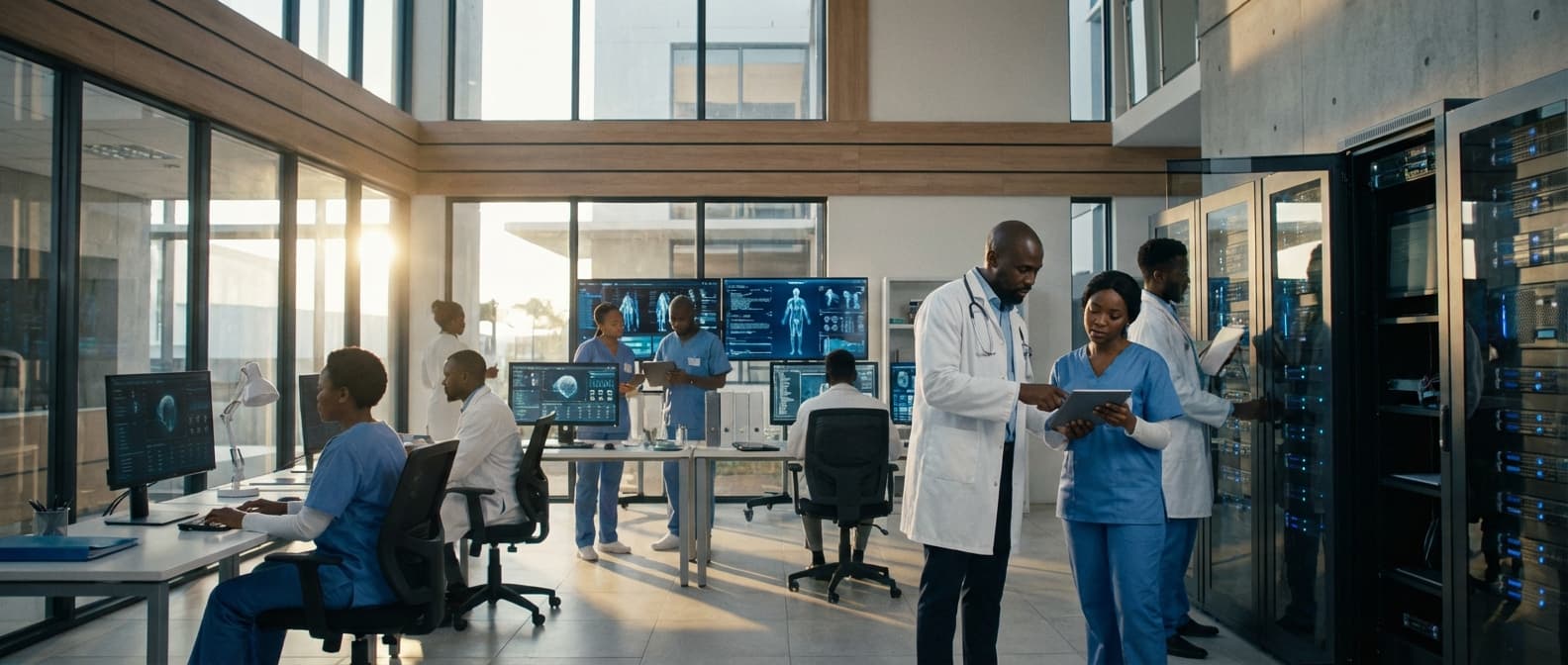
Tele-Radiology in Congo (Brazzaville)
Engineering Excellence & Technical Support
24/7 access to certified radiologists providing rapid, accurate remote interpretation of diagnostic imaging studies. High-standard technical execution following OEM protocols and local regulatory frameworks.
Bridging Geographic Divides
Leveraging advanced telemedicine platforms, Tele-Radiology in Congo (Brazzaville) overcomes vast distances, enabling expert radiological interpretation for remote clinics and underserved populations, significantly reducing travel time and improving diagnostic accessibility.
Expert Consultation On-Demand
Provides immediate access to a network of highly skilled radiologists, offering real-time consultation on complex cases. This ensures that patients in Congo (Brazzaville) receive specialized diagnostic opinions, leading to more accurate diagnoses and timely treatment plans.
Empowering Local Healthcare Infrastructure
Through training and technology transfer, Tele-Radiology strengthens the capacity of local healthcare professionals and facilities in Congo (Brazzaville). This sustainable approach fosters self-sufficiency in diagnostic imaging and enhances the overall quality of patient care within the country.
What Is Tele-radiology In Congo (Brazzaville)?
Tele-radiology in Congo (Brazzaville) refers to the practice of transmitting radiological images (e.g., X-rays, CT scans, MRIs) from a healthcare facility in Congo to a remote radiologist for interpretation. This service leverages telecommunications technology to bridge geographical distances, enabling access to specialized radiological expertise where it may be scarce locally. The process typically involves the acquisition of medical images at the originating site, their secure digitization and transmission to a remote location, and subsequent interpretation and reporting by a qualified radiologist. The interpreted report is then transmitted back to the referring physician. This modality is particularly crucial in regions with limited availability of trained radiologists, specialized equipment, or the infrastructure to support comprehensive diagnostic imaging services.
| Stakeholder/Need | Description of Need | Benefit of Tele-radiology |
|---|---|---|
| Rural Healthcare Facilities | Limited or no in-house radiology expertise and equipment. | Provides access to expert diagnostic interpretation, improving patient care and reducing the need for patient travel to urban centers. |
| Hospitals in Urban Centers | Overburdened local radiologists, lack of subspecialty expertise (e.g., neuroradiology, pediatric radiology). | Augments existing radiology departments, allows for second opinions, and provides access to subspecialty readings, enhancing diagnostic accuracy and turnaround times. |
| Primary Care Physicians | Need timely and accurate interpretation of radiological studies for diagnosis and treatment planning. | Facilitates prompt access to radiologist reports, enabling faster clinical decision-making and reducing delays in patient management. |
| Patients in Remote Areas | Limited access to diagnostic imaging services and specialist consultations. | Democratizes access to advanced diagnostics, preventing the need for potentially long and costly travel for imaging and interpretation. |
| Public Health Initiatives | Need for widespread screening and diagnostic capabilities for specific diseases (e.g., tuberculosis, endemic pathologies). | Enables scalable diagnostic support for public health programs, facilitating early detection and intervention. |
Key Aspects of Tele-radiology in Congo (Brazzaville)
- Image Acquisition: Digital capture of radiological examinations (X-ray, CT, MRI, Ultrasound).
- Data Transmission: Secure and encrypted transfer of large image files over networks (internet, dedicated lines).
- Remote Interpretation: Analysis of transmitted images by a radiologist located in a different geographical area.
- Reporting: Generation of a diagnostic report by the remote radiologist.
- Feedback Loop: Transmission of the report back to the referring clinician for patient management.
- Technological Infrastructure: Requires PACS (Picture Archiving and Communication System), Teleradiology software, and reliable network connectivity.
Who Needs Tele-radiology In Congo (Brazzaville)?
Tele-radiology offers a crucial solution for improving diagnostic imaging access and quality in Congo (Brazzaville), addressing significant challenges in infrastructure, specialist availability, and geographic remoteness. By connecting local healthcare facilities with remote radiologists, tele-radiology can bridge critical gaps, leading to faster diagnoses, more accurate treatment planning, and ultimately, better patient outcomes.
| Customer Segment | Key Departments/Needs | Specific Challenges Addressed |
|---|---|---|
| Public Hospitals (e.g., University Hospital of Brazzaville, General Hospitals) | Radiology Department, Emergency Room, Internal Medicine, Surgery, Pediatrics, Neurology, Oncology | Lack of in-house radiologists, outdated equipment, long waiting times for interpretation, limited subspecialty expertise, high patient load. |
| Private Hospitals and Clinics | Radiology Department, Outpatient Services, Specialist Clinics (e.g., cardiology, neurology) | Desire for faster turnaround times, access to subspecialty opinions, competitiveness in service offering, supplementing existing radiologist capacity. |
| Referral Centers and Regional Hospitals | Radiology, General Medicine, Surgery | Geographic isolation, limited access to advanced imaging modalities, need for specialized interpretations for complex cases, supporting surrounding smaller facilities. |
| Rural Clinics and Health Posts (with basic imaging capabilities) | General Medicine, Primary Care | Absolute lack of on-site radiology expertise, enabling basic diagnostic imaging (e.g., X-rays) to be interpreted remotely, preventing unnecessary patient transfers. |
| Specialized Medical Centers (e.g., oncology centers, cardiac centers) | Oncology, Cardiology, Neurology, Neurosurgery | Need for highly specialized interpretations of advanced imaging (CT, MRI), second opinions for complex diagnoses and treatment planning, subspecialty radiology support. |
| Medical Training Institutions | Radiology Residency Programs, Continuing Medical Education | Providing educational case studies and remote supervision for trainees, facilitating continuous learning and skill development for local radiologists. |
Target Customers and Departments for Tele-Radiology in Congo (Brazzaville)
- Hospitals (Public and Private)
- Referral Centers
- Rural Clinics and Health Posts
- Specialized Medical Centers
- Medical Training Institutions
Tele-radiology Process In Congo (Brazzaville)
Tele-radiology, the practice of interpreting medical images remotely, offers a significant opportunity to improve diagnostic capabilities in regions with limited access to specialized radiologists, such as Congo (Brazzaville). The workflow, from initial inquiry to final report, is designed to bridge geographical gaps and ensure timely and accurate diagnoses. This process typically involves a referring physician in Congo, a teleradiology service provider (potentially located internationally), and the patient's medical records. Key stages include image acquisition, secure transmission, remote interpretation, and report delivery.
| Stage | Description | Key Stakeholders | Technology/Tools |
|---|---|---|---|
| Local physician assesses patient and orders imaging. | Local Physician, Patient | Clinical knowledge, EHR (if available) |
| Radiological imaging performed at local facility. | Radiology Technologist, Patient | X-ray machine, CT scanner, MRI machine, PACS |
| Images converted to digital format and prepared for transmission. | Radiology Technologist, Local IT Support | DICOM standard, Anonymization software |
| Digital images sent securely to teleradiology provider. | Local IT Support, Teleradiology Platform Administrator | Secure internet connection, VPN, Encryption protocols, PACS |
| Case assigned to an appropriate remote radiologist. | Teleradiology Platform Administrator | Teleradiology Workflow Software |
| Radiologist reviews images and forms a diagnosis. | Remote Radiologist | High-resolution monitors, Teleradiology viewing software |
| Radiologist creates a diagnostic report. | Remote Radiologist | Voice recognition software, Dictation software, Report templates |
| Report checked for accuracy and completeness. | Senior Radiologist, Quality Assurance Specialist | Teleradiology QC module |
| Final report sent back to the local facility. | Teleradiology Platform Administrator, Local IT Support | Secure internet connection, Encrypted email, Teleradiology platform |
| Local physician interprets the report and discusses with patient. | Local Physician, Patient | Clinical knowledge, Patient communication skills |
| Report added to patient's medical records. | Local Physician, Medical Records Staff | EHR system |
Tele-Radiology Workflow Stages in Congo (Brazzaville)
- 1. Patient Consultation & Image Ordering: A local physician in Congo (Brazzaville) consults with a patient and determines the need for radiological imaging (e.g., X-ray, CT scan, MRI).
- 2. Image Acquisition: The imaging procedure is performed at a local healthcare facility in Congo (Brazzaville) equipped with compatible imaging equipment.
- 3. Image Digitization & Pre-processing: The acquired images are digitized (if not already digital) and may undergo initial pre-processing (e.g., anonymization, quality checks) at the local facility.
- 4. Secure Image Transmission: The digitized images are securely transmitted over a reliable internet connection to the teleradiology service provider. This often involves encrypted channels and Picture Archiving and Communication Systems (PACS) or similar platforms.
- 5. Teleradiology Service Provider Assignment: Upon receiving the images, the teleradiology platform assigns the case to a qualified radiologist based on specialty, availability, and subspecialty requirements.
- 6. Remote Image Interpretation: The assigned radiologist, located elsewhere, accesses and reviews the images using specialized software on their workstation. They analyze the findings, consider clinical history, and formulate a diagnosis.
- 7. Report Generation: The radiologist dictates or types a comprehensive diagnostic report, including findings, impressions, and recommendations. This report is often structured and standardized.
- 8. Report Review & Quality Assurance: In some models, a second radiologist or a quality assurance specialist may review the report for accuracy and completeness.
- 9. Secure Report Transmission: The final diagnostic report is securely transmitted back to the referring physician in Congo (Brazzaville) through the teleradiology platform or a secure email system.
- 10. Local Physician Review & Patient Consultation: The local physician in Congo (Brazzaville) receives the report, reviews it in conjunction with the patient's clinical status, and discusses the findings and treatment plan with the patient.
- 11. Integration with Electronic Health Records (EHR): The report is typically integrated into the patient's local medical records or EHR system for future reference.
Tele-radiology Cost In Congo (Brazzaville)
Tele-radiology, the practice of interpreting medical images remotely, is a burgeoning field with significant potential to improve healthcare access in regions like Congo (Brazzaville), where specialist radiologists may be scarce. The cost of tele-radiology services in Congo (Brazzaville) is not a fixed figure and is influenced by a multitude of factors. These include the complexity and type of imaging study (e.g., X-ray, CT, MRI), the urgency of the report, the subspecialty required for interpretation, the technology platform used by the service provider, and the operational overheads. Due to the developing nature of tele-radiology adoption, there isn't a readily available, standardized pricing guide. However, based on general market trends and considerations for service providers in similar economic contexts, we can outline potential pricing factors and estimate a range in the local currency, the Central African CFA franc (XAF).
| Service/Study Type | Estimated Price Range (XAF) |
|---|---|
| Basic X-ray Interpretation (e.g., Chest X-ray, Limb X-ray) | 15,000 - 30,000 |
| CT Scan Interpretation (e.g., Head CT, Abdomen CT - single slice) | 30,000 - 75,000 |
| MRI Scan Interpretation (e.g., Brain MRI, Spinal MRI - single slice) | 50,000 - 120,000 |
| Ultrasound Interpretation (e.g., Abdominal Ultrasound, Pelvic Ultrasound) | 20,000 - 45,000 |
| STAT/Rush Interpretation (additional fee) | 5,000 - 15,000 (on top of base fee) |
| Subspecialty Interpretation (additional fee) | 10,000 - 40,000 (on top of base fee, depending on subspecialty) |
Key Pricing Factors for Tele-Radiology in Congo (Brazzaville):
- Type of Imaging Modality: Simple X-rays are generally less expensive to interpret than more complex studies like CT scans or MRIs, which require more specialized software and expertise.
- Urgency of Report: Standard reports typically have a turnaround time of 24-48 hours. Rush or STAT interpretations, often required for critical cases, will command a higher fee.
- Subspecialty Expertise: Interpretation by a general radiologist is usually more affordable than that by a subspecialist (e.g., neuroradiologist, interventional radiologist, pediatric radiologist) who possesses advanced training in a specific area.
- Volume of Studies: Healthcare facilities that commit to a higher volume of tele-radiology studies might be able to negotiate bulk discounts or lower per-study rates.
- Technology and Platform: The cost can vary depending on the tele-radiology platform provider. This includes the software used for image transmission, storage, and reporting, as well as the connectivity infrastructure required.
- Radiologist's Experience and Location: While remote, the qualifications, experience level, and even the geographical location (if the service provider has different pricing tiers based on where their radiologists are based) of the interpreting radiologist can influence the cost.
- Ancillary Services: Some tele-radiology providers may offer additional services such as preliminary reports, follow-up consultations, or integration with electronic health records, which can add to the overall cost.
- Regulatory and Administrative Costs: Depending on the local regulatory environment and the administrative overhead of the tele-radiology provider, these costs can be factored into the pricing.
- Exchange Rates and Economic Factors: While pricing is in XAF, broader economic conditions and potential exchange rate fluctuations if services are sourced internationally can indirectly impact costs.
Affordable Tele-radiology Options
Tele-radiology offers a cost-effective solution for healthcare providers by outsourcing diagnostic imaging interpretation to remote radiologists. This can significantly reduce overhead associated with in-house radiology departments, such as equipment maintenance, staff salaries, and facility costs. Furthermore, tele-radiology provides 24/7 coverage, improving turnaround times and patient care, especially in underserved or rural areas. Value bundles and strategic cost-saving measures are key to maximizing the financial benefits of tele-radiology services.
| Cost-Saving Strategy | Description | Potential Benefit |
|---|---|---|
| Reduced Staffing Overhead | Eliminating the need for full-time, in-house radiologists and support staff. | Significant savings on salaries, benefits, recruitment, and training costs. |
| Optimized Equipment Utilization | Leveraging existing imaging equipment without the burden of managing a dedicated radiology department. | Lower capital expenditure and maintenance costs associated with radiology-specific infrastructure. |
| Improved Turnaround Times | Faster report turnaround due to 24/7 availability of radiologists, leading to quicker treatment decisions. | Enhanced patient flow, reduced length of stay, and improved patient satisfaction. |
| Access to Subspecialists | Consulting with subspecialty radiologists remotely for complex cases without the cost of employing them directly. | Improved diagnostic accuracy and better patient outcomes for specialized conditions. |
| Scalability and Flexibility | Adjusting tele-radiology services based on fluctuating patient volumes or specific needs. | Avoidance of overstaffing during low-demand periods and ensuring adequate coverage during peak times. |
| Elimination of Infrastructure Costs | Not needing dedicated reading rooms, specialized IT infrastructure for radiology, or physical office space for radiologists. | Savings on real estate, utilities, and IT maintenance. |
Value Bundles in Tele-Radiology
- {"title":"Per-Study Pricing","description":"A straightforward model where healthcare facilities are charged a fixed fee for each interpreted imaging study. This is often the most transparent and predictable pricing structure, ideal for facilities with consistent imaging volumes."}
- {"title":"Subspecialty Packages","description":"Bundles that offer dedicated interpretation services for specific subspecialties (e.g., neuroradiology, musculoskeletal radiology, pediatric radiology). This ensures access to expert opinions for complex cases and can be more cost-effective than maintaining in-house subspecialists."}
- {"title":"Volume-Based Discounts","description":"Tiered pricing where the per-study cost decreases as the volume of studies increases. This incentivizes larger healthcare systems or facilities with high imaging throughput to adopt tele-radiology."}
- {"title":"Full-Service Contracts","description":"Comprehensive agreements that include not only interpretation but also workflow integration, IT support, quality assurance, and potentially preliminary report generation. These are typically for longer-term partnerships and offer a holistic solution."}
- {"title":"On-Call Coverage Packages","description":"Bundles designed to provide immediate interpretation services during off-hours, weekends, or holidays. This is crucial for emergency departments and critical care units requiring rapid diagnostic input."}
Verified Providers In Congo (Brazzaville)
In the Democratic Republic of Congo (Brazzaville), accessing reliable and verified healthcare providers is paramount for the well-being of individuals and families. Franance Health stands out as a leading entity in this domain, offering a meticulously curated network of medical professionals and facilities. Their rigorous credentialing process ensures that every provider listed on their platform meets the highest standards of expertise, ethical practice, and patient care. This commitment to verification is not merely a formality but a foundational principle that underpins their reputation for excellence. By prioritizing verified providers, Franance Health empowers individuals to make informed decisions about their health, confident that they are engaging with qualified and trustworthy professionals. This meticulous approach mitigates risks associated with seeking medical assistance and fosters a more secure and effective healthcare experience within Congo (Brazzaville).
| Credentialing Aspect | Franance Health's Approach | Benefit for Patients |
|---|---|---|
| Licensing and Registration | Verification of current and valid medical licenses from recognized authorities. | Ensures providers are legally authorized to practice medicine. |
| Educational Background and Specialization | Confirmation of academic qualifications and specialized training relevant to their practice. | Guarantees expertise in specific medical fields. |
| Professional Experience | Review of past work history and references to assess practical skills and experience. | Provides confidence in the provider's ability to manage diverse medical cases. |
| Reputation and Ethical Conduct | Background checks and assessment of professional standing and adherence to ethical standards. | Protects patients from malpractice and unprofessional behavior. |
| Continuing Professional Development | Encourages and, where applicable, verifies ongoing training and skill enhancement. | Ensures providers remain up-to-date with the latest medical advancements. |
Why Franance Health is Your Best Choice for Verified Providers in Congo (Brazzaville):
- Rigorous Credentialing Process: Franance Health employs a multi-stage verification system to ensure all listed providers possess valid licenses, specialized training, and a proven track record.
- Commitment to Patient Safety: By exclusively featuring verified professionals, Franance Health prioritizes your well-being and minimizes the risk of encountering unqualified or fraudulent practitioners.
- Comprehensive Network: Access a wide range of medical specialties and healthcare facilities, all vetted and approved by Franance Health.
- Transparency and Trust: Their commitment to verification builds trust and allows you to make informed decisions about your healthcare with confidence.
- Enhanced Healthcare Access: Franance Health streamlines the process of finding and engaging with quality healthcare services in Congo (Brazzaville).
- Focus on Ethical Practice: Verified providers on the Franance Health platform adhere to strict ethical guidelines and professional codes of conduct.
Scope Of Work For Tele-radiology
This document outlines the Scope of Work (SoW) for the provision of Tele-Radiology services. It details the technical deliverables and standard specifications required to ensure high-quality, secure, and efficient remote diagnostic imaging interpretation. The SoW covers the operational aspects, technical infrastructure, reporting standards, and service level agreements (SLAs) for the tele-radiology service.
| Technical Deliverable | Description | Standard Specification/Requirement |
|---|---|---|
| Image Acquisition and Transmission | Secure and efficient transfer of medical images (e.g., DICOM) from originating sites to the tele-radiology platform. | DICOM compliance, HL7 integration for patient demographics, secure VPN or encrypted transmission protocols (e.g., TLS 1.2+), bandwidth requirements defined per site. |
| Tele-Radiology Platform (PACS/RIS) | Web-based or client-server platform for image viewing, reporting, and workflow management. | Zero-footprint viewer, compatibility with multiple operating systems and browsers, robust worklist management, audit trails, user access control, EHR integration capabilities. |
| Radiologist Workstations | High-resolution monitors and hardware for accurate image interpretation. | Minimum dual 3MP or higher diagnostic monitors, ergonomic setup, reliable workstation hardware, DICOM-compliant calibration tools. |
| Reporting and Dictation System | Software for creating and delivering diagnostic reports. | Integrated speech recognition, structured reporting templates, digital signature capabilities, secure report distribution. |
| Data Storage and Archiving | Secure and compliant storage of medical images and reports. | Cloud-based or on-premise solutions, adherence to HIPAA/GDPR or local regulations, data redundancy, long-term archiving capabilities. |
| Security Infrastructure | Measures to protect patient data and system integrity. | Role-based access control, multi-factor authentication, regular security audits, intrusion detection/prevention systems, data encryption at rest and in transit. |
| Network Connectivity | Reliable and secure network infrastructure for seamless data flow. | High-speed internet access at originating sites and tele-radiology centers, redundant connectivity options, Quality of Service (QoS) prioritization for medical imaging traffic. |
| Integration with Existing Systems | Interoperability with client's Picture Archiving and Communication System (PACS), Radiology Information System (RIS), and Electronic Health Record (EHR). | HL7 interfaces, DICOM services, FHIR APIs (if applicable), successful testing and validation of data exchange. |
| Quality Assurance (QA) Tools | Mechanisms for monitoring report quality and radiologist performance. | Peer review features, performance dashboards, discrepancy tracking. |
| Disaster Recovery and Business Continuity Plan | Protocols for maintaining service availability in case of disruptions. | Documented DR/BCP, regular testing of recovery procedures, defined RTO (Recovery Time Objective) and RPO (Recovery Point Objective). |
Key Areas Covered by the Scope of Work
- Service Description and Objectives
- Technical Requirements and Infrastructure
- Radiologist Qualifications and Performance Standards
- Reporting Standards and Turnaround Times (TATs)
- Data Security, Privacy, and Compliance
- System Integration and Interoperability
- Training and Support
- Service Level Agreements (SLAs) and Performance Monitoring
- Escalation Procedures and Issue Resolution
- Transition and Go-Live Plan
- Acceptance Criteria
Service Level Agreement For Tele-radiology
This Service Level Agreement (SLA) outlines the guaranteed response times and uptime for tele-radiology services provided by [Provider Name] to [Client Name]. This SLA is an addendum to the Master Service Agreement (MSA) dated [Date of MSA].
| Service Level | Description | Guaranteed Metric | Measurement Period |
|---|---|---|---|
| Availability (Uptime) | The tele-radiology platform and core services will be accessible and operational. | 99.9% Uptime | Monthly |
| Critical Incident Response Time | Time from reporting a Critical Incident until Provider begins active remediation. | 15 minutes | Per Incident |
| Routine Support Request Response Time | Time from reporting a non-critical issue until Provider begins active investigation. | 2 business hours | Per Incident |
| Stat Study Interpretation Turnaround Time (TAT) | Time from receipt of a 'STAT' study by the Provider until the final report is available to the Client. | 60 minutes (from image receipt) | Per Study |
| Routine Study Interpretation Turnaround Time (TAT) | Time from receipt of a 'ROUTINE' study by the Provider until the final report is available to the Client. | 24 hours (from image receipt) | Per Study |
Definitions
- Service Hours: The hours during which the tele-radiology service is available and operational. Unless otherwise specified, this is 24x7x365.
- Downtime: Any period during which the tele-radiology service is unavailable to the Client due to reasons within the Provider's control, excluding Scheduled Maintenance.
- Scheduled Maintenance: Pre-announced periods of planned downtime for system upgrades, maintenance, or repairs. Provider will provide at least [Number] days' notice for Scheduled Maintenance.
- Response Time: The maximum time allowed for the Provider to acknowledge and begin working on a reported issue or a submitted radiology study.
- Uptime: The percentage of time the tele-radiology service is available and functional during Service Hours.
- Critical Incident: An incident that renders the tele-radiology service completely unavailable or significantly impairs its core functionality, affecting all users or a substantial portion thereof.
Frequently Asked Questions

Ready when you are
Let's scope your Tele-Radiology in Congo (Brazzaville) project in Congo (Brazzaville).

Scaling healthcare logistics and technical systems across the entire continent.