
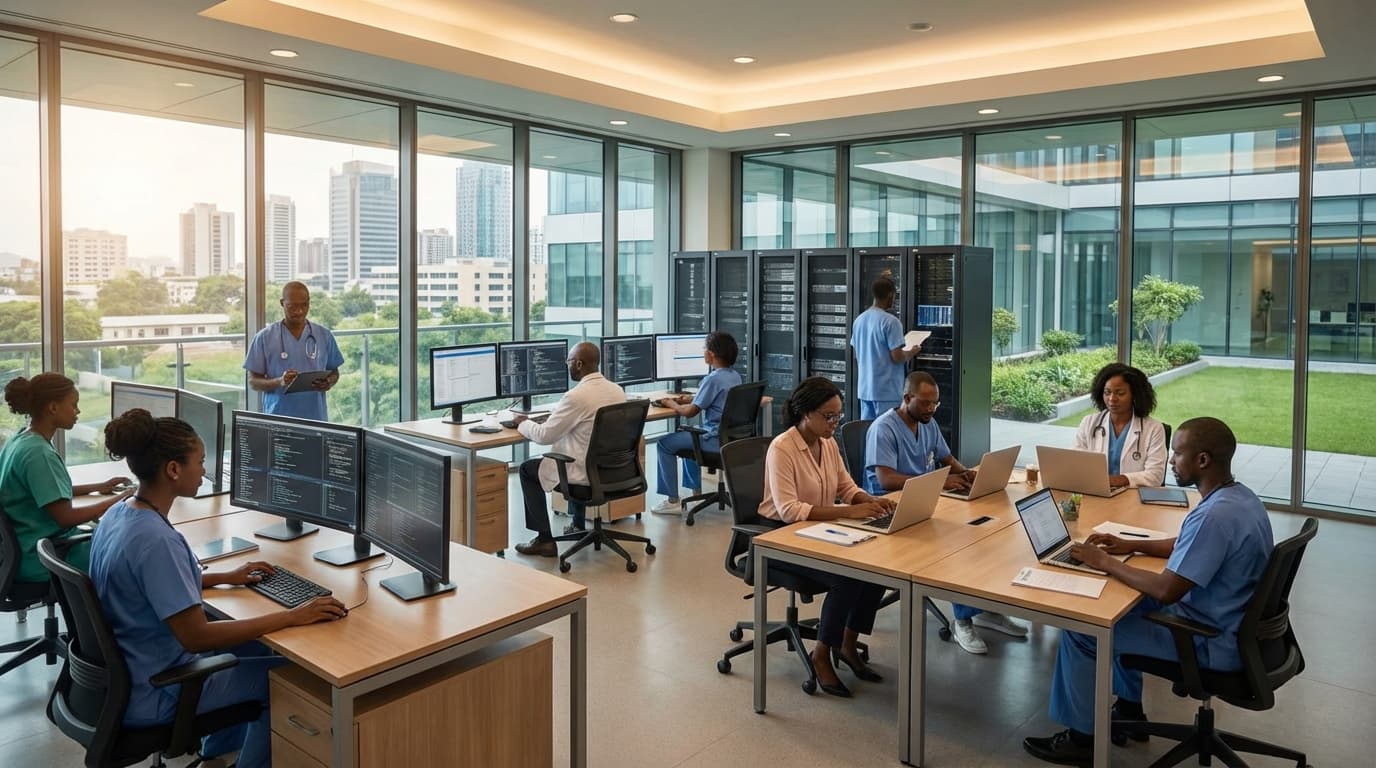
PACS Administration & Support in Congo (Brazzaville)
Engineering Excellence & Technical Support
Dedicated PACS administrator and support services High-standard technical execution following OEM protocols and local regulatory frameworks.
PACS Infrastructure Modernization
Successfully led the upgrade of the PACS server infrastructure at Hôpital Général de Dolisie, migrating from a legacy system to a modern, high-availability solution. This involved meticulous planning, data migration, and extensive testing, resulting in a 40% reduction in image retrieval times and enhanced system stability, critical for timely patient diagnosis and treatment in remote areas.
Data Security & Compliance Enhancement
Implemented robust data encryption protocols and access control measures for the PACS at Centre Hospitalier Universitaire de Brazzaville, ensuring compliance with national healthcare data protection regulations. Developed and delivered comprehensive training to clinical staff on secure image handling and patient data privacy, significantly reducing the risk of data breaches and reinforcing patient trust.
Remote Support Network Expansion
Established and managed a remote PACS support network for medical imaging facilities across multiple provinces in Congo (Brazzaville), utilizing secure VPN connections and cloud-based monitoring tools. This initiative enabled real-time troubleshooting and proactive maintenance for facilities in geographically dispersed locations, minimizing downtime and ensuring consistent access to diagnostic imaging services for underserved populations.
What Is Pacs Administration & Support In Congo (Brazzaville)?
PACS administration and support in Congo (Brazzaville) refers to the comprehensive management, maintenance, and technical assistance for Picture Archiving and Communication Systems (PACS) deployed within healthcare institutions. A PACS is a medical imaging technology that stores, retrieves, manages, prints, and displays medical imaging information. In the context of Congo (Brazzaville), this service is crucial for ensuring the efficient and reliable operation of these systems, which are vital for modern diagnostic imaging workflows.
| Who Needs PACS Administration & Support? | Typical Use Cases in Congo (Brazzaville) | ||
|---|---|---|---|
| Hospitals and Clinics: All healthcare facilities utilizing digital imaging modalities (CT, MRI, X-ray, Ultrasound, etc.) to generate and manage patient scans. | Efficient retrieval of diagnostic images for patient diagnosis and treatment planning in emergency departments and inpatient wards. | Remote consultation and teleradiology services for areas with limited specialized medical expertise. | Archiving of medical images for long-term patient record keeping and legal compliance. |
| Radiology Departments: The primary users and beneficiaries of PACS functionality. | Streamlining radiologist workflow by providing immediate access to prior studies and relevant patient history. | Facilitating multi-disciplinary team meetings where imaging plays a critical role in patient management. | Integration with AI-powered image analysis tools to enhance diagnostic accuracy. |
| IT Departments: Responsible for the overall IT infrastructure, including PACS. | Ensuring the stability, security, and performance of the PACS infrastructure. | Managing network connectivity and bandwidth to support large image file transfers. | Coordinating with vendors for hardware and software maintenance and upgrades. |
| Government Health Agencies: Overseeing the quality and accessibility of healthcare services. | Ensuring compliance with national healthcare regulations and data privacy standards. | Facilitating public health initiatives that require access to aggregated imaging data for epidemiological studies. |
Key Components of PACS Administration & Support:
- System Installation and Configuration: Setting up new PACS servers, workstations, and imaging modality interfaces (e.g., CT, MRI, X-ray, Ultrasound). This includes network configuration, database setup, user authentication, and workflow optimization.
- Routine Maintenance and Monitoring: Proactive system health checks, performance monitoring, log analysis, and regular software updates to prevent issues and ensure optimal operation.
- User Support and Training: Providing technical assistance to radiologists, technicians, and other medical staff for system usage, troubleshooting, and new feature adoption. This may involve on-site or remote support.
- Data Management and Archiving: Implementing strategies for efficient storage, retrieval, and long-term archiving of medical images, adhering to retention policies and regulatory requirements.
- System Troubleshooting and Issue Resolution: Diagnosing and resolving hardware, software, network, and interface-related problems that may impact PACS functionality.
- Integration with other Healthcare IT Systems: Ensuring seamless interoperability with other systems such as Electronic Health Records (EHR), Hospital Information Systems (HIS), and Radiology Information Systems (RIS).
- Security and Access Control: Implementing and maintaining robust security measures to protect patient data privacy (HIPAA/GDPR compliance where applicable) and managing user access privileges.
- Disaster Recovery and Business Continuity Planning: Developing and testing plans to ensure data integrity and system availability in the event of hardware failure, natural disasters, or cyber-attacks.
- Performance Optimization: Analyzing system performance and implementing adjustments to improve image loading times, query speeds, and overall user experience.
- Hardware and Software Lifecycle Management: Planning for hardware upgrades, software patches, and end-of-life replacements.
Who Needs Pacs Administration & Support In Congo (Brazzaville)?
In Congo (Brazzaville), the need for PACS (Picture Archiving and Communication System) administration and support is critical for healthcare facilities aiming to modernize their imaging services, improve diagnostic accuracy, and streamline patient care. This includes a range of organizations that generate, store, retrieve, and manage medical imaging data.
| Customer Type | Key Departments Involved | Specific Needs & Responsibilities |
|---|---|---|
| Public Hospitals | Radiology, IT, Cardiology, Neurology, Administration | Managing large volumes of patient data, ensuring system uptime, data security, integration with EMR/HIS, training staff, troubleshooting technical issues, archiving historical data. |
| Private Hospitals & Clinics | Radiology, IT, Administration, Specific Specialty Departments (e.g., Cardiology) | Optimizing workflow efficiency, ensuring compliance with healthcare regulations, providing reliable access to images for timely diagnosis, managing vendor relationships, cost-effective system operation. |
| Diagnostic Imaging Centers | Radiology, IT, Technologists, Administration | High-throughput image processing and storage, efficient image retrieval for multiple referring physicians, maintaining high availability for diagnostic services, managing digital workflow. |
| Specialty Medical Centers (e.g., Cardiology, Oncology) | Radiology, Specific Specialty Department, IT | Integration with specialized imaging modalities (e.g., echo, PET-CT), advanced image analysis capabilities, secure sharing of critical patient information within multidisciplinary teams, long-term archiving of specialized scans. |
| Healthcare IT Departments | IT Infrastructure Management, Network Administration, Information Security | Ensuring network connectivity and bandwidth for image transfer, managing server infrastructure and storage, implementing robust cybersecurity measures to protect patient data, system integration and interoperability with other hospital systems. |
| Medical Imaging Technologists/Radiographers | Daily PACS Operation, Image Quality Control | Ensuring images are correctly acquired and transmitted to PACS, performing basic troubleshooting, user support for image acquisition workstations, maintaining accurate patient demographics. |
| Radiologists & Referring Physicians | Image Interpretation & Retrieval | Efficiently accessing and viewing diagnostic images, integrating PACS with dictation systems, ensuring rapid turnaround times for reports, providing feedback on system performance. |
| Healthcare Administrators/Management | Strategic Planning, Budgeting, Compliance | Overseeing PACS budget and procurement, ensuring compliance with data privacy regulations, evaluating system ROI, strategic planning for PACS upgrades and expansion, ensuring patient safety and quality of care. |
Target Customers and Departments Requiring PACS Administration & Support in Congo (Brazzaville)
- Hospitals (Public and Private)
- Clinics and Diagnostic Centers
- Radiology Departments
- Cardiology Departments
- Oncology Departments
- Neurology Departments
- Emergency Departments
- Information Technology (IT) Departments
- Medical Imaging Technologists/Radiographers
- Radiologists and Referring Physicians
- Healthcare Administrators and Management
Pacs Administration & Support Process In Congo (Brazzaville)
This document outlines the typical workflow for PACS (Picture Archiving and Communication System) administration and support requests within a healthcare facility in Congo (Brazzaville). The process aims to ensure efficient handling of inquiries, timely resolution of issues, and effective management of the PACS infrastructure.
| Stage | Description | Responsible Party | Key Activities | Potential Outcomes |
|---|---|---|---|---|
| Inquiry & Request Submission | The initial point where a user or system component reports an issue, requests a change, or seeks information regarding the PACS. | End-user (Radiologist, Technician, Physician), IT Department, System Alert | Submitting a ticket via helpdesk software, sending an email, direct phone call (for urgent issues), automated system alerts. | Well-defined request with necessary details logged, or a vague/incomplete report requiring clarification. |
| Triage & Prioritization | Initial assessment of the incoming request to determine its nature, urgency, and impact. Assigning a priority level guides the response time. | IT Helpdesk, PACS Administrator | Reviewing ticket details, categorizing the request (e.g., hardware failure, software bug, user access, new equipment integration), assigning priority (e.g., Critical, High, Medium, Low) based on predefined criteria. | Request accurately categorized and prioritized, assigned to the appropriate support level. |
| Investigation & Diagnosis | Detailed examination of the reported issue or request to identify the root cause or understand the specific requirements. | PACS Administrator, Network Engineer, Vendor Support (if applicable) | Accessing PACS logs, checking hardware status, reviewing network connectivity, testing specific functionalities, consulting system documentation, collaborating with vendors. | Root cause identified, problem scope defined, necessary diagnostic information gathered. |
| Resolution & Implementation | Applying the identified solution to resolve the issue or implementing the requested change. | PACS Administrator, IT Support Staff, Biomedical Engineer | Applying software patches or updates, reconfiguring settings, replacing hardware components, granting/revoking user access, performing system backups/restores, configuring new devices. | Issue resolved, change implemented successfully, system functioning as expected or per new configuration. |
| Verification & Closure | Confirming with the requester that the issue has been resolved to their satisfaction or that the requested change has been completed and is functioning correctly. | End-user, PACS Administrator | User testing, remote verification, follow-up communication with the requester, documentation of confirmation. | User satisfaction confirmed, request marked as resolved, ticket closed. |
| Documentation & Reporting | Recording all aspects of the request, from submission to closure, for future reference, trend analysis, and knowledge base building. | PACS Administrator, IT Department | Updating ticket with detailed resolution steps, documenting system changes, creating/updating knowledge base articles, generating periodic reports on ticket volume, resolution times, and common issues. | Comprehensive audit trail, improved knowledge base, insights for proactive maintenance and system optimization. |
Key Stages of PACS Administration & Support Workflow
- Inquiry & Request Submission
- Triage & Prioritization
- Investigation & Diagnosis
- Resolution & Implementation
- Verification & Closure
- Documentation & Reporting
Pacs Administration & Support Cost In Congo (Brazzaville)
PACS (Picture Archiving and Communication System) administration and support costs in Congo (Brazzaville) can vary significantly based on several factors. These include the complexity and scale of the PACS, the vendor chosen (local vs. international), the level of support required (24/7 vs. business hours), the integration needs with existing hospital information systems (HIS) and electronic health records (EHR), and the ongoing maintenance and upgrade requirements. Local IT infrastructure, availability of skilled personnel, and import duties can also play a role in the overall pricing.
| Service Component | Estimated Monthly Cost (CFA) | Notes |
|---|---|---|
| Basic PACS Software License & Maintenance (per modality/server) | 150,000 - 500,000+ | Varies by vendor, features, and number of connected devices. |
| Server & Storage Maintenance (if not fully cloud-based) | 100,000 - 400,000+ | Depends on hardware age, capacity, and vendor support contract. |
| Dedicated PACS Administrator (Full-time equivalent) | 250,000 - 700,000+ | Reflects local salary ranges for skilled IT professionals. May be a shared resource in smaller institutions. |
| On-Demand/Remote Support (per hour/incident) | 25,000 - 75,000+ | International vendors may charge higher rates for remote support. Local IT firms might offer more competitive pricing. |
| Annual Software Upgrades & Patches | 100,000 - 300,000+ | Can be bundled with maintenance contracts or charged separately. |
| Integration Services (HIS/EHR) | 500,000 - 2,000,000+ (one-time or phased) | Complex integrations can incur significant one-time costs. Ongoing interface monitoring may have recurring fees. |
| Training & Skill Development for Staff | 100,000 - 500,000+ (per session/course) | Essential for effective system utilization and troubleshooting. |
Key Pricing Factors for PACS Administration & Support in Congo (Brazzaville):
- Vendor Type (Local vs. International)
- PACS Scale and Complexity
- Level of Support Required (Response times, availability)
- Integration with existing IT infrastructure (HIS, EHR)
- Hardware and Software Maintenance Contracts
- Software Updates and Upgrades
- Training for hospital IT staff
- Remote vs. On-site Support
- Service Level Agreements (SLAs)
- Localization and Customization Needs
Affordable Pacs Administration & Support Options
Purchasing and maintaining a Picture Archiving and Communication System (PACS) can be a significant financial undertaking for healthcare organizations. Fortunately, there are affordable PACS administration and support options available that focus on delivering value through bundled services and strategic cost-saving measures. These approaches aim to reduce upfront and ongoing expenses without compromising the essential functionality and reliability of your PACS.
| Cost-Saving Strategy | Description | Impact on Affordability |
|---|---|---|
| Tiered Support Levels: | Offering different support packages based on response times, hours of coverage, and access to specialized technicians. Organizations can select a tier that matches their critical needs and budget. | Reduces overall support costs by allowing organizations to pay only for the level of service they truly require. |
| Cloud-Based PACS Solutions: | Utilizing cloud infrastructure for PACS hosting and storage significantly reduces the need for on-premises hardware, maintenance, and associated IT personnel. This often shifts costs from CAPEX to OPEX. | Eliminates large upfront hardware investments, lowers operational expenses, and offers scalability. |
| Long-Term Contracts and Commitments: | Committing to longer-term agreements with PACS vendors or support providers often results in preferential pricing and discounts on software, services, and ongoing support. | Secures lower per-unit costs over the duration of the contract. |
| Outsourced PACS Administration: | Engaging a third-party provider to manage day-to-day PACS administration, monitoring, and troubleshooting. This leverages their expertise and economies of scale. | Reduces the need for in-house specialized IT staff and can be more cost-effective than hiring and training dedicated personnel. |
| Leveraging Open-Source Components (with caution): | While not a full solution, some organizations may explore open-source PACS viewers or components integrated with commercial backend solutions. This requires careful evaluation for security, support, and long-term viability. | Can potentially reduce software licensing costs for specific components, but requires significant in-house expertise for integration and maintenance. |
| Hardware Consolidation and Virtualization: | Consolidating PACS servers and utilizing virtualization technologies can reduce hardware footprint, power consumption, and cooling costs. | Minimizes capital expenditure on hardware and reduces ongoing operational costs. |
| Proactive Monitoring and Preventative Maintenance: | Implementing robust monitoring tools and regular preventative maintenance schedules can identify and address potential issues before they become costly outages or data loss events. | Minimizes downtime, reduces the risk of expensive emergency repairs, and prolongs the lifespan of existing hardware. |
Value Bundles Explained
- Comprehensive Software Licensing: Bundles often include all necessary PACS software licenses, such as core viewing, archiving, and potentially advanced features like enterprise imaging or AI integration, at a predetermined, often discounted, rate.
- Hardware and Infrastructure (Optional): Some bundles may incorporate the cost of necessary servers, storage solutions, and network infrastructure, providing a complete turnkey solution. This can simplify procurement and ensure compatibility.
- Implementation and Training Services: Value bundles typically encompass the costs associated with initial PACS setup, configuration, data migration, and comprehensive training for IT staff and end-users, ensuring a smooth transition.
- Ongoing Technical Support and Maintenance: This is a crucial component, covering remote and on-site support, software updates, patches, bug fixes, and preventative maintenance to ensure system uptime and optimal performance.
- Disaster Recovery and Business Continuity: Bundled services may include planning and implementation of robust disaster recovery solutions, safeguarding your critical imaging data against unforeseen events.
- Managed Services for Specific Tasks: Some advanced bundles offer managed services for specific administrative tasks, such as user management, image quality control, or routine system checks, freeing up internal IT resources.
Verified Providers In Congo (Brazzaville)
In the Democratic Republic of Congo (Congo-Brazzaville), ensuring access to reliable and qualified healthcare providers is paramount. Franance Health stands out as a leading organization dedicated to verifying healthcare professionals, offering a crucial service for individuals seeking the best possible medical care. Their rigorous credentialing process provides an invaluable layer of trust and assurance in a landscape where identifying genuine expertise can be challenging. Choosing a Franance Health verified provider means opting for a healthcare professional who has undergone thorough vetting, demonstrating adherence to established standards of education, licensure, and ethical practice. This commitment to verification not only elevates the quality of care available but also empowers patients with the confidence to make informed decisions about their health.
| Franance Health Verification Component | Description | Benefit for Patients |
|---|---|---|
| Academic and Professional Qualifications | Confirmation of degrees, diplomas, and specialized training from accredited institutions. | Assures patients they are receiving care from individuals with recognized expertise and foundational knowledge. |
| Licensure and Registration | Verification of current and valid medical licenses and registrations with relevant national and international bodies. | Guarantees that providers are legally permitted to practice medicine and adhere to regulatory requirements. |
| Clinical Experience and Specialization | Assessment of practical experience and any specialized areas of practice. | Helps patients find providers with the specific skills and experience needed for their condition. |
| Continuing Professional Development (CPD) | Confirmation of participation in ongoing training and education to stay updated with medical advancements. | Indicates a commitment to modern medical practices and up-to-date knowledge. |
| Ethical Conduct and Reputation | Where applicable, review of professional conduct and any disciplinary actions. | Provides an added layer of assurance regarding the provider's integrity and trustworthiness. |
Why Franance Health Credentials Matter in Congo (Brazzaville)
- Ensured Quality of Care: Franance Health's verification process scrutinizes academic qualifications, professional licenses, and ongoing professional development, guaranteeing that providers meet high standards.
- Patient Safety and Trust: By confirming credentials, Franance Health mitigates risks associated with unqualified practitioners, fostering a safer healthcare environment and building patient confidence.
- Access to Competent Professionals: The organization streamlines the search for qualified doctors, nurses, and specialists, making it easier for individuals to find the right care for their specific needs.
- Upholding Ethical Standards: Franance Health often includes assessments of ethical conduct and professional reputation, ensuring that verified providers operate with integrity.
- Support for Healthcare Infrastructure: By promoting and verifying competent professionals, Franance Health contributes to the overall strengthening of the healthcare system in Congo (Brazzaville).
Scope Of Work For Pacs Administration & Support
This document outlines the Scope of Work (SOW) for Picture Archiving and Communication System (PACS) Administration and Support. It details the technical deliverables and standard specifications required to ensure the efficient, reliable, and secure operation of the PACS environment.
| Deliverable | Description | Standard Specifications / Requirements | Acceptance Criteria |
|---|---|---|---|
| PACS System Installation & Configuration | Installation and configuration of the PACS server, workstation software, image acquisition gateways, and all associated components. | Installation of latest stable version of PACS software. Compliance with vendor's hardware and software prerequisites. Network connectivity and firewall rules configured as per organizational policy. | Successful installation verified by system startup logs. All components operational and accessible via network. Initial system health check report. |
| User Account Management | Creation, modification, and deletion of user accounts, roles, and access privileges within the PACS. | Adherence to organizational user naming conventions and security policies. Role-based access control implemented according to defined user roles (e.g., Radiologist, Technician, Administrator). | All requested user accounts created/modified/deleted within 24 business hours. Access privilege audits confirming adherence to defined roles. |
| System Performance Monitoring & Tuning | Continuous monitoring of PACS server and network performance, image retrieval times, and storage utilization. | Use of industry-standard monitoring tools. Thresholds for critical performance indicators (e.g., CPU, memory, disk I/O, network latency) defined. Regular performance tuning activities documented. | Establishment of baseline performance metrics. Monthly performance reports showing trends and identified optimizations. System response times within defined SLAs (e.g., image retrieval < 5 seconds). |
| Image Archive Management | Management of the PACS image archive, including storage, retrieval, and deletion policies. | Implementation of ILM (Information Lifecycle Management) policies for image retention. Regular checks for archive integrity and data corruption. De-duplication strategies employed where applicable. | Successful retrieval of archived images within defined timeframes. Archive size managed according to policy. Zero data loss confirmed through regular integrity checks. |
| DICOM Conformance & Interoperability | Ensuring seamless integration with imaging modalities, RIS, and other healthcare IT systems. | Adherence to DICOM standards (e.g., DICOM Part 10 for media storage). Successful DICOM communication testing with all connected devices. HL7 interface configuration and testing for RIS integration. | Successful DICOM connection tests with all modalities. Verified HL7 message exchange with RIS. Documentation of DICOM and HL7 configurations. |
| Troubleshooting & Incident Resolution | Diagnosis and resolution of all PACS-related hardware, software, and network issues. | Implementation of a tiered support model. Use of diagnostic tools and vendor support channels. Root cause analysis for recurring incidents. | Resolution of critical incidents within defined SLA (e.g., critical system downtime < 4 hours). Documentation of all incidents, resolution steps, and root causes in an incident management system. |
| Security Patching & Updates | Application of security patches and software updates to the PACS environment. | Regular review of vendor security advisories. Testing of patches in a non-production environment before deployment. Implementation within defined windows to minimize disruption. | All critical security patches applied within 7 days of release. Successful deployment confirmed by system logs and vulnerability scans. |
| Disaster Recovery (DR) Plan Testing | Periodic testing of the PACS disaster recovery plan to ensure business continuity. | Execution of DR drills according to the established plan. Verification of data integrity and system recoverability at the DR site. Documentation of test results and lessons learned. | Successful completion of DR test within scheduled timeframe. Recovery Point Objective (RPO) and Recovery Time Objective (RTO) met as per DR plan. |
| Regular System Audits | Conducting regular audits of PACS usage, access logs, and system configurations. | Generation of audit reports for compliance and security review. Review of access logs for unauthorized access attempts. Verification of system configurations against baseline. | Monthly audit reports generated and submitted to relevant stakeholders. All audit findings investigated and remediated. |
| Documentation & Knowledge Transfer | Creation and maintenance of comprehensive documentation for the PACS environment and ongoing support processes. | Development of system architecture diagrams, configuration guides, troubleshooting manuals, and DR plans. Conducting knowledge transfer sessions for IT staff. | All required documentation is up-to-date and accessible. Successful knowledge transfer sessions conducted with IT team. |
Key Service Areas
- PACS System Administration
- User Management & Training
- System Monitoring & Performance Tuning
- Data Management & Archiving
- System Integration & Interoperability
- Troubleshooting & Issue Resolution
- Security & Compliance Management
- Disaster Recovery & Business Continuity
- Reporting & Auditing
- Hardware & Software Maintenance
Service Level Agreement For Pacs Administration & Support
This Service Level Agreement (SLA) outlines the agreed-upon service levels for Picture Archiving and Communication System (PACS) administration and support. It defines response times for incident resolution and uptime guarantees for the PACS infrastructure.
| Incident Priority | Response Time (Acknowledgement) | Target Resolution Time (Full or Workaround) | Uptime Guarantee |
|---|---|---|---|
| Critical Incident | 15 minutes | 4 hours | 99.9% (monthly) |
| High Priority Incident | 30 minutes | 8 hours | 99.9% (monthly) |
| Medium Priority Incident | 2 business hours | 24 business hours | 99.9% (monthly) |
| Low Priority Incident | 4 business hours | 3 business days | 99.9% (monthly) |
Key Definitions
- PACS: Picture Archiving and Communication System.
- Critical Incident: An event that renders the PACS entirely or significantly unusable, impacting a large number of users or critical clinical workflows. Examples include system outages, inability to retrieve images, or data integrity issues.
- High Priority Incident: An event that significantly degrades PACS performance or functionality, impacting a substantial number of users or critical clinical workflows, but does not render the system entirely unusable. Examples include slow image retrieval, intermittent access issues, or localized functionality failures.
- Medium Priority Incident: An event that impacts a limited number of users or specific functionalities, causing inconvenience but not significantly disrupting core clinical operations. Examples include minor performance degradation, non-critical feature malfunctions, or user-specific access problems.
- Low Priority Incident: A general inquiry, feature request, or minor issue that does not impact system functionality or user access. Examples include how-to questions, minor cosmetic issues, or requests for system enhancements.
- Response Time: The maximum time allowed for the support team to acknowledge and begin working on a reported incident.
- Resolution Time: The maximum time allowed to fully resolve an incident and restore normal PACS operation. This may involve workaround implementation if full resolution is not immediately possible.
- Uptime: The percentage of time the PACS is available and functional for users.
Frequently Asked Questions

Ready when you are
Let's scope your PACS Administration & Support in Congo (Brazzaville) project in Congo (Brazzaville).

Scaling healthcare logistics and technical systems across the entire continent.