
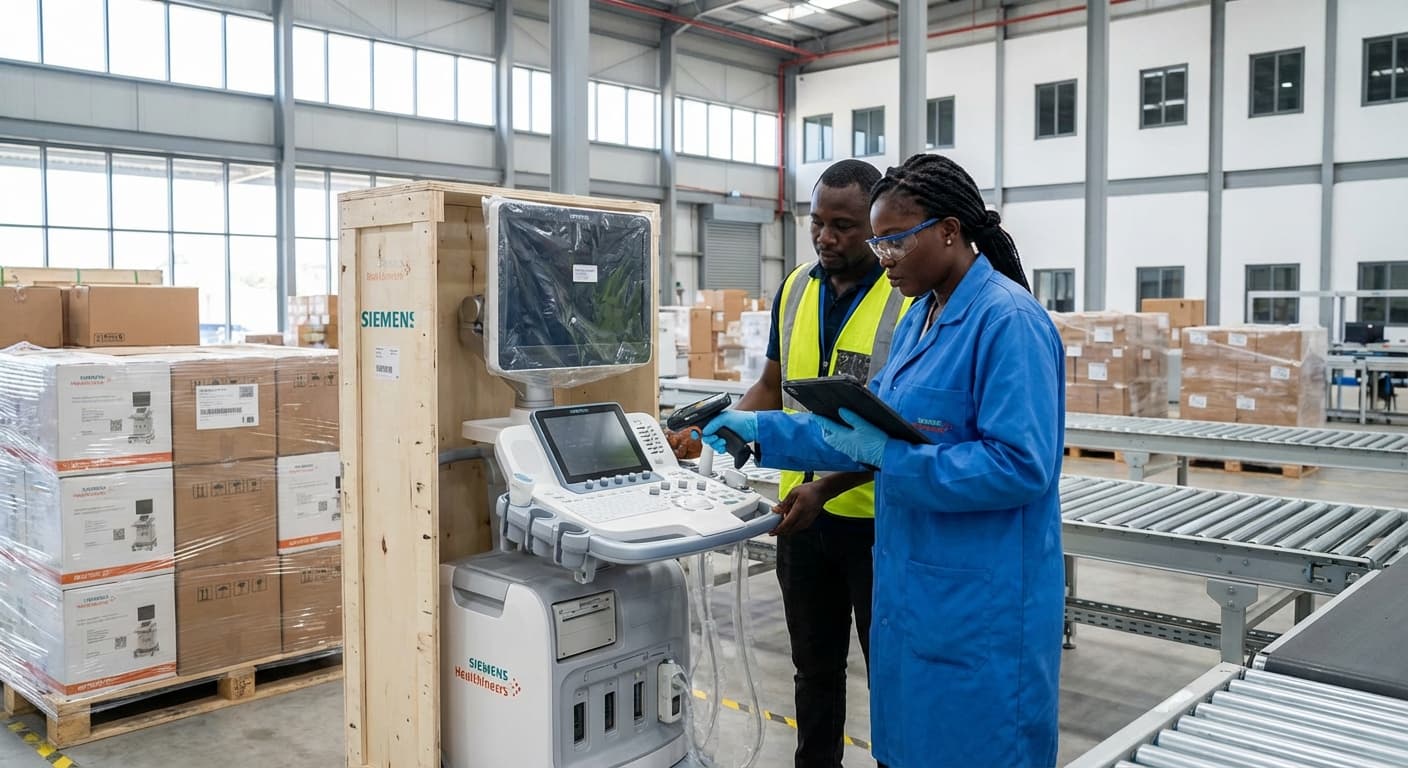
Warehouse Receiving Inspection Service (Medical Equipment) in Congo (Brazzaville)
Engineering Excellence & Technical Support
Warehouse Receiving Inspection Service (Medical Equipment) High-standard technical execution following OEM protocols and local regulatory frameworks.
Advanced Quality Control Protocols
Leveraging state-of-the-art inspection methodologies and calibrated equipment to meticulously verify the integrity, functionality, and compliance of all incoming medical equipment against international standards and client specifications. Our rigorous checks ensure zero defects before equipment enters your inventory.
Real-time Inventory Tracking & Verification
Implementing sophisticated barcode scanning and digital inventory management systems for immediate, accurate tracking and verification of each medical device upon arrival. This granular visibility provides irrefutable proof of receipt and allows for seamless integration with your existing supply chain management.
Compliance & Regulatory Assurance
Ensuring all received medical equipment meets stringent Congolese and international regulatory requirements. Our team is adept at identifying and validating necessary certifications, documentation, and safety standards, mitigating risks and guaranteeing operational readiness for your healthcare facilities.
What Is Warehouse Receiving Inspection Service (Medical Equipment) In Congo (Brazzaville)?
Warehouse Receiving Inspection Service (Medical Equipment) in Congo (Brazzaville) refers to a specialized quality control process conducted upon the arrival of medical equipment at a designated warehouse or storage facility. This service ensures that the received items conform to contractual specifications, regulatory standards, and are free from damage or defects prior to their integration into the supply chain. The objective is to mitigate risks associated with counterfeit, substandard, or damaged medical devices, thereby safeguarding public health and ensuring the efficacy of medical interventions.
| Who Needs This Service? | Typical Use Cases | ||
|---|---|---|---|
| Government Health Ministries and Agencies (e.g., Ministry of Health, Central Medical Stores): Responsible for public health infrastructure and procurement of essential medical supplies and equipment for national health programs, hospitals, and clinics. | Procurement of new medical equipment for public healthcare facilities (e.g., diagnostic imaging systems, surgical instruments, laboratory equipment, hospital beds). | Receiving shipments of donated medical equipment from international organizations or philanthropic entities. | Routine replenishment of stock in national or regional medical warehouses. |
| Non-Governmental Organizations (NGOs) and International Aid Organizations: Involved in providing healthcare services and medical aid in various regions, often managing their own supply chains. | Importation and distribution of medical equipment for humanitarian projects and disease-specific programs (e.g., HIV/AIDS, malaria, maternal health). | Establishing and managing local clinics or hospitals requiring specialized medical technology. | |
| Private Healthcare Providers (Hospitals, Clinics, Diagnostic Centers): Operating their own facilities and procuring medical equipment directly or through distributors. | Upgrading or expanding existing medical infrastructure with new equipment. | Ensuring the quality and authenticity of high-value medical devices and instruments. | Managing inventory for multiple service locations. |
| Medical Equipment Manufacturers and Distributors: Overseeing their supply chain and ensuring that their products meet quality standards upon reaching their warehousing facilities or clients. | Verifying the integrity of returned or refurbished medical equipment before re-integration into inventory. | Receiving bulk shipments from manufacturing sites for local distribution. | |
| Regulatory Bodies (as oversight): While not directly receiving, they may mandate or oversee such inspection services to ensure compliance with national medical device regulations. | Ensuring that imported medical equipment meets the safety and efficacy standards set by the Republic of Congo. |
Key Components of Warehouse Receiving Inspection Service (Medical Equipment):
- Document Verification: Cross-referencing received items against purchase orders, invoices, packing lists, certificates of origin, and quality assurance documentation (e.g., Certificates of Analysis, Conformity Certificates).
- Physical Inspection: Visual examination of packaging for signs of damage, tampering, or compromise. Inspection of the medical equipment itself for visible defects, material integrity, and proper labeling.
- Verification of Identity and Specification Compliance: Confirming the make, model, serial number, quantity, and technical specifications of the received equipment against order documents. This may involve checking for specific regulatory markings (e.g., CE marking, FDA approval, if applicable to the intended market and product).
- Condition Assessment: Evaluating the physical state of the equipment, including checking for any cosmetic blemishes, functional abnormalities (if initial functional tests are feasible at this stage), and completeness of accessories or components.
- Traceability Verification: Ensuring that unique identifiers (e.g., serial numbers, batch numbers) are present, legible, and align with documentation, facilitating end-to-end supply chain traceability.
- Sampling and Testing (where applicable): Depending on the nature and value of the equipment, a statistically relevant sample may be selected for more in-depth functional testing or performance verification against manufacturer specifications.
- Damage Reporting and Non-Conformance Documentation: Detailed recording of any discrepancies, damages, or deviations from expected conditions, including photographic evidence. This forms the basis for claims or rejections.
Who Needs Warehouse Receiving Inspection Service (Medical Equipment) In Congo (Brazzaville)?
Warehouse Receiving Inspection Service for medical equipment is crucial for ensuring the quality, safety, and compliance of vital healthcare supplies entering the Congo (Brazzaville). This service plays a critical role in preventing the distribution of faulty, counterfeit, or substandard medical devices, thereby protecting patient well-being and optimizing resource allocation. By meticulously verifying incoming medical equipment against specifications, regulatory requirements, and manufacturer standards, this service safeguards against financial losses and reputational damage for organizations involved in the medical supply chain.
| Target Customer/Department | Key Needs from Receiving Inspection | Impact of Service |
|---|---|---|
| Government Health Ministries | Verification of compliance with national standards, quality assurance for public health programs, preventing counterfeit products. | Improved patient safety, efficient use of public funds, enhanced national health infrastructure. |
| Public/Private Hospitals & Clinics | Ensuring equipment is functional and safe for patient use, validating purchase against specifications, reducing risk of equipment failure. | Reliable patient care delivery, minimized downtime, optimized operational efficiency. |
| NGOs & Aid Organizations | Confirming quality and suitability of donated/purchased equipment, accountability to donors, effective program implementation. | Successful humanitarian interventions, efficient resource utilization, positive impact on beneficiary health. |
| Medical Equipment Distributors/Importers | Compliance with import regulations, quality control for resale, managing supplier performance, mitigating import risks. | Streamlined import processes, market credibility, reduced returns and disputes. |
| Logistics Companies | Ensuring incoming goods meet quality criteria before storage/transport, risk mitigation for cargo, enhanced service offerings. | Reduced liability, improved service reliability, stronger partnerships with clients. |
| Procurement Departments | Validation of purchased goods, contract compliance, verification of specifications and quantities. | Cost savings through accurate procurement, prevention of waste, supplier accountability. |
| Quality Assurance Departments | Implementing quality control measures for incoming goods, ensuring adherence to quality standards, proactive issue identification. | Upholding product quality, minimizing defects, maintaining customer satisfaction. |
| Inventory Management Departments | Confirmation of item condition and usability before stock entry, accurate inventory records. | Efficient stock management, reduced loss due to damaged goods, optimized stock levels. |
| Clinical Engineering Departments | Ensuring equipment is ready for installation and operation, identifying potential maintenance issues early. | Reduced post-installation problems, extended equipment lifespan, enhanced patient safety in clinical settings. |
Target Customers and Departments for Warehouse Receiving Inspection Service (Medical Equipment) in Congo (Brazzaville)
- {"title":"Government Health Ministries and Agencies","description":"Responsible for national health policies, procurement, and distribution of medical equipment to public healthcare facilities. They require assurance that purchased equipment meets international standards and is fit for purpose."}
- {"title":"Public and Private Hospitals and Clinics","description":"End-users of medical equipment. They need to ensure that the equipment they receive for patient care is functional, safe, and meets the required specifications before it is deployed."}
- {"title":"Non-Governmental Organizations (NGOs) and International Aid Organizations","description":"Organizations involved in healthcare provision and humanitarian aid. They procure and distribute medical equipment to underserved populations and require verification of quality and compliance for donor accountability and program effectiveness."}
- {"title":"Medical Equipment Distributors and Importers","description":"Businesses that import and distribute medical equipment within Congo (Brazzaville). They need to ensure that the equipment they receive from international suppliers meets all local regulatory requirements and quality standards before onward sale."}
- {"title":"Pharmaceutical and Healthcare Logistics Companies","description":"Companies managing the storage and transportation of medical equipment. They may offer or require receiving inspection services as part of their value proposition or as a risk mitigation measure."}
- {"title":"Procurement Departments (all target customers)","description":"Responsible for sourcing and purchasing medical equipment. They rely on inspection services to validate that procured items match contract specifications and quality expectations, ensuring a return on investment."}
- {"title":"Quality Assurance (QA) Departments (all target customers)","description":"Responsible for maintaining and improving the quality of products and services. Receiving inspection is a fundamental component of their quality control processes for incoming medical supplies."}
- {"title":"Inventory Management Departments (all target customers)","description":"Responsible for managing stock levels and ensuring the availability of medical equipment. They need to confirm the integrity and usability of equipment before it is added to inventory."}
- {"title":"Clinical Engineering Departments (hospitals/clinics)","description":"Responsible for the maintenance, repair, and safety of medical equipment. Receiving inspection ensures that equipment is in good working order from the start, facilitating their work and preventing early failures."}
- {"title":"Regulatory Affairs Departments (larger organizations/distributors)","description":"Responsible for ensuring compliance with national and international regulations for medical devices. Receiving inspection helps verify adherence to these critical standards."}
Warehouse Receiving Inspection Service (Medical Equipment) Process In Congo (Brazzaville)
This document outlines the comprehensive workflow for the Warehouse Receiving Inspection Service of Medical Equipment in Congo (Brazzaville). This process ensures that all incoming medical equipment meets stringent quality, safety, and regulatory standards before being accepted into a warehouse. The workflow begins with a formal inquiry and concludes with the issuance of a detailed inspection report.
| Stage | Description | Key Activities | Deliverables | Responsibility |
|---|---|---|---|---|
| The client (e.g., Ministry of Health, hospital, NGO) initiates contact to request inspection services for incoming medical equipment shipments. A formal proposal is then prepared and submitted. | Receive client inquiry, understand scope and requirements, gather shipment details (origin, destination, type of equipment), prepare and submit a detailed proposal including scope of work, methodology, timelines, and pricing. | Formal Inquiry Response, Detailed Proposal | Service Provider |
| Once the proposal is accepted, a formal agreement is established, and detailed planning for the inspection takes place. | Contract negotiation and signing, develop a detailed inspection plan (including checklists, sampling methods, and specific tests), assign inspection team, coordinate logistics with the client and warehouse authorities, confirm inspection dates and times. | Signed Service Agreement, Approved Inspection Plan, Logistics Schedule | Service Provider & Client |
| The inspection team prepares all necessary tools, documents, and resources for the on-site inspection. | Review equipment specifications and standards (international and local regulations in Congo), prepare sampling plans, gather necessary testing equipment (e.g., calibration tools, measurement devices), brief the inspection team, confirm access to the warehouse and relevant documentation. | Prepared Inspection Checklists, Calibrated Equipment, Briefed Inspection Team | Service Provider |
| This is the core stage where the actual inspection of the medical equipment occurs at the warehouse receiving dock. | Verify shipment details against documentation (packing lists, invoices, certificates of origin), conduct visual inspection (packaging integrity, damage, correct labeling), perform quantity verification, check for compliance with stated specifications, conduct functional testing (where applicable and feasible), assess quality of materials and workmanship, identify any discrepancies or non-conformities. | Inspection Findings (documented in real-time), Photos/Videos of Findings, Samples (if required) | Service Provider |
| A comprehensive report detailing the inspection findings is compiled and submitted to the client. | Compile all collected data, analyze findings, document all discrepancies and non-conformities, draft the inspection report (including executive summary, scope, methodology, detailed findings, recommendations, and conclusion), submit the draft report for client review, finalize and issue the official inspection report. | Draft Inspection Report, Final Inspection Report, Certificates of Conformity (if applicable) | Service Provider |
| This stage involves addressing any issues raised in the report and formally closing the service engagement. | Address client queries regarding the report, monitor corrective actions taken by the supplier/client for non-conformities, conduct re-inspections if necessary, obtain client sign-off on the service completion, archive all project documentation, invoice client and process payment. | Resolution of Non-conformities, Service Completion Confirmation, Final Invoice | Service Provider & Client |
Key Stages of the Warehouse Receiving Inspection Service
- Inquiry and Proposal
- Agreement and Planning
- Pre-Inspection Preparation
- On-site Receiving Inspection
- Reporting and Documentation
- Follow-up and Closure
Warehouse Receiving Inspection Service (Medical Equipment) Cost In Congo (Brazzaville)
The cost of warehouse receiving inspection services for medical equipment in Congo (Brazzaville) can vary significantly based on several key factors. These factors influence the overall pricing, making it essential for businesses to obtain detailed quotes tailored to their specific needs. The service typically involves a thorough examination of incoming medical equipment to ensure it meets quality standards, is free from damage, and complies with regulatory requirements before it enters the warehouse. Local currency for pricing is the Congolese Franc (XAF).
| Service Type/Scope | Estimated Range (XAF) per Inspection/Unit* | Notes |
|---|---|---|
| Basic Visual Inspection (per unit) | 15,000 - 40,000 XAF | Checks for obvious external damage, incorrect labeling, and basic documentation verification. |
| Standard Inspection (per unit) | 30,000 - 75,000 XAF | Includes visual inspection, basic functionality check, and verification of essential documentation. |
| Comprehensive Inspection (per unit) | 70,000 - 250,000+ XAF | Involves detailed functional testing, calibration verification, compliance checks against specific standards, and extensive documentation review for complex equipment. |
| Rush Service Fee (additional) | 20,000 - 60,000 XAF | Applied on top of standard inspection fees for urgent requests. |
| On-site Charges (per inspector, per day) | 100,000 - 300,000 XAF | Covers inspector's time on-site, potentially including travel/accommodation if applicable. This is often in addition to per-unit fees for complex jobs. |
| Specialized Equipment Inspection (e.g., MRI, CT Scanner) | Priced on project basis (e.g., 500,000 - 2,000,000+ XAF) | Highly specialized, requires dedicated teams and extensive diagnostic equipment. Negotiated per contract. |
Key Pricing Factors for Warehouse Receiving Inspection Services (Medical Equipment) in Congo (Brazzaville):
- Volume and Quantity of Equipment: The sheer number of units to be inspected is a primary cost driver. Larger shipments generally command lower per-unit inspection fees due to economies of scale.
- Complexity and Type of Medical Equipment: Highly specialized, complex, or sensitive medical equipment (e.g., imaging machines, surgical robots) requires more skilled inspectors and specialized tools, leading to higher inspection costs compared to simpler items (e.g., basic diagnostic tools, furniture).
- Scope of Inspection: The depth of the inspection matters. A basic visual check will be less expensive than a comprehensive functional test, calibration, and verification against specific operational parameters.
- Time and Urgency: Rush inspections or those requiring out-of-hours work (nights, weekends, holidays) will incur premium charges.
- Location of the Warehouse: Accessibility and remoteness of the warehouse can impact logistics costs for the inspection team. Warehouses in more remote areas might have higher associated travel and accommodation expenses, which are passed on to the client.
- Regulatory Compliance Requirements: Inspections that need to adhere to stringent national or international medical device regulations will likely be more detailed and thus more costly. This might involve checking specific documentation, certifications, and traceability.
- Service Provider's Reputation and Expertise: Established inspection companies with a proven track record, specialized accreditations, and experienced personnel will typically charge more than newer or less specialized providers.
- Ancillary Services: Additional services like sample testing, preliminary documentation review, or extended reporting can increase the overall cost.
- Reporting Requirements: The level of detail and format of the inspection report can influence the cost. Comprehensive reports with detailed findings, photographic evidence, and recommendations will be more time-consuming and expensive.
- Negotiation and Contractual Agreements: The terms of the contract, including long-term service agreements, can influence pricing through potential discounts for committed volumes or partnerships.
Affordable Warehouse Receiving Inspection Service (Medical Equipment) Options
Finding an affordable warehouse receiving inspection service for medical equipment is crucial to ensure compliance, prevent costly errors, and maintain supply chain integrity. This service verifies the condition, quantity, and specifications of incoming medical devices and supplies against purchase orders and shipping manifests. We'll explore various options, focusing on value bundles and cost-saving strategies to make this essential process more economical.
| Service Provider Type | Typical Cost Structure | Cost-Saving Strategies | Value Bundles |
|---|---|---|---|
| Third-Party Inspection Companies (Specialized Medical) | Per inspection (e.g., per shipment, per item), hourly rates, or monthly retainers. | Negotiate volume discounts, long-term contracts, explore regional providers with lower overhead. | Bundles may include routine inspections, expedited service, or integration with your QA system. |
| Third-Party Inspection Companies (General) | Similar to specialized, but potentially lower rates if they have a broader scope. | Focus on providers with established medical supply chain experience, look for bundled services with broader logistics. | Can offer basic inspection bundled with warehousing or logistics services. May lack deep medical equipment expertise. |
| In-House Inspection (with outsourced support) | Internal labor costs, potentially supplemented by third-party for peak times or specialized needs. | Invest in efficient inspection tools and training for internal staff. Outsource only critical or high-volume tasks. | Can bundle internal resources with targeted outsourced services for cost optimization. Requires robust internal QA protocols. |
| Logistics Providers with Integrated Inspection Services | Often a per-unit fee or included in overall warehousing/fulfillment costs. | Negotiate comprehensive contracts that include inspection as part of a broader service package. Leverage their existing infrastructure. | Bundles often combine warehousing, transportation, and receiving inspection into a single, streamlined cost. Ideal for companies seeking a full-service solution. |
Key Components of a Warehouse Receiving Inspection Service for Medical Equipment
- Initial Verification: Matching incoming shipments against purchase orders and packing lists.
- Visual Inspection: Assessing for damage, defects, and proper packaging.
- Documentation Review: Checking for certificates of analysis, compliance documents, and lot numbers.
- Quantity Verification: Ensuring the correct number of items has been received.
- Labeling and Barcode Scan: Confirming accurate identification and tracking.
- Temperature Monitoring (if applicable): Verifying that temperature-sensitive items have been stored and transported correctly.
- Basic Functional Testing (optional): For certain equipment, a rudimentary check to ensure it powers on.
- Reporting: Detailed reports of findings, including discrepancies, damages, and non-compliance issues.
- System Integration: Updating inventory management systems with received goods.
Verified Providers In Congo (Brazzaville)
Finding reliable healthcare providers in Congo (Brazzaville) can be a challenge. Franance Health stands out as a premier choice for patients seeking high-quality and trustworthy medical services. Their rigorous credentialing process ensures that all affiliated healthcare professionals meet stringent standards, offering peace of mind and confidence in the care received. This commitment to verification is crucial in a landscape where discerning genuine expertise from unqualified practitioners is paramount.
| Credentialing Aspect | Franance Health Standard | Patient Benefit |
|---|---|---|
| Medical Licenses & Certifications | Verified and up-to-date with recognized medical bodies. | Ensures providers are legally qualified and competent. |
| Professional Experience | Thorough review of past practice, specializations, and patient testimonials. | Connects patients with proven expertise in their specific medical needs. |
| Ethical Conduct & Background Checks | Rigorous checks for disciplinary actions or malpractice claims. | Guarantees a high standard of professional integrity and ethical practice. |
| Specialization Validation | Confirmation of specific training and qualifications in chosen fields. | Ensures patients are treated by specialists best suited for their condition. |
| Continuous Professional Development | Encourages and tracks ongoing education and skill enhancement. | Keeps patients informed about providers at the forefront of medical advancements. |
Why Franance Health Credentials Matter:
- Unwavering commitment to patient safety and well-being.
- Access to highly skilled and experienced medical professionals.
- Reduced risk of encountering unqualified or fraudulent practitioners.
- Streamlined healthcare navigation, saving valuable time and reducing stress.
- Empowerment of patients with transparent and verifiable information.
Scope Of Work For Warehouse Receiving Inspection Service (Medical Equipment)
This Scope of Work (SOW) outlines the requirements for professional receiving inspection services for medical equipment at the designated warehouse facility. The service aims to ensure that all incoming medical equipment meets specified quality, safety, and regulatory standards before acceptance into inventory. This SOW details the technical deliverables and standard specifications to be adhered to during the inspection process.
| Deliverable/Specification | Description | Standard/Criteria | Documentation Required |
|---|---|---|---|
| Visual Inspection Report | Detailed examination of the physical condition of the medical equipment, including packaging, labeling, and the equipment itself. Checks for damage, contamination, and missing components. | No visible damage, tears, punctures, or signs of tampering on packaging. Equipment free from external defects, scratches, dents, or corrosion. All labeling legible and present. | Signed and dated Visual Inspection Report with photographs of any observed defects or discrepancies. |
| Quantity Verification Report | Confirmation of the number of units received against the purchase order and packing list. Reconciliation of any discrepancies. | Exact match between received quantity and documented quantity for each item. Any discrepancies clearly noted and investigated. | Signed and dated Quantity Verification Report detailing received quantities, discrepancies, and resolutions. |
| Functional Testing Report (for specified equipment) | Performance of pre-defined functional tests to ensure the equipment operates as intended. Tests will be based on manufacturer specifications and internal protocols. | Equipment passes all specified functional tests according to manufacturer guidelines and internal checklists. All operational parameters within acceptable ranges. | Signed and dated Functional Testing Report detailing test procedures, results (pass/fail), calibration status (if applicable), and any observations. |
| Non-Conformance Report (NCR) | Formal documentation of any deviation from the specified requirements, including damaged goods, incorrect items, missing parts, or failed functional tests. | Clear and concise description of the non-conformance, including item identification, nature of defect, quantity affected, and recommended disposition (e.g., quarantine, return, rework). | Completed NCR form, including date of issue, inspector details, nature of non-conformance, photographic evidence (if applicable), and proposed action. |
| Certificate of Conformance (CoC) Verification | Verification of the presence and authenticity of manufacturer-provided Certificates of Conformance for relevant medical equipment. | Valid and authentic CoC present for all applicable equipment, matching product serial numbers and specifications. | Copies of verified CoCs attached to inspection reports or stored in designated system. |
| Lot/Batch Number Traceability | Recording of lot or batch numbers for critical medical equipment to ensure traceability. | Accurate recording of lot/batch numbers as per labeling and documentation. | Inclusion of lot/batch numbers in the receiving inspection report and inventory system. |
| Expiration Date Verification (for consumables/perishables) | Checking of expiration dates for any medical equipment with a limited shelf life. | Expiration dates are valid and meet minimum shelf-life requirements as defined by the organization. | Recorded expiration dates in the receiving inspection report and inventory system. |
| Regulatory Compliance Check | Confirmation that the medical equipment and its documentation comply with applicable regulatory standards (e.g., medical device registration, labeling requirements). | Equipment meets all relevant national and international regulatory standards. All required documentation is present and accurate. | Noted in inspection reports, with specific reference to applicable regulations and any issues encountered. |
Key Areas of Responsibility
- Visual inspection of all incoming medical equipment.
- Verification of received items against purchase orders and packing lists.
- Functional testing of designated medical equipment.
- Documentation of all inspection findings.
- Identification and reporting of non-conformances and discrepancies.
- Adherence to all relevant regulatory requirements (e.g., FDA, ISO).
- Maintenance of accurate and organized inspection records.
Service Level Agreement For Warehouse Receiving Inspection Service (Medical Equipment)
This Service Level Agreement (SLA) outlines the agreed-upon service levels for the Warehouse Receiving Inspection Service of Medical Equipment provided by [Your Company Name] (hereinafter referred to as "Provider") to [Client Company Name] (hereinafter referred to as "Client"). This SLA defines the expected response times and uptime guarantees to ensure efficient and reliable inspection of incoming medical equipment shipments.
| Service Component | Service Level Target | Measurement Method | Remedy for Failure |
|---|---|---|---|
| Response Time for Standard Inspection Requests | Within 1 Business Hour of request submission. | Timestamp logging of request submission and acknowledgement by Provider. | 1% service credit for each occurrence exceeding the target response time, up to a maximum of 10% of monthly service fee. |
| Response Time for Critical Equipment Inspection Requests | Within 30 minutes of request submission. | Timestamp logging of request submission and acknowledgement by Provider. | 2% service credit for each occurrence exceeding the target response time, up to a maximum of 15% of monthly service fee. |
| Inspection Completion Time (Standard Shipment) | Within 4 Business Hours of commencement of inspection. | Timestamp logging of inspection commencement and completion. | 1% service credit for each shipment exceeding the target completion time, up to a maximum of 10% of monthly service fee. |
| Inspection Completion Time (Critical Equipment Shipment) | Within 2 Business Hours of commencement of inspection. | Timestamp logging of inspection commencement and completion. | 2% service credit for each shipment exceeding the target completion time, up to a maximum of 15% of monthly service fee. |
| Service Uptime Guarantee | 99.5% Uptime during scheduled Business Hours. | Provider's system monitoring tools and Client reported outages. | For every full hour of Downtime below the guaranteed Uptime, the Client will receive a service credit equivalent to 0.5% of the monthly service fee, capped at 20% of the monthly service fee. |
Key Definitions
- Receiving Inspection: The process of visually inspecting incoming medical equipment shipments for damage, completeness, and adherence to order specifications upon arrival at the client's designated warehouse.
- Business Hours: Monday through Friday, 9:00 AM to 5:00 PM [Client's Time Zone], excluding public holidays.
- Response Time: The maximum time allowed for the Provider to acknowledge a request for receiving inspection after it has been initiated by the Client.
- Inspection Completion Time: The maximum time allowed for the Provider to complete a standard receiving inspection once the inspection process has begun.
- Uptime: The percentage of time the Provider's inspection services are available and operational during scheduled Business Hours.
- Downtime: Any period during scheduled Business Hours when the Provider's inspection services are unavailable or not operational.
- Critical Equipment: Medical equipment designated by the Client as requiring immediate inspection due to its urgency or impact on patient care.
Frequently Asked Questions

Ready when you are
Let's scope your Warehouse Receiving Inspection Service (Medical Equipment) in Congo (Brazzaville) project in Congo (Brazzaville).

Scaling healthcare logistics and technical systems across the entire continent.