
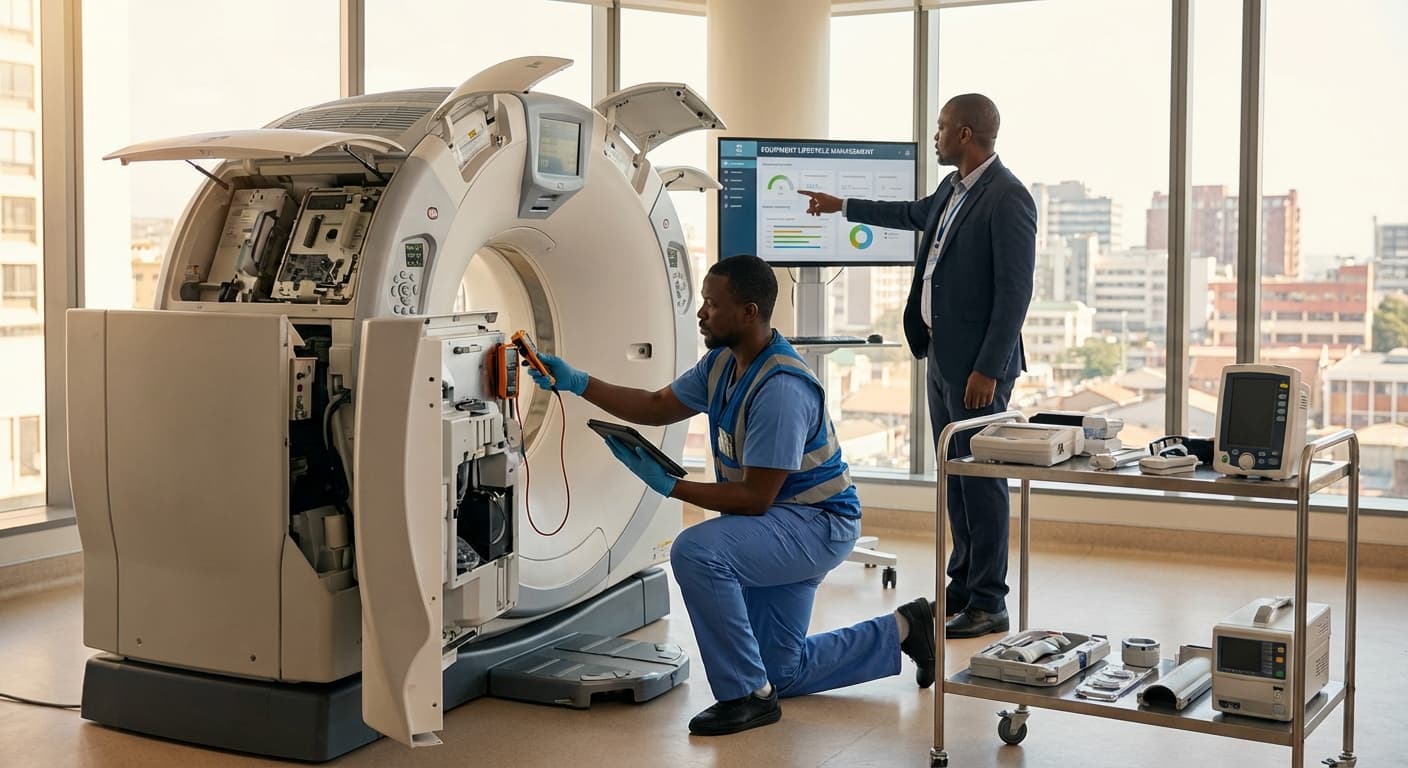
Equipment Replacement Planning & Obsolescence Strategy Service in Congo (Brazzaville)
Engineering Excellence & Technical Support
Equipment Replacement Planning & Obsolescence Strategy Service High-standard technical execution following OEM protocols and local regulatory frameworks.
Proactive Obsolescence Mitigation
Leverage our predictive analytics to identify critical equipment at risk of obsolescence in the Congo's evolving industrial landscape. We provide strategic replacement timelines and sourcing solutions, minimizing operational disruptions and ensuring continued productivity for your Brazzaville operations.
Optimized Capital Expenditure
Our service offers data-driven recommendations for capital investment in equipment modernization. We analyze usage patterns, maintenance costs, and future technological advancements relevant to Brazzaville's infrastructure, ensuring your replacement plans deliver maximum ROI and future-proof your assets.
Supply Chain Resilience for Brazzaville
Navigate the complexities of the Congolese supply chain with our specialized equipment replacement strategies. We identify reliable global and local sourcing channels for replacement parts and new equipment, safeguarding against disruptions and ensuring timely availability for your Brazzaville facilities.
What Is Equipment Replacement Planning & Obsolescence Strategy Service In Congo (Brazzaville)?
Equipment Replacement Planning & Obsolescence Strategy Service in Congo (Brazzaville) refers to a specialized consulting and management offering designed to assist organizations in the Republic of Congo (Brazzaville) in proactively managing their physical asset lifecycle. This service addresses the critical need to optimize the timing and execution of equipment replacement, thereby mitigating the risks associated with technological obsolescence, diminishing performance, increasing maintenance costs, and potential operational disruptions. It encompasses a systematic approach to evaluating the current state of assets, forecasting future needs, and developing strategic roadmaps for asset renewal and disposal. The core objective is to ensure continuous operational efficiency, cost-effectiveness, and alignment with organizational strategic goals through informed asset management decisions.
| Who Needs This Service? | Typical Use Cases in Congo (Brazzaville) | ||||||
|---|---|---|---|---|---|---|---|
| Industries with significant capital-intensive equipment: Oil and Gas, Mining, Manufacturing, Telecommunications, Power Generation, Transportation, and large-scale Agriculture. | Oil and Gas Exploration and Production: Planning for the replacement of aging offshore platforms, drilling equipment, and processing facilities to maintain operational integrity and comply with evolving safety and environmental regulations. | Mining Operations: Strategizing the replacement of heavy machinery (excavators, haul trucks), processing plants, and electrical infrastructure to optimize extraction efficiency and reduce downtime in remote locations. | Manufacturing Plants: Developing plans for the phased upgrade of production lines, CNC machines, and automated systems to enhance product quality, increase output, and adopt Industry 4.0 technologies. | Telecommunications Providers: Managing the lifecycle of network infrastructure, including base stations, switching equipment, and fiber optic cables, to ensure network reliability and capacity expansion in a rapidly evolving technological landscape. | Public Utilities (Power & Water): Planning for the replacement of aging turbines, generators, transformers, and water treatment plants to ensure consistent service delivery and reduce energy losses. | Infrastructure Development Projects: For entities involved in large-scale construction and maintenance of roads, bridges, and ports, ensuring the timely replacement of specialized construction equipment. | Government and Public Sector Agencies: Managing the lifecycle of critical public infrastructure assets, such as transportation fleets, public building HVAC systems, and emergency response vehicles. |
Key Components of the Service
- Asset Inventory and Condition Assessment: Comprehensive cataloging of all relevant equipment, including age, condition, performance data, and maintenance history.
- Obsolescence Risk Analysis: Evaluation of technological, functional, and economic obsolescence risks based on market trends, vendor support lifecycles, and performance degradation.
- Total Cost of Ownership (TCO) Analysis: Calculation of the full cost associated with owning and operating equipment, including acquisition, maintenance, energy, disposal, and potential downtime costs.
- Performance Benchmarking: Comparison of existing equipment performance against industry standards and best practices.
- Lifecycle Costing and Forecasting: Development of models to predict future maintenance, repair, and operational expenditures.
- Replacement Prioritization Framework: Establishment of criteria and methodologies to prioritize assets for replacement based on risk, criticality, and return on investment (ROI).
- Strategic Replacement Roadmap Development: Creation of a phased plan for equipment renewal, including procurement strategies, budget allocation, and project timelines.
- Disposal and End-of-Life Management Strategy: Planning for the environmentally responsible and cost-effective disposal or recycling of retired assets.
- Technology Scouting and Future-Proofing: Identification of emerging technologies and best-in-class equipment to inform future investment decisions.
- Risk Mitigation Strategies: Development of contingency plans for potential equipment failures and supply chain disruptions related to obsolete components.
Who Needs Equipment Replacement Planning & Obsolescence Strategy Service In Congo (Brazzaville)?
Organizations operating in Congo (Brazzaville) that rely on critical machinery, technology, or infrastructure for their operations need a robust Equipment Replacement Planning & Obsolescence Strategy Service. This is particularly true for sectors with long asset lifecycles, high capital investment, and significant operational risks associated with equipment failure or outdated technology. Proactive planning mitigates costly downtime, ensures compliance with safety and environmental regulations, and maintains a competitive edge by leveraging modern, efficient technologies. Without such a strategy, businesses risk operational disruptions, increased maintenance costs, and potential obsolescence that hinders growth and innovation.
| Department | Key Responsibilities & Needs | Impact of Obsolescence/Poor Planning |
|---|---|---|
| Operations/Production | Ensuring continuous workflow, minimizing downtime, meeting production targets. Needs reliable and efficient machinery. | Significant production losses, increased operational costs due to frequent breakdowns, inability to meet demand, safety hazards. |
| Maintenance & Engineering | Managing asset upkeep, troubleshooting, repair, and proactive servicing. Needs access to spare parts and technical expertise. | Difficulty sourcing spare parts, higher repair costs, extended downtime due to lack of expertise or outdated manuals, increased safety risks. |
| Asset Management | Strategic oversight of the entire asset lifecycle, from acquisition to disposal. Needs data-driven decisions for replacement and investment. | Suboptimal allocation of capital, inefficient asset utilization, missed opportunities for technological upgrades, financial losses due to premature or delayed replacements. |
| Procurement/Supply Chain | Sourcing new equipment, spare parts, and services. Needs lead times, cost-effectiveness, and supplier reliability. | Inability to acquire necessary equipment or parts, reliance on expensive and unreliable suppliers, project delays, budget overruns. |
| Finance/Accounting | Managing capital expenditure, depreciation, and return on investment. Needs accurate asset valuation and budgeting. | Unexpected capital expenditure, inaccurate financial reporting, inability to budget effectively for asset replacement, reduced profitability. |
| Health, Safety, and Environment (HSE) | Ensuring compliance with safety regulations and environmental standards. Needs equipment that meets current safety specifications. | Increased risk of accidents, non-compliance with regulations leading to fines and shutdowns, reputational damage, environmental incidents. |
| IT/Information Technology | Managing IT infrastructure, software, and cybersecurity. Needs up-to-date and secure systems. | Cybersecurity vulnerabilities, incompatibility with new systems, data loss, decreased employee productivity due to outdated technology. |
Target Customers and Departments for Equipment Replacement Planning & Obsolescence Strategy in Congo (Brazzaville)
- Oil & Gas Exploration and Production: Companies involved in offshore and onshore operations, requiring continuous functioning of drilling rigs, pipelines, pumps, and processing equipment.
- Mining Operations: Enterprises extracting valuable minerals, heavily dependent on heavy machinery like excavators, haul trucks, crushers, and conveyor systems.
- Power Generation and Utilities: Entities responsible for producing and distributing electricity, utilizing turbines, generators, transformers, and transmission infrastructure.
- Telecommunications Providers: Companies managing vast networks of base stations, fiber optic cables, switching equipment, and data centers.
- Industrial Manufacturing: Factories and production facilities across various sectors (e.g., food and beverage, cement, textiles) reliant on production lines, machinery, and automation systems.
- Transportation and Logistics: Infrastructure operators and large logistics companies managing fleets of vehicles, port equipment, and railway systems.
- Large-Scale Agriculture and Agro-Industry: Companies utilizing sophisticated agricultural machinery, processing plants, and storage facilities.
- Government and Public Infrastructure: Municipalities and national agencies responsible for maintaining public utilities, transportation networks, and critical infrastructure.
Equipment Replacement Planning & Obsolescence Strategy Service Process In Congo (Brazzaville)
This service process outlines the workflow for Equipment Replacement Planning & Obsolescence Strategy in Congo (Brazzaville). It covers the entire lifecycle from an initial client inquiry to the final execution of the strategy, ensuring optimal asset management and minimizing disruption due to outdated or underperforming equipment. The process is designed to be adaptable to various industries and organizational sizes operating within the Congolese context.
| Phase | Key Activities | Deliverables | Key Stakeholders (Client) | Key Stakeholders (Service Provider) | Estimated Timeline (Indicative) |
|---|---|---|---|---|---|
| Initial contact from client, understanding their current equipment inventory, operational challenges, and strategic goals related to asset management. Defining the scope of the service. | Service Request Document, Scope of Work (SOW) Outline, Initial Understanding Report | Procurement Manager, Operations Director, IT Manager (if applicable), Finance Department | Business Development Manager, Senior Consultant | 1-2 Weeks |
| Collecting comprehensive data on existing equipment: age, maintenance history, performance metrics, operational costs, warranty status, vendor support availability. Conducting site visits and interviews. | Equipment Inventory Database, Performance Baseline Report, Cost Analysis Spreadsheet | Asset Managers, Maintenance Teams, Operations Staff, IT Support | Data Analysts, Consultants, Technical Specialists | 2-4 Weeks |
| Evaluating equipment against obsolescence criteria: end-of-life support, scarcity of spare parts, lack of upgrades, safety concerns, performance degradation, and regulatory compliance. Identifying high-risk assets. | Obsolescence Risk Matrix, High-Risk Equipment Report, Impact Assessment | Maintenance Managers, Risk Management Department, Compliance Officers | Risk Analysts, Senior Consultants, Technical Experts | 1-3 Weeks |
| Formulating tailored replacement strategies: phased replacement, complete overhaul, technology upgrades, standardization. Prioritizing replacements based on risk, ROI, and operational impact. Considering local market availability and support. | Equipment Replacement Strategy Document, Prioritized Replacement Schedule, Technology Roadmap | Senior Management, Operations Heads, Finance Department | Strategy Consultants, Senior Technical Advisors | 2-4 Weeks |
| Developing detailed cost estimates for replacement, installation, training, and decommissioning. Exploring financing options and calculating ROI. Aligning with client's budget cycles and procurement policies. | Projected Budget, Financial Projections (ROI, NPV), Funding Recommendation Report | Finance Department, Procurement Department, Budget Holders | Financial Analysts, Senior Consultants | 1-2 Weeks |
| Assisting in the identification and evaluation of potential equipment suppliers and service providers. Supporting the Request for Proposal (RFP) process and contract negotiation, focusing on reliable local or regional partners. | Vendor Shortlist, RFP Document Assistance, Contract Review Recommendations | Procurement Department, Legal Department, Technical Evaluation Teams | Procurement Specialists, Legal Advisors (if required) | 3-6 Weeks (dependent on procurement cycles) |
| Overseeing the procurement, installation, and integration of new equipment. Managing project timelines, site readiness, and minimizing operational disruption during transition. Providing training to staff. | Project Implementation Plan, Installation & Commissioning Reports, Training Materials & Session Records | Project Managers, Operations Teams, IT Department, End-Users | Project Managers, Technical Implementation Teams, Training Specialists | Variable (dependent on scale of replacement) |
| Tracking the performance of newly installed equipment against defined benchmarks. Conducting post-implementation reviews to assess success and identify any teething issues. Gathering feedback. | Performance Monitoring Reports, Post-Implementation Review Summary, Feedback Analysis | Operations Management, Maintenance Teams, Finance Department | Performance Analysts, Senior Consultants | Ongoing (e.g., monthly, quarterly) |
| Establishing a framework for ongoing asset management and periodic review of the obsolescence strategy. Incorporating lessons learned into future planning cycles and staying abreast of technological advancements relevant to Congo. | Updated Asset Management Policy, Future Obsolescence Strategy Framework, Annual Review Report | Senior Management, Asset Management Team, Strategic Planning Department | Strategic Advisors, Senior Consultants | Annual/Bi-Annual |
Equipment Replacement Planning & Obsolescence Strategy Service Process
- Inquiry & Needs Assessment
- Data Gathering & Analysis
- Obsolescence Risk Assessment
- Replacement Strategy Development
- Budgeting & Financial Planning
- Vendor Selection & Procurement
- Implementation & Integration
- Performance Monitoring & Review
- Continuous Improvement & Long-Term Planning
Equipment Replacement Planning & Obsolescence Strategy Service Cost In Congo (Brazzaville)
Estimating the cost for Equipment Replacement Planning & Obsolescence Strategy services in Congo (Brazzaville) requires a nuanced understanding of several key factors. These services are critical for businesses aiming to optimize asset lifecycle management, minimize downtime, and avoid the risks associated with outdated or failing equipment. The pricing will be influenced by the scope of the project, the complexity of the existing equipment base, the level of detail required in the strategy, and the expertise of the service provider. Local market conditions, the economic climate, and the specific industry sector of the client also play a significant role. For accurate pricing, a detailed assessment of the client's needs is essential. The local currency is the Central African CFA franc (XAF).
| Service Component | Estimated Price Range (XAF) | Notes |
|---|---|---|
| Initial Consultation & Scoping | 500,000 - 1,500,000 | Covers initial meetings, understanding client needs, and defining project boundaries. |
| Equipment Inventory & Data Collection | 1,000,000 - 5,000,000+ | Varies significantly with the size and complexity of the equipment fleet. Includes data gathering and validation. |
| Obsolescence Analysis & Risk Assessment | 2,000,000 - 10,000,000+ | Core of the service. Involves technical evaluation, market research on alternatives, and risk scoring. |
| Replacement Strategy Development (Short/Medium/Long-Term) | 1,500,000 - 7,000,000+ | Outlining replacement schedules, budgeting, and technology roadmaps. |
| Budgeting & Financial Planning for Replacements | 800,000 - 3,000,000 | Developing cost estimates for replacement, installation, and decommissioning. |
| Reporting & Deliverables | 500,000 - 2,500,000 | Cost of generating comprehensive reports, presentations, and strategic documents. |
| Project Management & Client Liaison | 10% - 20% of total project cost | Ongoing management and communication throughout the project lifecycle. |
| Potential for On-site Assessment (per day) | 200,000 - 700,000 (plus travel/accommodation) | If physical inspection is required by consultants. |
| Total Project Cost (Small to Medium Enterprise) | 5,000,000 - 20,000,000 | Indicative range for a less complex, but comprehensive service. |
| Total Project Cost (Large Enterprise/Complex Operations) | 25,000,000 - 100,000,000+ | Indicative range for extensive, highly complex, or multi-site operations. |
Key Pricing Factors for Equipment Replacement Planning & Obsolescence Strategy Services in Congo (Brazzaville)
- Scope of Equipment Inventory: The number, type, and criticality of the equipment to be assessed directly impact the effort required. A larger and more diverse inventory will lead to higher costs.
- Complexity of Equipment: Highly specialized, custom-built, or integrated systems will require more specialized expertise and analytical effort compared to standard off-the-shelf equipment.
- Data Availability and Quality: The ease of accessing reliable data on equipment history, performance, maintenance records, and original purchase details will affect the time and cost of analysis. Poor data quality necessitates more investigative work.
- Level of Detail in Strategy: The depth of the obsolescence analysis, risk assessment, and the specificity of replacement recommendations will influence the service cost. A high-level overview will be less expensive than a detailed, phased implementation plan.
- Provider's Expertise and Reputation: Specialized consulting firms or experienced engineers with a proven track record in asset management and obsolescence planning will command higher fees.
- Project Timeline and Urgency: Expedited projects often incur premium pricing due to the need for immediate resource allocation and potential overtime.
- Reporting and Deliverables: The format, comprehensiveness, and frequency of reports and presentations can affect the overall cost.
- On-site vs. Remote Services: While many aspects can be managed remotely, on-site assessments of physical equipment may be necessary, adding travel and accommodation expenses.
- Integration with Existing Systems: If the strategy needs to be integrated with existing Enterprise Resource Planning (ERP) or Computerized Maintenance Management Systems (CMMS), this adds complexity and cost.
- Market Demand and Local Economic Conditions: The overall demand for such specialized services in Congo (Brazzaville) and the prevailing economic situation can influence pricing.
Affordable Equipment Replacement Planning & Obsolescence Strategy Service Options
Our Affordable Equipment Replacement Planning & Obsolescence Strategy Service helps businesses proactively manage their asset lifecycle, minimizing downtime, reducing unexpected capital expenditures, and optimizing operational efficiency. We offer flexible value bundles designed to cater to various needs and budgets, coupled with proven cost-saving strategies.
| Cost-Saving Strategy | Description | How Our Service Supports It |
|---|---|---|
| Proactive Replacements vs. Emergency Purchases | Scheduling replacements before equipment failure significantly reduces costly emergency service, expedited shipping, and lost productivity. | Our planning schedules replacements at optimal times, allowing for bulk purchasing, negotiation, and standard delivery. |
| Extended Equipment Lifespan | Proper planning and timely maintenance can extend the useful life of existing equipment, delaying replacement costs. | We identify opportunities for upgrades, refurbishment, and optimized maintenance schedules as part of the lifecycle analysis. |
| Negotiating Better Terms | Advance knowledge of upcoming purchases allows for better negotiation with vendors on price, service contracts, and warranties. | Our service provides a clear roadmap of future needs, empowering your procurement team with strong negotiation leverage. |
| Minimizing Downtime Costs | Planned downtime for replacement is far less disruptive and costly than unplanned breakdowns. This includes lost production, idle labor, and potential customer dissatisfaction. | Our strategic scheduling minimizes operational impact and allows for efficient, pre-arranged replacement processes. |
| Optimized Inventory Management | Strategic planning can lead to better alignment of replacement schedules with capital budget cycles, avoiding the need for excessive on-hand spare parts for aging equipment. | We help synchronize replacement timelines with financial planning, reducing carrying costs for obsolete spares. |
| Leveraging Technology & Upgrades | Sometimes, a planned upgrade to more energy-efficient or productive technology can offer significant long-term savings that outweigh the initial investment. | Our TCO analysis and scenario planning help identify these strategic upgrade opportunities with clear ROI. |
Service Value Bundles
- {"title":"Essential Planning Bundle","benefits":["Avoids urgent, unplanned replacements","Establishes a foundational replacement strategy","Provides early warning on critical equipment"],"features":["Initial Equipment Inventory & Assessment","Basic Replacement Cost Projections","Identification of High-Risk Obsolescence","One-Year Rolling Replacement Schedule"],"description":"Ideal for smaller businesses or those with less complex equipment portfolios. This bundle focuses on core replacement planning and basic obsolescence identification."}
- {"title":"Comprehensive Strategy Bundle","benefits":["Maximizes equipment lifespan and value","Informed decision-making for capital allocation","Reduced long-term operational disruption","Proactive management of supply chain risks"],"features":["Detailed Equipment Lifecycle Analysis","Advanced Obsolescence Risk Assessment (including end-of-life support)","TCO (Total Cost of Ownership) Analysis for Replacement Options","Multi-Year Replacement & Budgeting Plan","Risk Mitigation Recommendations"],"description":"Designed for growing businesses or those with diverse and critical equipment. This bundle offers a more in-depth analysis and strategic approach to managing obsolescence."}
- {"title":"Integrated Asset Management Bundle","benefits":["Optimizes capital expenditure and operational budgets","Ensures business continuity through strategic asset management","Leverages data-driven insights for maximum ROI","Builds resilience against market volatility and supply chain disruptions"],"features":["All features of the Comprehensive Strategy Bundle","Predictive Maintenance Integration for Extended Lifespan","Scenario Planning & 'What-If' Analysis","Vendor Negotiation Support for Replacement Contracts","Ongoing Monitoring & Strategy Refinement Service (Quarterly)"],"description":"Our premium offering, tailored for larger enterprises or those with highly critical and integrated operational systems. This bundle incorporates advanced analytics and continuous improvement."}
Verified Providers In Congo (Brazzaville)
In the Democratic Republic of Congo (Brazzaville), navigating the healthcare landscape can be challenging. Identifying reliable and reputable healthcare providers is paramount for individuals and organizations seeking quality medical services. Franance Health has established itself as a leading entity, offering a robust network of verified providers that meet stringent international standards. This credentialing process ensures that all affiliated healthcare professionals and facilities are not only licensed and experienced but also adhere to best practices in patient care, safety, and ethical conduct. Choosing Franance Health-credentialed providers offers unparalleled peace of mind, knowing you are receiving care from professionals who are regularly assessed for their competence and commitment to excellence.
| Service Category | Description of Verified Providers | Benefits of Choosing Franance Health |
|---|---|---|
| General Practitioners | Licensed and experienced doctors providing primary care, diagnostics, and preventative services. | Timely appointments, accurate diagnoses, compassionate care, and referral to specialists when needed. |
| Specialty Clinics (e.g., Cardiology, Pediatrics, Oncology) | Highly qualified specialists with advanced training and state-of-the-art facilities. | Access to cutting-edge treatments, expert consultations, and personalized care plans. |
| Diagnostic Laboratories | Accredited labs equipped with advanced technology for accurate and reliable testing. | Prompt and precise test results, contributing to faster and more effective treatment decisions. |
| Imaging Centers (X-ray, Ultrasound, MRI) | Facilities offering a full range of diagnostic imaging services performed by certified technicians. | High-quality imaging for accurate disease detection and monitoring. |
| Surgical Centers | Hospitals and clinics with surgical suites staffed by experienced surgeons and a dedicated medical team. | Safe and effective surgical procedures with comprehensive pre- and post-operative care. |
| Emergency Services | 24/7 facilities equipped to handle medical emergencies and critical care situations. | Rapid response and expert management of life-threatening conditions. |
Why Franance Health Credentials Matter
- Rigorous Vetting Process: Franance Health employs a comprehensive evaluation methodology for all its providers, encompassing background checks, license verification, peer reviews, and ongoing performance monitoring.
- Commitment to Quality Care: Credentialed providers are dedicated to upholding the highest standards of medical expertise and patient-centered service.
- Enhanced Patient Safety: Adherence to strict safety protocols and best practices minimizes risks and ensures a secure healthcare experience.
- Access to Specialized Expertise: Franance Health connects patients with a diverse range of specialists and facilities, ensuring access to the most appropriate care for any medical need.
- International Standards Alignment: Providers are assessed against globally recognized benchmarks, guaranteeing a high level of care comparable to international healthcare systems.
- Trust and Reliability: The Franance Health credential serves as a mark of trust, assuring patients that they are receiving care from reputable and dependable healthcare professionals.
- Continuous Improvement: Regular assessments and feedback mechanisms foster a culture of continuous improvement among Franance Health's network of providers.
Scope Of Work For Equipment Replacement Planning & Obsolescence Strategy Service
This Scope of Work (SOW) outlines the services to be provided for Equipment Replacement Planning and Obsolescence Strategy. The objective is to develop a comprehensive strategy to proactively manage equipment lifecycle, mitigate risks associated with obsolescence, and ensure optimal replacement timing and cost-effectiveness for the client's assets. This includes detailed analysis of the current equipment inventory, assessment of obsolescence risks, development of replacement models, and formulation of a long-term strategic roadmap.
| Technical Deliverable | Description | Standard Specifications / Format |
|---|---|---|
| Current Equipment Inventory Database | A detailed, structured database of all relevant equipment, including make, model, serial number, installation date, warranty information, maintenance history, and criticality. | Microsoft Excel or a similar relational database format (e.g., CSV, SQL) with clearly defined fields and data validation. |
| Obsolescence Risk Assessment Report | A report detailing the assessment of obsolescence risk for each equipment item, categorized by technology, availability of spares, manufacturer support, and performance degradation. Includes a prioritized list of at-risk equipment. | PDF document with executive summary, methodology, detailed findings, risk matrix, and recommendations. |
| Equipment Replacement Cost-Benefit Analysis | Analysis comparing the cost of continued operation (maintenance, repair, downtime) versus the cost of replacement for key equipment. Includes ROI calculations and payback periods. | PDF document with detailed financial models, assumptions, sensitivity analysis, and clear presentation of findings. |
| Obsolescence Management Framework Document | A documented framework outlining policies, procedures, and best practices for managing equipment obsolescence, including triggers for review, decision-making processes, and responsibilities. | Word document or PDF, structured with clear sections on scope, definitions, processes, roles, and reporting. |
| Equipment Replacement Strategy Roadmap | A multi-year strategic plan detailing recommended equipment replacement schedules, budget allocations, and phased implementation plans, considering criticality, risk, and financial constraints. | PDF document or presentation slides (PowerPoint/Google Slides) with visual timelines, key milestones, and actionable recommendations. |
| Key Performance Indicator (KPI) Dashboard Template | A template for a dashboard to track the effectiveness of the obsolescence management and replacement strategy, including metrics such as equipment uptime, maintenance costs, and replacement budget adherence. | Excel spreadsheet or Business Intelligence (BI) tool compatible format (e.g., CSV for import) with predefined charts and metrics. |
| Training Materials and Session Summaries | Documentation and summaries from training sessions provided to the client's personnel on the implemented obsolescence management framework and replacement strategy. | PDF or Word documents for materials, and concise summary notes of key takeaways and discussions. |
Key Service Areas
- Equipment Inventory Assessment and Data Collection
- Obsolescence Risk Analysis and Prioritization
- Equipment Replacement Modeling and Scenario Planning
- Total Cost of Ownership (TCO) Analysis for Replacement Options
- Development of an Obsolescence Management Framework
- Strategic Roadmap and Action Plan for Equipment Replacement
- Knowledge Transfer and Training
Service Level Agreement For Equipment Replacement Planning & Obsolescence Strategy Service
This Service Level Agreement (SLA) outlines the response times and uptime guarantees for the Equipment Replacement Planning & Obsolescence Strategy Service (the "Service"). It defines the expectations for service availability, support response, and resolution for issues encountered with the Service. This SLA is an integral part of the Master Services Agreement (MSA) between the Provider and the Customer.
| Service Component | Uptime Guarantee | Response Time Target (for Critical Incidents) | Resolution Time Target (for Critical Incidents) |
|---|---|---|---|
| Platform Availability | 99.5% (measured monthly, excluding scheduled maintenance) | N/A | N/A |
| Critical Incident Support (Platform Inoperable or Major Functionality Impaired) | N/A | 1 hour | 4 business hours |
| High Incident Support (Significant functionality degradation, but core operations remain possible) | N/A | 2 business hours | 8 business hours |
| Medium Incident Support (Minor functionality issues or performance degradation) | N/A | 4 business hours | 2 business days |
| Low Incident Support (Informational requests, minor cosmetic issues) | N/A | 8 business hours | 5 business days |
| Consulting Services (if applicable) | N/A | As per agreed project schedule | As per agreed project schedule |
Service Description
- The Service assists Customers in proactively planning for the replacement of their IT equipment and developing strategies to mitigate the risks associated with technological obsolescence. This includes providing data-driven insights, forecasting future needs, identifying end-of-life assets, and recommending optimal replacement timelines and strategies.
- The Service is delivered via a web-based platform and may include consulting services to further support the Customer's planning efforts.
Frequently Asked Questions

Ready when you are
Let's scope your Equipment Replacement Planning & Obsolescence Strategy Service in Congo (Brazzaville) project in Congo (Brazzaville).

Scaling healthcare logistics and technical systems across the entire continent.