
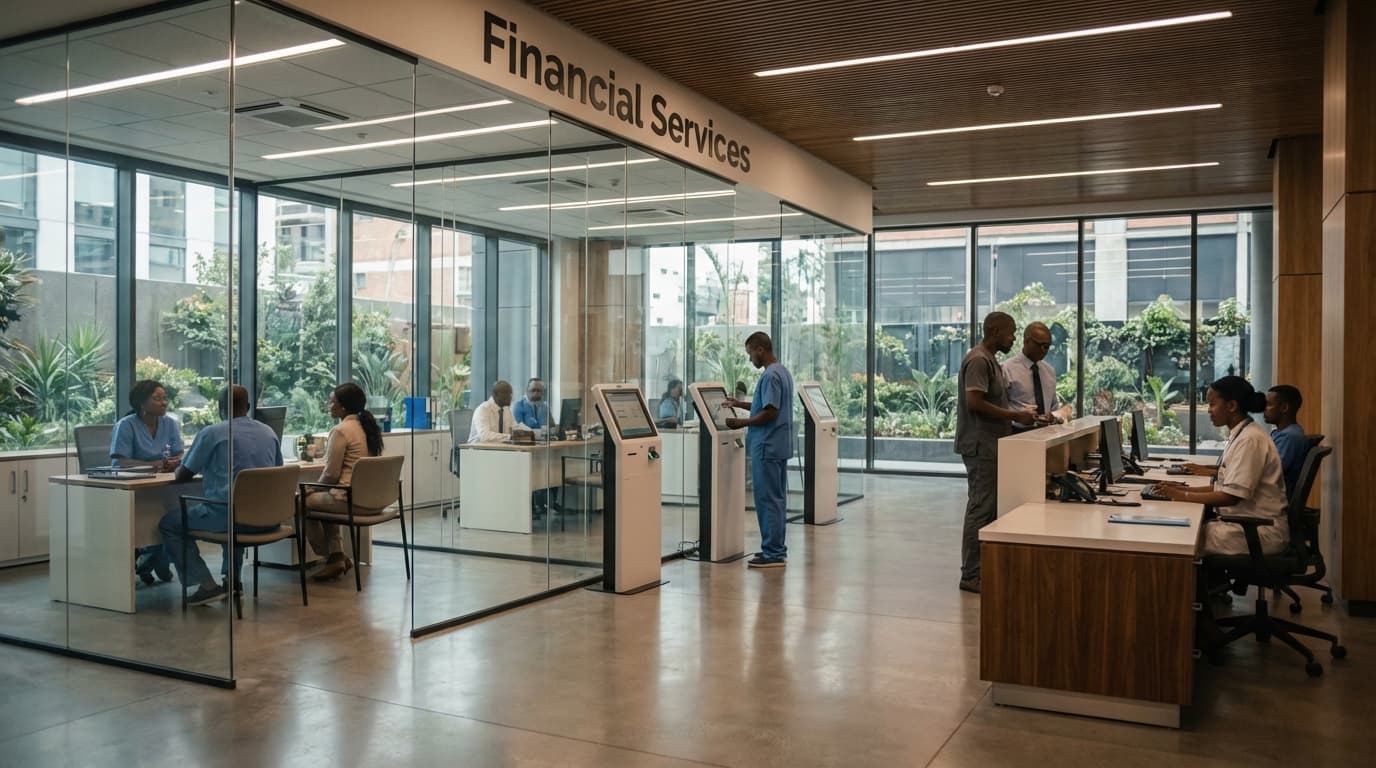
Medical Equipment Financing in Congo (Brazzaville)
Engineering Excellence & Technical Support
Leasing and financing solutions for medical equipment High-standard technical execution following OEM protocols and local regulatory frameworks.
Bridging the Healthcare Gap with Accessible Equipment Financing
We offer tailored financing solutions to healthcare providers in Congo-Brazzaville, enabling them to acquire essential medical equipment, from diagnostic tools to surgical instruments, thereby expanding access to quality healthcare services and improving patient outcomes across the nation.
Empowering Growth through Specialized Medical Equipment Leasing
Our flexible leasing options for medical equipment provide Congolese healthcare institutions with a cost-effective way to upgrade their facilities and stay at the forefront of medical technology, without the burden of significant upfront capital expenditure, fostering sustainable growth and innovation.
Streamlined Financing for Critical Medical Infrastructure Development
We specialize in facilitating the financing of critical medical equipment for public and private healthcare projects in Congo-Brazzaville, ensuring timely procurement and deployment of life-saving technologies to address urgent public health needs and build resilient healthcare systems.
What Is Medical Equipment Financing In Congo (Brazzaville)?
Medical equipment financing in Congo (Brazzaville) refers to the provision of capital, typically in the form of loans or leasing agreements, specifically for the acquisition, upgrade, or maintenance of medical devices and infrastructure. This financial service facilitates access to advanced healthcare technology for public and private healthcare providers within the Republic of the Congo. It involves structured financial products tailored to the unique operational and cash flow characteristics of the healthcare sector, enabling institutions to procure essential and specialized medical apparatus without requiring immediate, substantial capital outlay. The financing mechanisms are designed to mitigate the financial burden of high-value medical equipment, thereby promoting improved diagnostic, therapeutic, and surgical capabilities.
| Stakeholder Group | Needs and Motivations | Typical Use Cases |
|---|---|---|
| Public Hospitals and Clinics | Upgrading aging infrastructure, expanding service offerings, meeting national health mandates, improving patient outcomes, addressing equipment obsolescence, enhancing diagnostic accuracy and treatment efficacy. | Acquisition of new diagnostic imaging systems (MRI, CT scanners), modern surgical suites, intensive care unit (ICU) equipment, laboratory diagnostic tools, portable ultrasound devices, sterilization equipment, hospital beds, and patient monitoring systems. |
| Private Healthcare Providers (Clinics, Hospitals, Diagnostic Centers) | Gaining competitive advantage through advanced technology, increasing patient throughput, offering specialized medical services, meeting evolving patient expectations, improving revenue generation, reducing reliance on external referral centers. | Procurement of specialized surgical equipment (e.g., laparoscopy, arthroscopy), advanced laboratory automation, high-resolution endoscopy units, dental equipment, ophthalmic diagnostic and treatment devices, physiotherapy equipment, and advanced telehealth infrastructure. |
| Non-Governmental Organizations (NGOs) and Charitable Foundations | Delivering essential healthcare services in underserved areas, implementing public health programs, providing medical aid during emergencies, enhancing capacity building for local healthcare workers. | Financing for mobile clinics, essential primary care equipment, community health outreach tools, specialized equipment for disease-specific programs (e.g., maternal and child health, infectious disease control), and training equipment. |
| Medical Training and Research Institutions | Equipping laboratories for research and education, facilitating hands-on training for medical professionals, staying abreast of technological advancements in medical education. | Acquisition of simulation equipment, advanced anatomical models, research-grade laboratory instruments, diagnostic equipment for training purposes, and multimedia teaching facilities. |
Key Components of Medical Equipment Financing in Congo (Brazzaville):
- Asset-Based Lending: Financing secured by the medical equipment itself, allowing providers to acquire assets without depleting working capital.
- Leasing Options: Offering operational or finance leases, providing users with access to equipment for a specified period with ownership transfer potentially at the end of the term (finance lease) or not (operational lease).
- Term Loans: Providing capital for outright purchase with repayment over a predetermined schedule.
- Project Financing: Structuring finance for larger healthcare infrastructure projects that include significant medical equipment components.
- Vendor Financing: Partnerships with medical equipment manufacturers and distributors to offer financing solutions directly to healthcare providers.
- Working Capital Loans: Supplemental financing to cover associated costs such as installation, maintenance, training, and consumables.
Who Needs Medical Equipment Financing In Congo (Brazzaville)?
Medical equipment financing in Congo (Brazzaville) is a critical need for a diverse range of healthcare providers aiming to upgrade, expand, or maintain their diagnostic and treatment capabilities. This financing is essential for acquiring new technologies, replacing outdated machinery, and ensuring continuous patient care without prohibitive upfront capital expenditure.
| Customer Type | Key Departments Requiring Equipment | Typical Equipment Needs | Financing Rationale |
|---|---|---|---|
| Public Hospitals and Clinics | Emergency Rooms, Intensive Care Units (ICUs), Radiology, Surgery, Maternity, General Wards | X-ray machines, CT scanners, MRI machines, ventilators, anesthetic machines, ultrasound devices, patient monitors, surgical instruments, laboratory equipment | Addressing a high volume of patients, upgrading outdated equipment, expanding service offerings, improving diagnostic accuracy and patient outcomes. |
| Private Hospitals and Clinics | Cardiology, Oncology, Neurology, Ophthalmology, Dentistry, Rehabilitation | ECG machines, endoscopes, specialized surgical equipment, advanced imaging systems, dental chairs, physiotherapy equipment | Maintaining a competitive edge, offering specialized treatments, attracting a discerning patient base, investing in cutting-edge technology for better patient care and revenue generation. |
| Specialty Medical Centers (e.g., Dialysis Centers, Cancer Treatment Centers) | Nephrology, Oncology, Radiology | Dialysis machines, linear accelerators, chemotherapy infusion pumps, advanced imaging for radiation therapy planning | Acquiring and maintaining highly specialized, expensive equipment essential for their core services and to meet the specific needs of their patient populations. |
| Diagnostic Laboratories | Hematology, Biochemistry, Microbiology, Histopathology | Automated analyzers, PCR machines, microscopes, centrifuges, incubators, tissue processors | Improving turnaround times, enhancing accuracy of diagnostic tests, expanding the range of tests offered, adopting new diagnostic technologies. |
| Research Institutions | Various medical disciplines | Advanced laboratory equipment, imaging equipment for research purposes, specialized analytical instruments | Facilitating groundbreaking medical research, enabling scientific discovery, and supporting the training of future medical professionals. |
| NGOs with Healthcare Initiatives | Mobile clinics, primary healthcare centers, specialized treatment camps | Portable diagnostic equipment, basic surgical kits, essential medical devices for remote areas, ultrasound machines | Providing essential healthcare services in underserved or remote regions, expanding reach, and addressing public health challenges. |
| Medical Training Facilities | Simulation labs, anatomy labs, clinical skills training centers | Medical simulators, anatomical models, basic diagnostic equipment for training purposes, simulation software | Providing hands-on training for medical students and professionals, ensuring they are equipped with the skills to use modern medical technology. |
Target Customers for Medical Equipment Financing in Congo (Brazzaville):
- Public Hospitals and Clinics
- Private Hospitals and Clinics
- Specialty Medical Centers
- Diagnostic Laboratories
- Research Institutions
- Non-Governmental Organizations (NGOs) with Healthcare Initiatives
- Medical Training Facilities
Medical Equipment Financing Process In Congo (Brazzaville)
The medical equipment financing process in Congo (Brazzaville) typically involves a series of steps to ensure the acquisition of necessary medical technology is both feasible and legally sound. This workflow is designed to assess the applicant's financial standing, the viability of the project, and the specifics of the equipment being financed. The process begins with an initial inquiry and culminates in the successful acquisition and deployment of the medical equipment.
| Stage | Key Activities | Responsible Parties | Key Outputs/Deliverables |
|---|---|---|---|
| Initial Inquiry and Needs Assessment | Prospective borrower (hospital, clinic) contacts a financial institution (bank, leasing company) to express interest in financing medical equipment. Discussion of equipment needs, quantities, and intended use. | Prospective Borrower, Financial Institution | Understanding of financing requirements, preliminary equipment list. |
| Application Submission and Documentation Review | Borrower submits a formal application form along with supporting documents: business plan, financial statements, registration documents, feasibility studies, and details of the proposed equipment. | Prospective Borrower, Financial Institution (Loan Officer/Underwriter) | Completed application, comprehensive documentation package. |
| Credit Assessment and Risk Analysis | Financial institution evaluates the borrower's creditworthiness, financial health, repayment capacity, and the overall risk associated with the loan. This may involve site visits and interviews. | Financial Institution (Credit Department/Risk Analysts) | Credit report, risk assessment, preliminary loan decision. |
| Equipment Sourcing and Quotation | Borrower identifies specific equipment suppliers and obtains detailed quotations. Financial institution may review these quotations for reasonableness and market value. | Prospective Borrower, Equipment Suppliers, Financial Institution | Detailed equipment specifications, official quotations. |
| Proposal and Term Sheet Development | Based on the credit assessment and equipment details, the financial institution prepares a financing proposal outlining the loan amount, interest rate, repayment schedule, collateral requirements, and other terms and conditions. A term sheet is issued. | Financial Institution (Loan Officer/Underwriter) | Financing proposal, term sheet. |
| Legal and Regulatory Compliance Checks | Ensuring the financing structure complies with Congolese laws, regulations, and any specific requirements for medical equipment acquisition. This may involve consulting legal experts. | Financial Institution (Legal Department), External Legal Counsel | Confirmation of legal compliance, identification of any regulatory hurdles. |
| Approval and Sanctioning | The financing proposal is reviewed and approved by the relevant credit committees or decision-making bodies within the financial institution. A formal sanction letter is issued to the borrower. | Financial Institution (Credit Committee/Management) | Formal loan sanction letter. |
| Contract Finalization and Signing | Detailed loan agreements, security agreements, and any other necessary legal documentation are drafted and reviewed by both parties. The contracts are then signed. | Prospective Borrower, Financial Institution, Legal Counsel | Executed loan agreement, security documents, and related contracts. |
| Disbursement of Funds | Upon fulfillment of all conditions precedent, the financial institution disburses the approved loan amount directly to the equipment supplier or to the borrower, as per the agreement. | Financial Institution (Treasury/Operations Department) | Funds transferred to the supplier/borrower. |
| Equipment Delivery, Installation, and Commissioning | The borrower receives the equipment, oversees its installation and commissioning, and ensures it is operational and ready for use in healthcare services. | Prospective Borrower, Equipment Supplier | Installed and operational medical equipment. |
| Post-Disbursement Monitoring and Repayment | The financial institution monitors the borrower's adherence to the repayment schedule and the terms of the loan agreement. Regular communication and financial reviews may occur. | Financial Institution (Loan Monitoring Department), Prospective Borrower | Timely loan repayments, successful loan servicing. |
Workflow Stages of Medical Equipment Financing in Congo (Brazzaville)
- Initial Inquiry and Needs Assessment
- Application Submission and Documentation Review
- Credit Assessment and Risk Analysis
- Equipment Sourcing and Quotation
- Proposal and Term Sheet Development
- Legal and Regulatory Compliance Checks
- Approval and Sanctioning
- Contract Finalization and Signing
- Disbursement of Funds
- Equipment Delivery, Installation, and Commissioning
- Post-Disbursement Monitoring and Repayment
Medical Equipment Financing Cost In Congo (Brazzaville)
Securing financing for medical equipment in Congo (Brazzaville) involves a complex interplay of factors that influence the overall cost. These costs are typically expressed in the local currency, the Central African CFA franc (XAF). The primary drivers of financing costs include the type and cost of the equipment, the chosen financing method, the financial institution's assessment of risk, and prevailing market conditions. For instance, high-value, specialized diagnostic equipment like MRI machines or advanced surgical robots will naturally command higher financing costs than simpler items like examination tables or basic laboratory equipment. Loan terms, interest rates, processing fees, and any collateral requirements all contribute to the final price tag. It's crucial for healthcare providers to thoroughly research options, compare quotes from multiple lenders, and understand the total cost of ownership beyond the initial purchase price.
| Equipment Category | Estimated Initial Cost (XAF '000) | Indicative Annual Financing Cost Range (XAF '000, including interest and fees) | Notes |
|---|---|---|---|
| Basic Diagnostic (e.g., Portable Ultrasound, ECG Machine) | 5,000 - 20,000 | 500 - 3,000 | Lower upfront cost, financing often more accessible. Costs depend heavily on specific model and brand. |
| Intermediate Diagnostic (e.g., Digital X-ray, Basic Laboratory Analyzer) | 25,000 - 100,000 | 2,500 - 15,000 | Requires more significant capital. Financing terms may be stricter. Leasing can be a viable option. |
| Advanced Imaging (e.g., CT Scanner, MRI Machine) | 150,000 - 800,000+ | 15,000 - 100,000+ | Very high capital investment. Financing often involves specialized financial institutions, longer tenors, and rigorous due diligence. Consider maintenance and service contracts. |
| Surgical Equipment (e.g., Operating Theatre Lights, Basic Surgical Sets) | 10,000 - 50,000 | 1,000 - 6,000 | Cost varies widely based on complexity and automation. Financing can be tailored to the facility's surgical volume. |
| Specialized Medical Furniture (e.g., Electric Hospital Beds, Examination Chairs) | 1,000 - 10,000 | 100 - 1,000 | Generally more affordable. Financing might be part of a larger procurement package. |
Key Pricing Factors for Medical Equipment Financing in Congo (Brazzaville)
- Type and Value of Equipment
- Financing Method (Loan, Lease, Hire Purchase)
- Interest Rates (Variable vs. Fixed)
- Loan Tenor (Duration of Repayment)
- Down Payment or Initial Contribution
- Processing and Administrative Fees
- Collateral Requirements
- Lender's Risk Assessment (Creditworthiness of the Borrower)
- Market Conditions and Economic Stability
- Currency Exchange Rate Fluctuations (if equipment is imported)
- Insurance Costs for the Equipment
Affordable Medical Equipment Financing Options
Securing affordable medical equipment is crucial for the growth and efficiency of healthcare facilities. Beyond outright purchase, various financing options and cost-saving strategies can significantly reduce the financial burden. This guide explores these avenues, focusing on value bundles and smart procurement to ensure you get the most out of your investment.
| Cost-Saving Strategy | Description | Potential Benefit |
|---|---|---|
| Value Bundles (Bundled Solutions) | Manufacturers or distributors often offer packages that combine multiple pieces of equipment, software, and services (like installation, training, and maintenance) at a discounted price compared to purchasing each item separately. | Significant price reduction, streamlined procurement, integrated systems, and potentially better service agreements. |
| Bulk Purchasing & Group Purchasing Organizations (GPOs) | Negotiating bulk discounts when purchasing multiple items or joining a GPO, which leverages the collective buying power of many healthcare organizations to secure better pricing and terms. | Lower per-unit costs, reduced administrative burden, access to pre-negotiated contracts. |
| Refurbished or Pre-owned Equipment | Purchasing certified refurbished or well-maintained pre-owned medical equipment from reputable vendors. These devices are often restored to excellent working condition. | Substantial cost savings (often 30-70% less than new), still comes with warranties and support. |
| Negotiate Service and Maintenance Contracts | Don't just accept the standard service contract. Negotiate terms, scope of coverage, response times, and price. Consider longer-term contracts for potential discounts. | Reduced ongoing operational costs, predictable budgeting for maintenance, improved equipment uptime. |
| Early Payment Discounts | Inquire about discounts for paying invoices early, either from vendors or financing partners. | Marginal but cumulative savings over time. |
| Lease End Options | Understand your lease agreements. Negotiate for a favorable purchase option at the end of the lease term, or consider returning the equipment to lease newer models if technology has advanced significantly. | Potential for lower cost of ownership or access to up-to-date technology without a new capital outlay. |
| Technology Management & Lifecycle Planning | Develop a strategic plan for equipment acquisition, maintenance, and replacement. Avoid purchasing equipment that will become obsolete quickly or is not essential for current needs. | Optimized capital allocation, reduced waste from underutilized or outdated equipment. |
| Trade-in Programs | Inquire if manufacturers or vendors offer trade-in programs for your old equipment when purchasing new or leased items. | Reduces the net cost of new equipment. |
Key Financing Options for Medical Equipment
- Leasing: A popular option where you pay to use the equipment for a set period. This conserves capital, offers flexibility, and often includes maintenance. Residual value at the end of the lease can sometimes be negotiated for purchase.
- Loans: Traditional term loans from banks or specialized medical equipment lenders. This provides ownership of the equipment but requires upfront capital or a down payment and impacts your balance sheet.
- Medical Equipment Installment Plans: Offered by manufacturers or third-party financiers, these plans allow you to pay for equipment over time, often with competitive interest rates and flexible terms.
- Sale-Leaseback: You sell existing equipment to a leasing company and then lease it back. This frees up capital tied up in depreciating assets.
- Operating Leases vs. Finance Leases: Operating leases are shorter-term and treated as an operating expense, while finance leases are longer-term, are treated as an asset and liability on the balance sheet, and often have an option to purchase at a lower price.
Verified Providers In Congo (Brazzaville)
Finding verified healthcare providers in Congo (Brazzaville) is crucial for ensuring quality and trustworthy medical services. In this regard, Franance Health stands out as a leading organization, offering a robust system for credentialing and verifying medical professionals. Their rigorous vetting process ensures that all listed providers meet high standards of training, experience, and ethical practice, providing patients with peace of mind and access to competent healthcare.
Why Franance Health Credentials Represent the Best Choice:
Franance Health's commitment to excellence translates into several key benefits for patients seeking medical assistance in Congo (Brazzaville):
- Unwavering Quality Assurance: Franance Health employs a multi-faceted verification process. This includes scrutinizing academic qualifications, professional licenses, surgical certifications, and continuous professional development records. This meticulous approach guarantees that only genuinely qualified and skilled practitioners are listed.
- Enhanced Patient Safety: By ensuring providers are up-to-date with the latest medical advancements and adhere to stringent safety protocols, Franance Health significantly contributes to improved patient outcomes and reduced risks.
- Transparency and Trust: The Franance Health credentialing system fosters transparency. Patients can be confident that the listed providers have undergone a thorough and impartial evaluation, building a foundation of trust between patients and healthcare professionals.
- Access to Specialized Care: Franance Health's network extends to various medical specializations, making it easier for individuals to find the right expert for their specific health needs, from general practitioners to highly specialized surgeons.
- Ethical Practice Adherence: Beyond clinical skills, Franance Health also assesses providers for their adherence to ethical codes of conduct. This ensures a patient-centered approach that prioritizes the well-being and rights of individuals.
Choosing a healthcare provider verified by Franance Health means opting for reliability, expertise, and a commitment to your health and safety.
| Verification Aspect | Franance Health's Approach | Patient Benefit |
|---|---|---|
| Academic Qualifications | Thorough review of degrees, diplomas, and certifications from accredited institutions. | Ensures foundational medical knowledge and training. |
| Professional Licenses | Verification of current and valid operating licenses from relevant regulatory bodies. | Confirms legal authorization to practice medicine. |
| Experience | Assessment of practical experience, including years in practice and previous roles. | Indicates practical application of knowledge and skill. |
| Specializations & Certifications | Validation of specialized training and board certifications in specific medical fields. | Guarantees expertise in niche areas of medicine. |
| Continuous Professional Development (CPD) | Confirmation of ongoing learning and participation in medical education programs. | Ensures providers are up-to-date with medical advancements. |
| Ethical Conduct | Evaluation of adherence to professional ethics and patient care principles. | Promotes patient-centered and respectful healthcare. |
Key Benefits of Choosing Franance Health Verified Providers
- Rigorous verification of academic and professional qualifications.
- Ensures adherence to current medical standards and practices.
- Promotes patient safety through qualified practitioners.
- Builds trust and transparency in healthcare access.
- Facilitates access to specialized medical expertise.
- Upholds high ethical standards in medical practice.
Scope Of Work For Medical Equipment Financing
This Scope of Work (SOW) outlines the requirements for the financing of new and/or used medical equipment. It details the technical deliverables expected from the equipment and defines the standard specifications to ensure quality, safety, and interoperability. The objective is to secure a financing solution that meets the healthcare provider's operational needs and budgetary constraints, while ensuring the procured equipment adheres to industry best practices and regulatory standards.
| Technical Deliverable | Description | Standard Specifications / Requirements |
|---|---|---|
| Medical Equipment Unit(s) | Procurement of specific medical devices as per approved list, including but not limited to imaging systems, surgical instruments, diagnostic tools, patient monitoring devices, etc. | Must be new or in excellent refurbished condition. Compliance with relevant national and international safety standards (e.g., IEC 60601 series). CE marking or FDA approval where applicable. Detailed technical manuals (user, service, installation) in English. Full warranty coverage as specified per equipment type. Demonstrated interoperability with existing hospital IT infrastructure (e.g., EMR/PACS integration) via HL7, DICOM standards. |
| Installation & Commissioning Services | On-site professional installation and rigorous testing of all procured equipment to ensure full functionality and safety. | Performed by manufacturer-certified technicians. Pre-installation site survey. Post-installation calibration and performance verification. Formal sign-off by hospital biomedical engineering and clinical end-users. Compliance with all local building codes and electrical safety regulations. |
| User & Technical Training | Comprehensive training programs for clinical staff and biomedical engineers on the operation, maintenance, and basic troubleshooting of the equipment. | Tailored training modules for different user groups. Hands-on training sessions. Training materials to be provided in written and/or electronic format. Competency assessment for trainees. On-site and/or remote training options. |
| Maintenance & Service Plan | A defined plan for preventative maintenance, corrective maintenance, and access to spare parts for the financed equipment. | Minimum of a 5-year comprehensive service contract including parts and labor. Guaranteed response times for corrective maintenance (e.g., within 24-48 hours). Availability of genuine spare parts for at least 10 years post-installation. Regular preventative maintenance schedule as per manufacturer recommendations. |
| Documentation & Compliance | All necessary documentation related to the equipment, its installation, operation, and compliance with regulatory requirements. | Manufacturer's certificates of origin and conformity. Quality control reports. All permits and licenses required for operation. Asset tagging and inventory management system integration. |
Key Project Phases
- Requirement Gathering & Needs Assessment
- Equipment Specification Definition
- Financing Partner Selection
- Procurement & Delivery Management
- Installation & Commissioning
- Training & Support
- Ongoing Maintenance & Service
Service Level Agreement For Medical Equipment Financing
This Service Level Agreement (SLA) outlines the response times and uptime guarantees for the provision and maintenance of medical equipment financed through [Financing Company Name] (hereinafter referred to as 'Provider') for [Healthcare Facility Name] (hereinafter referred to as 'Client'). This SLA is an integral part of the Master Equipment Financing Agreement dated [Date].
| Service Component | SLA Target (Critical Equipment) | SLA Target (Standard Equipment) | Measurement Method |
|---|---|---|---|
| Initial Response Time (for critical issues) | Within [Number] Business Hours | Within [Number] Business Days | Provider's ticketing system and logged client contact. |
| Resolution Time (for critical issues) | Within [Number] Business Days | Within [Number] Business Days | Time from initial report to successful repair or provision of interim solution. |
| Scheduled Maintenance Notification | [Number] Business Days in advance | [Number] Business Days in advance | Email notification to designated Client contact. |
| Uptime Guarantee (Monthly) | 99.5% | 98.0% | Calculated as (Total Minutes in Month - Total Downtime Minutes) / Total Minutes in Month * 100% |
| Emergency Support Availability | 24/7 | During Business Hours | Dedicated phone line and emergency email contact. |
Key Definitions
- Equipment: Refers to all medical equipment financed by the Provider under the terms of the Master Equipment Financing Agreement.
- Downtime: The period during which the Equipment is not operational or accessible for its intended medical purpose due to technical malfunction, failure, or the need for scheduled maintenance. Unscheduled downtime is any downtime not communicated and agreed upon with the Client at least [Number] business days in advance.
- Response Time: The maximum time allowed for the Provider to acknowledge and begin addressing a reported Equipment issue.
- Resolution Time: The maximum time allowed for the Provider to restore the Equipment to full operational status, or to provide a suitable interim solution.
- Uptime Guarantee: The minimum percentage of time the Equipment is expected to be operational and available for use over a defined period.
- Business Hours: [Specify days, e.g., Monday to Friday] from [Start Time] to [End Time], excluding public holidays in [Relevant Jurisdiction].
- Critical Equipment: Equipment designated as critical by the Client, for which any downtime can have immediate and severe consequences on patient care. A list of Critical Equipment is appended as Appendix A.
- Standard Equipment: All Equipment not designated as Critical Equipment.
Frequently Asked Questions

Ready when you are
Let's scope your Medical Equipment Financing in Congo (Brazzaville) project in Congo (Brazzaville).

Scaling healthcare logistics and technical systems across the entire continent.