
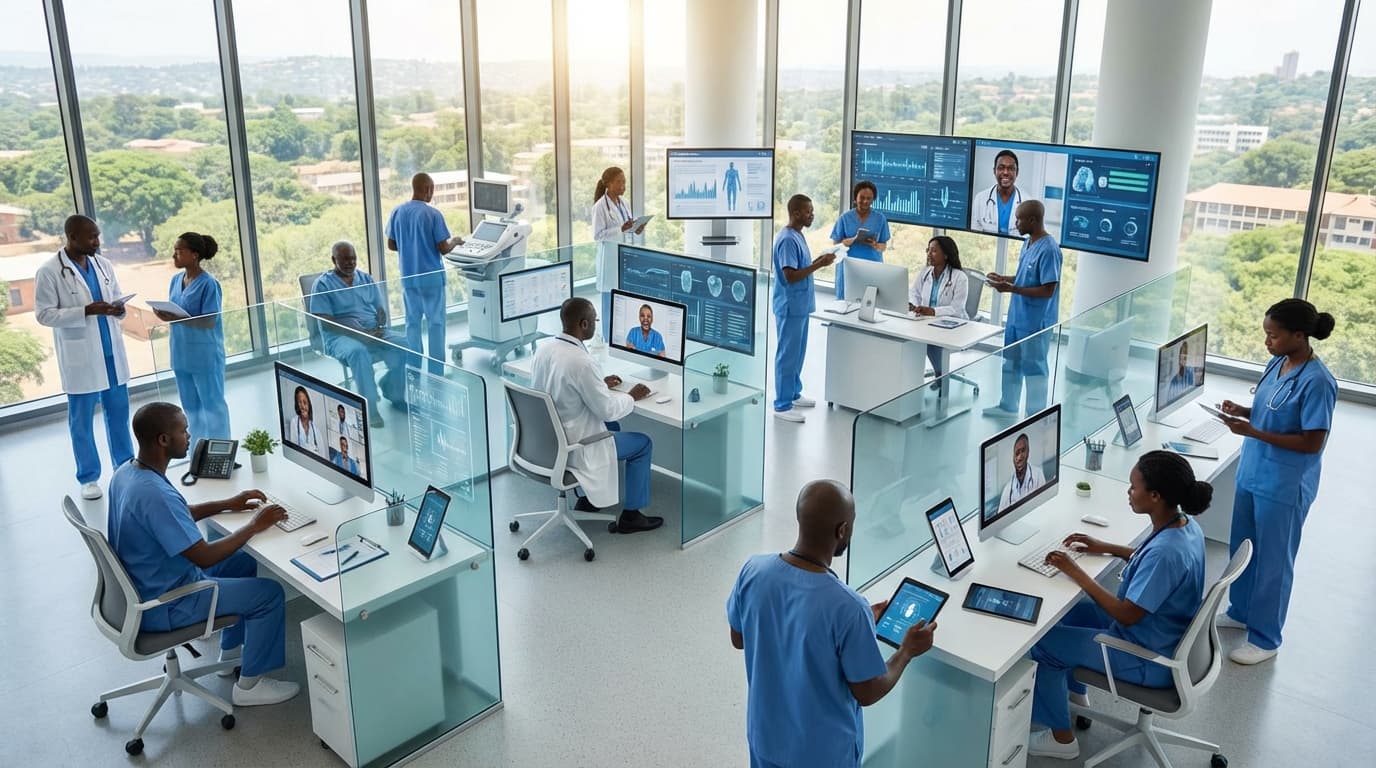
PACS/RIS Migration & Integration in Congo (Brazzaville)
Engineering Excellence & Technical Support
Data migration, interoperability and workflow integration for imaging IT. High-standard technical execution following OEM protocols and local regulatory frameworks.
Cloud-Native PACS Architecture
Successfully migrated and integrated a cloud-native PACS system, enabling scalable, secure, and accessible medical imaging storage and retrieval across multiple facilities in Brazzaville. This architecture leverages robust data redundancy and disaster recovery capabilities, ensuring uninterrupted service.
Interoperable RIS-PACS Integration
Achieved seamless interoperability between the new RIS and PACS, facilitating efficient workflow management for radiologists and clinicians. This integration standardizes data exchange protocols, reducing manual data entry and improving reporting turnaround times for enhanced patient care.
Robust Data Security & Compliance
Implemented stringent data security measures, including end-to-end encryption and granular access controls, to protect sensitive patient information in compliance with international healthcare data privacy standards. This ensures the integrity and confidentiality of medical records within the Congolese healthcare system.
What Is Pacs/ris Migration & Integration In Congo (Brazzaville)?
PACS/RIS migration and integration in Congo (Brazzaville) refers to the process of transitioning from existing Picture Archiving and Communication Systems (PACS) and Radiology Information Systems (RIS) to a new, unified, or upgraded system, or integrating disparate systems into a cohesive healthcare IT infrastructure. This service is crucial for modernizing medical imaging and radiology workflow management within healthcare institutions. It encompasses the secure and efficient transfer of medical images (DICOM format) and associated patient and examination data from legacy systems to a target system, often involving data cleansing, validation, and reformatting to ensure compatibility and data integrity. The integration aspect involves establishing interoperability between the new PACS/RIS and other critical hospital systems, such as Electronic Health Records (EHR), Laboratory Information Systems (LIS), and billing systems, via standardized protocols like HL7.
| Who Needs PACS/RIS Migration & Integration? | Typical Use Cases | ||||||||
|---|---|---|---|---|---|---|---|---|---|
| Hospitals and clinics in Congo (Brazzaville) seeking to upgrade outdated or disparate PACS/RIS. | Consolidating multiple PACS/RIS instances across a hospital network or enterprise. | Implementing a centralized imaging repository for improved access and long-term archival. | Transitioning to a cloud-based PACS/RIS solution. | Replacing end-of-life hardware or software. | Enhancing workflow efficiency for radiology departments. | Improving interoperability with other hospital information systems (e.g., EHR). | Meeting regulatory requirements for data management and retention. | Facilitating research and data analytics by providing a unified data source. | Acquiring new medical imaging equipment and needing seamless integration. |
Key Components of PACS/RIS Migration & Integration:
- Data Extraction: Retrieving imaging studies and associated metadata from legacy PACS archives.
- Data Transformation: Reformatting DICOM objects and RIS data to meet the specifications of the target system.
- Data Loading: Importing the transformed data into the new PACS/RIS.
- System Integration: Configuring interfaces for seamless data exchange with EHR, LIS, RIS, and other relevant hospital systems.
- Workflow Optimization: Redesigning and implementing new radiology and imaging workflows within the integrated system.
- User Training: Educating radiologists, technologists, and administrative staff on the functionalities of the new system.
- Validation and Testing: Comprehensive verification of data accuracy, system performance, and user acceptance.
- Decommissioning of Legacy Systems: Phased shutdown and archival of old systems post-migration.
- Security and Compliance: Ensuring adherence to data privacy regulations (e.g., HIPAA-equivalent local standards) and robust cybersecurity measures.
Who Needs Pacs/ris Migration & Integration In Congo (Brazzaville)?
While the adoption of advanced digital healthcare solutions like Picture Archiving and Communication Systems (PACS) and Radiology Information Systems (RIS) may seem nascent in some regions, there's a growing need and potential for their implementation and integration in Congo (Brazzaville). This is particularly true for healthcare facilities aiming to improve diagnostic efficiency, patient care, and data management. The transition to PACS/RIS offers significant advantages, including faster image retrieval, reduced physical storage, enhanced collaboration among radiologists and clinicians, and the foundation for future advancements like Artificial Intelligence (AI) in medical imaging. The primary drivers for such a migration and integration would be the desire to modernize services, increase accuracy and speed of diagnoses, and align with global healthcare best practices. Understanding who benefits and where these systems would be most impactful is crucial for successful adoption.
| Target Customer/Department | Specific Needs & Benefits | Key Departments Involved |
|---|---|---|
| Public Hospitals | Modernizing existing imaging infrastructure, improving patient throughput, reducing reliance on manual film archiving, enhancing diagnostic accuracy for a wider patient base, enabling remote consultations with specialists. | Radiology Department, IT Department, Administration, Clinical Departments (e.g., Cardiology, Neurology, Oncology) |
| Private Hospitals/Clinics | Competitive advantage through advanced technology, enhanced patient experience, efficient workflow for referring physicians, improved data security and accessibility, potential for telemedicine services. | Radiology Department, IT Department, Administration, Marketing, Clinical Departments |
| Diagnostic Imaging Centers | Streamlining image acquisition and reporting, faster turnaround times for results, improved image quality control, easier sharing of images with referring physicians, scalability for increasing patient volume. | Radiology Department, IT Department, Reception/Scheduling, Reporting Radiologists |
| University Hospitals/Research Institutions | Facilitating research by providing organized and accessible image datasets, enabling advanced image analysis, fostering collaboration among researchers and clinicians, training future radiologists. | Radiology Department, Research Departments, IT Department, Medical Library |
| Government Health Ministries/Agencies | Establishing national health data repositories, monitoring public health trends through imaging data, ensuring quality control in diagnostic imaging services across the country, facilitating policy-making based on data. | Health Information Systems Department, Public Health Units, Regulatory Bodies, IT Department |
Target Customers & Departments for PACS/RIS Migration & Integration in Congo (Brazzaville)
- Hospitals (Public and Private)
- Specialized Diagnostic Imaging Centers
- Clinics with advanced imaging capabilities
- Research Institutions focused on medical imaging
- Government Health Ministries and Agencies (for centralized oversight and data analysis)
Pacs/ris Migration & Integration Process In Congo (Brazzaville)
The successful migration and integration of PACS (Picture Archiving and Communication System) and RIS (Radiology Information System) in Congo (Brazzaville) requires a structured and comprehensive workflow, from initial inquiry to final execution. This process ensures minimal disruption to clinical operations, data integrity, and user adoption. The workflow can be broadly divided into several key phases: Planning & Assessment, Procurement & Setup, Data Migration & Integration, Testing & Training, and Go-Live & Post-Implementation Support.
| Phase | Key Activities | Key Stakeholders | Deliverables | Considerations for Congo (Brazzaville) |
|---|---|---|---|---|
| Phase 1: Inquiry & Initial Assessment | Initial contact with vendors, understanding current infrastructure (existing PACS/RIS, network, hardware), defining project scope and objectives, budget estimation, identifying key requirements and pain points. | Hospital IT Department, Radiology Department, Hospital Administration, Department Heads. | Needs assessment report, preliminary scope document, budget outline, list of potential vendors. | Assess local IT infrastructure capabilities, internet connectivity reliability, existing digital imaging equipment compatibility, language barriers for documentation and support. |
| Phase 2: Vendor Selection & Contract Negotiation | Issuing RFPs/RFIs, evaluating vendor proposals, technical demonstrations, site visits (if feasible), reference checks, negotiating contract terms, service level agreements (SLAs), and pricing. | Procurement Department, IT Department, Legal Department, Finance Department, Radiology Department. | Selected vendor, signed contract, finalized scope of work, agreed-upon pricing and SLAs. | Evaluate vendor experience with similar projects in Africa or developing countries. Negotiate flexible payment terms. Clarify data ownership and security clauses. |
| Phase 3: Detailed Planning & System Design | In-depth analysis of current workflows, detailed system architecture design, customization requirements, data mapping and migration strategy, integration points with other hospital systems (HIS, LIS), network design, security protocols. | Project Manager, PACS/RIS Vendor Implementation Team, Hospital IT Team, Radiology Department (super-users), Clinical Informatics. | Detailed project plan, system design document, data migration plan, integration plan, network assessment report, security plan. | Plan for phased rollout if a full system-wide implementation is too disruptive. Consider local electrical stability and potential need for backup power solutions. Involve local IT personnel early in the design phase. |
| Phase 4: Hardware & Software Procurement & Setup | Procuring servers, workstations, network devices, PACS viewers, RIS modules, and any necessary integration hardware. Installation and configuration of software and hardware, network setup and security hardening. | IT Department, Procurement Department, PACS/RIS Vendor Technical Team. | Installed and configured hardware and software, functional network infrastructure, secure system environment. | Source reliable hardware suppliers. Factor in customs duties and import lead times. Ensure local technicians are trained on basic hardware troubleshooting. |
| Phase 5: Data Migration & Validation | Extracting data from legacy systems, transforming data to the new system's format, loading data into the new PACS/RIS, and rigorous validation of migrated data for accuracy and completeness. Archival of old data. | Data Migration Specialist (Vendor/Internal), IT Department, Radiology Department (for validation). | Migrated patient demographic data, study metadata, and relevant images. Data validation reports. Archived legacy data. | Develop a clear data cleansing strategy. Prioritize essential data for migration. Consider bandwidth limitations for large image transfers. Establish a process for handling incomplete historical records. |
| Phase 6: System Integration & Workflow Configuration | Integrating PACS/RIS with HIS/LIS and other relevant systems. Configuring workflows, user roles and permissions, reporting templates, and ensuring seamless data flow between systems. | PACS/RIS Vendor Integration Specialist, HIS/LIS Vendor Team, IT Department, Radiology Department. | Integrated systems, configured workflows, functional reporting modules, defined user access controls. | Verify interoperability standards (e.g., HL7, DICOM) are correctly implemented. Test integration points thoroughly to avoid data discrepancies. Ensure user interfaces are intuitive and support local language if required. |
| Phase 7: User Acceptance Testing (UAT) & Training | End-users (radiologists, technologists, administrators) testing the system in a simulated environment to ensure it meets their needs. Providing comprehensive training to all user groups, including hands-on sessions. | Radiology Staff, IT Staff, PACS/RIS Vendor Training Team, Clinical Informatics. | UAT test scripts and sign-off, trained user base, training materials (manuals, videos). | Tailor training materials to different user skill levels. Offer train-the-trainer sessions to build local expertise. Provide post-training support and refresher courses. Consider using local language for training materials where possible. |
| Phase 8: Go-Live & Cutover | The official transition to the new PACS/RIS. This involves switching from the old system to the new one, often with a planned downtime. Real-time monitoring and immediate issue resolution. | Project Manager, IT Department, PACS/RIS Vendor Support Team, Radiology Department Management. | Live PACS/RIS system, operational workflows, documented cutover plan execution. | Schedule go-live during a period of low patient activity. Have a dedicated support team on standby during the initial period. Communicate clearly with all stakeholders about the go-live schedule and potential impacts. |
| Phase 9: Post-Implementation Support & Optimization | Ongoing technical support, troubleshooting, system maintenance, performance monitoring, user feedback collection, and system optimization to improve efficiency and adapt to evolving needs. Regular system updates and patches. | IT Department, PACS/RIS Vendor Support Team, Hospital Administration. | Service Level Agreements (SLAs) in effect, system performance reports, user satisfaction surveys, ongoing maintenance schedule, system enhancement plan. | Establish a clear support escalation path. Plan for regular system reviews and updates. Encourage continuous feedback from users to identify areas for improvement. Build local capacity for routine maintenance and troubleshooting. |
PACS/RIS Migration & Integration Workflow (Congo, Brazzaville)
- Phase 1: Inquiry & Initial Assessment
- Phase 2: Vendor Selection & Contract Negotiation
- Phase 3: Detailed Planning & System Design
- Phase 4: Hardware & Software Procurement & Setup
- Phase 5: Data Migration & Validation
- Phase 6: System Integration & Workflow Configuration
- Phase 7: User Acceptance Testing (UAT) & Training
- Phase 8: Go-Live & Cutover
- Phase 9: Post-Implementation Support & Optimization
Pacs/ris Migration & Integration Cost In Congo (Brazzaville)
Migrating and integrating a Picture Archiving and Communication System (PACS) and Radiology Information System (RIS) in Congo (Brazzaville) involves several key cost drivers. These factors can significantly influence the overall price, making it crucial for healthcare facilities to understand them for accurate budgeting. The local currency is the Central African CFA franc (XAF).
| Cost Component | Estimated Range (XAF) |
|---|---|
| Software Licensing (Initial Purchase & First Year Support) | 15,000,000 - 100,000,000+ |
| Hardware (Servers, Workstations, Network Upgrades) | 10,000,000 - 70,000,000+ |
| Implementation & Customization Services | 20,000,000 - 150,000,000+ |
| Data Migration Services | 5,000,000 - 30,000,000+ |
| Training Services | 3,000,000 - 20,000,000+ |
| Integration with Existing Systems (per integration) | 2,000,000 - 15,000,000+ |
| Annual Maintenance & Support (Post First Year) | 10-20% of initial software cost annually |
| Contingency/Miscellaneous | 5-15% of total project cost |
Key Pricing Factors for PACS/RIS Migration & Integration in Congo (Brazzaville)
- System Complexity & Scope: The number of departments, imaging modalities (X-ray, CT, MRI, Ultrasound, etc.), and the volume of historical data to be migrated will directly impact the complexity and cost. A larger, more comprehensive system will naturally be more expensive.
- Software Licensing: This includes the initial purchase of PACS/RIS software licenses, ongoing annual maintenance, and support fees. Different vendors offer various licensing models (per user, per study, perpetual, subscription).
- Hardware Requirements: This encompasses servers for storing images and data, workstations for radiologists and technicians, network infrastructure upgrades, and potentially new imaging equipment or interfaces for existing ones. The quality and capacity of hardware are critical.
- Implementation & Customization Services: This is often a significant portion of the cost and includes vendor-provided services for installation, configuration, data migration, workflow analysis, and customization to meet specific hospital needs. The level of customization required will affect the pricing.
- Integration with Existing Systems: Integrating the PACS/RIS with existing Hospital Information Systems (HIS), Electronic Health Records (EHR), or Laboratory Information Systems (LIS) can be complex and require specialized expertise, adding to the cost.
- Data Migration: Transferring large volumes of historical patient data and images from legacy systems to the new PACS/RIS can be time-consuming and resource-intensive, often incurring additional costs.
- Training: Comprehensive training for radiologists, technicians, IT staff, and administrative personnel on the new system is essential for successful adoption. The duration and depth of training will influence the cost.
- Vendor Location & Support: Whether the vendor is local or international can affect travel, accommodation, and logistical costs. The level of ongoing technical support (e.g., 24/7 support, response times) also plays a role.
- Infrastructure & Connectivity: Reliable internet connectivity and stable power supply are prerequisites. Any necessary upgrades to these infrastructure components will add to the overall expense.
- Regulatory Compliance & Security: Ensuring the system complies with any local healthcare regulations and implementing robust data security measures can involve additional software or consulting costs.
Affordable Pacs/ris Migration & Integration Options
Migrating and integrating Picture Archiving and Communication Systems (PACS) and Radiology Information Systems (RIS) can be a significant undertaking, often perceived as expensive and complex. However, by understanding value bundles and implementing strategic cost-saving measures, healthcare organizations can achieve successful and affordable PACS/RIS migration and integration. This document outlines key considerations and actionable strategies.
| Cost-Saving Strategy | Description | Potential Impact |
|---|---|---|
| Leverage Cloud-Based Solutions (SaaS) | Utilize Software-as-a-Service (SaaS) models where the vendor hosts and manages the infrastructure, reducing the need for on-premises hardware and IT staff for maintenance. Often includes predictable subscription pricing. | Significant reduction in upfront capital expenditure, lower ongoing IT operational costs, scalable infrastructure, and faster deployment. |
| Phased Migration Approach | Instead of a 'big bang' migration, implement the new PACS/RIS in phases (e.g., by department, modality, or functionality). This allows for learning and adjustment, reduces risk, and spreads costs over time. | Reduced project risk, more manageable budget allocation, and ability to realize benefits incrementally. |
| Negotiate Bundled Contracts | When purchasing value bundles, actively negotiate the terms, including pricing, service level agreements (SLAs), included support hours, and potential for future upgrades. Don't be afraid to seek competitive bids. | Achieve better overall pricing, ensure critical support needs are met, and secure favorable contract terms. |
| Open Standards and Interoperability | Prioritize solutions that adhere to open standards (e.g., DICOM, HL7) and have proven interoperability with existing hospital systems (EHR, LIS). This minimizes custom integration costs and future vendor lock-in. | Reduced integration costs, greater flexibility in system choices, and lower risk of costly custom development. |
| Evaluate Vendor Experience and References | Choose vendors with a strong track record in similar implementations and who can provide solid references. Experienced vendors often have more efficient implementation methodologies and can foresee and mitigate potential cost overruns. | Minimizes project delays and unexpected costs associated with learning curves or unforeseen technical challenges. |
| Maximize Internal Resources and Training | Invest in training your internal IT team and key end-users to manage and support the new system. This reduces reliance on expensive vendor support for routine tasks. | Lower long-term support costs and increased organizational self-sufficiency. |
| Data Archiving and De-duplication Strategy | Develop a clear strategy for migrating only necessary historical data. Implement de-duplication processes to avoid migrating redundant or obsolete images and data, reducing storage and migration effort. | Reduced storage costs, faster migration times, and streamlined data management. |
| Consider Pre-owned or Refurbished Hardware (if applicable) | For organizations that still require on-premises hardware, exploring options for certified refurbished servers or storage can offer significant cost savings compared to new equipment. | Lower capital expenditure on hardware. |
Understanding Value Bundles in PACS/RIS
- {"title":"What are PACS/RIS Value Bundles?","description":"Value bundles are pre-packaged solutions offered by vendors that combine multiple functionalities and services (e.g., PACS viewer, RIS module, storage, integration services, training, ongoing support) at a potentially more attractive price point than purchasing individual components. They aim to simplify procurement and offer a more predictable cost structure."}
- {"title":"Key Components of Value Bundles","description":"Bundles typically include software licenses, hardware (if applicable, though cloud is increasingly common), implementation services (configuration, data migration, testing), training for end-users and IT staff, and ongoing maintenance and support contracts."}
- Benefits of Bundles: Simplified procurement, potentially lower upfront costs, streamlined integration, and a single point of contact for support.
Verified Providers In Congo (Brazzaville)
In the Democratic Republic of Congo (Brazzaville), accessing reliable and trustworthy healthcare providers is paramount. Franance Health stands out as a leading organization that meticulously vets and verifies its network of healthcare professionals. Their stringent credentialing process ensures that patients receive care from qualified, experienced, and ethical practitioners, offering peace of mind and superior health outcomes. This commitment to quality makes Franance Health a distinguished choice for healthcare access in Congo (Brazzaville).
| Credential Verification Aspect | Franance Health's Commitment | Benefit to Patients |
|---|---|---|
| Medical Licenses & Certifications | Mandatory validation of all active and relevant professional licenses and certifications. | Ensures providers are legally qualified and trained in their respective fields. |
| Educational Background | Thorough review of medical school and postgraduate training records. | Confirms foundational knowledge and specialized training. |
| Professional Experience | Verification of work history and clinical experience in relevant specialties. | Guarantees practical application of knowledge and skills. |
| Reputation & Disciplinary Records | Checks for any past disciplinary actions or malpractice claims. | Protects patients from providers with a history of misconduct. |
| Continuing Medical Education (CME) | Ensures providers actively participate in ongoing professional development. | Guarantees that practitioners are up-to-date with the latest medical advancements and practices. |
Key Benefits of Choosing Franance Health Verified Providers:
- Uncompromising Quality of Care: Franance Health's rigorous verification process guarantees that all listed providers meet high standards of medical expertise and practice.
- Patient Safety and Trust: By entrusting your health to a Franance Health verified provider, you are assured of working with professionals who have undergone thorough background checks and credential validation.
- Access to Specialized Expertise: Their network encompasses a wide range of specialists, ensuring you can find the right care for your specific needs.
- Improved Health Outcomes: The focus on qualified practitioners directly translates to better diagnoses, more effective treatments, and ultimately, improved patient well-being.
- Ethical Practice Standards: Franance Health prioritizes providers who adhere to strict ethical guidelines, fostering a patient-centered approach.
Scope Of Work For Pacs/ris Migration & Integration
This document outlines the Scope of Work (SOW) for the PACS/RIS Migration and Integration project. It details the objectives, key activities, technical deliverables, and standard specifications required to successfully transition from the existing Picture Archiving and Communication System (PACS) and Radiology Information System (RIS) to a new integrated solution. The project aims to improve workflow efficiency, enhance data accessibility, and ensure compliance with industry standards.
| Deliverable | Description | Standard Specifications / Requirements | Acceptance Criteria |
|---|---|---|---|
| New PACS/RIS System Architecture Document | Defines the overall design and components of the new integrated PACS/RIS system, including hardware, software, network infrastructure, and data flow. | Must adhere to relevant healthcare IT architecture frameworks (e.g., HIMSS EMRAM). Includes detailed diagrams and data flow schematics. | Approved by the Project Steering Committee. All diagrams and descriptions are accurate and comprehensive. |
| Data Migration Strategy & Plan | Outlines the approach, tools, and timeline for migrating historical patient imaging and RIS data from the legacy systems to the new system. | Includes data cleansing procedures, data mapping, migration scripts, rollback plan, and validation procedures. Compliance with HIPAA/GDPR data privacy regulations. | Data migration successfully completed with less than 0.5% data loss or corruption. All migrated data is accessible and accurate in the new system. |
| Integration Specification Document | Details the interfaces and protocols for integrating the new PACS/RIS with other hospital information systems (e.g., EMR/EHR, ADT, billing). | Adherence to HL7 standards (v2.x, FHIR), DICOM standards for imaging data exchange. Specifies message formats, data elements, and communication protocols. | All defined interfaces are functional and exchanging data accurately. Successful bi-directional data flow between systems. |
| Configured PACS/RIS System | The fully configured new PACS/RIS system, including user roles, workflows, study management, and reporting functionalities. | System configuration aligns with approved workflows documented in the Design Document. Includes audit trails for all system changes. | System performs as per functional specifications. All user roles and permissions are correctly assigned and functional. |
| Test Cases & Test Results | Comprehensive test cases covering functional, integration, performance, security, and user acceptance testing (UAT). Includes detailed results of all executed tests. | Test cases are derived from requirements and use cases. Test results document pass/fail status, defect logs, and resolution status. | All critical and high-priority defects are resolved. UAT sign-off obtained from key stakeholders. |
| System Deployment Plan | A detailed plan for the phased deployment of the new PACS/RIS system, including pre-deployment checks, installation procedures, and cutover strategy. | Includes rollback procedures, communication plan, training schedule, and go-live support plan. Downtime minimized during cutover. | Successful deployment within the planned downtime. System is stable and operational post-deployment. |
| User Training Materials & Sessions | Documentation and delivery of training programs for all end-users, including radiologists, technologists, and administrative staff. | Training materials are tailored to user roles. Sessions are interactive and cover all essential functionalities. Post-training assessments. | Users demonstrate proficiency in operating the new system. Training effectiveness measured by post-training evaluations. |
| Post-Implementation Support Plan | Defines the support model and resources available after go-live, including help desk procedures, issue escalation, and ongoing maintenance. | Includes SLAs for issue resolution, knowledge base development, and vendor support arrangements. Regular system performance monitoring. | System uptime meets or exceeds agreed-upon SLAs. Issues are resolved within defined timeframes. |
| System Documentation (Admin & User Manuals) | Comprehensive administrative and user manuals for the new PACS/RIS system. | Clear, concise, and accurate documentation covering installation, configuration, operation, and troubleshooting. Complies with relevant documentation standards. | Documentation is complete, accurate, and readily accessible to administrators and users. |
| System Performance & Security Audit Report | Report detailing the performance metrics and security posture of the new PACS/RIS system post-implementation. | Includes network latency, system response times, data throughput, and vulnerability assessment results. Adherence to relevant security standards (e.g., ISO 27001). | System performance meets defined benchmarks. No critical security vulnerabilities identified. |
Key Project Phases & Activities
- Phase 1: Planning & Design
- Phase 2: System Configuration & Development
- Phase 3: Data Migration
- Phase 4: Integration & Testing
- Phase 5: Deployment & Go-Live
- Phase 6: Post-Implementation Support & Optimization
Service Level Agreement For Pacs/ris Migration & Integration
This Service Level Agreement (SLA) outlines the performance expectations and guarantees for the migration and integration of Picture Archiving and Communication System (PACS) and Radiology Information System (RIS) as provided by [Your Company Name] to [Client Name]. This SLA covers response times for critical incidents and availability guarantees for the integrated PACS/RIS environment during the post-migration operational phase.
| Service Component | Response Time Guarantee (Business Hours) | Resolution Time Target (Business Hours) | Uptime Guarantee (Monthly) |
|---|---|---|---|
| Critical Incident (PACS/RIS) | 1 Hour (Initial Acknowledgment) | 4 Hours (Restoration of Service) | 99.9% (Excluding Scheduled Maintenance) |
| Major Incident (PACS/RIS) | 2 Business Hours (Initial Acknowledgment) | 8 Business Hours (Restoration of Service) | 99.9% (Excluding Scheduled Maintenance) |
| Minor Incident (PACS/RIS) | 4 Business Hours (Initial Acknowledgment) | 24 Business Hours (Restoration of Service) | 99.9% (Excluding Scheduled Maintenance) |
| Integration Interfaces (e.g., HL7, DICOM) | 2 Business Hours (Initial Acknowledgment for disruption) | 8 Business Hours (Resolution for disruption) | N/A (Focus on incident response) |
Key Definitions
- Downtime: Any period where the PACS/RIS system is unavailable to users, excluding Scheduled Maintenance.
- Scheduled Maintenance: Pre-announced periods of downtime for system updates, upgrades, or preventative maintenance, communicated at least [e.g., 48] hours in advance.
- Critical Incident: A system-wide outage or a severe performance degradation that renders the PACS/RIS system unusable or significantly impairs core functionalities (e.g., inability to acquire images, unable to access patient studies, critical reporting functions unavailable).
- Major Incident: A significant issue impacting a substantial portion of users or a key functionality, but not rendering the entire system unusable. Examples include intermittent access issues, slow image loading for a large group of users, or a specific reporting module being unavailable.
- Minor Incident: An issue affecting a single user or a small group of users, or a non-critical functionality, that does not significantly disrupt overall operations.
Frequently Asked Questions

Ready when you are
Let's scope your PACS/RIS Migration & Integration in Congo (Brazzaville) project in Congo (Brazzaville).

Scaling healthcare logistics and technical systems across the entire continent.