
Diagnostic Imaging in Congo (Brazzaville)
Engineering Excellence & Technical Support
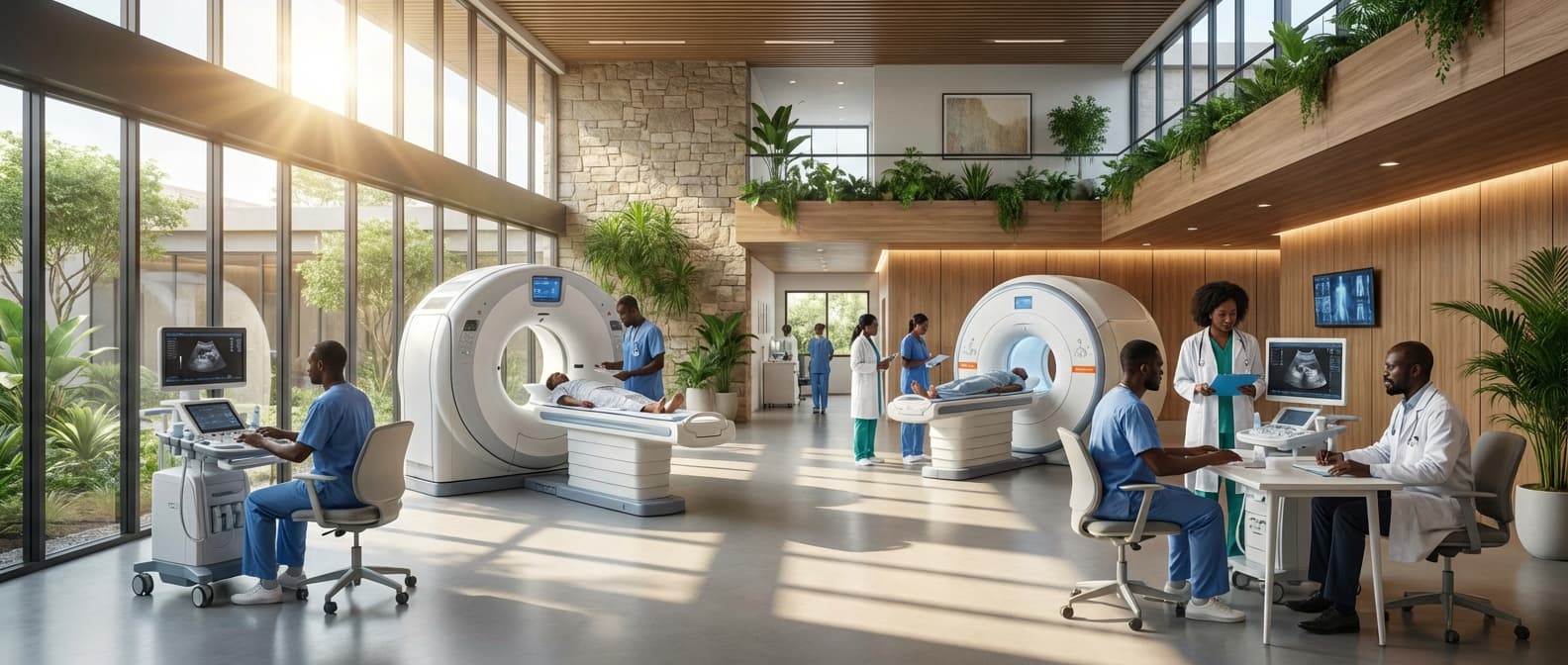
High-resolution imaging systems including CT scanners, MRI, X-ray, and ultrasound technology for accurate clinical diagnosis. High-standard technical execution following OEM protocols and local regulatory frameworks.
Expansion of Digital Radiology Services
Deployment of new digital X-ray machines and PACS systems across key public hospitals, significantly improving image quality, reducing patient radiation dose, and enabling remote consultations for specialized diagnoses.
Introduction of Advanced Ultrasound Diagnostics
Implementation of high-resolution ultrasound equipment with Doppler capabilities in provincial health centers, empowering early detection and management of critical conditions like obstetric emergencies, cardiovascular diseases, and abdominal pathologies.
Establishment of CT Scan Capabilities
Successful installation and operationalization of Computed Tomography (CT) scanners in tertiary care facilities, providing crucial insights for trauma management, neuroimaging, and oncology diagnostics, previously unavailable locally.
What Is Diagnostic Imaging In Congo (Brazzaville)?
Diagnostic imaging in Congo (Brazzaville) refers to the use of various medical technologies to visualize the internal structures of the human body for the purpose of diagnosing, monitoring, and treating disease. This modality plays a critical role in modern healthcare by providing non-invasive or minimally invasive methods for anatomical and physiological assessment. The service typically involves the operation of specialized equipment by trained radiographers and the interpretation of the generated images by qualified radiologists. The scope of diagnostic imaging encompasses a range of modalities, each with unique applications and contraindications.
| Imaging Modality | Principle | Typical Applications | Commonly Available in Congo (Brazzaville)? |
|---|---|---|---|
| X-ray (Radiography) | Attenuation of X-ray beams by tissues of varying density | Fracture detection, pneumonia, foreign bodies, skeletal abnormalities | Yes, widely available |
| Computed Tomography (CT) Scan | Reconstruction of cross-sectional images from multiple X-ray projections | Trauma imaging, stroke, pulmonary embolism, abdominal pathologies, oncology staging | Available in major urban centers and tertiary hospitals |
| Ultrasound (Sonography) | Reflection of high-frequency sound waves from tissue interfaces | Obstetrics and gynecology, abdominal organ assessment (liver, kidneys, gallbladder), vascular studies, musculoskeletal imaging | Yes, widely available |
| Magnetic Resonance Imaging (MRI) | Interaction of magnetic fields and radiofrequency pulses with atomic nuclei (primarily hydrogen protons) | Neurological imaging (brain, spine), soft tissue evaluation (joints, ligaments, muscles), cardiac imaging, abdominal and pelvic imaging | Limited availability, primarily in specialized centers |
| Nuclear Medicine (e.g., SPECT, PET) | Detection of gamma rays emitted by administered radiopharmaceuticals | Thyroid function assessment, bone scans for metastatic disease, cardiac perfusion imaging | Very limited availability, often requires referral |
Key Aspects of Diagnostic Imaging in Congo (Brazzaville)
- Service Definition: The application of physical principles (e.g., X-rays, magnetic fields, sound waves, radionuclides) to generate images of internal body structures and functions. This includes image acquisition, processing, and interpretation by medical professionals.
- Who Needs It: Patients presenting with a wide spectrum of clinical conditions, requiring anatomical or functional assessment to aid in diagnosis, treatment planning, and follow-up. This can range from acute trauma to chronic disease management.
- Typical Use Cases: Evaluation of skeletal injuries, detection of internal bleeding, assessment of organ abnormalities (e.g., tumors, infections, inflammation), screening for certain cancers, guidance for interventional procedures, and monitoring treatment efficacy.
Who Needs Diagnostic Imaging In Congo (Brazzaville)?
Diagnostic imaging plays a crucial role in modern healthcare by providing non-invasive visualizations of the internal body. In Congo (Brazzaville), access to these technologies is vital for accurate diagnosis, treatment planning, and patient management across a range of medical conditions. This section outlines the primary beneficiaries and departments that rely heavily on diagnostic imaging services.
| Customer Group | Primary Needs from Diagnostic Imaging |
|---|---|
| Patients with Symptoms | Accurate diagnosis of underlying conditions. |
| Post-Operative Patients | Monitoring healing and detecting complications. |
| Trauma Victims | Rapid identification of injuries for immediate intervention. |
| Cancer Patients | Staging, treatment planning, and monitoring. |
| Patients with Chronic Illnesses | Tracking disease progression and treatment effectiveness. |
| Surgical Candidates | Pre-operative planning and risk assessment. |
Target Customers and Departments for Diagnostic Imaging in Congo (Brazzaville)
- {"items":["Patients with suspected or confirmed diseases: This includes individuals presenting with a wide array of symptoms requiring internal visualization for diagnosis.","Patients undergoing treatment monitoring: Those whose conditions require regular imaging to assess the effectiveness of treatments (e.g., chemotherapy, physical therapy).","Individuals requiring pre-operative assessment: Patients scheduled for surgery often need imaging to plan the procedure and identify potential risks.","Patients with trauma or injuries: To identify fractures, internal bleeding, or other injuries.","Public health initiatives: For screening programs or epidemiological studies where imaging might be employed."],"title":"Target Customers"}
- {"items":["Radiology Department: The central hub for all diagnostic imaging procedures, including X-rays, CT scans, MRI, and ultrasound.","Surgical Departments (General Surgery, Orthopedics, Neurosurgery, etc.): Essential for pre-operative planning, intra-operative guidance (in some cases), and post-operative evaluation.","Emergency Departments (ER): Critical for rapid diagnosis of trauma, acute conditions (e.g., stroke, appendicitis), and life-threatening emergencies.","Internal Medicine/General Medicine: For diagnosing a broad spectrum of illnesses affecting organs like the lungs, heart, and abdomen.","Oncology Department: For staging cancers, monitoring treatment response, and detecting recurrence.","Cardiology Department: To assess the heart and blood vessels using techniques like echocardiography and CT angiography.","Neurology Department: For diagnosing conditions affecting the brain and nervous system, such as strokes, tumors, and degenerative diseases.","Pediatrics Department: For diagnosing congenital abnormalities, infections, and injuries in children.","Obstetrics and Gynecology (OB/GYN) Department: For prenatal care, diagnosis of gynecological conditions, and infertility assessments.","Pulmonology Department: For diagnosing lung diseases like pneumonia, tuberculosis, and emphysema.","Gastroenterology Department: For evaluating the digestive system using imaging techniques.","Urology Department: For diagnosing kidney, bladder, and prostate conditions."],"title":"Key Departments Utilizing Diagnostic Imaging"}
Diagnostic Imaging Process In Congo (Brazzaville)
Diagnostic imaging services in Congo (Brazzaville) follow a structured workflow to ensure timely and accurate diagnosis. This process typically begins with a referral from a clinician, progresses through scheduling and preparation, involves the imaging procedure itself, and concludes with image interpretation and reporting. Access to these services can be influenced by factors such as the availability of technology, trained personnel, and patient financial capabilities. Public and private healthcare facilities both offer diagnostic imaging, with varying levels of equipment and specialization.
| Stage | Description | Key Actors | Potential Challenges |
|---|---|---|---|
| Patient Referral & Inquiry | A clinician identifies the need for diagnostic imaging and refers the patient. The patient or their representative inquires about available services and costs. | Referring Clinician, Patient/Family | Lack of awareness of available services, communication barriers, cost concerns. |
| Appointment Scheduling | Contacting the imaging center to book an appointment. This may involve waiting times depending on equipment availability and patient load. | Patient/Family, Receptionist/Scheduler | Long waiting lists, limited appointment slots, inconvenient scheduling. |
| Patient Preparation | Instructions are given to the patient regarding any specific preparations needed, such as fasting, dietary restrictions, or wearing specific clothing. | Radiology Department Staff, Patient | Patient non-compliance with instructions, lack of clear communication. |
| Imaging Procedure Execution | The patient undergoes the scheduled imaging procedure (e.g., X-ray, Ultrasound, CT scan, MRI) by a trained radiographer or technician. | Radiographer/Technician, Patient | Equipment malfunction, power outages, limited availability of specialized modalities (e.g., MRI), technician shortages. |
| Image Archiving & Retrieval | Digital or physical images are stored for future reference. Accessing historical images can be crucial for comparison. | Radiology Department Staff, IT Support (for digital systems) | Inadequate storage capacity, difficulty in retrieving older films, lack of a robust PACS (Picture Archiving and Communication System). |
| Radiologist Interpretation | A qualified radiologist analyzes the acquired images to identify abnormalities and formulate a diagnosis. | Radiologist | Shortage of qualified radiologists, heavy workload leading to delays in interpretation. |
| Report Generation & Communication | A detailed report is generated by the radiologist and communicated back to the referring clinician. The patient may also receive a copy. | Radiologist, Referring Clinician, Patient/Family | Delays in report delivery, misinterpretation of findings, poor communication channels between radiologists and clinicians. |
Diagnostic Imaging Workflow in Congo (Brazzaville)
- Patient Referral & Inquiry
- Appointment Scheduling
- Patient Preparation
- Imaging Procedure Execution
- Image Archiving & Retrieval
- Radiologist Interpretation
- Report Generation & Communication
Diagnostic Imaging Cost In Congo (Brazzaville)
Diagnostic imaging costs in Congo (Brazzaville) are influenced by several key factors, leading to a range of prices for various procedures. These factors include the type of imaging modality used (e.g., X-ray, ultrasound, CT scan, MRI), the complexity of the examination, the specific medical facility (public vs. private, hospital vs. clinic), the availability of specialized equipment, and the experience of the radiologist. Emergency services or urgent requests may also incur higher fees. Prices are typically quoted in the local currency, the Central African CFA franc (XAF).
| Imaging Modality/Procedure | Estimated Price Range (XAF) |
|---|---|
| X-ray (e.g., Chest X-ray, Limb X-ray) | 10,000 - 30,000 |
| Ultrasound (e.g., Abdominal, Pelvic, Obstetric) | 20,000 - 60,000 |
| CT Scan (e.g., Head CT, Abdominal CT) | 70,000 - 200,000+ |
| MRI Scan (e.g., Brain MRI, Spinal MRI) | 150,000 - 500,000+ |
| Mammography | 30,000 - 70,000 |
| Doppler Ultrasound (e.g., Vascular Studies) | 30,000 - 80,000 |
Factors Influencing Diagnostic Imaging Costs in Congo (Brazzaville)
- Imaging Modality: Different technologies have vastly different equipment and operational costs. X-rays are generally the most affordable, while MRI scans are usually the most expensive due to the complex machinery and expertise required.
- Procedure Complexity: A simple chest X-ray will cost less than a contrast-enhanced CT scan of the abdomen, for example. The amount of time, contrast agents used, and the technical skill involved all contribute to the price.
- Facility Type: Private healthcare providers and larger hospitals often have more advanced equipment and may charge higher prices compared to public health centers or smaller clinics.
- Equipment Availability and Maintenance: Access to state-of-the-art imaging machines and their ongoing maintenance can significantly impact the cost of services.
- Radiologist Expertise: The fees charged by experienced and specialized radiologists can also play a role in the overall cost of the diagnostic imaging service.
- Urgency/Emergency: Expedited services or emergency imaging procedures may come with a surcharge.
- Geographic Location within Brazzaville: While less pronounced than other factors, there might be minor variations in pricing between different districts or zones within the capital city.
Affordable Diagnostic Imaging Options
Diagnostic imaging plays a crucial role in diagnosing and monitoring a wide range of medical conditions. However, the cost of these services can be a significant concern for many patients. Fortunately, various affordable diagnostic imaging options and cost-saving strategies are available. Understanding value bundles and exploring alternative providers can significantly reduce out-of-pocket expenses without compromising the quality of care.
| Strategy | Description | Potential Savings |
|---|---|---|
| Value Bundles | Pre-packaged services for related diagnostic tests at a reduced overall cost. | Moderate to Significant, depending on the bundle's scope and discount. |
| Independent Imaging Centers | Specialized facilities often with lower overhead than hospitals, leading to competitive pricing. | Moderate to Significant, often 20-50% less than hospital-based imaging. |
| Cash Pricing/Self-Pay Discounts | Reduced rates offered to patients paying for services upfront without insurance. | Significant, can be a substantial percentage off the billed price. |
| Price Comparison Tools | Online platforms and apps that allow you to compare prices for specific procedures across different providers. | Variable, but can lead to identifying savings of hundreds or even thousands of dollars. |
| Negotiation | Directly discussing and agreeing upon a lower price with the imaging provider. | Variable, depends on the provider's flexibility and your negotiation skills. |
| Physician Consultation for Modality Choice | Discussing less expensive imaging alternatives that can still provide adequate diagnostic information. | Low to Moderate, depending on the price difference between modalities. |
Key Strategies for Affordable Diagnostic Imaging
- Understand Your Insurance Coverage: Before scheduling any imaging, thoroughly review your health insurance plan. Understand your deductible, co-pays, co-insurance, and out-of-network benefits. This knowledge empowers you to make informed decisions.
- Shop Around and Compare Prices: Prices for the same imaging procedure can vary dramatically between different facilities. Don't hesitate to call multiple imaging centers, hospitals, and independent radiology groups in your area to get quotes. Websites and apps dedicated to healthcare price transparency can also be valuable resources.
- Explore Independent Imaging Centers: Independent imaging centers often offer lower prices than hospital-based facilities for the same services. They typically have lower overhead costs, which they can pass on to patients.
- Inquire About Cash Prices/Self-Pay Discounts: If you don't have insurance or have a high deductible, ask about cash prices or self-pay discounts. Many facilities offer significant reductions for patients paying out-of-pocket.
- Consider "Value Bundles" or Package Deals: Some providers offer value bundles, which combine multiple related services into a single, often discounted, price. This can be particularly beneficial for comprehensive diagnostic workups.
- Discuss Alternatives with Your Doctor: Talk to your physician about the most cost-effective imaging options for your condition. Sometimes, less expensive imaging modalities can provide sufficient diagnostic information.
- Utilize Telehealth for Consultations: For initial consultations or follow-up discussions about imaging results, telehealth appointments can save on travel costs and time.
- Negotiate with Providers: In some cases, especially if you have a large out-of-pocket expense, you may be able to negotiate the price with the imaging provider.
- Check for Accredited Facilities: While prioritizing cost, ensure the imaging facility is accredited by recognized organizations (e.g., American College of Radiology). Accreditation signifies adherence to quality and safety standards.
- Understand the 'All-Inclusive' vs. 'Itemized' Billing: Be aware of whether a facility provides an all-inclusive price or an itemized bill. Understanding all components of the bill helps avoid surprise charges.
Verified Providers In Congo (Brazzaville)
Ensuring access to reliable and trustworthy healthcare providers is paramount in any region. In Congo (Brazzaville), identifying verified healthcare professionals can be a challenge. This document highlights the importance of verified providers and specifically introduces Franance Health as a leading choice, detailing their credentials and the advantages they offer.
| Credential/Aspect | Franance Health's Commitment | Why it Matters for Patients in Congo (Brazzaville) |
|---|---|---|
| Professional Licensing and Registration | Franance Health rigorously verifies that all affiliated practitioners hold valid and up-to-date licenses and registrations with the appropriate Congolese medical boards and regulatory bodies. | Ensures practitioners are legally qualified and authorized to practice medicine, providing a fundamental layer of trust and accountability. |
| Education and Training Verification | We meticulously review the academic and professional training records of all providers, confirming their educational background from recognized institutions. | Guarantees that healthcare professionals have received a solid foundation in medical knowledge and skills, leading to competent diagnoses and treatments. |
| Specialization and Expertise Validation | Franance Health confirms specific areas of specialization and expertise through certification, fellowships, and peer reviews where applicable. | Connects patients with the most appropriate specialists for their specific health needs, improving the effectiveness and efficiency of care. |
| Experience and Track Record | We assess the practical experience and clinical history of our providers, looking for a proven track record of successful patient care. | Experienced providers often have a deeper understanding of complex conditions and a greater ability to manage a wide range of medical situations. |
| Ethical Practice and Professional Conduct | Franance Health upholds a strict code of ethics and monitors professional conduct to ensure all providers adhere to the highest moral and professional standards. | Protects patients from malpractice, unethical behavior, and ensures compassionate and respectful treatment. |
| Continuous Professional Development (CPD) | We encourage and, where possible, facilitate ongoing training and development for our affiliated healthcare professionals. | Ensures providers stay abreast of the latest medical advancements, technologies, and best practices, leading to superior patient care. |
| Patient Feedback and Quality Assurance | Franance Health incorporates patient feedback mechanisms and quality assurance programs to continuously evaluate and improve the services provided. | Provides a platform for patient voice and drives a culture of ongoing improvement in healthcare delivery. |
Why Choose Verified Healthcare Providers?
- Trustworthiness and Reliability: Verified providers have undergone a vetting process, ensuring they meet specific professional standards.
- Quality of Care: Verification often includes checks on qualifications, licenses, and experience, leading to better patient outcomes.
- Patient Safety: Certified professionals adhere to ethical practices and regulatory guidelines, prioritizing patient well-being.
- Reduced Risk: Avoiding unverified practitioners minimizes the risk of receiving substandard or fraudulent medical services.
- Peace of Mind: Knowing you are in the hands of a legitimate and competent healthcare professional offers significant reassurance.
Scope Of Work For Diagnostic Imaging
This Scope of Work (SOW) outlines the technical deliverables and standard specifications required for the provision of Diagnostic Imaging services. It aims to ensure the highest quality of care, accurate and timely reporting, and efficient utilization of resources.
| Category | Deliverable | Standard Specification / Requirement | Measurement / Verification |
|---|---|---|---|
| Imaging Modalities | Availability of Imaging Services | X-ray, CT, MRI, Ultrasound, Mammography, Fluoroscopy, Nuclear Medicine. | Confirmation of service offering and equipment inventory. |
| Imaging Modalities | Equipment Specifications | All equipment must be current generation, FDA-approved (or equivalent international approval), and regularly maintained. Specific technical parameters (e.g., slice thickness, resolution, field of view) to be detailed per modality. | Equipment certification, maintenance logs, and technical specification sheets. |
| Image Acquisition | Image Quality Standards | Images must be free of artifacts, with optimal contrast and spatial resolution, suitable for accurate diagnosis. Compliance with ACR (American College of Radiology) or equivalent imaging protocols. | Peer review of images, image quality assessments by radiologists. |
| Image Acquisition | Radiation Dose Management | All procedures involving ionizing radiation must adhere to ALARA (As Low As Reasonably Achievable) principles. Dose reporting and optimization measures must be in place. | Dose reports for relevant procedures, review of radiation safety protocols. |
| Reporting | Radiologist Qualifications | All interpreting radiologists must be board-certified (or equivalent) in radiology and licensed to practice. Subspecialty expertise required for specific modalities (e.g., neuroradiology, musculoskeletal radiology). | Copies of certifications, licenses, and credentials. |
| Reporting | Report Turnaround Time (TAT) | Routine reports: within 24-48 business hours. STAT reports: within 1-2 business hours. Critical findings to be communicated verbally immediately. | Tracking of report generation timestamps and communication logs for critical findings. |
| Reporting | Report Content | Reports must be comprehensive, clear, concise, and include clinical history, findings, impression, and recommendations. Structured reporting templates to be utilized where applicable. | Review of sample reports for adherence to content and structure standards. |
| Data Management & Storage | Picture Archiving and Communication System (PACS) | A robust PACS system for storing, retrieving, and displaying images. Compliance with DICOM (Digital Imaging and Communications in Medicine) standards. | PACS system audit, verification of DICOM compliance. |
| Data Management & Storage | Data Security & Privacy | Full compliance with HIPAA (Health Insurance Portability and Accountability Act) or equivalent data protection regulations. Secure data transmission and access controls. | Security audit reports, access control logs, data breach incident reports (if any). |
| Integration | Electronic Health Record (EHR) Integration | Seamless integration with the client's EHR system for order entry, patient demographics, and report delivery. HL7 (Health Level Seven) standards for interoperability. | Successful data exchange during testing and live operation. |
| Quality Assurance | Ongoing Quality Improvement Program | Implementation of a continuous quality improvement (CQI) program for all aspects of imaging services, including image quality, reporting accuracy, and patient satisfaction. | CQI reports, audit findings, and corrective action plans. |
| Patient Care | Patient Safety Protocols | Adherence to established patient safety protocols, including patient identification, procedure verification, and informed consent. | Review of safety incident reports, observation of patient care processes. |
| Emergency Services | Availability for Emergency Imaging | 24/7 availability for emergency imaging services, with defined response times for STAT procedures. | On-call schedules, response time metrics for emergency cases. |
Key Objectives
- To provide comprehensive diagnostic imaging services across various modalities.
- To ensure the delivery of high-quality, accurate, and timely diagnostic reports.
- To maintain state-of-the-art equipment and technologies.
- To adhere to all relevant medical, safety, and regulatory standards.
- To facilitate seamless integration with existing healthcare information systems.
Service Level Agreement For Diagnostic Imaging
This Service Level Agreement (SLA) outlines the performance commitments for diagnostic imaging services provided by [Provider Name] to [Client Name]. It covers response times for critical imaging requests and uptime guarantees for the diagnostic imaging platform and associated services.
| Service Component | Target Response Time (Critical Requests) | Uptime Guarantee | Service Credits |
|---|---|---|---|
| CT Scanning | Within 30 minutes of confirmed notification | 99.9% Monthly Uptime | See SLA Appendix A for Service Credit details. |
| MRI Scanning | Within 45 minutes of confirmed notification | 99.9% Monthly Uptime | See SLA Appendix A for Service Credit details. |
| X-ray Imaging | Within 20 minutes of confirmed notification | 99.9% Monthly Uptime | See SLA Appendix A for Service Credit details. |
| Ultrasound Imaging | Within 30 minutes of confirmed notification | 99.9% Monthly Uptime | See SLA Appendix A for Service Credit details. |
| PACS (Picture Archiving and Communication System) | N/A (Continuous availability expected) | 99.95% Monthly Uptime | See SLA Appendix A for Service Credit details. |
| RIS (Radiology Information System) | N/A (Continuous availability expected) | 99.95% Monthly Uptime | See SLA Appendix A for Service Credit details. |
| Online Reporting Portal | N/A (Continuous availability expected) | 99.9% Monthly Uptime | See SLA Appendix A for Service Credit details. |
Key Definitions
- Critical Imaging Request: An imaging request designated by the referring physician as requiring immediate attention due to a life-threatening condition or potential for rapid deterioration.
- Standard Imaging Request: All imaging requests that are not classified as Critical.
- Scheduled Imaging Appointment: An imaging appointment booked in advance by the client.
- Downtime: Any period during which the diagnostic imaging platform or associated services are unavailable to the client, excluding Scheduled Maintenance.
- Scheduled Maintenance: Pre-announced periods of planned downtime for system updates, upgrades, or preventative maintenance, communicated to the client at least [Number] days in advance.
- Response Time: The time elapsed from when a Critical Imaging Request is received by the Provider to when the imaging service is initiated (e.g., patient is in the scanner for CT/MRI, x-ray is performed for X-ray/Ultrasound).
- Uptime: The percentage of time the diagnostic imaging platform and associated services are operational and accessible to the client.
Frequently Asked Questions

Ready when you are
Let's scope your Diagnostic Imaging in Congo (Brazzaville) project in Congo (Brazzaville).

Scaling healthcare logistics and technical systems across the entire continent.