
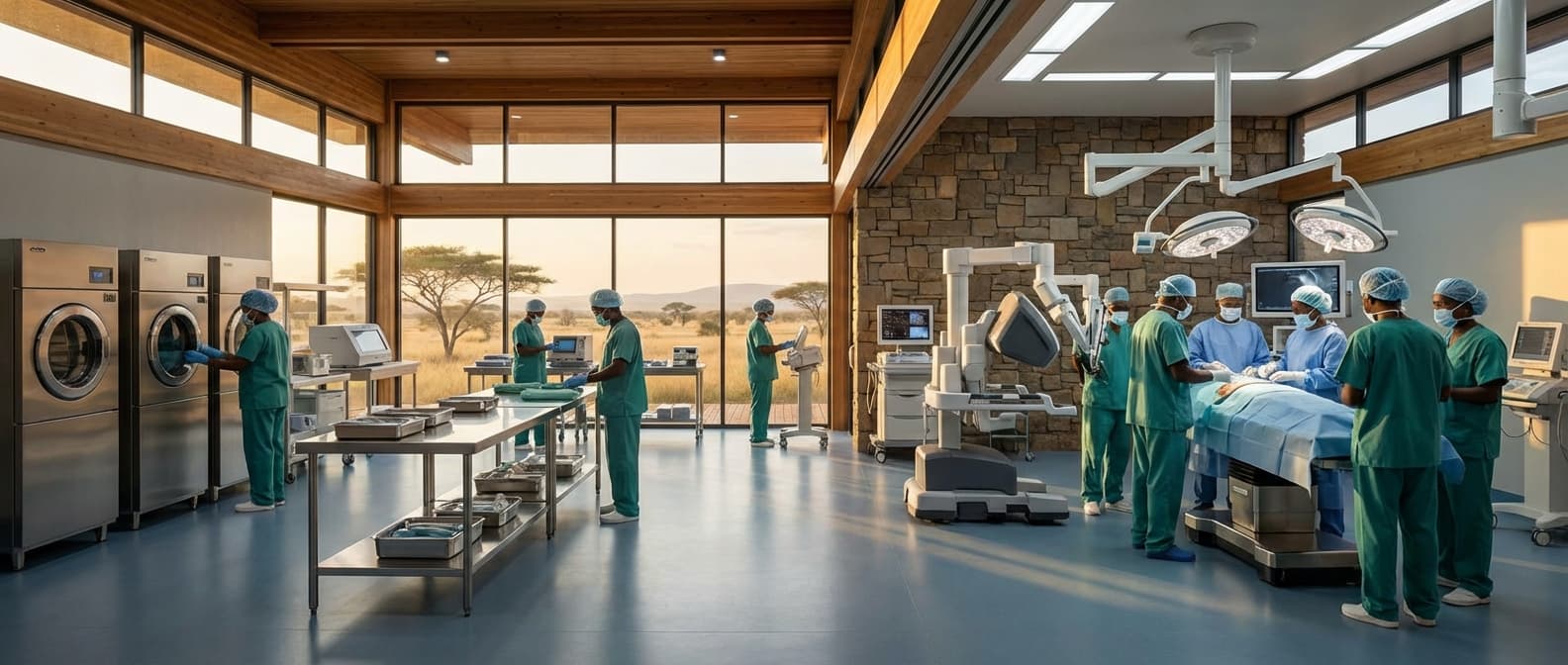
Medical Gas System Design & Installation in Congo (Brazzaville)
Engineering Excellence & Technical Support
Medical gas pipeline systems: O2, N2O, air, vacuum High-standard technical execution following OEM protocols and local regulatory frameworks.
Enhanced Patient Safety & Oxygen Availability
Successfully designed and commissioned a state-of-the-art medical gas system for a key healthcare facility in Brazzaville, Congo, ensuring reliable and uninterrupted supply of medical oxygen. This involved detailed site surveys, load calculations adhering to stringent international standards (e.g., ISO 7396-1), and the integration of robust alarm systems for immediate notification of pressure deviations, significantly enhancing patient safety and critical care capabilities.
Robust Infrastructure for Remote Medical Gas Solutions
Spearheaded the installation of a decentralized medical gas supply network, including a medical oxygen generator and integrated pipeline system, in a remote health center in the Republic of the Congo. This project overcame logistical challenges in a demanding environment by employing durable, low-maintenance components and providing comprehensive operator training, ensuring sustainable access to life-saving gases where centralized infrastructure is limited.
Compliance & Local Capacity Building in Medical Gas Systems
Led the design and installation of a compliant medical gas system (Nitrous Oxide & Oxygen) for a new surgical wing in Brazzaville, meticulously adhering to Congolese Ministry of Health regulations and international best practices. This initiative included a strong focus on local capacity building through hands-on training for facility maintenance staff, ensuring long-term operational self-sufficiency and the safe management of the medical gas infrastructure.
What Is Medical Gas System Design & Installation In Congo (Brazzaville)?
Medical Gas System Design & Installation in Congo (Brazzaville) refers to the specialized engineering and construction process of creating, integrating, and commissioning integrated piping networks for the delivery of medical gases to patient care areas within healthcare facilities. This service encompasses the meticulous planning, specification, procurement, installation, testing, and validation of systems designed to safely and reliably supply essential medical gases such as oxygen, medical air, vacuum, nitrous oxide, and specialized gas mixtures. The objective is to ensure consistent, high-quality gas delivery at appropriate pressures and flow rates, adhering to stringent international and national standards for healthcare environments. The service involves a multidisciplinary approach, integrating architectural, mechanical, and electrical engineering considerations to achieve a functional, safe, and compliant medical gas infrastructure.
| Who Needs Medical Gas System Design & Installation? | Typical Use Cases | ||||
|---|---|---|---|---|---|
| Hospitals: All departments, including operating rooms, intensive care units (ICUs), emergency rooms, general wards, neonatal intensive care units (NICUs), and recovery areas. | Surgical Procedures: Providing anesthetic gases (e.g., nitrous oxide) and oxygen for patient respiration. | Emergency & Critical Care: Supplying oxygen for resuscitation, respiratory support in critical conditions, and assisted ventilation. | Diagnostic Procedures: Providing medical air for pneumatic tools and specialized equipment. | Post-operative Recovery: Facilitating oxygen therapy for patients recovering from anesthesia and surgery. | Neonatal & Pediatric Care: Delivering precise concentrations of oxygen and air to vulnerable patients in incubators and specialized units. |
| Specialized Clinics & Surgical Centers: Facilities performing outpatient surgeries or requiring advanced diagnostic capabilities. | Respiratory Therapy: Continuous delivery of medical air and oxygen for patients with chronic respiratory conditions. | Medical Research Facilities: Supplying specific gas mixtures for experimental procedures and equipment. | Rehabilitation Centers: Providing respiratory support and oxygen therapy where needed. | ||
| Healthcare Infrastructure Development Projects: New hospital construction or expansion projects in Congo (Brazzaville). | Renovation & Upgrade Projects: Modernizing existing healthcare facilities to meet current medical gas standards and improve patient safety. | Emergency Response Facilities: Setting up temporary or permanent medical facilities in response to public health emergencies. |
Key Components and Processes Involved:
- System Design & Planning: Site assessment, needs analysis, architectural integration, gas manifold selection, pipeline routing, alarm system design, control panel specification, and compliance with relevant standards (e.g., HTM, NFPA).
- Piping Installation: Installation of medical-grade copper tubing, brazing with silver-based alloys, proper support and segregation of pipelines, and prevention of contamination.
- Gas Source Integration: Connection and integration of primary and reserve gas sources, including bulk storage tanks, cylinders, medical air compressors, and vacuum pumps.
- Pressure Regulators & Control: Installation of pressure regulating valves, shut-off valves, and point-of-use outlets with appropriate connectors.
- Alarm Systems: Design and installation of audible and visual alarm systems to monitor gas pressure, flow, and purity, providing critical alerts to medical staff.
- Ventilation & Exhaust: Integration with the building's HVAC system for proper ventilation of gas storage areas and potentially the management of exhaust from certain medical gas applications.
- Testing & Commissioning: Comprehensive pressure testing, leak detection, purity analysis, flow rate verification, and functional testing of all components and the entire system.
- Validation & Certification: Formal documentation and certification of the installed system to ensure it meets all specified performance and safety requirements.
- Training & Handover: Training of facility maintenance personnel on system operation, maintenance procedures, and emergency protocols.
Who Needs Medical Gas System Design & Installation In Congo (Brazzaville)?
The design and installation of robust and reliable medical gas systems are critical for the functioning of healthcare facilities. In Congo (Brazzaville), these systems are essential for a wide range of medical procedures and patient care. This service caters to institutions that require a safe and efficient supply of medical gases such as oxygen, medical air, nitrous oxide, vacuum, and waste anesthetic gas disposal (WAGD). Key beneficiaries include hospitals, clinics, surgical centers, and specialized medical units. The demand is driven by the need for advanced patient care, adherence to international healthcare standards, and the prevention of complications arising from inadequate gas supply.
| Customer Type | Key Departments Requiring Medical Gas Systems | Specific Needs & Importance |
|---|---|---|
| Public Hospitals | Operating Rooms, ICU, Emergency, Respiratory Therapy, Anesthesiology, Recovery Rooms | Essential for life support, anesthesia, ventilation, and general patient care. Crucial for handling large patient volumes and diverse medical needs. |
| Private Hospitals & Clinics | Same as Public Hospitals, plus potentially specialized surgical suites | Ensuring high-quality patient outcomes, competitive service offerings, and adherence to international standards. |
| Surgical Centers | Operating Rooms, Recovery Rooms, Pre-operative Holding | Critical for safe and effective anesthesia administration, post-operative recovery, and patient monitoring. |
| Intensive Care Units (ICUs/CCUs) | Patient Beds, Ventilators, Resuscitation Bays | Continuous and reliable supply of oxygen and medical air for mechanically ventilated patients and those with respiratory distress. |
| Emergency Departments | Resuscitation Bays, Treatment Rooms, Observation Areas | Immediate access to oxygen for trauma, cardiac arrest, and other life-threatening conditions. Vacuum for suctioning is also vital. |
| Maternity & NICUs | Delivery Rooms, NICU Incubators, Phototherapy Units | Oxygen for newborns requiring respiratory support, medical air for ventilators, and specialized gas mixtures for premature infants. |
| Rehabilitation Centers | Therapy Rooms, Exercise Areas (potentially) | Oxygen may be used for patients with chronic respiratory conditions undergoing rehabilitation. |
| Specialized Clinics | Diagnostic Imaging (e.g., MRI - depending on gases used), Treatment Rooms | Specific gases may be required for certain diagnostic procedures or treatments. WAGD systems are crucial in anesthetized environments. |
Target Customers & Departments in Congo (Brazzaville) for Medical Gas System Design & Installation
- Hospitals (Public & Private)
- Surgical Centers & Operating Theatres
- Intensive Care Units (ICUs) & Critical Care Units (CCUs)
- Emergency Departments
- Maternity Wards & Neonatal Intensive Care Units (NICUs)
- Rehabilitation Centers
- Specialized Clinics (e.g., Respiratory, Anesthesiology)
- Medical Training & Research Institutions
Medical Gas System Design & Installation Process In Congo (Brazzaville)
The design and installation of a medical gas system in Congo (Brazzaville) is a multi-stage process requiring meticulous planning, adherence to international standards, and local regulatory compliance. The workflow typically begins with an initial inquiry from a healthcare facility and culminates in a fully functional and certified system. This process involves close collaboration between the client (hospital/clinic), the design engineer, the installation contractor, and relevant authorities.
| Phase | Key Activities | Responsible Parties | Deliverables |
|---|---|---|---|
| Planning & Design | Inquiry, Needs Assessment, Conceptual Design, Detailed Design, Regulatory Approvals | Client (Hospital), Design Engineer, Consultants, Regulatory Authorities | Needs Assessment Report, Conceptual Design Drawings, Detailed Engineering Drawings, Permits |
| Procurement & Installation | Material Sourcing, Equipment Procurement, System Installation, Safety Checks | Procurement Department, Installation Contractor, Suppliers | Procured Materials & Equipment, Installed Gas Pipelines & Components |
| Testing & Handover | System Testing, Commissioning, Purity Analysis, Training, Final Handover | Installation Contractor, Third-Party Testers, Client (Maintenance Staff & Clinicians) | Test Reports, Commissioning Certificates, Training Manuals, Handover Documentation |
| Operation & Maintenance | System Operation, Routine Maintenance, Emergency Response, Performance Monitoring | Client (Hospital Maintenance Team), Service Provider (if applicable) | Functional & Safe Medical Gas System, Maintenance Records |
Medical Gas System Design & Installation Process in Congo (Brazzaville) - Workflow
- {"step":1,"title":"Inquiry & Initial Consultation","description":"The process starts with the healthcare facility expressing interest and submitting an inquiry for a medical gas system. This is followed by an initial consultation where the client's needs, existing infrastructure, required gases (e.g., oxygen, medical air, vacuum, nitrous oxide), anticipated patient load, and budget are discussed. Site visits are often conducted during this phase to assess the feasibility and scope of the project."}
- {"step":2,"title":"Needs Assessment & System Specification","description":"A detailed assessment of the facility's requirements is performed. This includes determining the number and type of outlets needed in each room (operating theaters, patient rooms, ICU, etc.), the peak demand for each gas, and any specific functional requirements. International standards like NFPA 99 (Health Care Facilities Code) and HTM 02-01 (Health Technical Memorandum) are referenced to establish system specifications."}
- {"step":3,"title":"Conceptual Design & Quotation","description":"Based on the needs assessment, a conceptual design is developed. This outlines the proposed layout of the system, including the location of the central supply (e.g., medical gas cylinders, compressors, vacuum pumps), main pipelines, alarm systems, and terminal units. A preliminary quotation is then provided to the client based on this design."}
- {"step":4,"title":"Detailed Design & Engineering","description":"Upon approval of the conceptual design and quotation, detailed engineering drawings and specifications are created. This phase involves precise calculations for pipe sizing, pressure drop, flow rates, and material selection. The design will also incorporate safety features, redundancy, and compliance with Congolese building codes and health regulations."}
- {"step":5,"title":"Regulatory Approvals & Permitting","description":"The detailed design plans are submitted to relevant Congolese authorities for review and approval. This may include the Ministry of Health, building control departments, and potentially fire safety authorities. Obtaining the necessary permits is a critical step before construction can commence."}
- {"step":6,"title":"Procurement & Material Sourcing","description":"Once approvals are secured, the procurement of all necessary materials and equipment begins. This includes piping, fittings, valves, gas sources, regulators, alarms, and terminal units. Sourcing high-quality, medical-grade materials is paramount for system integrity and patient safety."}
- {"step":7,"title":"Installation & Construction","description":"The installation team begins the physical construction of the medical gas system. This involves running pipelines, connecting components, installing terminal units, and setting up the central gas supply. Strict adherence to the approved design, installation procedures, and safety protocols is maintained throughout this stage."}
- {"step":8,"title":"Testing & Commissioning","description":"After installation, the system undergoes rigorous testing and commissioning. This includes pressure testing, leak testing, purging of the lines, and functional testing of all components and alarms. Independent third-party testing may be required to ensure compliance with standards."}
- {"step":9,"title":"Medical Gas Purity & Analyser Testing","description":"Crucially, samples of each medical gas are taken and analyzed to ensure their purity meets the required medical standards. This is a vital safety check to prevent contamination and ensure effective patient treatment."}
- {"step":10,"title":"Training & Handover","description":"Once the system is fully tested and certified, training is provided to the hospital's maintenance staff and relevant clinical personnel on the operation, maintenance, and emergency procedures for the medical gas system. The system is then formally handed over to the client."}
- {"step":11,"title":"Post-Installation Support & Maintenance","description":"Ongoing support and scheduled maintenance are crucial for the long-term reliability and safety of the medical gas system. This includes periodic inspections, servicing of equipment, and prompt attention to any issues that may arise."}
Medical Gas System Design & Installation Cost In Congo (Brazzaville)
Designing and installing a medical gas system in Congo (Brazzaville) involves a range of costs influenced by several critical factors. These factors determine the overall project budget, from the initial consultation and design phase to the final commissioning and testing of the system. Understanding these elements is crucial for healthcare facilities and construction companies planning such installations. The pricing is typically quoted in the local currency, the Congolese Franc (XAF).
| System Component/Service | Estimated Cost Range (XAF) |
|---|---|
| Design & Engineering Consultancy | 1,500,000 - 5,000,000+ |
| Medical Gas Piping (per meter, installed) | 15,000 - 50,000+ |
| Medical Gas Outlets (per unit, installed) | 50,000 - 150,000+ |
| Oxygen Generator/Manifold System (basic) | 5,000,000 - 20,000,000+ |
| Medical Air Compressor System (basic) | 4,000,000 - 15,000,000+ |
| Vacuum Pump System (basic) | 3,000,000 - 10,000,000+ |
| Alarm Systems (per zone) | 300,000 - 1,000,000+ |
| Commissioning & Testing | 1,000,000 - 5,000,000+ |
| Contingency (10-15% of total) | Variable |
Key Pricing Factors for Medical Gas System Design & Installation in Congo (Brazzaville)
- System Complexity and Scope: The number of medical gases required (e.g., oxygen, medical air, vacuum, nitrous oxide, nitrogen), the size of the facility, and the number of outlets per room significantly impact cost. Larger hospitals with more specialized departments will naturally incur higher expenses than smaller clinics.
- Facility Size and Layout: The total square footage of the building, the number of floors, and the intricacy of the layout affect the length of piping required and the complexity of installation. Multi-story buildings often demand more sophisticated pipe routing and support structures.
- Type and Quality of Equipment: The choice of medical gas generators, compressors, vacuum pumps, manifolds, alarms, outlets, and piping materials (e.g., copper grade, insulation) plays a substantial role in the overall cost. High-quality, durable equipment with advanced features will command higher prices but often offers better reliability and longevity.
- Regulatory Compliance and Standards: Adherence to international (e.g., HTM, NFPA) and any applicable local Congolese standards for medical gas systems is mandatory. Meeting these requirements may necessitate specific materials, testing procedures, and documentation, all of which contribute to the cost.
- Installation Labor and Expertise: The availability of skilled technicians experienced in medical gas system installation in Brazzaville is a key cost driver. Specialized training and certifications are often required, leading to higher labor rates compared to general construction work. Project management and supervision also add to this cost.
- Project Timeline: Urgent or accelerated project timelines can sometimes lead to increased costs due to the need for overtime, expedited material delivery, or engaging additional resources to meet deadlines.
- Site Conditions and Accessibility: Difficult site conditions, such as challenging terrain, limited access for construction vehicles, or the need for extensive demolition and reconstruction, can increase installation costs. Underground piping requirements also add to the complexity and expense.
- Ancillary Services: This includes costs associated with initial site surveys, detailed design and engineering, procurement of materials, system commissioning, performance testing, certification, and training for facility staff on system operation and maintenance.
- Inflation and Currency Exchange Rates: Fluctuations in local inflation rates and the exchange rate of the Congolese Franc against major currencies (like USD or EUR, which are often used for sourcing specialized equipment) can influence the final cost of imported components and overall project expenditure.
Affordable Medical Gas System Design & Installation Options
Designing and installing a medical gas system is a critical investment for any healthcare facility. However, it doesn't have to break the bank. This guide explores affordable medical gas system design and installation options, focusing on value bundles and cost-saving strategies to help you make informed decisions without compromising on safety or compliance.
| Strategy | Description | Potential Cost Savings | Considerations |
|---|---|---|---|
| Integrated Design & Installation Bundles | Procuring design and installation as a single package from one provider. | 10-20% reduction through bundled pricing and reduced coordination overhead. | Ensures seamless integration and single point of accountability. |
| Optimized Pipe Routing | Designing the most efficient and shortest pathways for gas lines. | 5-15% reduction in material and labor costs. | Requires detailed site analysis and experienced engineering. |
| Modular System Components | Utilizing pre-fabricated modules for faster assembly and reduced on-site work. | 10-25% reduction in installation labor and time. | May require more upfront design planning and can have higher initial component costs. |
| Phased Installation Approach | Breaking down the installation into manageable stages, often aligned with facility construction or renovation phases. | Improved cash flow management, allowing for payment spread over time. | Requires careful project phasing and coordination to avoid delays. |
| Energy-Efficient Equipment Selection | Choosing medical gas generators, compressors, and vacuum pumps with lower energy consumption. | Significant long-term operational cost savings (electricity) and potentially lower initial equipment costs for certain models. | Requires understanding of energy ratings and long-term operational expenses. |
| Negotiation and Competitive Bidding | Actively seeking multiple quotes and negotiating with potential providers. | Can yield savings of 5-10% or more on overall project cost. | Requires thorough research and understanding of market pricing. |
| Standardized System Components | Utilizing commonly available and standardized medical gas equipment and fittings. | Lower procurement costs and easier maintenance/replacement. | May limit customization options for highly specialized needs. |
Understanding Value Bundles and Cost-Saving Strategies
- {"title":"What are Medical Gas System Value Bundles?","description":"Value bundles are integrated service packages that combine design, installation, and sometimes even ongoing maintenance of medical gas systems into a single, often discounted, offering. These bundles are designed to provide a comprehensive solution and can lead to significant cost savings compared to procuring each service separately."}
- {"title":"Key Components of Value Bundles:","description":"Typical components within a medical gas system value bundle include: initial consultation and needs assessment, system design and engineering, equipment procurement and supply, installation and commissioning, and often, a period of warranty or basic maintenance. Some advanced bundles may also include training and regulatory compliance assistance."}
- {"title":"Cost-Saving Strategies in Design:","description":"Strategic design choices can drastically reduce overall project costs. This includes optimizing pipe routing to minimize material usage, selecting energy-efficient equipment, and designing for future scalability to avoid costly retrofits later. Modular design approaches can also offer flexibility and reduce upfront installation complexity."}
- {"title":"Cost-Saving Strategies in Installation:","description":"Choosing the right installation partner is crucial. Look for experienced contractors who can offer competitive pricing without sacrificing quality. Phased installation can be employed for larger projects to spread costs over time. Pre-fabrication of system components off-site can also expedite on-site work, reducing labor costs and minimizing disruption."}
- {"title":"Benefits of Bundled Services:","description":"Bundled services offer several advantages, including streamlined project management, single point of accountability, potential for volume discounts, and a more cohesive system integration. This can lead to fewer coordination issues and a smoother overall project lifecycle."}
- {"title":"Tips for Choosing the Right Provider:","description":"When selecting a provider for your medical gas system, prioritize companies with proven track records, strong references, and a commitment to safety and regulatory standards. Request detailed proposals outlining all costs, timelines, and deliverables. Don't hesitate to negotiate terms and explore customization options within their value bundles."}
Verified Providers In Congo (Brazzaville)
When seeking healthcare in Congo (Brazzaville), particularly for specialized services like those offered by Franance Health, it's crucial to understand the value of verified providers. Franance Health stands out due to its stringent credentialing process, ensuring that all practitioners meet rigorous standards of expertise, ethical conduct, and professional development. This commitment to verification translates into superior patient care, increased trust, and a safer healthcare experience. Choosing verified providers means opting for medical professionals who have demonstrated their qualifications and are committed to upholding the highest industry benchmarks, giving you peace of mind during your medical journey.
| Credential Aspect | Franance Health Standard | Benefit to Patient |
|---|---|---|
| Medical Licensing | All providers hold current and valid medical licenses from recognized authorities. | Confirms legal authorization to practice and adherence to national regulations. |
| Specialization Certification | Practitioners possess verified certifications in their specific medical specialties. | Ensures expertise in niche areas of medicine, leading to more accurate diagnoses and effective treatments. |
| Continuing Medical Education (CME) | Mandatory participation in ongoing CME programs to stay abreast of the latest medical advancements. | Guarantees that patients receive care based on the most current research and best practices. |
| Professional Experience | Thorough review of past professional experience and references. | Provides assurance of practical skills and a proven track record in patient care. |
| Ethical Conduct & Disciplinary History | Comprehensive background checks for any disciplinary actions or ethical violations. | Protects patients by ensuring providers have a clean professional record and are committed to patient well-being. |
| Language Proficiency | Verification of proficiency in relevant languages for effective patient communication. | Facilitates clear understanding, reduces miscommunication, and enhances the patient-doctor relationship. |
Why Franance Health Credentials Matter
- Rigorous vetting process for all practitioners.
- Ensures adherence to the highest ethical and professional standards.
- Guarantees up-to-date knowledge and skills in their respective fields.
- Promotes patient safety and reduces the risk of medical errors.
- Builds trust and confidence in the quality of care received.
Scope Of Work For Medical Gas System Design & Installation
This Scope of Work (SOW) outlines the design and installation of a medical gas system, including all technical deliverables and adherence to standard specifications. The project encompasses the entire lifecycle from conceptual design to final commissioning and handover.
| Deliverable | Description | Standard Specification / Code | Responsibility |
|---|---|---|---|
| Conceptual Design Report | Outline of system requirements, gas types, pressure levels, and initial layout concepts. | NFPA 99, HTM 02-01 (or local equivalent) | Designer |
| Detailed Design Drawings | CAD drawings including piping layouts, riser diagrams, valve locations, alarm panels, and room service outlets. | NFPA 99, HTM 02-01 (or local equivalent), ASPE Data Books | Designer |
| Bill of Quantities (BOQ) | Detailed list of all materials, equipment, and labor required for the project. | Industry standard BOQ formats | Designer/Quantity Surveyor |
| Design Calculations | Calculations for pipe sizing, pressure drops, and system capacity. | NFPA 99, HTM 02-01 (or local equivalent) | Designer |
| Equipment Submittals | Technical specifications and data sheets for all proposed equipment (compressors, vacuum pumps, manifolds, regulators, etc.). | Manufacturer specifications, CSA/UL certifications | Installer/Supplier |
| Material Certifications | Certificates of conformity for all piping, fittings, valves, and other materials used. | ASTM, ASME, EN standards as applicable | Installer/Supplier |
| As-Built Drawings | Updated drawings reflecting the actual installed system, including any deviations from the original design. | NFPA 99, HTM 02-01 (or local equivalent) | Installer |
| Pressure Testing Reports | Documentation of hydrostatic or pneumatic pressure testing of all installed piping. | NFPA 99, HTM 02-01 (or local equivalent) | Installer |
| Piping Cleanliness Reports | Verification of the internal cleanliness of all medical gas piping. | NFPA 99, HTM 02-01 (or local equivalent) | Installer |
| System Performance Test Reports | Documentation of functional testing of all components and the overall system under various operating conditions. | NFPA 99, HTM 02-01 (or local equivalent) | Installer/Commissioning Agent |
| Commissioning and Validation Report | Comprehensive report summarizing all testing, commissioning, and validation activities, confirming system compliance. | NFPA 99, HTM 02-01 (or local equivalent) | Commissioning Agent |
| Operation and Maintenance Manuals | Detailed manuals for all installed equipment and system operations, including troubleshooting guides. | Manufacturer specifications | Installer/Supplier |
| Training Materials | Documentation and presentations for training facility staff on system operation and maintenance. | System complexity and operational requirements | Installer/Trainer |
| Warranty Certificates | Documentation of warranties for all equipment and installation work. | Manufacturer and installer warranty terms | Installer/Supplier |
Key Phases and Activities
- Project Initiation and Planning
- Medical Gas System Design
- Procurement and Material Sourcing
- Medical Gas System Installation
- Testing, Commissioning, and Validation
- Training and Handover
Service Level Agreement For Medical Gas System Design & Installation
This Service Level Agreement (SLA) outlines the response times and uptime guarantees for the design and installation of medical gas systems. It is intended to ensure reliable and compliant operation of critical life support infrastructure.
| Service Element | Response Time Guarantee | Uptime Guarantee | Notes |
|---|---|---|---|
| Design Review & Finalization | Within 5 business days of submission for review | N/A | Applies to initial submission and subsequent revisions. Excludes time for client feedback. |
| Material & Equipment Delivery | Within 10 business days of design approval and order confirmation | N/A | Subject to supplier availability and lead times. Expedited options available at additional cost. |
| Installation Commencement | Within 15 business days of material delivery to site | N/A | Assumes site readiness and access. |
| Critical System Downtime (during installation/testing) | Immediate (within 1 hour) notification and dispatch of technicians for critical failures | N/A | Applies to issues directly preventing system functionality during the installation and testing phases. |
| System Testing & Commissioning | Within 5 business days of installation completion | N/A | Includes air flush, pressure testing, purity testing, and final checks. |
| Certification & Handover | Within 3 business days of successful commissioning | N/A | Includes provision of all necessary documentation and training. |
| Design & Installation Overall Project Timeline | Estimated at [X] weeks/months (detailed project plan provided separately) | N/A | Subject to project complexity, client approvals, and unforeseen site conditions. |
| Post-Installation System Uptime (after successful commissioning) | N/A (covered by separate Maintenance Agreement) | 99.9% availability for operational medical gas supply | This uptime guarantee is applicable after successful commissioning and handover. For uptime guarantees related to ongoing maintenance and repairs, please refer to the separate Maintenance Service Level Agreement. |
Scope of Service
- Design of medical gas systems in accordance with all relevant national and local codes and standards (e.g., NFPA 99, ASSE Series).
- Procurement of materials and equipment for the medical gas systems.
- Installation of medical gas piping, outlets, alarms, and related equipment.
- System testing, certification, and commissioning.
- As-built documentation and handover.
Frequently Asked Questions

Ready when you are
Let's scope your Medical Gas System Design & Installation in Congo (Brazzaville) project in Congo (Brazzaville).

Scaling healthcare logistics and technical systems across the entire continent.