
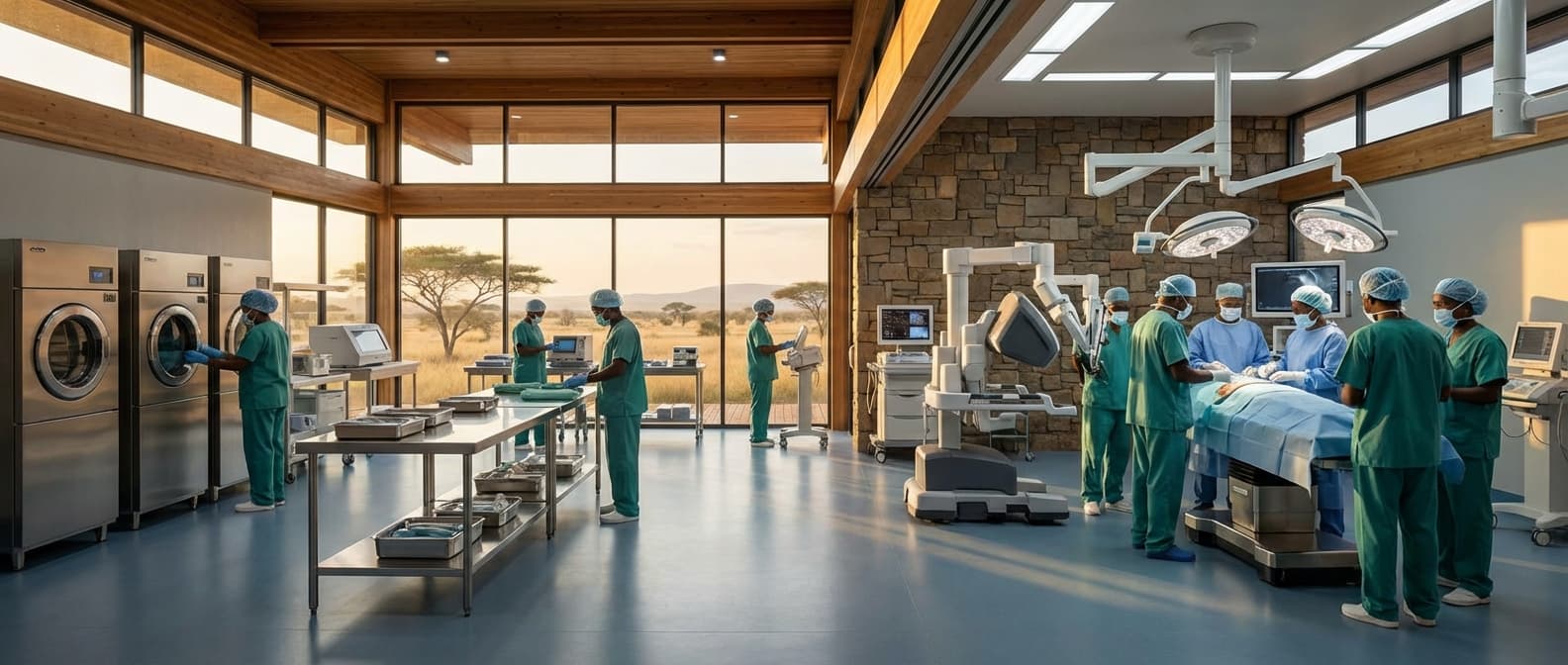
Endoscopy Reprocessing Validation in Congo (Brazzaville)
Engineering Excellence & Technical Support
AER validation, SOP development and compliance High-standard technical execution following OEM protocols and local regulatory frameworks.
Microbiological Validation Program
Established and implemented a comprehensive microbiological validation program to ensure the efficacy of automated endoscope reprocessors and manual disinfection protocols against common pathogens relevant to the Congo Basin, including validation against C. difficile spores and M. tuberculosis.
Process Parameter Verification
Developed and executed rigorous protocols for verifying critical process parameters during endoscope reprocessing, including detergent concentration, water temperature, cycle times, and rinsing effectiveness, utilizing calibrated monitoring equipment and documented procedures.
Contamination Trend Analysis
Initiated and analyzed trend data for endoscope contamination rates post-reprocessing, identifying root causes for any deviations and implementing targeted corrective actions and staff training to maintain optimal patient safety standards.
What Is Endoscopy Reprocessing Validation In Congo (Brazzaville)?
Endoscopy Reprocessing Validation in Congo (Brazzaville) refers to the systematic process of verifying that flexible endoscopes and their accessories are cleaned and disinfected to a standard that eliminates viable microorganisms, thereby preventing patient-to-patient transmission of infectious agents and ensuring the safety and efficacy of endoscopic procedures. This validation is a critical component of infection prevention and control within healthcare facilities in Congo (Brazzaville) that utilize flexible endoscopes. It ensures that the reprocessing protocols implemented by the facility meet established regulatory guidelines and best practices for medical device reprocessing.
| Who Needs Endoscopy Reprocessing Validation? | Typical Use Cases | ||||||
|---|---|---|---|---|---|---|---|
| Hospitals and Clinics: Any healthcare facility in Congo (Brazzaville) performing endoscopic procedures, including gastrointestinal endoscopy (gastroscopy, colonoscopy), bronchoscopy, cystoscopy, and hysteroscopy. | Routine Quality Assurance: To periodically confirm the ongoing effectiveness of existing reprocessing protocols. | Implementation of New Equipment or Protocols: When introducing new endoscopes, accessories, automated reprocessors, or disinfectant agents. | Following Equipment Malfunction or Repair: To revalidate the reprocessing system after significant equipment issues. | Regulatory Compliance: To meet the requirements of local health authorities or international accreditation bodies. | Outbreak Investigation: To rule out endoscope reprocessing as a source of healthcare-associated infections. | Pre- and Post-Market Surveillance: For manufacturers to ensure their reprocessing instructions are validated and effective. | Training and Competency Assessment: As a benchmark for training reprocessing staff and assessing their competency. |
Key Components of Endoscopy Reprocessing Validation:
- Verification of cleaning efficacy: Demonstrating the removal of visible soil and biological debris from all lumens and surfaces of the endoscope.
- Verification of high-level disinfection (HLD) or sterilization efficacy: Confirming the inactivation or elimination of a broad spectrum of microorganisms, including high-risk pathogens.
- Assessment of automated endoscope reprocessor (AER) performance: Evaluating the functionality and efficacy of AERs used in the HLD process.
- Monitoring of manual cleaning and HLD processes: Ensuring adherence to standardized protocols for manual cleaning and disinfection steps.
- Validation of drying and storage procedures: Confirming that endoscopes are adequately dried to prevent microbial growth and stored appropriately to maintain cleanliness.
- Documentation and record-keeping: Maintaining comprehensive records of all validation activities, test results, and corrective actions.
Who Needs Endoscopy Reprocessing Validation In Congo (Brazzaville)?
The critical process of endoscopy reprocessing validation is essential for ensuring patient safety and preventing the transmission of infections. In Congo (Brazzaville), several key stakeholders and departments are in dire need of robust validation protocols to guarantee the efficacy of their disinfection and sterilization procedures. This is particularly important given the potential for healthcare-associated infections (HAIs) in any healthcare setting, and the need for consistent adherence to international best practices.
| Department/Facility Type | Specific Needs/Concerns | Rationale for Validation |
|---|---|---|
| Gastroenterology Departments | High volume of procedures (gastroscopy, colonoscopy); risk of cross-contamination between patients with gastrointestinal issues. | Ensures thorough cleaning and disinfection of reusable endoscopes, preventing the spread of enteric pathogens and blood-borne viruses. |
| Pulmonology Departments | Bronchoscopy procedures; potential for transmission of respiratory pathogens (e.g., tuberculosis, multidrug-resistant organisms). | Validates the effectiveness of disinfection protocols for bronchoscopes, crucial for protecting immunocompromised patients and controlling respiratory infections. |
| Urology Departments | Cystoscopy and ureteroscopy procedures; risk of urinary tract infections and transmission of STIs. | Confirms that reprocessing effectively eliminates microorganisms from urological endoscopes, reducing the incidence of UTIs post-procedure. |
| Operating Rooms (ORs) / Surgical Centers | Laparoscopic and other minimally invasive surgical procedures using endoscopes; stringent sterility requirements. | Guarantees that reusable surgical endoscopes meet the highest standards of sterility, preventing surgical site infections. |
| Infection Prevention and Control (IPC) Departments | Oversight of all infection control practices; need for objective data to monitor and improve reprocessing. | Provides evidence-based data to demonstrate compliance with IPC guidelines and identify areas for improvement in reprocessing workflows. |
| Healthcare Facility Administration | Ensuring patient safety, regulatory compliance, and maintaining the reputation of the institution. | Validates that the facility is meeting national and international standards for reprocessing, mitigating legal and ethical risks. |
| Biomedical Engineering Departments | Maintenance and validation of medical equipment, including reprocessing equipment (e.g., automated endoscope reprocessors). | Confirms the proper functioning of reprocessing machinery and validates that the processes they perform are effective. |
| Regulatory Bodies (if applicable) | Ensuring adherence to national healthcare standards and patient safety regulations. | Provides assurance to regulatory authorities that patient care is being delivered safely and effectively. |
Target Customers and Departments Requiring Endoscopy Reprocessing Validation in Congo (Brazzaville)
- Hospitals with Endoscopy Units
- Clinics Offering Endoscopic Procedures
- Surgical Centers Performing Endoscopies
- Specialty Clinics (e.g., Gastroenterology, Pulmonology, Urology)
Endoscopy Reprocessing Validation Process In Congo (Brazzaville)
The Endoscopy Reprocessing Validation Process in Congo (Brazzaville) aims to ensure that flexible endoscopes are cleaned and disinfected according to established protocols, minimizing the risk of patient-to-patient transmission of infections. This process is crucial for patient safety and maintaining the integrity of endoscopic procedures. The workflow encompasses several key stages, from the initial inquiry about the need for validation to the final execution and reporting.
| Stage | Key Activities | Responsible Parties | Deliverables/Outcomes |
|---|---|---|---|
| Inquiry and Scoping | Healthcare facility requests validation of their endoscopy reprocessing procedures. Understanding the scope of validation (e.g., specific scope types, reprocessing agents used, volume of procedures). | Healthcare Facility (Inquiring Party), Potential Validation Provider/Consultant | Understanding of validation needs, initial proposal/quote. |
| Protocol Review and Gap Analysis | Review of the facility's current Standard Operating Procedures (SOPs) for endoscopy reprocessing. Assessment against national/international guidelines (e.g., WHO, national health ministry guidelines). Identification of any gaps or deviations. | Validation Provider/Consultant, Healthcare Facility (Reprocessing Staff) | Identified gaps in SOPs, recommendations for protocol enhancement. |
| Material and Equipment Preparation | Ensuring availability of appropriate cleaning agents, disinfectants, and testing materials (e.g., ATP swabs, culture media). Calibration and verification of any automated reprocessing equipment. Training of reprocessing staff on any updated protocols. | Healthcare Facility (Reprocessing Staff, Biomedical Engineering), Validation Provider/Consultant | Readiness of reprocessing area, validated cleaning/disinfection agents, trained staff. |
| Validation Execution (Process & Microbiological) | Process Validation: Observation and documentation of the entire reprocessing cycle for multiple endoscopes, ensuring adherence to the revised SOPs. Microbiological Validation: Post-reprocessing sampling (e.g., surface swabs, rinse water) to assess the microbial load and effectiveness of the disinfection process. Testing for specific indicator organisms if deemed necessary. | Validation Provider/Consultant, Healthcare Facility (Reprocessing Staff) | Observed reprocessing logs, collected samples for laboratory analysis, documented deviations (if any). |
| Data Analysis and Reporting | Analysis of the collected data, including process observations and microbiological results. Comparison of results against predefined acceptance criteria. Preparation of a comprehensive validation report detailing the methodology, findings, and conclusions. | Validation Provider/Consultant, Laboratory Personnel | Validation report with findings and conclusions. |
| Corrective Actions and Re-validation | If validation fails or significant deviations are identified, a root cause analysis is performed. Implementation of corrective and preventive actions (CAPAs). Re-validation may be required to confirm the effectiveness of the implemented changes. | Healthcare Facility (Management, Reprocessing Staff), Validation Provider/Consultant | Implemented CAPAs, successful re-validation (if applicable). |
| Documentation and Certification | Finalization of all validation documentation. Issuance of a validation certificate or statement of compliance, confirming that the endoscopy reprocessing procedures meet the required standards. Establishment of a schedule for periodic re-validation. | Validation Provider/Consultant, Healthcare Facility | Signed validation certificate, comprehensive validation dossier, ongoing monitoring plan. |
Endoscopy Reprocessing Validation Workflow
- Inquiry and Scoping
- Protocol Review and Gap Analysis
- Material and Equipment Preparation
- Validation Execution (Process & Microbiological)
- Data Analysis and Reporting
- Corrective Actions and Re-validation
- Documentation and Certification
Endoscopy Reprocessing Validation Cost In Congo (Brazzaville)
Validating the reprocessing of endoscopic equipment is a critical step in preventing healthcare-associated infections. In Congo (Brazzaville), the cost of this validation is influenced by several factors, leading to a range of pricing. The primary drivers include the type and number of validation tests required, the complexity of the endoscopic equipment being processed, the specific reprocessing facility or laboratory conducting the validation, and the labor involved. Specialized tests, such as those for high-level disinfection efficacy or sterilisation assurance, will naturally incur higher costs than standard surface monitoring. The cost is typically expressed in the local currency, the Congolese Franc (XAF).
| Validation Component/Service | Estimated Cost Range (XAF) | Notes |
|---|---|---|
| Basic Surface Bioburden Testing (per endoscope) | 20,000 - 40,000 | Assesses general microbial load. |
| High-Level Disinfection (HLD) Efficacy Testing (per cycle validation) | 50,000 - 100,000 | Confirms effectiveness of HLD processes for specific disinfectants. |
| Sterilization Validation (e.g., for reusable components) | 75,000 - 150,000 | Ensures complete sterilization of critical items. |
| Water System Validation (for automated reprocessors) | 60,000 - 120,000 | Tests the microbial quality of water used in reprocessing. |
| Environmental Monitoring (e.g., air and surface in reprocessing area) | 40,000 - 80,000 (per area, per sampling event) | Assesses the ambient cleanliness of the reprocessing environment. |
| ATP Swab Testing (per endoscope) | 15,000 - 30,000 | Rapid indicator of organic material presence. |
| Microbial Challenge Testing (for specific pathogens) | 80,000 - 200,000+ | More complex testing for specific, high-risk pathogens. |
| Certification and Documentation Fee | 10,000 - 25,000 | For official reports and certificates of validation. |
Key Pricing Factors for Endoscopy Reprocessing Validation in Congo (Brazzaville)
- Type and Scope of Validation Tests: Different tests have varying complexity and reagent requirements.
- Number of Endoscopes to Validate: Bulk validation may offer per-unit cost reductions.
- Complexity of Endoscopic Equipment: Specialized or intricate equipment may require more detailed validation procedures.
- Choice of Validation Provider: Public health laboratories might have different fee structures than private entities.
- Reagent and Consumable Costs: The price of chemicals and materials used in testing.
- Labor and Expertise: The time and skill of technicians performing the validation.
- Location of Service: Potential logistical costs for sample transport or on-site testing.
Affordable Endoscopy Reprocessing Validation Options
Ensuring the effectiveness of endoscopy reprocessing is critical for patient safety and regulatory compliance. However, validation can be a significant expense for healthcare facilities. This document outlines affordable options for endoscopy reprocessing validation, focusing on value bundles and cost-saving strategies.
| Strategy | Description | Value Proposition | Cost-Saving Potential |
|---|---|---|---|
| Value Bundles | Purchasing validation services as a package, often including routine testing, documentation review, and staff training, can offer significant discounts compared to individual services. | Streamlined process, predictable costs, comprehensive compliance support. | Significant discounts on combined services, reduced administrative overhead. |
| Leveraging Third-Party Reprocessing Services | Outsourcing complex or high-volume reprocessing to specialized third-party providers who often incorporate validation as part of their service offering. | Access to expertise, advanced technology, and integrated validation. | Reduces capital investment, internal staffing needs, and potentially the cost of validation itself. |
| Phased Validation Approach | Instead of full validation at once, consider a phased approach, prioritizing critical components or equipment based on risk and usage. This allows for budget allocation over time. | Manages budget, allows for learning and adaptation, focuses resources on highest impact areas. | Spreads costs over multiple budget cycles, potentially reducing the need for large upfront expenditures. |
| Internal Training and Skill Development | Investing in internal staff training for basic validation checks and documentation can reduce reliance on external services for routine tasks. | Empowers staff, improves understanding of reprocessing protocols, builds internal capacity. | Reduces the need for external validation for simpler, routine tasks, freeing up resources for more complex validation needs. |
| Consortium or Group Purchasing | Collaborating with other facilities to negotiate bulk pricing for validation services or equipment. | Increased purchasing power, shared resources and best practices. | Potentially substantial discounts due to volume purchasing. |
| Manufacturer-Provided Validation Tools | Exploring validation tools or kits offered by endoscope manufacturers, which may be more cost-effective for specific equipment. | Equipment-specific expertise, potentially simpler validation procedures. | Can be more cost-effective than general validation services for certain manufacturer-specific requirements. |
| Digital Documentation and Auditing Tools | Implementing digital systems for tracking reprocessing cycles, maintenance, and validation results. This can streamline audits and reduce paper-based costs. | Improved record-keeping, easier access to data, efficient audit preparation. | Reduces printing, storage, and manual retrieval costs associated with paper records. |
Affordable Endoscopy Reprocessing Validation Options
- Understanding the Importance of Validation
- Common Validation Requirements
- Strategies for Cost-Effective Validation
Verified Providers In Congo (Brazzaville)
When seeking healthcare services in Congo (Brazzaville), ensuring the credibility and competence of providers is paramount. Verified providers offer a crucial layer of assurance, and Franance Health stands out as a premier choice due to its rigorous credentialing process and unwavering commitment to quality. Their approach ensures that patients receive safe, effective, and ethical medical care.
| Credential Verification Area | Franance Health Standard | Implication for Patients |
|---|---|---|
| Medical Licenses and Certifications | Mandatory verification of all current and valid licenses from recognized authorities. | Ensures providers are legally qualified and authorized to practice. |
| Educational Background | Verification of degrees and diplomas from accredited institutions. | Confirms foundational medical knowledge and training. |
| Clinical Competence Assessment | Evaluation of practical skills and experience, often through peer review or documented case studies. | Guarantees proficiency in delivering specific medical treatments and procedures. |
| Professional References and Background Checks | Thorough checks for any disciplinary actions or malpractice history. | Mitigates risks and ensures ethical practice. |
| Continuing Medical Education (CME) | Requirement for ongoing professional development to stay updated with medical advancements. | Ensures patients receive care informed by the latest medical knowledge and techniques. |
Why Franance Health Credentials Matter
- Rigorous Vetting Process: Franance Health meticulously vets all healthcare professionals, examining their educational background, professional licenses, and past performance.
- Commitment to Quality Standards: They adhere to international best practices in healthcare delivery, ensuring that their network consistently meets high standards of care.
- Patient Safety Focus: Credentialing by Franance Health prioritizes patient safety through thorough background checks and verification of clinical competencies.
- Access to Specialized Expertise: Their network includes a diverse range of specialists, all verified to ensure they possess the necessary qualifications for their respective fields.
- Trust and Reliability: Choosing a Franance Health-affiliated provider offers peace of mind, knowing you are engaging with a healthcare professional who has met stringent verification criteria.
Scope Of Work For Endoscopy Reprocessing Validation
This document outlines the Scope of Work (SOW) for the validation of the endoscopy reprocessing procedures at [Facility Name]. The objective is to ensure that all flexible endoscopes are reprocessed in accordance with current regulatory requirements, industry best practices, and manufacturer's instructions for use (IFU), thereby minimizing the risk of patient-to-patient transmission of infections. This SOW details the technical deliverables and standard specifications required for the successful completion of this validation study.
| Category | Deliverable | Standard Specification/Reference | Acceptance Criteria |
|---|---|---|---|
| Protocol Development | Validation Protocol | Detailed document outlining study design, objectives, methods, scope of endoscopes, sampling plan, reagents, equipment, and acceptance criteria. Must align with AAMI ST98, FDA guidance on reprocessing, and manufacturer IFUs. | Protocol approved by relevant stakeholders (e.g., Infection Prevention, Risk Management, Clinical Engineering, Endoscopy Department). |
| Pre-Validation Assessment | Site Readiness Assessment Report | Report documenting assessment of reprocessing area layout, workflow, water quality, equipment calibration, and staff competency. | All identified deficiencies in site readiness addressed prior to initiation of validation runs. |
| Cleaning Validation | Cleaning Efficacy Data Report | Data from tests (e.g., protein, hemoglobin, carbohydrate assays) performed on rinse water and/or endoscope surfaces after cleaning. Must demonstrate significant reduction of biological soil. | Levels of residual protein, hemoglobin, and carbohydrates below established acceptable limits (e.g., < 200 µg/mL for protein, < 30 µg/mL for hemoglobin, < 15 µg/mL for carbohydrates in rinse water). |
| Disinfection/Sterilization Validation | Microbiological Challenge Test Results | Data from tests using biological indicators (BIs) or non-pathogenic surrogate microorganisms inoculated onto critical areas of the endoscope, processed according to the validated HLD/sterilization cycle. | Complete inactivation of biological indicators or surrogate microorganisms for HLD. Log reduction of at least 6 or complete kill for sterilization, as per applicable standards (e.g., AAMI TIR34 for water quality, AAMI ST41 for sterilization). |
| Endoscope Functionality and Integrity | Endoscope Functionality Check Report | Documentation of functional tests performed on each endoscope post-reprocessing, including image quality, light source, air/water channels, suction, and articulation. | All functional parameters within manufacturer specifications. |
| Process Monitoring and Control | Environmental Monitoring Report (if applicable) | Data from monitoring of water quality (e.g., endoscope rinse water, HLD water) for microbial contamination and disinfectant concentration. | Water quality within acceptable limits (e.g., compliant with AAMI TIR34). Disinfectant concentrations verified at the start and end of each reprocessing cycle. |
| Documentation and Reporting | Final Validation Report | Comprehensive report summarizing all validation activities, results, statistical analysis (if applicable), deviations, root cause analysis, and conclusions. Includes reference to all raw data and supporting documentation. | Report approved by all relevant stakeholders. Provides clear evidence that the reprocessing process is effective and reproducible. |
| Training and Competency | Staff Training and Competency Assessment Records | Documentation of training provided to reprocessing personnel on the validated procedures and subsequent competency assessments. | All staff involved in reprocessing demonstrate competency in the validated procedures. |
Key Objectives
- To verify the efficacy of the manual and automated cleaning processes for flexible endoscopes.
- To validate the effectiveness of the high-level disinfection (HLD) or sterilization processes for flexible endoscopes.
- To confirm the functionality and integrity of all reprocessed endoscopes.
- To identify and document any deviations from established protocols and recommend corrective actions.
- To establish and document a robust validation protocol for ongoing quality assurance.
Service Level Agreement For Endoscopy Reprocessing Validation
This Service Level Agreement (SLA) outlines the guaranteed response times and uptime for the Endoscopy Reprocessing Validation service. This service ensures the proper functioning and availability of the validation systems and processes necessary for ensuring the cleanliness and safety of reprocessed endoscopic equipment.
| Service Component | Response Time Guarantee (Critical Incidents) | Response Time Guarantee (Non-Critical Incidents) | Uptime Guarantee |
|---|---|---|---|
| Endoscopy Reprocessing Validation System Access | 15 minutes (acknowledgement), 1 hour (resolution) | 4 business hours (acknowledgement), 8 business hours (resolution) | 99.9% |
| Validation Process Monitoring & Alerting | 10 minutes (acknowledgement), 45 minutes (resolution) | 2 business hours (acknowledgement), 4 business hours (resolution) | 99.9% |
| Data Reporting & Archiving | 30 minutes (acknowledgement), 2 hours (resolution) | 8 business hours (acknowledgement), 16 business hours (resolution) | 99.5% |
| Technical Support & Troubleshooting | 15 minutes (acknowledgement), 1 hour (resolution) | 4 business hours (acknowledgement), 8 business hours (resolution) | N/A (support is provided as needed within response times) |
Key Service Components
- Endoscopy Reprocessing Validation System Access
- Validation Process Monitoring & Alerting
- Data Reporting & Archiving
- Technical Support & Troubleshooting
Frequently Asked Questions

Ready when you are
Let's scope your Endoscopy Reprocessing Validation in Congo (Brazzaville) project in Congo (Brazzaville).

Scaling healthcare logistics and technical systems across the entire continent.