
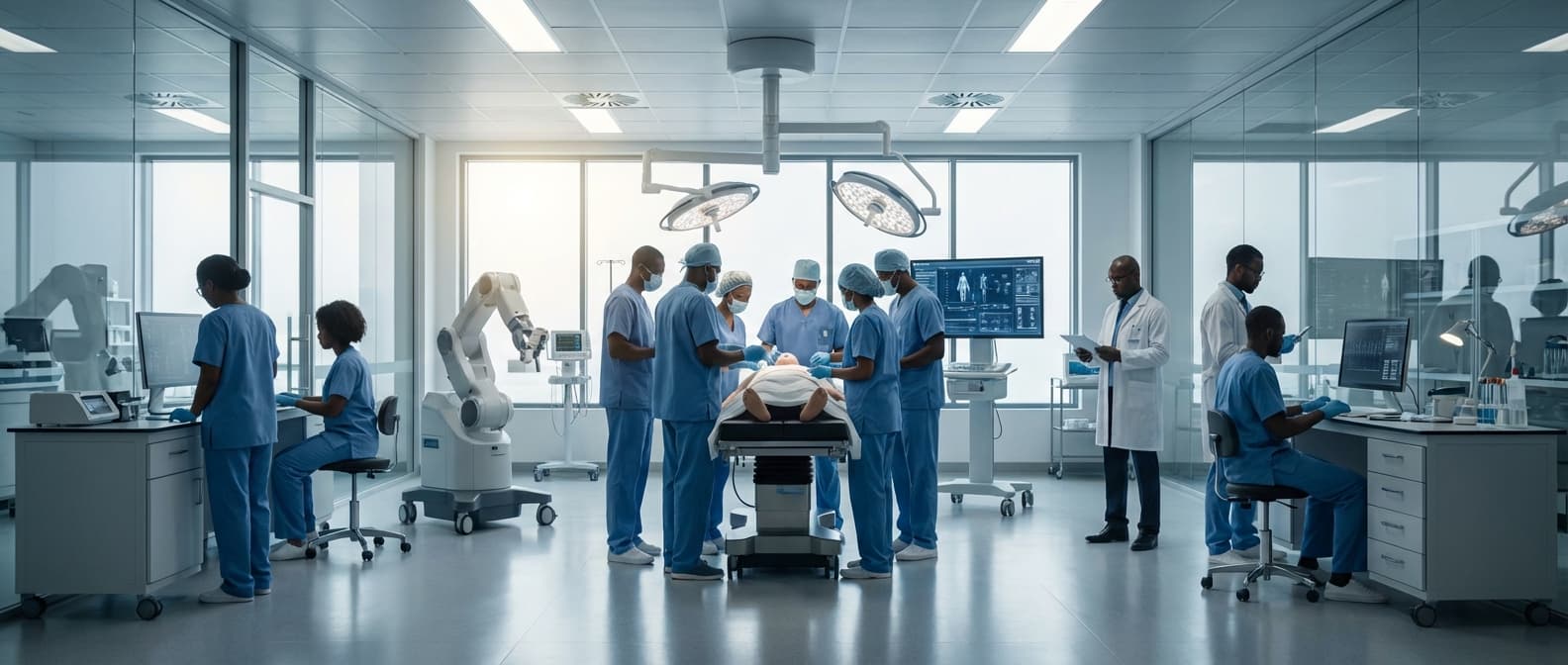
Biomedical Engineering Consulting in Congo (Brazzaville)
Engineering Excellence & Technical Support
Equipment selection, procurement and implementation consulting High-standard technical execution following OEM protocols and local regulatory frameworks.
Advanced Diagnostic Imaging Integration
Designing and implementing seamless integration of cutting-edge diagnostic imaging technologies (MRI, CT, Ultrasound) into existing healthcare infrastructure across Congo, ensuring accurate and timely disease detection.
Remote Patient Monitoring Solutions
Developing and deploying robust remote patient monitoring systems for cardiovascular and chronic disease management, leveraging telecommunications to provide continuous patient care and reduce hospital burden in remote areas.
Biomedical Equipment Procurement & Validation
Providing expert consultation and technical validation for the procurement of essential biomedical equipment, ensuring compliance with international standards and suitability for local clinical needs and resource constraints.
What Is Biomedical Engineering Consulting In Congo (Brazzaville)?
Biomedical Engineering Consulting in Congo (Brazzaville) refers to the provision of expert advisory services and technical solutions related to medical devices, healthcare technology, and the integration of engineering principles into clinical practice and healthcare infrastructure. This service is crucial for optimizing the performance, safety, and cost-effectiveness of healthcare systems by leveraging engineering expertise. Consultants analyze existing healthcare infrastructure, identify technological needs, and propose appropriate solutions, often involving the selection, procurement, installation, maintenance, and management of biomedical equipment. They also play a role in regulatory compliance, training of healthcare professionals, and the strategic planning of healthcare facilities.
| Service Recipient | Need for Biomedical Engineering Consulting | Typical Use Cases |
|---|---|---|
| Public Hospitals and Clinics | Limited in-house technical expertise, aging equipment, need for cost-effective maintenance strategies, compliance with national health policies. | Developing procurement guidelines for essential medical equipment, establishing a centralized maintenance workshop, implementing a digital asset management system, training biomedical technicians. |
| Private Healthcare Providers (Hospitals, Clinics, Diagnostic Centers) | Desire for advanced medical technologies, competitive market positioning, efficient operational workflows, ensuring patient safety and satisfaction. | Selecting and integrating advanced imaging modalities (MRI, CT scanners), optimizing workflow for diagnostic laboratories, developing a robust cybersecurity plan for connected medical devices, advising on the latest surgical robotics. |
| Ministry of Health and Public Health Agencies | National health infrastructure planning, resource allocation for medical equipment, establishing national standards for medical device management, ensuring equitable access to healthcare technology. | Conducting a national audit of medical equipment, developing a national telemedicine strategy, setting up a regulatory framework for medical device imports and use, designing training programs for a national biomedical workforce. |
| Non-Governmental Organizations (NGOs) and International Development Agencies | Implementing health projects in resource-limited settings, procuring and deploying medical equipment for humanitarian aid, ensuring sustainability of donated medical technology. | Assessing the biomedical equipment needs for a new field hospital, developing a sustainable maintenance plan for donated ultrasound machines, training local healthcare workers in remote areas on basic equipment repair, advising on the selection of robust and low-maintenance medical devices. |
| Medical Device Manufacturers and Distributors | Navigating local regulatory landscapes, establishing service and support networks, understanding market needs and challenges, providing technical training to local partners. | Providing pre-sales technical consultation to potential buyers, developing after-sales service agreements, conducting product launch support, offering technical training on new product lines to local distributors and end-users. |
| Research Institutions and Universities | Setting up specialized laboratories, acquiring and maintaining research-grade biomedical equipment, developing novel medical technologies, collaborating on innovation projects. | Advising on the configuration of advanced biosafety laboratories, troubleshooting complex analytical instruments, facilitating technology transfer from research to clinical application, supporting grant applications requiring equipment justifications. |
Key Aspects of Biomedical Engineering Consulting in Congo (Brazzaville)
- Technical Assessment and Planning: Evaluating existing biomedical equipment inventory, identifying obsolescence, and developing strategic plans for technology acquisition and lifecycle management.
- Procurement and Installation Support: Assisting in the specification, tendering, and installation of new medical equipment, ensuring compliance with international standards and local regulations.
- Maintenance and Calibration Programs: Developing and implementing robust preventive maintenance schedules, troubleshooting complex equipment failures, and ensuring accurate calibration of diagnostic and therapeutic devices.
- Regulatory Compliance and Quality Assurance: Guiding healthcare institutions in adhering to national and international standards for medical device safety, efficacy, and quality management systems.
- Training and Capacity Building: Educating clinical and technical staff on the proper operation, maintenance, and troubleshooting of biomedical equipment.
- Healthcare Facility Design and Optimization: Providing input on the layout and infrastructure requirements for new or renovated healthcare facilities to ensure optimal integration of medical technology.
- Technology Transfer and Innovation: Facilitating the adoption of new biomedical technologies and assisting in the development of locally relevant healthcare solutions.
Who Needs Biomedical Engineering Consulting In Congo (Brazzaville)?
Biomedical Engineering Consulting in Congo (Brazzaville) offers a crucial lifeline for healthcare institutions seeking to optimize their medical technology, ensure patient safety, and navigate the complexities of modern healthcare delivery. This specialized field addresses the unique challenges faced by a developing healthcare infrastructure, including the need for expert guidance on equipment acquisition, maintenance, calibration, and training. Consultants bring invaluable technical expertise, regulatory knowledge, and strategic planning capabilities to help facilities operate more efficiently and effectively, ultimately improving patient care outcomes.
| Customer Type | Key Departments Served | Specific Needs/Challenges Addressed |
|---|---|---|
| Hospitals (Public & Private) | Biomedical Engineering Department, Clinical Engineering, Radiology, Cardiology, Anesthesiology, Intensive Care Unit (ICU), Operating Rooms, Laboratory Services, Central Sterile Supply Department (CSSD), IT Department (for medical device integration) | Equipment procurement and lifecycle management, preventative maintenance programs, troubleshooting and repair of complex medical devices, medical device risk management, compliance with local and international standards, staff training on equipment operation and safety, development of service contracts, technology assessment and strategic planning for future investments. |
| Clinics & Health Centers | General Outpatient Department, Specialized Clinics (e.g., maternal health, pediatrics), Laboratory Services, Pharmacy | Basic equipment maintenance and repair, assessment of essential medical equipment needs, training for clinical staff on equipment use, ensuring functionality of diagnostic tools, optimizing utilization of limited resources. |
| Diagnostic Laboratories | Laboratory Management, Laboratory Technicians, Quality Assurance | Calibration and maintenance of analytical instruments (e.g., hematology analyzers, biochemistry analyzers, PCR machines), validation of new equipment, troubleshooting of laboratory diagnostics, ensuring data integrity and accuracy, compliance with laboratory accreditation standards. |
| Research Institutions | Research Laboratories, Principal Investigators, Technical Staff | Procurement and installation of specialized research equipment, maintenance of sensitive scientific instruments, calibration for experimental accuracy, ensuring equipment suitability for specific research protocols, integration of research equipment with data management systems. |
| Government Health Ministries & Agencies | Procurement Department, Technical Services, Planning & Policy Units, Regulatory Affairs | Development of national medical equipment policies and standards, national equipment procurement strategies, establishment of centralized biomedical engineering services, oversight of medical device regulations, training of personnel for public health facilities, impact assessments of technology adoption, disaster preparedness for medical equipment. |
| Medical Equipment Suppliers & Distributors | Sales & Marketing, Technical Service Department, After-Sales Support | Providing expert technical support and training to their clients, developing robust service and maintenance plans for their product lines, ensuring compliance with manufacturer specifications, offering value-added services to differentiate their offerings, advising on market needs for new technologies. |
| Non-Governmental Organizations (NGOs) | Program Managers, Logistics & Procurement, Field Operations Staff | Assessment of equipment needs for specific health programs, procurement and installation of equipment in remote areas, training of local healthcare providers on equipment use and basic maintenance, ensuring sustainability of medical equipment in project sites, evaluation of equipment impact and effectiveness. |
Target Customers & Departments for Biomedical Engineering Consulting in Congo (Brazzaville)
- Hospitals (Public & Private)
- Clinics & Health Centers
- Diagnostic Laboratories
- Research Institutions
- Government Health Ministries & Agencies
- Medical Equipment Suppliers & Distributors
- Non-Governmental Organizations (NGOs) involved in healthcare
Biomedical Engineering Consulting Process In Congo (Brazzaville)
Biomedical Engineering Consulting in Congo (Brazzaville) follows a structured workflow designed to address the specific needs of healthcare institutions, research facilities, and governmental bodies. This process typically begins with an initial inquiry and culminates in the successful execution and handover of the project. The engagement aims to improve healthcare infrastructure, optimize medical equipment utilization, ensure regulatory compliance, and foster innovation within the biomedical sector. The process is adapted to the local context, considering infrastructure, resource availability, and the unique regulatory landscape of the Republic of Congo.
| Phase | Key Activities | Deliverables (Examples) | Stakeholders Involved |
|---|---|---|---|
| Inquiry & Initial Contact | Client expresses need, consultant responds. | Initial acknowledgement, request for more information. | Client (initiator), Consultant (responder) |
| Needs Assessment & Scope Definition | Gathering client requirements, site visits, stakeholder interviews. | Needs assessment report, defined project scope document. | Client (management, technical staff, users), Consultant (project lead, technical experts) |
| Proposal Development & Quotation | Outlining solutions, methodologies, timelines, and costs. | Detailed project proposal, cost quotation. | Consultant (business development, technical leads), Client (procurement, management) |
| Contract Negotiation & Agreement | Finalizing terms, conditions, and legalities. | Signed consulting agreement/contract. | Consultant (legal, management), Client (legal, management) |
| Project Planning & Team Assembly | Developing detailed work plan, assigning roles. | Project plan, team structure, communication matrix. | Consultant (project manager, team members) |
| Information Gathering & Analysis | Collecting data, technical assessments, workflow analysis. | Assessment reports, data analysis summaries. | Consultant (technical specialists, analysts), Client (staff providing information) |
| Solution Design & Development | Creating tailored recommendations and strategies. | Design documents, technical specifications, strategy plans. | Consultant (designers, engineers), Client (for feedback and validation) |
| Implementation & Execution | Putting solutions into practice, overseeing activities. | Installed equipment, implemented systems, delivered training. | Consultant (implementers, trainers), Client (users, technicians) |
| Monitoring & Quality Assurance | Tracking progress, ensuring standards are met. | Progress reports, quality control checklists. | Consultant (project manager, QA team), Client (for oversight and feedback) |
| Testing & Validation | Verifying functionality and performance. | Test reports, validation certificates. | Consultant (testers, engineers), Client (users for acceptance testing) |
| Handover & Documentation | Transferring deliverables and knowledge. | Final project report, user manuals, training materials. | Consultant (project lead), Client (receivers) |
| Post-Project Support & Evaluation | Providing ongoing assistance and gathering feedback. | Support logs, client satisfaction survey, lessons learned document. | Consultant (support team), Client (users, management) |
Biomedical Engineering Consulting Workflow in Congo (Brazzaville)
- Inquiry & Initial Contact: The process commences with a potential client (hospital, clinic, research institute, government agency) reaching out to a biomedical engineering consulting firm. This can be through various channels: direct email, phone call, website contact form, or through industry networks and referrals. The initial contact aims to briefly introduce the client's need or challenge.
- Needs Assessment & Scope Definition: Following the initial inquiry, a detailed discussion takes place to understand the client's specific requirements, objectives, and challenges. This phase may involve preliminary site visits (if feasible), meetings with key stakeholders (administrators, medical staff, technicians), and a review of existing infrastructure and documentation. The goal is to precisely define the scope of work, deliverables, and project objectives.
- Proposal Development & Quotation: Based on the defined scope, the consulting firm develops a comprehensive proposal. This document outlines the proposed solutions, methodologies, project timelines, deliverables, required resources, and a detailed cost quotation. It also includes information about the consulting team's expertise and experience relevant to the project.
- Contract Negotiation & Agreement: Once the proposal is reviewed and accepted by the client, contract negotiations commence. This involves finalizing terms, conditions, payment schedules, intellectual property rights, confidentiality agreements, and any specific performance indicators. A formal contract is then signed by both parties, officially initiating the engagement.
- Project Planning & Team Assembly: Upon contract signing, a detailed project plan is developed. This includes breaking down the project into manageable tasks, assigning responsibilities to specific team members, establishing communication protocols, and setting up project management tools. The consulting team with the most relevant expertise is assembled.
- Information Gathering & Analysis: This is a critical phase where the consulting team gathers all necessary data. This might involve conducting technical assessments of existing medical equipment, evaluating facility layouts, reviewing maintenance records, analyzing operational workflows, and understanding regulatory requirements specific to Congo (Brazzaville).
- Solution Design & Development: Based on the gathered information and analysis, the consulting team designs tailored solutions. This could range from recommending new equipment purchases and installations, developing maintenance strategies, optimizing service workflows, designing new biomedical departments, advising on regulatory compliance, or implementing training programs.
- Implementation & Execution: The designed solutions are put into action. This phase is highly dependent on the project's scope. It could involve overseeing equipment procurement and installation, conducting technical assessments and upgrades, developing and delivering training for medical and technical staff, establishing quality control protocols, or assisting with accreditation processes.
- Monitoring & Quality Assurance: Throughout the execution phase, the project's progress is continuously monitored against the established plan. Quality assurance checks are implemented to ensure that deliverables meet the agreed-upon standards and client expectations. Regular progress reports are provided to the client.
- Testing & Validation: For projects involving new equipment or systems, rigorous testing and validation are performed to ensure they function optimally and meet all specifications. This often involves end-user training and feedback integration.
- Handover & Documentation: Upon successful completion and validation of the project, a formal handover takes place. This includes delivering all final reports, technical documentation, training materials, and any other agreed-upon deliverables. A comprehensive project closure report is provided.
- Post-Project Support & Evaluation: While the formal engagement might end, many consulting firms offer post-project support. This can include troubleshooting, ongoing advice, or performance evaluations. A final project evaluation may be conducted to gather feedback for continuous improvement of the consulting services.
Biomedical Engineering Consulting Cost In Congo (Brazzaville)
Biomedical engineering consulting costs in Congo (Brazzaville) can vary significantly depending on several key factors. These factors influence the overall project budget, from initial assessments to complex system implementations. Understanding these elements is crucial for organizations seeking expert advice in the healthcare technology sector within the country.
Key Pricing Factors:
- Scope and Complexity of the Project: A simple equipment needs assessment will be less expensive than a full hospital infrastructure design or a regulatory compliance audit for a new medical device. The depth of analysis, research required, and the number of stakeholders involved all contribute to the cost.
- Consultant Expertise and Experience: Highly specialized biomedical engineers with extensive experience in specific medical fields (e.g., imaging, diagnostics, rehabilitation) or with advanced regulatory knowledge will command higher fees. Junior consultants or those with broader, less specialized experience will typically charge less.
- Duration of the Engagement: The longer the project, the higher the cumulative cost. This is often calculated on a daily or hourly basis. Some consultants may offer project-based fixed fees for well-defined scopes.
- Location and Travel: While the primary location is Congo (Brazzaville), if consultants need to travel to remote areas within the country or require international travel for specific expertise or training, these costs will be added. Local consultants might offer a slight advantage in terms of travel expenses within Brazzaville itself.
- Deliverables and Reporting: The level of detail and sophistication required for the final reports, presentations, and any accompanying documentation will impact the cost. Custom-tailored solutions and extensive data analysis will be more resource-intensive.
- Regulatory Landscape: Navigating the specific healthcare regulations and standards in Congo can be complex. Consultants with proven experience in this area will be more valuable and may charge accordingly due to the specialized knowledge required.
- Urgency of the Project: Projects with tight deadlines may incur premium charges due to the need for accelerated work schedules and potentially higher resource allocation.
- Consulting Firm Size and Overhead: Larger, established consulting firms often have higher overhead costs, which are reflected in their pricing. Independent consultants or smaller specialized firms might offer more competitive rates.
Estimated Cost Ranges (in Congolese Francs - XAF):
It's important to note that these are estimated ranges and can fluctuate based on the factors above. It is highly recommended to obtain detailed quotes from multiple reputable consultants or firms for any specific project. Prices are generally quoted in XAF, though international firms might quote in USD and convert. For the sake of providing local context, we will focus on XAF.
Daily Consulting Rates:
- Junior/Entry-Level Consultant: XAF 100,000 - 200,000 per day
- Mid-Level/Experienced Consultant: XAF 200,000 - 400,000 per day
- Senior/Specialized Consultant: XAF 400,000 - 700,000+ per day
Project-Based Estimates (Illustrative Examples):
- Basic Equipment Needs Assessment for a Small Clinic: XAF 500,000 - 1,500,000 (typically 2-5 days of work)
- Feasibility Study for a New Diagnostic Imaging Unit: XAF 2,000,000 - 5,000,000 (typically 1-3 weeks of work)
- Hospital Infrastructure Design Review/Consultation: XAF 5,000,000 - 15,000,000+ (can be multi-week or month engagements)
- Regulatory Compliance Audit for a Medical Device: XAF 3,000,000 - 8,000,000 (depending on device complexity and scope)
These figures represent a general guide. Actual costs will be determined by the specific requirements of each engagement. Engaging with local professional bodies and consulting firms in Brazzaville will provide the most accurate and up-to-date pricing information.
| Consulting Level | Estimated Daily Rate (XAF) | Example Project Scope |
|---|---|---|
| Junior/Entry-Level Consultant | 100,000 - 200,000 | Basic equipment inventory, initial facility assessment |
| Mid-Level/Experienced Consultant | 200,000 - 400,000 | Equipment procurement advice, basic training needs analysis, feasibility study for a single department |
| Senior/Specialized Consultant | 400,000 - 700,000+ | Full hospital infrastructure planning, complex medical system design, regulatory compliance strategy, advanced technology implementation |
| Project-Based (Illustrative) | N/A (Variable) | Small Clinic Equipment Assessment: XAF 500,000 - 1,500,000 |
| Project-Based (Illustrative) | N/A (Variable) | Diagnostic Imaging Feasibility Study: XAF 2,000,000 - 5,000,000 |
| Project-Based (Illustrative) | N/A (Variable) | Medical Device Regulatory Audit: XAF 3,000,000 - 8,000,000 |
Factors Influencing Biomedical Engineering Consulting Costs in Congo (Brazzaville)
- Scope and Complexity of the Project
- Consultant Expertise and Experience
- Duration of the Engagement
- Location and Travel Requirements
- Deliverables and Reporting Standards
- Navigating the Local Regulatory Landscape
- Project Urgency and Timeline
- Consulting Firm Size and Overhead
Affordable Biomedical Engineering Consulting Options
Biomedical engineering consulting can be a significant investment, but many firms and independent consultants offer affordable options. Understanding value bundles and implementing cost-saving strategies are key to leveraging expert advice without breaking the bank. This guide explores how to access high-quality biomedical engineering expertise economically.
| Cost-Saving Strategy | Description | Benefit |
|---|---|---|
| Freelance & Independent Consultants | Engaging experienced individual engineers or small, specialized firms often reduces overhead compared to large consulting companies. | Lower hourly rates, direct communication, and flexibility. |
| Phased Project Approach | Breaking down large projects into smaller, manageable phases with defined deliverables and budgets for each phase. | Allows for cost control, risk mitigation, and learning between phases. |
| Leveraging Existing Data & Research | Providing the consultant with all available internal data, previous reports, and research to minimize their need for foundational investigation. | Reduces billable hours spent on data gathering and analysis. |
| Remote Collaboration Tools | Utilizing video conferencing, cloud-based document sharing, and project management software to facilitate efficient remote work. | Minimizes travel expenses and allows for global talent access. |
| Strategic Partnerships | Collaborating with other companies or academic institutions to share consulting costs or resources for specific projects. | Distributes the financial burden and expands available expertise. |
| Focus on Core Expertise | Clearly defining the scope of consultation to ensure you're only paying for the specialized knowledge you truly need. | Avoids unnecessary expenses on services outside your primary requirements. |
| Negotiating Payment Terms | Discussing payment schedules, milestone-based payments, or early payment discounts. | Can improve cash flow and potentially secure better rates. |
| Small Business & Startup Programs | Inquire about any special pricing or programs offered by consultants to support emerging companies. | Provides access to expertise at more accessible price points. |
Understanding Value Bundles
- Defined Scope Projects: Bundling services for a specific, well-defined project (e.g., product design verification, regulatory submission preparation). This offers predictable costs and a clear deliverable.
- Retainer Packages: For ongoing needs, retainers can provide a set number of hours or a specific suite of services at a reduced hourly rate, ensuring access to expertise as required.
- Tiered Service Offerings: Consultants may offer different levels of service, from basic advisory to comprehensive project management, allowing clients to choose based on budget and need.
- Software & Tool Access: Bundling consulting with access to specialized software, simulation tools, or testing equipment can be more cost-effective than purchasing or subscribing independently.
Verified Providers In Congo (Brazzaville)
Finding reliable healthcare providers is paramount when seeking medical services in any country. In Congo (Brazzaville), the landscape of healthcare can be complex. This document outlines the significance of verified providers and highlights why Franance Health stands out as a leading choice, backed by their robust credentials and commitment to quality care.
| Credential/Attribute | Franance Health's Commitment | Why it Matters for Patients |
|---|---|---|
| Accreditation and Licensing | Franance Health partners exclusively with healthcare facilities and individual practitioners holding valid and recognized accreditations and licenses in Congo (Brazzaville). | Guarantees that medical professionals meet legal requirements and have passed essential competency assessments, ensuring they are qualified to practice. |
| Professional Qualifications and Experience | We meticulously vet the qualifications, specializations, and years of experience of all our listed healthcare providers. | Ensures you are connected with doctors and specialists who possess the appropriate expertise for your medical condition, leading to more accurate diagnoses and effective treatments. |
| Patient Testimonials and Feedback | Franance Health actively collects and monitors patient feedback and testimonials to maintain a high standard of service. | Provides real-world insights into the patient experience, highlighting providers known for their compassionate care, effective communication, and positive outcomes. |
| Adherence to International Standards | Where applicable, Franance Health encourages and verifies adherence to international healthcare standards for hygiene, patient care, and medical ethics. | Offers peace of mind that the care you receive aligns with globally recognized best practices, even within the local context. |
| Comprehensive Medical Network | Our network is built on established relationships with reputable hospitals, clinics, and individual practitioners across Congo (Brazzaville). | Provides access to a wide range of medical services and specialists, ensuring that your healthcare needs, from routine check-ups to complex procedures, can be met efficiently and effectively. |
Why Choose Verified Providers in Congo (Brazzaville)?
- Ensuring Quality of Care: Verified providers have undergone rigorous checks, confirming their adherence to established medical standards and best practices.
- Patient Safety: Verification processes often include checks on licensing, qualifications, and adherence to safety protocols, directly benefiting patient well-being.
- Trust and Reliability: Knowing a provider is verified instills confidence and reduces the anxiety associated with seeking medical treatment in an unfamiliar environment.
- Access to Competent Professionals: Verification helps identify practitioners with the necessary expertise and experience for your specific health needs.
- Ethical Practice: Verified providers are more likely to adhere to ethical guidelines and maintain professional integrity.
Scope Of Work For Biomedical Engineering Consulting
This Scope of Work (SOW) outlines the services to be provided by [Consulting Firm Name] (hereinafter referred to as 'the Consultant') to [Client Organization Name] (hereinafter referred to as 'the Client') for biomedical engineering consulting. The project aims to [briefly describe the project's overall goal, e.g., 'develop a novel medical device prototype', 'assess the regulatory pathway for a new diagnostic tool', 'optimize the design of an existing healthcare system component']. This document details the technical deliverables, standard specifications, and key project phases.
| Deliverable ID | Deliverable Name | Description | Standard Specification (Reference/Description) | Associated Phase |
|---|---|---|---|---|
| TDR-001 | Project Kick-off Meeting Minutes | Summary of initial meeting, including objectives, stakeholders, and preliminary timelines. | ISO 9001:2015 (Quality Management Systems) – Clause 5.3 Roles, responsibility and authority | Phase 1 |
| TDR-002 | Biomedical Needs Assessment Report | Detailed analysis of client requirements, user needs, and existing solutions. | Usability Engineering – IEC 62366-1:2015 | Phase 1 |
| TDR-003 | Technical Feasibility Study | Evaluation of technological options, risk assessment, and cost-benefit analysis. | ISO 14971:2019 (Medical devices – Application of risk management to medical devices) | Phase 1 |
| TDR-004 | Conceptual Design Document | Outline of proposed design concepts, including block diagrams, key features, and preliminary performance targets. | Good Engineering Practice (GEP) principles | Phase 2 |
| TDR-005 | Detailed Design Specifications | Comprehensive documentation of the chosen design, including schematics, CAD models, material specifications, and interface definitions. | ASME Y14 Series (Dimensioning and Tolerancing) | Phase 2 |
| TDR-006 | Bill of Materials (BOM) | Detailed list of all components, sub-assemblies, and materials required for prototype construction. | IPC-2581 (Generic Design File Format for Printed Boards) | Phase 2 |
| TDR-007 | Prototype(s) | Functional prototype(s) demonstrating key functionalities and performance characteristics. | Client-specified performance criteria, verified through testing | Phase 3 |
| TDR-008 | Verification and Validation Test Plan | Document outlining the methodology and criteria for testing the prototype against design specifications and user needs. | ISO/IEC 17025:2017 (General requirements for the competence of testing and calibration laboratories) | Phase 3 |
| TDR-009 | Verification and Validation Test Reports | Detailed reports of all tests performed, including results, deviations, and conclusions. | As per TDR-008 | Phase 3 |
| TDR-010 | Regulatory Pathway Assessment Report | Analysis of applicable regulatory requirements (e.g., FDA, CE Marking) and proposed submission strategy. | FDA 21 CFR Part 820 (Quality System Regulation) | Phase 4 |
| TDR-011 | Design History File (DHF) Outline | Structure and content of the DHF to be maintained throughout the product development lifecycle. | ISO 13485:2016 (Medical devices – Quality management systems) | Phase 4 |
| TDR-012 | Risk Management File (RMF) Outline | Structure and content of the RMF, aligned with ISO 14971. | ISO 14971:2019 | Phase 4 |
| TDR-013 | Final Project Report | Comprehensive summary of the project, including design, testing, regulatory considerations, and recommendations for future development. | Client-approved format | Phase 5 |
| TDR-014 | Transferred Design Documentation Package | All final design files, specifications, and relevant documentation required for manufacturing or further development. | Client-specified format and software compatibility | Phase 5 |
Project Phases and Key Activities
- {"title":"Phase 1: Discovery and Requirements Gathering","description":"Understanding the client's needs, market landscape, and technical challenges."}
- {"title":"Phase 2: Conceptualization and Design","description":"Developing innovative solutions and preliminary design concepts."}
- {"title":"Phase 3: Prototyping and Testing","description":"Building functional prototypes and conducting rigorous testing."}
- {"title":"Phase 4: Regulatory Strategy and Documentation","description":"Planning and preparing for regulatory submissions."}
- {"title":"Phase 5: Finalization and Handover","description":"Completing the project deliverables and facilitating client adoption."}
Service Level Agreement For Biomedical Engineering Consulting
This Service Level Agreement (SLA) outlines the response times and uptime guarantees for Biomedical Engineering Consulting services provided by [Your Company Name] (hereinafter referred to as "Provider") to [Client Name] (hereinafter referred to as "Client"). This SLA is an integral part of the overall service contract between the Provider and the Client.
| Support Category | Response Time Target (Within Business Hours) | Response Time Target (Outside Business Hours) | Resolution Target (Best Effort) |
|---|---|---|---|
| Emergency Support | 1 Hour | 2 Hours | Within 8 Business Hours (acknowledgment and initial action), ongoing until resolved. |
| Urgent Support | 4 Business Hours | 8 Business Hours | Within 24 Business Hours (acknowledgment and initial action), ongoing until resolved. |
| Standard Support | 8 Business Hours | Next Business Day | Within 3 Business Days (acknowledgment and initial action), ongoing until resolved. |
Key Definitions
- {"title":"Business Hours","description":"Monday to Friday, 9:00 AM to 5:00 PM [Client's Time Zone], excluding public holidays recognized in [Client's Time Zone]."}
- {"title":"Emergency Support","description":"A critical issue impacting patient safety, regulatory compliance, or core operational functions that requires immediate attention."}
- {"title":"Urgent Support","description":"A significant issue impacting a key operational function or posing a moderate risk to patient care or compliance, but not an immediate safety threat."}
- {"title":"Standard Support","description":"A non-critical issue, a request for information, or a minor functional impairment that does not significantly disrupt operations."}
- {"title":"Uptime Guarantee","description":"The percentage of time that critical consulting services or support systems are available and functional."}
- {"title":"Downtime","description":"The period during which critical consulting services or support systems are unavailable or not functioning correctly, excluding Scheduled Maintenance."}
- {"title":"Scheduled Maintenance","description":"Pre-announced periods during which services may be unavailable for upgrades, repairs, or maintenance activities. Such maintenance will be communicated to the Client at least [Number] business days in advance and will ideally occur outside of Business Hours."}
Frequently Asked Questions

Ready when you are
Let's scope your Biomedical Engineering Consulting in Congo (Brazzaville) project in Congo (Brazzaville).

Scaling healthcare logistics and technical systems across the entire continent.