
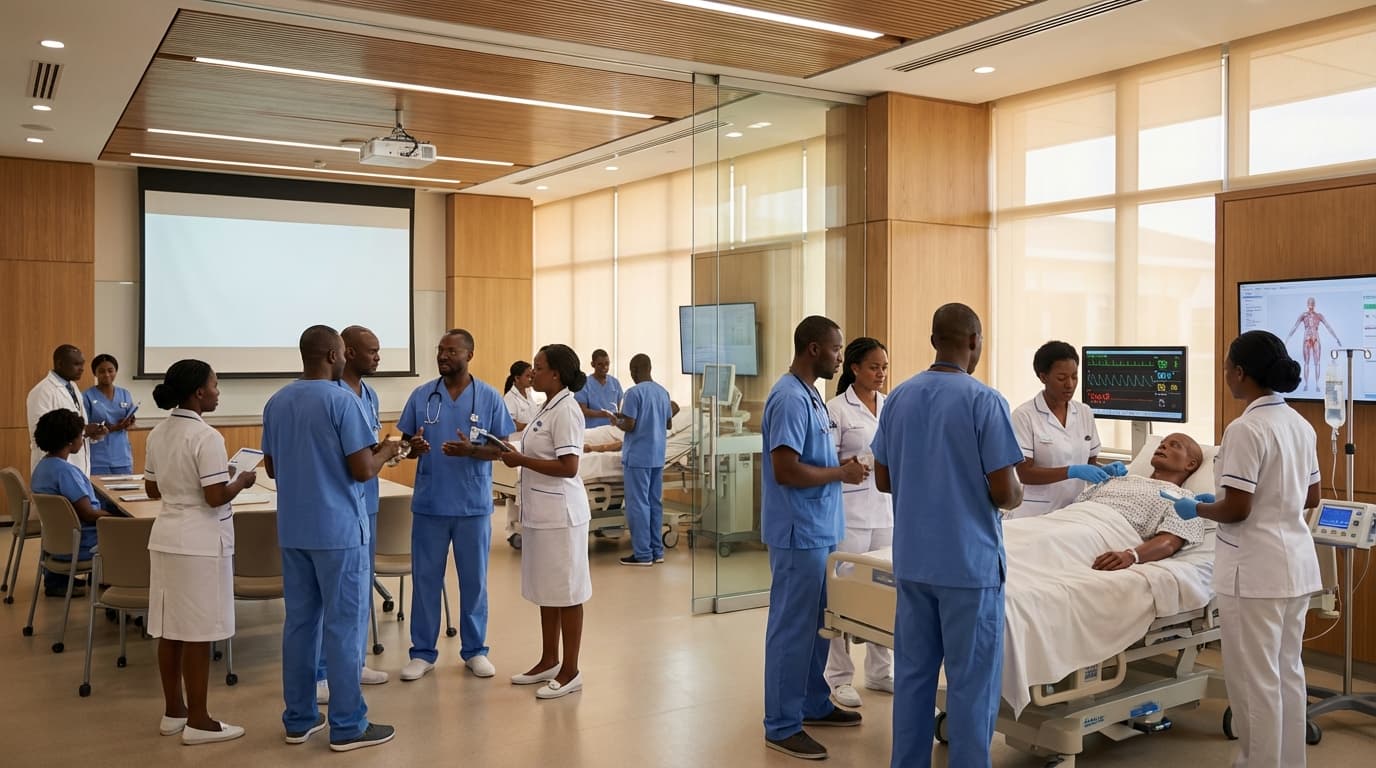
Equipment Training & Education in Comoros
Engineering Excellence & Technical Support
Comprehensive equipment training and certification programs High-standard technical execution following OEM protocols and local regulatory frameworks.
Empowering Local Technicians with Advanced Equipment Skills
Delivering hands-on training modules for critical agricultural machinery and renewable energy systems, enhancing local capacity and driving self-sufficiency in Comorian communities.
Interactive E-Learning Platform for Equipment Maintenance
Launching a comprehensive digital resource library with video tutorials and interactive simulations, providing 24/7 access to essential knowledge for operating and maintaining vital industrial and infrastructure equipment across the islands.
Partnership for Sustainable Equipment Operation & Repair
Collaborating with Comorian vocational schools and government agencies to integrate modern equipment operation and repair into curricula, fostering a skilled workforce for long-term economic development and reducing reliance on external support.
What Is Equipment Training & Education In Comoros?
Equipment training and education in Comoros refers to the systematic process of imparting knowledge, skills, and competencies to individuals or groups regarding the safe, efficient, and effective operation, maintenance, and troubleshooting of specific machinery, tools, and apparatus. This service is crucial for enhancing operational productivity, ensuring workplace safety, minimizing equipment downtime, and extending the lifespan of assets within the Comorian economic landscape. It encompasses theoretical instruction, practical hands-on demonstrations, and ongoing competency validation, tailored to the specific technological context and user proficiency levels prevalent in the region.
| Who Needs Equipment Training & Education in Comoros? | Typical Use Cases |
|---|---|
| Industrial Workers: Personnel operating heavy machinery in manufacturing, construction, mining, and agricultural sectors. | Operation of excavators, bulldozers, cranes, forklifts, agricultural machinery (tractors, harvesters), and factory assembly line equipment. |
| Healthcare Professionals: Technicians and medical staff responsible for operating and maintaining medical devices and diagnostic equipment. | Training on MRI scanners, CT scanners, X-ray machines, laboratory analyzers, ventilators, and surgical instruments. |
| IT & Telecommunications Technicians: Individuals managing and maintaining network infrastructure, servers, and communication devices. | Installation, configuration, and troubleshooting of routers, switches, servers, fiber optic equipment, and mobile network base stations. |
| Maritime & Logistics Personnel: Seafarers, port operators, and warehouse staff handling specialized cargo and port equipment. | Operation of cranes, reach stackers, forklifts, and maintenance of marine engines and navigation systems. |
| Energy Sector Employees: Technicians and engineers involved in the operation and maintenance of power generation and distribution equipment. | Training on generators, transformers, substations, solar panel installation and maintenance, and wind turbine operation. |
| Government & Public Service Agencies: Personnel managing public infrastructure and services. | Operation of public transport vehicles, municipal waste management equipment, and water treatment plant machinery. |
Key Components of Equipment Training & Education
- Needs Assessment: Identifying specific training gaps and requirements based on existing equipment inventory, operational demands, and skill levels of personnel.
- Curriculum Development: Designing structured training modules covering theoretical principles, operational procedures, safety protocols, preventive maintenance, and basic troubleshooting.
- Instructional Delivery: Employing diverse methodologies including classroom lectures, interactive workshops, simulator-based training, on-the-job training (OJT), and e-learning platforms.
- Practical Skill Development: Facilitating hands-on practice sessions under expert supervision to build confidence and proficiency in equipment operation and maintenance.
- Safety & Compliance Training: Emphasizing adherence to national and international safety standards, hazard identification, risk mitigation, and emergency response procedures.
- Assessment & Certification: Evaluating learner comprehension and skill acquisition through written tests, practical examinations, and performance appraisals, leading to formal certification.
- Ongoing Support & Refresher Training: Providing continuous learning opportunities, updates on new equipment or procedures, and periodic refresher courses to maintain competency.
Who Needs Equipment Training & Education In Comoros?
In Comoros, effective equipment training and education are crucial for a wide range of individuals and organizations to ensure operational efficiency, safety, and economic growth. This training empowers users to operate machinery and tools correctly, reducing the risk of accidents, minimizing downtime, and maximizing productivity. It also fosters a skilled workforce capable of maintaining and repairing equipment, contributing to the longevity of assets and reducing reliance on external expertise.
| Sector/Industry | Key Departments/Roles | Types of Equipment (Examples) | Training Objectives |
|---|---|---|---|
| Agriculture | Farmers, Cooperatives, Extension Officers | Tractors, Harvesters, Irrigation Pumps, Pesticide Sprayers | Optimizing crop yields, efficient resource management, preventative maintenance, safety. |
| Fisheries | Fishermen, Boat Owners, Marine Technicians | Outboard Motors, Fishing Nets, Sonar Equipment, Navigation Systems | Safe boat operation, fuel efficiency, equipment maintenance, sustainable fishing practices. |
| Construction | Site Workers, Machine Operators, Supervisors | Excavators, Bulldozers, Cranes, Concrete Mixers, Power Tools | Safe operation of heavy machinery, adherence to safety regulations, efficient project execution, basic repair. |
| Small and Medium Enterprises (SMEs) | Staff across various functions (operations, production, service) | Industrial Ovens, Commercial Refrigerators, Sewing Machines, IT Servers | Maximizing equipment lifespan, improving product quality, reducing operational costs, efficient workflow. |
| Public Sector (Infrastructure) | Road Maintenance Crews, Water Utility Technicians, Building Custodians | Road Rollers, Water Pumps, Power Generators, Maintenance Tools | Proper equipment usage, routine maintenance, adherence to public safety standards, cost-effective operations. |
| Healthcare | Radiology Technicians, Laboratory Staff, Biomedical Engineers | X-ray Machines, MRI Scanners, Centrifuges, Sterilizers | Accurate operation for diagnostics, patient safety, equipment calibration, preventative maintenance. |
| Education | Instructors, Students (Vocational/Technical) | Lathes, Welding Machines, Computer Hardware, Laboratory Equipment | Developing skilled workforce, practical application of theory, safety in workshop environments. |
| Energy | Power Plant Operators, Solar Technicians, Maintenance Crew | Generators, Solar Panels, Wind Turbines, Electrical Tools | Safe installation and operation, troubleshooting, energy efficiency, compliance with standards. |
| Transportation & Logistics | Truck Drivers, Forklift Operators, Warehouse Staff | Trucks, Buses, Forklifts, Pallet Jacks, Loading Docks | Safe driving and operation, cargo handling efficiency, vehicle maintenance, regulatory compliance. |
| Environment | Waste Management Personnel, Water Treatment Plant Operators | Compactors, Water Filters, Pumps, Monitoring Sensors | Safe operation, environmental compliance, efficient waste processing, water quality management. |
Target Customers & Departments in Comoros Requiring Equipment Training & Education
- Agriculture Sector: Farmers, agricultural cooperatives, and extension officers benefit from training on modern farming equipment (tractors, harvesters, irrigation systems) to improve yields and sustainability.
- Fisheries Sector: Fishermen and marine transport operators need training on operating and maintaining fishing vessels, engines, and specialized fishing gear for safer and more efficient operations.
- Construction Industry: Construction workers, site supervisors, and machinery operators require training on heavy machinery (excavators, cranes, concrete mixers), power tools, and safety protocols to ensure project completion and worker safety.
- Small and Medium Enterprises (SMEs): Businesses in various sectors (manufacturing, hospitality, retail) that utilize specialized equipment (e.g., commercial kitchen appliances, industrial sewing machines, IT hardware) need training for their staff to optimize their use.
- Public Works and Infrastructure Departments: Government employees responsible for maintaining roads, water systems, and public buildings need training on operating and servicing relevant equipment.
- Healthcare Facilities: Technicians and medical staff require specialized training on operating and maintaining medical equipment (diagnostic machines, surgical tools, laboratory equipment) for accurate diagnosis and treatment.
- Educational Institutions: Technical and vocational schools, as well as universities, need to provide equipment training to their students to prepare them for the job market.
- Energy Sector: Workers involved in the installation, maintenance, and operation of power generation, distribution, and renewable energy equipment (e.g., solar panels, generators) need specialized training.
- Transportation and Logistics: Drivers, mechanics, and logistics personnel require training on operating and maintaining vehicles (trucks, buses), forklifts, and other material handling equipment.
- Environmental Agencies: Staff responsible for operating waste management equipment, water treatment facilities, and pollution monitoring devices need relevant training.
Equipment Training & Education Process In Comoros
The Equipment Training & Education Process in Comoros outlines the systematic workflow initiated by an inquiry for equipment training, leading to its successful execution. This process ensures that relevant stakeholders receive the necessary knowledge and skills to operate and maintain equipment effectively, thereby maximizing its utility and safety. The workflow involves several distinct stages, from initial contact and needs assessment to curriculum development, delivery, evaluation, and follow-up.
| Stage | Description | Key Activities | Responsible Party/Department | Outcome/Deliverable |
|---|---|---|---|---|
| The process begins when an individual or organization expresses interest in equipment training. | Receive inquiry, gather basic contact information, understand the general training need. | Prospective Client / Comorian Organization, Training Provider Sales/Inquiry Desk | Initial acknowledgment of inquiry, preliminary understanding of training scope. |
| A detailed analysis of the specific training needs, target audience, and equipment involved. | Conduct meetings, surveys, or site visits; identify skill gaps, existing knowledge, equipment models, operational context. | Training Provider (Needs Assessment Team), Client Representative (Technical/Operational Staff) | Detailed training needs report, defined learning objectives, identification of specific equipment to be covered. |
| Based on the needs assessment, a comprehensive training proposal is formulated and a cost estimate provided. | Outline training modules, duration, methodology (theory/practical), trainer qualifications, required resources, and pricing. | Training Provider (Proposal/Sales Department) | Formal training proposal document, detailed quotation, terms and conditions. |
| Formalizing the training engagement through a signed contract or agreement. | Review and negotiation of terms, signing of the contract, agreement on payment schedules. | Client Representative (Procurement/Management), Training Provider (Legal/Management) | Signed training contract/agreement. |
| Creating or adapting training content and materials to meet the specific objectives. | Develop training manuals, presentations, practical exercises, case studies, assessment tools. | Training Provider (Curriculum Developers/Subject Matter Experts) | Finalized training curriculum, participant handouts, trainer guides, assessment tools. |
| Identifying and preparing qualified trainers for the specific equipment and audience. | Select trainers based on expertise, experience, and communication skills; provide them with training materials and any necessary briefing. | Training Provider (Training Management/HR) | Selected and briefed trainers. |
| Arranging all logistical aspects and scheduling the training sessions. | Confirm training dates and times, book training venue (if applicable), arrange for equipment availability, participant invitations, travel, and accommodation (if needed). | Training Provider (Logistics Coordinator), Client Representative (for facility/equipment access) | Confirmed training schedule, logistical arrangements in place. |
| The actual execution of the training program. | Conduct theoretical sessions (lectures, discussions, case studies) and practical hands-on sessions with the equipment. | Trainer(s) | Delivery of training sessions as per schedule. |
| Measuring the effectiveness of the training and the participants' learning. | Conduct pre- and post-training assessments (quizzes, practical tests), gather participant feedback through evaluation forms. | Trainer(s), Training Provider (Evaluation Team) | Assessment results, participant feedback reports. |
| Issuing certificates of completion and documenting the training conducted. | Prepare and issue certificates to participants who successfully complete the training; maintain training records. | Training Provider (Administration/Training Management) | Certificates of completion, training attendance records, assessment summaries. |
| Providing ongoing support to participants and gathering feedback for future improvements. | Offer follow-up support, answer queries, gather feedback on the overall training experience and its impact on operations. | Training Provider (Support Team/Account Manager), Client Representative | Resolved participant queries, documented feedback for continuous improvement. |
| Analyzing the entire training process to identify areas for enhancement. | Review feedback, assessment results, and operational impact; update training materials and methodologies as needed. | Training Provider (Management/Quality Assurance) | Recommendations for process improvement, updated training protocols. |
Equipment Training & Education Process Workflow in Comoros
- Inquiry & Initial Contact
- Needs Assessment & Requirement Gathering
- Proposal Development & Quotation
- Contractual Agreement
- Curriculum & Material Development
- Trainer Selection & Preparation
- Logistics & Scheduling
- Training Delivery (Theory & Practical)
- Assessment & Evaluation
- Certification & Documentation
- Post-Training Support & Feedback
- Process Review & Improvement
Equipment Training & Education Cost In Comoros
The cost of equipment training and education in Comoros is influenced by a variety of factors. These include the complexity and type of equipment being trained on, the duration of the training program, the qualifications and experience of the trainers, the location of the training (on-site vs. off-site), and the specific training provider. Demand for specialized training can also impact pricing. While official, standardized price lists are not readily available, general price ranges can be estimated based on common industry practices and the economic conditions within Comoros. Training for basic operational skills on common machinery might be more affordable than advanced technical certification courses on specialized industrial equipment.
| Training Category | Estimated Price Range (Comorian Franc - KMF) |
|---|---|
| Basic Operational Training (e.g., simple tools, office equipment) | 5,000 - 20,000 KMF per participant |
| Intermediate Technical Skills Training (e.g., basic machinery operation, specific software) | 20,000 - 75,000 KMF per participant |
| Advanced Technical or Specialized Training (e.g., industrial machinery, advanced software, certification prep) | 75,000 - 250,000+ KMF per participant |
| On-site Custom Training (per day, negotiable based on scope) | 30,000 - 150,000+ KMF |
Factors Influencing Equipment Training Costs in Comoros
- Type and Complexity of Equipment: Basic tools versus advanced machinery.
- Duration of Training: Short workshops versus multi-day courses or certifications.
- Trainer Expertise and Qualifications: Local instructors versus international specialists.
- Training Location: On-site at a company's premises versus a dedicated training facility.
- Training Provider Reputation and Resources: Established institutions versus smaller operations.
- Demand for Specific Skills: Niche expertise may command higher prices.
- Inclusion of Materials and Assessments: Study guides, practical exams, and certifications.
- Logistics and Travel Costs: If trainers or trainees need to travel.
Affordable Equipment Training & Education Options
Investing in equipment training and education is crucial for operational efficiency, safety, and employee development. Fortunately, numerous affordable options exist to equip your team without breaking the bank. This guide explores cost-saving strategies and the benefits of value bundles to maximize your training investment.
| Value Bundle Type | Description | Cost-Saving Benefit | Ideal For |
|---|---|---|---|
| Comprehensive Equipment Certification Package | Includes theoretical knowledge, hands-on practical training, and final certification for a specific piece of equipment. | Lower per-module cost compared to individual courses; streamlined process for certification. | New hires, employees needing full proficiency, or compliance requirements. |
| On-Demand Skill Refreshers & Advanced Modules | Access to a library of short, focused online modules for reviewing specific skills or learning advanced features. | Pay-as-you-go or subscription models are often more cost-effective than booking full courses for minor updates. | Experienced operators needing to stay current or learn new functionalities. |
| Safety & Operations Fundamentals Bundle | Combines essential safety protocols with basic operational procedures for a range of common equipment. | Reduces the need for separate safety and operational training sessions; ensures consistent foundational knowledge. | All new employees, or as a mandatory refresher for existing staff. |
| Manufacturer-Specific Training & Support Pack | Includes access to official manufacturer training, specialized software updates, and dedicated technical support. | Bundling support with training can lead to better equipment uptime and reduced maintenance costs. | Companies heavily invested in a particular brand of equipment. |
| Blended Learning Packages | Combines self-paced e-learning modules with scheduled in-person or virtual instructor-led sessions. | Reduces travel and accommodation costs associated with full in-person training while retaining interactive elements. | Companies seeking a balance between cost-effectiveness and personalized instruction. |
Cost-Saving Strategies for Equipment Training
- Leverage Online and E-Learning Platforms: Digital courses offer flexibility and often come at a lower price point than in-person sessions. Look for platforms specializing in vocational or technical training.
- Prioritize Essential Skills: Focus training on the equipment and tasks most critical to your operations. Avoid unnecessary or advanced modules initially.
- Develop In-House Expertise: Train a few key employees to become internal trainers. This can significantly reduce external training costs over time and ensure training is tailored to your specific equipment and processes.
- Utilize Manufacturer Resources: Many equipment manufacturers offer free or low-cost training materials, webinars, and certifications. Check their websites and support portals.
- Explore Government Grants and Subsidies: Investigate local, regional, or national programs that provide funding for workforce development and technical training.
- Partner with Community Colleges and Vocational Schools: These institutions often offer specialized courses and can be more affordable than private training providers. They may also offer customized training for businesses.
- Buy in Bulk or Bundle Services: Negotiate discounts for training multiple employees or for purchasing comprehensive training packages.
- Implement On-the-Job Training (OJT) with Structured Programs: While OJT is inherently cost-effective, formalize it with checklists, mentorship, and performance evaluations to ensure effectiveness and safety.
- Consider Train-the-Trainer Programs: Investing in a 'train-the-trainer' program allows you to scale training internally, reducing the long-term per-person cost.
- Seek Out Open-Source or Freely Available Resources: For foundational knowledge, explore open-source documentation, forums, and educational videos. Be sure to vet the accuracy and relevance of these resources.
Verified Providers In Comoros
Finding reliable healthcare providers is crucial for ensuring quality medical care. In Comoros, a growing emphasis is being placed on verifying the credentials of medical professionals to guarantee patient safety and treatment efficacy. This verification process adds a layer of trust and assurance, empowering individuals to make informed decisions about their health. Franance Health stands out as a leading organization dedicated to this vital mission, offering a robust system for credentialing and promoting excellence in healthcare services within Comoros. Their rigorous vetting process ensures that healthcare providers meet stringent standards of education, training, experience, and ethical conduct. By choosing providers affiliated with Franance Health, patients can be confident in the caliber of care they will receive, knowing that their healthcare professionals have undergone thorough scrutiny and are committed to upholding the highest medical standards.
| Key Benefits of Choosing Franance Health Verified Providers | Description |
|---|---|
| Guaranteed Competence | Providers have demonstrated the necessary skills, knowledge, and experience to deliver quality medical services. |
| Ethical Practice Assurance | Verified professionals adhere to strict ethical codes of conduct, ensuring patient rights and privacy are respected. |
| Reduced Risk of Medical Errors | The thorough vetting process minimizes the likelihood of unqualified individuals providing care, leading to safer patient outcomes. |
| Informed Decision-Making | Patients can confidently choose healthcare providers knowing they have met a recognized standard of excellence. |
| Access to Specialized Care | Franance Health often verifies a wide range of specialists, ensuring access to diverse medical expertise within Comoros. |
| Peace of Mind | The assurance of receiving care from a verified and accredited provider offers significant peace of mind for individuals and families. |
Why Franance Health Represents the Best Choice for Verified Providers in Comoros:
- Comprehensive Credentialing Process: Franance Health employs a multi-faceted approach to verify the qualifications and experience of all healthcare professionals.
- Commitment to Patient Safety: Their primary focus is on safeguarding patient well-being by ensuring only competent and ethical practitioners are recognized.
- Promotion of Medical Excellence: Franance Health actively encourages and supports providers in maintaining and exceeding industry best practices.
- Enhanced Patient Trust: The verification mark provides an immediate signal of reliability and quality, fostering greater confidence for patients.
- Access to Qualified Professionals: Patients can easily identify and access healthcare providers who have met Franance Health's high standards.
- Continuous Monitoring and Re-evaluation: Franance Health's commitment extends beyond initial verification through ongoing assessments.
- Adherence to International Standards: Their credentialing protocols often align with internationally recognized benchmarks for healthcare quality.
Scope Of Work For Equipment Training & Education
This Scope of Work (SOW) outlines the requirements for providing comprehensive training and educational services for the specified equipment. The objective is to ensure proficient operation, maintenance, and troubleshooting of the equipment by designated personnel. This SOW details the technical deliverables and standard specifications for the training program.
| Deliverable | Description | Format/Method | Standard Specifications |
|---|---|---|---|
| Training Curriculum | Detailed outline of all modules, learning objectives, and assessment methods. | Document (PDF/Word) | Aligned with equipment manufacturer's guidelines and industry best practices. Clearly defined learning outcomes for each module. |
| Training Materials | Participant guides, presentations, case studies, and supplementary resources. | Digital (PDF, PowerPoint) and/or Printed | High-quality, accurate, and easy-to-understand content. Includes diagrams, illustrations, and real-world examples. |
| Hands-on Practical Sessions | Guided exercises and simulations using actual equipment or realistic simulators. | On-site or Virtual (if applicable) | Adequate time allocated for practical application. Trainer-to-participant ratio suitable for effective supervision and feedback. |
| Assessment Tools | Quizzes, practical tests, and performance evaluations to measure learning. | Written (digital/paper) and/or Practical | Objective and fair assessment criteria. Results clearly documented for each participant. |
| Trainer Qualification | Credentials and experience of the trainers delivering the program. | Resume/CV and Certification Proof | Certified by the equipment manufacturer or possess equivalent demonstrable expertise and training experience in the specific equipment domain. |
| Training Environment | Physical or virtual space where training will be conducted. | On-site facility or Virtual Platform | Adequate lighting, ventilation, and space. Access to power, internet (if virtual), and all necessary equipment. Safe and conducive learning atmosphere. |
| Post-Training Support | Follow-up assistance and Q&A sessions after the formal training period. | Email, Phone, or Scheduled Online Meetings | Defined response times for queries. Availability for a specified period post-training. |
| Training Completion Certificate | Official document certifying successful completion of the training program. | Digital (PDF) and/or Printed | Includes participant name, course title, date of completion, and issuing authority. |
Key Areas of Training Coverage
- Introduction to Equipment: Overview, design principles, and intended applications.
- Operational Procedures: Step-by-step guidance on normal operation, startup, shutdown, and emergency procedures.
- Routine Maintenance: Scheduled inspections, cleaning, lubrication, and basic adjustments.
- Troubleshooting and Diagnostics: Identifying common issues, fault finding techniques, and basic repair procedures.
- Safety Protocols: Understanding and adhering to all safety regulations and best practices related to the equipment.
- Software/Control System Operation (if applicable): Navigating interfaces, configuring settings, and interpreting data.
- Advanced Features and Optimisation: Utilizing specialized functionalities and optimizing performance.
- Documentation and Record Keeping: Proper use of manuals, logbooks, and reporting mechanisms.
Service Level Agreement For Equipment Training & Education
This Service Level Agreement (SLA) outlines the guaranteed response times and uptime for equipment training and educational services provided by [Your Company Name] to [Client Company Name]. This SLA is an addendum to the Master Services Agreement (MSA) dated [MSA Date].
| Incident Priority | Response Time (Business Hours) | Target Resolution Time (Business Hours) | SLA Uptime Guarantee |
|---|---|---|---|
| Critical Incident | 1 Hour | 4 Hours | 99.9% |
| High Priority Incident | 2 Hours | 8 Business Hours | 99.9% |
| Medium Priority Incident | 4 Business Hours | 24 Business Hours | 99.9% |
| Low Priority Incident | 8 Business Hours | 48 Business Hours | N/A (Support provided during Business Hours) |
Key Definitions
- Business Hours: Monday to Friday, 9:00 AM to 5:00 PM [Client's Time Zone], excluding public holidays.
- Critical Incident: An event that renders the training environment or critical educational materials completely inaccessible, preventing the execution of scheduled training sessions or the completion of essential learning modules.
- High Priority Incident: An event that significantly degrades the functionality of the training environment or educational materials, causing major disruption to scheduled training or learning progress, but not complete inaccessibility.
- Medium Priority Incident: An event that causes minor disruption to the training environment or educational materials, affecting specific features or non-critical functionalities, but not preventing core training activities.
- Low Priority Incident: A request for information, clarification, or a minor issue that does not impact the functionality of the training environment or educational materials.
- Response Time: The maximum time allowed for [Your Company Name] to acknowledge and begin working on an reported incident or request.
- Resolution Time: The maximum time allowed for [Your Company Name] to resolve an incident and restore normal service levels.
- Uptime Guarantee: The percentage of time the training platform and core educational materials are available for use during the agreed-upon service period.
Frequently Asked Questions

Ready when you are
Let's scope your Equipment Training & Education in Comoros project in Comoros.

Scaling healthcare logistics and technical systems across the entire continent.