
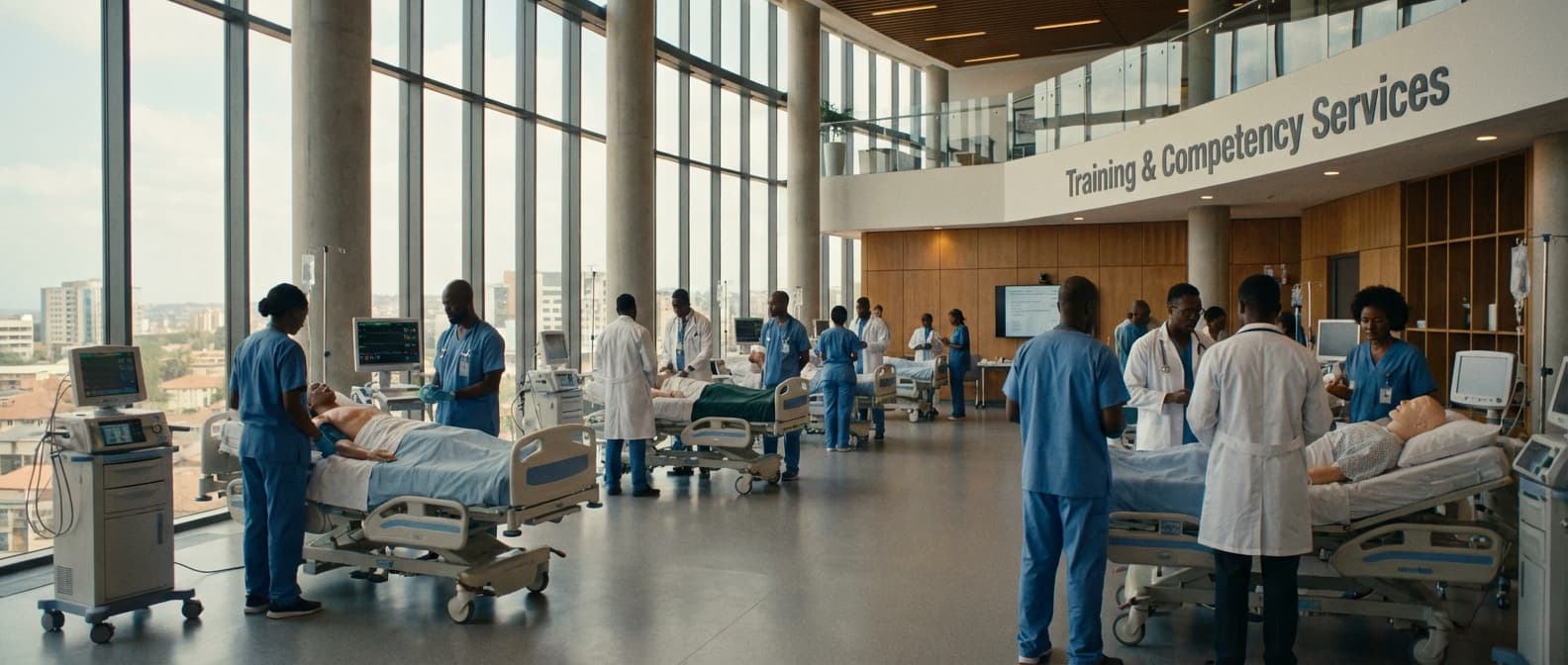
Ventilator User Training Service (Nurses) in Comoros
Engineering Excellence & Technical Support
Ventilator User Training Service (Nurses) High-standard technical execution following OEM protocols and local regulatory frameworks.
Precision Ventilation Control
Master the Comoros Ministry of Health's approved ventilator settings for optimal patient oxygenation and ventilation, ensuring precise delivery of therapeutic breath volumes and pressures tailored to individual patient needs.
Proactive Alarm Management
Become proficient in interpreting and responding swiftly to critical ventilator alarms. Learn best practices for identifying the root cause and implementing immediate corrective actions to maintain patient safety and therapeutic efficacy.
Integrated Patient Assessment
Develop advanced skills in correlating ventilator data with direct patient assessment. Understand how to integrate clinical signs and symptoms with real-time ventilator parameters to optimize patient care and weaning strategies.
What Is Ventilator User Training Service (Nurses) In Comoros?
Ventilator User Training Service (Nurses) in Comoros refers to specialized educational programs designed to equip registered nurses with the knowledge and practical skills necessary for the safe and effective operation of mechanical ventilators within the Comorian healthcare system. This service aims to ensure that nursing personnel can confidently manage patients requiring ventilatory support, optimize ventilator settings, troubleshoot common issues, and provide appropriate patient care in accordance with established clinical protocols. The training addresses the unique challenges and resource considerations prevalent in the Comorian healthcare landscape, emphasizing practical application and hands-on experience.
| Who Needs Ventilator User Training (Nurses)? | Typical Use Cases in Comoros | |||
|---|---|---|---|---|
| Registered nurses working in intensive care units (ICUs), critical care units (CCUs), emergency departments, and operating rooms within Comorian hospitals. | Management of patients with acute respiratory failure secondary to conditions such as pneumonia, sepsis, severe asthma exacerbations, acute respiratory distress syndrome (ARDS), and post-operative respiratory complications. | Support of patients undergoing surgical procedures requiring general anesthesia and mechanical ventilation. | Care for neonates and pediatric patients requiring ventilatory support in specialized units. | Responding to public health emergencies or outbreaks that may lead to a surge in patients requiring respiratory support. |
Key Components of Ventilator User Training for Nurses:
- Principles of Mechanical Ventilation: Understanding the physiological basis of ventilation, gas exchange, respiratory mechanics, and the goals of mechanical support.
- Ventilator Modes and Settings: Comprehensive instruction on various ventilation modes (e.g., volume-controlled, pressure-controlled, SIMV, assist-control), including the rationale for selecting specific modes and their associated parameters (tidal volume, respiratory rate, PEEP, FiO2, flow trigger, etc.).
- Patient Assessment and Monitoring: Training in the ongoing assessment of patients on ventilators, including vital signs, hemodynamic status, respiratory parameters (e.g., airway pressures, exhaled tidal volume, minute ventilation), and indicators of distress or complications.
- Troubleshooting and Alarm Management: Identification of common ventilator alarms and patient-ventilator dyssynchrony, with practical strategies for diagnosis and resolution.
- Ventilator Circuit Management: Proper procedures for setting up, maintaining, and changing ventilator circuits to prevent infection and ensure adequate gas delivery.
- Weaning from Mechanical Ventilation: Understanding the principles and protocols for assessing readiness for liberation from mechanical ventilation and the process of gradual withdrawal.
- Infection Prevention and Control: Emphasis on aseptic techniques, ventilator-associated pneumonia (VAP) prevention strategies, and infection control measures.
- Emergency Procedures: Protocols for managing critical events such as ventilator malfunction, patient disconnection, or severe respiratory decompensation.
- Documentation: Accurate and timely recording of ventilator settings, patient responses, interventions, and any adverse events.
Who Needs Ventilator User Training Service (Nurses) In Comoros?
To effectively utilize and maintain the complex machinery of ventilators, specialized training is crucial for healthcare professionals. In Comoros, ensuring nurses are proficient in ventilator operation, patient monitoring, and troubleshooting is paramount for delivering quality critical care and improving patient outcomes.
| Customer Segment | Primary Role | Department Focus | Need for Training |
|---|---|---|---|
| Nurses in ICUs | Direct patient care, ventilator management | Intensive Care Unit | High - managing critically ill patients requiring mechanical ventilation |
| Nurses in EDs | Initial assessment, stabilization, and initiation of ventilation | Emergency Department | Moderate to High - often the first point of contact for respiratory distress |
| Anesthesiologist Nurses | Intraoperative ventilation management | Operating Room | High - critical during surgical procedures |
| Nurses in PACUs | Post-operative recovery and monitoring, including ventilation | Post-Anesthesia Care Unit | Moderate - managing patients weaning off ventilation post-surgery |
| Nurses in Respiratory Care | Specialized respiratory support, ventilator protocols | Respiratory Care Department | Very High - core expertise in respiratory equipment |
| Neonatal/Pediatric Nurses | Ventilation of infants and children | Neonatal Intensive Care Unit (NICU) / Pediatric Intensive Care Unit (PICU) | High - specialized knowledge for smaller patients |
| Nurse Supervisors/Managers | Ensuring staff competency, protocol adherence, resource allocation | All relevant departments | Moderate - overseeing training implementation and staff development |
Target Customers & Departments for Ventilator User Training Service (Nurses) in Comoros
- {"items":["Registered Nurses","Licensed Practical Nurses","Nurse Supervisors/Managers","Critical Care Nurses","Anesthesiologist Nurses"],"title":"Primary Target Customers"}
- {"items":["Intensive Care Units (ICUs)","Emergency Departments (EDs)","Operating Rooms (ORs)","Post-Anesthesia Care Units (PACUs)","Respiratory Care Departments","Maternal and Child Health Units (for neonatal/pediatric ventilators)","General Wards with Ventilator-Dependent Patients"],"title":"Key Departments Requiring Training"}
- {"items":["Major Hospitals (e.g., Hopital El-Maarouf in Moroni)","Regional Hospitals","Community Health Centers with critical care capabilities","Private Clinics offering intensive care services"],"title":"Healthcare Facilities"}
Ventilator User Training Service (Nurses) Process In Comoros
This document outlines the workflow for the Ventilator User Training Service specifically for nurses in Comoros. The process is designed to be clear, efficient, and ensure that nurses receive comprehensive training on ventilator operation and patient management. The workflow begins with an initial inquiry and concludes with the successful execution and certification of the training.
| Stage | Description | Key Activities | Responsible Parties | Expected Outcome |
|---|---|---|---|---|
| The initial step where potential trainees or their institutions express interest in ventilator training. | Contacting the training provider, expressing interest, identifying specific training needs (e.g., type of ventilators, skill level required). | Nurses, Hospital Administration, Ministry of Health Representatives, Training Provider. | Understanding of training requirements and initial scope. |
| The training provider submits a detailed proposal based on the identified needs. | Developing a training proposal (curriculum outline, duration, cost, trainer qualifications), formalizing the agreement through a contract or memorandum of understanding (MOU). | Training Provider, Client (Hospital/Ministry of Health). | Agreed-upon training scope, deliverables, and terms. |
| Tailoring the training content to the specific ventilators used in Comoros and the existing skill set of the nurses. | Reviewing existing training materials, adapting them to local context, incorporating specific ventilator models, developing practical exercises and case studies. | Training Provider (Curriculum Developers), Subject Matter Experts. | A comprehensive and relevant training curriculum. |
| Arranging all practical aspects for the training sessions. | Identifying training venue(s), procuring or confirming availability of training ventilators, scheduling dates and times, arranging for trainers' travel and accommodation (if applicable). | Training Provider, Client (Hospital Administration). | All logistical arrangements in place for effective training delivery. |
| The core phase where nurses receive theoretical and practical instruction. | Conducting lectures, interactive sessions, hands-on practice with ventilators, simulation exercises, demonstrating proper operation, maintenance, and troubleshooting. | Certified Trainers, Nurses (Trainees). | Nurses gain theoretical knowledge and practical skills in ventilator management. |
| Measuring the effectiveness of the training and the nurses' comprehension. | Administering theoretical tests (quizzes, exams), practical assessments (scenario-based simulations), post-training feedback surveys from trainees and trainers. | Certified Trainers, Training Provider. (Trainees participate in assessments) | Identification of knowledge gaps, demonstration of competency, and feedback for improvement. |
| Formalizing the successful completion of the training and providing ongoing support. | Issuing certificates of completion to nurses who meet the competency standards, providing post-training support (e.g., access to resources, refresher sessions), collecting final project reports (if applicable). | Training Provider, Ministry of Health (for accreditation/recognition). | Certified nurses, documented training records, and a pathway for continued professional development. |
Ventilator User Training Service (Nurses) Process in Comoros
- Inquiry & Needs Assessment
- Proposal & Agreement
- Curriculum Development & Customization
- Logistics & Scheduling
- Training Delivery
- Assessment & Evaluation
- Certification & Follow-up
Ventilator User Training Service (Nurses) Cost In Comoros
The cost of ventilator user training services for nurses in Comoros can vary significantly depending on several factors. These include the duration and intensity of the training, the qualifications and experience of the trainers, the specific type of ventilators being covered, the location of the training (on-site at a hospital versus a dedicated training facility), and whether the training includes practical, hands-on sessions with equipment. Additionally, the provider of the training service (e.g., medical equipment suppliers, specialized training organizations, or hospital-internal programs) will influence the pricing. While a definitive price list is not publicly available for Comoros, general estimates can be provided based on these influencing factors.
| Training Scope/Duration | Estimated Price Range (Comorian Franc - KMF) |
|---|---|
| Basic Ventilator Operation & Monitoring (1-2 days) | 50,000 - 150,000 KMF |
| Intermediate Ventilator Management & Troubleshooting (3-5 days) | 150,000 - 400,000 KMF |
| Advanced Ventilator Techniques & Critical Care Integration (5+ days, specialized) | 400,000 - 1,000,000+ KMF |
| On-site Hospital Training (per day, inclusive of trainer fee) | 75,000 - 250,000 KMF |
Pricing Factors for Ventilator User Training (Nurses) in Comoros
- Duration of Training: Shorter, introductory courses will be less expensive than comprehensive, multi-day programs.
- Trainer Expertise: Highly experienced and certified respiratory therapists or clinical educators will command higher fees.
- Ventilator Type: Training on complex, advanced ventilators will likely be more costly than on simpler models.
- Hands-on Component: Training that includes practical application with actual ventilators will increase the cost.
- Training Location: On-site training at a healthcare facility might incur additional logistical costs for the provider, potentially affecting the price. Training at a dedicated facility could have its own associated overhead.
- Provider Reputation and Scope: Established training providers with a strong track record may charge more.
- Materials and Resources: Costs associated with training manuals, simulations, and other learning materials.
- Number of Participants: Group training can sometimes be more cost-effective per participant compared to individual sessions.
Affordable Ventilator User Training Service (Nurses) Options
This document outlines affordable ventilator user training service options specifically designed for nurses. It explores value bundles, which are packaged training solutions offering enhanced benefits at a reduced overall cost, and presents various cost-saving strategies that healthcare facilities can implement to minimize expenses while ensuring high-quality, essential training for their nursing staff.
| Value Bundle Option | Description | Potential Cost-Saving Benefits | Target Audience |
|---|---|---|---|
| Basic Competency Bundle | Includes foundational knowledge of ventilator modes, settings, alarms, and basic troubleshooting. Delivered via a blend of e-learning and a single in-person skills session. | Reduced travel costs, shorter in-person time, scalable for large groups, lower per-nurse cost than fully in-person training. | New graduates, nurses transitioning to critical care, general floor nurses requiring basic ventilator awareness. |
| Advanced Critical Care Bundle | Covers advanced modes, weaning protocols, specific patient populations (ARDS, COPD), advanced troubleshooting, and emergency management. Includes comprehensive e-learning, virtual case studies, and multiple in-person simulation lab sessions. | Potentially lower cost than individual advanced courses, standardized curriculum ensures consistent learning, skill enhancement reduces potential complications. | Experienced critical care nurses, nurses seeking to specialize in respiratory care, charge nurses. |
| Train-the-Trainer Certification | Equips a select group of experienced nurses to become certified internal trainers. Includes in-depth curriculum, teaching methodologies, and ongoing support. | Significant long-term cost savings by eliminating external trainer fees, consistent training delivery, fosters internal expertise and ownership. | Highly experienced critical care nurses with strong leadership and teaching aptitude. |
| Annual Refresher & Update Bundle | Designed for previously trained nurses, this bundle focuses on updates in best practices, new ventilator technology, and complex case reviews. Primarily delivered through webinars and online modules with optional in-person Q&A sessions. | Cost-effective for ongoing education, minimizes disruption to clinical schedules, ensures compliance with updated guidelines. | All nurses who have previously completed core ventilator training. |
| Equipment-Specific Training Bundle | Tailored training for specific ventilator models used within the facility. Can be combined with other bundles or offered as a standalone module. | Reduced training time if only one or two models are used, minimizes errors related to equipment unfamiliarity, potentially negotiated discounts if multiple facilities use the same equipment. | All nurses who will be operating specific ventilator models. |
Key Cost-Saving Strategies for Ventilator Training
- Leverage existing in-house expertise: Identify and train qualified internal staff (e.g., Respiratory Therapists, experienced RNs) to become trainers. This reduces reliance on external providers.
- Utilize online and blended learning models: Incorporate e-learning modules, webinars, and virtual simulations to deliver theoretical knowledge, reducing the need for in-person sessions and associated travel/venue costs.
- Negotiate group training discounts: When multiple nurses or departments require training, negotiate bulk pricing with training providers.
- Develop train-the-trainer programs: Invest in training a core group of internal staff who can then train their colleagues, creating a sustainable and cost-effective in-house training program.
- Regularly update and reuse training materials: Invest in creating high-quality, reusable training content (e.g., standardized presentations, case studies) that can be updated annually rather than repurchased.
- Partner with academic institutions or professional organizations: Collaborate with local nursing schools or professional bodies for access to training resources or discounted training programs.
- Seek grant funding: Explore available grants for medical equipment training or professional development that can offset training costs.
- Standardize ventilator equipment: If possible, standardize ventilator models across the facility to streamline training and reduce the number of different ventilator types that need to be covered.
- Focus on core competencies: Prioritize training on essential ventilator management skills and patient populations to avoid unnecessary depth in less critical areas.
- Utilize simulation labs: Invest in or partner with facilities that have simulation labs to provide hands-on practice in a safe and controlled environment, reducing wear and tear on actual equipment.
Verified Providers In Comoros
In Comoros, finding healthcare providers you can trust is paramount. Franance Health is committed to ensuring you access the highest quality medical care by rigorously vetting and credentialing all its partner providers. This meticulous process guarantees that every Franance Health-affiliated doctor, clinic, and hospital meets stringent standards for expertise, ethics, and patient care. When you choose a Franance Health verified provider, you are choosing peace of mind, knowing you are in capable and trustworthy hands. Our commitment to transparency and quality assurance makes Franance Health the definitive choice for your healthcare needs in Comoros.
| Credential Component | Franance Health Verification Standard | Benefit to Patient |
|---|---|---|
| Medical Degree & Licensure | Verifies authenticity and current validity with relevant Comorian and international medical boards. | Ensures providers are legally qualified and possess foundational medical knowledge. |
| Professional Experience | Assesses years of practice, surgical volumes (if applicable), and areas of specialization. | Guarantees that providers have practical experience in their field. |
| Board Certifications | Confirms specialized training and successful completion of rigorous examinations in their respective fields. | Indicates a high level of expertise and advanced knowledge in a specific medical area. |
| Continuous Professional Development | Requires evidence of ongoing training, participation in medical conferences, and adherence to updated guidelines. | Ensures providers are up-to-date with the latest medical advancements and treatments. |
| Patient Feedback & Outcomes | Monitors patient satisfaction surveys and, where possible, reviews anonymized treatment outcomes. | Provides insight into a provider's bedside manner and effectiveness of care. |
| Ethical Conduct | Reviews for any disciplinary actions or malpractice claims. | Protects patients from unethical or harmful medical practices. |
Why Franance Health Credentials Matter
- Rigorous Vetting: We don't just accept providers; we actively screen them based on their education, experience, specializations, and patient feedback.
- Commitment to Quality: Our credentialing process is designed to ensure adherence to the highest medical standards and best practices.
- Patient Safety First: We prioritize your well-being by only partnering with providers who demonstrate a strong commitment to patient safety and ethical conduct.
- Access to Expertise: Franance Health connects you with a network of specialists and general practitioners equipped to handle a wide range of medical needs.
- Peace of Mind: Knowing your provider is verified by Franance Health eliminates the guesswork and allows you to focus on your recovery.
Scope Of Work For Ventilator User Training Service (Nurses)
This Scope of Work (SOW) outlines the requirements for providing comprehensive ventilator user training services specifically tailored for nursing staff. The training will equip nurses with the knowledge and practical skills necessary to safely and effectively operate, monitor, and troubleshoot ventilators in a clinical setting. The training will cover theoretical concepts, hands-on practice, and competency assessment, adhering to the highest industry standards.
| Deliverable Title | Description | Format/Method | Acceptance Criteria |
|---|---|---|---|
| Training Curriculum Development | Comprehensive curriculum covering theoretical and practical aspects of ventilator use for nurses. Includes learning objectives, content modules, and assessment strategies. | Digital Document (PDF/Word) | Curriculum approved by Client's clinical education department. Covers all key training objectives. Aligns with hospital policies and procedures. |
| Training Materials (Participant) | User-friendly training manuals, quick reference guides, case studies, and simulation scenarios for nurses. | Digital (PDF) and Printed Copies | Materials are clear, concise, and relevant to nursing practice. All materials provided in sufficient quantities as agreed upon. |
| Training Facilitation (On-site) | Delivery of theoretical lectures, interactive discussions, and supervised hands-on practice sessions by qualified and experienced trainers. | In-person sessions at Client's facility | Sessions conducted by certified trainers with demonstrable expertise. Training duration meets agreed-upon schedule. Positive participant feedback. |
| Ventilator Simulation Lab Setup | Setting up and ensuring functionality of simulated ventilator workstations for hands-on practice. Includes ventilators (functional or simulated), manikins, and necessary accessories. | Physical setup at Client's facility | All simulation equipment is functional and ready for use. Adequate space and resources provided for all participants. |
| Competency Assessment Tools | Development and administration of tools to evaluate nurses' understanding and practical skills, including written tests and practical skills checklists. | Digital (Online/PDF) and Paper-based | Tools accurately assess achievement of learning objectives. Minimum passing score defined and consistently applied. Results documented. |
| Post-Training Support Plan | Outline of resources and methods for ongoing support to nurses after initial training, such as access to online resources, Q&A sessions, or refresher modules. | Digital Document (PDF/Word) | Plan is comprehensive and addresses potential knowledge gaps or new ventilator features. Clearly defines support channels. |
| Training Report | Summary report detailing training attendance, assessment results, identified areas for improvement, and overall training effectiveness. | Digital Document (PDF/Word) | Report is accurate, comprehensive, and delivered within agreed timeframe. Includes aggregate data and recommendations. |
Key Training Objectives for Nurses:
- Understand the fundamental principles of mechanical ventilation.
- Identify common ventilator modes and their clinical indications.
- Perform proper patient connection and setup of the ventilator.
- Set up and adjust ventilator parameters based on patient condition and physician orders.
- Monitor patient response to ventilation and recognize signs of complications.
- Troubleshoot common ventilator alarms and equipment malfunctions.
- Perform routine equipment checks and basic maintenance.
- Understand infection control protocols related to ventilator use.
- Document ventilator settings, patient status, and interventions accurately.
- Demonstrate competency in safe weaning from mechanical ventilation.
Service Level Agreement For Ventilator User Training Service (Nurses)
This Service Level Agreement (SLA) outlines the guaranteed response times and uptime for the Ventilator User Training Service (Nurses) provided by [Your Company Name] to [Client Name]. This agreement is effective as of [Start Date] and will remain in effect until [End Date].
| Service Level | Description | Response Time Target | Uptime Guarantee | Remedy for Failure |
|---|---|---|---|---|
| Standard Support | General inquiries, technical assistance, scheduling requests, and minor issue resolution. | 4 Business Hours | 99.5% during scheduled training sessions | Service credits of 5% of monthly training fee for each 1% of uptime missed below 99.5% |
| Critical Support | Issues preventing nurses from accessing or participating in scheduled training sessions, or critical technical failures impacting training delivery. | 1 Business Hour | 99.9% during scheduled training sessions | Service credits of 10% of monthly training fee for each 0.5% of uptime missed below 99.9%; immediate escalation to senior technical staff. |
Key Service Metrics
- {"text":"Response Time: The maximum time it takes for [Your Company Name] to acknowledge and begin addressing a reported issue or request related to the Ventilator User Training Service."}
- {"text":"Uptime Guarantee: The percentage of time the Ventilator User Training Service is available and operational for the intended users (nurses) during scheduled training periods."}
Frequently Asked Questions

Ready when you are
Let's scope your Ventilator User Training Service (Nurses) in Comoros project in Comoros.

Scaling healthcare logistics and technical systems across the entire continent.