
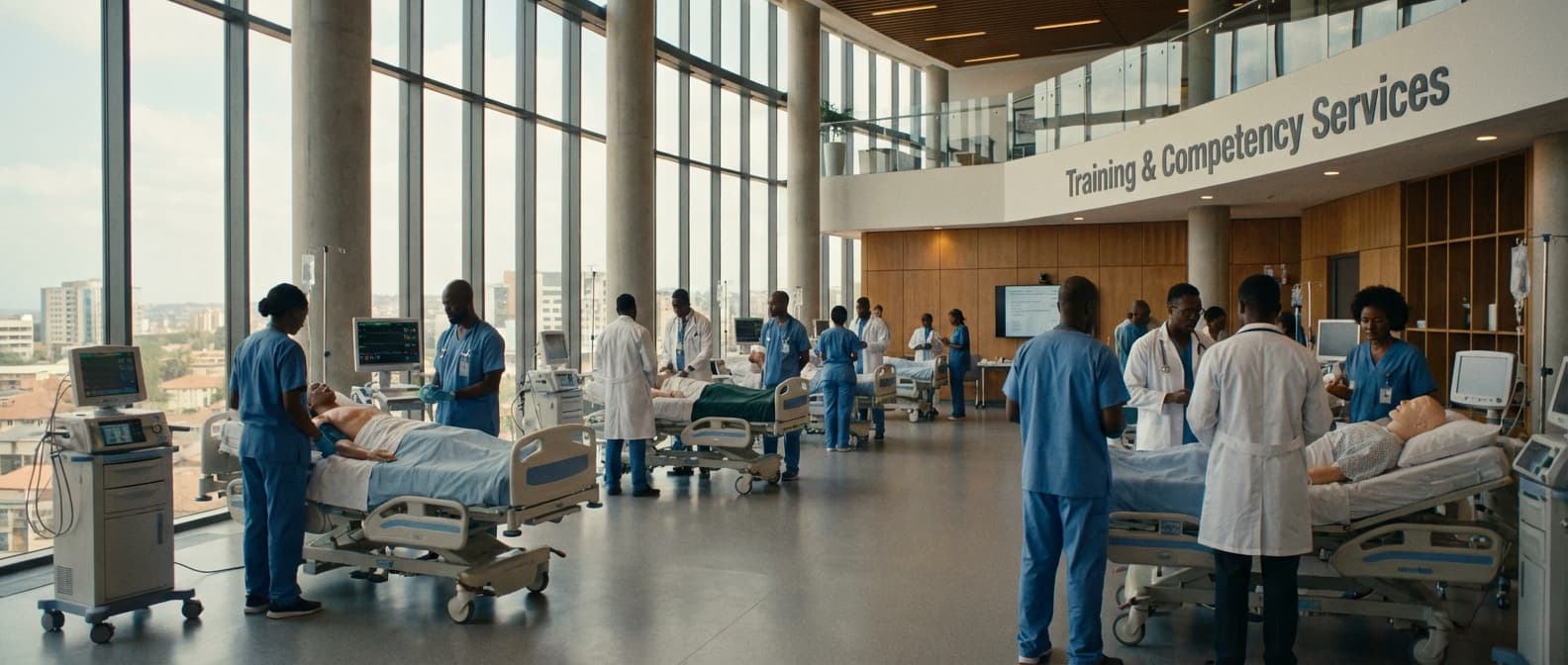
Ultrasound Application Training Service (Protocol-Based) in Comoros
Engineering Excellence & Technical Support
Ultrasound Application Training Service (Protocol-Based) High-standard technical execution following OEM protocols and local regulatory frameworks.
Standardized Protocol Training
Our service provides in-depth training on globally recognized ultrasound protocols, ensuring Comorian healthcare professionals master standardized scanning techniques for consistent and reliable diagnostic outcomes.
Clinical Application Focus
Training is tailored to the specific clinical needs of Comoros, covering essential ultrasound applications in areas like obstetrics, gynecology, and basic emergency medicine, empowering local practitioners with practical skills.
Accessible & Sustainable Training
We deliver accessible, cost-effective training solutions designed for the Comorian healthcare landscape, fostering long-term skill development and enhancing ultrasound utilization within the nation.
What Is Ultrasound Application Training Service (Protocol-based) In Comoros?
Ultrasound Application Training Service (Protocol-Based) in Comoros refers to a specialized educational program designed to equip healthcare professionals with the knowledge and practical skills required to perform diagnostic ultrasound examinations according to established clinical protocols. This service focuses on the systematic and standardized application of ultrasound techniques for specific medical conditions or anatomical regions. The training emphasizes adherence to evidence-based protocols to ensure accuracy, reproducibility, and diagnostic efficacy. It typically involves theoretical instruction on ultrasound physics, image acquisition, interpretation, and clinical correlation, complemented by hands-on supervised practice on phantoms and, where permissible and ethical, on human subjects.
| Target Audience | Needs Addressed | Typical Use Cases |
|---|---|---|
| Radiologists and Radiographers in Comoros | Enhancing diagnostic accuracy, standardizing examination procedures, improving patient care, meeting international quality standards. | Performing routine obstetric scans (e.g., dating, anomaly, growth), gynecological assessments (e.g., transvaginal pelvic ultrasound), abdominal evaluations (e.g., liver, gallbladder, kidneys), superficial soft tissue imaging, and basic vascular examinations. |
| Physicians in specialized fields (e.g., Obstetrics & Gynecology, Internal Medicine, Emergency Medicine) in Comoros | Enabling point-of-care ultrasound (POCUS) capabilities, facilitating rapid diagnosis, improving patient management in resource-limited settings, reducing reliance on external imaging centers. | Assessing fetal well-being, evaluating pelvic pathologies, performing FAST (Focused Assessment with Sonography for Trauma) scans, guiding procedures (e.g., paracentesis, thoracentesis), and assessing fluid status. |
| Healthcare Technicians and Sonography Students in Comoros | Building foundational ultrasound skills, gaining practical experience, preparing for certification, ensuring competence in specific diagnostic modalities. | Assisting senior sonographers, performing preliminary scans under supervision, acquiring proficiency in specific ultrasound applications prior to independent practice. |
| Public Health Officials and Hospital Administrators in Comoros | Improving the overall quality and accessibility of diagnostic imaging services, ensuring cost-effectiveness of imaging protocols, facilitating training program development and resource allocation. | Developing or upgrading national ultrasound guidelines, implementing training strategies for healthcare personnel, evaluating the impact of ultrasound services on public health outcomes. |
Key Components of Ultrasound Application Training Service (Protocol-Based):
- Protocol Development and Dissemination: Training materials are based on pre-defined, standardized ultrasound protocols for various applications (e.g., obstetric, gynecological, abdominal, vascular, musculoskeletal).
- Theoretical Instruction: Covers fundamental ultrasound principles, machine operation, artifact recognition, image optimization, and detailed anatomical and pathological considerations relevant to the specific application.
- Practical Skill Development: Emphasizes systematic scanning techniques, probe manipulation, and optimal transducer positioning to acquire high-quality diagnostic images adhering to protocol requirements.
- Image Interpretation and Reporting: Focuses on identifying normal and abnormal sonographic findings, correlating them with clinical presentations, and generating comprehensive, structured reports.
- Quality Assurance and Quality Control (QA/QC): Incorporates modules on maintaining equipment performance and ensuring consistent image quality according to established benchmarks.
- Supervised Clinical Practice: Hands-on sessions under the guidance of experienced sonographers or radiologists, allowing trainees to apply learned protocols in realistic clinical scenarios.
- Assessment and Certification: Typically includes theoretical examinations, practical skills assessments, and case-based evaluations to gauge competency and potentially award certification.
Who Needs Ultrasound Application Training Service (Protocol-based) In Comoros?
This document outlines the essential need for Ultrasound Application Training Service (Protocol-Based) in Comoros, specifically targeting healthcare professionals who require standardized and effective ultrasound practices. The service aims to enhance diagnostic accuracy, improve patient care, and ensure consistent application of ultrasound protocols across various medical disciplines.
| Target Customer Group | Key Departments/Units | Specific Training Needs/Benefits |
|---|---|---|
| Public Hospitals (e.g., CHU El-Marpaf, CH Ajuda) | Radiology, Obstetrics & Gynecology, Emergency Medicine, Internal Medicine, Pediatrics, Surgery | Standardization of imaging protocols, improved diagnostic accuracy for common pathologies (e.g., pregnancy complications, appendicitis, pneumonia, cardiac abnormalities), enhanced emergency ultrasound skills (FAST scan, POCUS), training for new equipment. |
| Private Clinics and Diagnostic Centers | Radiology, Obstetrics & Gynecology, Cardiology | Competitive edge through advanced ultrasound skills, offering specialized services, adherence to international standards, efficient workflow optimization. |
| Maternal and Child Health Centers | Obstetrics & Gynecology, Pediatrics | Essential obstetric ultrasound (dating scans, anomaly scans), fetal monitoring, neonatal ultrasound screening (e.g., for HIE), improving access to quality prenatal care. |
| Emergency Medical Services and Disaster Preparedness Units | Emergency Departments, Mobile Medical Units | Point-of-care ultrasound (POCUS) for rapid diagnosis in trauma, critical care, and remote settings; improving patient triage and management during emergencies. |
| Medical Schools and Training Programs | Radiology, Obstetrics & Gynecology, Internal Medicine faculties | Integrating comprehensive ultrasound training into the curriculum, equipping future healthcare professionals with essential skills, developing local expertise in ultrasound education. |
| Government Health Ministries and Agencies | Public Health Planning, Quality Assurance Departments | Ensuring consistent quality of ultrasound services nationwide, facilitating national health initiatives requiring ultrasound diagnostics, establishing accreditation and competency frameworks. |
Target Customers and Departments in Comoros
- Radiology Departments in Hospitals
- Obstetrics and Gynecology Departments
- Emergency Departments
- Cardiology Departments
- Internal Medicine Departments
- Pediatric Departments
- Surgical Departments
- Primary Healthcare Centers with Ultrasound Capabilities
- Medical Training Institutions and Universities
Ultrasound Application Training Service (Protocol-based) Process In Comoros
This document outlines the workflow for the Ultrasound Application Training Service (Protocol-Based) in Comoros, detailing the process from initial inquiry to the successful execution of the training.
| Stage | Description | Key Activities | Responsible Parties | Deliverables/Outcomes |
|---|---|---|---|---|
| The client expresses interest in the Ultrasound Application Training Service. | Receive and acknowledge inquiry, schedule initial meeting, understand client's general training needs. | Prospective Client, Training Provider Representative | Initial understanding of client's interest and basic requirements. |
| A detailed assessment of the client's specific training requirements. | Conduct detailed needs assessment (e.g., current skill levels, target applications, equipment availability), develop a tailored training proposal outlining curriculum, duration, methodology, and cost. | Training Provider (Needs Assessor, Training Specialist), Prospective Client | Detailed Training Needs Analysis Report, Formal Training Proposal. |
| Formalizing the training agreement between the client and the provider. | Review and negotiate proposal, finalize contract terms and conditions, sign agreement. | Prospective Client (Decision Makers), Training Provider (Management) | Signed Service Agreement/Contract. |
| Tailoring the training content and setting the schedule. | Refine curriculum based on agreed-upon protocols and client specifics, determine optimal training dates and location, confirm trainer availability. | Training Provider (Curriculum Developer, Training Coordinator), Client (Logistics) | Finalized Training Curriculum, Agreed Training Schedule and Location. |
| Ensuring all logistical and material requirements are met before training begins. | Procure/prepare training materials (manuals, presentations, case studies), arrange for equipment (if not provided by client), confirm participant list, send pre-training information to participants. | Training Provider (Logistics Coordinator, Trainers), Client (Participant Nomination) | Training Materials, Confirmed Participant List, Pre-Training Information Packs. |
| The actual delivery of the protocol-based ultrasound training. | Deliver theoretical lectures, practical demonstrations, hands-on supervised sessions, case study reviews, interactive Q&A. | Training Provider (Certified Trainers) | Active participant engagement, skills development, protocol understanding. |
| Assessing the effectiveness of the training and providing ongoing support. | Conduct post-training assessments (e.g., practical exams, knowledge tests), gather participant feedback (evaluation forms), provide initial post-training support/mentorship, identify any areas requiring further reinforcement. | Training Provider (Trainers, Evaluation Team), Participants | Training Assessment Results, Participant Feedback Reports, Recommendations for further development. |
| Issuing formal documentation of training completion and reporting on outcomes. | Issue certificates of completion to successful participants, provide a comprehensive training report to the client (including attendance, performance summary, and overall effectiveness), facilitate final payment. | Training Provider (Administration, Management), Client | Certificates of Completion, Final Training Report, Final Invoice. |
Ultrasound Application Training Service (Protocol-Based) Workflow
- Inquiry and Initial Consultation
- Needs Assessment and Proposal Development
- Agreement and Contract Finalization
- Curriculum Customization and Scheduling
- Pre-Training Preparations
- Training Execution
- Post-Training Evaluation and Follow-up
- Certification and Reporting
Ultrasound Application Training Service (Protocol-based) Cost In Comoros
Providing Ultrasound Application Training Services based on established protocols in Comoros involves a range of costs influenced by several key factors. These factors determine the overall investment required for an individual or institution seeking to acquire or enhance ultrasound skills for specific medical applications. The pricing structure is typically designed to reflect the comprehensive nature of the training, including the expertise of the trainers, the duration and intensity of the program, the resources utilized, and the administrative overhead associated with delivering a quality service in the Comorian context. Understanding these elements is crucial for budgeting and making informed decisions.
| Training Scope | Estimated Price Range (Comorian Franc - KMF) |
|---|---|
| Basic Ultrasound Principles & Introduction to 2D Imaging (e.g., Abdomen Fundamentals) | 300,000 - 600,000 KMF |
| General Ultrasound Applications (e.g., Extended Abdomen, Pelvis) | 500,000 - 1,000,000 KMF |
| Specialized Ultrasound Applications (e.g., Obstetrics & Gynecology) | 750,000 - 1,500,000 KMF |
| Advanced Ultrasound Techniques (e.g., Doppler, Musculoskeletal, Echocardiography - per module) | 1,000,000 - 2,500,000 KMF |
| Comprehensive Protocol-Based Training Package (multiple applications, extended duration) | 1,500,000 - 4,000,000+ KMF |
| On-site Training with External Trainers (includes travel, accommodation - per week) | Additional 500,000 - 1,500,000 KMF on top of course fee |
Key Pricing Factors for Ultrasound Application Training (Protocol-Based) in Comoros
- Trainer Expertise and Qualifications: The experience, specialization, and credentials of the ultrasound instructors significantly impact the cost. Highly experienced sonographers or radiologists with extensive clinical and teaching experience command higher fees.
- Duration and Intensity of Training: Longer training programs or those with more intensive hands-on sessions will naturally be more expensive. The number of training hours, modules covered, and the depth of practical application are key determinants.
- Scope of Ultrasound Applications: Training for specialized applications (e.g., obstetric, cardiac, vascular, musculoskeletal) often requires more advanced knowledge and specific equipment, thus increasing the cost compared to general ultrasound training.
- Training Modality (On-site vs. Remote/Hybrid): On-site training, requiring travel and accommodation for trainers (if external) and dedicated facilities, is generally more expensive than remote or hybrid models. However, the effectiveness of on-site training for practical skills is often preferred.
- Equipment and Simulation Resources: The availability and quality of ultrasound machines, phantoms, and simulation software used during the training contribute to the overall cost. Access to state-of-the-art equipment can increase the training fee.
- Curriculum Development and Customization: If the training requires significant customization of existing protocols or the development of new training materials tailored to specific institutional needs, this will add to the cost.
- Certification and Assessment: Costs associated with examinations, practical assessments, and the issuance of certificates are often factored into the training fee.
- Location and Logistics: For on-site training, the geographical location within Comoros and associated travel, accommodation, and logistical expenses for both trainers and trainees (if applicable) will influence the price.
- Provider Reputation and Accreditations: Training providers with established reputations and relevant accreditations may charge a premium for their recognized quality and standards.
- Group Size and Institutional Packages: Discounts may be available for larger groups or for institutions that engage training providers for multiple courses or extended periods.
Affordable Ultrasound Application Training Service (Protocol-based) Options
Our Affordable Ultrasound Application Training Service provides comprehensive, protocol-based training designed to equip individuals with the essential skills for medical ultrasound procedures. We understand the importance of cost-effective professional development and offer flexible options to suit various budgets and learning needs. Our program emphasizes hands-on learning and adherence to industry-standard protocols, ensuring graduates are confident and competent practitioners.
| Value Bundle | Included Training Modules | Duration | Key Benefits | Cost-Saving Strategies |
|---|---|---|---|---|
| Foundational Ultrasound Essentials | Introduction to Ultrasound Physics, Basic Anatomy & Physiology, Ultrasound Machine Operation, Introduction to Transducer Handling, Basic Abdominal Scan Protocol. | 2 Weeks (Full-Time Equivalent) | Build a strong fundamental understanding of ultrasound principles and basic scanning techniques. Ideal for new entrants or those needing a solid refresher. | Early Bird Discount: Register 30 days in advance for a 10% discount. Group Discount: 5% off per participant for groups of 3 or more. |
| Core Application Specialist | Includes Foundational Ultrasound Essentials PLUS: Focused Abdominal Ultrasound, Pelvic Ultrasound, Introduction to Echocardiography. | 4 Weeks (Full-Time Equivalent) | Gain proficiency in common diagnostic areas. Suitable for general sonographers or those specializing in internal medicine or OB/GYN. | Bundle Discount: Save 15% compared to purchasing modules individually. Payment Plan: Interest-free installments over 3 months. |
| Advanced Specialization Track | Includes Core Application Specialist PLUS: Advanced Echocardiography Protocols, Vascular Ultrasound Protocols, Small Parts Ultrasound (Thyroid, Breast, Testicular). | 6 Weeks (Full-Time Equivalent) | Develop expertise in specialized ultrasound fields. For individuals aiming for advanced certification or specific career paths. | Referral Bonus: Earn a 5% tuition credit for each successful referral. Online Resource Access: Lifetime access to our online library of supplementary materials and case studies. |
| Customizable Module Package | Select any combination of our available training modules. | Variable (Based on selected modules) | Tailor your training to your specific career goals and existing knowledge. Maximum flexibility for experienced professionals or those with niche interests. | Module Combination Discount: 10% off when selecting 3 or more modules. 'Bring Your Own Equipment' Discount: If your facility allows you to practice on your own approved equipment, inquire about a potential reduction. |
Key Features of Our Ultrasound Training:
- Protocol-Driven Curriculum: Learn standardized scanning techniques for various applications.
- Expert Instruction: Taught by experienced sonographers and medical professionals.
- Hands-On Practice: Ample opportunity for practical application with state-of-the-art equipment.
- Flexible Learning Formats: Options to accommodate different schedules and learning styles.
- Certification Preparation: Training designed to prepare you for professional certification exams.
- Affordable Pricing: Designed to be accessible without compromising quality.
Verified Providers In Comoros
Ensuring access to reliable healthcare services is paramount, especially in nations like Comoros. The role of verified providers cannot be overstated, as they guarantee adherence to quality standards and ethical practices. Franance Health stands out as a leader in this domain, offering a robust network of credentialed healthcare professionals. Their commitment to thorough vetting and ongoing assessment ensures that patients in Comoros receive the highest caliber of medical care. This rigorous approach distinguishes Franance Health, making them the preferred choice for individuals and organizations seeking trustworthy healthcare solutions.
| Provider Category | Franance Health Verification | Benefits for Patients in Comoros |
|---|---|---|
| General Practitioners | Verified medical degree, valid license, clean disciplinary record. | Access to primary care, diagnosis, and referrals to specialists. |
| Specialists (e.g., Cardiologists, Pediatricians) | Verified specialization, fellowship training, peer reviews. | Expertise in specific medical fields, advanced treatment options. |
| Surgeons | Certified surgical training, documented surgical experience, hospital affiliations. | Safe and effective surgical interventions, access to advanced procedures. |
| Dentists | Verified dental degree, specialized training, adherence to hygiene standards. | Oral health assessment, preventative care, and restorative treatments. |
| Nurses | Registered nurse license, certifications in relevant areas (e.g., critical care). | Compassionate patient care, post-operative support, health education. |
Why Franance Health is the Premier Choice for Verified Providers in Comoros:
- Comprehensive Credentialing Process: Franance Health employs an exhaustive vetting system that scrutinizes the qualifications, licenses, and experience of all their healthcare providers.
- Commitment to Quality and Safety: Providers within the Franance Health network are held to strict standards of patient care, safety protocols, and ethical conduct.
- Extensive Network Across Comoros: Franance Health boasts a wide reach, connecting patients with verified specialists and general practitioners across various islands and regions.
- Patient-Centric Approach: The organization prioritizes patient well-being, ensuring clear communication, accessibility, and a positive healthcare experience.
- Continuous Professional Development: Franance Health encourages and supports the ongoing education and training of its providers to stay abreast of the latest medical advancements.
Scope Of Work For Ultrasound Application Training Service (Protocol-based)
This Scope of Work (SOW) outlines the requirements for a protocol-based Ultrasound Application Training Service. The objective is to provide comprehensive training to healthcare professionals on the effective and accurate use of ultrasound applications, adhering to established protocols and guidelines. This SOW details the technical deliverables and standard specifications required for successful service delivery.
| Deliverable | Description | Standard Specifications | Acceptance Criteria |
|---|---|---|---|
| Training Modules | Development of digital and/or print training modules covering specific ultrasound applications (e.g., Abdominal, Cardiac, OB/GYN, Vascular). Modules will incorporate relevant anatomy, physiology, pathology, scanning techniques, and interpretation guidelines based on established protocols. | Modules shall be developed in accordance with internationally recognized ultrasound guidelines (e.g., AIUM, ASE, EFSUMB). Content must be current, evidence-based, and clearly articulated. Interactive elements (quizzes, case studies) are preferred for digital modules. | Modules are approved by the client's medical lead or designated representative. Content accuracy and adherence to specified protocols are verified. |
| Training Delivery | Conducting theoretical lectures, hands-on scanning workshops, and simulation-based training. Training sessions will be delivered by qualified and experienced sonographers or sonologists. | Sessions must be interactive, with a trainer-to-trainee ratio conducive to personalized learning. Practical sessions will utilize appropriate ultrasound equipment and phantom models. Minimum session duration and frequency will be defined in the project plan. | Trainee attendance and engagement are documented. Practical scanning proficiency is assessed during sessions. Positive feedback from trainees on training quality and effectiveness. |
| Training Materials | Provision of standardized participant workbooks, reference guides, quick-reference cards, and access to online resources (if applicable). | Materials will be high-quality, durable, and easy to navigate. Content should directly align with the training modules. Digital materials will be provided in accessible formats (e.g., PDF). | Materials are reviewed and approved by the client. Content consistency with modules is confirmed. Easy accessibility for trainees. |
| Competency Assessment | Development and implementation of assessment tools to evaluate trainee knowledge and practical skills. This may include written examinations, practical scanning assessments, and case study reviews. | Assessment methods will be objective, reliable, and valid. Passing scores will be clearly defined. Feedback on assessment performance will be provided to trainees. | Assessment tools are validated and approved by the client. Trainee assessment results are documented and reported. A defined percentage of trainees achieving competency. |
| Post-Training Support | Provision of limited post-training support, which may include Q&A sessions, access to a subject matter expert for a defined period, or follow-up resources. | Support channels will be clearly defined (e.g., email, scheduled online sessions). Response times for queries will be stipulated. | Support queries are addressed within the agreed-upon timeframe. Satisfaction with post-training support is evaluated. |
| Training Environment | Ensuring a suitable training environment that includes access to functional ultrasound machines, appropriate simulation phantoms, and a conducive learning space (classroom/lab). | Equipment must be calibrated and in good working order. Space should be adequately lit, ventilated, and equipped with necessary audiovisual aids. | Availability and functionality of all required training equipment and facilities confirmed prior to training commencement. |
| Reporting | Regular progress reports and a final comprehensive report detailing training activities, trainee performance, and any challenges encountered. | Reports will be provided in a clear and concise format, typically on a weekly or monthly basis for progress reports and a final summary. | Reports are submitted on time and contain accurate and relevant information. Client satisfaction with reporting detail and frequency. |
Key Components of the Ultrasound Application Training Service
- Development and customization of protocol-based ultrasound training modules.
- Delivery of theoretical and practical training sessions.
- Provision of standardized training materials and documentation.
- Assessment of trainee competency and performance.
- Post-training support and follow-up.
Service Level Agreement For Ultrasound Application Training Service (Protocol-based)
This Service Level Agreement (SLA) outlines the agreed-upon performance standards for the Ultrasound Application Training Service (Protocol-Based). It defines the response times for support requests and the guaranteed uptime for the training platform.
| Service Component | Response Time (Business Hours) | Uptime Guarantee (Monthly) |
|---|---|---|
| Ultrasound Application Training Platform Access | 2 Business Hours | 99.5% |
| Protocol-Related Technical Support (e.g., software glitches affecting protocol execution) | 4 Business Hours | N/A (covered by platform uptime) |
| Content Inquiries (e.g., clarification on training material) | 8 Business Hours | N/A (covered by platform uptime) |
Key Metrics
- Response Time: The maximum time allowed for the initial acknowledgment and assessment of a support request.
- Uptime Guarantee: The percentage of time the Ultrasound Application Training Service (Protocol-Based) platform is operational and accessible to users.
Frequently Asked Questions

Ready when you are
Let's scope your Ultrasound Application Training Service (Protocol-Based) in Comoros project in Comoros.

Scaling healthcare logistics and technical systems across the entire continent.