
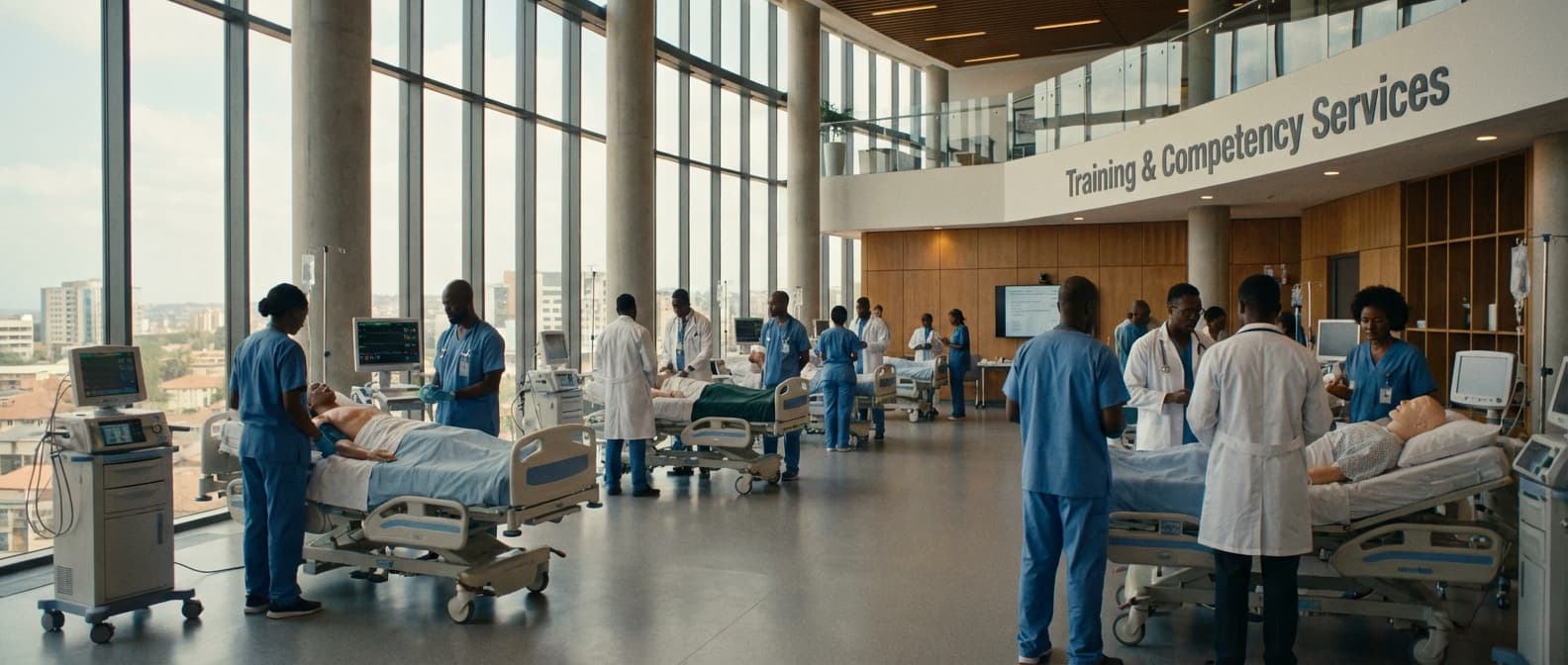
MRI Operator Training Service (Radiographers) in Comoros
Engineering Excellence & Technical Support
MRI Operator Training Service (Radiographers) High-standard technical execution following OEM protocols and local regulatory frameworks.
Advanced Neuroimaging Protocols
Master the latest MRI protocols for detailed brain, spinal cord, and neurological disorder imaging, ensuring diagnostic accuracy and optimal patient outcomes in Comoros.
Cardiovascular MRI Expertise
Gain proficiency in cardiac MRI techniques for assessing structural and functional heart conditions, enhancing the capacity for cardiovascular diagnostics in Comoros.
Musculoskeletal & Orthopedic Imaging
Develop specialized skills in MRI for musculoskeletal and orthopedic applications, including joint, bone, and soft tissue imaging, supporting advanced patient care in Comoros.
What Is Mri Operator Training Service (Radiographers) In Comoros?
MRI Operator Training Service (Radiographers) in Comoros refers to specialized educational programs designed to equip radiographers with the necessary knowledge, skills, and practical experience to safely and effectively operate Magnetic Resonance Imaging (MRI) scanners. This service aims to ensure proficient diagnostic image acquisition, patient management during MRI procedures, and adherence to stringent safety protocols specific to the magnetic environment. It addresses the growing demand for advanced medical imaging capabilities in Comoros, enabling healthcare facilities to offer comprehensive diagnostic services.
| Who Needs It | Typical Use Cases |
|---|---|
| Certified Radiographers seeking specialization in MRI imaging. | Advanced diagnostic imaging for neurological conditions (e.g., stroke, tumors, epilepsy). |
| Medical imaging technologists new to MRI operations. | Musculoskeletal imaging for diagnosing joint injuries, soft tissue abnormalities, and spinal conditions. |
| Radiology departments in hospitals and diagnostic centers in Comoros. | Abdominal and pelvic imaging for evaluating organs such as the liver, kidneys, pancreas, and reproductive systems. |
| Healthcare professionals involved in diagnostic imaging in regions with limited MRI expertise. | Cardiovascular imaging for assessing heart structure, function, and blood flow. |
| Individuals or institutions aiming to establish or enhance MRI services. | Oncology imaging for tumor detection, staging, and treatment monitoring. |
| Radiographers working in research settings requiring specialized MRI protocols. | Fetal MRI for detailed prenatal diagnosis of congenital anomalies. |
Key Components of MRI Operator Training Service:
- Theoretical understanding of MRI physics, principles, and image formation.
- Comprehensive knowledge of MRI hardware, including magnets, gradient coils, radiofrequency coils, and associated systems.
- Patient preparation protocols, including screening for contraindications (e.g., metallic implants, pacemakers) and ensuring patient comfort and safety.
- Image acquisition techniques, including understanding pulse sequences, parameter optimization, and artifact reduction strategies.
- Post-processing and image manipulation techniques.
- Radiation safety principles (though MRI is non-ionizing, safety protocols are paramount due to magnetic field hazards).
- Emergency procedures and management of adverse events during MRI scans.
- Quality assurance and control measures for MRI equipment.
- Hands-on practical training utilizing MRI simulators and/or live patient scanning under expert supervision.
Who Needs Mri Operator Training Service (Radiographers) In Comoros?
MRI Operator Training Service (Radiographers) in Comoros is crucial for enhancing the quality and accessibility of advanced diagnostic imaging. This training aims to equip radiographers with the necessary skills and knowledge to operate MRI scanners effectively, interpret images accurately, and ensure patient safety during examinations. The demand for such specialized training stems from the growing need for modern medical technologies and the importance of having a skilled workforce to manage them.
| Target Customer Type | Specific Departments/Roles | Rationale for Training Needs |
|---|---|---|
| Public Hospitals | Radiology Department, Diagnostic Imaging Unit | To establish or improve MRI services, ensure safe operation, and enhance diagnostic capabilities for a wider patient population. |
| Private Hospitals & Clinics | Radiology Department, Imaging Services | To offer advanced diagnostic imaging, attract more patients, and maintain a competitive edge by employing highly skilled MRI operators. |
| Standalone Diagnostic Imaging Centers | MRI Technologists, Radiographers | To meet the demand for specialized MRI scans, ensure optimal image quality, and provide expert interpretation support to referring physicians. |
| Ministry of Health/Government Health Facilities | Radiology Technicians and Engineers involved in imaging equipment | To build national capacity in advanced imaging, standardize training protocols, and ensure efficient utilization of public health infrastructure. |
| Medical Schools/Training Institutions (potential future partners) | Radiography Instructors, Lecturers | To integrate MRI operation and interpretation into their curriculum, preparing future generations of radiographers with essential skills. |
Target Customers and Departments for MRI Operator Training Service in Comoros
- Hospitals (Public and Private)
- Diagnostic Imaging Centers
- Radiology Departments
- Specialized Clinics (e.g., Neurology, Orthopedics, Cardiology)
Mri Operator Training Service (Radiographers) Process In Comoros
This document outlines the standard workflow for providing MRI Operator Training Services to Radiographers in Comoros. The process is designed to be comprehensive, from the initial client inquiry to the successful execution and completion of the training program.
| Phase | Step | Description | Key Activities | Deliverables/Outcomes |
|---|---|---|---|---|
| Phase 1: Inquiry & Needs Assessment | 1.1 Initial Inquiry | Prospective clients (hospitals, clinics, or individual radiographers) express interest in MRI operator training. | Contact initiation (email, phone, website form). Initial discussion of training needs. | Confirmation of interest. Basic understanding of training requirements. |
| 1.2 Needs Assessment Meeting | Detailed discussion to understand the specific training requirements, current skill levels, available equipment, and desired outcomes. | On-site or virtual meeting with key stakeholders. Assessment of radiographers' prior experience, specific MRI modalities to be covered, and any specialized applications. | Comprehensive training needs analysis report. Identification of learning objectives. | |
| Phase 2: Proposal Development & Agreement | 2.1 Proposal Creation | Development of a customized training proposal based on the needs assessment. | Outline of training modules, curriculum, duration, trainers' profiles, methodologies, logistics, and costs. Inclusion of learning outcomes and assessment methods. | Detailed training proposal document. |
| 2.2 Proposal Review & Negotiation | Client reviews the proposal and may engage in discussions for modifications or clarifications. | Feedback sessions. Negotiation of terms, pricing, and schedule. Contractual discussions. | Agreed-upon training proposal. | |
| 2.3 Contract Signing | Formal agreement between the training provider and the client. | Signing of the training service contract, outlining all terms, conditions, responsibilities, and payment schedules. | Signed training contract. | |
| Phase 3: Pre-Training Preparations | 3.1 Trainer Assignment & Curriculum Finalization | Selection of qualified trainers and finalization of the training curriculum. | Assignment of trainers with relevant expertise. Detailed review and approval of the training modules and materials. | Assigned trainers. Finalized training curriculum and materials. |
| 3.2 Logistics & Scheduling | Arrangement of all practical aspects for the training. | Booking of training venue (if off-site). Confirmation of equipment availability and access. Finalization of training dates and times. Travel and accommodation arrangements for trainers (if applicable). | Confirmed training schedule. Logistics plan. | |
| 3.3 Participant Registration & Communication | Registration of radiographers and communication of pre-training information. | Collection of participant details. Distribution of training agenda, pre-reading materials, and any pre-course questionnaires. Information on venue and timings. | Registered participant list. Pre-training information disseminated. | |
| Phase 4: Training Execution | 4.1 Theoretical Sessions | Delivery of classroom-based or online theoretical knowledge. | Lectures, presentations, case studies, and group discussions covering MRI physics, safety, anatomy, pathology, and image interpretation. | Enhanced theoretical understanding of MRI principles. |
| 4.2 Practical/Hands-on Sessions | Application of theoretical knowledge to real-world scenarios. | Demonstrations on MRI equipment. Supervised scanning sessions. Protocol development and optimization. Image acquisition practice. | Proficiency in operating MRI equipment and acquiring diagnostic images. | |
| 4.3 Assessment & Feedback | Evaluation of participant learning and provision of constructive feedback. | Quizzes, practical assessments, scenario-based evaluations. Trainer feedback to participants on performance. Q&A sessions. | Assessment of learning outcomes. Identification of areas for improvement. | |
| Phase 5: Post-Training & Evaluation | 5.1 Training Completion & Certification | Formal acknowledgement of successful completion of the training. | Issuance of certificates of completion to participants who meet the required standards. | Certificates of completion. |
| 5.2 Post-Training Support | Provision of ongoing support and resources. | Follow-up consultations. Access to training materials and resources. Technical support for initial post-training challenges. | Continued learning and application of skills. | |
| 5.3 Program Evaluation | Gathering feedback to assess the effectiveness of the training program. | Post-training evaluation surveys for participants and clients. Trainer feedback on program delivery. Analysis of assessment results. | Training program evaluation report. Identification of areas for program improvement for future offerings. |
MRI Operator Training Service Workflow for Radiographers in Comoros
- Phase 1: Inquiry & Needs Assessment
- Phase 2: Proposal Development & Agreement
- Phase 3: Pre-Training Preparations
- Phase 4: Training Execution
- Phase 5: Post-Training & Evaluation
Mri Operator Training Service (Radiographers) Cost In Comoros
The cost of MRI operator training for radiographers in Comoros can vary significantly based on several key factors. These factors influence not only the price but also the depth and quality of the training provided. Understanding these elements is crucial for institutions and individuals seeking to invest in such specialized education.
| Factor | Description | Estimated Cost Impact (Comorian Francs - KMF) |
|---|---|---|
| Training Type & Duration | Basic introductory courses are cheaper than comprehensive, multi-week advanced training programs. Shorter workshops vs. full certification. | 100,000 - 750,000 KMF |
| Provider & Accreditation | Training offered by internationally recognized institutions or accredited bodies will likely command higher fees than local, unaccredited providers. Reputation matters. | 200,000 - 1,000,000 KMF |
| Curriculum & Specialization | General MRI operation vs. specialized training in areas like neurological, orthopedic, or cardiac MRI. Advanced topics increase cost. | 150,000 - 800,000 KMF |
| Location of Training | Training conducted at a dedicated training facility with state-of-the-art equipment is typically more expensive than on-site training at a hospital with existing MRI scanners. | 120,000 - 900,000 KMF |
| Resources & Equipment Access | Training that includes significant hands-on practice on actual MRI machines, especially for extended periods, will be priced higher. | 250,000 - 1,200,000 KMF |
| Trainer Expertise | Highly experienced and certified MRI technologists or radiologists as trainers generally command higher fees. | 180,000 - 850,000 KMF |
| Certification & Assessment | If the training leads to a recognized certification requiring rigorous testing and evaluation, this will add to the overall cost. | 50,000 - 300,000 KMF |
| Ancillary Costs | Includes study materials, accommodation (if not local), meals, and transportation. These can be bundled or charged separately. | 30,000 - 200,000 KMF |
Key Pricing Factors for MRI Operator Training in Comoros:
- Type and Duration of Training:
- Provider and Accreditation:
- Curriculum and Specialization:
- Location of Training:
- Resources and Equipment Access:
- Trainer Expertise and Qualifications:
- Certification and Assessment:
- Ancillary Costs:
Affordable Mri Operator Training Service (Radiographers) Options
This service aims to provide accessible and cost-effective MRI operator training for radiographers. We understand the importance of skilled MRI technologists and the financial considerations for training. Our offerings focus on maximizing value and minimizing expenses through flexible learning formats, group discounts, and strategic resource utilization. We are committed to equipping radiographers with the essential knowledge and practical skills to safely and effectively operate MRI scanners.
| Training Package | Description | Included Features | Potential Cost Savings |
|---|---|---|---|
| Online Self-Paced Module | Ideal for individuals seeking foundational knowledge at their own pace. | Access to all lecture materials, quizzes, and online simulations. Certification exam included. | Lowest upfront cost, eliminates travel and accommodation expenses. |
| Blended Learning (Online + Live Virtual) | Combines self-paced online learning with interactive live virtual sessions for Q&A and scenario discussions. | Online modules, scheduled live virtual instructor-led sessions, group case study analysis. | Reduced travel costs compared to on-site, more interaction than purely online. |
| On-Site Group Training | Tailored for healthcare facilities with multiple radiographers requiring training. | On-site instruction by certified trainers, hands-on practice on facility equipment (if applicable), customized curriculum. | Significant cost per participant savings through group discounts, reduced individual travel, and optimized scheduling. |
| Customized Workshop Module | Focuses on specific MRI applications or advanced techniques relevant to a facility's needs. | Specialized curriculum developed in collaboration with the facility, focused practical training. | Ensures training directly addresses operational needs, maximizing immediate value and efficiency. |
Key Features and Value Proposition
- Comprehensive curriculum covering MRI physics, safety protocols, image acquisition, and artifact recognition.
- Flexible learning modules catering to different learning styles and schedules (online, blended, on-site).
- Experienced and certified MRI technologists as instructors.
- Hands-on simulation and practical training opportunities.
- Certification upon successful completion.
- Ongoing support and access to learning resources.
- Emphasis on cost-effectiveness and return on investment for individuals and institutions.
Verified Providers In Comoros
Finding reliable and qualified healthcare providers is paramount for any individual seeking medical services. In Comoros, "Franance Health" has emerged as a trusted name, consistently delivering high-quality care. This document outlines the credentials of Franance Health and explains why they represent the best choice for healthcare needs in Comoros.
| Why Franance Health is the Best Choice | Key Benefits |
|---|---|
| Unwavering Commitment to Quality: Franance Health prioritizes patient well-being through stringent quality control measures and adherence to international best practices. | Access to highly skilled and experienced doctors, nurses, and specialists across various medical fields. A patient-centered approach ensuring personalized care. |
| Comprehensive Service Offerings: From routine check-ups to complex surgical procedures, Franance Health provides a broad spectrum of medical services. | Convenient and accessible healthcare solutions, reducing the need for overseas medical travel. Integrated approach to managing patient health. |
| Trust and Reliability: Decades of experience and a proven track record of excellent patient care have established Franance Health as a trusted healthcare provider. | Peace of mind knowing you are receiving care from a reputable and well-regarded institution. Strong patient satisfaction rates. |
| Technological Advancement: Investment in modern medical equipment and facilities ensures accurate diagnoses and effective treatments. | Access to advanced diagnostic tools and treatment technologies. Efficient and effective healthcare delivery. |
| Ethical Practice and Patient Advocacy: Franance Health operates with the highest ethical standards, championing patient rights and transparent communication. | Confidentiality and respect for patient privacy. Empowered patients through clear communication and informed consent. |
Franance Health Credentials and Recognition
- Accreditation by reputable international health organizations, signifying adherence to global standards of quality and safety.
- Partnerships with leading medical institutions and specialists, ensuring access to cutting-edge treatments and expertise.
- A rigorous vetting process for all affiliated healthcare professionals, guaranteeing that only highly qualified and experienced practitioners are part of the network.
- A commitment to continuous professional development for their medical staff, keeping them updated on the latest advancements in healthcare.
- Positive patient testimonials and a strong track record of successful patient outcomes.
- Compliance with all local and international healthcare regulations and ethical guidelines.
- Specialized clinics and services catering to a wide range of medical needs, from general practice to specialized care.
Scope Of Work For Mri Operator Training Service (Radiographers)
This Scope of Work (SOW) outlines the requirements for providing MRI Operator Training services specifically for radiographers. The objective is to equip radiographers with the necessary theoretical knowledge and practical skills to safely and effectively operate MRI scanners, interpret images, and ensure optimal patient care. The training will cover fundamental principles of MRI physics, advanced imaging techniques, patient safety protocols, image quality optimization, and common artifact identification and troubleshooting. The training will be delivered through a combination of classroom instruction, hands-on simulator sessions, and supervised clinical practice. Technical deliverables include comprehensive training manuals, practical competency checklists, and post-training assessments. Standard specifications will adhere to relevant professional guidelines and regulatory requirements for medical imaging professionals.
| Deliverable | Description | Format | Specification / Standard |
|---|---|---|---|
| Training Manuals | Comprehensive guides covering all training modules, including theoretical explanations, diagrams, and examples. | Digital (PDF) and/or Printed Copy | Content accuracy verified by certified MRI specialists. Compliant with current MRI best practices. |
| Practical Competency Checklists | Tools to evaluate the radiographer's ability to perform specific MRI procedures and operate equipment. | Digital (fillable PDF) and/or Printed Copy | Covers essential operational tasks, safety checks, protocol selection, and basic troubleshooting. |
| Post-Training Assessment (Theory) | Written or online examination to assess understanding of MRI physics, safety, and protocols. | Online Platform or Written Exam | Minimum passing score of 80%. Questions drawn from all training modules. |
| Post-Training Assessment (Practical) | Observed demonstration of skills on an MRI simulator or actual equipment, evaluated using competency checklists. | Direct Observation and Evaluation | Successful completion of all critical tasks with minimal supervision. |
| Certificate of Completion | Document verifying successful completion of the MRI Operator Training program. | Digital (PDF) and/or Printed Copy | Includes trainee name, training dates, provider name, and a unique identifier. |
| Training Session Feedback Forms | Forms for trainees to provide feedback on the training content, instructors, and delivery methods. | Digital (online survey) and/or Printed Copy | Standardized questions covering content relevance, instructor effectiveness, and learning environment. |
Key Training Modules and Topics
- Introduction to MRI Physics: Principles of Nuclear Magnetic Resonance (NMR), Magnetism, Radiofrequency Pulses, Gradient Fields, Signal Generation.
- MRI Hardware and Components: Superconducting Magnets, Gradient Coils, RF Coils, Patient Table, Console Operation.
- Pulse Sequences and Image Contrast: Spin Echo, Gradient Echo, Inversion Recovery, FLAIR, DWI, fMRI Principles.
- Imaging Protocols: Brain, Spine, Abdomen, Pelvis, Musculoskeletal System, Cardiovascular System.
- Patient Safety and Contraindications: MRI Safety Zones, Screening Procedures, Contrast Agent Administration and Safety, Screening Questionnaires.
- Image Acquisition and Optimization: Coil Selection, Field of View (FOV), Matrix Size, Slice Thickness, TR/TE Optimization, Bandwidth, SAR.
- Image Processing and Analysis: Windowing, Leveling, Magnification, Post-processing Techniques.
- Artifacts: Types, Causes, and Troubleshooting (e.g., motion, susceptibility, chemical shift, aliasing).
- Quality Assurance and Control: Phantom Scans, Image Quality Assessment, Equipment Maintenance Basics.
- Ethical and Legal Considerations: Patient Confidentiality, Informed Consent, Radiation Protection (though MRI is non-ionizing).
- Hands-on Practical Sessions: Simulator training and supervised scanning on actual MRI equipment.
Service Level Agreement For Mri Operator Training Service (Radiographers)
This Service Level Agreement (SLA) outlines the guaranteed response times and uptime for the MRI Operator Training Service provided to qualified radiographers. It aims to ensure timely and reliable access to training resources and support, fostering efficient skill development and operational continuity.
| Service Component | Uptime Guarantee | Response Time (Acknowledgement) | Resolution Time (Target) |
|---|---|---|---|
| Online Training Platform Access | 99.5% (Monthly) | 1 Business Hour | 4 Business Hours (for system issues) |
| Virtual MRI Simulator Access | 99.0% (Monthly) | 2 Business Hours | 8 Business Hours (for system issues) |
| Expert Q&A Forum/Session | N/A (asynchronous/scheduled) | 1 Business Day (for initial moderation/response) | 3 Business Days (for comprehensive answer) |
| Technical Support (Platform/Access Issues) | N/A (reactive) | 30 Minutes (for critical issues) | 4 Business Hours (for critical issues) |
| Training Material Updates & Availability | 100% | 2 Business Days (for notification of planned downtime) | N/A |
Key Service Level Objectives
- Response Times: Define the maximum acceptable timeframes for the service provider to acknowledge and initiate action on support requests and training inquiries.
- Uptime Guarantees: Specify the minimum percentage of time the MRI Operator Training Service will be available and operational for users.
- Scope of Service: Clearly define the services covered by this SLA, including access to online training modules, virtual labs, expert Q&A sessions, and technical support.
Frequently Asked Questions

Ready when you are
Let's scope your MRI Operator Training Service (Radiographers) in Comoros project in Comoros.

Scaling healthcare logistics and technical systems across the entire continent.