
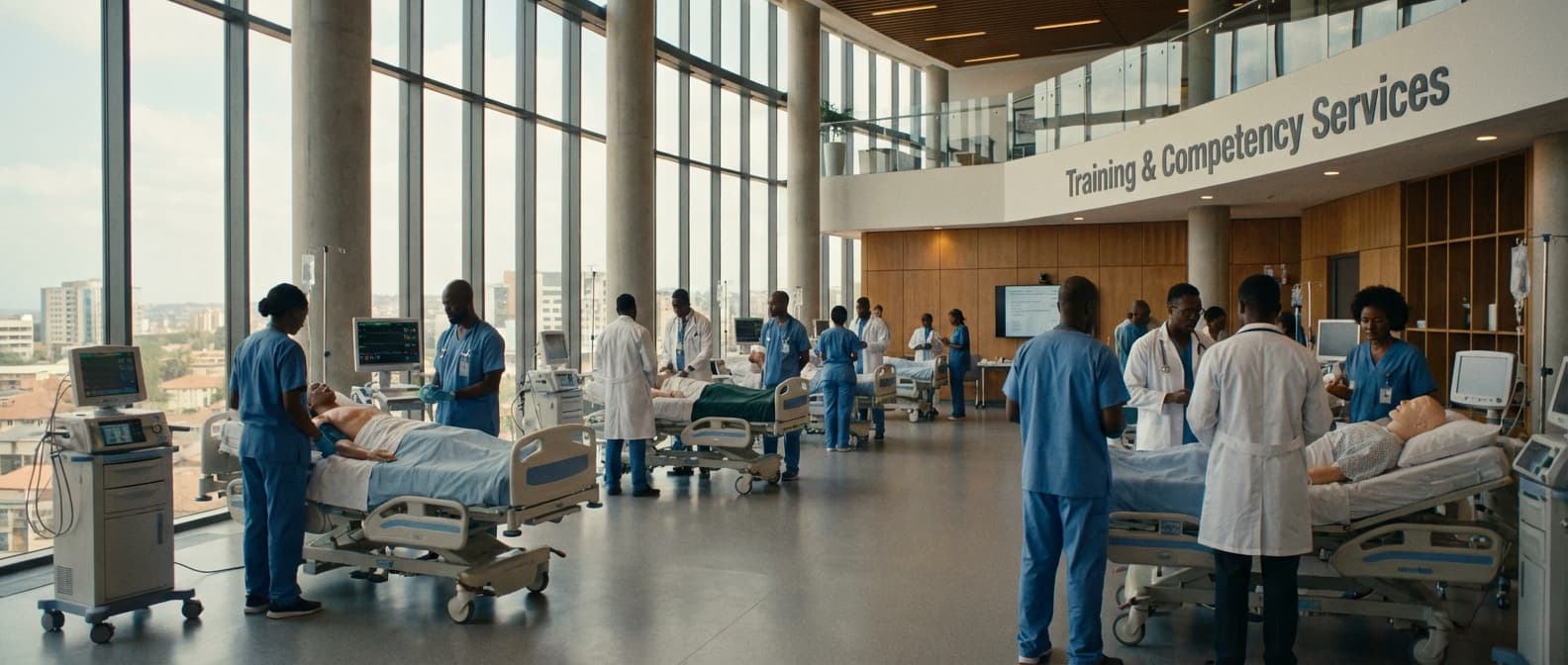
Biomedical Engineering First-Line Support Training Service in Comoros
Engineering Excellence & Technical Support
Biomedical Engineering First-Line Support Training Service High-standard technical execution following OEM protocols and local regulatory frameworks.
Advanced Biomedical Equipment Calibration & Validation
Master the intricate calibration and validation procedures for a wide range of critical medical devices, ensuring adherence to international safety standards and optimal performance within Comorian healthcare facilities. Our training emphasizes hands-on practice with real-world scenarios.
Remote Troubleshooting & Tele-Biomedical Support Integration
Develop proficiency in remote diagnostic tools and communication protocols to provide rapid first-line support, even in geographically dispersed Comorian islands. Learn to effectively guide local healthcare staff through troubleshooting steps and escalate complex issues efficiently.
Critical Patient Monitoring System Alarm Management & Response
Gain expertise in the rapid identification, diagnosis, and resolution of alarms on vital patient monitoring systems. This training focuses on understanding common failure modes, implementing immediate corrective actions, and documenting incident responses to enhance patient safety in Comorian hospitals.
What Is Biomedical Engineering First-line Support Training Service In Comoros?
Biomedical Engineering First-Line Support Training Service in Comoros refers to a specialized training program designed to equip entry-level technicians and healthcare professionals with the foundational knowledge and practical skills required to perform initial troubleshooting, basic maintenance, and operational checks on medical equipment within healthcare facilities in Comoros. This service aims to enhance the reliability and accessibility of medical devices by enabling local personnel to address common technical issues promptly, thereby reducing downtime and improving patient care outcomes. The training emphasizes understanding equipment functionalities, identifying common failure modes, and executing predefined diagnostic procedures and corrective actions within the scope of their authorization.
| Who Needs the Training? | Typical Use Cases | ||||||
|---|---|---|---|---|---|---|---|
| Biomedical Technicians (entry-level) | Initial response to equipment malfunctions reported by clinical staff. | Performing scheduled preventive maintenance checks on basic medical devices (e.g., infusion pumps, patient monitors, ECG machines). | Verifying equipment functionality post-installation or minor repairs. | Troubleshooting common user-related errors. | Performing routine cleaning and disinfection procedures. | Documenting equipment status and maintenance activities. | Identifying the need for escalation to higher-tier biomedical engineers or manufacturers for complex repairs or specialized interventions. |
| Clinical Staff (e.g., Nurses, Doctors, Laboratory Technologists) | Basic operational checks of equipment before patient use. | Recognizing and reporting equipment malfunctions or anomalies accurately. | Understanding fundamental operational parameters and user interface troubleshooting. | Performing simple user-level maintenance tasks as per manufacturer guidelines. | |||
| Healthcare Facility Management | Ensuring a trained workforce to minimize equipment downtime. | Improving cost-effectiveness by handling routine maintenance locally. | Enhancing overall operational efficiency of healthcare services. |
Key Components of Biomedical Engineering First-Line Support Training:
- Foundational principles of medical device operation and safety.
- Basic troubleshooting methodologies and diagnostic techniques.
- Routine preventive maintenance procedures (e.g., cleaning, calibration verification, visual inspections).
- Identification and documentation of equipment malfunctions.
- Understanding of user manuals and technical specifications.
- Basic electrical safety principles and patient isolation techniques.
- Proper use of hand tools and diagnostic equipment.
- Escalation protocols for complex technical issues requiring specialized engineering intervention.
- Inventory management and spare parts identification.
- Regulatory compliance and documentation standards relevant to medical equipment.
Who Needs Biomedical Engineering First-line Support Training Service In Comoros?
This document outlines the critical need for first-line support training services in Biomedical Engineering within Comoros. The objective is to equip healthcare facilities with skilled personnel capable of performing basic maintenance, troubleshooting, and operational checks on medical equipment. This initiative aims to improve the reliability and availability of medical devices, ultimately enhancing the quality of healthcare services across the nation.
| Customer Type | Key Departments Requiring Training | Primary Needs Addressed |
|---|---|---|
| Public Hospitals | Engineering/Maintenance Department, Biomedical Unit (if existing), Clinical Departments (e.g., ICU, Operating Room, Radiology, Laboratory) | Basic troubleshooting and repair of common medical equipment (e.g., patient monitors, infusion pumps, X-ray machines, anesthesia machines), preventive maintenance, equipment inventory management, ensuring operational readiness of critical equipment. |
| Private Hospitals | Technical Department, Biomedical Services Team, All clinical units. | Similar to public hospitals, with a focus on efficient equipment uptime to minimize service disruptions and maintain patient satisfaction. Training on new equipment management. |
| Health Centers & Clinics | General Maintenance Staff, Nurses-in-Charge, Laboratory Technicians. | Operation and basic maintenance of essential medical devices (e.g., thermometers, blood pressure monitors, basic diagnostic equipment, sterilizers). Understanding of user manual, simple troubleshooting for common issues. |
| Medical Laboratories | Laboratory Technicians, Laboratory Managers, Maintenance Personnel. | Calibration and basic maintenance of laboratory equipment (e.g., centrifuges, microscopes, basic analyzers). Ensuring accuracy of diagnostic results through well-maintained equipment. |
| Surgical Centers | Surgical Department Staff, Maintenance Technicians, Biomedical Staff. | Maintenance and troubleshooting of surgical equipment (e.g., electrosurgical units, surgical lights, anesthesia machines) to ensure patient safety during procedures. |
| Rehabilitation Centers | Therapists, Maintenance Staff. | Operation and basic care of rehabilitation equipment (e.g., exercise machines, therapeutic ultrasound devices). |
| Vocational Training Institutions | Instructors, Students in Biomedical Technology or Healthcare Programs. | Providing practical, hands-on training content that aligns with curriculum needs, preparing future biomedical technicians and engineers for the realities of frontline support. |
Target Customers & Departments for Biomedical Engineering First-Line Support Training Service in Comoros
- Hospitals (Public and Private)
- Health Centers and Clinics
- Medical Laboratories
- Surgical Centers
- Rehabilitation Centers
- Vocational Training Institutions offering healthcare-related programs
Biomedical Engineering First-line Support Training Service Process In Comoros
This document outlines the workflow for the Biomedical Engineering First-Line Support Training Service in Comoros, detailing the process from initial inquiry to the successful execution of the training. The service aims to equip healthcare professionals in Comoros with essential skills to perform first-line maintenance and troubleshooting of biomedical equipment, thereby enhancing the reliability and longevity of medical devices within the nation's healthcare facilities.
| Phase | Step | Description | Key Activities | Responsible Parties | Deliverables/Outcomes |
|---|---|---|---|---|---|
| 1.1 Inquiry Received | The service begins when a healthcare institution or relevant ministry in Comoros expresses interest in the first-line support training. | Initial contact, expression of need, preliminary discussion of requirements. | Client (Healthcare Institution/Ministry), Service Provider (Biomedical Engineering Training Department) | Confirmed interest, initial understanding of training needs. |
| 1.2 Needs Assessment | A detailed evaluation of the client's specific needs regarding biomedical equipment and existing technical capacity. | On-site or remote assessment of equipment inventory, technical skills gap analysis, identification of priority equipment for training. | Service Provider (with input from Client) | Detailed needs assessment report, list of target equipment, trainee profile. |
| 2.1 Proposal Development | Based on the needs assessment, a comprehensive training proposal is developed. | Defining training objectives, curriculum outline, duration, methodology, trainer profiles, budget, and proposed schedule. | Service Provider | Formal Training Proposal. |
| 2.2 Proposal Review and Negotiation | The client reviews the proposal, and negotiations take place to finalize terms and conditions. | Client review of proposal, feedback incorporation, budget adjustments, scope refinement. | Client, Service Provider | Agreed-upon training scope, budget, and schedule. |
| 2.3 Agreement and Contract | A formal agreement or contract is signed, outlining the responsibilities and commitments of both parties. | Contract drafting, legal review, signing of the agreement. | Client, Service Provider | Signed Training Agreement/Contract. |
| 3.1 Curriculum Customization | The general curriculum is tailored to the specific equipment and context identified in the needs assessment. | Modifying modules, developing practical exercises, selecting relevant case studies. | Service Provider (Trainers) | Customized Training Curriculum. |
| 3.2 Trainer Allocation and Briefing | Qualified trainers with relevant expertise are assigned and briefed on the training objectives and context. | Trainer selection, pre-training briefing sessions, familiarization with client's environment. | Service Provider (Training Management) | Assigned and briefed training team. |
| 3.3 Logistics and Resource Mobilization | All necessary resources, including training materials, equipment for practicals, and venue arrangements, are secured. | Procurement of consumables, preparation of training equipment (simulators, test tools), booking of training venue, travel and accommodation arrangements for trainers and potentially trainees. | Service Provider (Logistics Team), Client (for venue access/support) | Ready training environment, all required materials and equipment. |
| 3.4 Trainee Registration and Pre-Assessment (Optional) | Participants are registered, and a pre-assessment may be conducted to gauge existing knowledge. | Communication with client for participant list, distribution of pre-assessment questionnaires. | Client, Service Provider | Registered trainee list, pre-assessment results (if applicable). |
| 4.1 Training Delivery | The actual training sessions are conducted according to the customized curriculum and schedule. | Lectures, demonstrations, hands-on practical exercises, group activities, Q&A sessions. | Service Provider (Trainers) | Delivered training modules. |
| 4.2 On-site Support During Training | Trainers provide immediate assistance and clarification to trainees during practical sessions. | Troubleshooting during exercises, individual guidance, feedback provision. | Service Provider (Trainers) | Effective skill acquisition by trainees. |
| 5.1 Post-Training Assessment | The knowledge and skills acquired by the trainees are evaluated. | Written exams, practical skill demonstrations, simulations. | Service Provider (Trainers) | Assessment results, identification of areas needing reinforcement. |
| 5.2 Feedback Collection | Feedback is gathered from trainees and the client on the training program and its delivery. | Distribution and collection of feedback forms, informal discussions. | Service Provider, Client, Trainees | Training feedback report. |
| 5.3 Certificate Issuance | Certificates of completion are issued to trainees who successfully pass the assessment. | Preparation and distribution of certificates. | Service Provider | Certificates of Completion. |
| 5.4 Reporting and Documentation | A final report is compiled summarizing the training activities, outcomes, and recommendations. | Compilation of attendance records, assessment results, feedback, and overall training impact report. | Service Provider | Final Training Report. |
| 5.5 Post-Training Support (Optional/As per agreement) | Follow-up support may be provided to address any lingering questions or challenges. | Remote consultation, on-call technical advice, refresher sessions (if agreed upon). | Service Provider | Continued technical proficiency of trainees. |
Biomedical Engineering First-Line Support Training Service Process in Comoros
- Inquiry and Needs Assessment
- Proposal Development and Submission
- Agreement and Contract Finalization
- Curriculum Customization and Planning
- Logistics and Resource Mobilization
- Training Delivery and Execution
- Post-Training Support and Evaluation
- Reporting and Documentation
Biomedical Engineering First-line Support Training Service Cost In Comoros
The cost of first-line support training for biomedical engineering in Comoros is influenced by several key factors. These include the duration and depth of the training program, the qualifications and experience of the instructors, the location and facilities where the training is conducted, and the specific equipment or software covered. The demand for such specialized training within Comoros also plays a role, as does the provider's reputation and any accreditation they may hold. Due to the nascent nature of specialized technical training in the region, costs can vary significantly. Generally, shorter, introductory courses might be more accessible, while comprehensive, hands-on training requiring specialized equipment will command higher fees.
| Training Type | Estimated Cost Range (Comorian Franc - KMF) | Notes |
|---|---|---|
| Basic Troubleshooting & Maintenance (1-3 days) | 25,000 - 75,000 KMF | Covers fundamental concepts, common issues, and basic preventative maintenance. |
| Intermediate Skills & Specific Equipment (3-5 days) | 60,000 - 150,000 KMF | Includes hands-on practice with specific medical devices, more in-depth troubleshooting. |
| Advanced First-Line Support & Simulation (5-7 days) | 120,000 - 300,000+ KMF | Comprehensive training, often involving simulated scenarios, advanced diagnostics, and reporting. |
| On-site Corporate Training (Per Day) | 50,000 - 150,000+ KMF | Varies greatly based on the number of participants, customization, and instructor fees. |
Key Pricing Factors for Biomedical Engineering First-Line Support Training in Comoros
- Training Duration and Curriculum Depth
- Instructor Qualifications and Experience
- Training Location and Facilities
- Equipment and Software Specificity
- Provider Reputation and Accreditation
- Market Demand and Supply
- Inclusion of Practical Sessions and Materials
Affordable Biomedical Engineering First-line Support Training Service Options
This document outlines affordable training service options for biomedical engineering first-line support personnel. We focus on delivering high-value training that equips technicians with essential skills without a significant financial burden. This includes exploring various training modalities, understanding value bundles, and implementing cost-saving strategies.
| Value Bundle | Description | Key Benefits | Typical Cost Savings |
|---|---|---|---|
| Core Skills Essentials Bundle | Combines foundational online modules on electrical safety, basic troubleshooting, infection control, and common biomedical device categories. | Establishes a strong baseline understanding for all new support staff. Reduces time spent on basic knowledge gaps. | Up to 20% when purchased as a package compared to individual module costs. |
| Advanced Troubleshooting & Diagnostics Bundle | Includes VILT sessions and advanced online modules focusing on complex diagnostic techniques, specialized tools, and common failure analysis for high-priority equipment. | Improves first-time fix rates. Reduces escalation to higher-tier support. Minimizes equipment downtime. | Up to 25% when bundled with vendor-specific training. Savings on reduced downtime and repair costs. |
| Comprehensive New Hire Onboarding Package | A complete solution including online modules, VILT sessions, and a basic on-site workshop for hands-on introductions to your specific environment and key equipment. | Accelerates new hire proficiency. Ensures consistent training standards across the team. Reduces external recruitment costs due to higher retention. | Up to 30% when all components are included. Significant savings from faster onboarding and reduced external training needs. |
| Continuous Professional Development Subscription | Access to a library of new and updated online modules, webinars, and community forums for ongoing learning and skill enhancement. | Keeps staff updated on new technologies and best practices. Fosters a culture of continuous improvement. Reduces the need for ad-hoc training. | Tiered pricing based on user numbers. Cost-effective for organizations with ongoing training needs. |
Key Training Service Options
- Online On-Demand Modules: Self-paced learning with access to video lectures, simulations, and quizzes covering core concepts in biomedical equipment maintenance and troubleshooting.
- Virtual Instructor-Led Training (VILT): Live, interactive sessions conducted remotely, allowing for real-time Q&A and personalized instruction from experienced trainers.
- Blended Learning Programs: A combination of online modules and scheduled VILT sessions to cater to different learning styles and provide a comprehensive learning experience.
- On-Site Workshops (Group Rates): Focused, hands-on training delivered at your facility, ideal for teams and specific equipment training, with cost reductions for larger groups.
- Train-the-Trainer Programs: Empowering experienced internal staff to deliver foundational training to new hires, creating a sustainable in-house training solution.
- Vendor-Specific Equipment Training: Specialized courses focused on the maintenance and repair of commonly used medical devices within your organization.
Verified Providers In Comoros
In Comoros, ensuring access to reliable and trustworthy healthcare providers is paramount. Franance Health stands out as a leading entity that rigorously vets and verifies medical professionals. This commitment to credentialing guarantees that patients receive high-quality care from qualified and experienced practitioners. Franance Health's verification process is comprehensive, encompassing academic qualifications, professional licenses, ongoing training, and adherence to ethical standards. By choosing providers affiliated with Franance Health, individuals can have confidence in the expertise and integrity of their healthcare providers, making it the best choice for health services in Comoros.
| Provider Type | Franance Health Verification Status | Benefits for Patients |
|---|---|---|
| General Practitioners | Verified | Access to trusted primary care, accurate diagnoses, and appropriate referrals. |
| Specialist Physicians (e.g., Cardiologists, Dermatologists) | Verified | Assurance of expertise in specific medical fields for complex conditions. |
| Surgeons | Verified | Confidence in the skill and safety of surgical procedures. |
| Dentists | Verified | Reliable oral healthcare from qualified dental professionals. |
| Pharmacists | Verified | Safe and accurate dispensing of medications with expert advice. |
Key Aspects of Franance Health's Provider Verification
- Rigorous academic qualification checks.
- Verification of current professional licenses.
- Assessment of clinical experience and specializations.
- Review of continuous professional development and training.
- Adherence to ethical conduct and patient care standards.
- Background checks and reputation assessment.
Scope Of Work For Biomedical Engineering First-line Support Training Service
This document outlines the Scope of Work for a Biomedical Engineering First-Line Support Training Service. It details the objectives, deliverables, training modules, and standard specifications required for a comprehensive training program designed to equip technical personnel with the foundational knowledge and skills for first-line support of biomedical equipment. The training aims to enhance equipment uptime, improve diagnostic accuracy, and ensure patient safety through effective initial troubleshooting and maintenance.
| Deliverable ID | Deliverable Name | Description | Format | Acceptance Criteria | Responsibility |
|---|---|---|---|---|---|
| DEL-001 | Training Curriculum Document | Detailed outline of all training modules, learning objectives, duration, and assessment methods. | PDF Document | Approved by Client Training Manager. | Service Provider |
| DEL-002 | Training Materials (Participant) | Comprehensive set of handouts, presentations, and practical exercise guides for each trainee. | Digital (PDF) and/or Printed Copies | Content accuracy verified; all modules covered. | Service Provider |
| DEL-003 | Training Materials (Instructor) | Instructor guides, lesson plans, and presentation slides with detailed notes. | Digital (PPT/PDF) | Alignment with participant materials; clear instructions for delivery. | Service Provider |
| DEL-004 | Assessment Tools | Quizzes, practical skill checklists, and final examination papers. | Digital (Word/PDF) | Measures achievement of learning objectives. | Service Provider |
| DEL-005 | Trainee Performance Reports | Individual reports detailing trainee performance in assessments and practical exercises. | Digital (Excel/PDF) | Includes scores, feedback, and recommendations. | Service Provider |
| DEL-006 | Training Completion Certificates | Certificates issued to trainees who successfully complete the course. | Digital (PDF) and/or Printed | Accurate trainee names and course details. | Service Provider |
| DEL-007 | Post-Training Support Plan | Outline of available support mechanisms for trainees after course completion (e.g., Q&A sessions, online forum). | Digital (PDF) | Clear description of support channels and availability. | Service Provider |
| DEL-008 | Training Evaluation Feedback Report | Summary of trainee feedback on the course content, instructors, and overall experience. | Digital (PDF) | Anonymized data compilation and analysis. | Service Provider |
Key Objectives of the Training Service
- To provide trainees with a fundamental understanding of common biomedical equipment principles and operation.
- To develop practical skills in basic troubleshooting and fault identification for a range of biomedical devices.
- To educate trainees on essential preventive maintenance procedures to prolong equipment lifespan and ensure reliability.
- To instill knowledge of safety protocols and regulatory compliance relevant to biomedical equipment.
- To empower first-line support personnel to resolve common issues, thereby reducing reliance on specialized engineers for initial problems.
- To improve response times for equipment-related issues and minimize patient care disruptions.
Service Level Agreement For Biomedical Engineering First-line Support Training Service
This Service Level Agreement (SLA) outlines the performance expectations for the Biomedical Engineering First-Line Support Training Service. It defines response times for support requests and uptime guarantees for the training platform and associated resources.
| Incident Severity | Response Time Guarantee (Business Hours) | Resolution Time Target (Business Hours) | Uptime Guarantee |
|---|---|---|---|
| Critical Incident | 1 hour | 4 business hours | 99.9% (monthly average) |
| Major Incident | 2 business hours | 8 business hours | 99.5% (monthly average) |
| Minor Incident | 4 business hours | 2 business days | N/A (Focus on continuous improvement) |
| General Inquiries/Feature Requests | 8 business hours | 5 business days | N/A |
Key Definitions
- Training Platform: The designated online portal or system used for delivering the First-Line Support Training.
- Support Request: A documented request for assistance submitted by a user of the training service (e.g., a trainee or administrator) via the defined support channels.
- Critical Incident: An issue that renders the training platform completely unusable or prevents a significant portion of users from accessing or completing their training.
- Major Incident: An issue that significantly impairs the functionality of the training platform or affects a substantial number of users, but does not prevent core functionality.
- Minor Incident: An issue that has a limited impact on individual users or specific features, but does not prevent overall training delivery.
- Business Hours: Monday to Friday, 9:00 AM to 5:00 PM (local time), excluding public holidays.
- Response Time: The maximum time allowed to acknowledge and begin actively working on a support request.
- Resolution Time: The maximum time allowed to fully resolve a support request and restore normal service.
Frequently Asked Questions

Ready when you are
Let's scope your Biomedical Engineering First-Line Support Training Service in Comoros project in Comoros.

Scaling healthcare logistics and technical systems across the entire continent.