
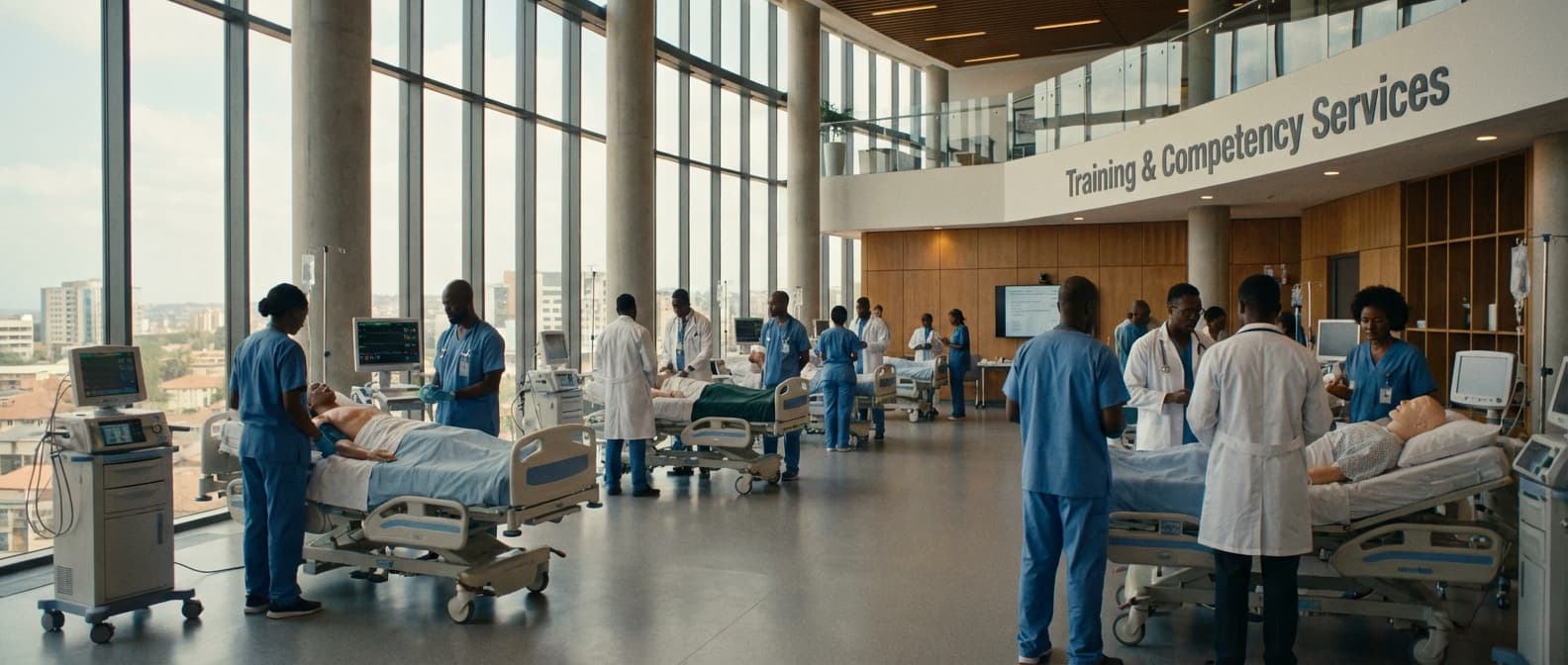
Anesthesia Workstation User Training Service in Comoros
Engineering Excellence & Technical Support
Anesthesia Workstation User Training Service High-standard technical execution following OEM protocols and local regulatory frameworks.
Streamlined Anesthesia Workflow Optimization
Master efficient patient preparation and anesthetic delivery using our Anesthesia Workstation User Training Service. Learn advanced techniques for rapid setup, accurate gas delivery, and seamless integration with monitoring systems, ensuring optimal patient care in Comorian healthcare settings.
Enhanced Patient Safety Through Device Mastery
Gain in-depth knowledge of the Anesthesia Workstation's safety features, alarms, and ventilation modes. Our training empowers Comorian healthcare professionals to proactively identify potential risks, troubleshoot effectively, and uphold the highest standards of patient safety during anesthetic procedures.
Expert Troubleshooting & Maintenance Skills
Become proficient in diagnosing and resolving common Anesthesia Workstation issues. Our training covers essential maintenance protocols and practical troubleshooting strategies, enabling Comorian medical teams to minimize downtime and ensure consistent operational readiness of critical equipment.
What Is Anesthesia Workstation User Training Service In Comoros?
Anesthesia Workstation User Training Service in Comoros refers to the provision of specialized educational programs designed to equip healthcare professionals with the knowledge and practical skills necessary for the safe and effective operation of anesthesia workstations. These workstations are complex medical devices that integrate multiple functions for patient monitoring, ventilation, and anesthetic gas delivery during surgical and interventional procedures. The service aims to ensure that users can optimally utilize the equipment, respond to alarms and critical events, and maintain patient safety throughout the anesthetic process, adhering to international best practices and local regulatory requirements.
| Target Audience | Primary Needs | Typical Use Cases |
|---|---|---|
| Anesthesiologists and Certified Registered Nurse Anesthetists (CRNAs) in Comoros. | To safely and effectively operate sophisticated anesthesia delivery and monitoring equipment. To minimize the risk of adverse events related to device malfunction or misuse. To optimize patient outcomes through precise anesthetic management. | Operating rooms in hospitals and surgical centers. Intensive Care Units (ICUs) for advanced ventilation support. Ambulatory surgery centers. Training new staff on anesthesia workstation operation. Introduction of new workstation models into clinical practice. Refresher training to maintain competency. |
| Anesthesia Technicians and Biomedical Engineers. | To perform routine maintenance, calibration, and basic troubleshooting of anesthesia workstations. To ensure the equipment is functional and safe for clinical use. To assist anesthesiologists during procedures as needed. | Biomedical engineering departments responsible for medical equipment maintenance. Anesthesia departments for technical support. Installation and commissioning of new anesthesia workstations. Preventative maintenance schedules. Responding to equipment failure alerts. |
| Medical Device Manufacturers and Distributors. | To provide mandatory initial and ongoing training to end-users to ensure product safety and efficacy. To meet regulatory compliance requirements for medical device training. To enhance customer satisfaction and support. | Onboarding new healthcare facilities with the manufacturer's anesthesia workstation. Providing updates on new software versions or hardware enhancements. Facilitating product demonstrations and trials. Compliance with post-market surveillance and training mandates. |
Key Components of Anesthesia Workstation User Training Service:
- Theoretical Instruction: Comprehensive modules covering the physiological principles of anesthesia, pharmacology of anesthetic agents, and the design, functionality, and technical specifications of the specific anesthesia workstation model.
- Practical Simulation: Hands-on training utilizing the actual anesthesia workstation or high-fidelity simulators. This includes scenarios for induction, maintenance, emergence, and management of common and critical anesthetic complications.
- System Operation and Maintenance: Detailed training on routine pre-use checks, calibration procedures, troubleshooting common errors, and basic preventative maintenance to ensure device reliability and longevity.
- Ventilator Management: In-depth instruction on various ventilation modes, settings optimization, interpretation of ventilator waveforms and parameters, and management of patients requiring mechanical ventilation.
- Anesthetic Gas Delivery and Monitoring: Training on the accurate delivery of volatile anesthetics and gases, calibration of vaporizers, and interpretation of anesthetic gas monitoring data.
- Alarm Management and Safety Protocols: Education on understanding and responding to device-specific alarms, implementing safety checklists, and adhering to protocols for the prevention of anesthetic mishaps.
- Emergency Response Scenarios: Simulation of critical events such as difficult airway management, malignant hyperthermia, anaphylaxis, and cardiopulmonary resuscitation, with the workstation as a central component of management.
- Competency Assessment: Evaluation of user proficiency through written examinations and practical skill demonstrations to ensure mastery of the training objectives.
Who Needs Anesthesia Workstation User Training Service In Comoros?
Anesthesia Workstation User Training Service is crucial for healthcare facilities in Comoros to ensure the safe, efficient, and effective operation of anesthesia machines. This specialized training empowers anesthesia providers, biomedical engineers, and technicians with the knowledge and skills to properly use, maintain, and troubleshoot these complex medical devices, ultimately contributing to improved patient outcomes and operational efficiency.
| Target Customer Type | Primary Departments Requiring Training |
|---|---|
| Hospitals & Major Healthcare Centers | Anesthesiology Department, Surgery Department, Biomedical Engineering Department, Operating Room (OR) Staff |
| Public Hospitals | Anesthesiology, Surgery, Biomedical Engineering, OR Nurses |
| Private Clinics & Hospitals | Anesthesiology, Surgical Teams, Biomedical Technicians |
| Surgical Centers | Anesthesiologists, Surgical Nurses, Anesthesia Technicians |
| Medical Training Institutions | Medical Faculty (Anesthesiology Specialists), Nursing Faculty, Biomedical Engineering Programs |
Target Customers and Departments in Comoros
- Hospitals and Major Healthcare Centers: These institutions are the primary users of anesthesia workstations and require comprehensive training for their surgical and anesthesia departments.
- Public Hospitals: Government-funded hospitals, which form the backbone of the healthcare system in Comoros, will benefit significantly from this training to enhance the capabilities of their medical staff.
- Private Clinics and Hospitals: For-profit healthcare providers that offer surgical services will also need this training to maintain high standards of patient care and operational excellence.
- Surgical Centers: Dedicated surgical facilities that perform a range of procedures will require trained personnel to operate anesthesia workstations safely.
- Emergency Medical Services (EMS) with Advanced Capabilities: While less common for direct workstation use, EMS units with specialized equipment might benefit from training on transportable anesthesia units or for personnel who might interface with hospital anesthesia teams.
- Medical Training Institutions and Universities: Schools and universities in Comoros that offer medical and nursing programs, particularly those with surgical or anesthesiology components, can integrate this training into their curriculum.
Anesthesia Workstation User Training Service Process In Comoros
This document outlines the Anesthesia Workstation User Training Service Process for clients in Comoros. The process is designed to be comprehensive, ensuring that users are thoroughly trained on the safe and effective operation of anesthesia workstations. It covers all stages from initial inquiry to the successful completion of training and post-training support.
| Phase | Stage/Activity | Description | Responsible Party | Key Deliverables/Outcomes |
|---|---|---|---|---|
| Initial Contact | Client expresses interest in anesthesia workstation user training. | Prospective Client, Training Provider Sales Team | Initial understanding of client's training needs and contact information. |
| Needs Assessment Call/Meeting | Detailed discussion to understand the client's specific anesthesia workstations, existing user skill levels, desired training outcomes, preferred dates, and logistics. | Training Provider Technical/Sales Specialist, Prospective Client | Documented training requirements, participant profile, and preliminary scope of work. |
| Proposal Generation | Development of a detailed training proposal outlining objectives, curriculum, duration, trainers, equipment requirements, cost, and schedule. | Training Provider Technical/Sales Specialist | Formal training proposal document. |
| Proposal Review and Negotiation | Client reviews the proposal, asks clarifying questions, and negotiates terms if necessary. | Prospective Client, Training Provider Sales Team | Agreed-upon training scope, schedule, and cost. |
| Contract Signing | Formal agreement between the client and the training provider, outlining all terms and conditions. | Authorized Representatives of Client and Training Provider | Signed Training Agreement/Contract. |
| Curriculum Finalization | Tailoring the training curriculum to the specific anesthesia workstations and client needs. | Training Provider Curriculum Developer/Lead Trainer | Finalized training modules and materials. |
| Trainer Assignment | Selection and assignment of qualified and experienced trainers. | Training Provider Management | Assigned trainers with relevant expertise. |
| Logistics Coordination | Arranging travel and accommodation for trainers (if applicable), confirming training venue, and ensuring all necessary equipment is available and functional. | Training Provider Operations/Logistics Coordinator, Client Facilities Manager | Confirmed training venue, equipment readiness, and travel/accommodation arrangements. |
| Participant Notification | Client informs participants about the training schedule, objectives, and any pre-requisites. | Client Management/HR Department | Informed training participants. |
| On-site/Remote Training Delivery | Conducting theoretical sessions (lectures, presentations) and practical hands-on sessions with the anesthesia workstations. | Assigned Trainers | Knowledge transfer and skill development in participants. |
| Interactive Q&A and Demonstrations | Facilitating discussions, answering questions, and demonstrating advanced features and troubleshooting. | Assigned Trainers | Enhanced understanding and confidence in participants. |
| Knowledge Assessment | Administering written or oral tests to evaluate theoretical knowledge. | Assigned Trainers | Assessment of theoretical comprehension. |
| Practical Skills Assessment | Observing participants performing specific tasks and procedures on the anesthesia workstations. | Assigned Trainers | Assessment of practical competency and safe usage. |
| Certification Issuance | Issuing certificates of completion to participants who successfully meet the training objectives. | Training Provider | Official Certificate of Training. |
| Feedback Collection | Gathering feedback from participants and client on the training effectiveness and delivery. | Training Provider, Participants, Client Management | Training evaluation report and insights for improvement. |
| Post-Training Consultation | Offering limited post-training support via email or phone for any immediate queries or issues. | Training Provider Technical Support | Resolution of immediate post-training queries. |
| Follow-up and Refresher Courses (Optional) | Arranging optional follow-up sessions or refresher courses as per client's ongoing needs. | Training Provider Sales/Service Team | Continued skill maintenance and operational excellence. |
Anesthesia Workstation User Training Service Process in Comoros
- Phase 1: Inquiry and Needs Assessment
- Phase 2: Proposal and Agreement
- Phase 3: Planning and Preparation
- Phase 4: Training Execution
- Phase 5: Evaluation and Certification
- Phase 6: Post-Training Support
Anesthesia Workstation User Training Service Cost In Comoros
The cost of anesthesia workstation user training services in Comoros can vary significantly based on several factors. These factors influence the overall price, making it essential for healthcare facilities to understand them when budgeting for such training. The scarcity of specialized training providers and the need for qualified, often international, instructors are primary drivers of cost. Furthermore, the complexity of the anesthesia workstation itself, the duration and depth of the training program, and the number of participants all play a crucial role in determining the final service fee. Travel and accommodation expenses for trainers, if they are not local, can also add a substantial amount to the overall cost. The availability of training materials and the need for hands-on simulation equipment can further influence the pricing.
| Training Scope/Duration | Estimated Cost Range (KMF) |
|---|---|
| Basic Operator Training (1-2 days, 5-10 participants) | 150,000 - 400,000 KMF |
| Intermediate User Training (2-3 days, 10-15 participants) | 300,000 - 700,000 KMF |
| Advanced/Specialized Training (3-5 days, 15-20 participants, including troubleshooting) | 600,000 - 1,500,000+ KMF |
| Training with International Instructor (additional travel/accommodation) | Add 500,000 - 2,000,000 KMF to base cost |
| Customized Training Program (specific needs, simulation equipment) | Price on application (POA) - can significantly exceed standard rates |
Key Pricing Factors for Anesthesia Workstation User Training in Comoros
- Trainer's qualifications and experience (local vs. international)
- Duration and intensity of the training program
- Number of participants requiring training
- Complexity and specific model of the anesthesia workstation
- Need for on-site training vs. remote options (if available)
- Travel and accommodation costs for trainers
- Provision of training materials (manuals, presentations)
- Requirement for hands-on simulation equipment
- Certification or accreditation offered by the training provider
- Negotiation and contract terms with the service provider
Affordable Anesthesia Workstation User Training Service Options
This service provides essential user training for affordable anesthesia workstations, empowering your clinical staff to operate them safely and efficiently. We understand the critical need to maximize your investment in cost-effective anesthesia technology. Our training solutions are designed to be flexible and budget-conscious, ensuring your team gains the necessary skills without incurring excessive costs. We offer various value bundles and cost-saving strategies to make this vital training accessible.
| Cost-Saving Strategy | Description | Benefit |
|---|---|---|
| Group Training Discounts | Enroll multiple staff members from the same institution in a training session at a reduced per-person rate. | Lower per-user training cost, fostering team-wide competency. |
| Online/Virtual Training Options | Leverage web-based platforms for remote training sessions, eliminating travel expenses and time away from clinical duties. | Significant reduction in travel and accommodation costs, increased flexibility. |
| Bundled Training with Workstation Purchase | Inquire about packages that include initial user training at a discounted rate when purchasing a new affordable anesthesia workstation. | Integrated cost savings from the outset of your equipment acquisition. |
| Tiered Training Packages | Choose the package that precisely matches your team's skill level and training needs, avoiding overpaying for unnecessary advanced modules. | Optimized cost based on actual requirements, preventing wasted expenditure. |
| Refresher Course Discounts | Offer discounted rates for follow-up training sessions to ensure ongoing competency and reinforce learned skills. | Maintains skill proficiency at a reduced cost over time. |
Value Bundles
- {"title":"Basic Proficiency Package","description":"Covers core functionalities, essential safety checks, and basic troubleshooting. Ideal for new users or as a refresher."}
- {"title":"Advanced Operations Bundle","description":"Includes basic proficiency plus advanced ventilation modes, waveform interpretation, and more complex troubleshooting. Suitable for experienced clinicians or those requiring deeper understanding."}
- {"title":"Train-the-Trainer Program","description":"Equips designated staff members with the knowledge and skills to train their colleagues internally, creating a sustainable in-house training program."}
- {"title":"Customized Module Training","description":"Tailored training sessions focusing on specific features or workflows relevant to your institution's unique needs and the anesthesia workstation model."}
Verified Providers In Comoros
In the Comoros, ensuring access to reliable and qualified healthcare providers is paramount. Franance Health has established itself as a leading entity in verifying healthcare professionals and institutions. Their rigorous credentialing process ensures that all listed providers meet stringent standards of expertise, ethics, and patient care. Choosing a Franance Health verified provider in the Comoros offers peace of mind, guaranteeing that you are receiving care from competent and trustworthy professionals. This verification signifies a commitment to excellence, patient safety, and adherence to international healthcare best practices, making them the premier choice for your health needs.
| Provider Type | Franance Health Verification Criteria | Why They Are the Best Choice |
|---|---|---|
| General Practitioners | Valid medical license, completed residency, good standing with medical board, demonstrated patient care experience. | Ensures accurate diagnosis and appropriate primary care, laying the foundation for your overall health management. |
| Specialist Physicians (e.g., Cardiologists, Dermatologists, Pediatricians) | Board certification in their specialty, advanced degrees, proven clinical experience, ongoing professional development. | Provides access to highly skilled professionals for complex medical conditions, offering specialized and effective treatment. |
| Hospitals and Clinics | Accreditation by recognized health organizations, adherence to safety and hygiene standards, qualified medical staff, up-to-date equipment. | Guarantees a safe and well-equipped environment for treatment and recovery, supported by a competent medical team. |
| Dentists | Licensed dental practitioner, specialization (if applicable), compliance with dental practice regulations, patient satisfaction records. | Offers reliable dental care, from routine check-ups to advanced procedures, prioritizing oral health and comfort. |
| Pharmacists | Registered pharmacist, verifiable qualifications, adherence to pharmaceutical regulations, ethical dispensing practices. | Ensures the safe and accurate dispensing of medications, providing crucial guidance on drug usage and potential interactions. |
Benefits of Choosing Franance Health Verified Providers in Comoros:
- Unparalleled Trust and Reliability: Franance Health's thorough vetting process eliminates uncertainty, ensuring you connect with genuine and qualified medical professionals.
- Commitment to Quality Care: Verified providers adhere to high standards of medical practice and patient safety protocols.
- Access to Expertise: Franance Health identifies specialists and general practitioners with proven track records and relevant certifications.
- Enhanced Patient Safety: By choosing a verified provider, you significantly reduce the risk of encountering unqualified or fraudulent practitioners.
- Streamlined Healthcare Experience: Franance Health's platform simplifies the process of finding and engaging with trusted healthcare services.
Scope Of Work For Anesthesia Workstation User Training Service
This Scope of Work (SOW) outlines the requirements for providing comprehensive user training services for the Anesthesia Workstation. The training will cover all essential functions, features, and safety protocols necessary for proficient and safe operation of the workstation. The objective is to equip healthcare professionals with the knowledge and skills to utilize the Anesthesia Workstation effectively in a clinical setting.
| Deliverable | Description | Format/Method | Standard Specification | Acceptance Criteria |
|---|---|---|---|---|
| Training Curriculum Document | Detailed breakdown of all training modules, learning objectives, duration, and assessment methods. | Digital Document (PDF) | Must align with all modules listed in Key Training Modules and cover all workstation functionalities as per manufacturer's specifications. Language: English. | Approved by client representative. Curriculum is comprehensive and covers all defined learning objectives. |
| Instructor-Led Training Sessions | Hands-on practical training sessions conducted by certified instructors. | In-person or Virtual (Webinar with interactive elements) | Minimum 80% of participants actively engaged in practical exercises. Instructor-to-participant ratio not exceeding 1:10 for hands-on sessions. Sessions conducted using actual or simulated Anesthesia Workstation units. | Successful completion of practical exercises by participants. Positive feedback on instructor clarity and session effectiveness (average score > 4/5). |
| Training Manuals/User Guides | Comprehensive printed or digital manuals for participants to refer to. | Printed Booklets or Digital PDFs | Content must be accurate, up-to-date with the latest workstation software version, and easy to understand. Includes diagrams and illustrations. | Content accuracy verified. Manuals are provided to all participants. No significant omissions or errors identified. |
| Competency Assessment Tool | Written or practical assessment to evaluate participant understanding and skill proficiency. | Quizzes, practical skill checklists, or simulation-based assessments | Minimum passing score of 85% for written assessments. Successful demonstration of all critical skills as per checklist for practical assessments. | All participants undergo assessment. Passing scores achieved by at least 95% of participants. Results documented and provided to the client. |
| Training Certificates | Official certificates awarded to participants upon successful completion of training. | Digitally signed PDF or Printed Certificates | Each certificate must include participant name, training date, workstation model, and issuing entity. | Certificates issued to all participants who meet the competency assessment criteria. Legible and verifiable. |
| Post-Training Support Plan | Outline of available support channels and duration after initial training. | Document outlining contact information, response times, and escalation procedures. | Support available for a minimum of 30 days post-training. Response time for critical queries within 4 business hours. | Support plan clearly defined and communicated to the client and participants. Support provided as per the defined plan. |
| Training Report | Summary report detailing training activities, participant performance, and feedback. | Digital Document (PDF) | Includes number of sessions, attendees, pass/fail rates, common areas of difficulty, and overall feedback summary. | Report submitted within 5 business days of training completion. Contains accurate and comprehensive data. |
Key Training Modules
- Introduction to the Anesthesia Workstation: Overview of components, design principles, and primary functions.
- Basic Operation: Powering on/off, patient connection, gas delivery system, ventilation modes (e.g., volume control, pressure control, SIMV, PSV).
- Advanced Ventilation Techniques: Implementing and managing specialized ventilation modes, lung protective strategies.
- Monitoring and Alarms: Understanding all monitoring parameters (e.g., SpO2, EtCO2, NIBP, ECG, temperature), alarm configuration, troubleshooting, and response protocols.
- Vaporizer Management: Filling, emptying, calibration, and safe handling of anesthetic vaporizers.
- Gas Delivery and Scavenging: Understanding fresh gas flow, mixing, delivery accuracy, and effective waste gas scavenging systems.
- Breathing Circuit Management: Assembling, disassembling, leak testing, and sterilization procedures for the breathing circuit.
- User Interface and Navigation: Efficiently navigating menus, settings, and patient data screens.
- Troubleshooting and Maintenance: Identifying common errors, performing basic troubleshooting, and understanding routine maintenance schedules.
- Emergency Scenarios: Simulating and responding to common anesthesia-related emergencies and workstation failures.
- Integration with Other Devices: Understanding compatibility and basic integration with patient monitors and other hospital systems.
- Safety Features and Protocols: In-depth review of all safety mechanisms, interlocks, and adherence to institutional policies and regulatory requirements.
Service Level Agreement For Anesthesia Workstation User Training Service
This Service Level Agreement (SLA) outlines the guaranteed response times and uptime for the Anesthesia Workstation User Training Service provided by [Your Company Name] to [Client Company Name]. This SLA is an integral part of the overarching service agreement and details the performance commitments for training sessions, technical support, and platform availability.
| Service Component | Uptime Guarantee | Response Time (Technical Support) | Response Time (Training Session Rescheduling) |
|---|---|---|---|
| On-Demand Training Modules Access | 99.5% Monthly Uptime | N/A | N/A |
| Virtual Instructor-Led Training (VILT) Platform Availability | 99.8% Monthly Uptime | Within 1 hour during business hours | N/A |
| Technical Support (Training Platform Issues) | N/A | Critical: Within 30 minutes | N/A |
| Technical Support (General Inquiries) | N/A | Within 4 business hours | N/A |
| Scheduled Training Session Availability | N/A | N/A | If cancellation required by [Your Company Name]: Within 48 business hours notice for rescheduling |
| Scheduled Training Session Availability | N/A | N/A | If rescheduling requested by [Client Company Name]: Subject to trainer availability and standard booking procedures |
Key Service Components
- On-site and Remote Training Sessions
- Virtual Instructor-Led Training (VILT)
- On-Demand Training Modules Access
- Technical Support for Training Platform
- Scheduled Training Session Availability
Frequently Asked Questions

Ready when you are
Let's scope your Anesthesia Workstation User Training Service in Comoros project in Comoros.

Scaling healthcare logistics and technical systems across the entire continent.