
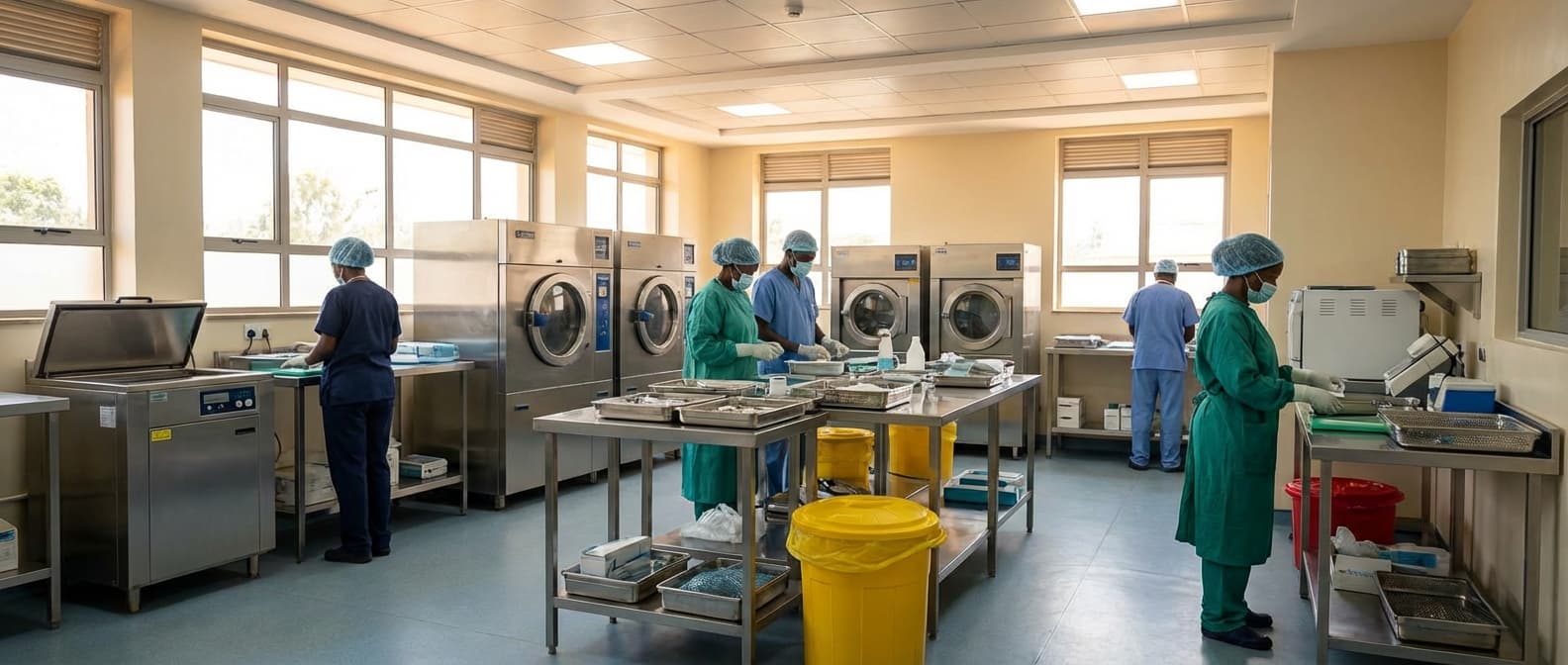
Medical Equipment Decontamination Service (Pre-Repair/Pre-Relocation) in Comoros
Engineering Excellence & Technical Support
Medical Equipment Decontamination Service (Pre-Repair/Pre-Relocation) High-standard technical execution following OEM protocols and local regulatory frameworks.
Pre-emptive Decontamination for Enhanced Safety
Our specialized pre-repair and pre-relocation decontamination process rigorously eliminates hazardous biological agents, chemical residues, and radioactive contaminants from medical equipment. This ensures the highest safety standards for your technicians and the integrity of your facility in Comoros, preventing cross-contamination risks.
Advanced Bioburden Reduction Protocols
Leveraging state-of-the-art disinfection and sterilization techniques, we meticulously reduce bioburden to critically low levels on medical devices. This critical step before repair or relocation guarantees that equipment is not only functional but also microbiologically safe, meeting stringent international healthcare guidelines in the Comorian context.
Streamlined Transition for Operational Continuity
Minimize downtime and operational disruption. Our efficient pre-decontamination service prepares medical equipment for seamless repair or relocation across Comoros. By ensuring equipment is sterile and properly documented, we facilitate quicker turnaround times and a smoother transition, preserving your healthcare services' continuity.
What Is Medical Equipment Decontamination Service (Pre-repair/pre-relocation) In Comoros?
Medical Equipment Decontamination Service (Pre-Repair/Pre-Relocation) in Comoros refers to the comprehensive process of cleaning, disinfecting, and/or sterilizing medical devices prior to their transfer for repair or relocation. This service is critical for mitigating the risk of nosocomial infections, ensuring the safety of biomedical technicians and equipment handlers, and maintaining the integrity of the equipment during transit and subsequent handling. The decontamination process typically involves a multi-step approach tailored to the specific type of medical equipment and its potential bioburden.
| Who Needs This Service? | Typical Use Cases | ||||||
|---|---|---|---|---|---|---|---|
| Hospitals and Healthcare Facilities in Comoros: All departments utilizing medical equipment that requires maintenance or is being moved to a new location. | Repair of Diagnostic Imaging Equipment: Ensuring safety before sending an MRI or CT scanner for calibration or component replacement. | Servicing of Surgical Instruments: Decontaminating complex surgical sets before sending them to a specialized repair center. | Relocation of Intensive Care Unit (ICU) Equipment: Preparing ventilators, patient monitors, and infusion pumps for transfer within a facility or to a new wing. | Maintenance of Laboratory Equipment: Disinfecting centrifuges, microscopes, or analyzers before they are sent for recalibration. | Repair of Biomedical Devices: Decontaminating devices such as defibrillators, ECG machines, or anesthesia machines. | Internal Equipment Reassignment: Moving equipment from one department to another, requiring a baseline decontamination. | External Equipment Transportation: Preparing equipment for shipment to off-site repair facilities or for disposal/recycling. |
| Biomedical Engineering Departments: Responsible for equipment maintenance and repair. | Procurement and Logistics Departments: Overseeing the movement and management of medical assets. | Infection Prevention and Control Teams: Ensuring compliance with safety protocols. | Third-Party Medical Equipment Service Providers: Requiring decontaminated equipment upon receipt. | Medical Equipment Manufacturers: For warranty repairs or product returns. |
Key Components of Medical Equipment Decontamination (Pre-Repair/Pre-Relocation)
- Initial Assessment and Classification: Evaluating the type of equipment, its intended use, and potential contamination levels.
- Pre-cleaning: Removal of gross soil, visible debris, and organic matter using appropriate cleaning agents.
- Disinfection: Application of chemical disinfectants or physical methods (e.g., UV-C irradiation) to inactivate or destroy microorganisms on the equipment's surfaces.
- Sterilization (if applicable): For critical or semi-critical devices, processes like autoclaving, ethylene oxide sterilization, or hydrogen peroxide plasma sterilization may be employed.
- Rinsing and Drying: Thoroughly rinsing to remove cleaning/disinfecting agents and ensuring the equipment is dry to prevent microbial growth.
- Packaging and Labeling: Securely packaging the decontaminated equipment and clearly labeling it to indicate its decontamination status.
- Documentation: Maintaining detailed records of the decontamination process, including the methods used, dates, and personnel involved.
Who Needs Medical Equipment Decontamination Service (Pre-repair/pre-relocation) In Comoros?
This service is crucial for any entity in Comoros that owns, operates, or handles medical equipment, especially when that equipment requires repair or is being moved to a new location. The primary goal is to ensure the safety of technicians, facility staff, and the eventual users of the equipment by eliminating potential biohazards and chemical contaminants. This proactive step prevents the spread of infections and ensures equipment is handled and serviced in a sterile environment, contributing to patient safety and operational efficiency.
| Target Customer/Department | Specific Needs for Decontamination (Pre-Repair/Pre-Relocation) |
|---|---|
| Hospitals (General, Surgical, Pediatric, etc.) | Departments: Operating Rooms, Intensive Care Units (ICU), Emergency Departments (ER), Sterilization Units, Biomedical Engineering Departments. Needs: Decontaminating surgical equipment before sending for repair to prevent cross-contamination for technicians. Relocating imaging machines, patient monitors, or surgical robots requires thorough decontamination to avoid exposing new environments or personnel to potential biohazards from previous use. |
| Clinics and Health Centers | Departments: Outpatient Services, Diagnostic Labs, Minor Procedure Rooms. Needs: Decontaminating diagnostic tools (e.g., ultrasound probes, endoscopes) before servicing or if the clinic is relocating to a new facility. This ensures the continuity of safe patient care. |
| Diagnostic Laboratories | Departments: Microbiology, Hematology, Biochemistry, Pathology. Needs: Decontaminating complex analytical instruments (e.g., centrifuges, incubators, automated analyzers) before they are sent for repair or calibration. This protects laboratory technicians and repair personnel from potential biological samples. |
| Medical Equipment Manufacturers/Distributors | Departments: Service Centers, Logistics/Warehousing. Needs: Receiving and handling returned equipment for repair or refurbishment. Decontamination is essential to ensure their own technicians can safely work on the equipment and that the reconditioned equipment is safe for resale or redeployment. |
| Biomedical Engineering Departments | Departments: Equipment Maintenance and Repair Teams. Needs: Pre-repair decontamination is paramount for their technicians' safety when handling potentially contaminated medical devices. This also reduces the risk of them introducing contaminants to their workshops or other equipment. |
| Ambulatory Care Facilities/Surgical Centers | Departments: Procedure Rooms, Recovery Areas. Needs: Decontaminating specialized surgical instruments, anesthesia machines, or patient monitoring systems before they are sent for repair or during facility relocation to maintain sterility and safety standards. |
Who Needs Medical Equipment Decontamination Service (Pre-Repair/Pre-Relocation) in Comoros?
- Hospitals (Public and Private)
- Clinics and Health Centers
- Diagnostic Laboratories
- Surgical Centers
- Rehabilitation Centers
- Ambulatory Care Facilities
- Medical Equipment Manufacturers and Distributors (for returned or serviced equipment)
- Government Health Agencies (managing public health facilities)
- Non-Governmental Organizations (NGOs) involved in healthcare delivery
- Emergency Medical Services (EMS) providers
Medical Equipment Decontamination Service (Pre-repair/pre-relocation) Process In Comoros
The Medical Equipment Decontamination Service in Comoros, specifically for pre-repair and pre-relocation processes, ensures that medical devices are rendered safe to handle and transport. This workflow is crucial for preventing the spread of infections and protecting personnel. The process begins with an initial inquiry from a healthcare facility or entity requiring decontamination. This inquiry triggers a series of steps, culminating in the successful decontamination and documentation of the equipment. The service adheres to strict protocols to guarantee efficacy and compliance.
| Stage | Description | Key Activities | Responsible Party |
|---|---|---|---|
| The process begins when a healthcare facility, repair technician, or relocation specialist identifies the need for medical equipment decontamination. | Contacting the decontamination service provider, submitting a service request form, providing initial details about the equipment (type, quantity, known contaminants). | Healthcare Facility/Requester |
| The service provider evaluates the request to determine the scope of work and provide a cost estimate. | Reviewing the submitted information, potentially requesting additional details or photographs, assessing the complexity of decontamination required, preparing and submitting a formal quotation. | Decontamination Service Provider |
| Once the quotation is accepted, the service is scheduled, and logistical arrangements are made. | Confirming the date and time for decontamination, coordinating access to the equipment's location, arranging for necessary personnel and equipment transport. | Decontamination Service Provider & Requester |
| Trained personnel perform the decontamination of the medical equipment using approved methods and agents. | Visual inspection of equipment, selection of appropriate decontamination agents and methods (e.g., chemical disinfection, UV-C irradiation), application of decontamination procedures, ensuring proper ventilation and personal protective equipment (PPE) usage. | Decontamination Service Technicians |
| The effectiveness of the decontamination process is verified, and all actions are meticulously documented. | Visual confirmation of cleanliness, potential use of biological or chemical indicators, completion of a decontamination certificate/report detailing the equipment, methods used, date, and personnel involved. | Decontamination Service Technicians & Supervisor |
| The decontaminated equipment is officially handed over to the requester, and a brief follow-up may occur. | Presenting the decontamination certificate to the requester, confirming satisfaction with the service, answering any immediate questions, potential follow-up call or email to ensure continued satisfaction. | Decontamination Service Provider & Requester |
Medical Equipment Decontamination Service Workflow (Pre-Repair/Pre-Relocation) in Comoros
- Inquiry and Service Request
- Initial Assessment and Quotation
- Scheduling and Logistics
- On-site Decontamination Execution
- Verification and Documentation
- Handover and Post-Service Follow-up
Medical Equipment Decontamination Service (Pre-repair/pre-relocation) Cost In Comoros
Providing a precise cost for medical equipment decontamination services in Comoros, specifically for pre-repair or pre-relocation purposes, is challenging due to several influencing factors. The market is relatively nascent, and specialized service providers might be limited, leading to less standardized pricing. However, we can outline the key pricing determinants and provide estimated ranges in the local currency, the Comorian Franc (KMF). It's crucial to understand that these are indicative and obtaining direct quotes from service providers is essential for accurate budgeting.
| Equipment Category | Estimated Decontamination Cost Range (KMF) |
|---|---|
| Small Diagnostic Tools (e.g., Stethoscopes, Blood Pressure Cuffs) | 15,000 - 30,000 KMF |
| Medium-Sized Equipment (e.g., ECG Machines, Small Imaging Devices) | 50,000 - 150,000 KMF |
| Large/Complex Medical Systems (e.g., X-ray Units, Ultrasound Machines, Sterilizers) | 200,000 - 1,000,000+ KMF |
| Specialized/High-Risk Equipment (e.g., Anesthesia Machines, Ventilators, Laboratory Analyzers) | 300,000 - 1,500,000+ KMF |
Factors Influencing Medical Equipment Decontamination Costs in Comoros
- Type and Complexity of Equipment: Larger, more intricate, or specialized medical devices (e.g., MRI machines, CT scanners, complex surgical equipment) will naturally incur higher decontamination costs due to the time, specialized chemicals, and expertise required.
- Level of Contamination: The extent and type of contamination (e.g., routine bioburden, specific pathogens, hazardous materials) will directly impact the cleaning protocols and materials needed, thereby affecting the price.
- Service Provider's Expertise and Reputation: Established decontamination companies with proven track records, specialized certifications, and advanced equipment will generally command higher prices than newer or less experienced operators.
- Location within Comoros: Accessibility to the equipment's location can play a role. Remote areas might incur additional transportation costs for personnel and equipment, increasing the overall service fee.
- Urgency of Service: Emergency or same-day decontamination services will typically be more expensive than scheduled appointments due to the demand and resource allocation required.
- Scope of Service: Whether the decontamination is a surface-level clean or a more in-depth internal and external process will influence the labor and material costs.
- Regulatory Compliance Requirements: If specific regulatory standards need to be met for decontamination (e.g., for export or import), this might necessitate more rigorous procedures and specialized documentation, potentially increasing costs.
- Consumables and Chemicals Used: The type and quantity of cleaning agents, disinfectants, and sterile supplies employed will be factored into the pricing. Sourcing specialized medical-grade chemicals might be more expensive in Comoros.
- Waste Disposal: Proper and safe disposal of contaminated materials is a critical part of the service and will be included in the cost.
Affordable Medical Equipment Decontamination Service (Pre-repair/pre-relocation) Options
Ensuring medical equipment is properly decontaminated before repair or relocation is crucial for patient safety, staff well-being, and regulatory compliance. Affordable decontamination services can significantly reduce risks and costs associated with these processes. This document outlines value bundles and cost-saving strategies for pre-repair/pre-relocation medical equipment decontamination.
| Service Bundle | Included Services | Target User | Estimated Value/Cost-Saving Aspect | Ideal Scenario |
|---|---|---|---|---|
| Basic Decontamination Package | Surface cleaning with EPA-approved disinfectants, visual inspection for visible contaminants. | Small clinics, individual practitioners, low-risk equipment. | Cost-effective for routine cleaning, prevents minor contamination issues. | Equipment with minimal or no direct patient contact, routine maintenance. |
| Standard Decontamination Package | Basic package + targeted cleaning of high-touch surfaces, manual wipe-down of critical areas, basic documentation. | Medium-sized clinics, outpatient facilities, moderate-risk equipment. | Balances affordability with thoroughness, addresses common contamination points. | Equipment used in various patient settings, pre-scheduled repairs. |
| Advanced Decontamination Package | Standard package + validated disinfection protocols (e.g., sporicidal agents for critical items), basic bioburden testing, detailed service report. | Hospitals, surgical centers, high-risk or critical equipment. | Ensures compliance with stringent guidelines, reduces biohazard risk significantly, provides auditable records. | Equipment used in sterile environments, pre-move decontamination for entire departments, critical care devices. |
| Custom Decontamination Solution | Tailored to specific equipment type, contamination history, and regulatory requirements. May include specialized cleaning agents, advanced testing, or on-site services. | Unique equipment, specialized medical procedures, large-scale relocation projects. | Optimizes cost by focusing on essential services, addresses complex contamination scenarios. | When standard packages don't fully meet needs, high-value or unique equipment. |
Why Decontaminate Before Repair/Relocation?
- Preventing cross-contamination between patients and healthcare settings.
- Protecting repair technicians and relocation personnel from biohazards.
- Avoiding damage to sensitive equipment components from improper cleaning.
- Meeting regulatory requirements (e.g., OSHA, CDC guidelines).
- Reducing the risk of introducing new pathogens into a sterile environment.
- Minimizing liability and potential legal issues.
Verified Providers In Comoros
In the Comoros, ensuring access to reliable and credentialed healthcare providers is paramount for public health and individual well-being. Franance Health stands out as a premier organization dedicated to vetting and verifying healthcare professionals, guaranteeing that individuals seeking medical services in the Comoros can trust the qualifications and expertise of their chosen providers. This meticulous verification process by Franance Health not only enhances patient safety but also contributes to the overall improvement of healthcare standards within the nation.
| Category of Provider | Verification Criteria | Benefits for Patients |
|---|---|---|
| Physicians (General Practitioners & Specialists) | Medical School Accreditation, Internship Completion, Licensing Board Approval, Continuing Medical Education (CME) records, Specialty Board Certifications | Diagnosis of illnesses, Prescription of medication, Performance of medical procedures, Access to specialized medical knowledge |
| Nurses (Registered Nurses, Licensed Practical Nurses) | Nursing School Accreditation, Practical Training Hours, National Nursing Council Registration, Current Practicing License | Patient care, Wound management, Administration of medications, Health education, Monitoring vital signs |
| Dentists | Dental School Graduation, Dental Licensing Board Approval, Post-graduate training (if applicable) | Oral health assessment, Teeth cleaning and polishing, Fillings, Extractions, Root canals |
| Pharmacists | Pharmacy School Graduation, Pharmacy Board Registration, License to practice, Knowledge of drug interactions and regulations | Dispensing prescribed medications, Counseling on drug usage and side effects, Ensuring medication safety |
| Allied Health Professionals (e.g., Physiotherapists, Lab Technicians) | Accredited training programs, Professional body registration, Relevant certifications | Rehabilitation services, Diagnostic testing, Supporting medical diagnoses |
Why Franance Health Credentials Represent the Best Choice for Verified Providers in Comoros:
- Rigorous Qualification Assessment: Franance Health employs a comprehensive and stringent process to evaluate the educational background, licensing, and professional experience of all healthcare providers. This ensures that only those meeting the highest standards are accredited.
- Commitment to Patient Safety: The primary objective of Franance Health's verification is to safeguard patients. By confirming the legitimacy and competence of medical professionals, they significantly reduce the risk of unqualified individuals providing care.
- Enhancing Trust and Transparency: Franance Health's seal of approval provides a much-needed layer of trust and transparency in the healthcare landscape of the Comoros. Patients can be confident they are receiving care from legitimate and skilled practitioners.
- Promoting Professional Excellence: The rigorous standards set by Franance Health encourage healthcare providers to maintain and continuously improve their skills and knowledge, fostering a culture of professional excellence.
- Access to Reliable Healthcare Information: By partnering with Franance Health, patients gain access to a directory of verified providers, making it easier to find qualified doctors, nurses, and specialists.
- International Recognition and Standards: Franance Health often aligns its verification processes with international best practices, ensuring that providers in the Comoros meet globally recognized benchmarks for quality and safety.
- Facilitating International Partnerships: The credibility established by Franance Health can also open doors for international collaborations and partnerships, further strengthening the healthcare sector in the Comoros.
Scope Of Work For Medical Equipment Decontamination Service (Pre-repair/pre-relocation)
This Scope of Work (SOW) outlines the requirements for medical equipment decontamination services to be performed prior to scheduled repairs or relocation. The primary objective is to ensure the equipment is rendered safe and free from biohazardous materials, chemical contaminants, and radioactive isotopes, thereby protecting personnel involved in repair or transport. This service is crucial for maintaining a safe working environment and preventing the spread of infection or contamination. Standard specifications for decontamination agents, processes, and verification methods are detailed herein. Technical deliverables will include a decontamination certificate for each piece of equipment, signed by the performing technician, confirming the successful completion of the decontamination process according to the specified standards.
| Equipment Type/Category | Decontamination Method/Agents (Standard) | Verification Method | Documentation Requirement |
|---|---|---|---|
| General Medical Devices (non-invasive) | High-level disinfectant (e.g., peracetic acid, glutaraldehyde solutions) or EPA-approved sporicidal disinfectant. Wiping or immersion as appropriate. | Visual inspection for cleanliness. Documentation of disinfectant used and contact time. | Decontamination Certificate (Standard Form 1A) |
| Surgical Instruments (reusable) | Autoclave or steam sterilization (if manufacturer-approved pre-repair/relocation). If not, high-level disinfection as per above. | Sterilization cycle logs or visual inspection. Documentation of disinfectant used and contact time. | Decontamination Certificate (Standard Form 1A) |
| Imaging Equipment (e.g., X-ray, MRI, CT Scanners) | Surface disinfection using hospital-grade disinfectants (e.g., quaternary ammonium compounds, accelerated hydrogen peroxide) appropriate for sensitive electronics. Focus on high-touch surfaces. | Visual inspection for cleanliness. Documentation of disinfectant used. | Decontamination Certificate (Standard Form 1A) |
| Laboratory Equipment (e.g., centrifuges, incubators) | Specific cleaning and disinfection protocols based on the type of biological or chemical agents used in the equipment (e.g., enzymatic cleaners, specific chemical neutralizers). | Visual inspection and may include swab testing for specific contaminants (if required). Documentation of cleaning agents and procedures. | Decontamination Certificate (Standard Form 1B - tailored for lab environments) |
| Equipment with potential for radioactive contamination | Specialized decontamination procedures by trained radiologic technologists. Use of specific radioactive decontamination agents (e.g., chelating agents) and containment protocols. | Radiation survey meter readings (pre and post-decontamination). Documentation of isotope, activity levels, and decontamination agents. | Decontamination Certificate (Standard Form 1C - for radioactive materials) |
| Large/Immobile Equipment (e.g., patient beds, dialysis machines) | Thorough surface cleaning and disinfection. Use of EPA-approved broad-spectrum disinfectants. Focus on accessible surfaces. | Visual inspection for cleanliness. Documentation of disinfectant used. | Decontamination Certificate (Standard Form 1A) |
Key Objectives of Decontamination Service
- Eliminate biological hazards (e.g., blood, bodily fluids, microbial contamination).
- Neutralize or remove chemical contaminants.
- Isolate and contain radioactive materials (if applicable).
- Ensure the safety of repair technicians, logistics personnel, and end-users.
- Prevent cross-contamination between different environments or facilities.
- Comply with relevant health, safety, and environmental regulations.
Service Level Agreement For Medical Equipment Decontamination Service (Pre-repair/pre-relocation)
This Service Level Agreement (SLA) outlines the response times and uptime guarantees for the decontamination of medical equipment prior to repair or relocation. This agreement is between [Your Company Name] (the "Provider") and [Client Name] (the "Client").
| Service Level | Description | Response Time Target | Uptime Guarantee |
|---|---|---|---|
Key Service Objectives
- To ensure prompt and effective decontamination of medical equipment to facilitate safe and efficient repair or relocation processes.
- To minimize downtime of critical medical equipment by adhering to agreed-upon response times.
- To provide a reliable and consistent decontamination service that meets or exceeds industry standards and regulatory requirements.
Frequently Asked Questions

Ready when you are
Let's scope your Medical Equipment Decontamination Service (Pre-Repair/Pre-Relocation) in Comoros project in Comoros.

Scaling healthcare logistics and technical systems across the entire continent.