
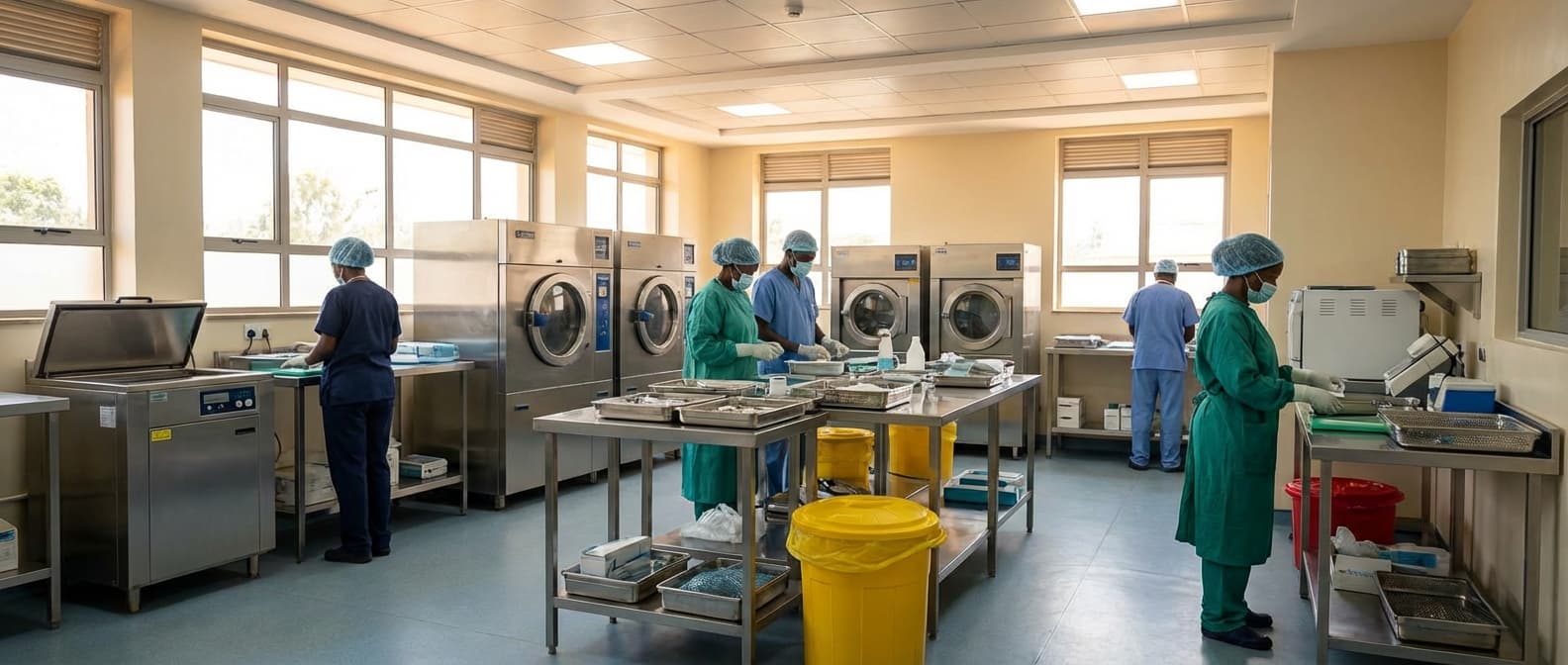
Infection-Control Readiness Support Service for Reusable Equipment in Comoros
Engineering Excellence & Technical Support
Infection-Control Readiness Support Service for Reusable Equipment High-standard technical execution following OEM protocols and local regulatory frameworks.
Advanced Sterilization Protocols
Implementation of globally recognized sterilization and disinfection protocols for reusable medical equipment, ensuring adherence to international standards and minimizing cross-contamination risks in Comorian healthcare facilities.
Capacity Building & Training Programs
Comprehensive training modules for healthcare staff in Comoros on the proper handling, cleaning, disinfection, and sterilization of reusable medical devices, fostering a skilled workforce and promoting a culture of safety.
Equipment Maintenance & Quality Assurance
Establishment of robust maintenance schedules and quality assurance checks for sterilization equipment, guaranteeing the reliability and effectiveness of infection control processes and prolonging the lifespan of essential medical tools.
What Is Infection-control Readiness Support Service For Reusable Equipment In Comoros?
Infection-Control Readiness Support Service for Reusable Equipment in Comoros refers to a comprehensive programmatic offering designed to enhance the capacity of healthcare facilities in Comoros to safely and effectively manage, process, and deploy reusable medical devices. This service is critical for mitigating the risk of healthcare-associated infections (HAIs) stemming from inadequately sterilized or disinfected equipment. It encompasses a multi-faceted approach that addresses the entire lifecycle of reusable medical equipment, from initial procurement and infrastructure assessment to ongoing operational support and quality assurance.
| Who Needs It? | Typical Use Cases | ||||||
|---|---|---|---|---|---|---|---|
| Public and Private Healthcare Facilities: Including hospitals, clinics, health centers, and specialized medical units across Comoros. | Introduction of New Reusable Medical Devices: Ensuring proper processing protocols are established for new instruments or equipment. | Facilities Experiencing High Rates of HAIs: Investigating and addressing potential sources of infection related to reusable equipment. | Healthcare Facilities Undergoing Renovation or Expansion: Assessing and upgrading sterilization and disinfection areas. | Training New Healthcare Personnel: Equipping staff with the knowledge and skills for safe reusable equipment management. | Facilities Lacking Dedicated Infection Control Personnel: Providing external expertise and support. | Response to Outbreaks: Intensifying surveillance and reinforcing best practices for reusable equipment during infectious disease outbreaks. | Regular Maintenance and Validation of Sterilization Equipment: Ensuring ongoing efficacy and safety. |
Key Components of the Service:
- Needs Assessment and Gap Analysis: Evaluating existing infrastructure, equipment inventory, staff training, and current sterilization/disinfection protocols against international best practices and national guidelines.
- Policy and Procedure Development/Refinement: Assisting in the creation or enhancement of standard operating procedures (SOPs) for cleaning, disinfection, sterilization, storage, and handling of reusable medical equipment.
- Infrastructure and Equipment Assessment/Recommendations: Advising on the suitability of existing spaces, utilities (water, electricity, ventilation), and recommending appropriate sterilization and disinfection equipment based on the facility's needs and resources.
- Staff Training and Capacity Building: Delivering targeted training modules on infection prevention and control principles, proper use of sterilization/disinfection equipment, safe handling of hazardous materials, and documentation.
- Quality Assurance and Monitoring: Establishing systems for regular monitoring of sterilization processes (e.g., biological and chemical indicators), equipment maintenance, and infection surveillance related to reusable devices.
- Supply Chain Management Support: Providing guidance on the procurement of appropriate cleaning agents, disinfectants, sterilization consumables, and spare parts.
- Technical Support and Troubleshooting: Offering ongoing technical assistance for the operation and maintenance of sterilization and disinfection equipment.
Who Needs Infection-control Readiness Support Service For Reusable Equipment In Comoros?
This document outlines the critical need for infection-control readiness support services specifically for reusable medical equipment in Comoros. The service aims to enhance the safety and efficacy of healthcare delivery by ensuring that reusable instruments and devices are properly cleaned, disinfected, and sterilized, thereby preventing the transmission of healthcare-associated infections (HAIs).
| Customer Type | Specific Departments/Units | Primary Need | Example Reusable Equipment |
|---|---|---|---|
| Hospitals (Public & Private) | Central Sterile Supply Department (CSSD/Sterilization Unit) | Training on proper sterilization techniques, validation of processes, equipment maintenance, development of SOPs. | Surgical instruments, endoscopes, anesthesia equipment, respiratory therapy devices. |
| Hospitals (Public & Private) | Operating Theatres (OTs) | Ensuring sterile fields, immediate reprocessing of instruments, immediate disinfection protocols. | Surgical packs, drapes, gowns, specialized surgical tools. |
| Hospitals (Public & Private) | Intensive Care Units (ICUs) / Critical Care Units | Sterilization and disinfection of patient-care equipment, staff training on safe handling. | Ventilators, nebulizers, suction devices, monitoring equipment probes. |
| Hospitals (Public & Private) | Emergency Departments (EDs) | Rapid and effective reprocessing of equipment used in high-turnover environments. | Wound care instruments, splints, diagnostic tools. |
| Hospitals (Public & Private) | Outpatient Clinics / Polyclinics | Basic disinfection and sterilization for common procedures, staff competency assessment. | Diagnostic instruments (e.g., otoscopes, ophthalmoscopes), minor surgical tools. |
| Health Centers / Dispensaries | General Healthcare Provision | Training on basic disinfection, safe storage, and essential sterilization methods for limited resources. | Syringes, needles (for reuse if applicable and safe), thermometers, basic wound care instruments. |
| Maternal and Child Health Centers | Gynecology / Obstetrics / Pediatrics | Specific protocols for gynecological instruments, infant care equipment, and safe delivery tools. | Speculums, forceps, infant feeding equipment, delivery kits. |
| Government Health Ministries / Agencies | Infection Prevention and Control (IPC) Unit | Development of national guidelines, regulatory oversight, capacity building for healthcare facilities, procurement support for sterilization equipment. | All types of reusable medical equipment. |
| NGOs & International Aid Organizations | Program Implementation / Healthcare Delivery Teams | Ensuring their supported facilities meet infection control standards, training their local staff, providing technical expertise. | All types of reusable medical equipment deployed in their projects. |
Target Customers and Departments
- Healthcare Facilities of All Sizes
- Government Health Ministries and Agencies
- Non-Governmental Organizations (NGOs) involved in healthcare
- International Aid Organizations
Infection-control Readiness Support Service For Reusable Equipment Process In Comoros
The Infection-Control Readiness Support Service for Reusable Equipment Process in Comoros aims to ensure that healthcare facilities are adequately prepared to safely reprocess reusable medical equipment, minimizing the risk of healthcare-associated infections. This service operates on a structured workflow, beginning with an initial inquiry and culminating in the execution of support activities, followed by an evaluation and reporting phase.
| Stage | Description | Key Activities | Responsible Parties |
|---|---|---|---|
| Initial contact from a healthcare facility or relevant health authority in Comoros expressing a need for support in reusable equipment reprocessing and infection control. | Facilitated initial consultation, site visit (if feasible), identification of current practices, assessment of existing infrastructure, equipment, and human resources, identification of knowledge gaps and challenges. | Healthcare Facility Representative, Ministry of Health Representatives, Support Service Coordinator |
| Development and submission of a tailored proposal outlining the scope of services, objectives, methodologies, timelines, and budget. | Proposal development based on needs assessment, presentation of proposal, negotiation of terms, formal agreement signing (Memorandum of Understanding or Service Contract). | Support Service Team, Healthcare Facility Management, Ministry of Health Representatives |
| Detailed planning and preparation for the on-site support activities. | Development of a detailed work plan, identification and mobilization of support personnel, procurement of necessary materials and consumables, logistical arrangements (travel, accommodation), pre-departure briefings. | Support Service Team, Logistics Coordinator |
| Direct provision of support and guidance to the healthcare facility for improving their reusable equipment reprocessing processes. | Assessment of current reprocessing workflows, hands-on demonstration and implementation of best practices, guidance on Standard Operating Procedures (SOPs), recommendations for equipment upgrades or maintenance, support with waste management related to reprocessing. | Support Service Team (Infection Control Specialists, Biomedical Engineers, Technicians), Healthcare Facility Staff |
| Empowering healthcare facility staff to independently manage and maintain safe reprocessing practices. | Conducting tailored training sessions for different cadres of staff (nurses, technicians, cleaners), practical demonstrations and skill-building exercises, development and dissemination of training materials (manuals, posters). | Support Service Trainers, Healthcare Facility Staff |
| Assessing the effectiveness of the implemented support and identifying areas for further improvement. | Periodic follow-up visits, collection of data on reprocessing indicators (e.g., adherence to protocols, equipment functionality), interviews with staff, review of incident reports related to reusable equipment. | Support Service Team, Healthcare Facility Quality Assurance Personnel |
| Documenting the support provided, outcomes, and providing actionable recommendations for sustained improvement. | Preparation of comprehensive reports detailing activities undertaken, findings, challenges encountered, and impact achieved, provision of a final report with recommendations for the facility and the Ministry of Health, development of a sustainability plan. | Support Service Team, Healthcare Facility Management, Ministry of Health Representatives |
Workflow Stages
- Inquiry & Needs Assessment
- Proposal & Agreement
- Preparation & Planning
- On-site Support & Implementation
- Training & Capacity Building
- Monitoring & Evaluation
- Reporting & Recommendations
Infection-control Readiness Support Service For Reusable Equipment Cost In Comoros
The cost of Infection-Control Readiness Support Services for reusable equipment in Comoros is influenced by a variety of factors, reflecting the unique economic and logistical landscape of the archipelago. These services are crucial for ensuring the safe reuse of medical devices, a practice often necessitated by resource constraints. Pricing is typically denominated in the Comorian Franc (KMF).
| Service Component | Estimated Cost Range (KMF) | Notes |
|---|---|---|
| Basic Infection Control Training (per group) | 50,000 - 150,000 | Covers fundamental principles for healthcare staff handling reusable equipment. |
| On-site Equipment Assessment & Inventory | 75,000 - 200,000 | Per facility visit, assessing the condition and type of reusable equipment. |
| Development of Reusable Equipment Protocols | 100,000 - 300,000 | Tailored standard operating procedures (SOPs) for cleaning, disinfection, and sterilization. |
| Sterilization Process Validation (per cycle/equipment type) | 80,000 - 250,000 | Includes testing and confirmation of effective sterilization methods (e.g., autoclaving). |
| Biomedical Engineering Consultation (per day) | 120,000 - 350,000 | For specialized assessment of sterilization equipment and technical support. |
| Comprehensive Readiness Audit (small facility) | 200,000 - 500,000 | Includes training, protocol review, and initial equipment check. |
| Comprehensive Readiness Audit (medium/large facility) | 400,000 - 1,000,000+ | More extensive assessment and validation, potentially including multiple departments. |
| Ongoing Monitoring & Support (monthly retainer) | 150,000 - 600,000 | For continuous quality improvement and compliance. |
| Logistics & Travel (per trip/island) | 30,000 - 150,000 | Variable depending on distance and transportation method. |
Key Pricing Factors for Infection-Control Readiness Support Services:
- Scope of Services: The breadth of support offered significantly impacts cost. This can range from basic training and guideline development to comprehensive on-site audits, equipment assessment, validation of sterilization processes, and ongoing monitoring.
- Equipment Volume and Type: A larger number of reusable equipment items or a greater diversity of complex devices requiring specialized sterilization methods (e.g., high-level disinfection vs. autoclaving) will increase service costs.
- Duration of Engagement: Whether the service is a one-time consultation, a short-term project, or an ongoing contractual arrangement will directly affect the total price. Longer-term contracts may offer economies of scale.
- Level of Expertise Required: Services requiring highly specialized technicians, infection control specialists, or biomedical engineers will command higher fees than those provided by general trainers.
- Geographic Location within Comoros: While Comoros is relatively small, access to remote islands or areas with less developed infrastructure might incur additional logistical costs for travel and accommodation of service providers.
- Provider Type: Costs can vary between local Comorian service providers, regional African consultants, and international organizations. International providers often have higher overheads but may bring specialized global best practices.
- Training Materials and Resources: The provision of comprehensive training manuals, visual aids, and potentially specialized testing equipment (e.g., biological indicators, chemical integrators) can add to the overall cost.
- Regulatory Compliance and Reporting: Services that include assisting with meeting national or international infection control standards and generating detailed reports for regulatory bodies will typically be more expensive.
- Language and Cultural Adaptation: Services that require significant adaptation of materials or communication to local languages and cultural contexts might have slightly adjusted pricing.
- Equipment Condition and Existing Protocols: If existing equipment is in poor condition or current infection control protocols are inadequate, more extensive remedial work will be required, increasing costs.
Affordable Infection-control Readiness Support Service For Reusable Equipment Options
Our Affordable Infection-Control Readiness Support Service for Reusable Equipment Options provides a comprehensive and cost-effective solution for healthcare facilities to ensure the highest standards of infection prevention. We understand that maintaining rigorous infection control protocols for reusable medical equipment can be a significant financial and operational challenge. Our service offers flexible value bundles and implements strategic cost-saving measures to make exceptional infection control accessible and sustainable.
| Cost-Saving Strategy | Description | Benefit to Facility |
|---|---|---|
| Optimized Cleaning & Sterilization Protocols | Our service helps refine and standardize your cleaning and sterilization processes based on manufacturer guidelines and current evidence-based practices. This reduces the risk of reprocessing errors. | Decreased reprocessing failures, leading to less equipment downtime and reduced replacement costs. Improved patient safety. |
| Preventative Maintenance Guidance | We provide guidance on optimal preventative maintenance schedules for reusable equipment, ensuring longevity and proper functioning. This proactive approach minimizes unexpected breakdowns. | Extended equipment lifespan, reducing the need for premature replacement. Lower repair and maintenance expenses. |
| Inventory Management & Standardization | Our expertise can assist in streamlining your inventory of reusable equipment, identifying opportunities for standardization, and eliminating redundant or underutilized items. | Reduced capital expenditure on unnecessary equipment. Improved storage efficiency and reduced waste. |
| Staff Training & Competency Assurance | Effective training ensures staff are proficient in proper handling, cleaning, and reprocessing procedures, minimizing the risk of human error. | Reduced incidents of infection transmission, leading to fewer patient safety events and potential litigation. Increased staff confidence and efficiency. |
| Leveraging Technology | Our subscription-based tracking software automates documentation, alerts for reprocessing deadlines, and provides data analytics for continuous improvement. | Significant reduction in manual labor for record-keeping. Enhanced audit readiness and compliance. Data-driven insights for operational efficiency. |
| Economies of Scale | By partnering with us, you benefit from our collective expertise and resources, which can be more cost-effective than building a comprehensive in-house infection control program from scratch. | Access to specialized knowledge and tools without the overhead of hiring a full-time, in-house infection control team focused solely on reusable equipment. |
Key Value Bundles
- {"title":"Basic Readiness Bundle","description":"Ideal for facilities with established internal protocols, this bundle focuses on essential training, audit tools, and access to our knowledge base. It empowers your team with the latest best practices and provides the framework for effective self-assessment."}
- {"title":"Standard Readiness Bundle","description":"This bundle includes everything in the Basic Readiness Bundle, plus a subscription to our cloud-based tracking software. This software simplifies documentation, provides real-time compliance monitoring, and streamlines the management of reusable equipment lifecycles."}
- {"title":"Premium Readiness Bundle","description":"Our most comprehensive offering, the Premium Bundle encompasses all features of the Standard Bundle, along with periodic on-site validation audits by our infection control specialists, customized training programs, and priority support for any critical infection control concerns."}
- {"title":"Customizable Solutions","description":"We recognize that every facility has unique needs. Our team can work with you to create a bespoke value bundle tailored to your specific equipment types, operational workflows, and budget constraints."}
Verified Providers In Comoros
In Comoros, ensuring access to reliable and credentialed healthcare providers is paramount for individual well-being and public health. Franance Health stands out as a beacon of trust, offering a meticulously curated network of healthcare professionals who meet stringent verification standards. This commitment to quality assurance means that when you choose a provider through Franance Health, you are selecting a practitioner who has undergone thorough vetting, demonstrating their expertise, qualifications, and ethical practice. Their rigorous credentialing process encompasses verification of medical licenses, educational background, professional experience, and adherence to best practices, providing patients with peace of mind and confidence in the care they receive. This dedication to transparency and excellence positions Franance Health as the premier choice for accessing verified healthcare in Comoros.
| Credentialing Aspect | Franance Health's Approach | Benefit to Patients |
|---|---|---|
| Medical Licensing | Verified and current medical licenses with relevant authorities. | Ensures providers are legally qualified to practice medicine. |
| Educational Background | Confirmation of degrees and certifications from accredited institutions. | Guarantees foundational medical knowledge and training. |
| Professional Experience | Thorough review of past practice history and areas of specialization. | Identifies experienced practitioners with relevant expertise. |
| Reputation and Ethics | Checks for disciplinary actions and maintains a focus on professional conduct. | Promotes trust and confidence in the provider's integrity. |
| Continuing Education | Encourages and, where applicable, verifies ongoing professional development. | Ensures providers stay updated with the latest medical advancements. |
Why Franance Health Represents the Best Choice for Verified Providers in Comoros:
- Rigorous Verification Process: Franance Health employs a multi-layered approach to verify the credentials of all healthcare providers.
- Ensured Quality of Care: By selecting verified providers, patients can be assured of receiving competent and ethical medical services.
- Increased Patient Confidence: The transparency and thoroughness of the credentialing process build trust and reduce patient anxiety.
- Access to Specialized Expertise: Franance Health's network often includes specialists who have met high standards of training and experience.
- Commitment to Ethical Standards: Providers are vetted not only for their medical skills but also for their adherence to professional ethics.
Scope Of Work For Infection-control Readiness Support Service For Reusable Equipment
This Scope of Work (SOW) outlines the services to be provided by the Contractor for Infection-Control Readiness Support for Reusable Equipment. The primary objective is to ensure the healthcare facility has robust processes and infrastructure in place to safely and effectively process reusable medical equipment, thereby preventing healthcare-associated infections (HAIs). This SOW details the required technical deliverables and the standard specifications for their successful completion.
| Deliverable ID | Deliverable Name | Description | Standard Specification/Acceptance Criteria | Format |
|---|---|---|---|---|
| D01 | Current State Assessment Report | Comprehensive evaluation of existing processes, equipment, facility layout, and staff competency related to reusable equipment reprocessing. | Report includes detailed findings, identified gaps, risk assessment, and preliminary recommendations. Must be reviewed and approved by Facility Infection Control Department. Minimum 10-day review period. Accuracy of data validated by on-site observation. | PDF Document |
| D02 | Revised Standard Operating Procedures (SOPs) | Development of clear, concise, and evidence-based SOPs for all stages of reusable equipment reprocessing, including pre-cleaning, cleaning, disinfection, sterilization, storage, and distribution. | SOPs must align with current national and international guidelines (e.g., CDC, AAMI, ISO). Must include step-by-step instructions, required personnel qualifications, equipment specifications, validation protocols, and emergency procedures. Must be reviewed and approved by Facility Infection Control Department and relevant clinical stakeholders. Minimum 15-day review period. Revisions based on feedback are mandatory. | Word Document (Editable), PDF Document |
| D03 | Quality Assurance & Monitoring Plan | A detailed plan outlining methods for routine monitoring and auditing of reprocessing processes, including process validation, biological monitoring, chemical indicators, and equipment performance testing. | Plan must specify frequency of monitoring, responsible personnel, data collection methods, reporting mechanisms, and corrective action protocols. Must include templates for all monitoring logs and reports. Approved by Facility Infection Control Department. Minimum 5-day review period. | Word Document (Editable), PDF Document |
| D04 | Staff Training Materials & Competency Assessment Tools | Development of comprehensive training modules and assessment tools for all staff involved in reusable equipment reprocessing. | Materials must cover all revised SOPs, infection control principles, equipment operation, and troubleshooting. Competency assessments must be designed to objectively evaluate understanding and practical application of skills. Includes pre- and post-training assessments. Training sessions to be documented with attendance records. Approved by Facility Infection Control Department and Human Resources. Minimum 7-day review period. | PowerPoint Presentations, Handouts (PDF), Assessment Forms (Word, PDF) |
| D05 | Equipment Recommendation Report | Analysis of existing reprocessing equipment and recommendations for upgrades, replacements, or new acquisitions to meet enhanced infection control standards. | Report must include justification for each recommendation based on cost-benefit analysis, efficiency gains, safety improvements, and compliance with regulatory standards. Includes detailed technical specifications for proposed equipment. Approved by Facility Biomedical Engineering and Procurement. Minimum 10-day review period. | PDF Document |
| D06 | Documentation & Record-Keeping System Design | Design of a standardized system for documenting all aspects of reusable equipment reprocessing, including logs, sterilization records, maintenance records, and incident reports. | System must be designed for ease of use, accessibility, and long-term data retention, compliant with relevant regulations. Includes proposed templates and workflow for data entry and retrieval. Approved by Facility IT and Infection Control Department. Minimum 7-day review period. | Word Document (Templates), PDF Document (System Design Overview) |
| D07 | Post-Implementation Review & Support Strategy | A report detailing the findings of a post-implementation review of the new processes and a strategy for ongoing support and continuous improvement. | Review includes evaluation of the effectiveness of implemented changes, identification of any remaining challenges, and recommendations for future optimization. Support strategy outlines mechanisms for ongoing consultation and issue resolution. Approved by Facility Infection Control Department. Minimum 5-day review period. | PDF Document |
Key Activities and Technical Deliverables
- Assessment of current reusable equipment reprocessing workflows and infrastructure.
- Development of enhanced Standard Operating Procedures (SOPs) for cleaning, disinfection, and sterilization.
- Implementation of a robust quality assurance and monitoring program.
- Training and competency assessment for staff involved in reprocessing.
- Recommendation and justification for necessary equipment upgrades or acquisitions.
- Establishment of a documentation and record-keeping system.
- Post-implementation review and ongoing support strategy.
Service Level Agreement For Infection-control Readiness Support Service For Reusable Equipment
This Service Level Agreement (SLA) outlines the response times and uptime guarantees for the Infection-Control Readiness Support Service for Reusable Equipment. This service ensures timely assistance and availability of critical resources related to the proper disinfection, sterilization, and handling of reusable medical equipment to prevent healthcare-associated infections (HAIs).
| Service Component | Response Time Guarantee (for Incidents) | Uptime Guarantee (for Core Service Functions) |
|---|---|---|
| Critical Incident Support (e.g., equipment malfunction directly impacting infection control protocols, urgent inquiries requiring immediate action) | Within 30 minutes (initial acknowledgement and commencement of troubleshooting/resolution activities) | 99.9% Monthly Uptime (for essential infection control monitoring and support systems) |
| High Priority Incident Support (e.g., inquiries requiring prompt attention but not immediately critical to patient care, requests for procedural clarification) | Within 2 hours (initial acknowledgement and commencement of troubleshooting/resolution activities) | 99.5% Monthly Uptime (for communication channels and knowledge base access) |
| Standard Support Request (e.g., non-urgent inquiries, requests for documentation, scheduled maintenance coordination) | Within 4 business hours (initial acknowledgement) | N/A (Service is expected to be available, but response times are prioritized for incidents) |
| System Availability (for the primary support portal and communication platforms) | N/A (Covered by uptime guarantee) | 99.9% Monthly Uptime (excluding scheduled maintenance) |
Key Service Components:
- 24/7 Availability of Support Personnel
- Proactive Monitoring of Equipment Status (where applicable)
- Rapid Response to Urgent Issues
- Regular Updates and Reporting on Service Performance
Frequently Asked Questions

Ready when you are
Let's scope your Infection-Control Readiness Support Service for Reusable Equipment in Comoros project in Comoros.

Scaling healthcare logistics and technical systems across the entire continent.