
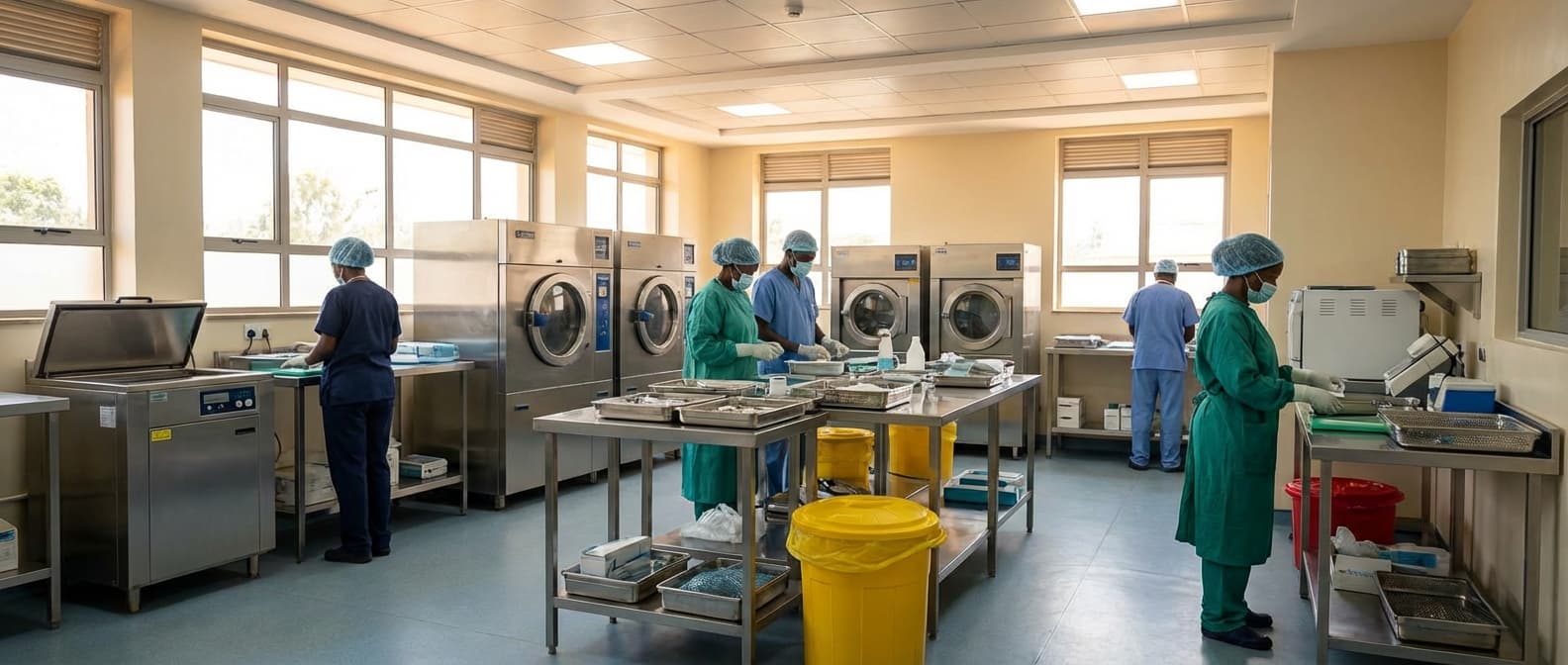
Endoscope Reprocessing Equipment Support Service in Comoros
Engineering Excellence & Technical Support
Endoscope Reprocessing Equipment Support Service High-standard technical execution following OEM protocols and local regulatory frameworks.
Rapid Response & Minimizing Downtime
Our specialized team in Comoros provides swift on-site technical support for your endoscope reprocessing equipment, ensuring minimal operational downtime and maximizing instrument availability for critical procedures.
Certified Technical Expertise & Compliance
Benefit from our Comorian-based certified technicians who possess in-depth knowledge of leading endoscope reprocessing systems, guaranteeing adherence to international safety and decontamination standards.
Proactive Maintenance & Longevity
We offer tailored preventive maintenance programs for your reprocessing equipment in Comoros, extending its lifespan, preventing costly breakdowns, and ensuring consistent, reliable performance.
What Is Endoscope Reprocessing Equipment Support Service In Comoros?
Endoscope reprocessing equipment support service in Comoros refers to the provision of maintenance, repair, calibration, validation, and technical assistance for automated and manual systems used in the cleaning, disinfection, and sterilization of flexible and rigid endoscopes. This service is critical for ensuring the safety and efficacy of endoscopic procedures by preventing the transmission of healthcare-associated infections (HAAs) through contaminated endoscopes. It encompasses a range of activities designed to maintain the operational integrity, performance, and regulatory compliance of endoscope reprocessing equipment within healthcare facilities in Comoros.
| Who Needs the Service | Typical Use Cases | ||||||||||
|---|---|---|---|---|---|---|---|---|---|---|---|
| Hospitals and Clinics: Healthcare facilities in Comoros performing diagnostic and therapeutic endoscopic procedures (e.g., gastroenterology, pulmonology, urology, gynecology, surgery). | Routine maintenance of automated endoscope reprocessors (AERs) to ensure consistent disinfection efficacy. | Repair of malfunctioning washer-disinfectors that fail to complete cycles or display error codes. | Calibration of drying and disinfection units to verify temperature, flow rate, and chemical concentration parameters. | Validation of new reprocessing equipment before clinical use to confirm compliance with safety and performance standards. | Troubleshooting of automated flushing and brushing systems that may be obstructed or ineffective. | On-demand support for urgent repairs to minimize downtime and maintain patient safety. | Periodic servicing of sterilizers (e.g., low-temperature plasma, ethylene oxide) if used for endoscopes. | Technical assistance for manual cleaning stations and allied equipment. | Endoscopy departments requiring uninterrupted workflow and adherence to infection control protocols. | Central sterile supply departments (CSSDs) responsible for the reprocessing of reusable medical devices, including endoscopes. | Healthcare providers undergoing audits or inspections requiring documented evidence of equipment maintenance and validation. |
Key Components of Endoscope Reprocessing Equipment Support Service
- Preventive Maintenance: Scheduled inspections, cleaning, lubrication, and component replacement to avert equipment failures and extend operational lifespan.
- Corrective Maintenance/Repair: Diagnosis and rectification of malfunctions, breakdown repairs, and replacement of worn or damaged parts.
- Calibration: Adjustment of equipment parameters to meet manufacturer specifications and regulatory standards, ensuring accurate and effective reprocessing cycles.
- Validation and Verification: Performance testing and documentation to confirm that cleaning, disinfection, and sterilization processes achieve the intended log reduction of microorganisms according to established guidelines (e.g., AAMI ST58, ISO 15883).
- Technical Consultation and Training: Expert advice on equipment selection, operation, troubleshooting, and training for healthcare personnel responsible for reprocessing.
- Parts and Consumables Supply: Provision of genuine spare parts, filters, detergents, disinfectants, and other consumables essential for equipment operation.
- Regulatory Compliance Assistance: Support in meeting local and international standards and guidelines pertaining to medical device reprocessing and infection control.
Who Needs Endoscope Reprocessing Equipment Support Service In Comoros?
Endoscope reprocessing equipment support services are crucial for ensuring the safety and efficiency of medical procedures involving endoscopes in the Comoros. These services are essential for healthcare facilities that utilize endoscopes for diagnostic and therapeutic purposes, as improper reprocessing can lead to the transmission of infections. The demand for such services stems from the need to maintain sterilized equipment, comply with healthcare regulations, and minimize downtime for critical medical devices. Without proper maintenance and repair, endoscopes can become a significant risk to patient health and a financial burden due to prolonged unavailability.
| Department | Specific Needs | Why Support is Crucial |
|---|---|---|
| Endoscopy Unit/Department | Maintenance, calibration, and repair of automated endoscope reprocessors (AERs), washer-disinfectors, leak testing equipment, and drying/storage cabinets. | Ensures effective sterilization of endoscopes, preventing hospital-acquired infections (HAIs) and maintaining procedural readiness. |
| Sterile Processing Department (SPD) | Technical support for reprocessing equipment used for flexible and rigid endoscopes, including enzymatic cleaners, disinfectants, and associated machinery. | Critical for maintaining the integrity and functionality of reprocessing workflows, ensuring all instruments are safe for patient use. |
| Operating Rooms (OR) | On-demand repair and maintenance for any reprocessing equipment directly supporting surgical endoscopes. | Minimizes delays in surgical procedures due to unavailable or malfunctioning endoscopic equipment, impacting patient outcomes. |
| Infection Prevention and Control (IPC) | Assistance with validation and quality control of reprocessing equipment to meet international standards. | Ensures compliance with infection control protocols and safeguards patient safety by verifying the effectiveness of sterilization processes. |
| Biomedical Engineering Department | Technical expertise for troubleshooting, repair, and planned preventative maintenance (PPM) of all endoscope reprocessing machinery. | Provides in-house capability for basic maintenance and acts as a liaison for external specialized support, optimizing equipment lifespan and performance. |
| Administration/Procurement | Guidance on equipment upgrades, service contracts, and cost-effective maintenance solutions. | Ensures financial sustainability of reprocessing operations through efficient resource management and reliable equipment functioning. |
Target Customers and Departments Requiring Endoscope Reprocessing Equipment Support Service in Comoros
- Hospitals (Public and Private)
- Specialty Clinics (e.g., Gastroenterology, Pulmonology, Urology)
- Diagnostic Centers
- Surgical Centers
- Government Health Agencies
- Healthcare Training Institutions (for practical demonstrations)
Endoscope Reprocessing Equipment Support Service Process In Comoros
This document outlines the comprehensive workflow for endoscope reprocessing equipment support services in Comoros, covering the entire process from initial customer inquiry to the successful execution and closure of a service request. The objective is to ensure efficient, transparent, and high-quality support for critical healthcare equipment, thereby maintaining patient safety and operational continuity in Comorian healthcare facilities.
| Stage | Key Activities | Responsible Party | Deliverables/Outcomes | Potential Challenges | Mitigation Strategies |
|---|---|---|---|---|---|
| Inquiry & Initial Assessment | Customer contacts support regarding equipment malfunction, performance issue, or scheduled maintenance. Support team gathers preliminary information on the equipment model, serial number, nature of the problem, and facility details. | Customer, Support Representative | Understanding of the issue, preliminary identification of equipment type. | Incomplete or unclear information from customer, difficulty in understanding technical issues. | Structured inquiry questions, use of remote diagnostic tools (if applicable), clear communication protocols. |
| Service Request Creation & Prioritization | A formal service request is created in the support system. The request is prioritized based on urgency (e.g., critical downtime, patient safety risk, scheduled maintenance). | Support Representative, Service Manager | Unique Service Request (SR) number, categorized and prioritized SR. | Overburdened support team, subjective prioritization criteria. | Defined Service Level Agreements (SLAs) for response and resolution times, clear prioritization matrix. |
| Parts & Resource Allocation | Based on the initial assessment and SR details, necessary spare parts, tools, and qualified technicians are identified and allocated. For Comoros, this may involve coordination with regional warehouses or international suppliers. | Logistics Coordinator, Service Manager, Technician | Allocated parts, scheduled technician, travel arrangements (if necessary). | Parts unavailability, shipping delays to Comoros, technician availability. | Maintaining an optimal inventory of common parts, establishing reliable shipping partners, cross-training technicians. |
| On-Site or Remote Diagnosis | Technician travels to the facility (if on-site) or utilizes remote diagnostic tools/video calls to further assess the equipment issue. This may involve troubleshooting, running diagnostic tests, and identifying the root cause. | Field Technician, Remote Support Engineer | Accurate diagnosis of the problem, list of required actions and parts (if not already identified). | Limited access to facilities, unreliable internet connectivity in Comoros, lack of specialized diagnostic equipment on-site. | Pre-service checklists, training technicians on remote support, providing basic diagnostic tools to facilities. |
| Service Execution | The allocated technician performs the necessary repairs, maintenance, or installation. This includes replacing faulty parts, calibrating the equipment, and ensuring it meets manufacturer specifications. | Field Technician | Repaired or maintained endoscope reprocessing equipment, functional equipment. | Unforeseen complications during repair, incorrect part identified, environmental factors at the facility. | Detailed service manuals, ongoing technician training, access to technical support from manufacturer. |
| Testing & Validation | After service execution, the equipment undergoes rigorous testing and validation procedures to ensure it is functioning correctly and safely. This includes performance checks, safety tests, and adherence to reprocessing standards. | Field Technician, Facility Biomedical Engineer | Successful test results, validated equipment performance, updated calibration records. | Inability to replicate issues, lack of standardized testing protocols. | Standardized testing checklists, independent validation where possible, clear acceptance criteria. |
| Documentation & Closure | All service activities, parts used, test results, and technician notes are documented in the service request. The SR is formally closed once the customer confirms satisfaction and all documentation is complete. | Field Technician, Service Representative | Completed service report, updated equipment maintenance history, closed SR. | Incomplete documentation, customer dissatisfaction, delays in sign-off. | Mandatory documentation fields in the service system, pre-defined customer sign-off procedure, prompt follow-up on pending approvals. |
| Follow-up & Feedback | A follow-up call or email is conducted to ensure the equipment is still functioning optimally and to gather customer feedback on the service provided. This feedback is used for continuous improvement. | Support Manager, Customer Service Representative | Customer satisfaction confirmed, feedback collected for service improvement, potential for repeat business. | Lack of response from customer, superficial feedback. | Proactive follow-up, structured feedback forms, incentivizing detailed feedback. |
Endoscope Reprocessing Equipment Support Service Workflow in Comoros
- Inquiry & Initial Assessment
- Service Request Creation & Prioritization
- Parts & Resource Allocation
- On-Site or Remote Diagnosis
- Service Execution
- Testing & Validation
- Documentation & Closure
- Follow-up & Feedback
Endoscope Reprocessing Equipment Support Service Cost In Comoros
The cost of endoscope reprocessing equipment support services in Comoros is influenced by several key factors, leading to a range of pricing. These services are crucial for maintaining the functionality, safety, and longevity of vital medical equipment used in diagnostic and surgical procedures. The specific type and complexity of the endoscope, the service provider's expertise, the urgency of the request, and the availability of spare parts all play a significant role in determining the final cost. For specialized or older models, the cost might be higher due to the need for rare parts or specialized technicians. Emergency call-outs or rapid repair services will also incur premium charges. The prevailing economic conditions and the general cost of doing business in Comoros also contribute to the overall pricing structure.
| Service Type | Estimated Price Range (Comorian Francs - KMF) | Notes |
|---|---|---|
| Routine Maintenance/Preventative Servicing (per endoscope) | 15,000 - 50,000 KMF | Includes cleaning, inspection, lubrication, and basic functional checks. |
| Minor Repairs (e.g., cable connection, minor lens issue) | 25,000 - 75,000 KMF | Excludes cost of parts. Depends on the complexity and time involved. |
| Major Repairs (e.g., image sensor replacement, significant internal damage) | 80,000 - 300,000+ KMF | Highly variable based on the extent of damage and the cost of specialized parts. May require sending equipment abroad for repair. |
| Emergency Call-Out Fee | 20,000 - 60,000 KMF | Additional to the repair cost, for immediate response outside regular hours or scheduled appointments. |
| On-site Technical Consultation/Assessment | 10,000 - 30,000 KMF | For initial diagnosis and recommendation of necessary services. |
| Software Updates/Troubleshooting | 15,000 - 40,000 KMF | For issues related to the endoscope's control system or image processing unit. |
| Training on Equipment Usage/Reprocessing Protocols | 30,000 - 100,000 KMF | Per session or per day, depending on the scope of training and number of participants. |
Key Pricing Factors for Endoscope Reprocessing Equipment Support Services in Comoros
- Type and Model of Endoscope: Different endoscopes (e.g., flexible, rigid, video) and their manufacturers have varying complexity, influencing repair and maintenance costs.
- Nature of the Service Required: Routine maintenance, preventative servicing, emergency repairs, and software updates will have distinct pricing.
- Availability of Spare Parts: The cost and lead time for acquiring genuine or compatible spare parts significantly impact service charges. Scarce parts often lead to higher prices.
- Service Provider's Expertise and Reputation: Established service providers with certified technicians and a proven track record may charge more for their specialized knowledge and guaranteed quality.
- Urgency of Service: Emergency or same-day services typically command a higher fee compared to scheduled appointments.
- Location within Comoros: Travel expenses for technicians to reach remote healthcare facilities can add to the overall cost.
- Warranty Status of Equipment: Services performed outside of warranty periods will be charged at standard rates.
- Volume of Services: Hospitals or clinics requiring regular, high-volume support might negotiate bulk discounts.
- Import Duties and Taxes: Any applicable duties or taxes on imported spare parts or specialized equipment used for servicing will be factored into the cost.
Affordable Endoscope Reprocessing Equipment Support Service Options
Ensuring proper reprocessing of endoscopes is critical for patient safety and compliance, but the equipment and associated services can represent a significant operational cost for healthcare facilities. This document outlines affordable support service options, focusing on value bundles and cost-saving strategies to help manage endoscope reprocessing equipment expenses.
| Service Type | Standard Pricing | Value Bundle Benefit | Cost-Saving Strategy | Potential Savings |
|---|---|---|---|---|
| Preventive Maintenance (Annual Contract) | $X per unit/year | Includes scheduled PMs, priority service, discounted parts. | Negotiate multi-year contracts, consider regional service providers. | 10-20% on PMs, reduced downtime. |
| Corrective Maintenance (Per Incident) | $Y per hour + parts | Response time guarantees (e.g., within 24/48 hours), discounted labor rates. | Evaluate service contracts vs. pay-per-incident based on usage patterns. | 20-30% on labor, minimized downtime costs. |
| Parts and Consumables | Varies based on usage/OEM pricing | Bulk purchasing discounts, preferred pricing for contract holders. | Explore reputable third-party suppliers for non-critical parts, manage inventory effectively. | 15-25% on parts and consumables. |
| Comprehensive Service Contract (Bundle) | Customized quote (often a % of equipment cost) | Covers PM, corrective maintenance, parts (sometimes), priority support, training refreshers. | Assess total cost of ownership vs. separate services, negotiate contract inclusions. | 25-40% compared to piecemeal services. |
| Training & Calibration | Separate fees or included in contracts | On-site training sessions, bundled calibration services. | Leverage online training modules, schedule calibration during planned PMs. | 15-20% on training and calibration. |
Understanding Endoscope Reprocessing Support Services
- {"title":"Preventive Maintenance (PM)","description":"Regularly scheduled maintenance to identify and address potential issues before they lead to breakdowns, extending equipment lifespan and minimizing costly emergency repairs."}
- {"title":"Corrective Maintenance/Repair Services","description":"On-demand service calls to diagnose and fix equipment malfunctions. Response time and technician availability are key factors in cost and downtime."}
- {"title":"Calibration and Performance Verification","description":"Ensuring the equipment operates within specified parameters to guarantee effective cleaning and disinfection. This is often a regulatory requirement."}
- {"title":"Parts and Consumables","description":"The cost of replacement parts, filters, seals, and approved cleaning/disinfection agents. Bulk purchasing and OEM vs. third-party options can impact cost."}
- {"title":"Training and Education","description":"Ensuring staff are adequately trained on equipment operation, troubleshooting, and reprocessing protocols. This reduces user error and equipment damage."}
- {"title":"Software Updates and Upgrades","description":"Maintaining the latest software for optimal performance, security, and compliance. Costs can vary depending on the vendor and frequency of updates."}
Verified Providers In Comoros
Navigating healthcare options in a foreign country can be challenging. For those seeking reliable and high-quality medical services in Comoros, identifying verified providers is paramount. Franance Health stands out as a leading credentialing body, ensuring that healthcare professionals and facilities meet rigorous international standards. This commitment to quality verification makes Franance Health-credentialed providers the optimal choice for anyone requiring medical care in Comoros.
| Key Benefits of Choosing Franance Health Verified Providers | Description |
|---|---|
| Quality Assurance | Guaranteed adherence to international standards of medical practice and patient care. |
| Professional Integrity | Verification of medical licenses, certifications, and ethical standing. |
| Facility Standards | Ensures that medical facilities are equipped, safe, and meet hygiene requirements. |
| Continuity of Care | Facilitates seamless transitions and coordination of care, especially for complex medical needs. |
| Transparency | Provides clear and verifiable information about provider qualifications and services. |
| Risk Mitigation | Reduces the risk of encountering substandard medical services or unqualified practitioners. |
Why Franance Health Credentials Matter in Comoros
- International Recognition: Franance Health aligns with globally accepted healthcare benchmarks, providing an assurance of quality that transcends local regulations.
- Rigorous Vetting Process: Providers undergo a comprehensive evaluation of their qualifications, experience, ethical conduct, and facility standards.
- Patient Safety Focus: The credentialing process prioritizes patient safety through strict adherence to protocols and best practices.
- Enhanced Trust and Confidence: Knowing a provider is Franance Health-credentialed offers peace of mind and builds essential trust for patients, especially expatriates and tourists.
- Access to Specialized Care: Franance Health credentialing often signifies access to a wider range of specialized medical services and advanced treatments.
- Facilitated Medical Tourism: For those considering Comoros for medical tourism, Franance Health credentials simplify the process of finding reputable and capable healthcare providers.
Scope Of Work For Endoscope Reprocessing Equipment Support Service
This Scope of Work (SOW) outlines the requirements for providing comprehensive support services for endoscope reprocessing equipment. The objective is to ensure the optimal performance, reliability, and longevity of all installed endoscope reprocessing systems, thereby maintaining the highest standards of patient safety and infection control. The services include routine maintenance, unscheduled repairs, technical support, and the supply of necessary parts and consumables.
| Technical Deliverable | Description | Standard Specification / Acceptance Criteria | Frequency / Timing |
|---|---|---|---|
| Preventive Maintenance (PM) | Scheduled inspections, cleaning, lubrication, calibration, and testing of all endoscope reprocessing equipment to prevent failures and ensure optimal performance. | PM checklist adherence (as per manufacturer's guidelines and regulatory requirements). All safety features to be tested and verified. Calibration to be performed using traceable standards. Detailed PM reports including findings, actions taken, and recommendations. | Quarterly for all major reprocessing units (e.g., automated endoscope reprocessors - AERs, washer-disinfectors), Annually for ancillary equipment (e.g., leak testers, drying cabinets). |
| Unscheduled Repair Services | On-demand troubleshooting, diagnosis, and repair of endoscope reprocessing equipment that has malfunctioned or broken down. | Response time: On-site within 24 business hours of notification for critical equipment failures. Resolution within 48 business hours of on-site arrival, where parts are readily available. Use of OEM or equivalent certified parts. Post-repair testing and validation of full functionality and safety. | As needed, based on equipment failure notifications. |
| Technical Support & Consultation | Provision of expert advice and guidance on equipment operation, troubleshooting, best practices in reprocessing, and regulatory compliance. | Availability of technical support via phone/email during standard business hours (e.g., 8 AM - 5 PM local time). On-site consultations as required. Clear and concise communication of technical information and recommendations. | Ongoing throughout the contract period. |
| Spare Parts Management | Procurement, stocking, and supply of all necessary OEM or equivalent certified spare parts for endoscope reprocessing equipment. | Parts to meet or exceed manufacturer specifications. Inventory management system to ensure availability of critical spares. Provision of part numbers, specifications, and lead times. Reporting on parts usage and inventory levels. | Ongoing, based on PM and repair needs, with an agreed-upon minimum stock level for critical components. |
| Consumables Supply | Supply of approved cleaning agents, disinfectants, and other consumables specifically recommended for the endoscope reprocessing equipment. | Consumables to be compatible with equipment and meet regulatory approval for use in healthcare settings. Certificates of Analysis (CoA) or equivalency documentation provided upon request. Consistent supply chain to avoid stock-outs. | Ongoing, based on usage and client forecasts. |
| Documentation & Reporting | Provision of detailed service reports, maintenance logs, calibration certificates, and training materials. | All reports to be clear, accurate, and include dates, technician name, equipment ID, work performed, parts used, and test results. Reports to be submitted within 5 business days of service completion. Maintenance logs to be kept up-to-date for each piece of equipment. | Following each PM and repair service, and as otherwise specified. |
| Performance Monitoring | Regular review of equipment performance data and service history to identify trends and areas for improvement. | Periodic (e.g., quarterly) review meetings to discuss equipment performance, service trends, and future recommendations. Data analysis to identify recurring issues or potential proactive interventions. | Quarterly, or as agreed upon. |
| Training & Knowledge Transfer | On-site training for facility biomedical technicians and reprocessing staff on equipment operation, basic troubleshooting, and routine maintenance tasks. | Training to be tailored to the specific equipment and user skill levels. Competency assessment included. Training materials provided. Documentation of training sessions and attendee lists. | Initial training upon contract commencement and refresher training annually or as needed. |
Key Objectives
- Ensure consistent and reliable operation of all endoscope reprocessing equipment.
- Minimize equipment downtime through proactive maintenance and swift response to issues.
- Maintain compliance with all relevant regulatory standards and manufacturer guidelines for endoscope reprocessing.
- Optimize equipment performance to enhance efficiency and effectiveness of reprocessing workflows.
- Provide expert technical assistance and training to facility personnel.
- Manage and replenish necessary spare parts and consumables.
Service Level Agreement For Endoscope Reprocessing Equipment Support Service
This Service Level Agreement (SLA) outlines the guaranteed response times and uptime for the support services provided for endoscope reprocessing equipment. This agreement is designed to ensure the optimal performance and availability of critical reprocessing machinery, minimizing downtime and supporting patient safety.
| Incident Severity Level | Description | Response Time Guarantee | Resolution Time Target | Uptime Guarantee |
|---|---|---|---|---|
| Critical (Severity 1) | Complete equipment failure impacting reprocessing capabilities for all units. Significant risk to patient safety. | 1 Hour (from confirmed report) | 4 Business Hours (target, aim for resolution) | 98.0% (monthly average for critical equipment) |
| High (Severity 2) | Partial equipment malfunction affecting a significant portion of the reprocessing workflow. Potential delay in patient care. | 2 Business Hours (from confirmed report) | 8 Business Hours (target, aim for resolution) | 99.0% (monthly average) |
| Medium (Severity 3) | Minor equipment issue impacting a single function or efficiency, but not overall reprocessing capability. No immediate impact on patient care. | 4 Business Hours (from confirmed report) | 2 Business Days (target, aim for resolution) | 99.5% (monthly average) |
| Low (Severity 4) | Non-critical issue, cosmetic defect, or user guidance request. No impact on equipment functionality. | 1 Business Day (from confirmed report) | 3 Business Days (target, aim for resolution) | N/A (not applicable to uptime) |
Key Service Components and Guarantees
- Scope of Service: This SLA covers all scheduled and unscheduled maintenance, troubleshooting, repair, and technical support for [Specify Endoscope Reprocessing Equipment Manufacturer/Model - e.g., Steris, Getinge, Olympus reprocessing units].
- Service Hours: Support services will be available during standard business hours (Monday - Friday, 8:00 AM - 5:00 PM local time) and as specified in the premium support tier for 24/7 coverage.
- Incident Severity Levels: Incidents will be categorized to prioritize response and resolution.
- Reporting and Escalation: A clear process for reporting incidents and escalating issues to ensure timely resolution.
Frequently Asked Questions

Ready when you are
Let's scope your Endoscope Reprocessing Equipment Support Service in Comoros project in Comoros.

Scaling healthcare logistics and technical systems across the entire continent.