
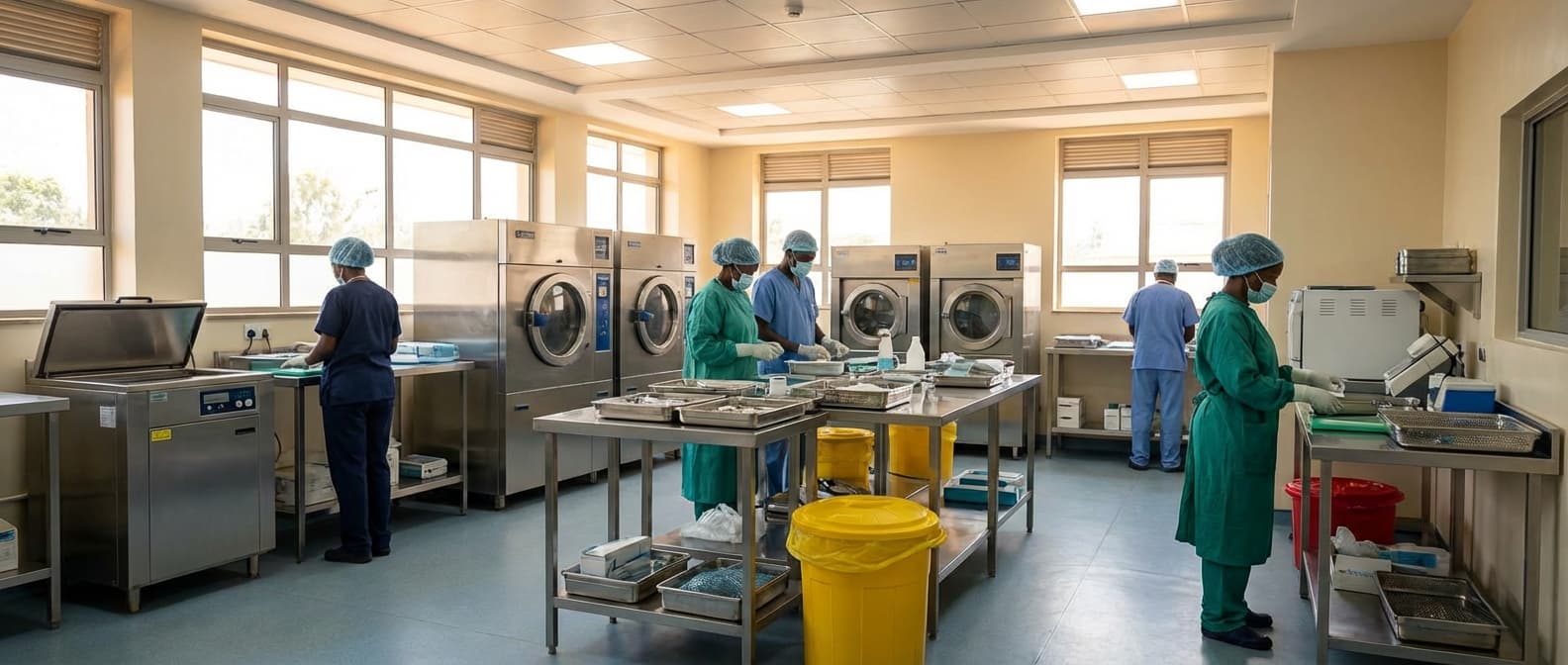
Autoclave Validation Support Service in Comoros
Engineering Excellence & Technical Support
Autoclave Validation Support Service High-standard technical execution following OEM protocols and local regulatory frameworks.
Robust Sterilization Efficacy Testing
Our service ensures your autoclaves consistently achieve validated sterilization levels, preventing bioburden and ensuring patient safety through meticulous biological indicator and chemical indicator testing performed according to international standards in Comoros.
Comprehensive Performance Qualification (PQ)
We provide in-depth Performance Qualification for all your autoclaves, including load mapping and cycle parameter verification. This guarantees repeatable, reliable sterilization cycles tailored to the specific needs and environmental conditions of healthcare facilities in Comoros.
Streamlined Regulatory Compliance Documentation
Navigate Comorian healthcare regulations with confidence. Our service delivers meticulously prepared validation reports and documentation, ensuring full compliance and audit readiness for your sterilization equipment.
What Is Autoclave Validation Support Service In Comoros?
Autoclave Validation Support Service in Comoros refers to the provision of specialized expertise and procedures to ensure that steam sterilization equipment (autoclaves) within healthcare facilities, research laboratories, and manufacturing industries consistently achieve and maintain effective microbial inactivation. This service is critical for guaranteeing the sterility of medical devices, laboratory consumables, and pharmaceutical products, thereby preventing healthcare-associated infections (HAIs) and ensuring product safety and efficacy.
| Entity/Sector | Need for Service | Typical Use Cases |
|---|---|---|
| Hospitals and Clinics | Essential for patient safety, preventing HAIs, and compliance with national health regulations. Crucial for sterilizing surgical instruments, dental equipment, and other reusable medical devices. | Sterilization of surgical packs, endoscopic equipment, biopsy instruments, dental burs, and other reusable critical and semi-critical medical devices. |
| Diagnostic and Research Laboratories | Ensures the sterility of laboratory equipment and consumables to prevent contamination of samples and experimental results. Compliance with biosafety and biosecurity standards. | Sterilization of glassware, pipettes, culture media components, and other laboratory consumables; sterilization of equipment used in microbiology and molecular biology. |
| Pharmaceutical and Medical Device Manufacturers | Mandatory for ensuring product sterility, meeting Good Manufacturing Practices (GMP), and obtaining market authorization. Critical for the safety and efficacy of sterile drugs and devices. | Sterilization of sterile drug products (injectables, ophthalmic solutions), sterile medical devices (syringes, catheters, implants), and packaging materials. |
| Veterinary Practices | Similar to human healthcare, ensuring the sterility of surgical instruments and equipment used in animal care. | Sterilization of surgical instruments for spaying, neutering, and other veterinary procedures. |
Service Components
- Installation Qualification (IQ): Verifying that the autoclave is installed correctly according to manufacturer specifications and relevant regulatory standards.
- Operational Qualification (OQ): Documenting that the autoclave operates within its defined parameters and specifications throughout its intended operating range. This includes testing temperature, pressure, and cycle times.
- Performance Qualification (PQ): Demonstrating, with a high degree of assurance, that the validated sterilization cycle consistently kills a challenging microbial load (using biological indicators or equivalent methods) under the normal operating conditions of the facility. This involves multiple test runs under worst-case scenarios.
- Validation Protocol Development: Creating comprehensive, written plans outlining the methodologies, acceptance criteria, and documentation requirements for the validation process.
- Validation Execution: Conducting the IQ, OQ, and PQ tests in accordance with the approved protocol.
- Documentation and Reporting: Generating detailed validation reports that include raw data, analysis, and conclusions, meeting regulatory expectations.
- Revalidation Support: Assisting facilities in planning and executing revalidation activities following equipment maintenance, modifications, or at predetermined intervals.
- Calibration and Maintenance Verification: Ensuring that critical parameters monitored by the autoclave are accurately calibrated and that preventative maintenance schedules are being adhered to.
- Regulatory Compliance Guidance: Providing expertise on relevant international and local standards (e.g., ISO 13485, FDA guidelines, WHO recommendations) applicable to sterilization validation.
Who Needs Autoclave Validation Support Service In Comoros?
Autoclave validation is a critical process for ensuring that sterilization equipment, such as autoclaves, effectively eliminates microorganisms. This validation is essential for maintaining patient safety and regulatory compliance. While the need for such services is universal in healthcare settings, the specific demand for Autoclave Validation Support Services in Comoros is particularly relevant to institutions where reliable sterilization is paramount. These services offer expertise in setting up, performing, and documenting validation processes, ensuring autoclaves operate within specified parameters and meet industry standards. This is crucial for preventing infections and maintaining the integrity of medical procedures.
| Customer Type | Specific Departments/Areas of Need | Key Concerns Addressed by Validation Support |
|---|---|---|
| Hospitals (Public & Private) | Operating Theatres, Intensive Care Units (ICUs), Emergency Departments, CSSD, Dental Departments, Maternity Wards | Patient safety, prevention of hospital-acquired infections (HAIs), regulatory compliance, equipment reliability, staff confidence in sterilization efficacy. |
| Clinics and Health Centers | Minor Procedure Rooms, Sterilization Areas, Dental Units (if present) | Ensuring safe practices for outpatient procedures, cost-effectiveness through proper equipment maintenance and validation, meeting basic health standards. |
| Dental Practices | Sterilization areas for dental instruments | Preventing cross-contamination, patient safety during dental procedures, compliance with dental hygiene regulations, protecting reputation. |
| Laboratories (Medical & Research) | Sterilization of media, glassware, and equipment for experiments and diagnostics | Ensuring sterility for accurate test results, preventing contamination of samples, maintaining research integrity, safety of laboratory personnel. |
| Surgical Centers | All areas involved in surgical procedures, CSSD | High level of assurance for sterile surgical instruments, preventing surgical site infections (SSIs), meeting stringent accreditation requirements. |
| Maternity Wards | Sterilization of instruments used for childbirth and post-natal care | Protecting newborns and mothers from infections, ensuring safe delivery practices, compliance with maternal health standards. |
| Sterilization Units/CSSD | All aspects of instrument reprocessing and sterilization | Core function of the department, ensuring consistent and effective sterilization, optimizing workflow, managing validation records for audits. |
| Veterinary Clinics and Hospitals | Surgical suites, sterilization areas for veterinary instruments | Ensuring animal patient safety, preventing infection transmission, maintaining animal welfare standards, compliance with veterinary regulations. |
Target Customers and Departments in Comoros Requiring Autoclave Validation Support Service
- Hospitals (Public and Private)
- Clinics and Health Centers
- Dental Practices
- Laboratories (Medical and Research)
- Surgical Centers
- Maternity Wards
- Sterilization Units/Central Sterile Supply Departments (CSSD)
- Veterinary Clinics and Hospitals
Autoclave Validation Support Service Process In Comoros
This document outlines the standard workflow for Autoclave Validation Support Services in Comoros, from initial client inquiry to the final execution of validation activities. The process is designed to ensure regulatory compliance and optimal performance of autoclaves used in healthcare and laboratory settings.
| Stage | Description | Key Activities | Deliverables | Responsible Party |
|---|---|---|---|---|
| Initial contact from a client seeking autoclave validation services. Understanding the client's specific needs, autoclave type, and regulatory requirements. | Client contacts service provider, discusses requirements, provides autoclave details (make, model, capacity, intended use), identifies relevant standards (e.g., ISO 17665, local regulations). | Understanding of client's validation scope and requirements. | Client, Service Provider |
| Development and submission of a detailed proposal outlining the scope of work, methodology, timeline, and cost. | Service provider designs validation protocol, estimates resources, prepares a formal proposal and quotation, client reviews and requests clarification if needed. | Formal Proposal & Quotation. | Service Provider, Client |
| Formalization of the service agreement and scheduling of the validation activities. | Client accepts the proposal, formal agreement/contract is signed, mutually agreed dates for on-site execution are confirmed, necessary site access and personnel are arranged. | Signed Service Agreement, Confirmed Schedule. | Client, Service Provider |
| Ensuring the autoclave is in optimal working condition and all necessary documentation is available before on-site execution. | Client ensures autoclave is calibrated, functional, and records are maintained; service provider prepares validation equipment and documentation (e.g., SOPs, calibration certificates for equipment). | Ready Autoclave, Available Documentation, Prepared Validation Equipment. | Client, Service Provider |
| Conducting the physical validation tests on the autoclave according to the agreed protocol. | Installation Qualification (IQ), Operational Qualification (OQ), and Performance Qualification (PQ) tests are performed. This includes temperature mapping, biological indicator challenges, and cycle verification. Data is collected using calibrated equipment. | Raw Validation Data, Test Logs, Photographic Evidence (if applicable). | Service Provider |
| Analyzing the collected data, interpreting the results, and generating a comprehensive validation report. | Service provider analyzes test results against acceptance criteria, compiles a detailed validation report including methodology, results, conclusions, and recommendations. Report is submitted to the client for review. | Comprehensive Validation Report. | Service Provider, Client |
| Addressing any queries regarding the report and offering ongoing support. | Client reviews report and may have questions; service provider provides clarification, assists with any minor corrective actions if required, and discusses recommendations for revalidation frequency or preventative maintenance. | Clarified Report, Recommendations for Future Validation. | Service Provider, Client |
Autoclave Validation Support Service Process
- Inquiry & Needs Assessment
- Proposal & Quotation
- Agreement & Scheduling
- Pre-Validation Preparation
- On-Site Validation Execution
- Data Analysis & Reporting
- Post-Validation Support
Autoclave Validation Support Service Cost In Comoros
Providing autoclave validation support services in Comoros involves a range of factors that influence pricing. These factors are crucial for healthcare facilities, laboratories, and any organization relying on steam sterilization to ensure the efficacy and safety of their processes. The cost is not a fixed figure but rather a variable influenced by the scope of work, the complexity of the sterilization equipment, and the level of service required. Local currency pricing in Comoros (Comorian Franc - KMF) will reflect these underlying cost drivers.
| Service Type | Estimated Range (KMF) | Notes |
|---|---|---|
| Basic Autoclave Validation (e.g., single cycle, limited scope) | 250,000 - 500,000 | Covers essential OQ/PQ for a standard cycle. |
| Standard Autoclave Validation (e.g., multiple cycles, full IQ/OQ/PQ) | 500,000 - 1,500,000 | Comprehensive validation for typical laboratory or small hospital autoclaves. |
| Complex/Industrial Autoclave Validation (e.g., large capacity, multiple chambers, specialized cycles) | 1,500,000 - 4,000,000+ | Involves more intensive testing, specialized equipment, and potentially multiple days of work. |
| Annual Re-validation | 300,000 - 1,000,000 | Typically less comprehensive than initial validation but still requires rigorous testing. |
| IQ Only | 100,000 - 300,000 | Focuses solely on installation verification. |
| OQ Only | 150,000 - 400,000 | Focuses on verifying operational parameters. |
| PQ Only | 200,000 - 600,000 | Focuses on demonstrating consistent sterilization performance. |
Key Pricing Factors for Autoclave Validation Support in Comoros
- Scope of Validation: This is the primary driver of cost. A full validation typically includes Installation Qualification (IQ), Operational Qualification (OQ), and Performance Qualification (PQ). IQ verifies the equipment was installed correctly, OQ tests its operational parameters, and PQ confirms it consistently sterilizes effectively under real-world conditions. A partial validation, focusing on specific aspects, will be less expensive.
- Number and Type of Autoclaves: The more autoclaves to be validated, and the more complex their technology (e.g., different sizes, makes, models, or specific cycle types), the higher the overall cost. Specialized or larger industrial autoclaves may require more intricate validation procedures and thus incur higher fees.
- Complexity of Sterilization Cycles: Autoclaves offering a wide variety of cycles (e.g., for different load types like textiles, instruments, porous materials) will require more extensive testing during PQ to ensure each cycle's efficacy. Each cycle validated adds to the service cost.
- Documentation Requirements: The level of detail and customization required for the validation reports can impact the price. Some clients may need highly specific documentation tailored to regulatory bodies or internal quality management systems, which demands more time and expertise from the service provider.
- Service Provider's Expertise and Reputation: Highly experienced and reputable validation service providers, particularly those with specialized knowledge of international standards and Comorian regulatory nuances, may command higher fees due to their proven track record and reliability.
- Geographical Location and Travel: While Comoros is a relatively small island nation, travel costs to remote areas or specific islands within the archipelago can add to the overall service expense.
- Urgency of Service: If a client requires expedited validation services, providers may charge a premium for prioritizing the work and rearranging schedules.
- Inclusion of Calibration: Often, validation services are bundled with or require prior calibration of the autoclave's critical parameters (temperature, pressure, time). The cost of calibration, if performed by the validation provider, will be an additional factor.
- Re-validation vs. Initial Validation: Re-validation, typically conducted at regular intervals (e.g., annually or bi-annually), might be slightly less costly than an initial full validation due to pre-existing documentation and familiarity with the equipment, though it still requires thorough testing.
- Consumables and Testing Materials: The validation process may involve the use of specific biological and chemical indicators. The cost of these consumables, especially if high-quality or specialized, contributes to the overall price.
- Regulatory Landscape: Awareness and adherence to specific Comorian health regulations or international standards (like ISO, HTM) that may be adopted will influence the methodology and therefore the cost.
Affordable Autoclave Validation Support Service Options
Finding cost-effective solutions for autoclave validation is crucial for many organizations. This service aims to provide essential validation support without breaking the bank, offering flexible options to meet diverse budgetary needs. We understand that while compliance is non-negotiable, the expense associated with it can be a significant concern. Our approach focuses on delivering high-quality validation services through smart planning, efficient execution, and transparent pricing. By offering value-driven bundles and implementing strategic cost-saving measures, we ensure you receive the necessary validation documentation and assurance at a price that makes sense.
| Bundle Name | Included Services | Target Audience | Estimated Cost Savings (vs. A la carte) | Ideal For |
|---|---|---|---|---|
| Basic Compliance Bundle | Initial Installation Qualification (IQ), Operational Qualification (OQ) - Standard Cycle Validation (3 cycles). | Small clinics, research labs with single sterilizers, organizations with established validation protocols. | 10-15% | Organizations needing fundamental validation for new or existing equipment, with a focus on core compliance. |
| Standard Operational Bundle | IQ, OQ, Performance Qualification (PQ) - Standard Cycle Validation (5 cycles), annual preventive maintenance check report documentation. | Medium-sized dental practices, veterinary clinics, small manufacturing facilities. | 15-20% | Businesses requiring routine validation and documentation for ongoing operational compliance and quality assurance. |
| Comprehensive Assurance Bundle | IQ, OQ, PQ - Extended Cycle Validation (7 cycles with varied loads), re-validation services for specific challenging materials, audit trail review, and comprehensive report generation. | Hospitals, large dental groups, pharmaceutical labs, medical device manufacturers. | 20-25%+ | Organizations with complex validation needs, stringent regulatory requirements, or a high volume of critical sterilization processes. |
| Customizable Options | Tailored to specific equipment, validation needs, and budget constraints. Can include specific cycle types, extended PQ runs, or specialized testing. | All organization sizes and types facing unique validation challenges. | Variable | When standard bundles don't perfectly align with your specific requirements or budget. |
Understanding Our Affordable Autoclave Validation Support
- Why Affordable Validation Matters: Maintaining compliance with regulatory standards for autoclaves is vital for patient safety, product integrity, and operational efficiency. However, the cost of specialized validation services can be a barrier for smaller institutions or those with tight budgets. Our service addresses this by making essential validation accessible.
- Our Commitment to Value: We are dedicated to providing excellent validation expertise and reliable documentation without unnecessary markups. Our pricing is structured to be competitive, offering transparent breakdowns and no hidden fees. We aim to be your trusted partner in compliance, not just a service provider.
- Key Cost-Saving Strategies Employed:
- Value Bundles Explained: To enhance affordability and streamline the validation process, we offer tiered value bundles. These packages combine essential validation services at a discounted rate compared to purchasing them individually. This allows you to select the level of support that best suits your current needs and budget, while ensuring comprehensive compliance.
Verified Providers In Comoros
Finding trustworthy healthcare providers is paramount, especially when navigating a different healthcare system. In Comoros, Franance Health stands out as a beacon of reliability and excellence. Their rigorous credentialing process ensures that all affiliated healthcare professionals meet the highest international standards for medical competence, ethical conduct, and patient safety. This meticulous verification means that when you choose a Franance Health provider, you are selecting a doctor, specialist, or facility that has been thoroughly vetted, guaranteeing a superior level of care.
| Credentialing Aspect | Franance Health's Standard | Benefit to Patients |
|---|---|---|
| Educational Background | Verified authenticity and completeness of medical degrees and diplomas from accredited institutions. | Ensures a strong foundational knowledge of medical science. |
| Board Certifications | Confirms specialized training and successful completion of rigorous examinations in specific medical fields. | Guarantees expertise in particular areas of medicine. |
| Clinical Experience | Thorough review of past practice history, including scope of practice and patient outcomes. | Indicates practical competence and a track record of successful treatment. |
| Professional References | Contact and verification of recommendations from respected medical peers and institutions. | Provides external validation of skill, ethics, and reliability. |
| Licensure and Regulatory Compliance | Confirms current and valid medical licenses in relevant jurisdictions and adherence to all regulatory requirements. | Ensures legal and ethical practice within the healthcare system. |
| Ongoing Professional Development | Requirement for continuous learning and participation in accredited continuing medical education (CME) programs. | Keeps providers up-to-date with the latest medical innovations and techniques. |
Why Franance Health Credentials Matter:
- Rigorous Verification: Franance Health employs a multi-stage credentialing process that goes beyond basic licensing. This includes verification of educational background, board certifications, clinical experience, and professional references.
- Commitment to Quality: They prioritize providers who demonstrate a consistent commitment to ongoing professional development, staying abreast of the latest medical advancements and best practices.
- Patient Safety Focus: Patient safety is at the core of Franance Health's vetting. They assess providers for adherence to safety protocols and a strong ethical framework.
- International Standards: Franance Health aligns its credentialing standards with internationally recognized benchmarks, providing a level of assurance that resonates globally.
- Peace of Mind: Knowing your healthcare provider is a Franance Health verified professional offers invaluable peace of mind, allowing you to focus on your health and recovery.
Scope Of Work For Autoclave Validation Support Service
This Scope of Work (SOW) outlines the services to be provided by [Service Provider Name] (hereinafter referred to as "the Service Provider") for Autoclave Validation Support to [Client Name] (hereinafter referred to as "the Client"). The Service Provider will perform all necessary activities to ensure the autoclave units located at [Client Facility Address] are validated in accordance with industry best practices and regulatory requirements.
| Phase | Activity Description | Technical Deliverables | Standard Specifications / References |
|---|---|---|---|
| Phase 1: Planning & Protocol Development | Review of existing autoclave documentation (manuals, SOPs, maintenance records). Site survey and assessment of autoclave(s) and their environment. Development of a detailed Autoclave Validation Protocol (AVP) covering all validation phases (IQ, OQ, PQ). Definition of critical process parameters (CPPs) and critical quality attributes (CQAs) relevant to the sterilization cycle. Selection of appropriate biological and chemical indicators. | Autoclave Validation Protocol (AVP). List of critical process parameters (CPPs) and critical quality attributes (CQAs). List of approved consumables (indicators, data loggers, etc.). Site assessment report. | ASTM E1300 (Standard Practice for Transfer Standards in Sterilization Validation). ISO 11135 (Sterilization of health care products - Ethylene oxide). ISO 17665 (Sterilization of health care products - Moist heat). FDA Guidance for Industry on Sterility Assurance. Client's internal SOPs and quality standards. Manufacturer's recommendations and specifications for the autoclave model. |
| Phase 2: Installation Qualification (IQ) | Verification of proper installation of the autoclave(s) and associated utilities (power, water, steam, ventilation). Confirmation of equipment specifications against purchase orders and manufacturer's data. Verification of calibration status for all critical instruments (temperature probes, pressure sensors). Documentation of all installed components and their serial numbers. | Installation Qualification (IQ) Report. Calibration certificates for all instruments. Manufacturer's documentation review checklist. As-built drawings (if applicable). | Manufacturer's installation manual. Relevant industry standards for electrical, plumbing, and mechanical installations. Calibration standards traceable to national/international metrology institutes. |
| Phase 3: Operational Qualification (OQ) | Testing of autoclave(s) functions and controls under various operating conditions. Verification of alarm functions and interlocks. Performance testing to demonstrate that the autoclave(s) can achieve and maintain specified parameters (temperature, pressure, time, humidity) throughout the cycle. Leak testing of the chamber and door seals. | Operational Qualification (OQ) Report. Functional test records. Alarm and interlock test results. Cycle parameter verification data. Leak test report. | Autoclave manufacturer's operational manual. Parameters defined in the AVP. Standard testing procedures for mechanical systems. |
| Phase 4: Performance Qualification (PQ) | Execution of multiple sterilization cycles using representative loads and challenging conditions (e.g., highest and lowest recommended loads, most difficult-to-sterilize items). Placement of biological and chemical indicators at strategic locations within the chamber to assess sterilization efficacy. Collection and analysis of temperature, pressure, and time data. Post-sterilization evaluation of biological indicators (growth or no growth) and chemical indicators (color change). | Performance Qualification (PQ) Report. Sterilization cycle logs and data printouts. Biological indicator test results. Chemical indicator test results. Load mapping study report (if required). Summary of all validation runs. | ISO 11135, ISO 17665, or applicable sterilization standards. Biological indicator manufacturer's instructions for use and incubation. Chemical indicator manufacturer's specifications. Defined challenging load configurations. Client's product/process risk assessment. |
| Phase 5: Documentation & Final Report | Compilation of all data, reports, and supporting documents from IQ, OQ, and PQ. Analysis of results against predefined acceptance criteria. Preparation of a comprehensive Autoclave Validation Summary Report detailing the validation status. Identification of any deviations, investigations, and corrective actions taken. Provision of recommendations for revalidation or routine monitoring. | Autoclave Validation Summary Report. All IQ, OQ, and PQ reports and raw data. Deviation reports and CAPA documentation (if applicable). Revalidation plan (if required). | Good Documentation Practices (GDP). Client's Quality Management System (QMS) requirements. Regulatory requirements (e.g., FDA 21 CFR Part 11, EMA Annex 1). |
Key Objectives
- To verify and document that the autoclave(s) consistently meet predefined performance specifications.
- To ensure the autoclave(s) are suitable for their intended use (e.g., sterilization of medical devices, laboratory media, etc.).
- To provide comprehensive documentation supporting the validation status of the autoclave(s) for regulatory compliance.
- To minimize risk of product/process failure due to inadequate sterilization.
Service Level Agreement For Autoclave Validation Support Service
This Service Level Agreement (SLA) outlines the performance standards for the Autoclave Validation Support Service provided by [Your Company Name]. It defines the agreed-upon response times for support requests and the guaranteed uptime for the service.
| Service Tier | Response Time Guarantee | Uptime Guarantee |
|---|---|---|
Key Service Metrics
- This SLA applies to all active customers of the Autoclave Validation Support Service.
- Support requests are defined as issues or inquiries related to the installation, configuration, troubleshooting, or operational guidance of the autoclave validation process and associated software/hardware.
- Response times are measured from the time a support ticket is successfully logged by [Your Company Name]'s support system.
Frequently Asked Questions

Ready when you are
Let's scope your Autoclave Validation Support Service in Comoros project in Comoros.

Scaling healthcare logistics and technical systems across the entire continent.