
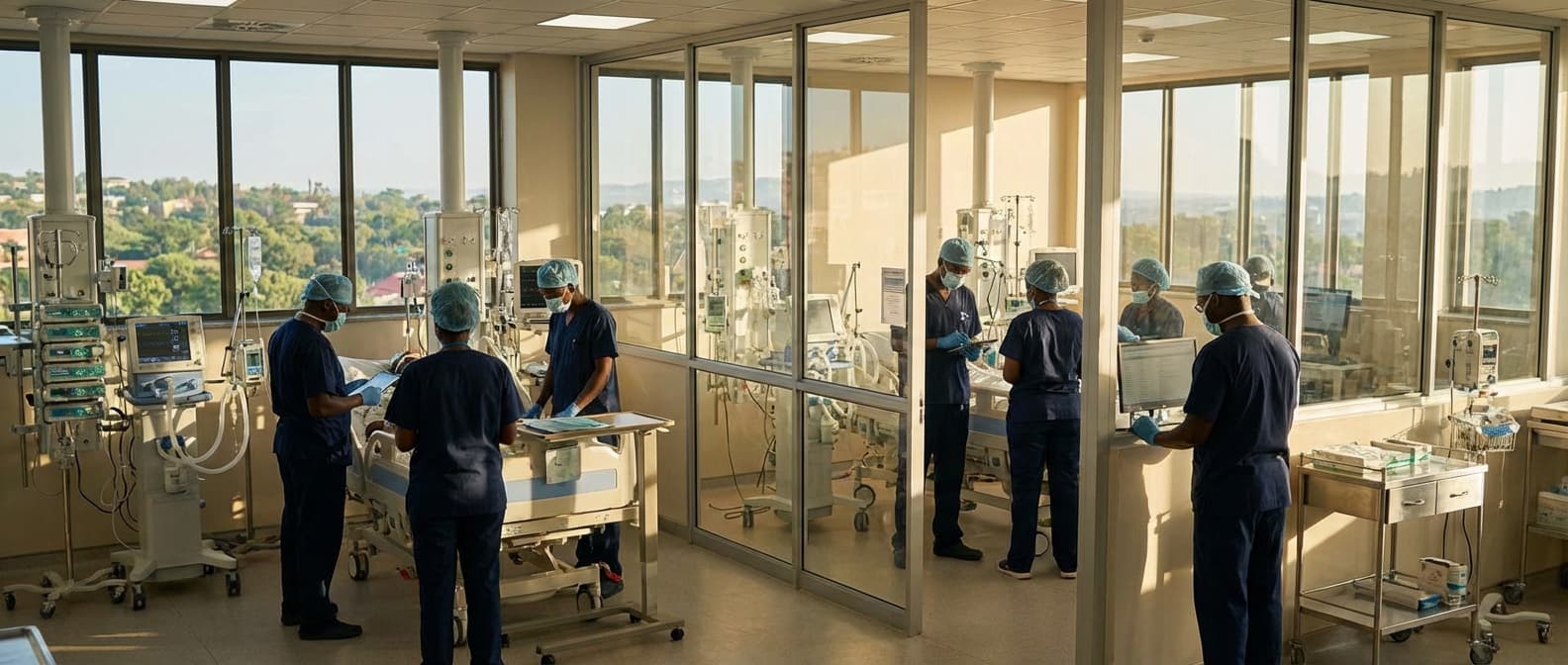
Ventilator Fleet Management & PM in Comoros
Engineering Excellence & Technical Support
Preventive maintenance and fleet management for ICU ventilators High-standard technical execution following OEM protocols and local regulatory frameworks.
Proactive Ventilator PM Schedule
Implements a dynamic preventive maintenance schedule for the Comoros ventilator fleet, optimizing uptime and reducing emergency repairs through predictive analytics and condition-based monitoring.
Remote Fleet Monitoring & Diagnostics
Leverages remote monitoring technology to provide real-time performance data and diagnostic alerts for all ventilators across Comoros, enabling swift intervention and efficient resource allocation.
Optimized Spare Parts Inventory
Establishes a centralized and optimized spare parts inventory system for ventilator maintenance in Comoros, ensuring immediate availability of critical components and minimizing logistical delays.
What Is Ventilator Fleet Management & Pm In Comoros?
Ventilator Fleet Management & Preventive Maintenance (PM) in Comoros refers to the comprehensive operational and maintenance strategy for a collection of mechanical ventilators utilized within healthcare facilities. This service encompasses the entire lifecycle of ventilator assets, from acquisition and deployment to ongoing operational support and scheduled maintenance, with the objective of ensuring optimal functionality, reliability, and availability of these critical respiratory support devices. The scope includes inventory tracking, calibration, performance verification, component lifecycle management, and timely execution of manufacturer-recommended preventive maintenance schedules to mitigate failure risks and extend equipment lifespan. Furthermore, it addresses software updates, sterilization protocols, and emergency repair readiness.
| Stakeholder/Entity | Requirement/Need | Typical Use Case Examples |
|---|---|---|
| Ministry of Health (Comoros) | Ensuring adequate and reliable respiratory support capacity across the national healthcare system. | Planning for national ventilator stockpiles, setting maintenance standards, and allocating resources for fleet management programs. |
| Public Hospitals and Clinics (e.g., CHU El-Maarouf) | Maintaining the operational readiness of ventilators for patient care and complying with clinical safety standards. | Implementing daily checks, scheduling routine PM, and responding to equipment malfunctions during patient treatment. |
| Private Healthcare Providers | Guaranteeing the availability of functional ventilators to meet the needs of their patient population. | Contracting with third-party service providers for PM and repair, or establishing in-house maintenance capabilities. |
| Biomedical Engineering Departments/Technicians | Performing diagnostic testing, calibration, repair, and preventive maintenance on ventilator equipment. | Conducting scheduled PM based on service manuals, troubleshooting error codes, and replacing faulty components. |
| Clinical Staff (e.g., Respiratory Therapists, Nurses) | Utilizing ventilators safely and effectively, and identifying and reporting equipment issues promptly. | Performing pre-use checks, monitoring patient ventilation parameters, and initiating service requests when anomalies are detected. |
| International Aid Organizations/NGOs | Supporting the healthcare infrastructure by providing ventilators and ensuring their long-term functionality. | Funding and coordinating PM programs for donated ventilator fleets, or providing technical training to local staff. |
Key Components of Ventilator Fleet Management & PM in Comoros
- Asset Registration and Tracking: Establishing a centralized database for all ventilators, including serial numbers, model information, acquisition dates, and current location.
- Deployment and Commissioning: Ensuring proper installation, initial setup, and functional testing of new ventilators before clinical use.
- Routine Performance Verification (RPV): Regularly scheduled checks to confirm that ventilators meet specified performance standards and are operating within acceptable parameters.
- Preventive Maintenance (PM) Scheduling and Execution: Implementing a proactive maintenance program based on manufacturer recommendations and usage patterns to prevent failures.
- Calibration and Certification: Periodic calibration of sensors and flowmeters to maintain accuracy and compliance with regulatory requirements.
- Software and Firmware Updates: Managing and deploying necessary software upgrades to enhance functionality and address security vulnerabilities.
- Sterilization and Disinfection Protocols: Ensuring adherence to established procedures for cleaning and sterilizing ventilator components to prevent cross-contamination.
- Spare Parts Inventory Management: Maintaining an adequate stock of critical spare parts to facilitate timely repairs and minimize downtime.
- Technical Training and Competency Assessment: Providing ongoing training for biomedical technicians and clinical staff on the operation and maintenance of ventilators.
- End-of-Life Planning and Replacement Strategy: Developing plans for the eventual decommissioning and replacement of aging or obsolete ventilator units.
- Service Record Documentation: Maintaining detailed records of all maintenance activities, repairs, and performance tests for traceability and audit purposes.
- Emergency Preparedness and Response: Establishing protocols and ensuring readiness for rapid deployment and repair of ventilators during critical events or surges in demand.
Who Needs Ventilator Fleet Management & Pm In Comoros?
Comoros, while a small island nation, faces unique healthcare challenges. Maintaining a functional and reliable fleet of ventilators is crucial, especially in light of potential public health crises, seasonal respiratory illnesses, and the need to provide critical care for patients across its islands. Effective ventilator fleet management and preventive maintenance (PM) are not luxuries but necessities for ensuring patient safety, optimizing resource allocation, and building a resilient healthcare system. This service is essential for any entity responsible for the procurement, deployment, and maintenance of these life-saving medical devices.
| Target Customer/Department | Key Responsibilities Related to Ventilators | Need for Fleet Management & PM | Impact of Inadequate Management |
|---|---|---|---|
| Ministry of Health | National healthcare policy, budget allocation for medical equipment, national health security. | Ensuring a standardized, well-maintained, and readily available ventilator fleet across the nation. Strategic planning for future needs and upgrades. | Inconsistent availability of critical life-saving equipment, inequitable access to care, potential for widespread respiratory illness impact, difficulty in national emergency response. |
| Public Hospitals and Clinics (e.g., Moroni, Mutsamudu) | Procurement, deployment, daily operation, and basic maintenance of ventilators for patient care. | Ensuring ventilators are always operational, calibrated, and meet safety standards. Tracking equipment location, usage, and maintenance history. | Equipment failure during critical procedures, increased patient mortality, high repair costs due to deferred maintenance, inefficient use of resources, difficulty in compliance with national standards. |
| Biomedical Engineering Departments/Technicians | Preventive maintenance, calibration, repairs, technical training, inventory management. | Proactive scheduling of PM to prevent breakdowns. Ensuring all repairs are done correctly and promptly. Maintaining accurate service records. | Frequent equipment downtime, increased emergency repair costs, reduced equipment lifespan, patient safety risks due to faulty equipment, inability to verify equipment performance. |
| Medical Equipment Procurement and Logistics | Acquisition of new ventilators, managing inventory, storage, and distribution. | Understanding the total number of ventilators, their condition, and their lifespan to inform procurement decisions. Ensuring proper storage and handling to prevent damage. | Over- or under-stocking of ventilators, purchasing equipment that is already obsolete or difficult to maintain, poor condition of stored equipment, delays in deployment during emergencies. |
Target Customers and Departments in Comoros:
- Ministry of Health: The primary governmental body responsible for the overall healthcare infrastructure, policy, and resource allocation.
- Public Hospitals and Clinics: Central hospitals, regional hospitals, and potentially larger clinics that house and operate ventilators for patient care.
- Emergency Medical Services (EMS) / Ambulance Services: Organizations that may utilize transport ventilators or require operational ventilators for emergency response.
- Private Healthcare Providers (if any): Any private hospitals or clinics that operate intensive care units or provide critical respiratory support.
- Medical Equipment Procurement and Logistics Departments: The administrative arms responsible for acquiring, storing, and distributing medical equipment, including ventilators.
- Biomedical Engineering Departments/Technicians: The specialized personnel tasked with the installation, maintenance, repair, and testing of medical equipment.
- Infection Prevention and Control Departments: While not directly managing the fleet, they rely on properly functioning and cleaned ventilators to prevent healthcare-associated infections.
Ventilator Fleet Management & Pm Process In Comoros
This document outlines the workflow for ventilator fleet management and preventative maintenance (PM) processes in Comoros, from initial inquiry to the successful execution of maintenance activities. The aim is to ensure the optimal functioning and longevity of the ventilator fleet, thereby improving patient care and resource utilization.
| Stage | Description | Key Activities | Responsible Party |
|---|---|---|---|
| Inquiry & Initial Assessment | Identification of a need for ventilator service. | Clinical report, fleet audit, routine PM trigger. | Clinical Staff, Biomedical Engineering, Fleet Manager |
| Request Triage & Prioritization | Assessing urgency and resource availability. | Reviewing request details, assigning priority. | Biomedical Engineering Supervisor, Fleet Manager |
| Work Order Creation | Formal documentation of the service request. | Capturing equipment details, issue, priority, PM schedule. | Biomedical Engineering Administrator |
| Resource Allocation | Assigning personnel, parts, and tools. | Technician assignment, parts requisition, tool check-out. | Biomedical Engineering Supervisor |
| Scheduling & Notification | Planning the service and informing stakeholders. | Setting date/time, communicating with clinical department. | Biomedical Engineering Coordinator |
| On-Site Execution | Performing PM or repair on the ventilator. | Pre-checks, maintenance tasks, repair, documentation. | Biomedical Technician/Engineer |
| Testing & Calibration | Ensuring equipment operates within specifications. | Functional tests, performance checks, calibration. | Biomedical Technician/Engineer |
| Quality Assurance & Verification | Reviewing the completed work. | Inspection of work, review of test results. | Senior Biomedical Technician/Supervisor |
| Work Order Closure | Finalizing the service record. | Updating status, signing off on work order. | Biomedical Technician/Engineer |
| Fleet Data Update | Recording service history in the system. | Inputting maintenance details, equipment status. | Biomedical Engineering Administrator |
| Follow-up & Feedback | Ensuring satisfaction and gathering input. | Post-service check-in, collecting feedback. | Biomedical Engineering Supervisor |
Ventilator Fleet Management & PM Process Workflow
- Inquiry & Initial Assessment: The process begins with a request or identification of a need for ventilator maintenance, either scheduled PM or an unscheduled repair. This could originate from clinical staff, biomedical engineering, or a routine fleet assessment.
- Request Triage & Prioritization: Upon receiving an inquiry, it is triaged by the responsible team (e.g., Biomedical Engineering Department). Factors like urgency (e.g., critical patient impact, equipment failure), type of service required (PM vs. repair), and available resources are considered to prioritize the request.
- Work Order Creation: A formal work order is generated for each approved request. This document captures essential details such as equipment ID, location, reported issue/service type, requesting party, and priority level. For PM, this includes the scheduled date and specific tasks.
- Resource Allocation: Based on the work order, necessary resources are identified and allocated. This includes:
- Personnel: Assigning qualified biomedical technicians or engineers.
- Parts & Consumables: Identifying and sourcing any required spare parts, filters, batteries, or consumables.
- Tools & Equipment: Ensuring specialized diagnostic tools and calibration equipment are available.
- Time: Estimating the time required for the service.
- Scheduling & Notification: The work order is scheduled, and all relevant stakeholders are notified. This includes the clinical department where the ventilator is located to inform them of the planned downtime and the technician assigned to the task.
- On-Site Execution (PM or Repair): The assigned technician proceeds to the ventilator's location to perform the scheduled PM or repair. This involves:
- Pre-checks: Verifying equipment identification and initial visual inspection.
- PM Tasks: Executing a predefined checklist of cleaning, calibration, functional testing, and part replacement as per manufacturer guidelines and established PM protocols.
- Repair Tasks: Diagnosing the fault, replacing faulty components, and performing necessary adjustments and testing.
- Documentation: Meticulously recording all activities performed, parts used, measurements taken, and any observations in the work order.
- Testing & Calibration: After maintenance, rigorous testing and calibration are performed to ensure the ventilator is functioning within manufacturer specifications and safety standards. This may involve using specialized testing equipment.
- Quality Assurance & Verification: A senior technician or supervisor may review the completed work and test results to ensure quality and accuracy. This step is crucial for critical medical equipment.
- Work Order Closure: Once the service is successfully completed, tested, and verified, the work order is formally closed. This signifies that the equipment is returned to service. The closure includes final documentation of the outcome and any recommendations.
- Fleet Data Update: The fleet management system is updated with the details of the completed maintenance, including date, technician, service performed, parts used, and status of the equipment. This historical data is vital for future planning, trend analysis, and compliance.
- Follow-up & Feedback: In some cases, a follow-up may be conducted with the clinical team to ensure satisfaction and address any residual concerns. Feedback on the process and equipment performance is valuable for continuous improvement.
Ventilator Fleet Management & Pm Cost In Comoros
Managing a ventilator fleet in Comoros involves several pricing factors that influence the overall cost. These factors range from the initial acquisition or leasing costs to ongoing maintenance, spare parts, and specialized labor. Given the island nation's economic context and import dependencies, these costs can be higher than in larger, more developed markets. The specific currency used in Comoros is the Comorian Franc (KMF). Estimating exact pricing ranges is challenging without specific vendor quotes, but we can outline the key cost drivers and provide indicative ranges based on general market knowledge and the Comorian economic situation.
| Item Category | Indicative Pricing Range (KMF) | Notes/Considerations |
|---|---|---|
| New ICU Ventilator (Purchase) | 50,000,000 - 150,000,000+ | Highly dependent on brand, model, and features. Significant import costs. |
| Refurbished ICU Ventilator (Purchase) | 20,000,000 - 70,000,000 | Lower upfront cost, but potential for higher maintenance. |
| Ventilator Leasing (Annual, per unit) | 5,000,000 - 15,000,000+ | Includes maintenance and support may vary. Terms are crucial. |
| Annual Preventive Maintenance Contract (per unit) | 1,000,000 - 3,000,000 | Depends on scope, frequency, and included services. May include parts or be labor-only. |
| Common Spare Parts (e.g., filters, tubing sets) | 10,000 - 100,000+ | Cost per item. Bulk purchasing and import duties influence price. |
| Major Spare Parts (e.g., circuit boards, sensors) | 500,000 - 5,000,000+ | Can be very expensive, especially for specialized components. |
| Biomedical Technician Labor (Hourly/Daily Rate) | 25,000 - 100,000+ | Highly dependent on local availability and expertise. Includes travel/accommodation if external. |
| Training (per technician/staff member) | 500,000 - 2,000,000+ | Covers initial training and ongoing certification/refreshers. |
Key Pricing Factors for Ventilator Fleet Management & PM in Comoros:
- Ventilator Acquisition/Leasing Cost:
- New vs. Refurbished: New, state-of-the-art ventilators will have the highest upfront cost. Refurbished or reconditioned units can offer significant savings but may have a shorter lifespan or higher maintenance needs.
- Type of Ventilator: ICU ventilators are significantly more expensive than transport or portable units due to their advanced features and capabilities.
- Brand and Model: Reputable international brands often command higher prices, but availability and service support within Comoros are crucial considerations.
- Leasing vs. Purchase: Leasing can reduce upfront capital expenditure but incurs ongoing operational costs. The terms of the lease (duration, included services) are critical.
- Preventive Maintenance (PM) Contracts:
- Scope of Service: Comprehensive PM contracts covering regular inspections, calibration, cleaning, and minor part replacements will be more expensive than basic service agreements.
- Frequency of PM: The recommended frequency of PM depends on the ventilator model, usage, and environmental conditions. More frequent servicing increases costs.
- Included Services: Contracts that include emergency call-outs, loaner units, or extended warranties will have higher price tags.
- Spare Parts:
- Availability and Import Costs: Importing spare parts to Comoros can incur significant shipping, customs duties, and handling fees, driving up their price. Local availability significantly reduces these costs.
- Type of Parts: Consumables (filters, tubes) are generally cheaper than major components (circuit boards, sensors).
- Labor Costs:
- Technician Expertise: Specialized biomedical technicians trained on specific ventilator models are required. The availability of such trained personnel in Comoros is a key factor. If external technicians are required, travel and accommodation costs will be added.
- Hourly Rates: Local labor rates for skilled technicians, compared to international rates, will impact the overall cost.
- Training and Certification:
- Initial and Refresher Training: Training for medical staff on operating and basic troubleshooting, and for technicians on maintenance, is essential and adds to the cost.
- Certification Fees: Maintaining certifications for equipment and personnel may involve recurring fees.
- Ancillary Equipment and Consumables:
- Humidifiers, Circuits, Filters, Batteries: The cost of these recurring items needs to be factored into the overall fleet management budget.
- Logistics and Transportation:
- Moving Ventilators: For transport ventilators or for moving units for repair, logistics costs within the islands can be a factor.
- Currency Fluctuations and Import Duties:
- KMF Stability: While the Comorian Franc is pegged to the Euro, any fluctuations can impact the cost of imported goods. Import duties and taxes levied by the Comorian government are a significant consideration.
Affordable Ventilator Fleet Management & Pm Options
Managing a ventilator fleet effectively is crucial for healthcare institutions, impacting patient care, operational efficiency, and financial health. This document outlines affordable fleet management and preventative maintenance (PM) options, focusing on value bundles and cost-saving strategies to optimize resource utilization and extend equipment lifespan.
| Cost-Saving Strategy | Description | Potential Benefits |
|---|---|---|
| Bundled PM & Repair Contracts | Negotiate comprehensive service agreements with manufacturers or authorized third-party providers that cover routine PM and a defined scope of repairs. Often, these are offered at a discounted rate compared to à la carte services. | Predictable annual costs, reduced risk of unexpected repair bills, extended equipment lifespan, minimized downtime. |
| Extended Warranty Options | Inquire about purchasing extended warranties beyond the standard manufacturer warranty. While an upfront cost, it can protect against major repair expenses for a specified period. | Long-term cost predictability, protection against unforeseen equipment failures, deferred capital expenditure. |
| Utilizing Refurbished Parts/Units | When available and appropriate, consider using certified refurbished parts or even entire refurbished ventilators for non-critical applications or as spares. Ensure they come with a warranty. | Significant cost reduction compared to new parts/units, faster turnaround times for repairs, environmentally friendly option. |
| In-House Biomedical Engineering Support | Investing in a skilled in-house biomedical engineering team capable of performing routine PM and basic repairs can lead to substantial long-term savings compared to relying solely on external services. | Reduced service call fees, faster response times, greater control over maintenance schedules, deeper understanding of fleet needs. |
| Loaner Unit Programs | Negotiate for access to loaner ventilators from your service provider during major repairs. This prevents disruptions to patient care and avoids the need to maintain a larger excess inventory. | Ensures continuous patient care during repairs, reduces the need for a larger internal spare fleet, maintains operational readiness. |
| Preventative Maintenance Optimization | Leverage data analytics to tailor PM schedules based on actual equipment usage and failure patterns rather than generic recommendations. Focus on critical components most prone to wear. | Reduces unnecessary PM procedures, focuses resources on high-impact tasks, further extends equipment life, lowers PM labor costs. |
| Staff Training & Competency Programs | Invest in comprehensive training for clinical staff on proper ventilator use and for biomedical staff on advanced troubleshooting and repair. This reduces errors and the need for costly service interventions. | Fewer user-induced errors and equipment malfunctions, improved diagnostic capabilities for in-house staff, enhanced patient safety. |
Key Components of Affordable Ventilator Fleet Management & PM Options
- Understanding Value Bundles: Value bundles combine essential services and support into a comprehensive package, offering predictable costs and streamlined operations. These bundles can include PM, repair services, training, and sometimes even replacement parts or loaner units.
- Proactive Preventative Maintenance (PM): Regular, scheduled PM is the cornerstone of cost-effective fleet management. It identifies and addresses potential issues before they lead to costly breakdowns and unscheduled downtime, extending the life of the ventilators.
- Strategic Repair & Refurbishment: Implementing a strategy for timely and effective repairs, including the option for refurbished parts or units, can significantly reduce replacement costs.
- Training & Competency: Ensuring clinical and biomedical staff are adequately trained on ventilator operation, maintenance, and troubleshooting minimizes user errors and optimizes PM effectiveness.
- Data-Driven Decision Making: Utilizing fleet management software to track equipment usage, PM schedules, repair history, and performance metrics allows for informed decisions regarding upgrades, replacements, and service contracts.
- Partnership with Manufacturers/Third-Party Providers: Exploring flexible service agreements and partnerships can unlock cost efficiencies and access to specialized expertise.
- Inventory Management: Optimizing the number of ventilators in the fleet and managing critical spare parts inventory reduces carrying costs and ensures availability when needed.
Verified Providers In Comoros
Finding verified healthcare providers in Comoros can be a challenge, but when it comes to reliable and high-quality care, Franance Health stands out. Their rigorous credentialing process ensures that all affiliated medical professionals meet the highest standards of expertise, ethics, and patient safety. This commitment to verification means patients can have confidence in the skills and qualifications of the doctors, specialists, and clinics listed by Franance Health. Choosing a Franance Health-verified provider offers peace of mind, access to trusted medical services, and a streamlined healthcare experience in Comoros.
| Provider Type | Franance Health Verification Benefits | Why it's the Best Choice |
|---|---|---|
| General Practitioners | Ensures comprehensive medical knowledge and patient care skills. | Reliable first point of contact for all health concerns. |
| Specialists (e.g., Cardiologists, Dermatologists) | Confirms advanced expertise and specialized training in their field. | Access to highly skilled professionals for specific medical conditions. |
| Hospitals & Clinics | Verifies adherence to safety standards, equipment quality, and administrative efficiency. | Trustworthy facilities equipped to handle a range of medical needs. |
| Diagnostic Centers | Confirms accuracy of equipment and competency of technicians. | Accurate and reliable diagnostic results for informed treatment. |
Why Franance Health Credentials Matter in Comoros
- Rigorous vetting of medical professionals' qualifications and experience.
- Ensurance of adherence to ethical medical practices and patient-centered care.
- Commitment to up-to-date medical knowledge and continuing education.
- Verification of licenses and certifications with relevant authorities.
- Reduced risk of encountering unqualified or fraudulent practitioners.
Scope Of Work For Ventilator Fleet Management & Pm
This Scope of Work (SOW) outlines the requirements for a comprehensive Ventilator Fleet Management and Preventive Maintenance (PM) program. The objective is to ensure the optimal performance, reliability, and safety of the organization's entire ventilator fleet through proactive maintenance, efficient resource allocation, and robust asset tracking. This SOW details the technical deliverables expected from the service provider and the standard specifications that will govern the execution of the program.
| Specification Category | Standard Specification | Details/Description |
|---|---|---|
| PM Frequency | Manufacturer Recommendations & Usage-Based | PMs to be performed according to manufacturer guidelines and adjusted based on actual usage hours/cycles or clinical indications. |
| PM Task Checklist | Standardized & Manufacturer-Specific | A detailed checklist for each ventilator model, covering all functional checks, cleaning, lubrication, calibration verification, and part replacement as per OEM specifications. |
| Parts & Consumables | OEM Recommended or Equivalent Quality | Only genuine OEM parts or approved equivalent parts of equal or superior quality will be used. All parts will be documented with part number and serial number. |
| Calibration Standards | Traceable to NIST | All calibration activities must utilize equipment traceable to National Institute of Standards and Technology (NIST) or equivalent national metrology institutes. |
| Documentation Format | Digital & Secure | All records (PM reports, CM reports, calibration certificates, training logs) to be maintained digitally in a secure, accessible system with audit trails. |
| Response Time for CM | Tiered based on criticality | e.g., Critical ventilators: < 4 hours; High priority: < 8 hours; Standard: < 24 hours for initial response/diagnosis. |
| Downtime Minimization | Service Level Agreements (SLAs) | Agreed-upon SLAs for repair completion to minimize patient care impact. |
| Quality Assurance | Regular Audits | Provider to undergo periodic quality assurance audits by the organization to ensure adherence to SOW and specifications. |
| Reporting Cadence | Monthly & Quarterly | Monthly operational reports and quarterly strategic review meetings to discuss fleet performance, upcoming needs, and recommendations. |
| Safety Protocols | Adherence to Organizational Policies | Strict adherence to all organizational safety policies, including infection control, lockout/tagout procedures, and environmental safety. |
Key Technical Deliverables
- Comprehensive Asset Inventory and Database: A detailed and accurate inventory of all ventilators, including make, model, serial number, acquisition date, location, and current status. This will be maintained in a digital database or fleet management software.
- Preventive Maintenance (PM) Schedule: Development and implementation of a rigorous PM schedule based on manufacturer recommendations, usage data, and regulatory requirements.
- PM Execution and Reporting: Timely and documented execution of all scheduled PM tasks. Comprehensive reports for each PM, including work performed, parts replaced, findings, and recommendations.
- Corrective Maintenance (CM) Services: Responsive and effective repair services for ventilators requiring corrective maintenance. Detailed reports for all CM activities, including diagnosis, repair actions, parts used, and downtime.
- Calibration Services: Regular and documented calibration of all ventilators to ensure accuracy and compliance with performance standards.
- Performance Testing and Validation: Periodic performance testing of ventilators to verify operational parameters and identify potential issues.
- Software/Firmware Updates: Management and execution of approved software and firmware updates for ventilators.
- Asset Lifecycle Management: Recommendations and support for end-of-life assessment, decommissioning, and replacement planning for ventilators.
- Reporting and Analytics: Regular reports on fleet status, PM compliance, CM trends, equipment reliability, and cost analysis.
- Training and Knowledge Transfer: Provision of training for internal biomedical technicians on routine maintenance and troubleshooting, where applicable.
- Compliance Documentation: Maintenance of all documentation required for regulatory compliance (e.g., FDA, Joint Commission) related to ventilator maintenance and calibration.
Service Level Agreement For Ventilator Fleet Management & Pm
This Service Level Agreement (SLA) outlines the agreed-upon performance standards for Ventilator Fleet Management and Preventative Maintenance (PM) services. It defines critical response times for equipment issues and establishes uptime guarantees to ensure the continuous availability of the ventilator fleet.
| Service Category | Response Time Target | Uptime Guarantee |
|---|---|---|
| Emergency Equipment Failure | 1 Hour Dispatch | N/A (focus on rapid response) |
| Urgent Equipment Issue/PM Scheduling | 4 Business Hours Dispatch | N/A (focus on timely response) |
| Overall Fleet Availability | N/A | 99.5% |
| Critical Equipment Availability | N/A | 99.8% |
Key Performance Indicators (KPIs) and Guarantees
- Emergency Response Time: For critical equipment failures requiring immediate attention, a certified technician will be dispatched within 1 hour of service request initiation.
- Urgent Response Time: For non-critical equipment issues or preventative maintenance scheduling, a technician will be dispatched within 4 business hours of service request initiation.
- Planned Maintenance Completion: All scheduled preventative maintenance tasks will be completed within the agreed-upon timeframe as per the PM schedule, with a 98% on-time completion rate.
- Fleet Uptime Guarantee: The overall operational uptime for the entire ventilator fleet will be guaranteed at a minimum of 99.5% during the contract period, excluding scheduled preventative maintenance and planned downtime.
- Critical Equipment Uptime Guarantee: Individual critical ventilators, as identified by the client, will have a guaranteed uptime of 99.8% during the contract period, excluding scheduled preventative maintenance and planned downtime.
Frequently Asked Questions

Ready when you are
Let's scope your Ventilator Fleet Management & PM in Comoros project in Comoros.

Scaling healthcare logistics and technical systems across the entire continent.