
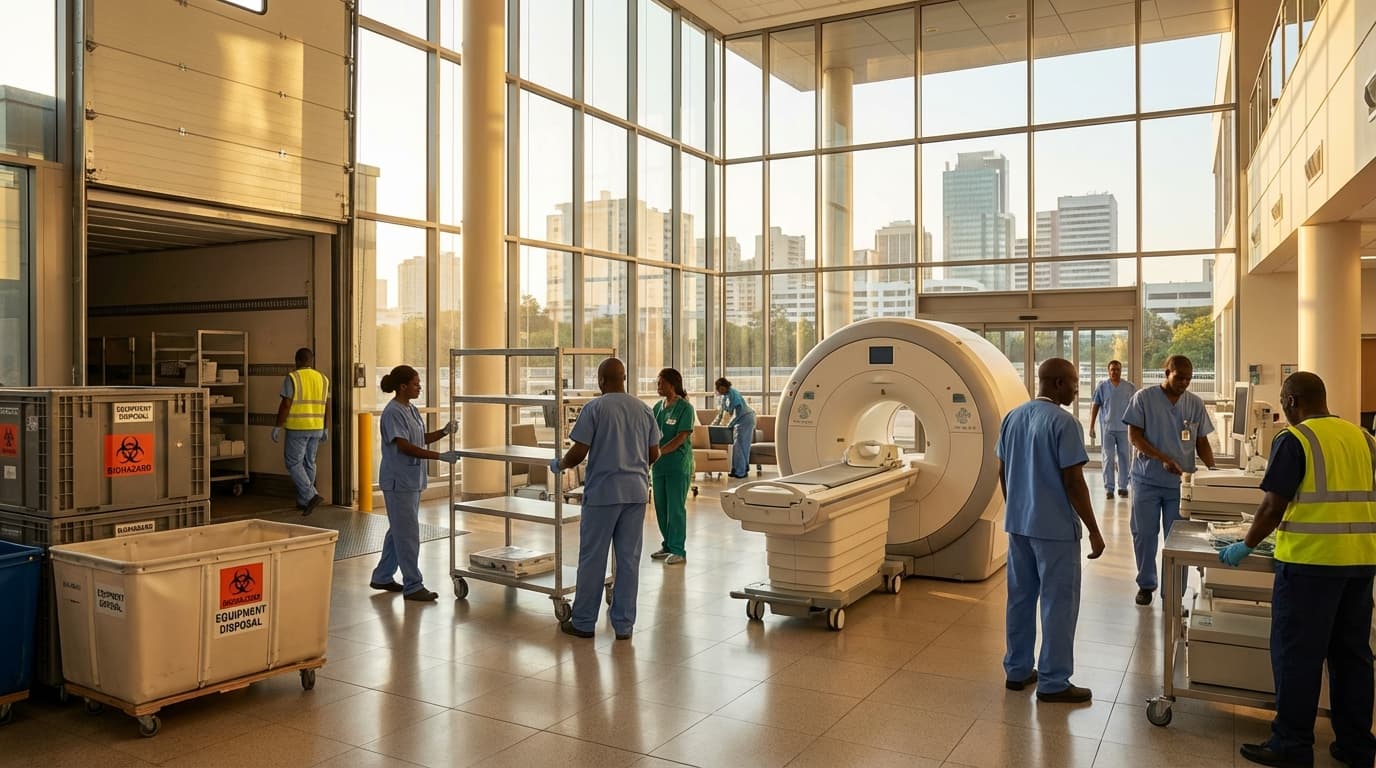
Site Restoration Service After Equipment Removal in Comoros
Engineering Excellence & Technical Support
Site Restoration Service After Equipment Removal High-standard technical execution following OEM protocols and local regulatory frameworks.
Advanced Geotechnical Assessment & Soil Stabilization
Our team conducts thorough geotechnical surveys to analyze soil composition, integrity, and potential contamination post-equipment removal. We employ specialized techniques such as soil stabilization, bioremediation, and targeted nutrient replenishment to restore soil health and prevent erosion, ensuring a stable and fertile environment.
Tailored Hydroseeding and Native Revegetation Strategies
Utilizing Comoros' unique climate and endemic flora, we design and implement custom hydroseeding and native revegetation plans. This approach accelerates ground cover establishment, controls dust, and promotes biodiversity, seamlessly blending the restored site back into the natural landscape.
Integrated Drainage and Water Table Restoration
We meticulously assess and restore natural drainage patterns and the water table equilibrium disrupted by heavy equipment. Our solutions include permeable surfacing integration, bioswale construction, and sub-surface drainage system rehabilitation to manage water flow, prevent waterlogging, and support the re-establishment of local aquatic ecosystems.
What Is Site Restoration Service After Equipment Removal In Comoros?
Site restoration after equipment removal in Comoros refers to the comprehensive process of returning a disturbed land area to a stable, safe, and environmentally acceptable condition following the deactivation, dismantling, and removal of industrial, commercial, or infrastructural equipment. This service aims to mitigate the negative impacts of equipment operations and subsequent removal on the local ecosystem, land stability, and aesthetic appeal. It encompasses a range of technical and environmental management practices tailored to the specific site characteristics and historical usage.
| Who Needs Site Restoration | Typical Use Cases |
|---|---|
| Industrial Facility Operators (e.g., manufacturing plants, processing facilities) | Decommissioning of old factories or processing units, removal of large-scale machinery. |
| Energy Companies (e.g., oil and gas, power generation) | Removal of outdated power generation equipment, dismantling of offshore platforms or onshore processing facilities. |
| Mining and Extractive Industries | Closure and rehabilitation of mines, removal of processing plants and associated infrastructure. |
| Government Agencies and Municipalities | Removal of abandoned or obsolete public infrastructure, remediation of former industrial sites. |
| Infrastructure Development Projects | Removal of temporary construction equipment and facilities after project completion, site rehabilitation. |
| Agricultural Operations | Removal of large-scale agricultural processing equipment or storage facilities. |
Key Components of Site Restoration:
- Decontamination and Hazardous Material Abatement: Identification, containment, and safe disposal or remediation of any residual hazardous substances (e.g., fuels, lubricants, processing chemicals) present on the site or within the removed equipment.
- Decommissioning and Demolition: Safe dismantling and removal of structures, foundations, pipelines, and ancillary equipment associated with the primary machinery. This often involves structural integrity assessments and controlled demolition methods.
- Soil Remediation: Assessment of soil contamination levels and implementation of appropriate remediation techniques, such as excavation and off-site disposal, in-situ treatment (e.g., bioremediation, chemical oxidation), or capping, to reduce contaminant concentrations to acceptable levels.
- Geotechnical Stabilization: Addressing any soil erosion, subsidence, or instability issues that may have arisen due to excavation, heavy equipment operation, or changes in surface hydrology. This can involve regrading, compaction, or the installation of erosion control measures.
- Hydrological and Drainage Restoration: Re-establishing natural drainage patterns, managing surface water runoff, and potentially restoring or creating wetlands or water bodies if they were impacted. This prevents erosion and potential flooding.
- Revegetation and Landscaping: Re-establishment of native or appropriate vegetation to stabilize soil, enhance biodiversity, and restore the aesthetic quality of the site. This may involve soil amendment, seeding, planting, and ongoing monitoring.
- Waste Management: Segregation, characterization, and appropriate disposal or recycling of all debris generated during the removal and restoration process, adhering to Comorian environmental regulations.
- Post-Restoration Monitoring: Long-term monitoring of environmental parameters (e.g., soil and water quality, vegetation establishment, erosion rates) to ensure the long-term success of the restoration efforts and compliance with regulatory requirements.
Who Needs Site Restoration Service After Equipment Removal In Comoros?
Site restoration services are crucial after equipment removal in Comoros for a variety of clients who have had machinery, infrastructure, or other operational assets taken from their premises. These services are designed to return the site to its original or a pre-determined state, mitigating environmental impact, ensuring safety, and preparing the land for future use. The primary target customers are organizations that have undergone a decommissioning process, are relocating operations, or have completed construction projects that involved heavy equipment.
| Customer Type | Typical Departments Involved | Reason for Restoration |
|---|---|---|
| Industrial Facilities | Operations, Facilities Management, Environmental Health & Safety (EHS), Procurement | Decommissioning of old machinery, closure of manufacturing lines, site repurposing. |
| Construction Sites | Project Management, Site Supervision, Logistics, Health & Safety | Removal of temporary structures, earthmoving equipment, and site preparation for handover or new development. |
| Mining and Extraction Operations | Mine Operations, Environmental Management, Engineering, Land Reclamation | Restoration of land after extraction, removal of mining equipment and infrastructure. |
| Agricultural Enterprises | Farm Management, Operations, Maintenance | Removal of obsolete agricultural machinery, storage units, or processing equipment. |
| Energy Production Facilities | Engineering, Operations & Maintenance (O&M), Environmental Compliance, Asset Management | Decommissioning of outdated energy generation equipment, removal of solar panels or wind turbines, site remediation. |
| Port and Logistics Hubs | Operations, Infrastructure Management, Facilities Management | Removal of cranes, conveyor systems, or specialized handling equipment. |
| Government and Public Infrastructure Projects | Public Works Department, Transportation Ministry, Environmental Protection Agencies | Restoration after road construction, bridge building, or utility installation projects. |
| Commercial Property Owners/Developers | Asset Management, Property Development, Leasing Departments | Preparing sites for new tenants or future development after previous structures or equipment have been removed. |
Target Customers & Departments Requiring Site Restoration in Comoros
- Industrial Facilities (factories, processing plants, manufacturing sites)
- Construction Sites (infrastructure projects, building sites)
- Mining and Extraction Operations
- Agricultural Enterprises (large-scale farms, processing facilities)
- Energy Production Facilities (power plants, solar farms, wind farms)
- Port and Logistics Hubs
- Government and Public Infrastructure Projects
- Commercial Property Owners/Developers
Site Restoration Service After Equipment Removal Process In Comoros
This document outlines the comprehensive workflow for our Site Restoration Service following equipment removal in Comoros. Our process is designed to be thorough, efficient, and to ensure minimal environmental impact, adhering to local regulations and client specifications. We manage the entire project from initial inquiry to final handover, providing a seamless experience for our clients.
| Phase | Stage | Key Activities | Deliverables | Timeline (Indicative) |
|---|---|---|---|---|
| 1 | Inquiry & Assessment | Initial client contact via phone, email, or web form. Discussion of project scope, equipment removed, site location, and desired restoration outcomes. Site visit (if feasible) or detailed information gathering (maps, photos, previous surveys). Preliminary risk assessment and identification of potential environmental sensitivities. | Acknowledgement of inquiry, preliminary scope understanding, initial site assessment report (if site visit conducted). | 1-3 business days |
| 2 | Proposal & Agreement | Development of a detailed proposal outlining scope of work, methodology, timeline, cost breakdown, and environmental protection measures. Submission of proposal to client. Negotiation and finalization of contract/agreement. Obtaining necessary permits or approvals from local authorities (if required). | Detailed Work Proposal, Signed Contract/Agreement, Permit Approvals (as applicable). | 3-7 business days (post-assessment) |
| 3 | Planning & Mobilization | Development of a comprehensive site-specific Restoration Plan. Resource allocation (personnel, equipment, materials). Procurement of necessary tools, machinery, and consumables. Logistics planning for transport to Comoros, including customs clearance and local transportation. Pre-mobilization safety briefings and training. | Approved Restoration Plan, Mobilization Schedule, Pre-mobilization Briefing Materials. | 5-10 business days |
| 4 | Execution of Restoration Activities | Site preparation (fencing, signage, access control). Demolition and removal of remaining non-salvageable structures or foundations. Soil remediation (if contaminated). Backfilling and grading to original or specified contours. Vegetation clearing and disposal (if necessary and specified). Re-vegetation with native or approved species. Waste management and disposal according to Comorian environmental regulations. | Completed restoration of the site as per the agreed plan. Regular progress reports. | Varies significantly based on site size and complexity (e.g., 1-4 weeks) |
| 5 | Verification & Handover | Internal quality control checks and verification against the Restoration Plan. Joint site inspection with the client and relevant authorities. Documentation of completed work (photos, reports). Final site handover to the client. | Final Restoration Report, As-Built Drawings (if applicable), Certificate of Completion, Site Handover Documentation. | 2-5 business days |
| 6 | Post-Restoration Monitoring (Optional) | Periodic site inspections to assess vegetation establishment and site stability. Monitoring of any identified environmental indicators. Reporting on the long-term success of the restoration efforts. | Post-Restoration Monitoring Reports (as per agreement). | As per contractually agreed monitoring period (e.g., 3-12 months) |
Site Restoration Service Workflow: Equipment Removal in Comoros
- Phase 1: Inquiry & Assessment
- Phase 2: Proposal & Agreement
- Phase 3: Planning & Mobilization
- Phase 4: Execution of Restoration Activities
- Phase 5: Verification & Handover
- Phase 6: Post-Restoration Monitoring (Optional)
Site Restoration Service After Equipment Removal Cost In Comoros
Restoring a site after equipment removal in Comoros involves several factors that influence the overall cost. These can range from the type and scale of the removed equipment to the specific environmental conditions of the site and the required level of restoration. Understanding these elements is crucial for accurate budgeting. Local currency, the Comorian Franc (KMF), is used for all pricing. The complexity of the task, the accessibility of the site, and the availability of skilled labor and materials all play a significant role in determining the final price. For instance, removing heavy industrial machinery will invariably incur higher restoration costs than removing smaller, less impactful equipment. Similarly, sites requiring extensive landscaping or hazardous material remediation will command higher service fees. The expertise and reputation of the service provider will also influence pricing.
| Restoration Scope | Estimated Cost Range (KMF) |
|---|---|
| Basic Debris Removal & Site Clearing | 50,000 - 200,000 |
| Minor Landscaping & Re-vegetation | 150,000 - 500,000 |
| Moderate Soil Remediation & Grading | 300,000 - 1,000,000 |
| Major Environmental Remediation (e.g., hazardous materials) | 800,000 - 3,000,000+ |
| Full Site Restoration (including structural elements if applicable) | 1,000,000 - 5,000,000+ |
Key Pricing Factors for Site Restoration in Comoros:
- Size and type of removed equipment (e.g., industrial machinery, vehicles, construction materials).
- Nature of the site and its original condition (e.g., natural landscape, developed industrial area).
- Extent of damage or disturbance caused by equipment presence and removal.
- Required level of restoration (e.g., basic debris removal, landscaping, soil remediation, structural repairs).
- Site accessibility and remoteness (affecting transportation of labor and materials).
- Environmental considerations (e.g., presence of sensitive ecosystems, hazardous waste).
- Permits and regulatory compliance requirements.
- Labor costs (availability and skill level of local workforce).
- Material costs (e.g., soil, plants, aggregate, waste disposal fees).
- Contractor's overhead, profit margin, and reputation.
Affordable Site Restoration Service After Equipment Removal Options
Removing heavy equipment from a site can leave behind a mess. Our affordable site restoration service specializes in returning your property to its pre-construction or pre-equipment state. We offer flexible options, including value bundles and cost-saving strategies, to ensure you get the best possible results without breaking the bank. Our goal is to provide efficient and effective restoration, minimizing disruption and maximizing your satisfaction.
| Service Bundle | Description | Key Features | Cost Savings |
|---|---|---|---|
| Basic Restoration Package | Essential services to address immediate post-removal needs. | Debris removal, basic grading, and topsoil replenishment. | Lowest upfront cost, ideal for minor disturbances. |
| Standard Restoration Package | Comprehensive restoration for moderate site impact. | Basic package plus advanced grading, minor soil amendments, and grass seeding. | Balanced cost and comprehensive results, suitable for most projects. |
| Premium Restoration Package | Full-service restoration for significant site disruption. | Standard package plus detailed landscaping, specialized soil remediation, and professional vegetation planting. | Best value for extensive restoration, includes long-term site health considerations. |
| Customizable Restoration Plan | Tailored services based on your specific site and budget. | Mix and match services from any package, or add specialized treatments. | Maximum flexibility to control costs and focus on critical restoration elements. |
Our Site Restoration Process
- Initial Site Assessment: We begin with a thorough evaluation of the impacted area to identify the extent of the damage and the specific restoration needs.
- Debris Removal: Clearing all residual materials, including soil, vegetation, and any remaining equipment parts.
- Grading and Leveling: Reshaping the land to its original contours or to meet new site requirements.
- Soil Remediation: Addressing any soil compaction or contamination issues that may have occurred.
- Vegetation Reinstatement: Replanting grass, shrubs, or other desired vegetation to restore the natural landscape.
- Final Inspection and Clean-up: Ensuring the site is fully restored and meets your expectations.
Verified Providers In Comoros
Navigating the healthcare landscape in a new country can be challenging. For those seeking reliable and trustworthy medical services in Comoros, understanding the importance of verified providers is paramount. Franance Health stands out as a leading name, offering a network of credentialed professionals and facilities that ensure quality, safety, and patient-centered care. This guide explores why choosing Franance Health-affiliated providers in Comoros is the most prudent decision for your health and well-being.
| Provider Type | Franance Health Verification Benefits | Why This is the Best Choice |
|---|---|---|
| Hospitals & Clinics | Certified for sanitation, equipment, and staff qualifications. Compliance with international healthcare protocols. | Ensures access to state-of-the-art facilities, safe surgical procedures, and comprehensive diagnostic capabilities. |
| Specialist Doctors | Verified medical licenses, board certifications, and continuous professional development records. | Guarantees expertise in specific medical fields, accurate diagnoses, and effective treatment plans from highly trained professionals. |
| Diagnostic Laboratories | Accredited for accuracy, quality control, and adherence to laboratory standards. | Provides reliable and precise test results essential for correct diagnosis and treatment monitoring. |
| Emergency Services | Verified responsiveness, availability of trained medical personnel, and appropriate emergency equipment. | Ensures prompt and effective medical attention during critical situations, potentially saving lives. |
Why Franance Health Credentials Matter in Comoros
- Uncompromising Quality Standards: Franance Health rigorously vets all its partner providers, ensuring they meet stringent international and local healthcare standards. This includes assessing medical expertise, facility infrastructure, and adherence to best practices in patient care.
- Enhanced Patient Safety: Credentials signify that providers have undergone thorough background checks and possess the necessary qualifications and licenses to practice. This significantly reduces risks and ensures you receive care from competent professionals.
- Access to Specialized Care: Through its network, Franance Health connects you with a diverse range of specialists, from general practitioners to highly specialized surgeons and diagnosticians. This breadth of expertise is crucial for addressing all your health needs.
- Trust and Transparency: The "verified" status provided by Franance Health offers a layer of trust and transparency, allowing you to make informed decisions about your healthcare providers. You can be confident that you are engaging with legitimate and qualified medical professionals.
- Streamlined Access to Services: Franance Health aims to simplify the process of finding and accessing quality healthcare. Their verified network means less time spent searching and more time focused on recovery and well-being.
Scope Of Work For Site Restoration Service After Equipment Removal
This Scope of Work (SOW) outlines the requirements for site restoration services following the removal of industrial equipment. The objective is to return the site to a safe, clean, and aesthetically acceptable condition, meeting all relevant environmental and regulatory standards. This document details the technical deliverables and standard specifications for the restoration process.
| Task/Activity | Description | Technical Deliverables | Standard Specifications |
|---|---|---|---|
| Site Assessment and Planning | Initial evaluation of the site to identify existing conditions, hazards, and restoration requirements. Development of a detailed restoration plan. | Site Survey Report, Restoration Plan, Hazard Identification Matrix | Compliance with all local, state, and federal regulations. Minimum of 5 business days for plan submission prior to commencement. Emergency response plan in place. |
| Demolition and Debris Removal | Dismantling and removal of any remaining ancillary structures, foundations, or concrete pads associated with the equipment. All generated debris will be characterized and disposed of properly. | Demolition Waste Manifests, Waste Characterization Reports, Disposal Certificates | Adherence to OSHA safety standards for demolition. All waste materials to be sorted and disposed of at licensed facilities. Hazardous waste handled according to EPA regulations. |
| Contamination Assessment and Remediation | If historical equipment operation or spills suggest potential soil or groundwater contamination, assessment and remediation will be performed. | Phase I/II Environmental Site Assessment (ESA) Report, Remediation Action Plan (RAP), Post-Remediation Verification Report | ASTM E1527-13 or latest standard for ESAs. Remediation methods to meet EPA Risk-Based Cleanup Levels or equivalent. Verification sampling to confirm remediation effectiveness. |
| Ground Surface Restoration | Repair of any damage to the ground surface, including grading, filling of voids, and compaction. Installation of appropriate topsoil and sub-base materials. | Grading and Compaction Report, Soil Sample Analysis Reports | Grading to match pre-existing contours or as per approved site plan. Compaction to achieve a minimum of 95% Standard Proctor Density. Topsoil to be screened to a minimum of 1/2 inch and free of debris. |
| Vegetation Management | Re-establishment of appropriate vegetation to prevent erosion and blend with the surrounding environment. Includes seeding, sodding, or planting as specified. | Seeding/Sodding Specifications, Plant Material Certifications, Post-Planting Monitoring Report | Use of native or climate-appropriate seed mixes/plants. Minimum of 70% vegetative cover within 90 days of establishment. Compliance with local horticultural best practices. |
| Final Inspection and Handover | Comprehensive inspection of the restored site to ensure all requirements of the SOW are met. Formal handover to the client. | Final Site Inspection Report, As-Built Drawings (if applicable), Project Closeout Documentation | Inspection to be conducted jointly by client and contractor representatives. All punch list items to be resolved prior to final acceptance. Provision of all required documentation within 10 business days of final acceptance. |
Key Stages of Site Restoration
- Site Assessment and Planning
- Demolition and Debris Removal
- Contamination Assessment and Remediation (if applicable)
- Ground Surface Restoration
- Vegetation Management
- Final Inspection and Handover
Service Level Agreement For Site Restoration Service After Equipment Removal
This Service Level Agreement (SLA) outlines the response times and uptime guarantees for the Site Restoration Service following the removal of equipment. This SLA is an addendum to the Master Service Agreement (MSA) between [Your Company Name] (hereinafter referred to as "Provider") and [Client Company Name] (hereinafter referred to as "Client").
| Service Component | Response Time (Business Hours) | Uptime Guarantee |
|---|---|---|
| Acknowledgement of Site Restoration Service Request | 2 Business Hours | N/A |
| Initiation of Site Restoration (On-Site) | 4 Business Hours (following acknowledgement, subject to site accessibility and pre-scheduled work) | N/A |
| Site Restoration Service Availability | N/A | 99.5% Uptime (excluding scheduled maintenance and Client-induced delays) |
Definitions
- Site Restoration: The process of returning the physical location where equipment was installed to its agreed-upon condition after the equipment has been successfully removed.
- Equipment Removal: The complete and documented detachment and extraction of the client's equipment from the designated site, as per the terms of the primary service agreement.
- Service Request: A formal notification from the Client to the Provider requesting the initiation of Site Restoration services.
- Acknowledgement: Confirmation from the Provider that a Service Request has been received and is being processed.
- Initiation of Restoration: The commencement of physical work on-site to perform the agreed-upon restoration tasks.
- Completion of Restoration: The finalization of all agreed-upon restoration tasks, confirmed by the Provider and/or Client (as per agreed-upon sign-off procedures).
- Downtime: Any period during which the Site Restoration Service is unavailable or significantly impaired, preventing the Provider from performing its obligations under this SLA. Routine maintenance, planned outages, and Client-induced delays are excluded from Downtime.
- Response Time: The maximum time allowed for the Provider to acknowledge a Service Request and begin the process of initiating restoration. Response time is measured in business hours, Monday through Friday, 9:00 AM to 5:00 PM [Client's Time Zone], excluding national holidays.
- Uptime Guarantee: The percentage of time the Site Restoration Service is expected to be available and functional.
Frequently Asked Questions

Ready when you are
Let's scope your Site Restoration Service After Equipment Removal in Comoros project in Comoros.

Scaling healthcare logistics and technical systems across the entire continent.