
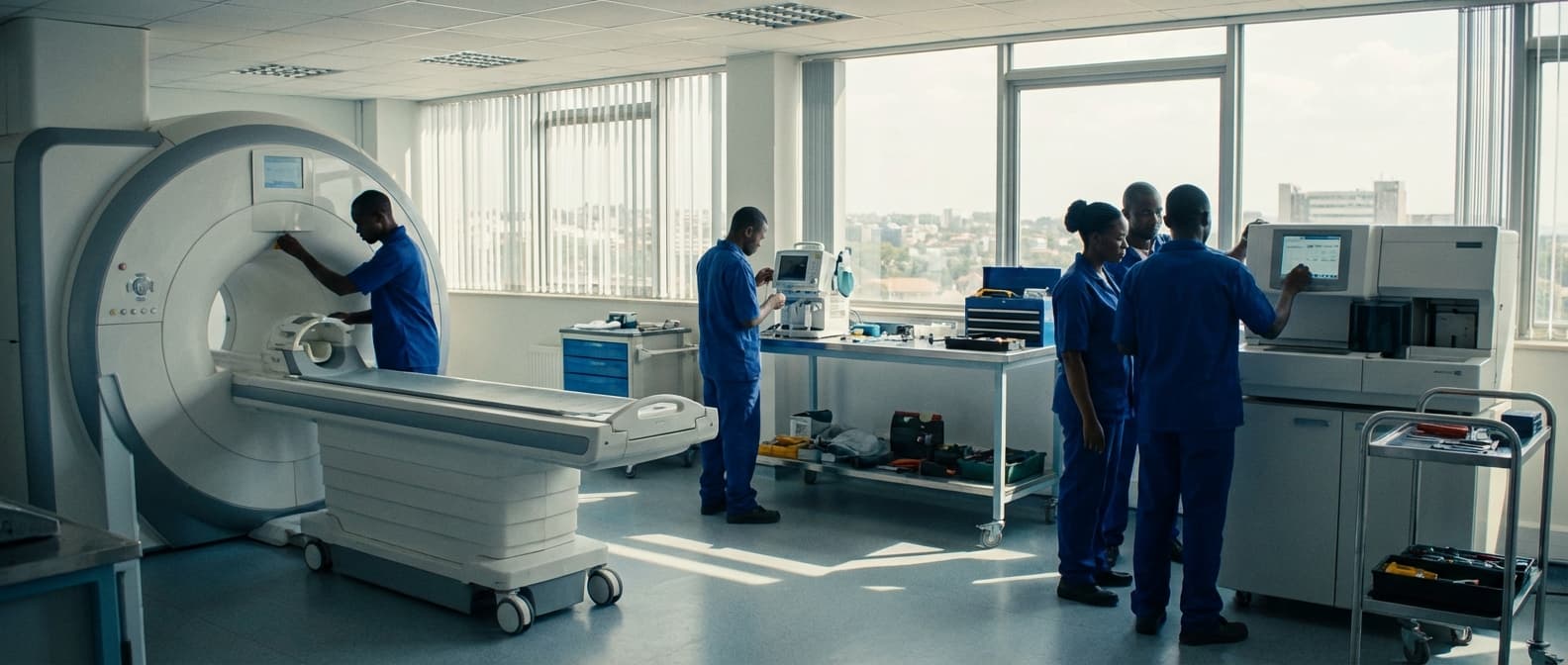
Uptime, Downtime & Root-Cause Analysis Reporting Service in Comoros
Engineering Excellence & Technical Support
Uptime, Downtime & Root-Cause Analysis Reporting Service High-standard technical execution following OEM protocols and local regulatory frameworks.
Proactive Uptime Maximization with Predictive Analytics
Leverage advanced AI-driven predictive analytics to anticipate potential service disruptions before they impact your operations in Comoros. Our service identifies subtle performance anomalies and forecasts failure probabilities, enabling timely interventions to guarantee consistent uptime for critical infrastructure and business applications.
Automated Downtime Detection & Real-time Incident Response
Minimize the financial and reputational cost of downtime with our automated monitoring and real-time alerting system. Instantly detect service outages across your Comorian infrastructure, from network connectivity to application availability. Our platform triggers immediate incident response workflows, ensuring rapid resolution and restoring services with minimal impact.
In-depth Root Cause Analysis with Visual Forensics
Go beyond superficial fixes with our comprehensive Root Cause Analysis (RCA) reporting. Our service meticulously traces the lineage of every incident, providing detailed technical logs, performance metrics, and visual diagnostics. Understand the 'why' behind every downtime event, enabling data-driven decisions to prevent recurrence and build a more resilient IT ecosystem in Comoros.
What Is Uptime, Downtime & Root-cause Analysis Reporting Service In Comoros?
In Comoros, an Uptime, Downtime & Root-Cause Analysis (RCA) Reporting Service refers to a specialized offering designed to monitor the operational status of IT infrastructure, applications, and services, identify periods of unavailability (downtime), and meticulously investigate the underlying causes of such disruptions. This service is crucial for organizations in Comoros seeking to maintain high availability, minimize business impact from outages, and implement proactive measures to prevent future occurrences. It involves a systematic process of data collection, event correlation, anomaly detection, and detailed forensic analysis.
Who Needs It:
This service is essential for a broad spectrum of entities operating in Comoros, including:
- Businesses of all sizes: From startups to large enterprises, any organization reliant on digital services for revenue generation, customer engagement, or internal operations.
- Government agencies: For the continuity of public services, administrative functions, and citizen-facing portals.
- Telecommunication providers: Given the critical nature of network uptime for communication services.
- Financial institutions: Banks, microfinance institutions, and payment processors that require uninterrupted access to financial systems.
- E-commerce platforms: Businesses that depend on continuous online presence for sales and transactions.
- Cloud service providers and managed service providers (MSPs) operating in or serving Comoros: To ensure the reliability of their offerings to their clients.
- Critical infrastructure operators: Including energy, water, and transportation sectors where downtime can have significant societal impact.
Typical Use Cases:
- Proactive Infrastructure Monitoring: Continuous surveillance of servers, network devices, cloud instances, and databases to detect performance degradation and potential failures before they manifest as full outages.
- Downtime Incident Management: Rapid detection, alerting, and initial assessment of service interruptions, enabling swift response and remediation efforts.
- Post-Incident RCA: Comprehensive investigation following an outage to determine the sequence of events, identify the primary contributing factors (e.g., hardware failure, software bugs, human error, network misconfiguration, cyber-attack), and document findings.
- Performance Baseline Establishment: Defining normal operating parameters for various systems to facilitate the identification of anomalies.
- Compliance and Auditing: Providing documented evidence of system availability and RCA reports for regulatory compliance and internal audit purposes.
- Capacity Planning and Optimization: Analyzing historical uptime and downtime data to identify trends, bottlenecks, and areas for performance improvement and resource allocation.
- Service Level Agreement (SLA) Reporting: Verifying adherence to agreed-upon uptime guarantees and providing reports to stakeholders.
- Vendor Performance Evaluation: Assessing the reliability of third-party services and infrastructure components.
| Service Aspect | Description | Key Metrics/Outputs | Impact in Comoros |
|---|---|---|---|
| Uptime Monitoring | Continuous surveillance of system availability and performance against established baselines. | Percentage uptime (e.g., 99.99%), Mean Time Between Failures (MTBF), Availability metrics. | Ensures uninterrupted critical services (e.g., banking, government, communication), vital for economic stability and citizen access to essential resources. |
| Downtime Detection | Identification and real-time alerting of service interruptions or performance degradation beyond acceptable thresholds. | Duration of downtime, frequency of incidents, severity level of outage. | Minimizes financial losses and reputational damage for businesses, and ensures continuity of public services for the population. |
| Root-Cause Analysis (RCA) | Systematic investigation to pinpoint the fundamental reasons behind an incident, not just its symptoms. | Identified root cause, contributing factors, recommended corrective actions, lessons learned. | Enables development of targeted preventative measures, enhancing the resilience of Comoros' digital infrastructure against recurring issues, fostering trust in digital services. |
| Reporting | Generation of comprehensive reports detailing uptime, downtime incidents, and RCA findings for stakeholder review and decision-making. | Uptime/Downtime reports, RCA documentation, SLA compliance reports, trend analysis. | Provides transparency, supports strategic decision-making for IT investment and operational improvements, and helps build a more robust digital ecosystem in Comoros. |
Components of Uptime, Downtime & Root-Cause Analysis Reporting Service
- Monitoring Tools Integration: Leveraging Network Monitoring Systems (NMS), Application Performance Monitoring (APM), Synthetic Monitoring, and Log Management tools.
- Alerting and Notification Mechanisms: Configurable systems to notify relevant personnel of detected anomalies or outages via email, SMS, or integrated ticketing systems.
- Data Aggregation and Correlation: Centralized collection of logs, metrics, and event data from disparate sources for analysis.
- Downtime Detection and Classification: Algorithms and heuristics to accurately identify and categorize periods of service unavailability.
- Root-Cause Analysis Methodologies: Application of structured approaches such as the '5 Whys', Fault Tree Analysis (FTA), or Ishikawa (Fishbone) diagrams.
- Reporting and Dashboards: Generation of real-time and historical reports, performance dashboards, and incident summaries.
- Knowledge Base Management: Documenting common issues, their causes, and resolution steps for faster future incident response.
Who Needs Uptime, Downtime & Root-cause Analysis Reporting Service In Comoros?
In today's interconnected world, reliable operations are paramount. Even in a developing economy like Comoros, businesses and organizations across various sectors depend on their IT infrastructure and operational systems functioning smoothly. Downtime can lead to significant financial losses, reputational damage, and a breakdown in essential services. Therefore, a comprehensive Uptime, Downtime, and Root-Cause Analysis Reporting Service is crucial for identifying, preventing, and resolving issues before they impact operations. This service provides invaluable insights into system performance, enabling proactive maintenance, informed decision-making, and ultimately, greater operational efficiency and resilience.
| Customer Sector | Key Departments/Roles Benefiting | Specific Needs Addressed |
|---|---|---|
| Financial Institutions | IT Operations, Risk Management, Compliance, Branch Operations | Ensuring continuous access to banking services, preventing transaction failures, meeting regulatory uptime requirements, identifying reasons for ATM or online banking outages. |
| Telecommunications Companies | Network Operations Center (NOC), Customer Support, Service Delivery, Engineering | Minimizing network downtime, improving call/data service availability, understanding reasons for service interruptions, optimizing network performance, reducing customer complaints. |
| Government Agencies | IT Department, Public Service Delivery Units, Administrative Offices | Maintaining availability of essential public services (e.g., online portals, licensing), ensuring data integrity, identifying causes of system failures affecting citizens, optimizing resource allocation. |
| Healthcare Providers | IT Department, Clinical Operations, Administration | Ensuring uptime of critical medical systems (e.g., EMR, diagnostic equipment interfaces), preventing disruptions to patient care, identifying reasons for system slowdowns or failures, ensuring data accessibility for medical professionals. |
| Transportation and Logistics | Operations Management, IT Department, Supply Chain Management | Keeping tracking systems operational, ensuring smooth dispatch and delivery processes, minimizing delays due to system failures, understanding reasons for disruptions in the supply chain. |
| Energy and Utilities | Operations Control, IT Department, Customer Service | Maintaining continuous supply of electricity and water, monitoring grid stability, identifying causes of service interruptions, ensuring efficient service delivery, managing customer complaints related to outages. |
| E-commerce and Retail | E-commerce Platform Management, IT Department, Operations | Maximizing online sales by preventing website downtime, ensuring smooth order processing, identifying reasons for cart abandonment or payment gateway failures, optimizing customer experience. |
| Educational Institutions | IT Department, Academic Administration, Online Learning Platforms | Ensuring availability of online learning platforms, learning management systems (LMS), and student information systems, preventing disruptions to academic activities, identifying causes of technical issues affecting students and faculty. |
| Hospitality Businesses | IT Department, Front Desk Operations, Reservations, Management | Maintaining uptime of reservation systems, point-of-sale (POS) systems, and guest Wi-Fi, ensuring seamless guest experience, identifying reasons for system failures impacting check-in/check-out or service delivery. |
| Non-Governmental Organizations (NGOs) | IT Department, Program Management, Field Operations | Ensuring continuity of critical program operations that rely on technology, maintaining communication channels, identifying reasons for system failures that could impact project delivery or beneficiary services. |
Target Customers in Comoros
- Financial Institutions (Banks, Microfinance)
- Telecommunications Companies
- Government Agencies (Ministries, Public Services)
- Healthcare Providers (Hospitals, Clinics)
- Transportation and Logistics Companies
- Energy and Utilities Providers
- E-commerce and Retail Businesses
- Educational Institutions
- Large Hospitality Businesses (Hotels, Resorts)
- Non-Governmental Organizations (NGOs)
Uptime, Downtime & Root-cause Analysis Reporting Service Process In Comoros
This document outlines the process for a Uptime, Downtime & Root-Cause Analysis (RCA) Reporting Service within the Comoros. The service aims to provide comprehensive reports on system availability, identify the causes of disruptions, and recommend corrective actions to improve reliability. The workflow details the journey from an initial inquiry to the final execution and delivery of the RCA report.
| Stage | Description | Key Activities | Responsible Party(ies) | Deliverables | Timeline (Estimated) |
|---|---|---|---|---|---|
| The initial stage where a client expresses interest in the RCA reporting service and the scope of services is clarified. | Client contacts service provider, discusses needs, defines systems/services to be monitored, agrees on service level agreements (SLAs) and reporting frequency. Initial consultation and proposal generation. | Client, Service Provider (Business Development/Sales) | Service Proposal, Signed Contract/Agreement | 1-3 Business Days |
| Establishing the infrastructure and processes for collecting relevant uptime and downtime data. | Deploying monitoring tools, configuring data collection agents, defining key performance indicators (KPIs) for uptime/downtime, establishing baseline performance metrics. | Service Provider (Technical Team) | Configured Monitoring System, Baseline Metrics Document | 3-7 Business Days |
| Detecting and categorizing instances of downtime or significant performance degradation. | Continuous monitoring of defined systems, automatic alerts for deviations from baseline or SLA breaches, preliminary classification of incident severity and impact. | Service Provider (Monitoring Operations Center/NOC) | Incident Alerts, Preliminary Incident Log | Continuous (During Service Operation) |
| The core investigative phase to determine the underlying reasons for downtime or performance issues. | Gathering logs, system diagnostics, network traces, configuration changes, interviewing relevant personnel, applying RCA methodologies (e.g., 5 Whys, Fishbone Diagram). | Service Provider (RCA Specialists, Technical Experts), Client (for information) | Identified Root Cause(s), Supporting Evidence | 2-5 Business Days (per incident, depending on complexity) |
| Compiling all collected data and RCA findings into a comprehensive report. | Structuring the report, detailing uptime/downtime statistics, presenting RCA findings, outlining impact and contributing factors, identifying trends. | Service Provider (Report Writers, Analysts) | Draft RCA Report | 1-3 Business Days |
| Presenting the findings to the client for their understanding and feedback. | Submitting the final report, scheduling a review meeting, explaining findings, answering client questions, addressing any discrepancies. | Service Provider (Account Manager, Analysts), Client | Final RCA Report, Meeting Minutes/Feedback Summary | 1-2 Business Days |
| Proposing actionable steps to prevent future occurrences and improve system resilience. | Developing recommendations based on RCA findings, proposing corrective actions, mitigation strategies, and preventative measures. Optionally, offering assistance in implementing these recommendations. | Service Provider (Consultants, Technical Experts), Client | Recommendations Document, Optional: Implementation Plan/Support | Ongoing (as part of report or separate engagement) |
Service Workflow Stages
- Inquiry & Scope Definition
- Data Collection & Monitoring Setup
- Incident Identification & Initial Assessment
- Root-Cause Analysis (RCA)
- Report Generation
- Report Delivery & Review
- Recommendations & Follow-up
Uptime, Downtime & Root-cause Analysis Reporting Service Cost In Comoros
The cost of Uptime, Downtime, and Root-Cause Analysis (RCA) reporting services in Comoros is influenced by several key factors. These services are crucial for businesses to understand their system reliability, identify performance bottlenecks, and prevent future disruptions. Pricing will vary based on the complexity of the infrastructure being monitored, the required depth and frequency of reporting, the expertise of the service provider, and the specific tools and technologies employed. For instance, monitoring a simple website will be significantly less expensive than analyzing the uptime of a complex enterprise-level network with multiple interconnected systems and applications. The need for real-time alerts, detailed forensic analysis, and the development of custom reporting dashboards will also drive up costs.
| Service Level | Description | Estimated Monthly Cost Range (Comorian Franc - KMF) | Notes |
|---|---|---|---|
| Basic Monitoring & Reporting | Monitoring of a few key systems (e.g., website, single server) with standard uptime/downtime reports. Limited RCA. | 150,000 - 400,000 KMF | Suitable for small businesses with simpler IT needs. |
| Standard Uptime & Downtime Reporting | Comprehensive monitoring of multiple systems, regular uptime/downtime reports, and basic RCA for common issues. | 400,000 - 900,000 KMF | Ideal for medium-sized businesses with established IT infrastructure. |
| Advanced Uptime, Downtime & RCA | In-depth monitoring of complex infrastructure, detailed RCA with forensic analysis, proactive recommendations, and customizable reporting. | 900,000 - 2,500,000+ KMF | Targeted towards large enterprises with critical systems and a high reliance on uptime. |
| On-Demand RCA Investigation | One-time investigation of specific incidents requiring in-depth root-cause analysis. | 200,000 - 700,000 KMF per incident | Pricing depends heavily on the complexity and duration of the investigation. |
Key Pricing Factors for Uptime, Downtime & RCA Reporting in Comoros
- Infrastructure Complexity: The number of servers, applications, network devices, and cloud services to be monitored. A more complex environment requires more sophisticated tools and a larger effort to analyze.
- Data Volume and Granularity: The amount of data generated by monitoring systems and the level of detail required in reports (e.g., minute-by-minute logs vs. daily summaries).
- Reporting Frequency and Depth: How often reports are generated (daily, weekly, monthly) and the level of detail included in the RCA (e.g., identifying the direct cause vs. a comprehensive historical analysis).
- Service Provider Expertise and Reputation: Highly experienced providers with a proven track record may command higher prices.
- Tools and Technologies Used: The cost of licensing and integrating advanced monitoring and RCA software, or the proprietary tools developed by the service provider.
- Level of Automation: Fully automated reporting and analysis will generally be more cost-effective than manual processes.
- On-demand vs. Subscription-based Services: Whether services are offered on a project basis or through a recurring subscription model.
- Scope of Services: Whether the service includes proactive monitoring, incident response, or solely retrospective reporting and analysis.
- Service Level Agreements (SLAs): Guarantees regarding response times and reporting accuracy can influence pricing.
Affordable Uptime, Downtime & Root-cause Analysis Reporting Service Options
This service provides comprehensive reporting for your system's uptime, downtime, and root-cause analysis. We understand that budget is a key consideration, so we offer flexible value bundles and cost-saving strategies to ensure you receive the insights you need without breaking the bank. Our goal is to equip you with actionable data to improve reliability and minimize costly outages.
| Value Bundle | Included Services | Ideal For | Estimated Monthly Cost (USD) |
|---|---|---|---|
| Essentials Bundle | Basic Uptime & Downtime Tracking, Standard RCA Reports (per incident) | Small businesses, startups, or teams with limited infrastructure | $50 - $150 |
| Professional Bundle | Advanced Uptime & Downtime Analytics, Proactive RCA Monitoring, Quarterly Trend Reports | Growing businesses, medium-sized enterprises, or teams managing multiple critical applications | $150 - $400 |
| Enterprise Bundle | Real-time Uptime & Downtime Monitoring, Comprehensive RCA with Predictive Analysis, Customizable SLA Reporting, Dedicated Account Manager | Large organizations, mission-critical operations, or businesses with complex IT environments | $400+ |
| Custom Bundle | Tailored reporting based on your specific needs and budget. | Organizations with unique requirements or seeking specific combinations of features. | Custom Quote |
Key Reporting Features & Benefits
- Uptime Reporting: Track the availability of your critical systems and services over various timeframes (daily, weekly, monthly, quarterly). Identify trends and areas for improvement.
- Downtime Analysis: Pinpoint the duration, frequency, and impact of all reported downtime events. Understand the financial and operational consequences.
- Root-Cause Analysis (RCA): Our service goes beyond simply identifying downtime. We investigate the underlying causes, providing detailed reports on what went wrong and why.
- Actionable Recommendations: Receive clear, concise recommendations to prevent future occurrences of similar issues, directly linked to the RCA findings.
- Customizable Dashboards & Alerts: Tailor your reporting experience to focus on the metrics that matter most to your organization. Receive timely alerts for critical events.
Verified Providers In Comoros
Navigating healthcare services in a foreign country can be challenging. For those seeking reliable and high-quality medical care in Comoros, understanding which providers are truly verified is paramount. Franance Health stands out as a leading credentialing body, rigorously vetting healthcare professionals and institutions to ensure adherence to the highest standards of practice. Their comprehensive evaluation process not only confirms the qualifications and experience of medical practitioners but also assesses the operational integrity and patient safety protocols of facilities. Choosing a provider accredited by Franance Health offers significant advantages, guaranteeing that you will receive care from competent, ethical, and well-equipped medical professionals. This commitment to excellence provides peace of mind and ensures a safer, more effective healthcare experience in Comoros.
| Credentialed Provider Type | Key Verification Areas by Franance Health | Benefits for Patients |
|---|---|---|
| Hospitals & Clinics | Infrastructure, Equipment, Staffing Ratios, Emergency Preparedness, Infection Control | Access to modern facilities, comprehensive care, and safe environments. |
| Specialist Physicians | Medical Degree, Board Certifications, Continuing Education, Clinical Experience | Expertise in specific medical fields, accurate diagnosis, and effective treatment plans. |
| General Practitioners | Medical License, Primary Care Training, Patient Satisfaction Metrics | Reliable first point of contact for health concerns, preventative care, and ongoing health management. |
| Diagnostic Laboratories | Equipment Calibration, Quality Control Procedures, Staff Qualifications, Accreditation | Accurate and reliable diagnostic test results for informed medical decisions. |
| Emergency Medical Services | Ambulance Availability, Equipment, Paramedic Training, Response Times | Prompt and effective emergency care when most needed, potentially life-saving interventions. |
Why Franance Health Credentials Matter in Comoros
- Ensures practitioners meet rigorous qualification and experience benchmarks.
- Verifies that healthcare facilities adhere to strict patient safety and hygiene standards.
- Confirms ethical conduct and commitment to professional best practices.
- Provides confidence in the quality and reliability of medical services offered.
- Reduces the risk of encountering substandard or unqualified healthcare providers.
Scope Of Work For Uptime, Downtime & Root-cause Analysis Reporting Service
This Scope of Work outlines the services provided for Uptime, Downtime, and Root-Cause Analysis Reporting. The objective is to deliver comprehensive, actionable reports that enable proactive identification and resolution of system issues, thereby enhancing overall service availability and performance.
| Section | Description | Technical Deliverables | Standard Specifications |
|---|---|---|---|
| Uptime & Downtime Monitoring | Continuous monitoring of specified systems and services to track availability and identify outages. | Real-time uptime/downtime status dashboards, historical uptime/downtime reports (daily, weekly, monthly, quarterly, annually). | Monitoring tools configured to detect outages within X minutes of occurrence. Reports generated with a minimum accuracy of 99.9%. Data retention for a minimum of Y months. |
| Incident Detection & Notification | Automated alerting and notification mechanism for downtime events. | Incident tickets automatically generated upon detection of downtime. Notification sent to designated stakeholders via email/SMS/collaboration tools. | Alerting thresholds configurable by the client. Notifications delivered within Z minutes of incident detection. |
| Root-Cause Analysis (RCA) | In-depth investigation of downtime incidents to determine the underlying cause. | Detailed RCA reports for all incidents exceeding a predefined duration (e.g., > 30 minutes) or impact level. | RCA process adheres to industry-standard methodologies (e.g., 5 Whys, Fishbone Diagram). Analysis to be completed within W business days of incident resolution. |
| RCA Report Content | Standardized format and content for all RCA reports. | RCA reports including: Incident summary, timeline of events, affected systems/services, impact assessment, root cause identification, contributing factors, corrective actions taken, preventative measures recommended, lessons learned. | Reports to be clear, concise, and avoid technical jargon where possible for broader stakeholder understanding. Actionable recommendations must be specific and measurable. |
| Trend Analysis & Reporting | Analysis of historical uptime/downtime data and RCA findings to identify recurring issues and trends. | Quarterly trend analysis reports highlighting common causes of downtime, areas of recurring instability, and recommendations for strategic improvements. | Reports to include statistical data (e.g., Mean Time Between Failures - MTBF, Mean Time To Repair - MTTR) and visualizations. Recommendations to focus on long-term systemic improvements. |
| Data Management & Security | Secure storage and management of all monitoring data and RCA reports. | Encrypted data storage. Access control mechanisms to restrict unauthorized access. Regular data backups. | Compliance with relevant data privacy regulations (e.g., GDPR, CCPA). Data access logs maintained. |
Key Objectives
- To accurately track and report on system uptime and downtime across designated services.
- To conduct thorough root-cause analysis (RCA) for all significant downtime incidents.
- To provide clear, concise, and actionable RCA reports.
- To identify trends and patterns in downtime to inform preventative measures.
- To contribute to the continuous improvement of system reliability and performance.
Service Level Agreement For Uptime, Downtime & Root-cause Analysis Reporting Service
This Service Level Agreement (SLA) outlines the guaranteed uptime, response times, and root-cause analysis reporting procedures for the Uptime, Downtime & Root-Cause Analysis Reporting Service (hereinafter referred to as 'the Service').
| Service Component | Uptime Guarantee | Response Time (Critical Incident) | Response Time (Major Incident) | Response Time (Minor Incident) | RCA Report Delivery (Critical Incident) | RCA Report Delivery (Major Incident) |
|---|---|---|---|---|---|---|
| Core Uptime Monitoring & Reporting | 99.9% | 1 Hour | 4 Business Hours | 8 Business Hours | Within 24 Business Hours | Within 48 Business Hours |
| Downtime Notification System | 99.8% | 1 Hour | 4 Business Hours | 8 Business Hours | Within 24 Business Hours | Within 48 Business Hours |
| Root-Cause Analysis Reporting Platform | 99.7% | 2 Hours | 8 Business Hours | 16 Business Hours | Within 48 Business Hours | Within 72 Business Hours |
Key Definitions
- Uptime: The percentage of time the Service is available and operational, excluding Scheduled Maintenance and Permitted Downtime.
- Downtime: Any period when the Service is unavailable or significantly degraded, preventing normal operation.
- Scheduled Maintenance: Planned periods during which the Service may be temporarily unavailable for upgrades, patches, or system maintenance. Customers will be notified at least 48 hours in advance.
- Permitted Downtime: Downtime that is not attributable to the Service Provider's failure, including but not limited to force majeure events, customer-caused issues, or third-party service provider failures beyond the Service Provider's control.
- Service Credits: Financial compensation provided to the customer in the event of a breach of the Uptime guarantee.
- Root-Cause Analysis (RCA) Report: A document detailing the underlying cause of a critical incident, the steps taken to resolve it, and measures implemented to prevent recurrence.
Frequently Asked Questions

Ready when you are
Let's scope your Uptime, Downtime & Root-Cause Analysis Reporting Service in Comoros project in Comoros.

Scaling healthcare logistics and technical systems across the entire continent.