
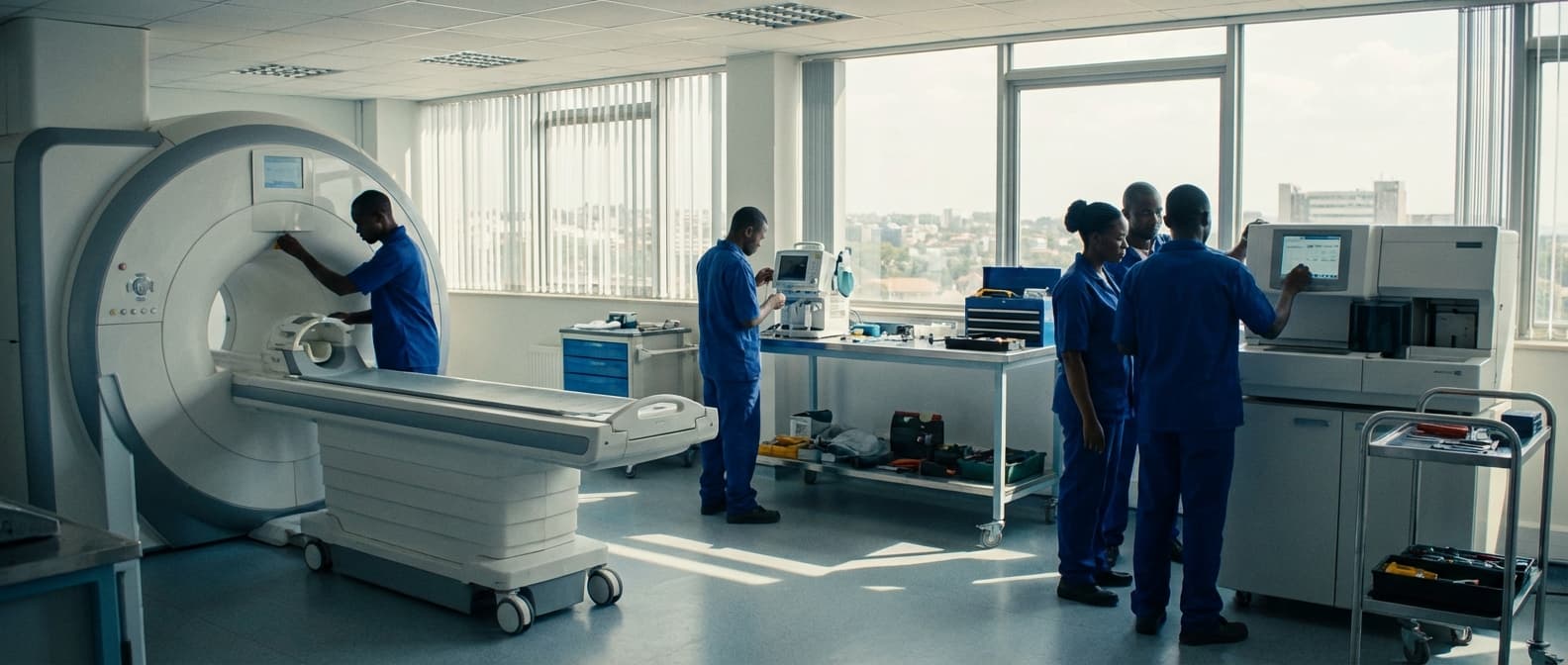
Planned Shutdown Coordination Service for Critical Equipment in Comoros
Engineering Excellence & Technical Support
Planned Shutdown Coordination Service for Critical Equipment High-standard technical execution following OEM protocols and local regulatory frameworks.
Proactive Critical Equipment Maintenance
Our service minimizes downtime by meticulously planning and coordinating scheduled shutdowns for your critical equipment in Comoros, ensuring all maintenance, repairs, and upgrades are performed efficiently and with minimal disruption to operations.
Optimized Shutdown Scheduling & Execution
Leveraging advanced scheduling tools and local expertise, we manage every phase of your planned shutdown, from resource allocation and vendor coordination to safety protocols and post-maintenance verification, guaranteeing timely completion and adherence to stringent quality standards.
Risk Mitigation & Performance Enhancement
By anticipating potential issues and implementing best practices in shutdown coordination, we significantly reduce the risk of unforeseen failures and operational bottlenecks, ultimately enhancing the long-term reliability and performance of your critical assets in the Comorian market.
What Is Planned Shutdown Coordination Service For Critical Equipment In Comoros?
Planned Shutdown Coordination Service for Critical Equipment in Comoros refers to a specialized operational framework designed to manage, schedule, and execute the planned cessation of operation (shutdown) for essential infrastructure and machinery within the Comoros archipelago. This service is paramount for ensuring the reliability, safety, and optimal performance of critical assets by minimizing disruption, mitigating risks, and maximizing efficiency during maintenance, repair, upgrade, or decommissioning activities. The service encompasses a holistic approach, integrating technical planning, resource allocation, stakeholder communication, and post-shutdown analysis.
| Who Needs It? | Typical Use Cases |
|---|---|
| Government Ministries and Agencies: Responsible for national infrastructure, public utilities, and essential services (e.g., Ministry of Energy, Ministry of Water, Ministry of Communications, Port Authority). | Scheduled maintenance of the main power generation facility in Moroni to prevent cascading failures. Upgrade of water purification systems at a central treatment plant to improve water quality and capacity. Routine inspection and refurbishment of critical telecommunication infrastructure to ensure network stability. Planned dredging and maintenance of the main shipping channel at the Port of Moroni. |
| Public Utility Corporations: Operating and maintaining power grids, water supply networks, and telecommunication systems. | Annual overhauls of large-scale diesel generators powering key islands. Replacement of aging pipelines or pumps in the potable water distribution network. Installation of new network components or software upgrades for mobile and internet services. |
| Industrial and Commercial Enterprises: Operating critical machinery or facilities that require planned downtime for maintenance or upgrades (e.g., large hotels, manufacturing facilities, fuel storage depots). | Maintenance of refrigeration systems in a large hotel to ensure uninterrupted guest services. Scheduled servicing of industrial boilers or specialized machinery in a production facility. Inspection and maintenance of fuel pumps and storage tanks at a critical depot. |
| International Development Organizations and Donors: Involved in funding and overseeing infrastructure projects. | Coordination of shutdowns for newly installed or upgraded infrastructure funded by international aid to ensure effective handover and initial operationalization. Monitoring and oversight of maintenance shutdowns on critical infrastructure projects to ensure compliance with grant agreements. |
Key Components of the Service:
- Asset Identification and Prioritization: Cataloging all critical equipment (e.g., power generators, water treatment plants, communication towers, port infrastructure) and assessing their operational criticality and interdependencies.
- Risk Assessment and Mitigation Planning: Identifying potential risks associated with shutdown (e.g., service interruption, safety hazards, environmental impact) and developing comprehensive mitigation strategies.
- Scheduling and Time Optimization: Developing detailed shutdown schedules that minimize impact on essential services and operations, often involving staggered or phased shutdowns where feasible.
- Resource Mobilization and Management: Coordinating the procurement and deployment of specialized personnel (engineers, technicians, safety officers), equipment, materials, and logistics required for the shutdown and subsequent restart.
- Stakeholder Communication and Engagement: Establishing clear communication channels with all affected parties, including government agencies, service providers, end-users, and regulatory bodies, to inform them of schedules, impacts, and progress.
- Execution Oversight and Quality Assurance: Supervising the entire shutdown process to ensure adherence to planned procedures, safety protocols, and quality standards.
- Post-Shutdown Verification and Reporting: Conducting thorough testing and verification of equipment functionality post-shutdown and providing comprehensive reports on the execution, outcomes, and lessons learned.
Who Needs Planned Shutdown Coordination Service For Critical Equipment In Comoros?
In Comoros, ensuring the continuous operation of critical equipment is paramount for economic stability and public welfare. Unexpected equipment failures can lead to significant disruptions in essential services, production losses, and safety hazards. A Planned Shutdown Coordination Service is essential for industries and organizations that rely on complex and high-value machinery. This service meticulously plans, schedules, and executes planned maintenance, upgrades, and replacements during designated downtime periods, minimizing operational impact and maximizing equipment longevity. This proactive approach is crucial for preventing costly emergency repairs and ensuring safety standards are met.
| Industry/Sector | Critical Equipment Examples | Impact of Downtime | Benefit of Planned Shutdown Coordination |
|---|---|---|---|
| Energy | Turbines, generators, transformers, switchgear | Power outages, economic disruption, public inconvenience | Reduced risk of catastrophic failure, extended equipment life, optimized power supply |
| Telecommunications | Base stations, network servers, fiber optic equipment | Communication blackouts, loss of essential services, economic impact | Ensured network reliability, minimized service interruptions, seamless upgrades |
| Water & Sanitation | Pumps, treatment plant machinery, distribution pipelines | Water shortages, public health risks, sanitation issues | Consistent water supply, prevention of contamination, improved operational efficiency |
| Ports & Logistics | Cranes, conveyor systems, refrigeration units | Cargo delays, increased shipping costs, disruption to trade | Efficient cargo handling, reduced demurrage, secure supply chains |
| Manufacturing | Production lines, heavy machinery, specialized processing equipment | Production stoppages, lost revenue, order backlogs | Maximized production uptime, improved product quality, cost-effective maintenance |
| Healthcare | Medical imaging equipment (MRI, CT scanners), life support systems, laboratory equipment | Delayed diagnostics and treatments, patient safety risks | Uninterrupted patient care, ensured accuracy of medical procedures, compliance with health regulations |
| Finance (Data Centers) | Servers, cooling systems, power backup units | Financial transaction failures, data breaches, loss of customer trust | High availability of financial services, data integrity, robust security |
| Government Infrastructure | Road maintenance equipment, public transport vehicles, waste management machinery | Disruption of essential public services, safety concerns, environmental impact | Reliable public services, improved citizen welfare, efficient resource allocation |
Target Customers and Departments in Comoros Requiring Planned Shutdown Coordination Services
- {"items":["Energy Sector (Power Generation & Distribution)","Telecommunications Providers","Water and Sanitation Utilities","Port Authorities and Logistics Companies","Manufacturing and Industrial Plants","Healthcare Facilities (Hospitals, Clinics)","Financial Institutions (Data Centers)","Government Infrastructure Agencies"],"title":"Target Customers"}
- {"items":["Operations Management","Maintenance and Engineering","Asset Management","Safety and Compliance","Production Planning","IT Infrastructure Management","Procurement and Supply Chain","Risk Management"],"title":"Key Departments within Target Organizations"}
Planned Shutdown Coordination Service For Critical Equipment Process In Comoros
This document outlines the workflow for the Planned Shutdown Coordination Service for Critical Equipment in Comoros. The service aims to ensure the safe, efficient, and timely execution of planned maintenance shutdowns for essential infrastructure and industrial equipment across the Comoros archipelago. The process is designed to be transparent and collaborative, involving stakeholders from the client organization, equipment manufacturers, specialized service providers, and regulatory bodies where applicable.
| Stage | Key Activities | Key Deliverables |
|---|---|---|
| Receive request, clarify scope, preliminary feasibility. | Initial assessment report, scope outline. |
| Technical meetings, condition assessment, work scope development. | Detailed work scope, project plan draft, risk assessment draft. |
| Procure parts, mobilize teams, develop schedule, logistics planning. | Procurement orders, confirmed team availability, detailed schedule, logistics plan. |
| Site prep, safety training, SOP finalization, permits. | Site readiness report, safety briefing records, confirmed permits. |
| Perform maintenance, monitor progress, manage issues, ensure safety. | Daily progress reports, incident logs, completed task records. |
| Test equipment, verify performance, final checks. | Test reports, commissioning certificates, performance validation data. |
| Formal handover, compile reports, lessons learned. | Handover certificate, final project documentation, lessons learned report. |
| Analyze KPIs, gather feedback, update procedures. | Performance evaluation report, updated service protocols, recommendations. |
Workflow Stages
- {"stage":"1. Inquiry & Initial Assessment","sub_steps":["Client submits formal inquiry/request.","Service provider acknowledges receipt and requests further details.","Initial scope definition and identification of critical equipment.","Preliminary assessment of technical requirements and potential challenges."],"description":"The process begins with an inquiry from the client regarding a planned shutdown for specific critical equipment. This initial phase involves understanding the scope of work, the type and criticality of the equipment, the desired shutdown period, and any preliminary constraints. A preliminary risk assessment and feasibility study may be conducted."}
- {"stage":"2. Detailed Planning & Scope Definition","sub_steps":["Joint technical meetings with client and relevant stakeholders.","Detailed equipment condition assessment and failure analysis (if applicable).","Development of a detailed work scope and bill of materials.","Identification and selection of specialized service providers and external contractors.","Preparation of preliminary risk management and mitigation plans."],"description":"Following the initial assessment, a detailed planning phase commences. This involves in-depth technical discussions, site visits (if necessary), and the development of a comprehensive project plan. The scope of work is precisely defined, including specific maintenance tasks, required resources, and performance indicators."}
- {"stage":"3. Resource Mobilization & Scheduling","sub_steps":["Procurement of all required spare parts and consumables.","Confirmation of availability and mobilization of internal and external technical teams.","Logistics planning for transportation of personnel, tools, and equipment to the site.","Development of a detailed Gantt chart or project schedule with critical path analysis.","Pre-qualification and contractual agreements with third-party service providers."],"description":"This stage focuses on securing all necessary resources, including skilled personnel, specialized tools, spare parts, and equipment. A detailed schedule is developed, factoring in lead times for parts procurement, contractor availability, and the client's operational needs. Logistics for personnel and equipment movement within Comoros are also addressed."}
- {"stage":"4. Pre-Shutdown Preparation & Safety Briefings","sub_steps":["Pre-shutdown site inspection and preparation of the work area.","Comprehensive safety training and site-specific inductions.","Development and review of detailed Standard Operating Procedures (SOPs) for each task.","Confirmation of equipment isolation procedures and lock-out/tag-out (LOTO) protocols.","Obtaining all necessary permits and regulatory approvals (if applicable)."],"description":"Before the shutdown commences, thorough preparations are made on-site. This includes safety briefings for all personnel involved, review of the shutdown procedures, isolation of equipment, and establishment of communication protocols. All necessary permits and approvals are secured."}
- {"stage":"5. Execution of Planned Shutdown","sub_steps":["Initiation of the planned shutdown and equipment isolation.","Execution of planned maintenance, repair, and inspection activities.","Daily progress reporting and site coordination meetings.","Management of any emergent issues or deviations from the plan.","Continuous monitoring of safety performance and adherence to procedures."],"description":"This is the core stage where the planned maintenance tasks are executed according to the approved schedule and procedures. Daily progress meetings are held to monitor performance, address any unforeseen issues, and ensure adherence to safety regulations. Real-time tracking of activities and resource utilization is maintained."}
- {"stage":"6. Post-Shutdown Testing & Commissioning","sub_steps":["Reassembly and preparation for start-up.","Pre-start-up checks and verification.","Controlled start-up and initial operation of the equipment.","Performance testing and validation against baseline data.","Final inspections and quality assurance checks."],"description":"Upon completion of the maintenance tasks, rigorous testing and commissioning procedures are implemented to ensure the equipment is functioning as expected and safely. This includes functional tests, performance verification, and any necessary calibration."}
- {"stage":"7. Handover & Documentation","sub_steps":["Formal handover of the equipment to the client.","Compilation of all project documentation (reports, test certificates, etc.).","Provision of recommendations for future maintenance and operational improvements.","Conducting a post-shutdown review meeting with key stakeholders.","Archiving of all project-related records."],"description":"Once the equipment has been successfully commissioned and tested, it is formally handed back to the client. All relevant documentation, including maintenance reports, test results, spare parts inventory, and lessons learned, is compiled and submitted. A post-shutdown review meeting is conducted."}
- {"stage":"8. Performance Evaluation & Continuous Improvement","sub_steps":["Analysis of project KPIs (e.g., schedule adherence, budget adherence, safety incidents).","Gathering feedback from client and service providers.","Identifying lessons learned and best practices.","Updating service procedures and protocols based on performance evaluation.","Planning for future shutdown coordination based on continuous improvement insights."],"description":"The final stage involves evaluating the overall performance of the shutdown coordination service against pre-defined Key Performance Indicators (KPIs). Feedback is gathered from all stakeholders to identify areas for improvement in future shutdown planning and execution. This feedback loop drives continuous enhancement of the service."}
Planned Shutdown Coordination Service For Critical Equipment Cost In Comoros
The cost of a Planned Shutdown Coordination Service for critical equipment in Comoros is influenced by several factors, making it challenging to provide a single fixed price. These factors include the complexity and scope of the shutdown, the duration of the outage, the specific types and number of critical equipment involved, the required level of expertise and specialized personnel, the geographical location within Comoros, and the urgency of the service. Service providers will typically conduct a thorough assessment to provide a tailored quote. The local currency is the Comorian Franc (KMF).
| Service Component | Estimated Cost Range (KMF) | Notes |
|---|---|---|
| Initial Assessment & Planning | 50,000 - 200,000 | Covers site visit, equipment evaluation, and initial scope definition. |
| Project Management & Coordination (per day) | 100,000 - 300,000 | Includes dedicated project manager and coordination staff. Varies with complexity. |
| Specialized Technical Expertise (per day/technician) | 70,000 - 250,000 | For engineers and technicians with specific equipment knowledge. Depends on skill level. |
| Safety Supervision & Compliance | 60,000 - 180,000 | Ensuring adherence to safety protocols and regulations. |
| Logistics & Site Support | 40,000 - 150,000 | Includes transportation, accommodation (if applicable), and on-site support. |
| Pre-Shutdown Risk Assessment | 50,000 - 150,000 | Identifying potential hazards and mitigation strategies. |
| Post-Shutdown Testing & Reporting | 70,000 - 200,000 | Verification of equipment functionality and detailed reporting. |
| Contingency Planning & Management | 30,000 - 100,000 | Budget for unforeseen issues during the shutdown. |
Key Pricing Factors for Planned Shutdown Coordination Services in Comoros:
- Scope and Complexity of the Shutdown: Larger and more intricate shutdowns involving multiple interconnected systems will incur higher costs.
- Duration of the Planned Outage: The longer the equipment is out of service, the more coordination and management resources are typically required, increasing the overall cost.
- Types and Quantity of Critical Equipment: The nature of the equipment (e.g., generators, pumps, control systems) and the number of units to be serviced will impact pricing. Highly specialized or a large number of units will raise costs.
- Required Expertise and Personnel: The need for specialized engineers, technicians, safety officers, and project managers with specific experience in critical equipment maintenance will affect the price. Higher skill levels and more personnel translate to higher costs.
- Geographical Location: Accessibility of the site within Comoros, transportation costs for personnel and equipment, and any logistical challenges associated with remote locations can influence the final price.
- Urgency and Lead Time: Shutdowns that require rapid planning and execution with short notice will likely come at a premium compared to those with ample preparation time.
- Additional Services: The inclusion of pre-shutdown planning, post-shutdown testing, reporting, and risk assessment will add to the overall service cost.
- Regulatory Compliance and Safety Standards: Ensuring adherence to local and international safety regulations can involve specialized training and procedures, impacting the pricing.
Affordable Planned Shutdown Coordination Service For Critical Equipment Options
Our Affordable Planned Shutdown Coordination Service is designed to minimize downtime and maximize efficiency for your critical equipment maintenance. We offer flexible value bundles and strategic cost-saving measures to ensure your planned shutdowns are executed smoothly and economically.
| Cost-Saving Strategy | Description | Benefit |
|---|---|---|
| Optimized Scheduling | Leveraging off-peak hours and minimizing parallel activities to reduce overall shutdown duration. | Reduced labor costs, less production loss. |
| Proactive Maintenance Planning | Identifying potential issues during planning phases to avoid unexpected delays and costly emergency repairs. | Lower unexpected repair expenses, improved equipment lifespan. |
| Bulk Procurement & Vendor Negotiation | Consolidating material and service needs for better pricing and streamlined vendor management. | Reduced equipment and service costs. |
| Resource Optimization | Ensuring the right personnel and equipment are available at the right time, avoiding over/understaffing. | Lower labor and equipment rental expenses. |
| Pre-Fabrication & Modularization | Where applicable, preparing components off-site to reduce on-site work and time. | Faster on-site installation, reduced labor exposure. |
| Knowledge Transfer & Training | Empowering your internal teams through collaborative planning and execution, building long-term capabilities. | Reduced reliance on external services for future shutdowns. |
Value Bundles
- {"title":"Essential Coordination Bundle","description":"Includes core planning, scheduling, resource allocation, and on-site supervision for planned shutdowns. Ideal for organizations with established maintenance protocols."}
- {"title":"Comprehensive Optimization Bundle","description":"Builds upon the Essential bundle with proactive risk assessment, detailed pre-shutdown inspections, vendor management, and post-shutdown performance analysis. Best for complex or high-risk shutdowns."}
- {"title":"Customizable Solutions","description":"Tailor a package to your specific needs, incorporating only the services you require. Flexible pricing based on scope and duration."}
Verified Providers In Comoros
In the Comoros, ensuring you are receiving care from verified and credentialed healthcare providers is paramount for your well-being. Franance Health stands out as a leading organization dedicated to providing access to such trusted professionals. Their rigorous credentialing process is designed to identify and onboard healthcare practitioners who meet the highest standards of skill, ethical practice, and professional integrity. By partnering with Franance Health, you gain confidence in the quality of care you receive, knowing that the providers have undergone thorough background checks, verification of their medical licenses, and an assessment of their clinical experience. This commitment to transparency and excellence makes Franance Health a premier choice for accessing reliable healthcare services in the Comoros.
| Benefit | Description |
|---|---|
| Patient Safety | Verified providers have met established standards, reducing risks. |
| Quality of Care | Credentials indicate competence and expertise in their field. |
| Trust and Confidence | Knowing your provider is vetted builds essential trust. |
| Access to Specialists | Franance Health helps identify qualified specialists. |
| Peace of Mind | Eliminates the uncertainty of seeking care from unverified sources. |
Why Franance Health Credentials Matter:
- Rigorous Verification of Medical Licenses and Qualifications
- Thorough Background Checks for Ethical Practice
- Assessment of Clinical Experience and Specializations
- Commitment to Ongoing Professional Development
- Ensuring Adherence to International Healthcare Standards
Scope Of Work For Planned Shutdown Coordination Service For Critical Equipment
This Scope of Work (SOW) defines the services required for the coordination of planned shutdown activities for critical equipment. The primary objective is to ensure a safe, efficient, and timely execution of scheduled maintenance, inspections, and upgrades with minimal disruption to operations. This SOW outlines the responsibilities of the service provider, the technical deliverables expected, and the standard specifications to be adhered to throughout the coordination process.
| Section | Description | Technical Deliverables | Standard Specifications / Requirements |
|---|---|---|---|
| Pre-shutdown assessment, scheduling, and resource planning. |
|
|
| On-site coordination during the shutdown period. |
|
|
| Completion verification, documentation, and handover. |
|
|
| Ensuring a safe working environment throughout the shutdown. |
|
|
| Ensuring the quality of work performed during the shutdown. |
|
|
Key Objectives of Planned Shutdown Coordination
- Minimize operational downtime during scheduled shutdowns.
- Ensure adherence to all safety regulations and site-specific procedures.
- Optimize resource allocation (personnel, materials, equipment).
- Facilitate effective communication among all stakeholders.
- Track progress and manage risks proactively.
- Ensure comprehensive documentation of shutdown activities.
- Facilitate the prompt return of critical equipment to operational status.
Service Level Agreement For Planned Shutdown Coordination Service For Critical Equipment
This Service Level Agreement (SLA) outlines the terms and conditions for the Planned Shutdown Coordination Service provided for Critical Equipment. It defines the response times for scheduled maintenance events and the uptime guarantees for the coordination service itself. This SLA aims to ensure minimal disruption to operations during planned maintenance and reliable availability of the coordination service.
| Service Component | Response Time (Acknowledgement) | Uptime Guarantee | Remediation Actions |
|---|---|---|---|
| Planned Shutdown Coordination Initiation (for scheduled events) | 1 business hour (for events scheduled with 7+ days notice) | N/A (Service is reactive for scheduled events) | Expedited coordination efforts, priority communication with stakeholders. |
| Planned Shutdown Coordination Service Availability (general) | N/A (Always available for scheduled coordination) | 99.9% per calendar month | Root cause analysis, temporary workarounds, expedited repair and rollback procedures. |
Key Definitions
- Planned Shutdown: A scheduled interruption of service for critical equipment, agreed upon in advance for maintenance, upgrades, or other planned activities.
- Critical Equipment: Equipment identified as essential for core business operations, where unplanned downtime would result in significant financial or operational impact.
- Coordination Service: The system and personnel responsible for managing, communicating, and overseeing the execution of planned shutdowns.
- Response Time: The maximum allowable time from the initiation of a request for planned shutdown coordination to the acknowledgement and commencement of coordination activities.
- Uptime Guarantee: The percentage of time the Planned Shutdown Coordination Service is available and functional during a defined period.
- Scheduled Maintenance Window: The pre-defined period during which a Planned Shutdown is scheduled to occur.
- Outage: Any period where the Planned Shutdown Coordination Service is unavailable.
Frequently Asked Questions

Ready when you are
Let's scope your Planned Shutdown Coordination Service for Critical Equipment in Comoros project in Comoros.

Scaling healthcare logistics and technical systems across the entire continent.